Tag: newspaper

  • Mathrubhumi Daily celebrates children and their future!

    Mathrubhumi Daily celebrates children and their future!

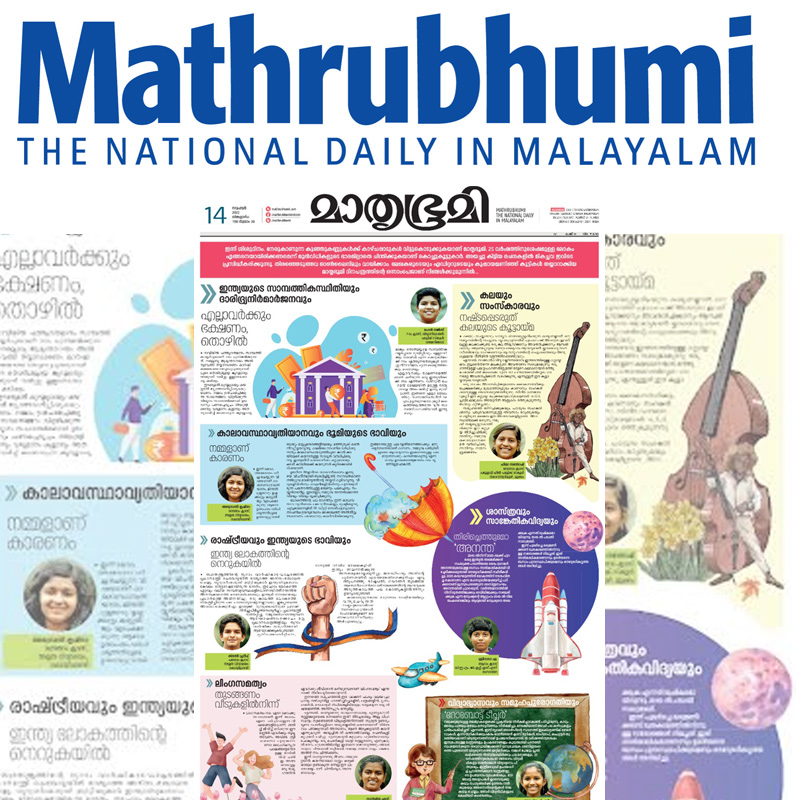
    Mumbai: Are you ready to write the newspaper of the future?

    This simple question was the spark that ignited Mathrubhumi Daily’s Children’s Day activity for 2022. The future was set in stone when the media house chose the year 2047. It was a good time away, enough for children today to be in the 30–50 age group. It was also India’s 100th year of independence and Mathrubhumi’s 125th year of existence. Perfect!

    Within a few days of getting in touch with schools, Mathrubhumi was flooded with entries. The editorial team of the company shortlisted the articles that would fill up the front page—14 different front pages for each of Kerala’s districts. The children were then brought in to sit with the editorial team led by Mathrubhumi, fine-tune their articles, and help design the front page. The remaining articles were uploaded to the Mathrubhumi website for everyone to read.

    On 14 November, Malayalees awoke to a front page that was very different: one that spread joy, looked ahead to the future, and gave everyone a glimpse of what the year 2047 could look like. Some of these ideas could revolutionise industries, make an impact, and perhaps even change the world. And what better way to change the world than through a humble newspaper.

  • HT Media hopeful of a resurgence in the mid to long term

    HT Media hopeful of a resurgence in the mid to long term

    Mumbai: In a message to shareholders to announce its first quarter results, HT Media, Hindustan Media Ventures chairperson and editorial director Shobhana Bhartia said that in the near term, the company expects market sentiment and growth to remain a bit subdued but is hopeful of a resurgence in the mid to long term. “Despite external macro headwinds, we remain committed to our journalism and to serving all our customers and stakeholders.”

    She noted that the first quarter of FY 2022–23 began on a positive note with a strong performance in the previous fiscal year, with overall business performance and the larger economic and business environment seeing considerable improvement, especially in the latter half of the fiscal. 

    “But it also began amidst indications of headwinds in terms of escalating material input costs owing to geopolitical tensions and protracted global conflicts. Our print business saw significant pricing pressure as material prices continued to remain at elevated levels even as a rise in general inflation impacted the overall cost of doing business. Advertising revenue across print, radio, and circulation revenues remained healthy.”

    HT Media posted its consolidated net losses, narrowed to Rs 41.80 crore for the quarter ended 30 June. Revenue from operations rose 72.5 per cent to Rs 420.09 crore during the same period against Rs 243.53 in the corresponding period of the previous year.

    Total expenses recorded during the quarter stood at Rs 496.78 crore compared to Rs 371.69 crore. 

    HT Media’s revenue from printing & publishing of newspapers and periodicals surged 71.51 per cent YoY to Rs 347.65 crore in Q1 FY2022-23.

    Its revenue from radio broadcast and entertainment rose two-fold to Rs 33.36 crore and digital was at Rs 38.76 crore, up 33.47 per cent.

    On the outlook, Bhartia said, “In the near term, we expect market sentiment and growth to remain a bit subdued, but are hopeful of a resurgence in the mid to long term. Despite external macro headwinds, we remain committed to our journalism and to serving all our customers and stakeholders.”

  • Apurva Purohit steps down as the president of the Jagran Group

    Apurva Purohit steps down as the president of the Jagran Group

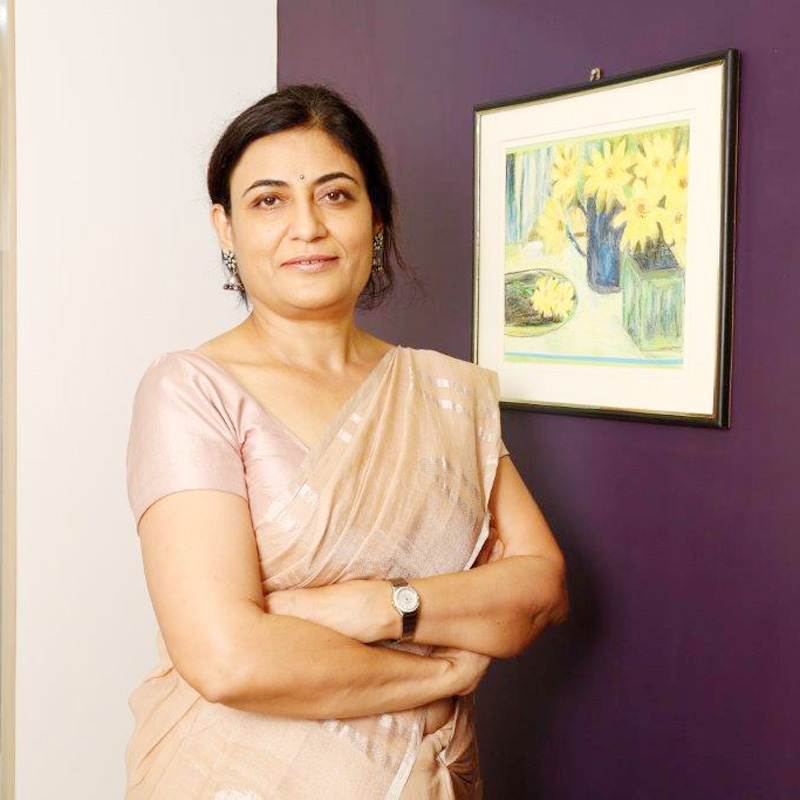
    Mumbai: Apurva Purohit, the president of the Jagran Group has announced her decision to step down, after working for over half a decade with the group and nearly 16 years with MBL (Radio City). She will remain with the organization till 30 June. 

    Purohit played a pivotal role in its transformational growth of Radio City as a leading brand in the FM radio industry. MBL went public in 2016 and is currently among the most valuable FM players in the public market. 

    “Apurva’s key strengths lie in her ability to simplify complex problems, build teams, and implement innovations and strategies in a focused and extremely effective fashion. Her understanding of consumer behavior and what drives change in people, and managing the tough business of media which requires both right and left brain thinking, and her business acumen have been invaluable to Jagran, especially in the last few difficult years. Her exit is a great loss to the Group,” said Jagran Prakashan Limited, group chief financial officer, R K Aggarwal. 

    In a statement released on Thursday, the company said Purohit helped the group to pivot from a deep-rooted reliance on its traditional print businesses to focus on new age emerging businesses. The strategies adopted under her tutelage and her emphasis on excellence in implementation have helped create strong and resilient verticals in radio, print, outdoor and digital with the ability to power through difficult economic scenarios, it added further. 

    Purohit has spent nearly 32 years in media, beginning with Lodestar to working in television, radio, print, and digital. “These three decades have given me incredible opportunities to build and scale up a diverse set of businesses – from fledgling ones like Radio City to new ventures like Times TV and supervising turnarounds in mature organizations like Zee TV. I will continue to use these experiences to mentor and guide CEOs and entrepreneurs to build valuable businesses, a role I have been doing for the past few years at Jagran and the other companies I am associated with,” Purohit said on Thursday. 

    Elaborating on her decision, Purohit added, “I have been reflecting recently, especially in this period of crisis, that it is the job of each one of us who has the ability and the resources to drive change, to worry about the economic situation around us and do everything in our power to create positive impact. This phase of my journey is about creating and funding businesses which work towards generating employment where it is needed, and at scale, a sorely needed initiative given the significant number of people who have been rendered jobless in the past year.”

  • Mathrubhumi.com wins at Wan IFRA’s South Asian Digital Media Awards 2020

    Mathrubhumi.com wins at Wan IFRA’s South Asian Digital Media Awards 2020

    Kochi: Mathrubhumi.com the digital news platforms of mathrubhumi group was recently conferred with a bronze metal at South Asian Digital Media Awards 2020 jointly presented by Wan – IFRA, (World Association of Newspapers and News Publishers,).  

    Creating its impact in the industry the metal was honoured to Mathrubhumi under Best Data Visualisation. The article titled’ Lockdownil Pranayuviny Jeevanvechu’ highlighted and explained the difference in air quality in different cities after the lockdown was implemented. The article was selected for illustrating the quality of air in various Indian cities using graphs.

    Mathrubhumi executive editor (Periodicals & Digital) Ramachandran O.R said, "This award winning visualisation is on the unbelievable air quality changes happened during lock down period in India. It is based on the air quality data published by Central Pollution Control Board on their website. They took measurements of 6 air quality elements from 120 cities in India during the four stages of lockdown and compared it with the observed values of the same elements 30 days before lockdown. We analysed the entire data and took a subset of the data having measurements from cities of Kerala and selected cities outside Kerala and made a sun burst visualisation of this data. This visualisation reveals the rise in air quality happened in the cities of Kerala during lockdown. This conveys a positive message to our readers about the reasons behind the rising air pollution of the state and the need of keeping it clean. The whole package was the result of journalistic passion ignited with technology and team work”.  

    The South Asian digital media awards presented by Wan –IFRA, recognise publishers who have adopted digital media and mobile strategies as part of their total product offering to meet the major changes in how people consume news today. Wan-IFRA digital media awards are presented in every region across the world and the winners from each region subsequently compete for the world digital media awards.   

    South Asian Digital Media Awards are presented in ten different categories including best website, audience engagement, native advertising /branded content, paid content strategy, news literacy and Covid19 projects among others. Twenty judges from across the globe evaluated the entries and selected winners. The winners will be presented trophies and shall be honoured virtually at the upcoming Digital Media India 2021 Conference on 2-4 March, next year.

  • Times Group shuts down Pune Mirror, turns Mumbai Mirror to a weekly

    Times Group shuts down Pune Mirror, turns Mumbai Mirror to a weekly

    New Delhi: The pandemic, lockdown and unprecedented economic crisis have massively impacted the media industry. It has hit the distribution, circulation, and advertising revenues of these companies.

    The latest victim of this unprecedented crisis is the Times Group, which has decided to cease the publishing of Pune Mirror and relaunch Mumbai Mirror as a weekly newspaper. Both these products will continue to have a strong digital presence.

    In a statement issued, the Times Group said, “Following months of discussions and deliberations, we have made this extremely difficult and painful decision to recalibrate our portfolio of publications. We truly value the contribution of our journalists and other staff towards building such a strong brand in a relatively short time, and thank them for their hard work and great effort.”

    It further said that not only has the newspaper industry been among the hardest-hit in terms of revenues, but it has also been weighed down by an import duty that has added to newsprint costs. With the long-held hope of a stimulus not materializing and the Indian economy is now officially in recession.

    Mumbai Mirror was launched 15 years ago. Feisty and fearless, energetic and enthusiastic, playful yet punchy, the paper lived up to its name from the day it was born, mirroring Mumbai in all its myriad moods. It was as local as Mumbai’s locals – the lifeblood that keeps the city on track and moving. The paper became such an integral part of the reader’s life, driving the narrative of the city, that it was decided to extend the experience to Bengaluru, Pune and Ahmedabad.

    Mumbai Mirror had also released several successful brand campaigns that went on to be appreciated by the industry and the audiences.

  • Mathrubhumi Group elevates Naveen Sreenivasan to head media solutions TRD

    Mathrubhumi Group elevates Naveen Sreenivasan to head media solutions TRD

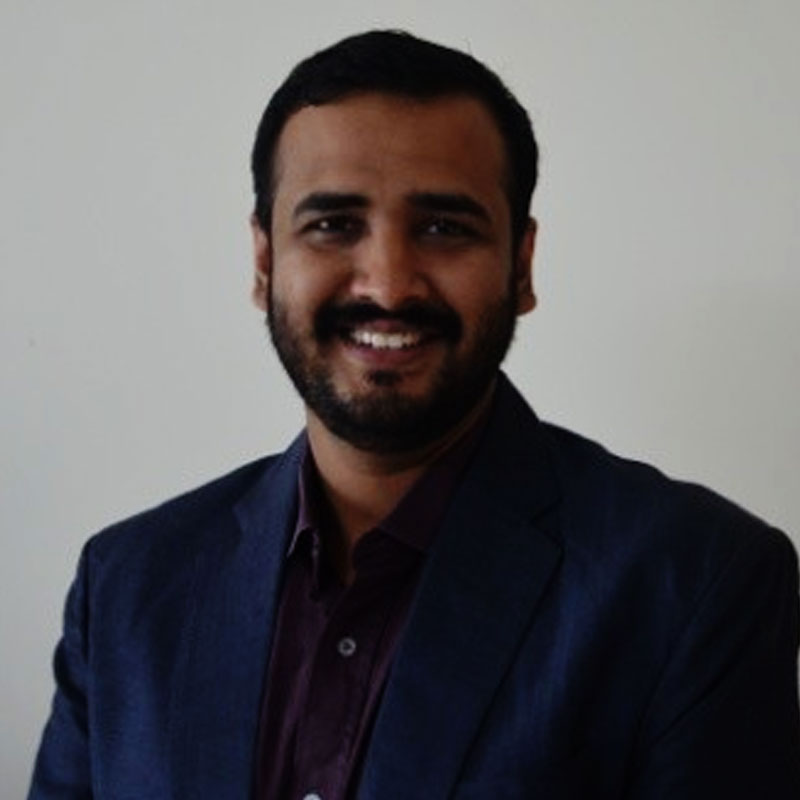
    Kochi: Mathrubhumi elevates Naveen Sreenivisan as head media solutions TRD. In his new role, Naveen will be responsible for the management of sales and marketing functions of Mathrubhumi News Television Channel, Kappa TV, Club FM, and Mathrubhumi Digital.

    Naveen Sreenivasan said, “I am really excited to take on this responsibility. While the situation is challenging, we have a great team which is geared up to face it head on. Further, as a media group, we have always deeply connected with the social fabric of Kerala and have enjoyed the trust of Malayalees, which will help us in being the partner of choice for brands; for marketing/media solutions in Kerala.”

    An IIM Lucknow alumnus with extensive experience across industries and domains, in his earlier appointment with the group, Naveen was heading as a cluster head sales for Mathrubhumi daily and is credited with generating new innovative ideas and sales driven activities for the company. He will report to Mathrubhumi Group MD M V Shreyams Kumar.

  • TOI innovates, brings out double newspaper during the weekend

    TOI innovates, brings out double newspaper during the weekend

    NEW DELHI: On 19 September, the newspaper readers were in for a surprise as there was not one but two Times of India newspapers at the doorsteps of the readers.

    Initially, the consumers were confused, but later they realised that the publisher did it intentionally to seek their attention and create a richer reading experience.

    “In our constant endeavour to give you more we’re doubling your delight quotient today. We bring you not one but two front pages” read the announcement.

    Commenting on the two newspapers on a single day, TOI president response Partha Sinha said, “The Times Group had been a pioneer when it comes to innovation. This is in line with the tradition. Our research showed that people are spending more time on the newspaper during this period and they need more reading material. We also figured out that there’s a queue of sorts in the morning and people want to share the paper especially on holidays etc. This created a great reading as well as sharing experience.

    Read more news on The Times of India

    A close up of a newspaper Description automatically generated 

    Times Group believes that this festival, people may not have enough opportunities to go out of their homes. So the home needs to made more interesting and there needs to bigger engagements from newspapers. “This is one of the many interesting ideas we have in store this festive season. This is the beginning of things to come. We have a lot planned for our readers and advertising partners – from exciting promotions, incentives to initiatives that can make a change in society. There’s lot more action coming your way” added Sinha.

    The initiative met with some resounding feedback ranging from positive sentiment to some tongue-in-cheek comments. A resident of Bengaluru, Shabari, says that for once she and her husband could read the newspaper at the same time without fighting about who gets which paper first. “With two papers and two sections of everything, it was such a peaceful morning. My Saturday began really well. Maybe I should consider ordering two newspapers every day.” she concluded. 

    In a survey across Mumbai, Delhi and Bengaluru the initiative has been appreciated up by over 75 per cent of the readers. 

  • TV tops news consumption in the UK

    TV tops news consumption in the UK

    MUMBAI: In the UK, TV is the most used platform for news (79 per cent) according to the 2018 News Consumption in the UK research report published by communications regulator Ofcom.

    TV is followed by internet (64 per cent), radio (44 per cent) and newspapers (40 per cent) among adults. However, internet is the most popular platform among 16-24s (82 per cent) and ethnic minority groups (EMGs) (73 per cent).

    Television being the most-used platform, BBC One is the most important news source and is used by 62 per cent adults in UK followed by ITV (41 per cent) and Facebook (33 per cent). When it comes to online news, social media is used by 44 per cent adults.

    BBC One is the most used source for news in Wales, Scotland and England, while UTV is most popular in Northern Ireland (NI). Facebook is the third most popular source across all nations. Welsh respondents are most likely to say they’re interested in news about their nation (55 per cent vs 49 per cent in Scotland, 37 per cent in NI and 32 per cent in England).

    One in seven adults (14 per cent) use all four main platforms for news (i.e. TV, radio, newspapers and the internet).

    Eighty two per cent of 12-15 year olds said that the news they heard from family was either ‘always’ or ‘mostly’ true, compared to 77 per cent for radio and 73 per cent for TV. Only one in three (34 per cent) think news stories on social media are reported truthfully.

  • Shekhar Gupta quits Indian Express after 25 years in two stints

    Shekhar Gupta quits Indian Express after 25 years in two stints

    NEW DELHI: Indian Express editor-in-chief Shekhar Gupta has quit the post without assigning any reason after a service of 25 years in two stints with the newspaper,


    The information was given out by Gupta himself in a mail to his colleagues in which he wrote that he would be available only till 15 June.


    Gupta had in August, last year, relinquished his corporate leadership responsibilities and quit his CEO role.


    In his e-mail, he paid a tribute to the newspaper saying there is no greater newspaper in India than the Indian Express, ‘topped by a large-hearted proprietor who pretty much distributes all that the company earns back to us.’ 


    Known for some major newsbreaks during his career, Gupta joined the Indian Express as a reporter in its Chandigarh edition in 1977. In his recent role as editor-in-chief spent 19 years with The Indian Express Group, making it a 25-year in two innings.


    He was awarded the Padma Bhushan in 2009 for his contribution to journalism.


    His letter begins with: ‘Goodbye notes can be heartwarming or heartbreaking. On a rare occasion they can be both. This is one such.’ He goes on to say that this departure is both a joy and a wrench.

    The letter sent to the entire staff is as follows:


    ‘It is time for me to say goodbyes at the Express — for the second time. The first was exactly at the same time of the year in 1983 when most of you were not born yet.

    I say goodbye now with joy because I leave behind a wonderfully vibrant newsroom with very good hands of home-grown leaders. And a newspaper that defines its value and power in terms of its depth, credibility and respect. There is no higher currency, no fairer denominator of a newspaper’s stature.

    And also a wrench precisely because we are such a fun gang, topped by a large-hearted proprietor who pretty much distributes all that the company earns back to us. As generous compensations, great working conditions, never a resource spared in pursuit of a story. No call ever to kill a story once it passes our highest and the most exacting editorial bars and filters.

    I can do no better than paraphrase what Gen. Krishnaswamy Sundarji, my friend and mentor in an area of journalism that fascinated me, had said at his farewell parade when cameras caught a hint of mist in his ever-smiling eyes. He said he didn’t know whether to sob or smile. Because he was leaving behind the world’s finest army that God gave any human the gift of leading.


    There isn’t a daily newspaper in India greater than the Express. Or a greater gift that a journalist can ask for than to lead it. I have been doubly blessed. I started at the same paper as a reporter in 1977 and worked here for a full 25 years in two innings.

    Leadership is its own teacher. In fact, the finest. It gives you an opportunity to learn from the many brilliant people that you have been given the honour to lead. I know, many of you by now would be tired of my three-example rule in editorial writing. Yet, here are my three leadership lessons.

    First, you must have a big heart. You can be a competent manager, a powerful boss, the wealthiest owner. But never a leader without a big heart. Because there is an essential moral dimension to leadership.

    Second, always connect with the universe of those you lead. In our case, it is exhilarating as, across our teams, we trawl the worlds of politics, government, economics, science, culture, cinema and sports. Even markets and advertising, our roti-dal and EMIs.

    And third, find that instinct to choose the most talented and diligent, give them space, and then trust them. I confess this defies conventional logic. Or advice on your usual leadership manual’s back-flap. But trust with your heart and not merely, clinically with your head. This is the one gift I take away from Viveck through a two-decade professional relationship, and a friendship that endures.

    This concludes my farewell sermon. So back to myself.

    When life becomes cosy for too long, you need to disrupt it. Smugness is the beginning of old age, even if you are in your teens, which I, regrettably, am not. I am embarrassed to lean on the wisdom of Neale Donald Walsh, a contemporary pop-spiritualist/philosopher so juvenile that had he been born in India, he would be a star on Aastha channel with his nutty Conversations with God. Life, he said, begins at the end of your comfort zone. I am checking him out.

    In any case, I am an incorrigible reporter and thereby a terminal adventure junkie. By the way, even at the risk of being charged with crass tribalism, I shall write something more specifically for my fellow reporters at the Express. But a bit later.

    I had said at my book release by Arun Shourie in Mumbai earlier this month that he taught me many things, but never to write anything short, an article, a letter, even a farewell note. So I can continue to indulge myself today as well. But you have to bring out tomorrow’spaper. And I must write my first in this series — my last at the Express — of First Person/Second Draft — on time. Heard that before?

    I so love you all, friends, colleagues, much younger, brighter and with a great future. I am proud of you and cherish the time we spent together. I will be generally in my office untilJune 15.There is a fair bit of pending writing. So please be forewarned: you will still have to endure the corridor addas on my compulsive breaks from spells of writing, bare feet and all.

    Postscript: One antidote to compulsive rambling is to steal a poet’s lines. Let me sign off, therefore, with Gulzar, whom we all so adore…

    Din dhale jahan, raat paas ho,

    Zindagi ki lau, oonchi kar chalo,

    Yaad aaye gar kabhi, jee udaas ho,

    Meri awaz hi pehchan hai,

    Gar yaad rahe…

    We will always be in touch….


    Shekhar”

  • INS gives ultimatum; MRUC to meet tomorrow

    INS gives ultimatum; MRUC to meet tomorrow

    NEW DELHI/MUMBAI: The revamped Indian Readership Survey (IRS) was supposed to create a new paradigm, but has instead turned out to be a nightmare for Media Research Users Council (MRUC).


    The Indian Newspaper Society (INS) today issued an ultimatum to MRUC, a not-for-profit body of advertisers, advertising agencies, publishers and broadcasters, to withdraw IRS 2013 within 24 hours or face total rejection of the findings of the survey by the publishers.


    Indiantelevision.com had reported earlier that the INS representatives would be meeting officials from MRUC today to discuss issues raised by publishers. Today’s meeting was held in two rounds: the first meeting had print publishers discuss the future course of action while the second one delivered the ultimatum to MRUC.


    The INS is unwilling to climb down from its demand for complete withdrawal of the survey within 24 hours, the contract for which was given to Nielsen.


    The INS representatives attending the meeting were unanimous in their demand for complete withdrawal of the IRS 2013 survey as the first corrective step. The publishers raised several questions regarding the methodology and mechanism based on which the survey findings were arrived at.


    To decide on what should be MRUC’s next course of action, its officials will have a meeting with the Readership Studies Council of India (RSCI), a joint body of MRUC and Audit Bureau of Circulation (ABC). INS Newspaper Society Chairman Mohit Jain confirmed the news and said: “We have also asked MRUC to conduct an extraordinary meeting tomorrow at 11.30 am and decide about today’s discussions.”


    “What happens next will be decided tomorrow by the RSCI,” says IRS Technical Committee Chairman Paritosh Joshi, who is personally saddened by the way things are taking shape.


    Sources say if MRUC fails to take action, INS may issue an advisory to its members asking them not to subscribe to IRS in the future and also not to use the mast heads of their newspapers in future surveys, and may consider supporting some newspapers going to court against the findings to get a stay order on the use of the latest IRS numbers by media planners and advertisers.


    A group of 18 publishers, which include The Times of India, Dainik Jagran, Bhaskar, India Today, Ananda Bazar Patrika, Lokmat, Outlook, Daily News and Analysis (DNA), Sakshi, The Hindu, Amar Ujala, The Tribune, Bartaman Patrika, Aaj Samaj, The Statesman, Mid Day, Nai Duniya and Dinakaran, have been vocal about their dismay with the numbers.


    The publishers felt that there was arbitrary decline in aggregate readership of certain publications. A majority of the publications are negatively affected by the 2013 survey which is based on a new methodology.


    Sources from the print industry shared the data, which shows how particular publications lost their Average Issue Readership (AIR) in a drastic way in some states.