Tag: News

  • Journalism webinars – the BBC Way

    Journalism webinars – the BBC Way

    New Delhi: During this unprecedented year, the BBC Indian Language Services have continued the trainee scheme in the form of webinars to train journalism and mass communication students who come from economically and socially marginalised communities of India. The ongoing webinars ‘Journalism – the BBC Way’ aim to educate the university students on BBC’s editorial standards of impartiality, accuracy, and factual journalism in six Indian languages: Hindi, Gujarati, Marathi, Punjabi, Telugu and Tamil.

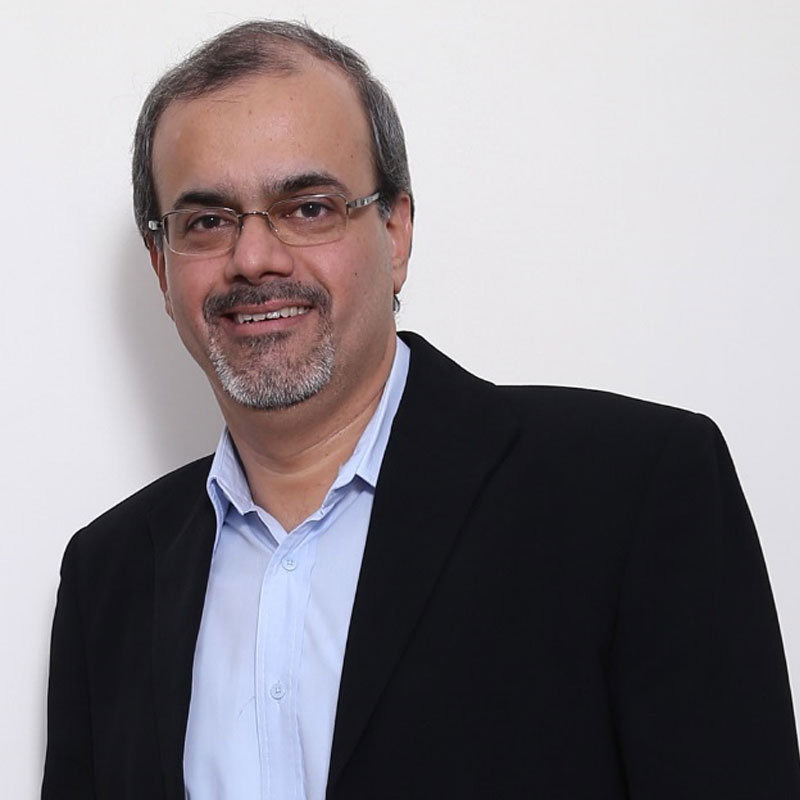
    BBC head of Indian Languages Rupa Jha said: ‘’As journalists, we must always scrutinise arguments, question consensus and hold power to account with consistency and due impartiality.  As part of our training programme during the pandemic, we  reach out to students of journalism from  socially and economically marginalised groups to train them in the most important aspect of journalism, that is, impartiality.’’

    Over the last two years, under this outreach programme a number of journalism graduates and postgraduates were selected and trained at BBC’s Delhi bureau by senior journalists and the production team. The trainees were given an opportunity to work in the newsroom with BBC’s Indian Language Services on multiple platforms such as TV, radio, digital and social media. 

    Some of the trainees from the previous two programmes described the BBC’s trainee programme as a “significant value addition” to their learning. Ananya Das, a trainee from the 2018-2019 scheme, who is now working full time with BBC Monitoring said, ‘’The trainee programme allowed me to be part of a world comprising complexity and opportunities, ideas, and new challenges to grapple with. It has sharpened my resilience and discipline to multitask in a dynamic environment. Remembering that listening is just as important as being heard, has helped me grow both personally and professionally.’’   

    Kailas Pimpalkar who contributes to the BBC Marathi Service said, “BBC is like a family to me where everyone is treated equally. Everyone works on the same platform. I came from a rural background and never thought that I would ever be able to work in an international organisation like the BBC. It is the epitome of journalism and I am privileged to work here. However, the training scheme offered by the organisation helped a lot in sharpening my journalistic and social media skills which would help me throughout my life.”

    Chitvan Vinayak a trainee from the 2019-2020 Scheme who now works with another renowned media outlet said: “BBC Trainee programme was an edifying one since it helped in 360-degree skill development in the field of journalism. Learning from the best gave me a hand in mastering the ethics of journalism. The programme focussed on social media and that sharpened my skills. BBC provided me with a way to polish story writing skills and also learn the art of video presentation and its making. I got an opportunity to work with another organisation of national repute because of what I learned at BBC.”

  • TRP scam: Republic TV CEO Vikas Khanchandani arrested, remanded to Mumbai Police custody till December 15

    TRP scam: Republic TV CEO Vikas Khanchandani arrested, remanded to Mumbai Police custody till December 15

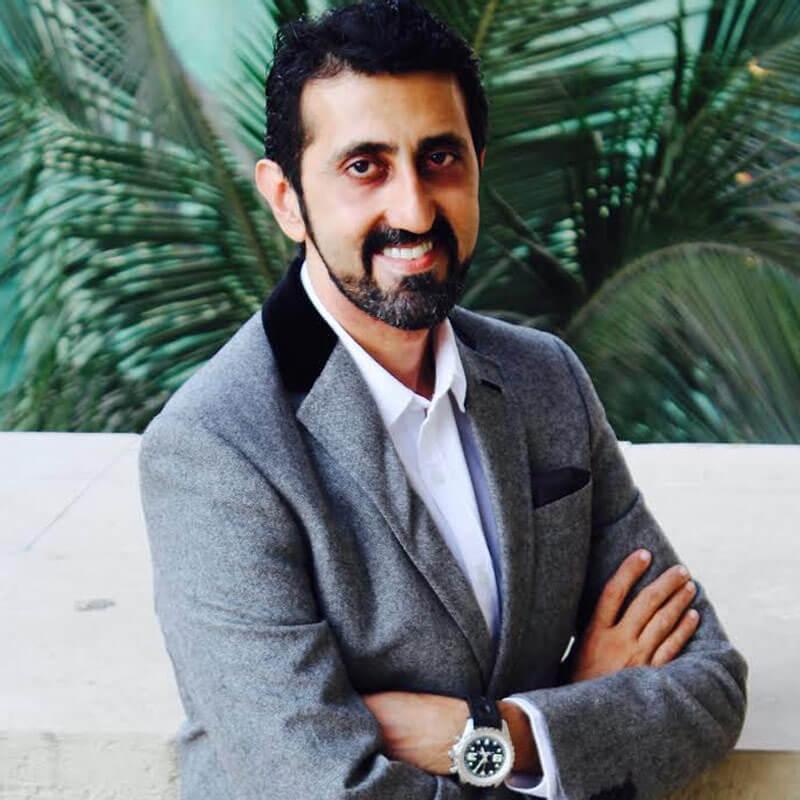
    New Delhi: On Sunday, Mumbai police arrested Republic TV CEO Vikas Khanchandani in the TRP rigging scam. A Mumbai court has remanded Khanchandani for two days police custody. This is the thirteenth arrest in the case.

    Earlier this week Khanchandani and CFO Sivasubramanian Sundaram moved sessions court, Mumbai seeking anticipatory bail in the fake TRP scam case registered by the Mumbai police apprehending.

    The police submitted before the court that Republic network in order to increase its TRP (TRP) paid Rs 15 lakhs monthly to ensure that more viewers watch their channels – Republic TV (English) and Republic Bharat (Hindi).

    Media reports say that police found the alleged amount in possession of Abhishek Kolawade, accused of taking money from the channel for carrying out activities to increase the viewership and thereby the TRPs of the channel.

    After interrogating ARG Outlier AVP Ghanshyam Singh, the police concluded that Singh was allegedly being directed to carry out illegal activities to increase TRPs for their channel by Republic TV COO Priya Mukherjee, who in turn was being instructed by Khanchandani.

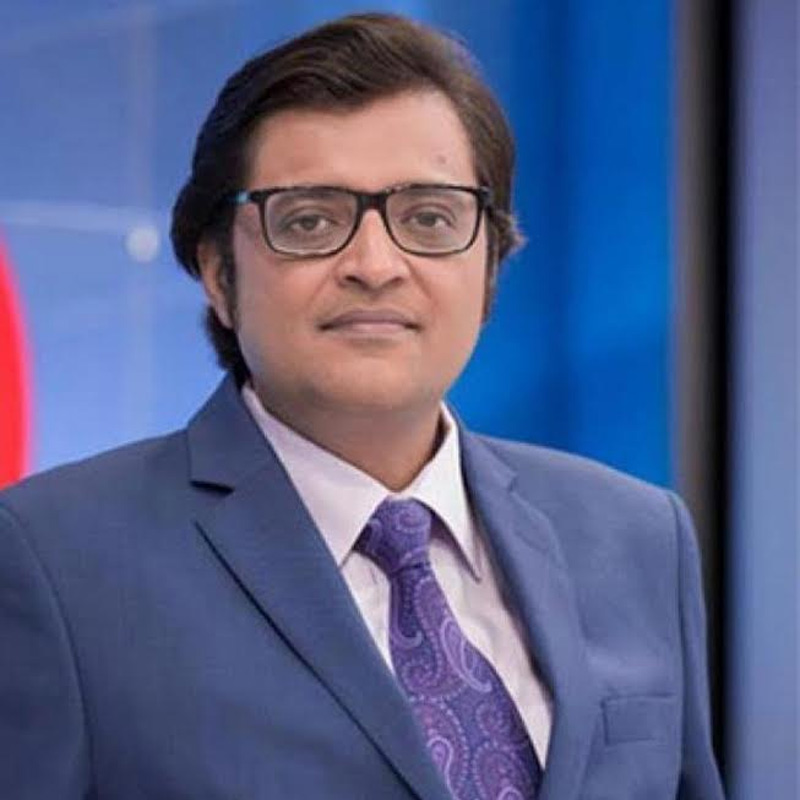
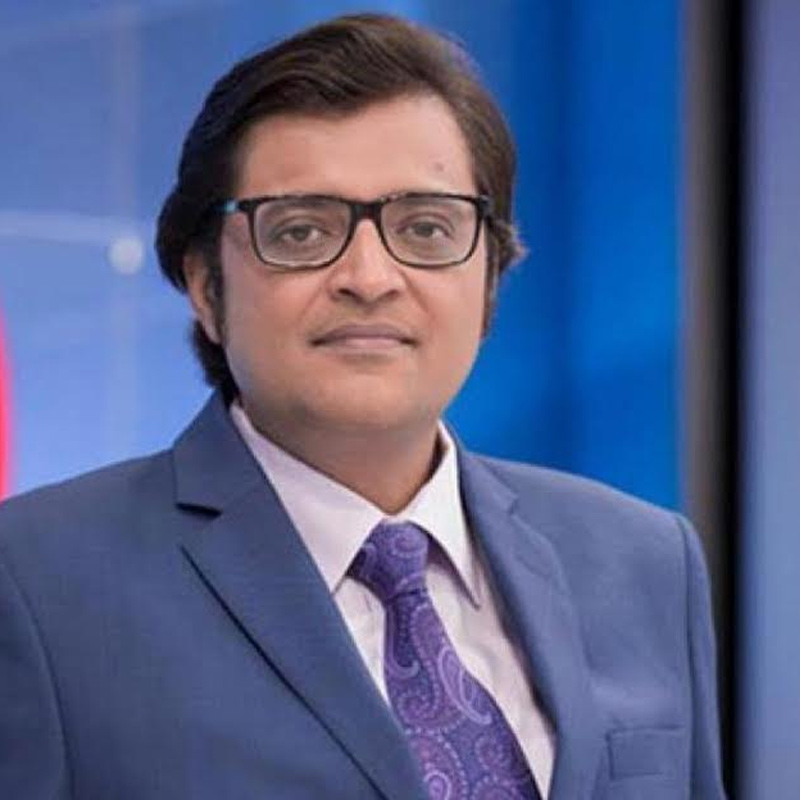
    The remand order for Khanchandani was sought on the above points. His counsel has argued that Khanchandi was targeted because Arnab Goswami is having a dispute with the Maharashtra government for several reasons. It was also pointed out that the arrest was deliberately done on Sunday, a day before his anticipatory bail application was listed for hearing before the Mumbai sessions court, so as to defeat his anticipatory bail application.

    News Broadcasters Federation has condemned the arrest and pointed out that it is highly alarming on the law and order situation in the state. It has urged the Maharashtra government to follow the law of the land. It urged PMO to immediately set-up and independent neutral national agency to investigate any allegations of professional misconduct by journalists, executives, and owners of the media company, in order to prevent harassment

    https://twitter.com/TweetsNbf/status/1338121311646670848

    Mumbai Police unearthed the TRP scam on 8 October after rating agency Broadcast Audience Research Council (BARC) filed a complaint through Hansa Research Group, alleging that certain television channels were rigging TRP numbers. Hansa had been tasked with installing barometers, which record viewership data at sample households.

    Mumbai Police Commissioner Param Bir Singh then claimed that Republic TV and two Marathi channels Box Cinema and Fakt Marathi- were involved in manipulating TRPs.

    Since then several arrests have been done in the case and there has been a lot of developments both within and outside of the courtroom. 

  • #ActNow for mental health awareness, says Times Network

    #ActNow for mental health awareness, says Times Network

    MUMBAI: In 2017, 197.3 million people had mental health disorders in India (lancet psychiatry 2020), implying that while at least 14 per cent Indians are living with such issues, an alarming 86 per cent is behind a veil of ignorance. India’s mental health landscape presents a grim reality of poor implementation of mental health policies, age old discriminatory attitude towards those suffering from mental health illnesses, compounded with shortage of qualified personnel and low perceived need for care. With the Covid2019 outbreak triggering implications that reach far beyond the direct impact on people’s physical health, there has been an exacerbated spiralling of tension and anxiety, further increasing the load on India’s overtaxed mental health machinery.

    Addressing the rampant stigma and discrimination around mental health problems, Times Network has launched #ActNow, an initiative to spread awareness, normalise conversations around the issue and sensitise people to be responsive to the mental health needs of others.

    A special campaign film #ActNow  takes an outside-in view of the problem and targets the ‘people around’ to act, rather than the one living with mental health issues. Mirroring how societal structures treats a person living with a mental ailment with ignorance, pity, annoyance and utter disbelief, the film unravels the state of mind of someone who is besieged by misinterpreted advice of his near and dear ones as he fights a lone battle. A clarion call to realign our minds to escape from the entrapment of the prevalent social stigma and recognize mental health as an existential crisis for humanity, the impactful film urges public at large to remain receptive to the deteriorating mental health of people around and take appropriate course of action to offer support without prejudice and fear. The initiative launched on a special edition of Mirror Now’s Urban Debate, hosted an expert panel that analysed and discussed the deteriorating condition of mental illness in India.

    The initiative which encourages the essential steps of acknowledging the signs, choosing the right words and urging people to talk to an expert, draws relevance from Times Network’s nationwide research study commissioned to Nielsen India titled, ‘How Urban India Perceives Mental Health’. The study indicates that while awareness levels related to mental health ailments have gone up recently, there is a pressing need to disseminate the factual information to tackle the strong undercurrents of stigma and lack access to quality mental healthcare. Mental health conversations remain the single most important detriment and solution for this issue. The quantitative study that examines the dynamics, culture, mindset and perceptions of the people towards mental health was conducted through three prolonged evaluations based on secondary research, in depth interactions with mental health experts and a survey with India’s cross-section of urban population.

    Key findings as follows:

    ·         70 per cent of urban India claim to suffer/know of someone who has suffered from a mental health ailment

    ·         Among people who are suffering/know someone suffering from mental health ailment, depressions come out as the most prominent at 58 per cent.

    ·         76 per cent perceive that “People are not open to talk about mental health to everyone” and there is still shame and stigma associated around mental health ·          52 per cent of the people face problems in accessing a mental health professional and 63 per cent perceive that there is difficulty in procuring medication

    ·         54 per cent people are not completely aware about the diseases covered in a health insurance policy and 47 per cent of the people are unaware of the government mandate for health insurance policies to cover treatment of mental health ailments

    ·         57 per cent of urban India considers financial pressures to be the leading cause of negative impact on mental health

    The study took a sample size of 2,440 people across Mumbai, Delhi, Chennai, Kolkata, Hyderabad, Bangalore, Jaipur, Patna, Ahmedabad, Mangalore, Vishakapatnam, Bareilly, Guwahati, Raipur, and Mangalore.

    Times Network president – strategy and business head – news and English entertainment cluster Vivek Srivastava said, “The new normal has triggered anxiety and deepened emotional turmoil, consequently leading to a quieter but concerning rise in the number of people grappling with mental health issues. ActNow is our endeavour to spread awareness and drive dialogues to break barriers around the mental health issue. Through our multi-faceted campaign, we urge the society at large to look beyond the happy faces that conceal the sufferings and encourage healthy and judgement-free conversations on mental health.”

    Refining and bringing a comprehensive view on mental health with the expert voices, the Network has onboarded Jaslok Hospital as the knowledge partner. Psychologists and mental experts from the hospital will provide critical inputs and steer the campaign with relevant information and decode the complex challenges associated with mental health crisis. Fostering positive mental health and evoking a sense of response amongst the millennials, Times Network has partnered with youth marketing firm, Viral Fission to drive community engagement through student advocates of mental health.

    #ActNow will be driven across Times Network channels and digital assets, print sds across The Times of India daily and a dedicated page on the network's digital news destination, Timesnownew.com, which will host a curated series of articles on mental well-being.

  • NBSA directs Zee news channels to apologise Rakul Preet Singh

    NBSA directs Zee news channels to apologise Rakul Preet Singh

    NEW DELHI: The News Broadcasting Standards Authority (NBSA) has found the news channels Aaj Tak, India TV, Times Now, Zee News, Zee 24 Taas, Zee Hindustani, News Nation, India Today and ABP News at fault for putting out slanderous reports against Bollywood actress Rakul Preet Singh and linking her to drugs.

    The NBSA has directed three channels from Zee Network to air public apology, while other channels have been issued a warning with respect to use of taglines and hashtags, and have been cautioned against telecasting unverified news.

    The NBSA also provided the three Zee news channels with a statement that had to be aired on December 17: “We apologise for the manner in which the hashtags/taglines and images were telecast, while reporting the ongoing investigation of Rhea Chakraborty's narcotic drugs case. The telecasts violated the code of ethics and broadcasting standards requiring broadcasters to maintain neutrality, impartiality, accuracy and fairness, the specific guidelines covering reportage and specific guidelines for reporting court proceedings. We clarify that there was no intention on our part to sensationalise the issue or to prejudice the investigation in any manner. We reiterate our commitment to uphold every individual's right to fair trial and reputation, while reporting about matters under investigation.”

    The channels have been further directed to remove any and all offensive videos on different platforms and report the same within seven days.

    Several channels used titles/headings like “The Rhea Drug Circle”, “Drugs Mandli”, “Theeno Bud leetey the”, “Took Drugs” , “Drugs se Rakul Ki Preeti”, “Bollywood Drug Connection” etc for Rakul Preet Singh, which has been roundly criticised by the regulator.

    The NBSA did not find the story run by Times Now to be objectionable but found its hashtags and taglines to be offensive. In the case of India TV, the regulator noted that pictures of the actor "dancing, smoking, and of her hips were objectionable, placed out of context and misleading." The taglines used by India Today and Aaj Tak were deemed "out of context…with no link with the news which was reported."

    The reports were run by the channels in their coverage of the Sushant Singh Rajput case. The channels claimed that Rhea Chakraborty gave this information, however Rhea denied sharing any such information.

    Singh had moved the Delhi high court in September seeking action against these news channels under the Programme Code, framed under the Cable TV Networks Regulation Act. The court, in turn, had directed the NBSA to look into the actor's complaints against the channels.

  • TRP row: SC rejects Arnab Goswami’s plea for CBI probe

    TRP row: SC rejects Arnab Goswami’s plea for CBI probe

    NEW DELHI: The Supreme Court has refused to entertain a petition filed by Republic TV and its editor-in-chief Arnab Goswami seeking protection for all the employees of the news channel from coercive action by Maharashtra police.

    The channel had filed a plea in the ongoing TRP scam investigation that was unearthed by Mumbai police on 8 October.

    The plea alleging continuous hounding of Republic TV employees by the Maharashtra police and seeking a probe by central bureau of investigation (CBI) was withdrawn after a bench headed by justice DY Chandrachud remarked that it was "ambitious in nature.”

    Chandrachud said, "This petition is ambitious in nature. You want Maharashtra police not to arrest any employee and transfer to CBI. You better withdraw this."

    Goswami's counsel, senior advocate Milind Sathe, then chose to rescind the plea after the court granted liberty to Goswami and Republic TV to move appropriate forum for relief.

    The fake TRP scam came to light in October when rating agency Broadcast Audience Research Council (BARC) filed a complaint through Hansa Research group, alleging that certain television channels were rigging TRP numbers. Hansa had been tasked with installing barometers, which record viewership data at sample households. 

    Mumbai police commissioner Param Bir Singh then claimed that Republic TV and two Marathi channels – Box Cinema and Fakt Marathi – were involved in manipulating ratings. 

    Since then several arrests have been made in the case and there has been a lot of developments both within and outside of the courtroom.  

  • Arnab Goswami seeks quashing of FIR against him in abetment case

    Arnab Goswami seeks quashing of FIR against him in abetment case

    NEW DELHI: Republic TV editor-in-chief Arnab Goswami’s legal nightmares show no signs of abating. He has been at loggerheads with police officials and the government of Maharashtra for a while now. Currently, Goswami is embroiled in two different cases — the TRP manipulation scam, and abetment to suicide case of interior designer Anvay Naik and his mother Kumud Naik. The industry has witnessed high voltage drama for the last two months with a litany of FIRs, arrests, lawsuits, hearings, and mud-slinging.

    In the latest development, Goswami has filed an interim application before Bombay high court (HC), seeking directions to be issued to the chief judicial magistrate at Alibaug to not take cognisance of the chargesheet filed by the Raigad police in the abetment case. He has petitioned for a stay on all further proceedings, including the investigation in relation to the chargesheet filed.

    For the record, last week, on 5 December, Raigad police filed a 1,916-page-long chargesheet before the Alibaug court implicating Goswami and two other accused in the same case. The chargesheet includes evidence from 65 witnesses. Media reports said that police has also submitted the forensic reports that have matched the handwriting in the suicide note, claiming it was not written under any pressure.

    Goswami’s application seeks quashing of the FIR against him in the case and he has moved the court for an early listing of the plea and the interim applications filed in it.

    It must be noted that he has also filed an application — a day before the filing of the chargesheet — with the Bombay HC seeking a stay on the filing of the chargesheet, and on any further probe into the abetment of the suicide case. In his plea, Goswami has also sought the transfer of the case to the central bureau of investigation (CBI) or any other independent investigating agency outside the purview of Maharashtra government.

    In the latest application, he has claimed that despite a pending application by him, the Raigad police went ahead and filed a chargesheet without giving any notice to him or giving him a copy of the same.

    Goswami’s lawyers argued that the filing of the chargesheet is a “complete subversion of due process given that it comes within hours of a political instruction being declared publicly by the home minister of Maharashtra, Anil Deshmukh.”

    They further pointed that the Raigad police acted out of pure malice and malafide intent by filing the chargesheet against him so as to render his earlier application moot.

    Goswami has submitted that the observations made by the Supreme Court in the judgment of 27 November “upholding due process and personal liberty, fell on deaf ears of the machinery in state of Maharashtra and it is proof of the desperate predetermined conspiracy in operation against him.”

    He concluded his plea by submitting that “the filing of a malicious chargesheet in the present matter pending the hearing of his plea is aiding the instrumentality of the state which is being weaponised for using the force of criminal law against him.”

    For the record, Goswami and the other accused were arrested by the Raigad police earlier in November and were remanded to judicial custody for 14 days. After the Bombay HC refused bail, the supreme court granted him interim release pending the disposal of the proceedings before the high court and for a period of four weeks from the date of the judgment of the HC.

  • LiveU & Grass Valley to offer cloud solutions for remote live productions

    LiveU & Grass Valley to offer cloud solutions for remote live productions

    NEW DELHI: LiveU and Grass Valley have joined forces to offer a pre-integrated cloud-based solution for remote live productions, enabling customers to simplify their processes and automate live and non-live news and sports productions in an efficient, agile and customisable workflow.

    LiveU’s co-founder and COO Avi Cohen, said, “With the ongoing shift to cloud production, we are committed to helping our customers maximise these new efficiencies, delivering our live video solutions as-a-service with pre-integrated workflows. Our collaboration with Grass Valley offers customers a highly efficient, flexible and scalable set of tools for going live from the field, providing greater flexibility to adapt to the needs of each and every story, giving a richer viewing experience. Remote live production can be orchestrated from anywhere via LiveU’s and Grass Valley’s integrated cloud environments, or using a hybrid model of choice, integrating high-quality live video feeds with smart automated production capabilities.”

    The collaboration facilitates live production, and news and asset management, in specific ways, helping to simplify the processes and speed up live broadcasts with compelling content. High-quality live feeds can be sent from any of LiveU’s field units for remote switching and live production using LiveU’s cloud solution with Grass Valley’s GV AMPP (Agile Media Processing Platform), the first cloud-based SaaS platform for broadcast to fully leverage the power of elastic compute. Built for the cloud from the start, GV AMPP is specifically designed to overcome broadcasters’ long-time reliance on costly and inflexible hardware-based media systems and provides a modular approach to everyday media workflows.

    In addition, live feeds from LiveU units can be integrated into the GV STRATUS news and asset management tool to streamline the remote news gathering and production workflow. Utilising LiveU’s live video metadata to automate the process and provide metadata enriched assets within GV STRATUS, users can quickly search, browse, edit and publish content – live or file – using a range of smart search criteria and via the smart rules’ engine.

    Grass Valley CEO and president Tim Shoulders said, “As our customers strive to deliver the captivating content and high production values that consumers demand, the GVTA gives them access to trusted solutions that are tested and configured to ensure interoperability with Grass Valley’s solutions – one of the major hurdles our customers face when deploying multi-vendor systems.”

  • ABP Network moving beyond usual ad spots through integrated content

    ABP Network moving beyond usual ad spots through integrated content

    KOLKATA: Over the years, ABP Network has earned a place in the country as a reliable multi-lingual network. With the winds of change, it has strengthened digital presence as well as clocked over four billion views on YouTube, more than ten million followers on Twitter and around 21 million on Facebook. Along with high connect on social media platforms, it reaches a number of users through its app, which boasts over ten million downloads.

    No doubt brands are drawn to the network’s platforms to reach their target audience across the country. It is not only traditional businesses who usually spend on news category that are choosing ABP Network, but new-age ventures are also collaborating with it. For instance, leading streaming platform Amazon Prime Video has yielded good results, courtesy out of the box campaign.

    The OTT platform wanted to promote its big hit Inside Edge season 2, with a view to go beyond commonplace marketing. Rather than promoting it as a returning season, the platform wanted to highlight it as a new IP in line with the tagline “Game beyond the game” without revealing too much about the show. ABP Spotlight, the creative content team of ABP Network, identified the theme of crime syndicate, dope, drugs similar to its own crime show Sansani.

    Taking an innovative approach, Spotlight decided to take the same promotional route as the one for Sansani. The show’s anchor Shrivardhan Trivedi was featured to tap into his strong follower base. Along with the usual promos run on the network, trailer snippets of the Prime Video show were run in the background while Sansani was on air. The show appeared an integral part of the latter thanks to the co-relation in the themes. No forceful changes or inclusion in anchors delivery, style and script were undertaken. 

    Read more news on ABP News 

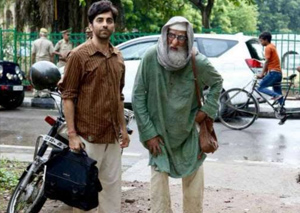
    The trust built in the first integration brought Amazon Prime Video back to ABP Network for the digital premiere of Gulabo Sitabo starring Amitabh Bachchan and Ayushman Khurana. Breaking the myths of news channels being used only for driving frequency, ABP Solution team took creativity one step ahead through content integration. It was not easy as the country woke up to Covid2019 shock right ahead of the movie’s release.

    Along with a massive change in content consumption trends, the lockdown compelled brands to alter the usual movie marketing strategy. Amazon Prime Video team did not agree to the strategy planned out after the first brief. The ABP creative team tweaked the first brief to come out with an innovative solution.  Instead of running promos featuring lead actors, ABP Spotlight opted for animated characters to meet the requirement of unique brand integration.

    While producing an animated capsule using lead characters played by Amitabh Bachchan and Ayushmann Khurrana, there were other challenges as the industry was still adjusting to the deadly crisis. The animation agencies found it difficult to deliver it in a record time of five-six days along with the challenge of finding the right dubbing artists to match the exact voice of the lead actors. Overcoming all the challenges, the ABP team was able to deliver the creative in a timely manner. Without any change in the format of usual content, the animated version of two lead characters were interviewed by Shrivardhan Trivedi, along with snippets of the movie running in the background. The 135 second-long vignette was aired on 11 June 2020. The experience was as immersive as a piece of news content.

    Moving away from usual ad spots, ABP Network has successfully implemented new-age marketing for Amazon Prime Video. While news networks were not being looked as an ideal option for content integration until few years ago, the effective ABP-Prime Video collaboration clearly indicates that times are changing.

  • 71% Indians trust their news sources, survey reveals

    71% Indians trust their news sources, survey reveals

    KOLKATA: According to the global survey by The Trust Project and Ipsos titled ‘Trust Misplaced?’, 71 per cent urban Indians and 64 per cent global citizens believe they have easy access to news from sources they trust. At least six in 10 urban Indians (59 per cent) say they read news they can access for free. 67 per cent global citizens hold this view.

    “Media entities are highly evolved in India. There are trusted sources for news; media houses that come with ethos and values and have built reputations over many decades of news dissemination, beating the odds. Further, Indians look at various sources for news and free news is readily accessible across social platforms and digitally. Now news can be accessed at a mere click and it has become easier to stay updated, going beyond the conventional sources,” Ipsos India CEO Amit Adarkar said.   

    Fake news and trust:

    Interestingly, more number of Indians say they can tell real news from fake news – at 60 per cent believe this; but they have less confidence in the ability of people in general to be able to spot real news from fake – only 47 per cent urban Indians believed they could.

    Indians say they pay for news from sources they trust (57 per cent) and are willing to pay for news from the sources they trust (56 per cent).

    The survey also shows that urban Indians are skeptical of news disseminated by influencers, bloggers, leaders, celebrities on social media – they tend to trust news shared by people they personally know – more so from friends and relatives (58 per cent) as opposed to news shared by bloggers, celebrities, leaders (48 per cent) on social media. Global citizens are more circumspect in news consumption – four in 10 (42 per cent) will trust people known personally, while only one in four (24 per cent) will trust news shared by bloggers, celebrities, and leaders.

    Global citizens (46 per cent) and urban Indians (54 per cent) believe their citizens are targeted by other countries with disinformation and fake news.

    “Disinformation and fake news can lead to discord and incite citizens and are in poor taste; sadly, a number of countries face it. Legal action can act as a deterrent,” added Adarkar.

    Where is news read most?

    One thing is clear, Indians are globally one of the largest consumers of news. Conventional media vehicles and new ones are all leveraged for staying updated.

    Daily news is accessed most via TV (78 per cent), social media (77 per cent), news apps (64 per cent), news sites (57 per cent), print – newspapers and magazines (56 per cent), and radio (23 per cent).

    Notably, India has the world’s largest number of those accessing daily news via print.

    And TV for daily news is very popular in Japan (76 per cent), Italy (74 per cent) and Turkey (73 per cent). 

    “News is accessed from multiple sources to stay updated. Some news is accessed on the go, some read for finer nuances and some watched to further get the perspective. It is not about one over the other. Each has its own place in the consumer’s information needs, in times of instant gratification,” said Adarkar.  

    Online adverts – few takers

    One in three global citizens (35 per cent) and two in five (42 per cent) urban Indians say they use software or apps that block online adverts. Global citizens (66 per cent) and urban Indians (69 per cent) say they try and avoid online adverts as far as possible.

  • Prabhu Chawla returns to India Today Group

    Prabhu Chawla returns to India Today Group

    New Delhi: In a major development, India Today Group has brought back veteran journalist Prabhu Chawla as editorial consultant for TV Today Network. He will be starting with the group from 1 December 2020.

    He will be seen weekly on Aaj Tak where he will be interviewing the most prominent personalities of the country. Chawla will also lend his expertise to political debates as and when required.

    “I am looking forward to seeing his no-holds-barred style, Prabhu, and working with a much-valued colleague,” India Today vice-chairperson Kalli Purie said.

    Chawla started his career with India Today Group and then moved on to join The Indian Express. He later rejoined ITG and was last serving as group editorial director and editor India Today (languages) when he decided to move on from the group in 2010. He was there for over 14 years.

    He has over four decades of experience in the news business and was most popularly known for his show Seedhi Baat where he interviewed some of the most popular personalities of the country including politicians, actors, sportspersons and others.

    Chawla has been associated with several major publications.

    He has won several accolades for his journalism and was awarded Padma Bhushan in 2003 by the president of India.