Tag: News

  • Rediscovering Excellence in Journalism: Journalism Mentor

    Rediscovering Excellence in Journalism: Journalism Mentor

    "In journalism, there has always been a tension between getting it first and getting it right," so said veteran American journalist & Pulitzer Prize winning syndicated columnist Ellen Goodman.

    In today‘s highly commercialised world, this conflict has become even more crucial. The very profession of journalism is being looked at through a cynical lens. It is hence, imperative that young aspiring journalists receive the right guidance and training so that they uphold the highest principles of journalism without compromising on newsworthiness and immediacy.

    Journalism Mentor (JM) (www.journalismmentor.in) is a-one-of-its-kind mentorship based programme for post graduate journalism in India which promises to provide that guidance to aspirants. The institute, located in Mumbai, was founded four years ago by veteran journalist Shishir Joshi and Dr. Aloke Thakore as a not-for-profit organisation.

    The institute was recently featured in a New York Times‘ article on journalism education in India. It is perhaps the only institute in India which places no age or no language barrier.

    Interestingly, both founders do not take any salary and are working for the sheer passion that drives them for this cause. While there are some students who pay the entire fees (in three installments), there are others who pay fees once they start earning their salaries. In some cases fees have been waived off in entirety, on humanitarian grounds.

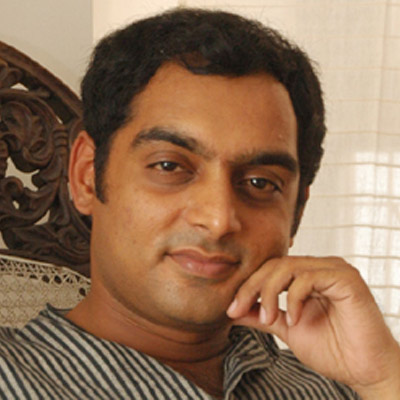
    Shishir Joshi

    Speaking exclusively toindiantelevision.com, Journalism Mentor programme director Shishir Joshi says: "Both Aloke and I felt that the gap between what is taught and what skills are needed is wide. Those entering the profession, whether in print or television, or multimedia, flounder. The need for proper education is more than ever. Senior journalists have shared this need and some of them are supporting this initiative as mentors. For me teaching has been an abiding interest and we have ensured that this programme delivers the best in journalism education."

    JM has an impressive line-up of visiting faculty which is paid even more than existing standards Joshi revealed. Shillong Times editor & Padamshree Patricia Mukhim, Outlook editor Krishna Prasad, Mumbai BBC bureau chief Zubair Ahmed, Divya Marathi chief editor Kumar Ketkar, former NDTV bureau chief South & currently The South Reports editor TS Sudhir are some of the reputed personalities associated with it.

    JM Foundation partners Martin Luther University to reach Shillong for a workshop on Journalism, citizens role, Media ethics and practice.

    The institute is an off-spring of the JM Foundation for Excellence in Journalism which is engaged in journalism education, archiving and journalism research. The foundation has trained more than 600 citizen journalists across five states and will soon be announcing its expansion to the North East.

    In addition to this, JM programme has now partnered with Martin Luther Christian University in Shillong, India, which will accept Journalism Mentor credits from students who wish to pursue a postgraduate diploma or masters in journalism.

    Joshi admits it has been a struggle at times. He elaborates: "It is not easy to sustain an organisation like this. When we started, we dipped into our pockets. We do have our limitations if we have to invite a guest speaker from outside of Mumbai as we cannot afford to bear their travel or stay costs at times."

    Joshi added that their dependence on fees from students is high. Sometimes other not-for-profit projects of the foundation help make ends meet for JM.

    "We are now a registered charitable institution and are approaching CSR (Corporate Social Responsibility) divisions of various institutions to come forward and support us, through endowments or even sponsoring the education of students. Many of our books have been donated by well wishers."

    Apart from total fee waiver for genuinely needy students, JM offers two other scholarships; one for the North Eastern states and one for Jammu and Kashmir.

    The institute maintains a clear and transparent approach for donation and has it displayed as a wishlist on its websitehttp://journalism.org.in/support/

    JM is gaining prominence and recognition gradually. The official Facebook page has a commendable twenty thousand likes. Besides, students from well informed backgrounds like young graduate Parth MN, son of renowned journalist Nikhil Wagle, are opting for this over other popular institutes.

    Joshi reasons: "What sets us apart from the hordes of other institutes is our approach. We will not induct more than 25 students a year and we give special attention to the skills and needs of each student. Besides, the faculty is well connected with the industry. As a result, after the programme, our students get placed in reputed organisations."

    JM has had 22 graduates over a span of three years and with the exception of three, all students have been employed in news organisations like NDTV, Times Now, Mumbai Mirror, The Telegraph, Careers 360, Hindustan Times, Mid-Day, The Afternoon Despatch & Courier, Deccan Chronicle, Lokmat Times, Dainik Bhaskar, Saamna and Mahanagar.

    The 14-month programme also includes 15 day project of conflict reporting which gives students a real insight into the practical and challenging demands of this profession. "We do not guarantee jobs but we definitely guarantee valuable education", Joshi concludes.

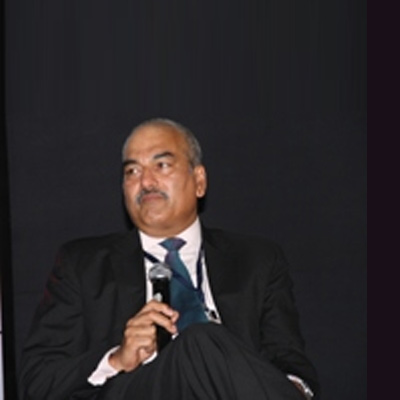
  • Media’s independence needs to be zealously guarded: Narayan Rao Executive Vice Chairperson at NDTV

    Media’s independence needs to be zealously guarded: Narayan Rao Executive Vice Chairperson at NDTV

    Freedom of the media is a fundamental component of a vibrant democracy. It is what differentiates a democracy from a dictatorship and all forms of totalitarianism. Indeed a democracy cannot function without a free media while the latter can only exist in a democratic state.

    As Lord Northcliffe, owner of The Times during the First World War once said, “News is something someone somewhere wants to suppress”. As a free media in the world‘s largest democracy, it is our job to ensure that nothing ever gets suppressed. Also, dissemination of news is really the performance of a public service. We seek to inform and educate and to do it with independence….from Government and from revenue considerations. Our responsibility is not to the Governors but to the governed.

    While a free media is an absolute need, it is also necessary to stress that with freedom comes responsibility. Responsibility to ensure that one is always accurate and credible and respectful of the privacy of an individual.

    It is in this need for freedom with responsibility that talk of regulation comes up every now and then. I would like to state with all the emphasis at my command that the only regulation that is acceptable in a democracy is self regulation. And by this I do not mean that each news organization regulates itself by following its own editorial policy and standards which would naturally be of varying levels from channel to channel, but to have a structured self regulatory mechanism that watches over a common expectation of what constitutes good, responsible journalism.

    While a free media is an absolute need, it is also necessary to stress that with freedom comes responsibility. Responsibility to ensure that one is always accurate and credible and respectful of the privacy of an individual.
    _____****_____


    I honestly believe that the News Broadcasters Association (NBA) has made remarkable progress in this regard. We created a common code of ethics, a wonderful document of journalistic good practices and expectations, which is available for all to see on the NBA website. We then set up a News Broadcasting Standards Authority (NBSA) with a Chairperson and several eminent members to monitor and ensure that this code is followed by all our member channels. Our first Chairperson was the most ethical, learned and highly regarded, late Justice J S Verma. He ensured along with the eminent members, that the NBSA is truly independent. It also needs to be noted that the NBSA is the “standards authority” and not merely the complaints authority.


    The aim is to improve standards of news broadcasting over a period of time and we are well on the path to realizing that aim. In probably the only such example of its kind in the world, every member channel carries a scroll several times a day, exhorting viewers to approach the NBSA if they have any complaint against a channel. The decisions of the NBSA can be seen on the NBA website and over time action has been taken against several of our channels. We also have some Editors sitting on the NBSA for fixed terms and on a rotational basis as it is believed that self regulation flourishes and standards improve when it is known that, among others who will look at the quality of your content, will be your own peers.

    We will miss Justice Verma immensely. But the show must go on and I am honoured and delighted to announce that Justice R V Raveendran, former Judge of the Supreme Court of India, has very graciously accepted our invitation to be the next Chairperson of the News Broadcasting Standards Authority.

    Justice Raveendran brings with him incredible legal and judicial ability, a wealth of experience and outstanding reputation in upholding democratic institutions and values through strict and fair implementation of the law of the land. He very ably takes the baton from the late Justice Verma to chart out the next leg of our mission to establish that the media must function through structured self regulation.

    In such a robust system where is the need for a media council? With all due respect to our Parliamentarians in the Standing Committee and some others, very erudite people who have pushed for such a Council, my counter question to them is what for? When we have the NBSA which is doing such magnificent work in an independent and strict manner, what is it that a media council will do? Who will appoint such a media council? Government? How can that be acceptable?

    We will miss Justice Verma immensely. But the show must go on and I am honoured and delighted to announce that Justice R V Raveendran, former Judge of the Supreme Court of India, has very graciously accepted our invitation to be the next Chairperson of the News Broadcasting Standards Authority.
    _____****_____

    The media is the fourth estate, the fourth pillar of democracy, and has to be independent of the other three. And like the three zealously guard their independence of each other and safeguard their positions, as they must and should do, so should the media zealously guard its independence.

    That in part means, no Government appointed body to oversee the media. 
    Some complain that the NBSA does not have statutory powers. I would urge that they only take a look at the NBA website to look at the powers that the NBSA has been given. These range from censure to asking offending channels to carry apologies, retractions and corrections on the same slot where the offense was first carried (if, for example, the offending story was in the 9 pm news, the retraction/apology has to be carried in the 9 pm news as well), a fine that can be up to Rs one lakh, and finally, the power to recommend to the licensing authority that the license of a particular channel should be suspended, even cancelled. Isn‘t that power enough?

    (To take a dekko at some of the decisions that the NBSA has taken click here)

    Also, it needs to be noted that in the Cable Act, when it comes to the advertising code, the Advertising Standards Council of India (ASCI) has been mentioned as the standard under which advertising can take place. Similarly, for programming, why can‘t the same be the case with the NBSA for news and the BCCI for other categories of television? In fact this has been one of our long pending requests to the Ministry of I&B.

    What is necessary is to ensure that all laws are implemented strictly and speedily by our courts. We have laws against defamation and libel but the general feeling is that there will be no decision in most such cases for 20 years. That can sometimes make our journalists complacent about essential things like accuracy. If one knows that the law will be applied with effect and expeditiously, one will be far more conscious of the need for absolute accuracy. We have the laws. Please implement them.

    (The views expressed in the comment are in author‘s personal capacity and do not represent the corporate viewpoint)

  • Rediff.com launches improved news app

    Rediff.com launches improved news app

    MUMBAI: Online provider of news, information, communication, entertainment and shopping services Rediff.com India Limited has modified and upgraded its Rediff News App service. Users will now be able to access news from over 30,000 Indian and International sources for free by downloading the news app.

    As part of the enhancements, the app also aggregates news from top news sources such as Reuters, The New York Times, Washington Post, The Times of India, The Economic Times, and The Hindu.

    In order to make sure that the app can be used by maximum mobile users, Rediff has released multiple versions of the app for mobile devices ranging from those using the latest versions of iOS, BlackBerry, Windows 8, and Android, to feature phones using the classical Java and Symbian operating systems. Each version is designed to provide the best user experience on the respective operating system and provides aggregated news content from multiple sources.

    The app has a tiled interface design that displays the latest news with images and a short description across popular categories such as top news, world, business, sports, cricket, and entertainment. A user can tap on an image to get a summary of the news and a further tap takes him/her to the full article on the original news source.

    The app also provides an offline access to previously downloaded news content even when the user is not connected to the internet, providing each user with a unique and differentiated news search and viewing experience.

    Rediff.com chairman and CEO Ajit Balakrishnan said, “The Indian mobile internet user base is expected to grow exponentially on the back of initiatives by the Government of India and leading Indian telecom service providers. Our launch of the Rediff News app that can work on almost all mobile phones provides users with better access to worldwide news and enhances search functionality. This is part of our continued strategy of enhancing our offerings to improve the Rediff user experience and positions Rediff to take advantage of future growth opportunities.”

  • Aidem Ventures to handle ad sales for Al Jazeera in India

    Aidem Ventures to handle ad sales for Al Jazeera in India

    MUMBAI: Aidem Ventures is appointed as Al Jazeera’s India media representative for its English and other flagship channels. These channels include Al Jazeera Arabic, Al Jazeera Documentary and Al Jazeera Mobasher.

    Al Jazeera English was granted a licence by the Government of India in December 2010 to broadcast in India for the first time.

    Announcing the appointment Group Media General Manager at q.media, the media representative of Al Jazeera Channels Jaber Al-Ansari, said,”We are excited to establish our business presence in India with the appointment of Aidem Ventures as our representative in India. This partnership reflects q.media’s ambition to pursue Al Jazeera’s successful global expansion and to meet Indian based companies’ needs for a prestigious media platform like Al Jazeera English Channel to market their brands to a global audience”.

    Al Jazeera English currently has a bureau and a distribution office in New Delhi. Al Jazeera English is the first English language world news channel to be headquartered in the Middle East.

    Aidem Ventures director Vikas Khanchandani said,”We are delighted to be entrusted with the mandate to develop the advertising potential of an iconic and credible media brand like AJE in India. As India continues to integrate strongly with the world economy, more and more Indian companies and brands will be looking to expand their footprint globally and will be seeking robust global media platforms to build their brands. Aidem, with its extensive experience and track record in the news genre, is best equipped to partner with Al Jazeera in their foray into the Indian market.”

    Launched in November 2006, Al Jazeera English seeks to present every side and every angle to its stories and act as a bridge between cultures. With unique access, making it the channel of reference for Middle East events, and 65 bureaus strategically placed around the world, Al Jazeera English laims to provide independent and impartial news for a global audience, giving voice to different perspectives from under-reported regions around the world.

    Al Jazeera English is available in more than 100 countries to more than 220 million households worldwide. The channel was awarded”Best 24 Hour News Programme” at the 48th and 50th Annual Monte Carlo Television Festival and has received awards from the Royal Television Society, Amnesty International and YouTube.

    The channel has also received a total of six International Emmy nominations in the News, Documentary and Current Affairs categories.

  • Wanted: More than just editors

    Wanted: More than just editors

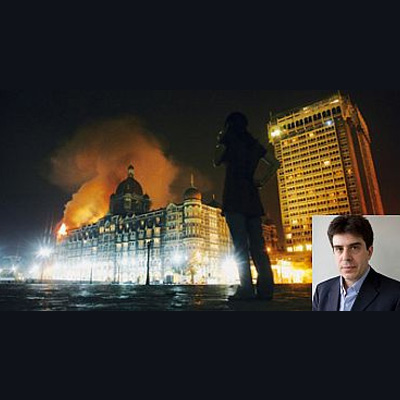
    The Mumbai attacks, for all their tragedy and pathos, were an unparalleled television event. It was news television that became the conduit of a shocked nation‘s horror and anger as we watched the terrible spectacle unfold in our living rooms. Mumbai was to be a game-changer at many levels – diplomatic, administrative and political. A year later, as the blanket coverage of the one-year retrospectives winds up on the networks, it is time to take stock. As the media focuses attention on the slap-dash political legacy of Mumbai – with many of the central characters of 2008 back where they were in 2009 – it is also time to focus the lens back on the news networks.

    Any discussion of broadcast reform in India gets stuck between two poles: the controlling impulses of a state always looking to turn the clock back and take back lost control and the need to maintain the independence of news television. For all its flaws, the creation of the Indian satellite news industry has been a landmark struggle unparalleled in the history of global news and the fear has always been that any attempt at regulation risks throwing the baby out with the bathwater. Yet, some kind of a real watchdog there must be. In a different context, the untamed impulses of Wall Street‘s bankers that led to the global economic crisis are an example of what unbridled laissez faire can lead to. Fifteen years after the landmark Supreme Court judgment that freed the airwaves, India remains the most unregulated television market in the world and while this suits the owners and the editors in their no-holds barred quest for revenues, Mumbai underscored the need for an unbiased oversight body comprising all stakeholders more than ever.

    Two provisos need to be added here. Much of the governmental criticism of the TV networks in 2008 focused on how television became the world‘s window into the ineptitude of the Indian state – too many spokespeople, too much ground confusion and too many operational details being divulged by the then Home Minister. Let us be clear. That was not television‘s fault. The state cannot blame the messenger for its own failures. In the early hours of Mumbai, television coverage did what it was meant to do: it brilliantly captured the scramble, the confusion and the reality on the ground.

    The real problem with television coverage in the days after Mumbai was a more deep-set one that we are used to seeing in its coverage of other events as well; that of sensationalism and the new addition to the vocabulary of newsrooms: “aggressive” journalism. The networks, in varying degrees of complicity, became not outlets of information but channels of propaganda and the lowest common denominator. The same sensitivity that goes into creating the saanp-seedhi genre of news went into much of the post-Mumbai coverage with at least one top network talking seriously about the option of a first-nuclear strike on Pakistan. This was not a considered news response; this was the response of a petulant child with the candy of TRPs hanging in front.

    The post-Mumbai proposal to provide the channels only edited and pre-censored footage of emergency situations was preposterous and was rightly opposed by TV editors and all those who believe in the institution of the free press. But it should also have been a moment to pause and consider how much of this statist counter-reaction was a result of TV‘s own impetuosity. What we have in the form of oversight today in news television is tall promises of self-regulation that are given with seeming sincerity but always fall prey to the weekly tyranny of ratings. Mumbai should have been an opportunity for genuine reform, one that seems lost.

    Ambika Soni‘s relatively benign and thoughtful attitude to news must not lead TV owners and editors into a comfort zone of complacency. Personalities come and go but the problem with satellite television regulation is structural, one that goes into the heart of the unique manner in which the industry grew in its initial years as an illegal medium. There is still no overarching regulatory body to oversee broadcasting issues. There is no Indian equivalent of the American Federal Communication Commission and Indian broadcasting remains highly unregulated. Compared to other developed television markets Indian broadcasting exists within a highly confusing maze of overlapping controls. For instance, India is one of the few developed TV markets with no cross-media ownership laws. Such a state of affairs, at a time when India is fast emerging as a new global media capital cannot be sustainable.

    In a sense, Indian television has continued to operate in a legal framework that is more akin to that utterly untranslatable North Indian word: jugaad. Jaipal Reddy‘s Broadcasting Bill of 1997 was based on British law after studying the broadcasting systems of six countries – USA, UK, France, Germany, Italy and Australia – and sought to create a new legal structure for broadcasting but disappeared into oblivion when the Gujral government fell. Priyaranjan Dasmunshi‘s draconian version of such a Bill is now on the backburner. Since the 1995 Cable Networks Regulation Act (which has limited uses), Parliament has only managed to pass one major broadcasting-related bill – the 2007 Act on mandatory sharing of sports feeds. And that only passed because of the immense drawing power of cricket.

    The Ministry of Information and Broadcasting has periodically tried to fill the regulatory vacuum with draft legislation and summary executive directives/notifications, most of these designed to assert its control. It has consistently tried to put the genie of broadcasting back into the bottle. Looking at it from a historic perspective, the contentious twists and turns over CAS and the news uplinking policy changes when NDTV bifurcated from Star News are perfect examples of the minefield that is the current broadcasting legal framework.

    War, they say, should never be left to the generals alone. Television, similarly, is too pervasive an influence to be left to the judgment of the industry itself. A year after Mumbai, the need for a genuinely impartial authority to balance the content and regulatory oversight that Indian broadcasting desperately needs is being felt even more. 

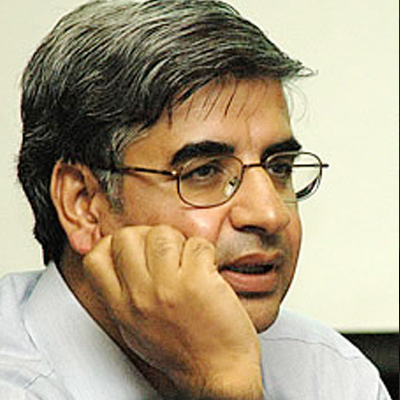
    (Nalin Mehta is the author of India on Television and a founding editor of the Routledge journal South Asian History and Culture)

  • Why the content king needs wise counsel

    Why the content king needs wise counsel

    As we mark the anniversary of the terrorist attacks in Mumbai on 26th November 2008 and the subsequent 60-hours of hostage-taking horror, with murders, mayhem and ensuing chaos unfolding live on national television, it is worth reflecting whether a more regulated news media might have shortened the misery and helped the security mission.

    There was much criticism of the way television networks covered the atrocity as a tacky round-the-clock Bollywood thriller – except that it was for real, claiming nearly 170 lives and many more injuries. Competing news networks vied with each other to provide the most sensational and dramatic reportage from India’s commercial capital. News footage such as live pictures of National Security Guard commandos being airdropped near the Nariman House, seemed highly irresponsible, potentially endangering both hostages and security forces.

    In a report just weeks after 26/11, a parliamentary panel called for greater regulation of real-time broadcasts during such emergencies, claiming that ‘the live footage shown by television channels was free intelligence for those allegedly guiding the attackers from afar through satellite/mobile phones‘. The government proposed 19 new amendments to the Cable TV Networks (Regulation) Act, including the suggestions that in the future there should be ‘delayed carriage of live feed‘ in such emergency situations.

    Partly in response, the News Broadcasters Association – a leading professional body of news organizations – set up a self-regulatory ‘emergency protocol‘ for covering terrorism. However, it is likely that commercial imperatives will still dictate what gets on air. In an excessively market-driven broadcasting ecology, the drive to be first with ‘breaking‘ news can lead journalists and news managers to compromise on content. There are numerous instances of this: one prime example is how television news has invented the sting story – sometimes slanderous, sometimes even fake. How should such content be regulated and by whom? What can we learn from other democracies?

    Until very recently, broadcasting content was tightly monitored within the European Union. Steeped in the tradition of public service, broadcasting was managed by governments as well as by self-monitoring by internal institutions within the broadcasters themselves. With the opening up of the airwaves to commercial – especially satellite and cable and later digital – broadcasting, this system has been considerably undermined by the forces of the market. As digitalization and technological convergence became a reality, it became difficult, if not impossible, to regulate content and as a result authorities opted for ‘soft touch regulation,‘ letting industry regulate itself in the public interest, while retaining control on broad policy outlines, as well as through judicial review.

    One reason that such an arrangement seems to generally work is that the regulators – such as Office of Communication (Ofcom) in Britain – are, and more importantly, are perceived to be, autonomous from government control, and therefore carry greater credibility both within the industry as well as among the general public. The content of such broadcasters as the BBC is also monitored by its Board of Governors and as a public broadcaster, it is also under parliamentary scrutiny, for periodic approval of the licence fee.

    What is more, the public have a greater say in terms of feedback on programme content – particularly on the public service television, unlike the commercial sector which is more often than not hostage to advertisers.

    Though the ratings-driven commercial model remains the dominant one in the United States and while the First Amendment ensures a high degree of independence to the media, the Federal Communications Commission requires broadcasters to follow certain restrictions in relations to content such as what is deemed as ‘harmful to minors‘.

    Though television in India was established in the European public broadcasting tradition, it has continued to veer towards a commercial model where Content is the King. As the world‘s largest and its most vibrant democracy, the notion of a free flow of information and freedom of expression is deeply entrenched in India. However, freedom of information and expression should come with a high dose of social responsibility, particularly relevant in a nation where more than 400 million people remain illiterate – despite huge progress in many areas including unprecedented growth in broadcasting industry – making India a country with the largest number of dedicated news channels (soon to touch three figures).

    As the Guidelines for Broadcast Regulations suggested by UNESCO state, the freedom of speech is ‘subject to such conditions and restrictions as are prescribed by law and necessary in a democratic society. The exclusions cover: the prevention of disorder or crime, the protection of health or morals, the protection of the reputation and rights of others (including the right to privacy), preventing the disclosure of information received in confidence, and maintaining the authority and impartiality of the judiciary.‘

    For a balanced dynamic to emerge between the freedom to report and social responsibility, there is a pressing need for an autonomous national regulator. The Indian government has been toying with such an idea for nearly two decades now and, despite promises, nothing concrete has been done. In the absence of a professional and credible content regulator, competitive commercial interests have pushed the envelope further and further in the process of creating television empires, while debasing public discourse. As we remember those who lost their lives on 26/11, it is high time that the king of content had some wise counsel.

    (Daya Thussu is Professor of International Communication and the Co-Director of the soon to be launched India Media Centre at the University of Westminster in London. Among his key recent publications are Internationalizing Media Studies (Routledge) and News as Entertainment: The Rise of Global Infotainment (Sage). He is founder and Managing Editor of the journal Global Media and Communication.)

    (Disclaimer: The views expressed here are those of the author and Indiantelevision.com need not necessarily subscribe to the same)

  • BBC sees audience boost for its news

    BBC sees audience boost for its news

    MUMBAI: The British Broadcasting Corporation has announced that its Global News division attracts a record weekly global audience of 238 million people to its international news services including BBC World Service and the BBC World News television channel.

    Last year BBC’s audience totalled 233 million. BBC World Service attracted a record weekly audience of 188 million. This figure was boosted by its new BBC Arabic television channel but masked an overall decline in radio listening which was down five million to 177 million in 2008/9. However, despite this loss, BBC World Service remains the world’s most popular international radio broadcaster.

    The largest overseas audiences for BBC news across all platforms come from Nigeria (26 million), the USA (24.1 million) and India (22.2 million). The biggest increases in the BBC’s global audience estimate came from Arab-speaking countries like Saudi Arabia (+1.9 million), Egypt (+1.3 million), and Syria (+1 million), and newly-surveyed markets like Niger (+2.4 million), Liberia (+1.1 million) and Guinea (+1.4 million). However, radio audiences in Iran dropped by 1.6 million due to a decline in shortwave listening there and the cutting of medium wave transmissions.

    Major development and enhancement of the BBC’s international facing news sites and mobile phone offer was rewarded with a record 16 million unique online users, a 27 per cent increase on last year.

    BBC Global News director Richard Sambrook said, “In a year when international radio listening to the BBC actually went down marginally, record overall global audiences demonstrate the success of our multimedia strategy and investments.

    “People come to the BBC’s international news services for journalism and ask difficult questions, yet they respect different points of view and actively encourages debate. Increasingly, audiences want access at a time and place that suits them.”

  • Campaigning against terror

    Indian news television channels have been lambasted by one and all for their over-the-top telecast of the terrorist strike late last month. While some of the caning has been well-deserved, one can‘t forget that the news crews and authorities probably lacked the experience to understand and implement the sensitivity required for the live coverage of such a high intensity event as the recent Mumbai terror attacks. And hence, as a consequence, both the parties have been taking steps to correct those flaws by announcing the formation of a code and a committee which will become active during the reportage of national crises.


    One month down the line from the terror attacks, indiantelevision.com decided to take a look at what else Indian news media have been doing post 26/11, more specifically in terms of campaigns to create awareness about terrorism and to find solutions to some of the key issues which could prevent India from facing a similar situation in future.


    * NDTV Profit launched a campaign to try and find answers to terror-based issues like security, intelligence, infrastructure, corporate activism and crisis management from the corporate world of India. As part of this campaign, the channel hosted a daily special called Ideas for change at 10:30 pm every day.


    Speaking to indiantelevision.com, NDTV Profit managing editor Shivnath Thukral said, “The threat to India is intensifying and the recent attack on Mumbai has shaken each and every citizen of the country. Nevertheless, this is the time for people to come together and find solutions to our problems. Through this campaign we wanted CEOs to use their experience in drafting a blueprint which will help us all to contain this terror. We required ideas from the corporates who till this time have helped in building the shares of their stakeholders and expanding the Indian industry; to provide solutions to issues that would help in safeguarding our country from terrorism.”


    NDTV Profit wishes to continue the campaign in the future in some form or another and address various other issues. Additionally, by the end of December, 2008 the channel will present the documented ideas to the Home Minister, P. Chidambaram and the Chief Minister of Maharashtra, Ashok Chavan.


    * Newspaper daily Daily News & Analysis (DNA) launched its own initiative called ‘Eyes & Ears – People Protection Group‘ with the catch phrase, ‘somebody needs to protect this city, let‘s start with you‘.


    “We plan to continue this campaign forever and for that DNA has also launched the website, eyesandears.in. The idea behind the campaign is to encourage people to report anything suspicious in their surroundings to DNA. To follow up on a complaint, DNA will interact with the concerned security authorities for further investigation. Generally people are scared to approach the police. Therefore, through this campaign we are trying to provide a channel through which the common people can communicate easily without any fear or difficulty,” elaborated DNA CEO K.U. Rao.


    * Network18‘s English news channel CNN-IBN in association with Hindustan Times group launched their own agenda against terrorism called, ‘Citizens against terror’.


    CNN-IBN executive editor Vinay Tewari noted, “Through this campaign with Hindustan Times, CNN-IBN is looking at addressing the burning issue the country faces after the terror attack in Mumbai. The campaign is an attempt to mobilise and help the people with various steps and initiatives they can take to contribute to this fight. We are inviting people to provide solutions to key issues via emails, blogs, messages etc. We then plan to create a handbook after selecting some of the best ideas which we will present to Home Minister P. Chidambaram and Maharashtra Chief Minister Ashok Chavan on 26 December, exactly a month after the attacks. In order to choose the best of the ideas we have set up an expert panel.”


    While both CNN-IBN and IBN7 are hosting shows on the terror attack on weekends, daily newspapers of HT Media- Hindustan Times and Hindustan- are carrying stories of people who have suffered during the attack.


    * Aajtak, the Hindi news channel, has also launched ‘Declare War on Terror‘. The mission of this movement is to bring all Indians together to fight and counter terrorism in all forms. The movement will develop programmes and will partner in areas such as empowering public opinion against all forms of terrorism. It will influence decision makers at the highest level – fighting against those who kill innocents, support measures that ensure safety, expose corruption and incompetence that endangered safety and security, defeat the enemy by having zero tolerance of terror, eliminate forces that propagate hate and promote unity among the people of India.


    * Mumbai-based daily tabloid Mid-Day not only used print but has further extended its campaign against terrorism on its radio station, Radio One 94.3 FM.


    Mid-Day group editorial director Shishir Joshi elucidates, “We launched our campaign ‘Enough‘ across our platforms which include daily papers like Mid-Day, Gujarati Mid-Day and Inquilab, radio station Radio One, Mid-day.com and also through the mobile short code 53650. Through our campaign we asked four basic questions to the government – ‘Did we have prior information about the attack?’, ‘What did we do after we had the information?’, ‘what could have been a better way of handling the situation then?’ and ‘what are the measures that should be adopted now to improve the situation?’. We took the answers from the representative of the government to the common people and then took their feedback on these answers to the government once again.”


    * The radio stations in Mumbai went an extra mile in serving as an interactive platform for listeners to express their anguish about 26/11. Red FM launched its campaign ‘Enough is enough‘ in which the airwaves were thrown open to Mumbaikars and the music on-air was reduced to accommodate the flood of calls from people. The callers included victims, families of victims, eye witnesses, staff members of the hotels and everybody else who wanted to speak about their experiences, send out a plea, express anger or demand answers for their unanswered questions.

    Mumbai station of ADAG owned Big 92.7 FM undertook a special drive to urge each and every Mumbaikar to join them and speak up against Terrorism. ‘Mumbai Halla Bol- Ab Chup Rehene ka Waqt Nahi‘ saw people from all walks of life including celebrities like Rahul Mahajan, Ad Film maker Prahlad Kakar, Singers Shaan and Ismail Darbar, Tops Security chief director Ramesh Iyer, Dr Mangeshkar who was one of the hostages at the Taj Hotel, professionals from various companies, College students, and the NGO Dreamz Home joining the initiative.


    Commenting on Big FM‘s role on the issue, station head Neerja Dhillon said, “Radio as a medium today can not only inform people, but it can activate a complete movement in the city by not only creating awareness, but by creating a feeling of responsibility. Hence, Big 92.7 FM took up this drive to bring together people from various backgrounds.”


    Additionally, ENIL‘s Radio Mirchi 98.3 FM initiated a 15 day campaign ‘Be alert but don‘t be prejudiced.‘ The campaign was an appeal to all to practice communal peace and tolerance rather than blindly blaming a particular caste or religion for the cause. The campaign also aired opinions and views of Muslims who lead normal, regular lives.

  • Lessons from the terror front

    Lessons from the terror front

    It’s the festival of lights. And for many the festival of noise courtesy exploding fireworks. In the hope of reducing the number of those belonging to the latter tribe, we, at indiantelevision.com, decided to put a display of firecracker articles for visitors this Diwali. We have had many top journalists reporting, analysing, over the many years of indiantelevision.com’s existence. The articles we are presenting are representative of some of the best writing on the business of cable and satellite television and media for which we have gained renown. Read on to get a flavour and taste of indiantelevision.com over the years from some of its finest writers. And have a Happy and Safe Diwali!


    Written By Anil Wanvari

     
     Posted on : 29 Nov 2008 01:02 pm

    They came to terrify. And in many ways they have succeeded, if, only, for a while. The memories of a gun- and grenade-toting killer army, spraying hundreds of innocents with bullets, lobbing grenades at will, will probably never leave us. Thanks to news television.

    I believe that the efforts of the army, the commandos, the NSG and the police to flush out the Taj Hotel, the Trident/Oberoi Hotels, and Nariman House offered to TV viewers images that will also stay embedded for a long, long time. Mumbaikars, nay Indians, were concerned, and in some cases affected by the terrorist strike, and wanted to know what is happening to those caught up in the mayhem.

    News channels offered them updates, took them to the scene of the dastardly acts. And they also exposed the government‘s, the administration‘s, the army‘s, the police‘s and their own lack of preparedness to handle the crises.

    India is a complex country. We have scores of news channels, probably more than any other nation in the world. Hence, our country requires unique treatment.

    While reporters on the field of all the channels need to be lauded for staying on for hours together, reporting on developments even as shrapnel was streaking around and bombs were exploding, the key issue is could the coverage of the carnage have been managed better? And the answer is yes. The fault does not lie solely with the news channels. The fault lies with systemic failure and understanding of crisis media management by the folks who took up the rescue act, whether it is the government or the administration or the commandos or the police or the media which reported on it.

    The lack of planning showed. Did anyone have a strategy – how to combat the terrorists or how to handle and manage media? It was alarming to see that no press briefing room was set up by the government or the administration or the police or the army and sound bytes were given by senior army officials and police out in the open. No protection was provided to either. Stray bullets, exploding window panes and shrapnel could have hit any one of them.

    TV cameramen followed almost every move that the commandos made. News editors carried those images, but could they have been done so in a delayed manner, say with a 5-10 minute time lag right from day one so that terrorists may have not been able to keep a tab on what was being planned as has been alleged?

    Could the reporters have asked more pertinent questions? Is there enough training being given to them on how to cover crises such as war or terror attacks? Most news stations internationally have war correspondents, who know how to handle themselves in demanding environments.

    Could there have been more analysis – with crisis and terror management experts being brought in – from reputed studio anchors rather than playing the blame game with celebs who spouted venom against the system? Could they instead have offered solutions?

    Indeed. News channels have been hard pressed for experienced journalistic talent, and hence have been putting relatively inexperienced journos on the field to handle tough situations. That is permissible if enough training is given to them.

    A lot more homework could have been done by the news channels, an understanding provided of similar terrorists attacks the world over, and how they were handled. In the process, they could have eased the panic and sense of hopelessness that they instilled in viewers and all of us.

    The news channels behaved like little boys in a school race all wanting to come first. Each one of them wanted to flash that exclusive. And that sometimes came in the form of canards, wild flights of imagination being flashed as insights and breaking news. Some of the Hindi channels really led in this with a sensationalist tone.

    Not that the English channels were far behind. The itch to be seen as the leader forced one of the leading English anchors to voice again and again that they heard the breaking news first on his channel. It was as insensitive as you can get when almost the entire nation was quavering with fear and anger.

    Clearly, a code of ethics and policies need to be put in place. Because going by the lack of focus of the government on anti-terrorism measures, a terrorist strike in another city may not be too far away. We are living in dangerous times. Hopefully, we will not see a repeat of the media management exercise we witnessed in Mumbai.

    The news channels would do well to live up to their raison d‘etre well, that is, to inform, analyse, and investigate. Even if the government and administration are not doing their jobs well enough.


    (Anil Wanvari is CEO and editor-in-chief of Indiantelevision Dot Com. He wrote this comment piece following the terrorist attacks on the Taj Mahal Hotel, The Oberoi Hotel in 2008 in Mumbai)

  • Olympics third least viewed in India

    While the Olympics recorded strong viewership in a lot of countries, India remained among the bottom three markets in terms of television viewership for the Olympics. New Zealand tops the list in viewing the biggest sport extravaganza of the year.

    According to Lintas Media Group report on the viewership patterns of the Olympics 2008 on TV across the globe received this week, the top 10 Olympics events in India together delivered a 1 TVR while the top viewing market New Zealand garnered a TVR as high as 22.6 for the top 10 events.

    Source : Lintas Media Group report

    The report has been compiled based on information and analysis of Olympic games TV viewing across 42 markets around the world. These markets include the US, UK, India, France, China, Russia, South Africa, New Zealand, Netherlands among others.

    The report states that the opening and closing ceremonies attracted 87 and 73.2 million of people in 35 countries respectively. Traditionally, the opening and closing ceremonies are among most watched Olympic events.

    Lintas Media Group chairman and CEO Lynn de Souza says, “India is not yet an Olympic nation. We make heroes of those who do manage a medal, but the medals are so few and far between, and most of the events do not have fan following among the masses. It‘s not surprising that viewership was low.”

    Source : Lintas Media Group report

    Tam data meanwhile shows that 74 million Indians tuned into the biggest sporting event of the year the Olympics which aired on DD Sports last month from 9-24 August. Tam data also shows that while the opening ceremony drew 28 million viewers, the Closing Ceremony only had 15 million. In the metros where the event fared the best it managed a total of 89.9 GRPs from 9-24 August.

    The highest GRPs recorded were 8.2 on 20 August driven by athletics. On 16 August, the GRPs were 7.7, driven no doubt by a surge in interest following Abhinav Bindra‘s Gold in shooting.

    The GRPs managed on the last day were five. The GRPs on the opening day were not far behind at 4.6 which is impressive given that there was only the opening ceremony. On the other hand, on the last day besides the closing ceremony you also had the finals of some boxing events as well as the men‘s basketball final among other things.

    Boxing, athletics and swimming were some of the sports that drove viewership. In the non-metros, the event managed to garner 60.2 GRPs. At an all-India level the figure is 70.4 showing that sport is more a metro-viewing phenomenon. The fact that sport is a male dominated viewing activity is borne out by the fact that 65 per cent of the audience was men. Sec and Sec B took a little over half of the viewership.

    In 2004, 67 million viewers tuned in to the extravaganza. Then also the Opening Ceremony did better with 8 mn viewers than the Closing Ceremony with five million viewers. Of course one has to keep in mind the fact that the Tam panel was expanded in 2006.

    Source : Lintas Media Group report

    Athletics, boxing, basketball, gymnastics and swimming were the most popular sports in the Olympics 2008. The top 10 Olympics events put together garnered an average of 8.4 TVR across the markets.

    Apart from New Zealand, Netherlands, Denmark, Lithuania and Thailand watched the Olympics the most. This is despite the fact that they are not leading countries in getting medals apart from the Netherlands which got 16 medals. China watched the Olympics on an average global level while Russia was much below the average global TVR.

    Apart from India, the other markets that watched the Olympics the least were Lebanon, Indonesia, Ukraine and Philippines.

    NBC hits the jackpot

    All these figures though pale in comparison with what US broadcaster NBC achieved. The broadcaster managed to get 214 million viewers across the event. NBC had pushed the Olympics across different properties. For example, the Today show benefitted as did Nightly News. The cable networks airing Olympics coverage also benefitted, drawing a total of 88 million viewers. CNBC, MSNBC, USA and Oxygen all delivered audience increases across key demos. Online at NBCOlympics.com, meanwhile, there were 75.5 million video streams, 51.9 million unique users, 1.24 billion page videos and a total of 9.9 million hours of video consumed.

    The Global Scene

    Nielsen Media Research estimated that 4.7 billion viewers watched some part of the Olympics. About 70 per cent of Earth‘s population was engaged making the Beijing Games the most-viewed event in TV history. The figure surpassed the 3.9 billion who watched some part of the Athens Games in 2004. Four years earlier, the Sydney Games garnered some 3.6 billion. 94 per cent of China‘s TV homes watched some part of the games.

    South Korea matched China‘s 94 per cent share, albeit gauged against a smaller population base, while 93 per cent of Mexican residents saw some part of the Games.

    The Ad scenario

    While Doordarshan had failed to get big sponsors this year for Beijing Olympics it looks like it‘s the news channels that have raked in the actual moolah.

    Doordarshan deputy DG sports Ashok Jailkhani says, “At the time of the Athens Olympics, DD had earned Rs 50 million of revenue and this time we have been able garner around Rs 80 million of revenue.” DD is believed to have spent around Rs. 170 million on the games.

    However, this year the absence of major advertisers were felt. The list of advertisers for this year‘s Olympics included Samsung, BSNL, LIC and the ministry of rural development apart from Maruti, ITC, Amul, Lenovo and some government departments.

    Says Prasar Bharati CEO B S Lali, “Last time, during Athens Olympics, DD had big sponsors like IOC who had invested Rs 20 million and Hero Honda had invested Rs 10 million. This time, that kind of large sponsors were missing yet the number of advertisers that had come to DD was much more as compared to the last time.”

    Mindshare‘s Amin Lakhani notes that news channels created hype around the event especially when India won three medals. “There was a lot of analysis. Each day one could catch highlights. This meant that viewers tuned in to them to catch the action. Advertisers naturally followed suit and many of them preferred news channels to DD. Also DD did not do any marketing but that was to be expected. When does DD ever market an event?”

    NBC made over a billion dollars from the Olympics. Hot day parts included swimming and gymnastics particularly with Michael Phelps breaking Mark Spitz‘s record for most gold medals in a single Olympics. Oxygen‘s gymnastics coverage gained interest from advertisers who were looking for female demos, and CNBC‘s coverage of boxing got money from advertisers looking for heavily male-skewed demographics.

    Need for Introspection

    DD had despatched teams of 11 cameras with crew to cover the event but DD‘s coverage of the event drew flake and the public broadcaster was forced to remodel its programming after an emergency meeting.

    Lali concedes that there is always scope of improvement. “In case of the Beijing Olympics, the DD crew reached the venue quite late. And, yes, the overage was criticised however an instant action was taken by the DD crew to provide better coverage at their end.”

    While the Beijing Olympics have ended for now, the public broadcaster will be holding a review meeting where it will take a close look at what went wrong so that it prepares itself for the Commonwealth Games in 2010.

    “We will hold a review meeting and draw a list of lessons that we have learnt from this year‘s Olympics. There have been some issues like the packaging of programmes, selection of commentators, the style of covering the event, etc; which requires thought,” noted Lali.

    News channels made hay as India shone with single Gold

    As the medal tally of India shone with a single Gold and two Bronze, news channels made hay. In the 17-days sports extravaganza news channel both Hindi and English diverted the spotlight to Olympics coverage.

    As per Tam data, HSM, 15+ , C & S, Hindi news channels devoted 5036 minutes (8 to 24 Aug) from a marginal 382 minutes (22 July to 7 Aug) in covering sports.

    The English news channels increased its coverage of sports exponentially. From 1705 minutes (All India, 15+, C &S), coverage of sports by English news channels surged to 7060 minutes during the 17-days of Olympics.

    Sports coverage by Hindi news channels increased to 3 per cent, while it has expanded to 4 per cent from 1 per cent in the English news channel space.

    Naturally, the sports genre in Hindi news channels increased to 4 per cent (8 to 24 Aug) from 0.8 per cent (22 Jul to 7 Aug). During the period, in the English news channels space the genre expanded to 7.5 per cent (All India) from 1.8 per cent.

    As per the Centre for Media Studies (CMS), NDTV 24X7 did 112 stories, 13 special shows and as a whole devoted 738 minutes on Olympics coverage. On the contrast, DD News had 1133 minutes of Olympics stories of which 24 were special stories. CNN-IBN devoted 914 minutes (24 special stories) of Olympics coverage, NDTV 24X7 738 minutes (13 stories), Aaj Tak 627 minutes (24 special stories), Zee News 607 minutes (17 special stories), while Star News had only 507 minutes (14 special stories).


    Conclusion

    Doordarshan would have done far better had there been more planning. To say that the airing was ad hoc and haphazard was to put it mildly. Take, for instance, the swimming. Michael Phelps going for eight Gold medals and successfully doing it is something that might not be repeated for quite a while. Broadcasters including NBC in the US used this as their tentpole event everyday while the swimming was on. That created huge appointment viewing. Not DD though. Sometimes he was shown, sometimes he wasn‘t.

    Sometimes instead of this marquee event, a preliminary hockey match was shown. On another occasion, a gripping and close men‘s tennis semi-final match between Nadal and DJokovic was cut short as the broadcaster felt it fit to showcase India‘s performance at Beijing for that day. Surely this could have waited or aired on DD National.

    What was also infuriating was the inane discussions that went on in the studio while medals were being decided upon. In fact ESS who has the rights for the 2012 London Olympics should study what DD did as a lesson on how not to cover the event.

    Expecting any other sports event other than cricket to find more TV viewership loyalty is a futile exercise. However, still hoping for a bite in the ad and viewership pie of the Commonwealth Youth Games and Commonwealth games, Prasar Bharati and the Press Information Bureau are investing Rs 4.63 billion for its coverage.

    The Youth Games are commencing in Pune on 12 October and will continue till 18 October while the XIX Commonwealth Games are to be held at New Delhi from 3 to 14 October 2010.

    Prasar Bharati through Doordarshan and All India Radio is the host broadcaster of both the Games.

    Meanwhile, the Union Cabinet has approved the release of additional funds of Rs 435 million to the Organising Committee for the conduct of the Commonwealth Youth Games, thus raising the total to Rs 1.10 billion. This is in addition to the funds made available by Government of India for City and Sports infrastructure to the funds given by the Maharashtra Government for Pune for the Commonwealth Youth Games.

    The Government had earlier approved an expenditure budget of Rs 7.67 billion as a loan to the Committee of Commonwealth Games for conduct of Commonwealth Games 2010 and Commonwealth Youth Games, out of which a budget of Rs 665 million was for the conduct of Commonwealth Youth Games.