Tag: news channels

  • Editors give thumbs up to branded content, if it doesn’t interfere with quality

    Editors give thumbs up to branded content, if it doesn’t interfere with quality

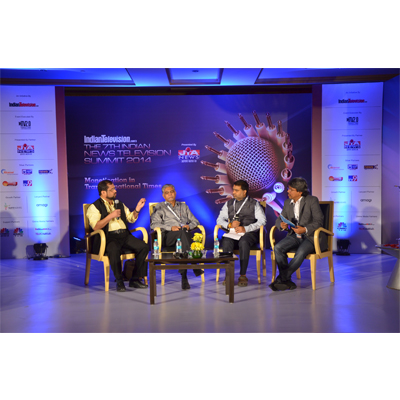
    MUMBAI: While the business heads and sales heads are worried about how to keep revenues growing, the editors are concerned about keeping them away from getting into their editorial decisions. Discussing exactly this was a panel at the 7th Indian News Television Summit that saw ITV Network editor in chief Deepak Chaurasia, senior columnist and veteran journalist QW Naqvi and Mi Marathi consultant and former IBN Lokmat chief editor Nikhil Wagle that was moderated by indiantelevision.com group founder, CEO and editor in chief Anil Wanvari.


    The discussion started off with Wanvari asking them how much would allow business heads to interfere with the editorial. Naqvi said that a business target should not influence editorial decision. Wagle said that he is aware that business is needed to run a channel but ‘without interference the channel can be profitable.’


    Chaurasiya was of the opinion that both need to be together for the business model to survive. “The company will go into loss if the model is wrong. The editorial should know the company’s profit and loss because it can’t be a loss  making business. However, sales and editorial should not have the authority to decide whether or not a story should be shown or the angle of the story be taken. If the marketing team will tell me that a particular party is giving money if we do this story and in this angle, then I would say I have surrendered myself to them,” he said.


    Wanvari said that political parties were different from brands, to which Wagle said that he isn’t against sponsored programmes, if they are disclosed. “If I was an editor, either I will stop such content or resign,” he said. Naqvi said that he is fine with integration where the quality, judgment and quantity isn’t compromised. “A programme shouldn’t be made just to make a brand happy despite not having any value,” he pointed out.


    Chaurasia however said that even a half an hour show with bad ratings will ruin his day’s average, so he hesitates while taking advertorial, despite the money. “Rather than think short term, I think its long term impact on my ad rates. 90 per cent advertisers want to make the show in their perspective,” he said. He was however worried about how with too many ads the time spent on the channel is decreasing.


    Times Now editor in chief Arnab Goswami is a brand in himself, which is being used by the channel, said Wanvari asking whether the three of them would allow that to happen to them. “TAM ratings only give numbers, not reactions. When that can be analysed, the real worth of a brand will be known,” he said.


    According to Chaurasia, with emergence of new channels and people shifting channels, it isn’t easy to keep brand loyalty. “Now-a-days people think that in four months, people will start asking for autographs while the first generation journalists have taken many years to prove their worth. They feel marketing will help them become this sooner,” he said.


    Moving on to the digital play in the future, Naqvi said that there is no doubt about digital being the priority for all. But when Wanvari asked if the editor would go with the marketing to an advertiser, Chaurasia said, “My work is to do content and make them understand the meaning. I have to get them ratings, revenue is a different department.”


    The regional space will see proliferation of digital in five years, according to Wagle, and long format journalism will be replaced by short form.


    Responding to Wanvari’s question about syndicating shows like how Al Jazeera or BBC does, Naqvi said that when the format will turn to digital, they could think of creating content that could sell because then the audience becomes global. “For this, we will need good internet connectivity till the remotest corner of the country,” he said. However, he also pointed out that not too many channels will survive digitally because people will not want to clutter their phones, but won’t mind seeing a long list of channels on TV.
  • Targeted advertising is the way forward for news channels

    Targeted advertising is the way forward for news channels

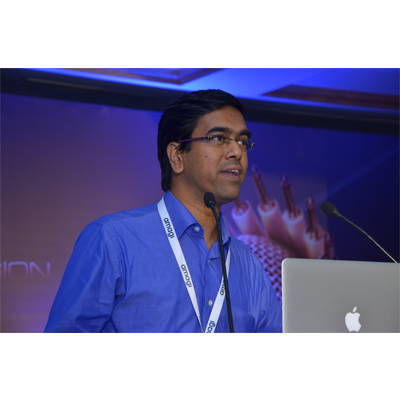
    MUMBAI: In a tough environment how can news channels monetise better from brands? Well, speaking at the Seventh Indian News Television Summit 2014 organised by indiantelevision.com, Amagi co-founder KA Srinivasan answered the big question.


    He began his keynote by giving the number of brands and advertisers on print and television. “Print media today has about 1.2 lakh or 1.5 lakh advertisers as compared to a paltry 11,000 on television.  When we look at brands there are about 17,000 brands on television compared to 2 lakh brands on print,” he said referring to a study conducted by Amagi from 13 October to 14 September.


    News as a genre, specifically English and Hindi channels, has 600 advertisers and about 1,000 to 1,400 brands advertising for the entire year. He then compared these numbers to print readership, which has a penetration of 20 per cent. “In any market outside India, print advertising is typically half of TV advertising size. While in India, a market where print is dramatically under penetrated compared to TV, we are seeing equal, if not more, advertising revenue generated by print,” said Srinivasan.


    He added, “As per the study, regional advertising consisting of only local brands on print, radio and outdoor is at least Rs 6,500 crore. The print classified size market is Rs 1,300 crore and is expected to grow to Rs 3,600 crore in the next two years.”  


    He then suggested ways by which news channels could tap into this market. A national channel which delivers substantial audience in various markets can monetise better by going after regional brands which is what Amagi has been doing. “In the US such targeted marketing was worth Rs 30,000 crore,” he informed.


    Srinivasan stated the example of how a television channel being watched at the same time in four different geographies can potentially showcase four different ads at the same time. By creating ad inventory regionally to address more advertisers and brands, news channels can increase revenue dramatically. The model can be utilised by local advertisers and large national advertisers while launching a brand specifically for one region and can save on spillage.


    “Hyundai ran an ad for different regions of Maharashtra like Baramati, Kolhapur, Sangli, Nasik etc simultaneously. Each of these ads ran with the local contact detail of the local dealer in each of these local cities,” he said. The study also presented a case study about the Telugu news classifieds market. “The market includes non FCT scrolls, tickers, ashton bands and brand builders predominantly scroll driven with local matrimonial, property deals that is worth Rs 20 crore and just in one market. Can it be replicated across India?” he asked.


    Another monetisation opportunity for news channels is by aggregating a number of channels together as advertisers find it attractive since this presents them a substantial chunk of viewership. “We believe that there are umpteen number of opportunities today that are completely untapped in terms of targeting geographically from a pure FCT perspective,” Srinivasan said in his closing remarks.

  • 7th Indian News Television Summit: Innovation for higher ad revenue

    7th Indian News Television Summit: Innovation for higher ad revenue

    MUMBAI: ‘When the going gets tough, the tough get going’ is an age old adage. Operating in a cash crunch environment, this seems to be just what Indian news broadcasters will have to do  if they want to continue to beam into homes. 


    The Indian TV news business has been grappling with several issues. Close to 400 channels account for a small per cent of ad spends. High carriage fees and cutthroat competition for the ad rupee have made the going really tough for those in the news business. 


    With this as the backdrop, comes leading Indian media service Indiantelevision.com’s Seventh News Television Summit entitled ‘Monetisation in Transformational Times” on 28 October at the Radisson Blu Hotel in Noida, Uttar Pradesh.  It seeks to address how those in the news TV ecosystem can develop more robust or new business models, including new revenue streams such as digital online video, syndication, off the air ground activities, advertiser driven programming solutions, among many others. 


    The highlights of the half day premier news television industry confab  are a keynote by News Broadcasters Association president and India TV chairman and editor in chief Rajat Sharma followed by a discussion on ‘Meeting the challenge for today’s TV news networks, a one-on-one with ITV Network MD Kartikeya Sharma and then a keynote from leading media agency Group M south Asia CEO CVL Srinivas.  .


    The session ‘Content monetisation through conventional and digital platforms of news channel’ will see a reveling discussion on how business heads are meeting the challenge of low ad rates and near zero subscription revenue with rising cost through alternative options such as syndication of news, events, digital etc. Included in this session are NDTV group CEO Vikram Chandra, TV Today Network CEO Ashish Bagga, IBN18 Network CEO Avinash Kaul, Doordarshan ADG News Mayank Agarwal and Focus News Network group CEO Neeraj Sanan.


    ‘Innovation in news selling’ will explore novel ideas for media agencies and brands to increase their ROI from their investments on news networks and what innovative methods can be drawn for both to achieve a win-win business model. Opening the session is Srinivas’ keynote followed by a discussion with IPG Mediabrands India CEO Shashi Sinha, CNN-IBN and IBN7 national revenue head Vishal Bhatnagar, India TV senior VP and country head – ad sales Sudipto Chowdhuri and Zee Sangam national sales head Harsha Vardhan Dwivedi. The sessions will be moderated by Provocateur Advisory principal Paritosh Joshi.


    Editors of networks will discuss how far they will go to allow money to drive content in the session titled  ‘Monetisation for editorial independence’. ITV Network editor in chief Deepak Chaurasia, former India TV editorial director and veteran journalist QW Naqvi, Mi Marathi consultant Nikhil Wagle and moderator Aaj Tak and Headlines Today editor at large Rahul Kanwal will take the stage. In a separate discussion,  Amagi co-founder KA Srinivasan will discuss how it can offer solutions to advertisers and news networks to further ad revenue.


    Says Indiantelevision.com founder, CEO and editor in chief Anil Wanvari:So far the news television industry has not been able to harness substantial subscription revenues, even as carriage fees look set to rise with digitisation being delayed. Hence, it needs to look for solutions to hike revenues from the advertising inventory – the threat of the reduction of this has been staved off at least for now – they have, apart from working closely with advertisers and agencies to offer solutions that opens up the revenue pipeline for them further. The challenge is to increase their yields while increasing the ROI for advertisers. I believe the seventh news television summit will help give both advertisers and news channels some pointers as to how they could achieve this jointly.”


    The presented by sponsor for the event is Jia News, silver partners are Akamai, India News, NewsX, Sakshi TV, TV9, growth partner is SureWaves, Amagi is lanyard partner, support partners are CNBC Awaaz and CNBC TV18, online media partners are radioandmusic.com and tellychakkar.com. The event is executed by ITV 2.0 Productions.


  • News channels reform before Modi’s big Budget 2014

    News channels reform before Modi’s big Budget 2014

    NEW DELHI: The presentation of the general budget on 10 July morning by Finance Minister Arun Jaitley will perhaps be the most keenly watched analysis of the financial shape of the nation since the early 90s when the then Finance Minister Manmohan Singh presented his budget.


    This is also perhaps the first time in recent years that the budget is being presented by a man from the legal profession.


    Although only Lok Sabha TV has the permission to cover the budget live from inside the portals of Lok Sabha, almost every channel in the country – and certainly every business channel – will be taking the beam from Lok Sabha TV and then adding its own analysis programmes.


    CNBC TV18, Doordarshan News, Times Now, and most other News channels plan to commence the discussion on the budget from around 8.00 am with experts talking about expectations, and then beaming the live presentation from 11.00 am onwards.


     The entry of websites like moneycontrol.com and economylead.com streaming the budget and by social media will be an added feature this year, as many websites have already announced plans in this regard.


    With the new dispensation in place, the aspirations of the common man are soaring high and many are wondering whether the ruling Bharatiya Janata Party will live up to its slogan of ‘Acche din aaney waley hain.’


    The presentation is expected to be followed soon after by the reaction of Prime Minister Narendra Modi on Doordarshan and Lok Sabha TV and an exhaustive interview of Jaitley about his budget on Doordarshan.


    In addition, channels will cover live the press meet by senior Finance Ministry officials in the afternoon about the various facets of the budget.


    The coverage on CNBC TV18 will be led by Shereen Bhan, on Times Now by Arnab Goswami, and on NDTV 24×7 by Prannoy Roy. Times Now has articulated its standpoint by saying ‘Everyone deserves a piece of this super budget. Get Yours.’ The channel though also warns that it may be a bitter pill.


    Other channels like CNN-IBN, Aaj Tak, ABP News, Sahara Samay, P-7, News X and others have also lined up experts who will analyse the budget. The channels will also have teams that will go to Parliament House premises to get the reactions of various political leaders.


     For the business channels, it will be a particularly exhaustive day as they will also have a link with the National Stock Exchange and Bombay Stock Exchange to get the latest ups and downs.


     Zee Business which is a Hindi business News channel will telecast the pre-Budget discussions and analysis from 7.00 am onwards and will bring in live and uninterrupted coverage of the Budget Speech. The channel will articulate, analyse and keep the common man abreast of all the impacts that Budget is going to have on their daily lives.


     Interestingly themed as the ‘Abki baar, sapne sakaar,’ Zee Business will have expert panels, business leaders and corporate captains throughout the day to give their expert advice. After the Finance Minister’s speech, Zee Business will undertake a series of power packed Budget Bulletins. Some of these bulletins will comprise high power panel discussions and will involve expert comments from the nation’s top business leaders and policy makers.  Some of the key Ministers holding important portfolios have already appeared and shared their views, and will also do so during post-Budget analysis programmes. They include Power, Coal, New & Renewable Energy Minister Piyush Goyal, Information & Broadcasting Minister Prakash Javadekar and Commerce & Industry Minister Nirmala Sitharaman.


    Special shows have been conceptualised with thorough research from the industry point of view without losing the ground reality and its impact on the common man. Expert opinions, industry perspective viz–a–viz market reaction and informative bulletins will be telecast.


    Zee Business will also organise a viewer’s engagement programme throughout the day from different parts of the country where commoners get a voice to air their reaction and feedback on the pertinent issues on budget.


     Zee Media CEO Samir Ahluwalia said, “With clear understanding of the expectations of the India Inc. as well as indications of the common man, Zee Business is poised to present a comprehensive Budget coverage. Through special programming and initiatives focusing on budget expectations, analysis and impact, Zee Business will once again ensure specialised coverage on Budget Day.”


    Added CNBC-TV18 managing editor Shereen Bhan, “The key question we will be asking is if the budget will be able to deliver. There will be a sharp focus on market reactions, the stance taken by other countries giving India a thumbs up and about investment in domestic capital. We will analyse the long term and short term ideas the government has as well as the reforms that will be taken up to revive the economy.”

  • Esha Media Research sees surge in demand of Railway Budget 2014 news clips

    Esha Media Research sees surge in demand of Railway Budget 2014 news clips

    KOLKATA: As the Union Railway Minister Sadananda Gowda started presenting his maiden Rail Budget in Lok Sabha on 8 July, Esha Media Research, a media monitoring and research company, saw an increase in inquiries, seeking news clips of the Railway Budget.


    The enquiries were for news clips in parts or as a whole from different stakeholders and interested parties across the ecosystem including big information technology (IT) companies and foreign direct investors (FDIs). The BJP-led government has mooted railway digitisation and foreign investment to improve the country’s railway system.


    Esha Media Research says that it currently monitors 140 channels across the nation in all languages. “We are tracking the entire railway budget and also certain areas like IT, FDI, freights in parts,” Esha Media Research managing director R S Iyer informed indiantelevision.com.


    “Tracking for railways is more as compared to last year,” Iyer said. “Apart from business houses, we are also receiving inquiries from media agencies tracking the economic content,” he added. Without mentioning the names of the clients and agencies, he revealed that there are some forums across the world that are interested to know and analyse the seriousness of the Prime Minister Narendra Modi-led BJP government.


    “We have been tracking from morning all the government interviews across channels, and they will continue to take place till the end of prime time today, maybe until 11pm. We have also started uploading the files,” Iyer informed.


    Gowda, during his budget presentation, said that his Ministry would seek cabinet approval for allowing foreign direct investment in the state-owned network, but passenger services would be excluded.


    The Railway Minister proposed work stations in select trains as a pilot project this year apart from offering technology for automatic closing of doors both in main line and suburban sections.


    He also said that the e-ticketing mechanism would be strengthened to allow 120,000 simultaneous bookings. The proposed overhaul of the e-ticketing system would support 7,200 tickets per minute as against the current 2,000 tickets per minute


    The budget also talked about the expansion scope of online booking, including streamlining of booking on mobiles, and providing Wi-Fi in A1 and A category stations and in select trains. E-procurement would be made compulsory for procurements worth Rs 25 lakh and more said Gowda.


    “Overall the budget was crisp and concise and the government played safe by not hiking the fare on the day of the budget but two weeks before it,” said a financial expert.


    Stock markets have not reacted very favourably to the railway budget-the BSE closed 562 points down at 4pm today as compared to the its pre-opening at 9am. The NSE CNX Nifty index also closed 2.11 per cent lower than its opening today.

  • NBA gets a regional competitor

    NBA gets a regional competitor

    NEW DELHI: Even as the News Broadcasters Association (NBA) is looking after the affairs of larger news broadcasters, an All India News Broadcasters Association (AINBA) has been established by regional news players to ensure ethical journalism.


    Azad News chairman MS Walia is the chairman of the new organisation, with Total TV chief managing director Anil Gaba as vice chairman.


    However, it was clarified that this is the interim committee of office bearers and fresh elections will be held within six months to form a permanent committee.


    The other office bearers are: general secretary Tejinder Pal Singh of Patiala based Channel 2, treasurer S K Gupta of Uttarakhand and Himachal Pradesh channel TV100 and joint secretaries Dr Prakash Sharma (Jabalpur’s SMBC Insight Channel) and Amit Agarwal (Raipur’s Channel TSN).


    Members of the governing body are: I D Garg (Gurgaon’s Khabrein Abhi Tak), Pushpendra Singh Baghel (Khabar Bharti, Noida), Vikram Newaar (Tazaa TV, Kolkata), A K Sama (Fast News, Rohtak), and Naresh Mehta (Khoj India, Gurgaon).


    A spokesperson told indiantelevision.com that a number of Indian news channels had tied up with the government and various agencies to put together a unified platform to look at a collective solution for ridding the industry of the various problems that continue to plague it without a workable solution in sight.


    The AINBA comprising of heads/owners of small and medium news channels held its first meeting in Delhi where it elected the interim committee of founding office bearers. The office will be located in the national capital. Currently having about 15 or 16 members, it will soon start approaching other broadcasters to join.


    This is the first such association or representative body of regional news players in the country, which will work towards creating a level playing field in the country at par with the national news channels.


    Apart from focusing on the problems of the industry, the association will work towards ensuring clean and ethical journalism, work towards curbing paid news and ensuring guidelines for self-regulation.


    The association will also work towards creating a platform for news syndication and exchange amongst member organisations, collective marketing and distribution.


    The AINBA will also act as a unified body working in conjunction with the government and representing the views, issues and concerns of the broadcasting industry, and play an exemplary role in finding workable solutions.


    The current body that exists is the NBA that has 57 news channels including a few regional ones such as Sakshi TV, ETV, Mathrubhumi, People TV, Kairali, Odisha TV, Sun network news channels and others.


  • Centre not in hurry for 100 per cent FDI in news: Javadekar

    Centre not in hurry for 100 per cent FDI in news: Javadekar

    MUMBAI: While general entertainment channels enjoy the liberty of having 100 per cent Foreign Direct Investment (FDI), News channels are restricted to having just 26 per cent. With a new government at the center, all eyes are on the new Information and Broadcasting (I&B) Minister Prakash Javadekar to bring in some changes.


    A pertinent question asked by journalists to Javadekar was regarding the same. According to a PTI report, he is said to have assured journalists that his Ministry is busy collecting views of the stakeholders related to the issue of allowing 100 per cent FDI in News media.


    “We want to take the views of all the stakeholders before we take a final decision if we should give a go-ahead for the 100 per cent FDI in News media. We are not in a hurry to go for the same,” he said to PTI.


    On the sidelines, he also addressed the issue of paid news stating that a meeting of the council of ministers will be held soon to discuss the matter. Highlighting two types of paid news, Javadekar said, “The first one is related to the elections, the other one was directly connected to the privately-owned business newspapers.” He added that a final meeting of the committee on paid news will be held today of which he is also a member.

  • Esha Media Research to go the TAM way

    Esha Media Research to go the TAM way

    KOLKATA: Esha Media Research, a media monitoring and research company, which currently monitors 140 channels, across the nation in all languages is looking at expanding its services. The company has plans to foray into giving out television rating points (TRP) data soon, like Television Audience Measurement (TAM).


    The company, for accurate data, is looking at installing around one lakh peoplemeters, which will be attached to the TV sets in different geographical and demographic sectors.


    Also, a venture capitalist (VC) may infuse around Rs 10 crore into Esha Media as it aims at increasing its reach.


    “We are working on the TRP project from last six months. We are waiting for the new government to settle,” Esha Media Research managing director RS Iyer told indiantelevision.com.


    TRP gives an index of the choice of the people and also the popularity of a particular channel and show. The device, peoplemeter, records the time and the programme that a viewer watches on a particular day. Then, the average is taken for a 30 day period which gives the viewership status for a particular channel.


    Iyer talking about the current TV programmes rating system said that at present for the calculation purpose, many states, especially the north eastern region is not covered. “We will install the device in tier III and IV cities as well,” he added.


    As earlier reported by indiantelevision.com, Esha Media, which currently monitors News channels is also looking at foraying into entertainment genre channels and other new verticals. “We will use the fund pumped by VCs,” informed Iyer.


    The company also has plans to take its channel monitoring number to 200, from the current 140 channels, in the next two months.


    At present the monitoring of channels is done using state of- the-art equipment that allows the agency to record, retrieve, transcribe, translate and deliver reports in formats ranging from CD and DVD to immediate uploads via FTP or a customised web page. “This enables the client to log in and access news of their interest, anytime and anywhere,” he concluded.

  • Elections 2014: News channels ‘Modi’fy

    Elections 2014: News channels ‘Modi’fy

    NEW DELHI: Even as television channels are trying to be one up on the other in the coverage of the counting process and the general election results, most channels reflected a common perception:that the results were individual-based and not party-based.

    In fact, most channels had the faces of Narendra Modi when showing the results of the Bharatiya Janata Party (BJP), that of Rahul Gandhi when showing the fate of the Indian National Congress (INC), of Arvind Kejriwal when reflecting how the Aam Aadmi Party (AAP) was doing, and so on. The party symbols of these parties were curiously missing from the studio reportage, even as these appeared during the live coverages from all over the country.

    Doordarshan News expectedly was the most sober in its coverage even as it was a little behind the other channels in showing the trends or results, but surprisingly even Times Now appeared to move a bit slowly with the trends and results even as it succeeded in getting a large number of panelists and politicians on board throughout the day.

    Even Lok Sabha TV (LSTV) and Rajya Sabha TV (RSTV) joined the fray for the first time to show the results. However, while LSTV confined itself to showing figures taken from Doordarshan accompanied by a live panel discussion, RSTV had live coverages from different parts of the country in collaboration with DD.   


    Clearly, NDTV 24×7 and ABP News captured a large number of eyeballs with their graphic presentations. NDTV 24×7 showed graphic presentation of the Lok Sabha, with a majority of seats occupied with yellow-coloured figures representing the BJP, and the numbers changed as the trends and results emerged.

    Aaj Tak had moving caricatures of Modi, Gandhi and Kejriwal reflecting the fate of their respective party, with Modi dancing with joy, Gandhi brow in frustration, and Kejriwal looking crestfallen in place of the party symbols.

    Interestingly the poll figures remained on screen even during the commercial breaks, reflecting the interest of the viewer.     

    As expected the presentations on the main news channels were led by their heads including Prannoy Roy of NDTV, Arnab Goswami of Times Now, and Rajdeep Sardesai of CNN-IBN.

    One common repeat throughout the day on all channels were the shots of Modi meeting and taking the blessings of his aged mother after his Vadodara victory and the run of the party for which he is the Prime Ministerial candidate.


    While Times Now appeared very cluttered with too many figures running simultaneously along with several visuals at the same time, channels like Zee News, ABP News, NDTV 24X7, P7, India News, CNN-IBN and NewsX caught the eye with their graphics and presentation.


    The interest in the Indian elections overseas was reflected by BBC Global News, as it went live several times during the day and had a live translation of all press meets being addressed in Hindi. CNN in comparison showed little interest as it only mentioned the results or trends from time to time.

    Clearly, all the channels were out to outdo each other as far as presentation was concerned vis-a-vis live graphics and coverage, and some like Times Now, ABP News, CNN-IBN and NDTV 24X7 catching the eye with their sets, with ABP News and NDTV 24X7 being most innovative.

    But it was clear that all the channels probably spent much more than the budgets initially earmarked by them for today. An earlier report had said that the channels had put aside Rs 1 crore to Rs 1.5 crore for the day, but one reporter of a channel told indiantelevision.com that the amount would go higher.


    Certain common points of discussion emerged throughout the day: was it the victory of Modi, the BJP workers or the RSS (an issue raised by both LK Advani and Sushma Swaraj during the day); will Rahul resign, accepting responsibility; did the allies matter since the BJP had emerged strongly on its own; was this high vote for BJP a rejection of many that it was a communal party; whether BJP leader Giriraj Singh who had made some very damaging statements should be removed from the party; why Sonia and Rahul Gandhi did not take questions and just made statements (Rahul was ready to face question, but left on Sonia’s gesture); and why were Dr Manmohan Singh and Arjun Kejriwal conspicuously missing. Advani and Sushma Swaraj’s attribution of the victory to BJP workers and the Rashtriya Swayam Sevak Sangh; and the virtually plastic smile on the face of Rahul also made for a lot of talk on TV channels and social media.

    But apart from the TV channels and even All India Radio including FM Gold which went live from 8:30 am in the morning, the social media was as active. While live coverage by way of latest figures appeared on sites like yahoo.in, Twitter was very active and was quoted throughout the day by TV channels whenever any personality including Modi and LK Advani sent tweets.


    Several interesting cartoons came on the internet, particularly Facebook, from individuals. One had a cartoon of Rahul Gandhi’s smiling face with the use of a BJP slogan: ‘Acchey din aaney waley hain, hum naani ke ghar jaane waaley hain’ (Good days are coming, we will go to our grandmother’s house) while another had a poster of ‘Dabbang 3’ with the photo of Modi. Some wanted to know if the victory of the film personalities was that of the individuals or the party they represented.    

    Even as the results started coming in the afternoon, the focus shifted entirely to the major personalities in the fray. And it will be interesting to note the conjectures of the channels about possible portfolios, particularly since most TV channels had got the exit polls right by predicting the victory of BJP.

  • News channels focus on graphics on D-day

    News channels focus on graphics on D-day

    MUMBAI: At a time when presentation matters as much as content if not more, news channels are leaving no stone unturned to better package their coverage of the elections, ahead of counting day on 16 May. According to insiders, channels are investing close to Rs 1 crore to Rs 1.5 crore in graphics and technology depending on their own internal resources.


    “There are two parts to it: pre-counting day and counting day. In the former, you have to effectively cover all constituencies and make people understand while in the latter, the emphasis is on graphics as well as synergy between getting the information and putting it out instantly,” says NDTV CTO Dinesh Singh. Simply put, maximum energy goes into ensuring that data is collected from multiple sources and punched in quickly to be flashed on your TV screens. More precisely, revamping studio sets, making graphics more elegant, and inflating backend support in terms of OB vans, cameras and servers are all part of this exercise.


    “Satellites, lease lines or 3G supported systems are used to send pictures and videos from the ground to the studio while historical data is put on air through graphics. This can be done either virtually on a green screen or in a real set with virtual graphics,” says Live India head of technical operations Johnjit Singh Ahluwalia. A case in point is Times Now where one can see editor-in-chief Arnab Goswami, belting out statistics in his swanky new studio with the graphics playing out in front of him. CNN-IBN, on the other hand, has tied up with Microsoft for presenting historical data of more than 60 years.


    Speaking of ABP News, the channel put in six months of effort to hire OB vans and extra manpower along with backpack units for larger coverage. New shows have been set up with multi camera facility, apart from extra microphones, cables, connectors and servers. Various mechanisms such as OB vans, leased lines, FTPS and back pack units like Live U and TVU that work on 2G/3G/4G and are equipped with a variety of data cards are used to receive data at the office. “We also focus on error-free transmission and so far, have achieved it. High end studio cameras are hired with a triax setup for outdoor shoots,” says MCCS marketing manager Vikas Singh.


    Network 18 has roped in AC Nielsen as the agency to handle raw counting day data. Planning was done eight months in advance, keeping in mind the pre-polling stage, the polling period, post-polls, counting day, and the results. “Technology plays a key role in the elections. From programmers to data analysts to statisticians, every specialist plays a key role. But more than playing an individual key role, I think the ability to maximise the relevance of technology and to be able to bring all of them together for a common deliverable is the key for in depth elections coverage,” says CNN-IBN and IBN7 managing editor Vinay Tewari.


    NDTV, with a developer team of 21 engineers and around 40 people in the graphics department, started preparations around three months in advance. “Earlier, counting used to be for three days and now, it starts in the morning and ends in the afternoon so the on-screen graphics need to be attractive and studio swanky,” says Dinesh Singh.


    ABP News has divided itself into teams of eight to 10 for production, camera editing, satcom, working for programmes etc. that report to line managers, who in turn report to the main head. Ahluwalia agrees about the importance of technology in election. “These are crucial five or six hours within which you either swim or sink. Most of the investment goes in the actual coverage from the ground and then on the presentation of that data. With little resource, give high quality,” he says.


    The crux of the election is to ensure that you have a good backup for everything in case anything goes wrong. “At various locations, we have a back up like another OB van or a Live U unit, stand-by cables, camera etc. in case of any equipment failure. We had contemplated each and every aspect of technical failure and have been thus able to avoid that. Equipment redundancies are built at various levels of production and post production, including the programme transmission,” says Vikas Singh. Ahluwalia says that most news broadcasters have seen at least one election that redundancies are built into the system with complimenting hardware, servers and machines to give seamless on-air transmission.


    With less than a day to go for counting, channels are all set to turn up some serious heat with not just the information but also the graphics. So, prepare to sit back and enjoy the game…