Tag: news channel

  • Afghanistan to have 24-hour TV news channel with Indian expertise from Prasar Bharati

    Afghanistan to have 24-hour TV news channel with Indian expertise from Prasar Bharati

    NEW DELHI: Afganistan will have a news channel run by the public service Radio and Television Afghanistan (RTA) in the next three months which is expected to get technical help from Prasar Bharati.


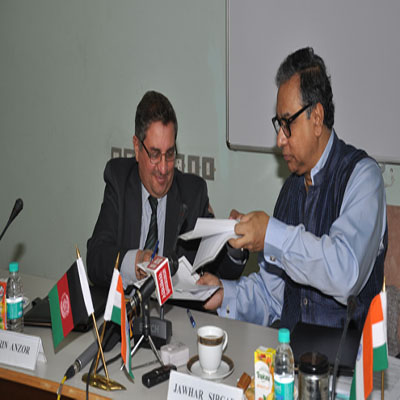
    RTA today signed a Memorandum of Understanding with Prasar Bharati which will enable the two public service broadcasters to exchange programmes and India will extend help to Afghanistan in infrastructure. The MoU was signed by RTA director general Zarin Anzor and his counterpart in Prasar Bharati, Jawhar Sircar. Abdul Rahman Panjshiri, head of international relations in Afghanistan, was also present, apart from All India Radio Director General L D Mandloi and other officials.


    The news channel will initially telecast news for six hours but will gradually become 24×7 channel.


    Afghanistan will send ten journalists and editors to India for training with the public service broadcaster to upgrade their talent pool, particularly, for their proposed News channel.


    An MoU was signed by him and CEO, Prasar Bharati on 27 to further strengthen bilateral cooperation between the two countries in the field of broadcasting.


    As part of its programme of development and reconstruction of war-ravaged Afghanistan, the government has already been providing assistance in the field of Broadcasting and Telecommunication and implemented several projects in various parts of Afghanistan. Sircar said that Prasar Bharati has been helping Afghanistan earlier on an ad hoc basis, but this agreement formalized the framework.


    A number of transmission towers and television studios with modern equipment have been provided.


    RTA has a network of 24 TV transmitters with downlink facilities at various parts, one 100 KW Short Wave transmitter with seven antennas catering service to its neighbouring countries and one Uplink Earth station in Kabul providing connectivity.


    The Afghan delegation requested Prasar Bharati and the Broadcast Engineering Consultants (India) Ltd. (BECIL) to help in repair and maintenance of the existing transmission facilities such as Uplink, Short Wave transmitter, and TV network.


    As there are lot of similarities in Indian and Afghan culture, RTA is very keen to have Indian programmes related to serials, documentaries, scientific programmes, films, etc.


    Doordarshan has already agreed to send two senior TV producers to RTA to help improving the quality and bring creativeness and innovations in their home productions. Prasar Bharati has accepted the requests from RTA and has assured it all possible help in achieving their goals.


    Addressing mediapersons, Anzor said the Afghans are very fond of Indian films and understand Hindi and Urdu. However, he agreed that its radio wing could take programmes in Dari and Pushtu languages from the External Services of All India Radio.


    Sircar said that the exchange of programmes would be on a ‘gratis basis’ and India will bear the costs. There were possibilities of production as well, he added.


    Panjshiri said short wave signals were not dissipated, and so AIR should be able to provide signals in medium wave or FM as Voice of America was doing. He said that Afghanistan would also like to learn from the Indian experience in Digital Radio Mondiale (DRM).


    He said Afghanistan today had forty TV channels, four FM channels, and eight AM transmitters – in the private and public sector. There are five private news agencies apart from one run by the government.


    Anzor admitted that there had been lack of communication, when it was pointed out to him that Afghanistan could pick up the streaming of AIR bulletins from its website and broadcast this in that country.
  • Bollywood actors to feature on ‘Star’ every weekend on Times Now

    Bollywood actors to feature on ‘Star’ every weekend on Times Now

    NEW DELHI: The Times Now news channel is commencing today the telecast of ‘Star’, a new show giving a glimpse into the life of Bollywood actors.


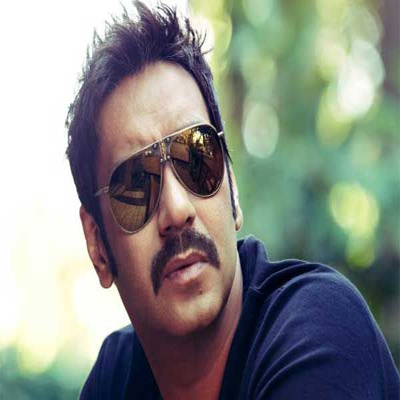
    Commencing today at 8.00 pm and repeated on Sunday at 12 noon, the first episode will feature the charismatic Ajay Devgn.


    The show will take viewers on a candid journey into the life of a Bollywood actor with unrestricted access into the star’s life – unscripted, unrehearsed and uninhibited content.


    One hour of exclusive conversation with the actor, more intimate and beyond the vanilla studio appearance, the show will delve straight into their personal life giving the audience a direct access to never seen before life of your favourite actor. The conversation will be in breaks during a shoot, getting ready for a meeting, interacting with fans, travelling for work.


    The launch episode showcases an actor who has done it all, from action to comedy to playing the baddie. Star will give the audience a chance to get to know this mysterious superstar who has been known to avoid media.


    Part of the first show with Ajay Devgn has been shot in a chartered flight, where Ajay candidly spoke about his preference on the location of his shoots; he is not a fan of outdoor shoots.


    Ajay is a family man and always likes to leave the sets by 6 p.m. Night shoots are an absolute no for him. Known for sporting one of the best male bodies in Bollywood, this can be attributed to Ajay following a strict workout regime but he confesses that he cannot quit smoking and alcohol.


    Ajay’s explosive revelation came when he admitted on the show his intention to walk away from the limelight in five to six years to take a long break and return back as a strong character artist, the Robert De Niro way.


    Star will feature the most successful and exclusive Bollywood actors like Ajay Devgn, Ranbir Kapoor, Deepika Padukone, Ranveer Singh, Sonam Kapoor, Surya, Ayushman, Ramcharan and others in a never seen before avatar and without the proverbial lights, camera, and action! Get to know what really happens behind the scenes, during rehearsals, the truth behind the so called cat-fights.

  • Rajat Sharma gets nod for second news channel

    Rajat Sharma gets nod for second news channel

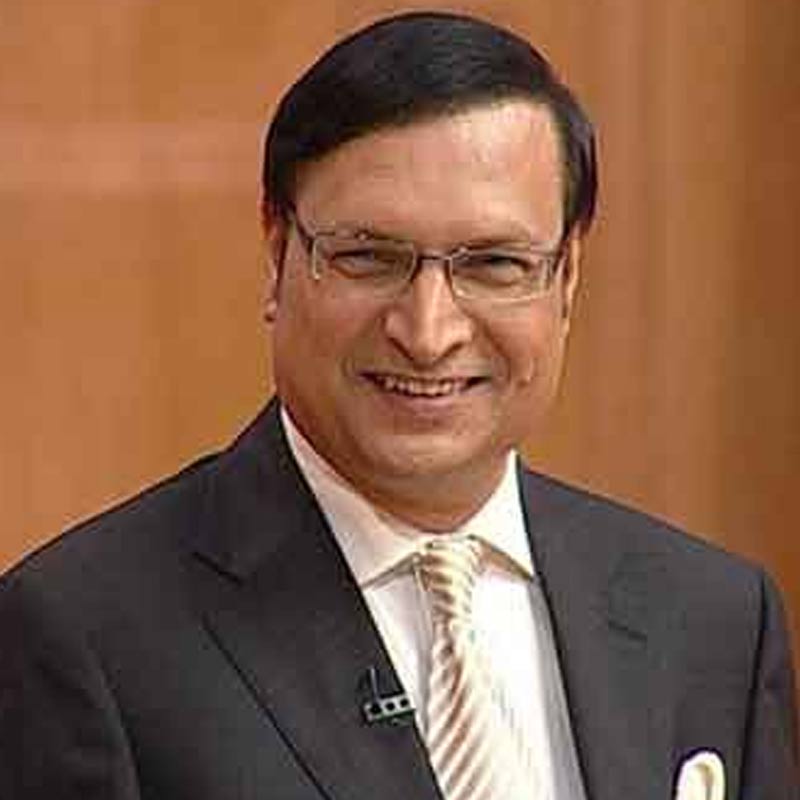
    NEW DELHI: After tasting success with India TV, founder-promoter Rajat Sharma is readying to launch his second news channel.

    Sharma has got the nod from the Information and Broadcasting Ministry to launch India TV Wiz, a news channel in Hindi and English.

    Sharma, who is Chairman of Independent News Service, said the permission was received yesterday. “Wiz will be up in six months, perhaps earlier in beta form. You will see a truly unique bouquet of content that will make it a nationwide phenomena,” Sharma added.

    The 24-hour channel will be available on analogue cable and all digital platforms. The aim will also be to connect with new-age audiences through the “fast-emerging digital media business, India TV Interactive.”

    “Wiz will break the mould. It will give premium advertisers a bouquet of screens that support true marketing innovation, reaching their message to top-of-the-line-audiences across Tam cities and the next wave of conditional access markets. Wiz will be plugged on to new media and mobile platforms from Day One. Finally, Wiz will power a world-class partner for international news,” said Sharma.

    INS launched India TV in August 2004. Fuse+ Media, an entity of ComVentures, a leading Silicon Valley-based venture capital and private equity group with over $1.5 billion of assets under management, took 19.17 per cent stake in INS for Rs 509 million. This valued INS at Rs 2.70 billion. In early 2008, after another strategic investment, INS’s enterprise value climbed to Rs 5 billion.

  • Prakash Jha to launch news channel

    Prakash Jha to launch news channel

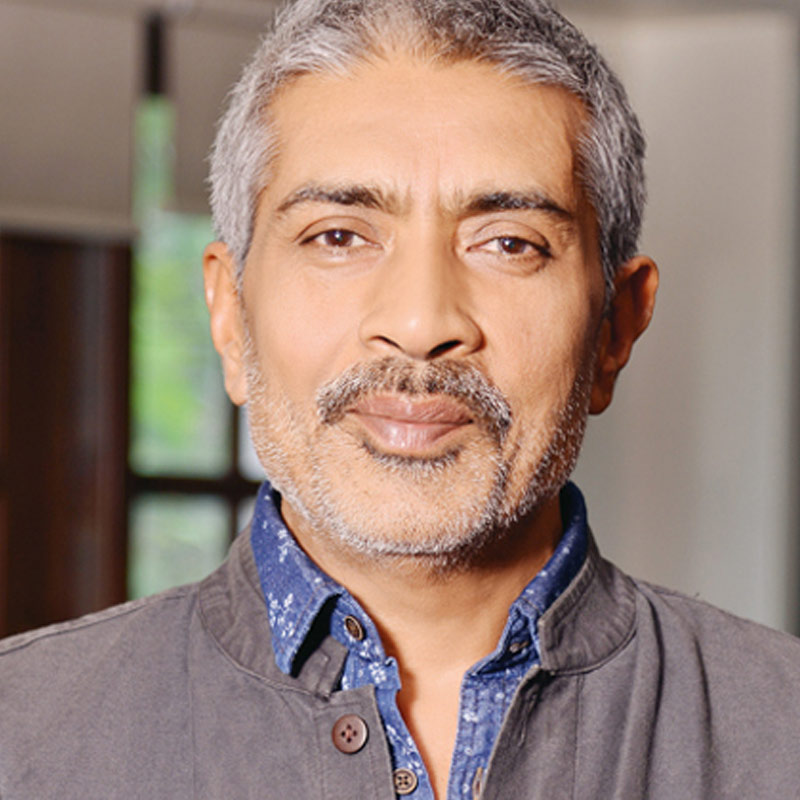
    MUMBAI: Filmmaker Prakash Jha is all set to launch his news and current affairs channel, Maurya TV, in Bihar.

    To be based in Patna, the 24-hour, free-to-air channel will air in Bihari language. “This will be an infotainment channel and will cover everything related to Bollywood, politics, news and society,” reveals Jha.

    According to Jha, the team for the setup is already in place and the process of chosing an individual to head day-to-day operations for the channel is currently in the final stages.

    Manmohan Shetty will be an investor in Jha’s project.

    The clearance of the channel was secured from the I&B Ministry a year ago and the channel in all probablity will start functioning two months from now, adds Jha.

  • ‘Burgeoning distribution costs eating into money that should have been spent on content’

    ‘Burgeoning distribution costs eating into money that should have been spent on content’

    Much has happened this year and yet not a lot has happened.

    For India TV it has been a good year. Two years ago we were number six or seven in the news channel category, with a 5 to 6 per cent share; today we are number three with a 17-18 per cent share.

    The broadcasting industry has seen a huge amount of debate and discussion on the proposed Broadcast Bill and the Content Code. It perhaps looks to an observer like there is much heat and no movement, but I do believe such debate and discussion is essential.

    This is not something that can be done in a hurry. It has very wide implications in a country as free as India, where the media are genuinely free.

    And while the arguments for and against regulation are many, the fundamental thing is that any attempt to legislate a free media has to be done with a great deal of care. It is at the heart of Indian democracy. And as the world acknowledges, we may have a myriad problems but we are a robust democracy despite all odds: it is too valuable to risk.

    On the Content Code there has been a discussion for well over a year, and the government has been open to dialogue, which is excellent. The broadcasters have offered to create their own Code for self-regulation.

    The government has welcomed the offer of the industry to develop its own Code, as it has accepted and notified the ASCI Code for advertising. ASCI is a voluntary body, so the government has encouraged self-regulation, which is great.

    The single biggest problem in the industry today is distribution. It is getting more and more competitive, as more and more channels come into business. The cost is enormous and growing wildly, and it is hurting every broadcaster from the biggest to the smallest, FTA or pay.

    In this battle MSOs and LCOs point fingers at each other, but either way it is costing the broadcaster. And money that could and should have been spent on content is getting spent on distribution instead, and it weakens the industry.

    And as that burgeoning cost is eating into money that could and should have been spent on content, in the end it is affecting the viewer, with no medium term solution in sight.

    Digitisation is the only real answer. Digitisation is slowly coming in the non-CAS areas, but the operative word is ‘slowly’. Anything that the government can do to accelerate digitisation will be for the good of all, mostly for the good of the consumer.

    The other important thing with growing competition is the issue of audience measurement. Periodically there is heated debate, and everyone has an expert opinion on the subject. But listen to what each broadcaster says, and you know how good their ratings are: why else are yesterday’s critics silent today and why were today’s critics silent yesterday, when the system has been the same for years?

    And even as broadcasters and agencies criticize the measurement system they continue to use the data to help in buying and selling Rs 5-6,000 crore worth of advertising, on the nonsensical plea that some data is better than no data.

    There have been impassioned complaints about how the broadcasters and production houses are victims of the rating system, how every Friday when those wretched numbers come in they have to slog overnight to fix the content according to what the numbers tell them.

    It’s Aamir the actor who acts for a living versus Aamir the brand whose equity must be protected, grown and leveraged
    _____****_____

    That’s like a hypochondriac taking his temperature and blaming the thermometer. No one is forcing anyone to use the data, much less what to do about it. If you choose to be tyrannised by it, that’s your choice.

    That is not to say the current system is perfect. That it needs upgrading is beyond doubt. The industry has taken the initiative in that, with the formation of the Broadcast Audience Research Council.

    Whatever the outcome, it can only lead to a better, more robust measurement system.

    The best thing that has happened this year?

    It may sound like a strange thing to say, but to my mind the best thing that has happened is the ongoing debate about the Broadcast Bill and the Content Code. It brings many issues to the fore, many things that we need to be more aware of and many that we need to engage with the government about.

  • Positiv TV plans to launch national news channel ‘Focus’

    MUMBAI: Guwahati-based media company Positiv TV is planning to launch a bi-lingual national news channel ‘Focus.’ The target date is 26 January, 2008.

    “We will launch the news channel after the initial dry run. We are aiming at a 26 January launch if there are no procedural delays,” says Positiv TV promoter Manoranjana Sinh.

    With bureaus spread across the country, Focus’ head office will be in located in Noida.

    Positiv TV currently operates a bi-lingual news channel in North-East ‘NE TV’, a bi-lingual entertainment channel NE ‘Hi-Fi’ and a Bengali infotainment channel NE Bangla in West Bengal.

    Sinh says NE Bangla will be re-launched as a news channel on 2 December. NE Bangla operates out of Kolkata. Headed by Ramesh Gandhi, NE Bangla gets its content from Rainbow Productions. Earlier Rainbow Productions provided content to ATN news and DD.

    As reported earlier by Indiantelevision.com, Positiv TV will be also launching two news channels for Jharkhand and Hyderabad.

    The company will first launch Hamar TV in Jharkhand followed by HY TV in Hyderabad.

    North East Multimedia, the radio venture of the company, operates three FM stations in Guwahati, Shillong and Agartala. By the year end, it will roll out the fourth station in Itanagar to complete launching all stations of which it has obtained license.

  • B.A.G Films & Media firms up editorial team for upcoming news channel

    MUMBAI: B.A.G Films & Media Ltd has beefed up its editorial team for its upcoming news channel with a slew of new appointments.

    The position of executive editor has been filled by Vibhakar and Rahul Mahajan. Vibhakar comes from Times Now where he was working as national affairs editor. His association with TV journalism has been for the last 10 years in various organisation like Aaj Tak and Zee News.

    Former Star News chief of bureau Mahajan was leading the national and city bureau. He has also been with Zee News and Aaj Tak.

    Sayeed Ansari has been appointed associate executive producer and anchor. Santosh Tiwari has been appointed as deputy editor – business and Kartikeya Sharma as chief political correspondent and anchor.

    Ansari quit Star News to join Bag Films and Tiwari comes on board from Aaj Tak where he was handling the business bureau. Sharma also comes in from from Aaj Tak where he was covering the PMO, Congress, cabinet and parliamentary affairs in addition to elections and other political events.

  • Iran launches English news channel

    MUMBAI: Iran’s state broadcaster has launched an English news channel Press TV, aiming to break the stranglehold of the West over the world’s media. Its competition ioncludes BBC, CNN, France 24 and AL Jazeera.

    The channel will focus on Middle East news. Iranian President Mahmoud Ahmadinejad has been quopted in reports saying that the network should stand behind oppressed nations but not make up news in their favour.

    The channel would, thus, pave the way for people’s acquaintance with an alternative voice and view. Press TV programmes hover on half hour news bulletins, reports, live talk shows and documentaries.

  • News broadcasters look at innovative ad sales

    News broadcasters look at innovative ad sales

    Mumbai: The approximately Rs. 600-700 million news market in India may get radically stirred if a proposal being considered by the newly-formed News Broadcasters Association of India sees the light of day.

    According to the still-under-discussion proposal, Hindi language news broadcasters with sizable market shares are looking at the pros cons of offering a uniform advertising rate to clients.

    The proposal, reportedly mooted by a few news market leaders in India who are part of News Broadcasters Association of India, may initially exclude the English news channels from this proposed uniform approach to ad sales, which might be a stumbling block in it going through.

    Scepticism notwithstanding, one news channel head admitted that the proposal is being considered.

    “It’s (having common ad rates across Hindi news channels) certainly on the agenda, but there are too many ifs and buts to be sorted out before any possibility of actual implementation,” the chief executive who did not want to be named said.

    The executive explained that the idea is to find common ground on various news broadcast-related issues, including infrastructure, distribution and, probably, ad sales too.

    Still, the revenue sharing formula being suggested too is debatable. As per an initial suggestion, after offering common ad rates, the revenue would be split amongst news channels as per respective market share in terms of viewership and ratings.

    For example, if Rs. 100 is generated through this common plank, then the bulk of it would go to the news channel boasting the largest market share and then split up as per market share percentage.

    However, another news channel head questioned the model suggested, saying the proposal may be “lofty, but the revenue share formula would throw up various questions.”

    Still, most news channels admit there’s no denying that having common approach to issues, including editorial, distribution and infrastructure, is worth exploring in the Indian market as certain expenses are spiraling.

    For instance, distribution and placement charges of news channels have increased manifold over the last two years with limited bandwidth of cable networks and mushrooming news channels.

    Presently, the major Indian news channels in Hindi and English include Aaj Tak, Star News, Zee News, NDTV India, NDTV 24×7, Sahara’s eight-odd channels, India TV, CNBC TV18, Awaaz, CNN IBN and IBN7.

    The News Broadcasters Association of India is also in the process of finalizing content code for its member companies and exploring having an ombudsman on the lines of Editors’ Guild of India, which primarily oversees the print medium.

  • Channel7 news channel renamed IBN7

    Channel7 news channel renamed IBN7

    NEW DELHI: What had been earlier put off has finally happened. Channel7 has been rechristened IBN7 and has been sporting the new name from India’s Independence Day, 15 August.
    This has been done to integrate the synergies between English language CNN IBN and the Hindi Channel7, in which the Television Eighteen Group bought controlling stake earlier this year.

    The on-air look of IBN7, including the channel ID, programme stings, on-air graphics, will give the channel a contemporary look and feel. The logo of IBN 7 in red, black and white reflects the brand identity and corporate philosophy of Global Broadcast Network (GBN), which is in sync with CNN IBN, an official statement said.

    Eight months ago, the Television Eighteen-controlled GBN had presented CNN IBN, which over the period has become a leading English news channel, driven by the spirit of Whatever it Takes.

    Now this spirit extends to IBN 7, which would embark on the principle of delivering khabar, har keemat par or Whatever it Takes, the statement added.

    Highlighting the philosophy behind this move CNN IBN and IBN7 chief editor Rajdeep Sardesai was quoted in the statement as saying, “We are delighted to launch IBN 7, our 24-hour Hindi news channel for the benefit of the Hindi news viewers. With the introduction of IBN 7, GBN attempts to expand its reach in India.”

    He added: “We are confident that CNN-IBN and IBN 7 together will bring to the discerning viewers a holistic approach to news delivery.”

    According to IBN 7 managing editor Ashutosh, the channel will present multi-genre news programming package for the Hindi news viewers and the focus will be on building a channel that broadcasts news as it happens, when it happens, wherever it happens.

    It was 19 January 2006 that Indiantelevision.com first broke the news that GBN, owners of English news channel CNN IBN, were in talks with Jagran TV, parent company of Channel7, aimed at making the Hindi news channel a part of the GBN stable through a joint venture.