Tag: News Broadcasters Association

  • NBA condemns attack on journalists and camerapersons in Chennai

    NBA condemns attack on journalists and camerapersons in Chennai

    MUMBAI: The News Broadcasters Association (NBA) has condemned the attacked on Times Now and Headlines Today by the Dravida Munetra Kazhagam (DMK) cadre in Chennai on 18 May.


    Cameramen and journalists of the two channels were attacked while they were covering the news of DMK leader Stalin’s resignation. According to TV reports, cameras and video footages were damaged.  One cameraperson has also been admitted with severe injuries.


    NBA president KVL Narayan Rao called it a “cowardly attack meant to intimidate journalists carrying out their work in disseminating news and information, a service that is essential for any democratic society.” He urged Tamil Nadu chief minister J Jayalalithaa to ensure that journalists were allowed to perform their duties in a free and fearless manner.


    He also requested that the state authorities would take action against the culprit(s) to ensure such incidents are not repeated.

  • NBA, DUJ condemn AAP’s remarks about media

    NBA, DUJ condemn AAP’s remarks about media

    NEW DELHI: The News Broadcasters Association (NBA) has expressed shock at what it described as ‘the unverified and objectionable’ allegations being made by Aam Aadmi Party leader Arvind Kejriwal and his associates against news television channels. The leaders of AAP have been alleging that news channels have been “paid” by rival political parties to drive their agenda in the run up to the general elections.


    NBA has reminded Kejriwal and his associates that the electronic media is independent and is discharging its responsibilities in a fair, transparent and balanced manner and urged AAP not to hurl unsubstantiated and unverified charges at the electronic media.


    NBA requested Arvind Kejriwal, the convener of AAP, to immediately refrain from making such preposterous allegations failing which NBA members would be forced to reconsider coverage of the activities of the Aam Aadmi Party.


    The Ethics Council of the Delhi Union of Journalists also condemned both repeated vile sniping against select media channels and the equally venomous threats to select media by the AAP.


    It said the DUJ is deeply concerned at the falling standards of objectivity in media coverage of the current elections by some TV channels, working on the assumption that they are key players in deciding who will rule the country.


    Sensationalism and hype are very evident these days in election reporting, particularly in coverage by television channels and other electronic media. Attempts to influence and manipulate the media through various means are also in evidence.


    The DUJ said: “As journalists, we cannot condone the AAP Party’s strong language against the media in various papers on 15 March but we also recognise that the media itself loses credibility if it carries paid news and biased views. Hence we demand an impartial inquiry by the Election Commission into the allegations made into the election coverage so far.”  


    The Press Council too must objectively examine the election coverage to detect any irregularities rather than just issue guidelines which these days are not followed.


    The DUJ further demanded that the Election Commission conduct an impartial inquiry into the ostensibly objective election polls being flashed by various media. The allegations of manipulation of poll results on behalf of various political parties need to be addressed.


    The DUJ added that the economic crisis has made the media, particularly the electronic media, vulnerable to influence from big advertisers. It is well known that the election propaganda budgets of the two main political parties are enormous and that much of this money is being fuelled into the media, whether in the form of advertising or otherwise. Some other parties also have substantial budgets for media campaigns. The spate of government advertising over the past months has been clearly aimed at influencing the voting patterns in favour of the ruling party.  The increasing ownership of media by powerful corporate houses is also adversely influencing the media’s objectivity.          


    DUJ president Sujata Madhok and General Secretary S K Pande said: “We uphold the right of all journalists to report news and views freely and fearlessly. We call for greater vigilance within the media to ensure that the highest standards of professionalism prevail.”

  • Is blaming the watchdog politicos’ new defence matra?

    Is blaming the watchdog politicos’ new defence matra?

    MUMBAI: The countdown to the general elections has well and truly begun, what with political parties and their prime ministerial hopefuls engaging in an unending game of one-upmanship.


    What is surprising though is that this time round, the fourth estate, otherwise hailed as ‘the watchdog of democracy’, is at the receiving end of this mud-slinging match.


    For starters, two years after an Indian Express report about the controversial movement of two army units towards the national capital, General VK Singh, who was the then army chief, opted to call the reporters ‘presstitudes’ while dismissing the article as ‘the fable of a sick mind’.  


    Then, Arvind ‘Aam Aadmi’ Kejriwal, during his recent speech at Rohtak in Haryana, alleged that Mukesh Ambani had bought some TV channels and newspapers and asked them to give extensive coverage to Rahul Gandhi and Narendra Modi.


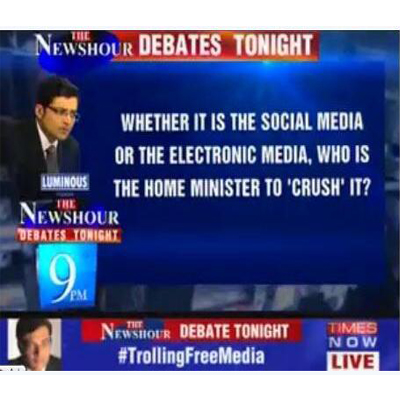
    Just the other day, at a Congress function in Solapur, Union Home Minister Sushil Kumar Shinde threatened “to crush elements in the electronic media spreading false propaganda” although he clarified the very next morning that he was targeting “social media, not journalism”.


    And while on the subject of social media, readers will recall how West Bengal Chief Minister Mamata Banerjee, known for her stiff stance on most issues, got a Jadavpur University Chemistry Professor arrested for allegedly circulating ‘anti-Mamata’ cartoons on the Internet in 2012.


    The same year, a similar fate befell a small scale industrialist who was arrested for allegedly posting ‘offensive’ messages on social media targeting Union Finance Minister P Chidambaram’s son Karti.


    Yes, social media can often be a double-edged sword but what is equally important is that it has given the aam aadmi a voice.


    Times Now Editor-in-Chief Arnab Goswami puts it correctly when he says that the media is variously termed as good or bad depending on whether it praises or bashes politicians. Indeed, politicos trolling media to suit their purpose was the subject of a News Hour debate not so long ago while #Trollingfreemedia had the Twitterati debating the issue endlessly.


    So much so, the Editors Guild came out in protest with a statement that read: “Ironically, leaders who built up reputations and support by engaging the public through the media are now turning on the very media when they come under critical scrutiny.”


    The News Broadcasters Association (NBA) too issued a press statement saying: “A news channel’s endeavour is to cover news-worthy events across all segments of national and international life and to present news to viewers, which is current and relevant. The media provides a service that is essential for any democratic society. This is particularly important when the most fundamental aspect of a democracy, the elections are round the corner. At such a time, the media plays an indispensable role in enabling citizens to stay well informed and make important choices. There can be no acceptable reason for attacking the media on frivolous, unsubstantiated grounds. Intimidation and preventing the media from performing its duties amounts to interfering with the freedoms enshrined in and guaranteed by the Constitution.”


    The NBA specifically appealed to political leaders across parties and public figures not to level baseless charges against the media and keep the discourse civil and sane.


    Somehow, now media has become everyone’s punching bag. Nonetheless, journalistic maturity is needed without losing the enthusiasm, energy and insightfulness.
  • NBA asks politicians to keep political discourse civil and sane

    NBA asks politicians to keep political discourse civil and sane

    MUMBAI: New channels normally throw the spotlight on politicians. As the ensuing elections to the Lok Sabha are turning out to be the most bitterly fought, it is the new channels that are coming under attack from politicians.


    Former Delhi chief minister Arvind Kejriwal recently lashed out at TV news channels. He accused the news channels of being biased towards BJP’s prime ministerial candidate Narendra Modi and Congress’ poll campaign chief Rahul Gandhi.


    On Monday, home minister Sushil Kumar Shinde shocked the media fraternity when he claimed that the intelligence wing had been keeping a tab on news channels and that the government would ‘crush’ the elements in electronic media engaged in spreading false propaganda.


    In the wake of these attacks, the News Broadcasters Association (NBA) has decided to hit back. It has objected to the kind of unwarranted criticism news channels are faced with.


    A statement issued by the NBA said:


    “News Broadcasters Association (NBA) objects to the unverified, unsubstantiated and highly defamatory charges being levelled against news channels by Mr Arvind Kejriwal of Aam Aadmi Party (AAP) and their members attributing corrupt motives and accusing the electronic media for not giving enough coverage or ignoring this or that party, without specific details to substantiate such charges. It is shocking to note that the very parties that gained immensely from media coverage are today turning against the electronic media, when they are under scrutiny on issues of governance.


    NBA is equally shocked by the statement of the Home Minister of India that he would crush the electronic media and that a “close watch” was being kept on them.


    NBA categorically states that a news channel’s endeavour is to cover news worthy events across all segments of national and international life and to present news to viewers, which is current and relevant. The media provides a service that is essential for any democratic society. This is particularly important when the most fundamental aspect of a democracy, the elections, are round the corner. At such a time, the media plays an indispensable role in enabling citizens to stay well informed and make important choices. There can be no acceptable reason for attacking the media on frivolous unsubstantiated grounds. Intimidation and preventing the media from performing its duties amounts to interfering with the freedoms enshrined in and guaranteed by the Constitution.


    NBA appeals to political leaders from all parties and public figures not to level baseless charges against the media and keep the discourse civil and sane.”

  • Ministry of Home Affairs gives security clearance lifeline

    Ministry of Home Affairs gives security clearance lifeline

    MUMBAI: In a positive move, news broadcasters got a new lease on life when the Indian Home Ministry extended the current three year term of security clearance given to broadcasters to cover the entire duration of the channel’s licence. Currently, licences given to TV channels are for 10 years.

    According to a PTI report, the Home Ministry also mentioned to the Ministry of Information and Broadcasting (MIB) that this was a temporary measure and the issue will be relooked by a committee of secretaries that will then give its final recommendations.

    This comes as a major relief for broadcasters who had been stumped suddely last year when it came to be known that security licences
    given to companies running channels were only valid for three years.
     

    News broadcasters approached the MIB through the News Broadcasters Association (NBA) then to consider the extension of the clearance to 10 years which then wrote to the Home Ministry.
     

    So for now channels can be rest assured that their security clearances will be ‘co-terminus’  with the channel licence.


    However, existing companies will have to seek approval from the Home Ministry  if they want to start a new channel or add a new director to the board.
     

  • News channels want longer security clearance period: Tewari

    News channels want longer security clearance period: Tewari

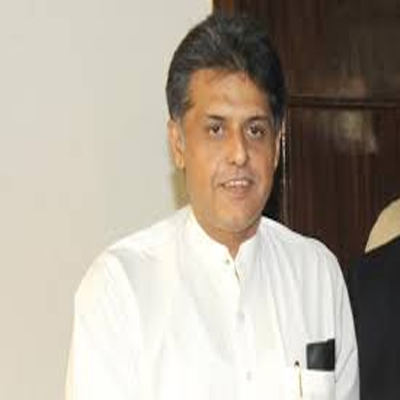
    Mumbai: News broadcasters have approached the ministry of information and broadcasting to increase the number of years they get security clearance for the channels they run. This was revealed by I&B minister Manish Tewari today in the Lok Sabha in reply to a question, says a Press Trust of India report.


    Current regulations put the security clearance given to a company and its directors validity period at three years, and the News Broadcasters Association has made a representation to the I&B ministry to extend it as it makes things difficult for them, disclosed Tewari.


    Adding to the news broadcasters woes is the Ministry of Home Affairs’ (MHA) decision that a media company should apply for fresh clearances for a new channel even if the firm has got security permissions earlier. Permissions for uplinking and downlinking of channels are issued for 10 years, and hence this has created an anomalous situation.

  • TDSAT ad cap: All arguments done

    TDSAT ad cap: All arguments done

    MUMBAI: It has been a long three weeks of hearings at Telecom Disputes Settlement Appellate Tribunal in the ad cap case between the News Broadcasters Association and other channels versus the Telecom Regulatory Authority of India (TRAI). Several arguments went back and forth between all the parties and, finally, it has come to an end.


    The last day saw the music channels, Polimer Media and TRAI give their rejoinders. Polimer Media’s rejoinder was that Article 19 1 a of the Constitution does not apply in this case since it is not a writ petition. It also said that pay channels and FTA channels cannot be treated the same.


    The music channels’ counsel Ramji Srinivasan argued that TRAI cannot use both section 36 and section 11 of the TRAI act for the regulation and now do a flip and call it a direction. If TRAI did want to frame the regulation, it should have done so under section 36 and not used multiple sections from multiple acts.


    However the music channels’ counsel said that they do have a license from the TRAI but if the regulator wants to use it then it needs to to apply section 7 (11) of the Cable TV Networks act strictly without additions or subtractions.


    He also presented data showing the effect the ad cap will have on their revenues. He said that channels in this genre will need to resort to a 30 per cent hike in ad rates if the cap does come into effect.


    Srinivasan said that amicus curiae Aman Ahluwalia had said that news channels will be severely affected by ad cap since their viewership is low; similarly the music channels are also in danger since they are are also niche with a limited viewership. And hence the ad regulation should not be applied to anyone at all.


    Finally the TRAI gave its rejoinder clarifying that it has framed a regulation under section 36 of the TRAI act and if the TDSAT feels it is a direction then it is not impeded in saying so. However the regulator maintained that it is not a direction, it is a regulation.


    The TDSAT is supposed to announce its judgement on the case.

  • TRAI issued notice on appeal by consumer body seeking proper regulation of ads on channels

    TRAI issued notice on appeal by consumer body seeking proper regulation of ads on channels

    NEW DELHI: The Telecom Disputes Settlement and Appellate Tribunal (TDSAT) has issued a notice to the Telecom Regulatory Authority of India (TRAI) on a petition by a consumers body demanding the proper regulation of advertisements on cable and satellite television channels.


    TDSAT said yesterday that it will hear the appeal after other related matters such as the appeal by the News Broadcasters Association have been heard.


    Consumer group MediawatchIndia had approached TDSAT with an appeal that had sought to ‘remind TRAI of its statutory responsibility to check the illegal and unfair practices of television broadcasters who had been indulging in ‘part-screen’ and ‘high-decibel’ ads.’


    The consumer group has complained that commercials played during programmes have a higher decibel level than the programme they are interrupting. Commercials as well as promotions of other shows keep appearing on the screen in the middle of the programmes thus distracting the viewer.


    Mediawatch in its appeal sought to “challenge the abrupt, unilateral and mala fide act of TRAI in omitting sub-regulations 3(5) & 3(6) Standards of Quality of Service (Duration of Advertisements in Television Channels) Regulations 2012 that deals with “distracting formats of advertisements (part-screen and drop down ads, scrolls etc. interfering the main programme)” and “loud commercials (high audio levels of advertisements vis-?-vis that of programme).”
    Mediawatch, earlier in June, made a representation before the Information and Broadcasting Ministry requesting action on the issue.

  • NBA denies violation of rules as ICC threatens to sue

    NBA denies violation of rules as ICC threatens to sue

    NEW DELHI: Though relieved at being allowed World Cup coverage of the final contest between India and Sri Lanka, the News Broadcasters Association (NBA) reiterated that its members had scrupulously adhered to the NBA News Access Guidelines and the dispensation available to them under Indian laws which clearly must prevail over ICC’s unilateral actions.

    Rejecting the ICC position that its Members had violated any Guidelines, NBA said its members had acted in consonance with the invariable practices followed in the past (including for ICC events), in the face of ICC’s attempt to deviate from standard accepted business practices prevalent in India.   
         
      Noting that the ICC had seen reason and understood the true nature of the India – Sri Lanka final match and restored accreditation to its Member Channels, NBA said this was “in large measure due to the constructive intervention of the Ministry of Information and Broadcasting, including the personal interest shown by Minister Ambika Soni, who has truly appreciated the sensitivities and rights of the Indian viewers”.

    NBA said its members are responsible broadcasters and are conscious of the rights and obligations of the parties, including those of the ICC, broadcasters and the Indian public.

    By restoring accreditation, ICC has also recognised that it must subject itself to the prevalent laws governing ‘fair use’ in the host country.

    The members will continue to strive to bring to their large number of viewers a most enjoyable coverage of the event which has always been the principle driving force of the news broadcasters, NBA said.


  • Centre to set up a media consultative committee

    Centre to set up a media consultative committee

    MUMBAI: The centre is setting up a standing Media Consultative Committee to address the growing concerns over media coverage on crisis situations. Television news channels had been criticised for the way they covered live the terror attacks on Mumbai.

    The minister of state for information and broadcasting (I&B) and external affairs Anand Sharma has said that the committee will be chaired by the secretary, information and broadcasting with representatives of key ministries, News Broadcasters’ Association (NBA), and editor’s guild as members.

    “Extraordinary circumstances require careful coverage, not hampering rescue or counter operations.” he said and added that a training programme is being introduced in consultation with the ministries of home and defence for the media persons on how to cover crisis situations, without exposing themselves to the risks.

    Meanwhile, the centre has welcomed the news coverage guidelines formulated by the NBA with respect to coverage of crisis situations. Sharma said, “It is a step in the right direction.”

    Sharma stressed upon the need for mature news broadcasting in the country, and said that the Mumbai terror attacks were a learning opportunity both for the Government as well as the media. He said that high level meetings were held between representatives of media and secretaries of key ministries like home, defence, tourism and I&B to agree upon and formulate ethics of news journalism in modern era.

    News Broadcasters appreciated the concerns expressed by various security and administrative outfits and agreed to address them, Sharma added.