Tag: News Broadcasters Association of India

  • Comment: 3 areas that new MIB minister Rathore needs to target

    Comment: 3 areas that new MIB minister Rathore needs to target

    In a recent reshuffle of his cabinet colleagues and their portfolios initiated by PM Modi, a surprise move was not Ministry of Information and Broadcasting (MIB) minister Smriti Irani’s removal, but handing the independent charge of the portfolio to her till-now junior, Rajyavardhan Rathore.

    There is some merit in giving Rathore full responsibility of MIB, which was conceptualised by the nation’s founding fathers to be the government interface with the media and public, in general. That MIB could have lost its relevance in this digital age – an issue being debated in certain quarters – is another story altogether for some other time. Why Rathore at the helm of MIB seems just what the doctor advised?

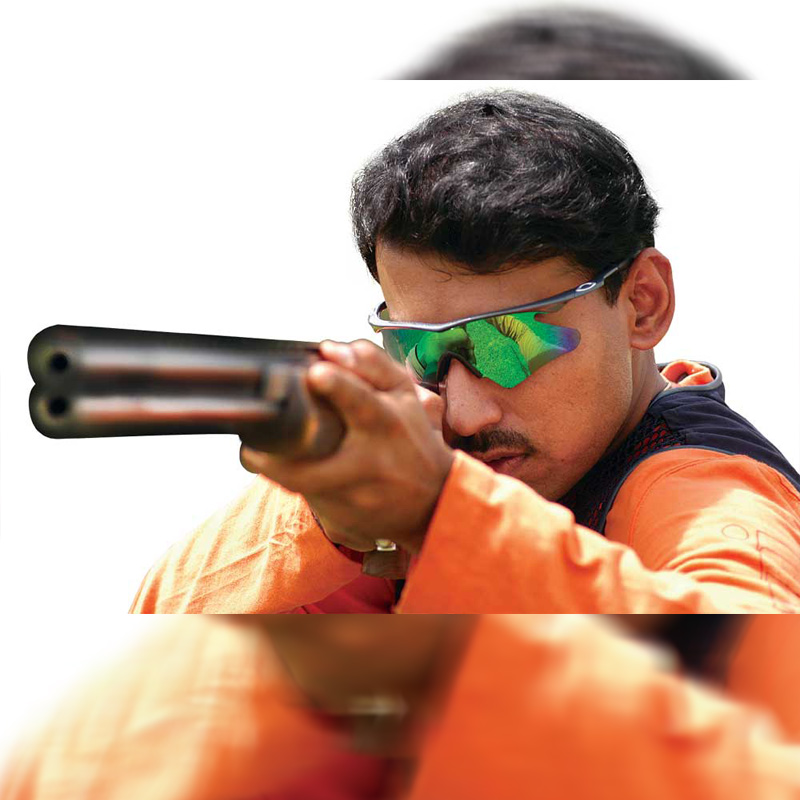
    First, he is young and suave. Second, he comes with a good pedigree of being an army officer and an Olympic medalist. Third, he’s comparatively young and has built a youth and people-friendly image, apart from his work as independent charge holder at Ministry of Youth Affairs and Sports – his latest initiative on Twitter, #HumFitTohIndiaFit , aimed at encouraging fitness by inviting celebs is already a hit on social media.

    As Rathore has served as a junior MIB minister long enough to get to know the complex issues that come with the terrain, it is expected that he is best suited to address the challenges being faced by the media industry. But for that, he needs to aim at the following three areas and hit the bull’s eye.

    Content Regulation

    The previous MIB minister waded into controversies because of her largely perceived unpopular move to create a panel in April this year to explore regulations for online media/news portals and online content. It did not help her or the government’s cause as this announcement, though being hinted at for several months, came close on the heels of a widely protested move to cancel the accreditation of journalists if found peddling fake news, while the government did not define clearly what constituted a fake news. Though the order was rescinded at the behest of the PM’s Office, the online content committee lingers on directionless and with nobody willing to father the baby presently. That this move antagonised not just online journalists, but also social media players (many of whom are backed and funded by government’s sympathisers) and video-on- demand portals is a story in itself.

    Rathore knows media in India enjoys certain constitutional freedoms, including the right to exercise freedom of speech and expression. Therefore, any move targeted at “regulating” such content shall only be interpreted as silencing criticism. That the online committee is packed with government officials with minuscule industry representation and zero presence of online media raises questions on government’s motives.

    What’s more, doubts have also been raised on the jurisdictional propriety of MIB to create such a committee in the first place. The government allocation of business rules that determine the remit of various government agencies clearly highlights that for all “policy matters relating to information technology; electronics; and Internet” only Ministry of Electronics and IT (MeITY) is competent to make decisions. The ambit of MIB is limited only to “the enunciation and implementation of the law relating to radio and television broadcasting in India by private Indian companies or Indian nationals”.

    With multiple laws applicable on online content, there seems to be no need of any additional regulation for online content, though MeITY could think otherwise, but it’s for it to take a call. Still, a self-regulating mechanism that places uniform standards over user-generated content platforms and video-on-demand portals is the need of the day. This shall also be in line with Rathore’s views expressed after assuming full charge at MIB where he stressed upon self-regulation as the only means of regulating media.

    As the final authority at MIB now, Rathore needs to walk the talk on online content regulation and, probably, let the committee set up by his predecessor die a natural death.

    Online content aside, in the world of traditional broadcasting there is a need to strengthen the already established self-regulatory mechanisms such as the Broadcasting Content Complaints Council (BCCC) of the IBF and a similar self-regulatory set-up of the NBA India.

    Ease of Doing Business

    It would be an understatement to say that the past year has been a difficult period for the Indian media and entertainment (M&E) sector what with after-effects of demonetisation of high-value currency notes and a new tax regime of GST rolled out last year. The story remains the same for ease of doing business in the sector as well.

    On this aspect, Rathore could focus on the recommendations made by Telecom Regulatory Authority of India (TRAI) on`Ease of Doing Business in Broadcasting Sector’ and implement them in letter and spirit.

    A unilateral decision by the previous leadership of MIB to impose a processing fee of Rs 100,000 per day/channel on temporary live uplinking of events (such as sports) and the same amount for seeking minor amendments (like change in name, logo, etc) has been causing heart burns.

    What was the rationale behind such moves to review processing fees? Allegedly non-revision for several years and that such a move could bring in some revenue for the government. But, should a government use licensing/permission fee as means of revenue maximisation? Probably, no.

    Another issue that demands attention from Rathore is the denial of permissions by DoS to satellite TV channels using private satellite capacity, especially foreign. Here, the newly appointed minister shall have to display his trademark leadership and try to resolve the concerns of his constituents (TV channels, DTH operators, teleport operators, etc) vis-a-vis DoS.

    Building an Investment Friendly Environment

    In the recently held global Asia Media Summit 2018 in New Delhi, PM Narendra Modi said that Asia has emerged as a promising region for media businesses and offers opportunities for international cooperation. This statement highlights his government’s push for increasing investment inflow across sectors of the Indian economy – including creative industries such as M&E.

    In this respect, Rathore will have to hit the road running — which he has done — and look at all the factors impeding investments in the sectors under him. This could necessitate reviewing licensing conditions and guidelines, which many in the industry believe hamper investments.

    Can Rathore bite the bullet and recreate the magic that he unveiled one fine day years back to get India the first Olympic medal in an individual event? Certainly, he can. Keep tuned in for the next episode.

    Also Read :

    MIB clears TV channel applications; Rathore calls for stakeholder meets

    Comment: India’s NTP 2018 gets digital makeover but needs complimentary policies

    Comment: MIB’s botched whip on fake news akin to testing waters

    M&E to add 1 mn jobs in 5 years: Sudhanshu Vats

  • MIB moves to regulate online media: various organisations join issue

    MIB moves to regulate online media: various organisations join issue

    NEW DELHI: Even as a debate on the need to regulate online news media gains momentum, various organisations have moved the Ministry of Information and Broadcasting (MIB) hoping to be made a part of the committee that will look into various aspects of proposed regulations—a panel that surprisingly doesn’t include, at present, any representation from the sector that is being sought to be brought under checks.

    According to media industry sources, Broadband India Forum (BIF), chambers of commerce FICCI and Confederation of Indian Industries (CII), Internet and Mobile Association of India and Hong Kong-based Asian media advocacy group CASBAA are amongst some of the organisations that have sought representation on the government panel to add value to the policy-making process. The MIB secretary is the convener of the nine-member panel at present.

    In an order issued in the first week of April this year, MIB had announced constitution of a committee for framing regulations for online media, news portals and online content, which would look not only look into the areas mentioned but also at digital broadcasting, entertainment and other media aggregators. The government justification has been that considering the print and electronic medium were governed by various government-mandated rules and also self-regulatory policies, online media (both news and entertainment) ought also to be brought under a similar regulatory framework.

    Though it’s not spelt out in so many words, industry observers feel that despite broadcast carriage regulator TRAI keeping away from it for the time being, video OTT and social media platforms could be brought under the proposed regulatory framework.

    The panel, despite some representation from overall media industry (Indian Broadcasting Foundation, News Broadcasters Association of India and Press Council of India), looks dominated by the government at the moment with members including secretaries from the Ministry of Electronics & IT, Ministry of Home Affairs and the Ministry of Law and Ministry of Commerce, apart from the CEO of another government organisation called MyGov.com. What raises some hope is that the convener can add representatives from any other organisation as deemed fit.

    Meanwhile, the Press Trust of India on Monday reported that the Congress attacked the Modi government over its proposal to install a chip in television set-top boxes to ascertain viewership data, dubbing the move a serious breach of privacy and the “next stage of surveillance.”

    Congress communications in-charge Randeep Surjewala alleged that I&B minister Smriti Irani wanted to now know about shows people watched within the four walls of their bedrooms. In a Twitter post, Surjewala referred to the Modi government as “surveillance sarkar” (surveillance government), raising questions over the right to privacy.

    “In a serious breach of privacy, Smriti Iraniji wants to know what show you watch on your TV, within the four walls of your bedroom, without your permission! Why? ‘Ab ki baar Surveillance sarkar’. The right to privacy broken into pieces,” PTI quoted the Surjewala tweets as stating.

    Within its lengthy views on the DTH sector, the MIB had proposed installing a chip in new set-top boxes that would provide data about channels watched and the duration of the viewing. A senior official of the ministry, according to the PTI report, said that the move was aimed at getting “more authentic” viewership figures for every channel that would “help advertisers and the DAVP (government’s media buying agency) to spend their advertising expenditure wisely.”

    ALSO READ:

    MIB forms committee to draft online media norms

    MIB proposes installation of chip in DTH boxes: Report

  • Comment: MIB’s botched whip on fake news akin to testing waters

    Comment: MIB’s botched whip on fake news akin to testing waters

    With the scourge of fake news rampant globally, any attempt to counter it is always a welcome move. And just for that India’s Minister of Information and Broadcasting Smriti Irani cannot be faulted even if such a view is radical and would be open to severe criticism-as it was in India over the last few days with a large section of civil society coming down like a ton of bricks on the minister’s assertions on guidelines for TV and print media journalists that proposed punitive penalties for breaching some undefined norms.

    However, the wording of the press statement put out by the government’s PR arm, Press Information Bureau, on behalf of MIB is what raises questions.

    First, the government statements were aimed at “regulating” fake news and not look at avenues to arrest their spread or, as the homoeopathy strand of medicine would do, go to the root cause of the ailment. The intent becomes clear: the aim was not really to find a solution to fake news in the true sense.

    Second, the timing of the guidelines, which were aimed at handing out harsh penalties to government accredited journalists from the print and electronic media, rings some more alarm bells. Though the present BJP-led government’s official five-year tenure ends mid-2019, it is widely expected that the general elections would be held before the tenure comes to an end officially—as is mostly done, but then this government has been known to break many times tested norms-if not as early as late 2018.

    On both these counts, the honourable MIB minister was found wanting and her move was widely dubbed as nothing but an initiative to gag the news media critical of the present government. That the prime minister himself had to step in to order a rollback of the MIB diktat a day later, as officially being stated, is a story in itself.

    Let’s forget for once what some of the journalistic organisations had to say in criticism of the MIB move to cancel accreditation of journalists found peddling fake news, though the definition of fake news was not elaborated, nor was the fact as to why just on a complaint from practically anybody a journalist, whose antecedents are verified by the government annually for security reasons, will be put in the hall of shame even if it’s for varied period of time.

    Two organisations, the Press Council of India (PCI) and the News Broadcasters Association of India (NBA), made responsible to decide whether the complaint on fake news was genuine or not (according to the government statement) have not much legal standing or bandwidth to do so. While the PCI is a (toothless) watchdog for the print medium, the NBA’s self-regulatory mechanism for member-TV news channels hasn’t always worked.

    Now let’s try analysing what could have prompted such a move by MIB-a move that was unveiled seemingly without taking into confidence the PM and his office.

    It’s a known fact in India, in sharp contrast to other global markets, that a TV news channel here is started, more often than not, to flaunt one’s status symbol and increase the owner’s powers (both politically and financially) rather than being a pure journalistic means. That is not saying there are no exceptions to the rule and India has some very fine and professional news channels, which daily go through the grind of living up to the high standards of journalism. But, what explains the fact that 25-30 per cent of the total 900-odd permitted TV channels in India would fall in the news and current affairs genre? And they come in all shapes, sizes and languages. If the big guns of the news and current affairs genre mostly have scarlet bottom lines, it goes without saying that the smaller news channels are barely churning out revenue. No other country in the world has so many TV news channels.

    In a year that will lead to general elections-a period after the elections are announced is when cacophony on TV news channels start peaking-clamping down on news outlets cannot be considered a bad strategy; especially when one is not used to hear criticism. Artificial barriers become natural armours. Putting on hold future permission to TV channels by the MIB till a new policy on uplink/downlink is put in place after regulator TRAI’s recommendations is one such clampdown. But then trying to gag the news media as a whole need to be thought out and well orchestrated instead of merely announcing one evening some guidelines under the garb of attempting to regulate fake news.

    And why regulate fake news? Does that mean some fake news could have been allowed, while filtering out the more damaging ones? More importantly, why target those journalists for fake news who are accredited by the government? Did that mean that non-accredited journalists, which are in huge numbers, would have been allowed to dabble in fake news? Considering most news websites and many online ventures that pretend to deal in news but hand out mostly tainted views are not accredited with the government, either at the federal or State level, the question arises whether they would have been allowed to peddle fake news? In India, fake news is more rampant on social media platforms and little known online ventures than in mainstream media.

    But Ms. Irani and her set of advisors again cannot be faulted to try regulating the news media. From the days of the infamous Emergency unleashed by then Prime Minister Indira Gandhi in the mid-70s to her son Rajiv Gandhi in the late 1980s and few other successive governments of post-independent, India has tried to muzzle at some time or other the not-so-perfect-yet-a-vibrant media of the country. Not only such moves have backfired, including the dark days of the Emergency, but in many cases the then governments had to beat a retreat in the face of stiff opposition to any such move. So much so, folklore in the complex realm of Indian politics says that all governments that tried to regulate media in any form bit the dust and were booted out of power.

    In the mid to late 1990s, just before the first NDA government came to power under Prime Minister A B Vajpayee, the then government had tried to bring in Parliament a Broadcasting Bill, envisaging wide-ranging limits to media businesses, including cross-media restrictions of ownerships. That government didn’t remain in power to see through the proposed legislation. However, that didn’t stop other governments, including the Congress-led coalitions that ruled for 10 years after 2004, to attempt limiting media independence. Manish Tiwari, a former MIB minister in 2013, had famously proposed a common examination for journalists as the minister thought media personnel were not qualified enough.

    Cut to 2018. The storm may have blown over for the time being, but for the media to sit back and relax could be dangerous. Simply because the present government is unlike any those in the past. To take satisfaction from an explanation that the PM was totally unaware of one of his minister’s moves to gag the media could be a bad strategy for the media industry. The government was just testing the waters.

    Also Read :

    PMO directs MIB to withdraw guidelines on fake news

    MIB nod to TV channels on hold till TRAI uplink, downlink suggestions

    Smriti Irani tweets industry body advisory urging restraint by TV news channels

  • MIB issues stringent norms on fake news in TV & print media

    MIB issues stringent norms on fake news in TV & print media

    NEW DELHI: Even as the government announced amendments in the guidelines for accreditation of print and electronic or TV journalists outlining punishments for breaches on account of fake news, the intention is being termed by stakeholders as debatably honourable but an indirect way to muzzle media freedom.

    On Monday, the Ministry of Information and Broadcasting (MIB) issued a statement stating that noticing increasing instances of fake news in various mediums, including print and electronic, the guidelines for accreditation of journalists have been amended with penalties and punishment factored in.

    “On receiving any complaints of instances of fake news, the same would get referred to the Press Council of India (PCI) if it pertains to print media and to News Broadcasters Association (NBA) of India if it relates to electronic media for determination of the news item being fake or not,” the MIB statement said, adding the process would be completed within 15 days.

    Once the complaint is registered for determination of fake news, the correspondent/journalist who created and/or propagated the fake news will, if accredited with the government, have the accreditation suspended till such time the determination regarding the fake news is made by the regulating agencies.

    The Accreditation Committee of the Press Information Bureau (PIB, the government’s PR arm), which consists of representatives of both PCI and NBA, shall be consulted for validation of any accreditation request of any news media agency. The punishment for peddling fake news ranges from suspension of accreditation for a period of six months in the case of first violation to permanent cancellation on third violation.

    While examining the requests seeking accreditation, the regulatory agencies will examine whether the ‘Norms of Journalistic Conduct’ and ‘Code of Ethics and Broadcasting Standards’ prescribed by the PCI and NBA, respectively are adhered to by journalists as part of their functioning. It would be obligatory for journalists to abide by these guidelines, the government statement said.

    However, a section of the news media dubbed the government move as an indirect way to muzzle media freedom in the run-up to the general elections in the country either in late 2018 or early 2019. A meeting of various journalists’ organisations is likely to be held on Tuesday in the capital to take stock of the situation.

    The present BJP-led government in New Delhi completes its five-year term mid-2019.  

    ALSO READ:

    MIB nod to TV channels on hold till TRAI uplink, downlink suggestions

  • Republic TV seeks more involvement in NBA India ahead of AGM

    Republic TV seeks more involvement in NBA India ahead of AGM

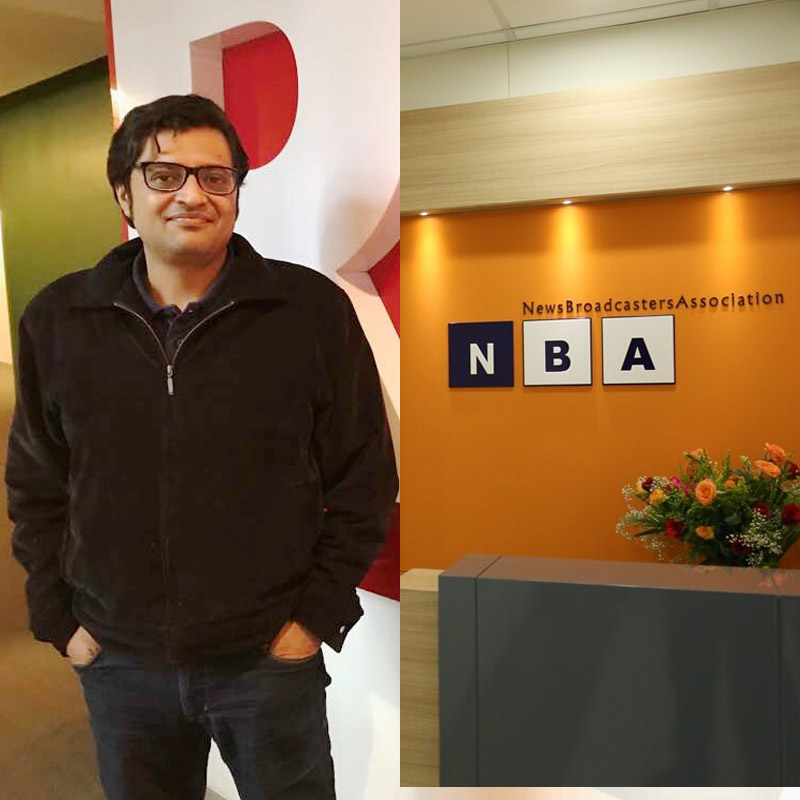
    MUMBAI: It has shaken up the Indian news broadcasting space within just a few months of its existence. Now, Republic TV, co-promoted by Arnab Goswami, is seeking to sweep clean the functioning of an industry body— the News Broadcasters’ Association of India or NBA, which, incidentally, is holding its tenth annual general meeting next week.

    Though recently it was inducted into the NBA India as a member, Republic’s Arnab, earlier in May, had dubbed the news outfit as a “cabal” and a “toothless body used for lobbying” by a chosen few people. Republic TV has now urged its concerns on  the alleged “undemocratic” ways of NBA India to be discussed in the next meeting of the industry organization.

    In a letter signed by its CEO Vikas Khanchandani and addressed to NBA India secretary general Annie Thomas, Republic TV has expressed that it would like to be an active participant in the process of addressing and finding solutions for the news broadcasters’ collective concerns.

    However, it has pointed out that a couple of governance practices in NBA India’s charter are preventing it being an active participant, labelling them as quite “undemocratic.”

    Amongst these is the provision that allows for seven “permanent” members.  Republic TV’s  assertions — “this may have been necessary in the early stages of the association, but maintaining a continued preferential even today is unjustified” — could very well set the cat amongst the pigeons if the note to NBA India is discussed at next week’s AGM and an amicable solution is not arrived at.

    The second objection of Republic TV is a provision that the NBA India board has been given powers to “induct up to two permanent directors with the affirmative vote of all the permanent directors voting in that meeting.” The letter, reviewed by Indiantelevision.com, states, “This is an arbitrary power and needs to change with the new realities.”

    Another rule, which it believes is restrictive, is the requirement of a six-month membership (before an ordinary general meeting), if a member wants to elect a representative to the association’s board. “This effectively keeps a new member like us outside the election process,” Khanchandani’s note points out, making it clear that Republic TV wants to be an office-bearer of NBA India.

    Additionally, it has alleged that the election of the NBA India office bearers, including the president, happens more by consensus rather than by an open electoral process, a system that needs an “immediate change.”

    Republic TV has stated that it would like these “permanent” practices and rules to be updated and made more relevant for today in its letter that has also been marked to the minister for information & broadcasting (MIB), secretary MIB and all NBA India members. Why the letter has been also copied to the government is not clear.

    Indiantelevision.com on Friday evening reached out to Joseph to get the NBA viewpoint and she stated that she was not authorized to speak to the media “on these matters.” The association’s vice-president and CEO & MD of Times TV Network/Times Global Broadcasting  MK Anand said he was clueless about the Republic TV letter.

    Well, this was the news bulletin for today, but keep tuned in as we keep tracking this developing story.

    Also Read: “The NBA is a toothless group,” says Republic TV’s Arnab Goswami

    NBA urges BARC not to release Republic TV viewership data until LCN issue is resolved

    New NBA member Republic TV wants regional & web players in

    Republic TV files contempt petition against Times Group

    India Today Group CEO Ashish Bagga resigns

  • News broadcasters to form association

    News broadcasters to form association

    NEW DELHI: After the Indian Broadcast Federation (IBF – representing broadcasters) and the Indian Media Group (IMG – representing Indian media companies), Indian news broadcasters are forming their own “pressure group”.

    The proposed body is likely to be called the News Broadcasters Association of India. It will comprise only Indian-promoted news ventures. The likes of BBC and CNN have their own set of problems and issues and, hence, would not be part of this new proposed body that is likely to be registered soon.

    The agenda that the body has broadly laid out is to address specific news-related issues and take them up with the government. Everybody remains a member of the IBF, but as the IBF cannot take up specific issues, TV news networks have formed their own association.

    The first meeting of the grouping was held last week in Delhi in TV Today office. No office-bearers have been elected as yet though.

    Admitted a news broadcaster, “We felt our specific needs and issues need to be addressed without confusing them with general (broadcasting) matters. That’s what the intention is behind setting up the News Broadcasters Association of India.”

    An example of the kind of issues that news broadcasters might take up include the draft of the Broadcast Bill, recently prepared by a sub-panel of a 30-member committee overseen by I&B secretary SK Arora, which hints at stringent content regulation, particularly for news channels. If okayed by lawmakers in its present state, it could well be the end of sting operations and coverage of issues where high profile politicians and personalities are involved.

    Sample this part: “TV channels must not use material relating to a person’s personal or private affairs or which invades an individual’s privacy unless there is an identifiable public interest reason for the material to be broadcast.” Who decides what constitutes an individual’s privacy? The government or the regulator? What this means of course is that it’s all up for interpretation.

    It is this scope for interpretation that has news broadcasters seriously concerned. More so since the onus of proving identifiable public interest lies with the TV channel and not the other way round.

    The interests of the print media are addressed and protected by the Indian Newspaper Association. That is the role the News Broadcasters Association of India hopes to fulfil as far as the electronic media is concerned.