Tag: News Broadcasters Association

  • News Broadcasters Association rechristens as News Broadcasters & Digital Association

    News Broadcasters Association rechristens as News Broadcasters & Digital Association

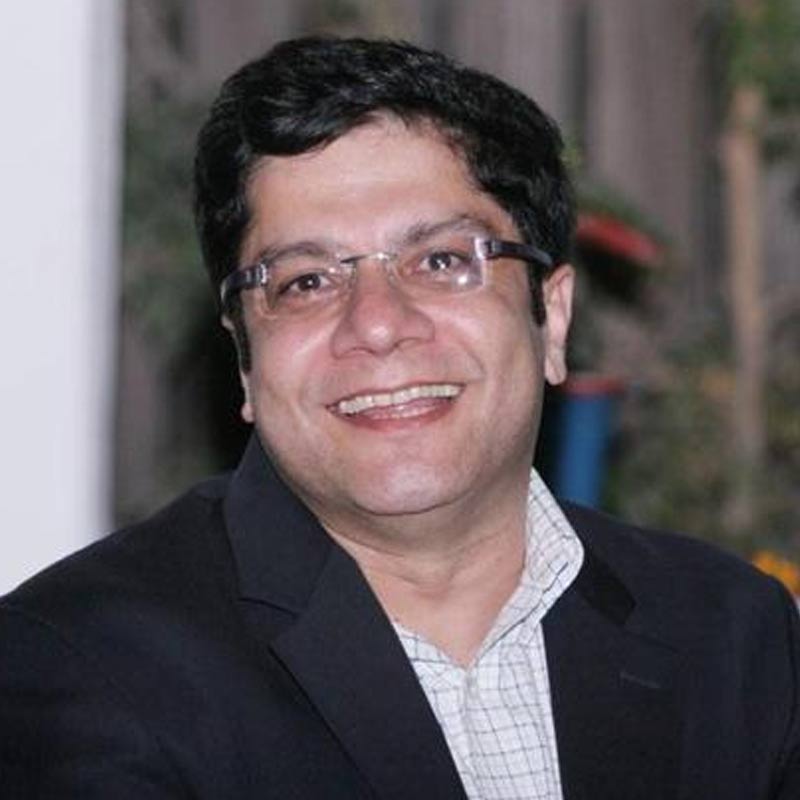
    Mumbai: News Broadcasters Association (NBA), the largest body of news broadcasters in the country, has decided to change its present name to ‘News Broadcasters & Digital Association’ (NBDA).

    NBA consists of the nation’s top-rated news channels and commands more than 80 per cent of news television viewership in India. With the media landscape has changed drastically due to technology, enormous choices have now become available to viewers to access content on various mediums and digital seems to be the future. NBA Board has decided to change the name of NBA to NBDA in order to reflect the addition of digital media news broadcasters as its members.

    “NBA has decided to bring within its purview digital media news broadcasters. In its new phase, with the inclusion of digital media news broadcasters, the NBA board has decided to change the name of the body from NBA to NBDA,” said NBA president Rajat Sharma announcing the decision.

    “I firmly believe that the NBDA will become a strong collective voice for both the broadcast and digital media. Along with commercial and regulatory issues, it will also enable the Association to defend the fundamental right of free speech and expression guaranteed to the media in the Constitution of India in a better manner,” Sharma added.

    The pride of the NBA has been the setting up of an independent self-regulatory body News Broadcasting Standards Authority (NBSA) 14 years ago. The NBSA has put in place a time-tested complaint redressal system and process, headed by eminent judges of the Supreme Court of India and eminent persons who have striven to improve broadcasting standards.

    NBDA board has decided that with the inclusion of digital media news broadcasters, the name of the self-regulatory body, NBSA be rechristened as ‘News Broadcasting & Digital Standards Authority’ (NBDSA).

  • News Broadcasters Association challenges new IT rules in High Court

    News Broadcasters Association challenges new IT rules in High Court

    New Delhi: Over a month after the new IT rules came into effect, the News Broadcasters Association (NBA) has filed a plea in the Kerala high court challenging the new rules stating that they give government authorities “excessive powers” to “unreasonably and impermissibly restrict” the freedom of speech and expression of the media.

    In a detailed statement, the NBA said the Information Technology (Intermediary Guidelines & Digital Media Ethics Code) Rules, 2021, are ultra vires to the Information Technology (IT) Act, 2000 apart from being violative of Article 14 (equality before law) and 19(1)(g) (right to freedom to practise any profession, or to carry on any occupation, trade or business) of the Constitution. It also stated the challenge is to Part III (Code of Ethics and Procedure and Safeguards in relation to Digital Media) of the IT rules as they create an “oversight mechanism giving the executive unfettered, unbridled and excessive powers to regulate the content of digital news media”.

    “The grievance redressal mechanism created and the powers delegated have a ”chilling effect” on the content of the media. The writ petition also states that the executive by creating such a structure, has made inroads into judicial power and vested itself with powers reserved exclusively for the judiciary and such exercise of power is without jurisdiction,” the statement read.

    The News Broadcasters Association (NBA) represents the private television news & current affairs broadcasters, and currently has 25 leading news and current affairs broadcasters (comprising 78 news and current affairs channels) as its members. According to NBA, the IT Act also does not contain any provision for dealing with the “content” of any programme and therefore, the rules are ultra vires the parent Act.

    The rules violate Article 14 as there is neither any parity nor any valid exercise of classification in the rules as ‘intermediaries’ have been equated with ”digital news media”, it said. The Programme Code contains vague, imprecise, and ambiguous terms concerning “content” such as “good taste”, “snobbish attitude” and therefore, does not align with the judgment of the Supreme Court.

    Meanwhile, the Centre has recently approached the Supreme Court seeking to transfer all pleas regarding the new IT rules to itself. Several digital news media platforms have already challenged the 2021 IT rules in various lower court courts. 

    The new rules notified on 25 February, came into effect on 26 May recommend a three-tier mechanism for the regulation of all online media portals and publishers, over-the-top (OTT) platforms, and social media intermediaries. Under the new rules, the digital publishers are required to take urgent steps for appointing a grievance officer, if not done, and place all relevant details in the public domain. “They also need to constitute self-regulatory bodies through mutual consultation so that the grievances are addressed at the level of publishers or the self-regulating bodies themselves,” according to the ministry.

    In June, Digital News Publishers Association (DNPA), composed of digital arms of 13 leading media companies of the country had also moved the high court against the rules, which it said: “violate the fundamental right of equality (Article 14) and freedom of speech and expression (Article 19(1)(a)”. According to DNPA, the online news portals of traditional media houses, which run newspapers and TV channels, do not come within the purview of IT Rules

    The Foundation of Independent Journalism (the non-profit company that publishes The Wire) and legal website, LiveLaw has also filed petitions against the new rules.

  • After Odisha, UP and Tamil Nadu declare journalists as frontline workers

    After Odisha, UP and Tamil Nadu declare journalists as frontline workers

    New Delhi: After Odisha, now Uttar Pradesh has declared journalists as frontline workers to be given priority in the ongoing vaccination drive and also directed authorities to allot separate centres for them where they can be inoculated.

    The new government formed in Tamil Nadu and West Bengal has also classified journalists as frontline workers, a day after emerging victorious in the Assembly elections. 

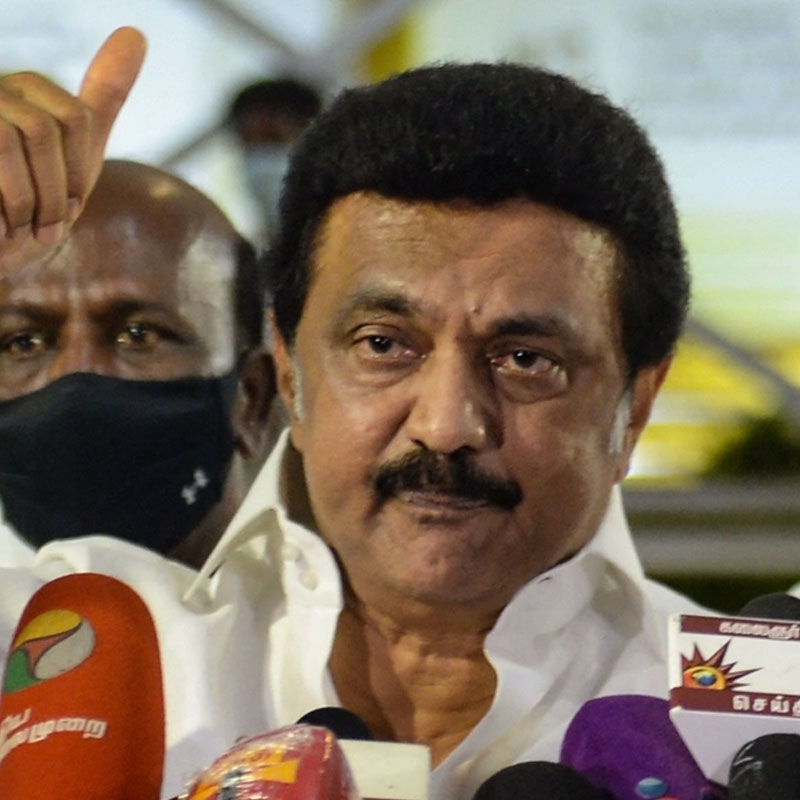
    “All journalists working in newspapers and the visual media risk their lives and their work will be considered as frontline workers in Tamil Nadu,” said Tamil Nadu CM MK Stalin on Tuesday.

    The devastating second wave of Covid2019 has taken a severe toll on news mediapersons, many of whom have been reporting from the ground. According to the Delhi-based Institute of Perception Studies, more than 100 journalists have died since 1 April 2020. Over 52 scribes from various parts of the country lost their lives in April alone.

    The decision comes amid several appeals by the Editors Guild of India (EGI) to the central government to give journalists priority in vaccination along with frontline workers. While several states, including Uttrakhand, Odisha, Bihar, Madhya Pradesh, Punjab have already declared journalists as frontline workers, the Centre has not yet made any provision in this regard.

    “Despite the support from various state governments and media organisations, the central government has not responded to this request. Now, even though vaccination has been technically opened for all above 18 years of age, there is an acute shortage of vaccines. Therefore, the Guild’s urgent demand that journalists be given priority along with other frontline workers,” said the Guild in a recent statement, while condoling the death of mediapersons.

    Welcoming the UP government’s decision on Tuesday, News Broadcasters Association president Rajat Sharma said UP chief minister Yogi Adityanath has directed his officials to open special vaccination centres exclusively for media personnel.

    Sharma had earlier written a letter to the UP CM to make the vaccines available to all media personnel and their family members on priority. “Noida has emerged as a big centre for national electronic media, and most of the TV journalists and camerapersons work and live here. In most of the cases, TV reporters and camera persons have to work in the midst of crowds, and meet Covid2019 patients, doctors and health care workers in hospitals. Hence, the need for vaccinating them and their family members on priority,” wrote the senior journalist.

  • Clear payments to workers till March, I&B ministry tells broadcasters, producers

    Clear payments to workers till March, I&B ministry tells broadcasters, producers

    MUMBAI: The ministry of information and broadcasting has urged the broadcasters and producers of TV serials to take a compassionate view of workers who have been hit by the Covid2019 pandemic. The ministry has urged them to ensure that all payments due to them up to March 2020 are cleared at the earliest, because this “will be of immense relief to them and their families.”

    The ministry has informed that the bureau of outreach and communication (BOC) is working on a war footing for liquidating the pendency of advertisement bills due to the media industry so as to help the broadcasting sector that has been reeling under the Covid2019 pandemic, said a ministry notification.  

    According to a ministry notification, the pandemic has led to financial downturn for a large number of sectors of the economy, including the broadcasting industry. The information and broadcasting minister recently discussed the problems of the broadcasting sector with the major stakeholders. And the BOC is trying to clear the pendency of advertisement bills.

    “However, equally important is the livelihoods of the employees (and their families) who are working in this sector, including a large number of modestly paid TV artists engaged for production of various TV serials. While services of such persons were taken, some of them may not have received their remuneration. While appreciating concerns of the broadcasting sector, the imminent need to give remuneration to them cannot be lost sight of,” said the notification.

    Copies of the notification have been sent to various industry associations such as the News Broadcasters Association, the Indian Broadcasting Foundation, Association of Regional Television Broadcasters of India, and Producers Guild of India.

  • NBA requests Maharashtra CM to drop charges against ABP Majha journalist

    NBA requests Maharashtra CM to drop charges against ABP Majha journalist

    MUMBAI: News Broadcasters Association (NBA) has requested Maharashtra chief minister to drop charges against ABP journalist Rahul Gurunath Kulkarni. NBA president Rajat Sharma requested to adopt the recourse of filing a complaint before the News Broadcasting Standards Authority (NBSA).

    In the letter addressed to the CM, Rajat Sharma wrote: “We write on behalf of the News Broadcasters Association (NBA), which is the apex body of news broadcasters and represents the private television news & current affairs broadcasters. It is the collective voice of the news & current affairs broadcasters in India. The fraternity is in an extreme state of shock and anguish with respect to the recent unreasonable arrest of a senior journalist Rahul Gurunath Kulkarni of ABP Majha Channel. The FIR is based upon some reports which purported to draw the connection between the gathering at Mumbai Bandra West station and a news story by him.”

    While condemning the unreasonable arrest, NBA said that it is a serious infringement on the right of freedom of speech and is a frontal assault on the freedom of press.

    “The fundamental right of freedom of speech is sought to be gagged and any further custody and incarceration of him would be a serious infraction of the constitutional mandate and would also threaten his life. As an association we believe in promoting excellence in broadcasting standards and all the members are governed by a Code of Ethics, Broadcasting Standards and Self-Regulation,” said the letter.

  • NBA deplores Congress president Sonia Gandhi’s suggestion to ban media ads

    NBA deplores Congress president Sonia Gandhi’s suggestion to ban media ads

    MUMBAI: The News Broadcasters Association (NBA) has strongly deplored the suggestion by Congress president Sonia Gandhi to "impose a complete ban on media advertisements – television, print and online – by the government and public sector undertakings (PSUs) for a period of two years".

    At a time when journalists, without fearing for their lives, are doing their national duty, by disseminating news on the pandemic, a statement like this from the Congress president is highly demoralising, said the association.

    On the one hand, there has been a slump in advertisement revenues of electronic media due to recession, on the other hand it is suffering from financial blows due to nationwide lockdown of all industries and businesses. Moreover, news channels are spending heavily on providing safety to their reporters and production staff. To suggest a "complete ban" on government and PSU advertisements is not only ill-timed, but highly arbitrary, said the association in a release.

    NBA has called upon the Congress  to withdraw her suggestion made to the prime minister about "complete ban" on media advertisements for two years in the interest of a healthy and free media.

  • NBA hails supreme court order to counter COVID-19 fake news menace

    NBA hails supreme court order to counter COVID-19 fake news menace

    MUMBAI: The News Broadcasters Association (NBA) has welcomed the Supreme Court’s decision of urging media to take up against fake news menace revolving around the novel coronavirus in social media.

    Supreme Court on 31 March had ordered that the media should report responsibly and weed out any fake news in social media while telecasting news on the Coronavirus crisis.

    According to an official press statement, “NBA appreciates that the apex court has acknowledged the freedom of the press and has stated that it does not intend to interfere with the free discussion, debate and coverage about the pandemic.”

    NBA also stated that it is pleased to learn that a daily bulletin by the government of India through all media avenues including social media and forums will be made available to clear the doubts of people. This would help media immensely to clarify their doubts and enable them to do accurate reporting.  

    The Supreme Court had asked the media to refer to an official portal, which will be created by the government within 24 hours to deal with updated corona related developments, and publish the official version about the developments.

    A bench led by chief justice of India SA Bobde had said: “We do not intend to interfere with the free discussion about the pandemic, but direct the media refer to and publish the official version about the developments.”

    The order came on a submission by the government blaming fake news for the migrant exodus and seeking a court direction to deal with the menace. Over 1600 positive cases have been confirmed in India and around 35 killed due to the pandemic.

  • NBF’s emergence signals turf war in India’s news broadcast business

    NBF’s emergence signals turf war in India’s news broadcast business

    MUMBAI: India’s often noisy and always cut-throat news broadcasting business is headed for interesting times. Current challenges facing the sector aside, Thursday made matters more complex with the birth of a new industry body in the form of News Broadcasters Federation (NBF).

    The NBF claims to be the largest-ever such grouping with over 50 news channels under its umbrella and a true representative of the diversity of news broadcasting in the country.

    In a sense, it is positioning itself as an alternative to the News Broadcasters Association (NBA), which critics describe as an elite club that is mostly receptive to concerns of news broadcasters headquartered in the national capital.

    Following NBF’s announcement, an NBA delegation of chairman Rajat Sharma (India TV), NBA secretary general Annie Joseph, honorary treasurer Anurradha Prasad (News24 Broadcast India), Rahul Joshi (TV18 Broadcast), Avinash Pandey (ABP News Network), Kalli Purie (TV Today Network) and Sonia Singh (NDTV) met the Minister for Information and Broadcasting (MIB) Prakash Javadekar.

    The NBA presently has 27 news and current affairs broadcasters (comprising 70 news and current affairs channels) as its members and describes itself as a unified and credible voice before the government on matters that affect the growing industry.

    The setting up of a parallel body though will have several implications for the ecosystem. For starters, it can deliver a blow to the broadcasting industry’s demand for recognition of the self-regulatory codes of Broadcasting Content Complaints Council (BCCC) and News Broadcasting Standards Authority (NBSA) for non-news and news channels respectively. While MIB has expressed satisfaction with the performance of BCCC during several interactions with stakeholders, it has found that NBSA lacks vision and discipline, often not meeting its own standards. With the setting up of NBF, the task of getting the ministry to recognise NBSA code of NBA will only get tougher.

    “The NBF has at least 10 such news channels which do not have licence but have entered into structures with other companies to lease channel licences which is illegal,” said a senior news broadcasting executive who did not wish to be identified.

    This list includes the likes of Living India News, Khabar Fast, IND24, A1 TV, National Voice, and Nirman News among others. Critics of the NBF also highlight the fact that it houses some channels that are part of the non-news category like MK Television, Ayush TV among others.

    Indiantelevision.com reached out to some of the founding members of the NBF. They, however, were not available for comment.

    The NBF is now in the process of accepting new members and will soon interact with relevant industry and regulatory bodies. With Javadekar terming the formation of NBF as a “very positive development”, its next move – forming the governing board – will be closely watched.

  • TV channels cite logistical challenges in broadcast for the disabled

    TV channels cite logistical challenges in broadcast for the disabled

    NEW DELHI: A debate on broadcasting for persons with disabilities (PWDs) has thrown up more questions than solutions. TV channels have stated that though desirable, the process is expensive and challenging, for instance, in case of live events and that before setting guidelines for private broadcasters, pubcaster Doordarshan should lead by setting an example.

    Pointing out that content to be made accessible to PWDs is viewed by the masses as well, which itself increases backend work, the Indian Broadcasting Foundation (IBF) has said in a country such as India, where varied languages, dialects and language-scripts prevail, broadcasting for specially abled people is challenging.

    “There should be synergies between capacity building for equipment manufacturers, distributors/re-distributors (DPOs) as well as broadcasters who are working with the Ministry [of Information and Broadcasting] for framing the Accessibility Standards for TV channels and the entire end-to-end chain of broadcasting should be coordinated, including amongst distributors and consumer premise equipment providers,” it added.

    IBF, an industry organisation comprising TV channels, was articulating its views on a consultation paper floated by the TRAI on making broadcast and ICT services accessible to persons with disabilities.

    If the IBF stated more co-ordination was needed amongst various stakeholders in the broadcasting value chain, another industry body representing news TV channels, the News Broadcasters Association (NBA), highlighted: “Though desirable, the effort required to make broadcasting and ICT accessible to PWDs is a major and expensive exercise.”

    What are the challenges in making broadcasts suitable for PWDs? There are several financial, technical and logistical challenges, including closed captioning, which is critical for people who are deaf or hard-of-hearing, or those who may have a disability that requires audio description. Wikipedia clarifies the term `closed’ indicates that the captions are not visible until activated by the viewer, usually via the remote control or menu option. Many Hollywood and European films providing subtitles sometimes have closed captioning, too.

    “News content presents special challenges to provide subtitling, especially in multiple languages. Most news items are cut live or within minutes of an event and there is no time to redo the content in multiple languages or provide subtitles,” the IBF has pointed out adding that TV screens in most news channels are “clogged with scrolls and headlines” leaving little space for additional closed captions to be run.

    However, it was conceded by the IBF that an effort to provide closed captioning can be made in repeat news bulletins, which, again, will carry a heavy financial burden as old clips also need to be captioned apart from news.

    According to the NBA, a universal categorisation is an impediment to finding a solution to the problem of accessibility for PWDs as broadcasting and ICT services include inadequate “distribution equipment and consumer premise equipment,” including remote-control systems that have voice recognition and a touch­-screen.

    The two industry organsiations, representing a wide spectrum of TV channels in India, have not only exhorted the regulator to advise the government to provide financial incentives before launching such guidelines, but have also suggested identifying certain percentage limits (50 per cent in one case) in the category or genre of TV channels that could possibly make broadcasts more accessible to PWDs.

    “We request that the consultation on issues relating to distribution/re-distribution of broadcast signals and related equipment and technical aspects be suspended till the time Accessibility Standards for Television Channels are issued by the Ministry,” the IBF has submitted, adding DD must “take the lead” in providing access solutions such as visual captioning to PWDs and demonstrate their applicability for private broadcasters to develop appropriate programming and technology to meet threshold requirements.

    Also Read :

    TRAI seeks better accessibility for persons with disabilities

    Broadcasters, DPOs oppose TV channel auction proposal

     TRAI bats for converged regulator & renaming of NTP’18