Tag: New York

  • Virgin America signs on Disney, Fox, Paramount & Warner Bros for in-flight content

    Virgin America signs on Disney, Fox, Paramount & Warner Bros for in-flight content

    MUMBAI: Virgin America, the new U.S. start-up airline has announced a collection of launch studio partners for its in-flight entertainment (IFE). The airline has reached individual agreements with Disney, Fox, Paramount Pictures and Warner Brothers to provide theatrical content at every seat and on every flight.

    Although details of the deals are not being disclosed, the agreements will provide Virgin America’s guests with the best in motion picture and television entertainment. The airline’s industry onboard entertainment will offer its customers ‘pay-per-view’ movies, live TV via satellite, a wide array of audio music entertainment including the ability to compile individual audio playlists, a broad selection of popular electronic games, and even meals on-demand, informs an official release.

    “Our partnerships with Disney, Fox, Paramount, and Warner Brothers are helping us redefine the travelling experience as it exists for airline customers today,” said Virgin America director inflight entertainment and partnerships, Charles Ogilvie. “Our guests will be able to pick from the latest and greatest Hollywood has to offer and enjoy their entertainment selections on their own schedule from the comfort of their seat.”

    “Disney is happy to be part of the Virgin America team’s challenge to redefine the inflight entertainment experience,” said Disney Non-Theatrical Distribution senior vice president, Linda Palmer. “All arms of this studio are excited about Virgin America taking flight!”

    “Interactive entertainment is a space that Paramount is excited about. Being members of the Virgin America launch team is something that we are excited about and is an important milestone as the U.S. domestic industry progresses toward more interactive inflight entertainment,” said Paramount non-theatrical distribution senior vice president Joan Filippini.

    The airline previously announced entertainment partners including CoKinetic Systems Corporation, IMS, Inflight Canada, Pace Communications, Panasonic Avionics, Spafax, and Wunderman. A new addition to team is the New York-based Anomaly agency.

  • Rolando Santos is CNN Intl senior VP, international relations

    Rolando Santos is CNN Intl senior VP, international relations

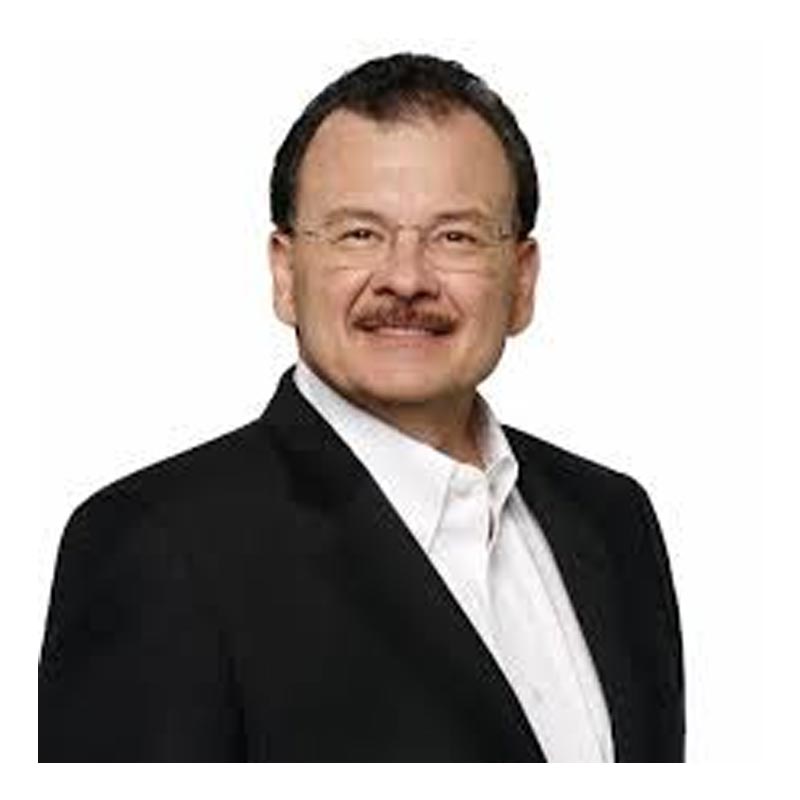
    MUMBAI: Rolando Santos is joining CNN International as senior VP, international relations. The announcement was made by CNN international MD Chris Cramer. In this role, Santos will play an integral part in the development of future CNN services around the world while working closely with CNN’s International affiliates and joint venture partnerships.

    Santos, currently executive vice president and general manager of Headline News, takes up his new role with CNN in mid-September. Cramer says, “Rolando has unrivaled experience in the creation of numerous CNN services, including CNN en Español in 1997, CNN + in Spain and CNN Turk in 1999,” Cramer said. “As we continue to build upon CNN’s international heritage and global influence, he is the perfect choice to work alongside our worldwide partners, affiliates and colleagues.”

    As a member of CNN International’s senior management group, Santos will work closely with Turner Broadcasting’s global business development teams identifying potential new platforms and editorial partnerships. He will also assume editorial liaison with some of CNN’s sister channels, CNN-IBN in India and CNN Turk in Turkey and will oversee CNN’s International Professional Program, which brings together journalists from around the world for hands-on editorial training in Atlanta

    He says, “I have enjoyed working in the international arena and helping launch so many successful CNN services around the world and, more recently, building Headline News into the dynamic news channel that it has become. This is the perfect opportunity to return and help shape CNN’s international growth and future.”

    Since 2002 Santos has served as executive VP and GM of Headline News, responsible for its development and overall operations. Prior to that he was president of CNN en Español, CNN’s 24-hour Spanish-language news network, where he oversaw all daily operations and editorial content of CNN en Español and CNN en Español Radio. He was also played a significant role in the development and launch of new international news networks such as CNN+ and CNN Turk.

    Additionally, he oversaw the Spanish-language newsgathering operations, including a fully bilingual staff in Atlanta, a worldwide network of Spanish-speaking correspondents and eight full-service bureaus in Los Angeles, Miami, New York, Washington, D.C., Buenos Aires, Jerusalem, London and Mexico City.

  • ‘We are competing for the entertainment share, not radio share’ : William Sabatini – Worldspace VP Global Programming

    ‘We are competing for the entertainment share, not radio share’ : William Sabatini – Worldspace VP Global Programming

    Worldspace VP Global Programming William Sabatini has more then 22 years of major market radio experience working at radio stations in New York (WNBC-AM, WXRK-FM and WCBS-FM) and Los Angeles (KCBS-FM).


    Sabatini has worked with the biggest names in the radio business in the US, including Howard Stern, Cousin Bruce Morrow, Dan Ingram and Wolfman Jack. He has been with WorldSpace for more than 8 years now, and started in 1998 before the satellites were even launched!


    Sabatini joined WorldSpace as director of Music Programming and was responsible for designing and launching the first original music channels which were created in the fall of 1999. Currently, his responsibilities include development of content strategy, building new content, partnering with third party content partners, implementation of content plans – managing the content on a global scale, encompassing numerous markets such as India, Middle East, Europe, South Africa.


    During a recent trip to Bangalore, Sabatini found time to speak to indiantelevision.com’s Taro W. Excepts from the interview:

    WorldSpace is about getting music at an affordable cost. How do you propose to face the challenge from the growing FM Radio explosion in India from the programming perspective?

    In truly providing different niches of music, whether it’s Indian music or Western music like in the case of the States where you have the XN series, we provide things that FM can’t provide. That’s kind of the starting point.

    What are the things that FM can’t provide?

    Well, we are going to have 65 music channels. An FM station can do one format. So you have a platform that will reach out, that’s it.

    As far as FM is concerned, it’s free, you only need a radio, a standard receiver, but in your case you require a separate receiver and a subscription charge. So what’s the differentiator? Suppose I was to subscribe to you, how would you get me to do that?

    Our job is to just provide that value, to demonstrate to the consumer why the value for the money. FM is free; we’re not, why come to us? That’s part of our job.

    So how do you go about doing that?

    What we’ve found in the States; Europe is that you have to really experience the product. People have to be explained the value proposition. And once they get it demonstrated to them, whether it’s through an audio retail outlet, or through the GM cars, people would get it for two months free. Once people heard it when they got it … Oh My God! Yes you have X number of stations in the market, the format would never be on FM radio, they’d never be able to provide individual stations with these kind of niche products. When you are on FM you are all about providing mass appeal, in all mass appeal, you’ve to track advertising revenue. It has to be the biggest broadest format. You can’t do a jazz channel, you can’t do a Carnatic classical music channel, and you can’t do a Punjabi music format. You can have a big brand, you know the Bollywood hits format, which is cool, we have one ourselves, but we also offer this variety of music formats that are not heard on traditional FM radio.


    The benefit of having a whole platform and the value proposition that we hopefully are, well unlike FM. Yes there is a subscription cost, but this is what you get. You get 40 plus channels of music. So hopefully the consumer understands that.


    We recently did an event in the US. It’s a big existing kind of yearly concert. We go there while we are on the ground, we get access to all the artists, we interview all the artists on the stage and we do it (a) Live on the channel and (b) we pick that and package it and distribute it to different channels in a format that makes sense for them and again that is an example of unique stuff that people have access to. People can have a CD of an artist, but they are not going to have the interviews and things like that.

    And your job is to organize the content basically.

    Right, I handle global content, developing the content strategy, trying to figure out what is it that people want. We have X amount of bandwidth on our system, how do we use that to get people what they want. Most in demand music formats for instance, you know, create demand.


    We have to think about content all the time. Providing content that is unique and compelling to people obviously. When I think about the content, I think about two things – the breadth of the content, all the different genres and varieties and choices that you have from A to Z. Then also within that channel selection of breadth, the depth of each particular channel, and what does that channel provide that is unique and compelling.


    Getting back to your original question, we’d like to articulate that – Yes, we have these variety of choices which are cool and great.


    Even for the channel choices, we really try to go deep and offer – like our New Pop (NP). You know NP is our globally focused Pop channel. We play the pop hits from around the world. Who are the big stars in Italy, in France, here, the US and everywhere? What we did last year, actually this year, was we went to Studio2 – the Beatles studio in London where they did everything. We went there for three days, brought in 20 plus bands and we recorded sessions with them which we broadcast.


    The event itself was cool; we repackaged that, nowhere else could you get that. A lot of up and coming British acts, some established British acts, and they were just excited to come, because they were in the place that the Beatles did all the great stuff in. Those are the kinds of things we look to do on all the channels, in sync with the channel, of course. A long answer to you question.

    Do you do some research to know kind of stuff that people want?

    At the end of the day, it’s not what I want, it’s not what anyone in the content department wants, it’s what our subscribers and potential subscribers want. They are the ones who are going to pay the subscription fees, so we’ve to give them what they want. We constantly do research to. We poll our subscribers, the satisfaction levels that they have with the channel, what do they like that we have, what don’t they like that we have, what things do they see missing on the platform, what do they like to see more of. A lot of those kinds of things. We’re constantly polling our subscribers and potential subscribers who may not even be aware of WorldSpace, that way we are always informed.

    Third party content, how easy, or how difficult is it get in different countries? Do you find different regulations all over the world?

    Yeah, it greatly varies. It varies on our partners, on their goal, what they want. Sometimes a partner might just want to be ubiquitous, they may just want distribution, WorldSpace can take this and it’ll be easy to get them on. In other cases, not so much. Maybe they already have distribution on some other platform. There’s no kind of set answer to that. It depends on the brand or the third party, what their goals are.

    What about from the regulations point of view? Do different countries have different rules as far as sharing of content, payments, other things are concerned?

    It’s not an issue at all.

    You have been in the music industry for 22 years.

    Yeah, I started in Radio New York City, and then worked with some big high profile people in Europe and then Los Angeles; I have been with WorldSpace when we didn’t even have the satellites up yet.

    What are the future plans for WorldSpace?

    Just generally, in terms of the content which I can best speak about – it’s continually staying on top, I talked about the research with our listeners; it changes from time to time. It’s about trying to figure out what’s the right mix of channels so that we can keep the subscribers happy. I am basically a consumer myself too, so I put myself in position of the consumer here or anywhere else that we do business and I want what I want. I am just trying to keep that consumer mindset in my mind when we program all these channels, and try to communicate that to all the people who run the channels and we really have to be in touch with all the listeners, in this day and age we can really communicate with people through email and message through to text, whatever. Chances are that they are communicating with the head of the channel, they like the channel. This is the core people who listen to your channel. We’ve to figure it out what they want from this channel.


    The RIFF Jazz event that we are going to do is the first of many events. This is the kind of thing that I want to do more of here – taking us to the people. We are just talking about Jazz in this event in particular. You know Jazz isn’t kind of high profile format; it’s an important format that’s got a core base of listeners. One of the reasons is because it doesn’t get the kind of exposure, people aren’t exposed to jazz, even in the states we have just 30 radio stations nationwide that are dedicated to Jazz. So people don’t grow up knowing about Jazz, they are not exposed to it, they are intimidated by this whole thing they don’t know about.


    So this kind of event will take Jazz to the people. This is the going out and explaining kind of Jazz to the people and demonstrating it and making it more acceptable. That’s what we do across all our channels, especially channels like this – Jazz and Classical. There is a wealth of knowledge and a wealth of history behind this kind of format. I want to replicate this kind of setting across multiple formats with different genres and do these kind of events all over India.

    India only? What about the other countries?

    You know with our satellites we cover 134 countries. If business climates call it, that will roll out as well. That’s not for me to talk about. There are future plans for the company, but right now obviously our main market of interest is India. That is quite clear.

    While we are going to have 65 music channels covering various formats, an FM radio station can cater to only one format

    Over the last eight and a half years, what are the different trends you’ve seen – Most music life is a few months or few days?

    Every person that we have hired to run the channel, I consider is a kind of expert in that field. We have also taken people on board who don’t have a lot of radio experience, but are a kind of an embodiment the format; they kind of live the format. You can literally teach people the basics of the radio, how to program a radio station, but you can’t teach them the lifestyle of the music. We are not in one place, we are in many with a million different expectations of what comes out of the radio, we can’t do research of one market like you do in a regular market and hire somebody, I am hiring you because of your instincts, on your gut feeling, we’ve to rely on you as an expert on this genre of music to program the station.


    Coming here to WorldSpace kind of liberates a lot of people, because they can program the station based on their own creativity and ideas and without having this pressure of “OH MY God! I can’t play this song because this section doesn’t like it. That’s why it’s really important for all the program directors of all the stations to (a) use their gut instincts (b) also be informed and try and stay in touch with the market with people all the different forms of communications because we have to understand what is going on the ground.


    Getting back to your question, people who are embodiments of these formats, people who know the lifestyle of that format, like Pamela Hall in the US. She grew up in a Jazz environment. She lived the life of Jazz.


    It’s up to the people to control the individual format and brand to constantly be on top of changing trends within their universe. Our people have to stay in touch, especially the current music – Pop. For example Reggae Pop, 3-4 years ago, it didn’t exist. We just started a channel called Flavor that is a globally focused hip-hop channel. Hip-hop started as a purely American form and the biggest Hip-hop, western people like that. What it’s done over the years is that in addition to people all over the world listening to hip-hop, they’ve got influenced by that and they’ve built their own versions. So we’ve this channel that globally focuses on hip-hop.


    That’s what we do on all the channels; we try to make them as globally focused as possible. Certainly not all formats can do that. Country format – for example -American country music. Our people are constantly aware of the trends, not just in the US, but everywhere.

    Today, internet has made geography history; do you see music becoming common globally? For example an album that is released in the US has a simultaneous release the world over. People globally are aware of it, on television, on the internet. How common is the content across different countries? The content that really gives you a good audience.

    One of the benefits of our platform is that we present a lot of different content. We have Indian produced channels that are very specific and focused on some regional languages and some more Indian formats, as well as the western content. Certain amount of that stuff applies globally. I have spent time here going to places such as bars, pubs, etc and just hear what people are listening to, especially some of the bars where the DJs’ are playing. It’s stuff that we all play on our channels.


    You walk into some of the bars here and they are just playing good old Led Zeppelin and the Who. And obviously that is the trend, no matter where. I’ve heard that kind of stuff everywhere. I think there is a certain commonality with some of the music, maybe on the platform, a lot of it, everywhere, but there are certain things that are specific to this market and maybe wouldn’t be trendy outside this region. So there is a kind of combination of both things on the platform. But I certainly agree it’s changed the music industry, that ubiquitousness of music has crossed the world; you will certainly see the kind of cultural exchange between people, people are aware of the other artists and, this wouldn’t necessarily happen if it weren’t for the easy access.


    We have a channel, a platform called World Zone to take the world of music and present it in a form that makes sense. I mean, literally, and I am not talking about just pop music, it’s more Chip Mammy, Sting, Peter Gabriel, and all these artists from around the world and putting it all into one mix representing it in the way that it is (1) first and foremost is entertaining, (2) but also educational.


    You remember when Sting came out with Chip Mammy, every one knew Sting, in the States at least, no one knew what Chip Mammy was, by virtue of being partner with Sting, people started paying attention to that. That’s what we are trying to do in World Zone, to bring all that music to people’s mind. We try to help in the process of globalization of music.


    Very often people may not like some of the music, something that they may not be yet interested in. We expose it to them, and play something they like, they give you the benefit of doubt, let’s stay with the channel, they kind of trust your instincts. They know, okay I like this channel they’ve introduced me to a lot of some cool music, it’s a sort of a global channel, that’s what we try to do. To kind of present the music to people they may not be familiar with, in the right context of course.

    Unlike Television, you don’t have methods of tracking listenership.

    No we don’t. Not yet. We just have the internal research that we do. We hope to have something like the TV ratings in the States for satellite radio. We’re pretty obsessed with the research that we do.

    What is your biggest competition?

    I think the biggest competition is not really the radio stations, it’s entertainment. I mean we have to make this a really compelling medium that people want to listen to us. Not just TV or news channels, or FM radio, it’s just entertainment. We are competing for the entertainment share, the entertainment ear if you will, so lots of forms. Satellite Radio series in the States are competing with each other, competing with FM, they are also competing now with I-pods. People have got I-pods in their car, it’s their music, when they want it. We have to give them a compelling reason with all these channels, give them stuff that they’re not going to get, can’t get on their I-pod. It’s also the serendipity of listening to a radio station, of not knowing what’s coming up, of being entertained by the DJ or the RJ.

    What about the internet, you have a choice to internet radio with so many channels in hold.

    You sure do, and I have thought a lot about that over the years, especially the kind of activities have increased, and with broadband, it’s easy to listen to internet radio, and as cities are getting wired, how long is it till internet is in the car. We can’t narrowly define our competition as this because there are maybe contrary things come up that attract attention for people. We just have to focus on the basics – content – how do we make our content so compelling, so unique that people just want our content.

    So content is the only differentiator?

    That’s what people are buying, they’re not just buying the receiver because it’s a cool receiver. It’s what they get from the box , and that’ why a subscriber probably just comes to us, they get things that I can’t get elsewhere, not on my I-pod, not on FM. That’s what we are selling on WorldSpace-content. And our music channels are commercial free, that’s another compelling reason.

  • PIX flies Tara Sharma to New York to interview Daniel Craig

    MUMBAI: The newest Bond film, Casino Royale is highly anticipated. PIX, the new premium English movie channel owned by Sony Entertainment Television, is flying film actress Tara Sharma to New York City to interview Daniel Craig, the newest James Bond.

    Tara will personally interview Daniel Craig, Eva Green (the new Bond Girl), Martin Campbell (the Director), and the whole cast and crew of Casino Royale. She will also see the film in a special screening on 3 November. Then on 4 November she will meet the cast and crew of the movie, asserts an official release.

    Talking about the interview Tara said, “I am extremely nervous and excited. I am a big Bond fan, and just love Daniel Craig. It’s thrilling to be one of the first to see the movie in New York City too. I’ve also been doing a lot of homework, as I will be interviewing artists of international caliber and so I want to be well prepared for the meetings.”

    On 17 November, Sony Pictures Entertainment will release Casino Royale, the latest film featuring James Bond. Its said to be very closely based on the original novel written by Ian Fleming, which shows us how Bond first got his ‘double-O’ license, adds the release.



    PIX will be airing a special show featuring Tara Sharma’s interviews with the whole cast and crew of Casino Royale. This episode will also present ‘behind the scenes’ footage and will be aired on all the SET channels in Hindi.

    PIX business head Sunder Aaron said, “PIX is growing at a fast pace so it’s important we continue to engage the viewers in our dedicated PIX community. While PIX shows English movies, we are also an Indian channel, so are committed to providing quality, original content for our viewers. It’s also great to be the official TV partner for Casino Royale: this allows us to create exciting, unique promotions for the movie that involve PIX, our other networks, Sony Electronics and Casino Royale.”

  • Moving Picture’s co-production film invited to participate in Tribeca Film Festival, New York

    MUMBAI: Moving Picture Company India Ltd has announced that the Company’s co-production film ‘The Journalist and The Jihad – The Murder of Daniel Pearl’ has been invited to participate in the 5th Tribeca Film Festival to be held in the New York City from April 25 – May 07, 2006.

    This invitation follows the Apsara Award won by the company for its 3D animated production ‘Jungle Tales‘ in the Best Animated Series category and Indian Telly Awards for ‘Popkorn’ telecast on Zoom Channel in the ‘Best Entertainment News Show’ category.

  • US media companies unite in effort to help parents monitor kids’ TV

    US media companies unite in effort to help parents monitor kids’ TV

    MUMBAI: The American Advertising Council has joined a broad cross-section of the media and entertainment industries to launch a national multi-media public service advertising (PSA) campaign calling on parents to take a more active role in their children’s television viewing habits.

    The campaign, entitled Media Management, was produced in partnership with the Motion Picture Association of America (MPAA), the National Cable and Telecommunications Association (NCTA) representing cable programmers and operators, the National Association of Broadcasters (NAB), the Consumer Electronics Association (CEA); television broadcast networks, including ABC, CBS, NBC, FOX and direct-to-home satellite providers DirecTV and Echostar.

    The new PSAs are being distributed to media outlets nationwide this month and will appear in advertising time and space donated by the media. The media company campaign partners have committed to donate $300 million in advertising time and space for the new PSAs during the next 18 months.

    Children’s bedrooms have increasingly become multimedia centers, raising important issues about supervision and exposure to unlimited content. Ad Council research shows the majority of parents (70-80 per cent) have serious concerns about age-inappropriate television content. However, according to a Kaiser Generation M study, 53 per cent of 8-18 year-olds say their families have no rules about TV watching.

    In addition, of the remaining 46 per cent who say their families do have rules, the vast majority (80 per cent) say these rules are enforced only some of the time, a little of the time, or never. Despite their general lack of awareness about blocking technologies, many parents are open to ideas that promise more control, and agree that these technologies can be an effective tool.

    “For the first time parents have total power to control all TV programming in their home. Through TV, cable and satellite blocking mechanisms, parents can become the TV Boss in their homes. Whatever programs parents believe to be unsuitable for their nine and ten year olds, can be easily blocked, so that when parents go out to dinner, they can be secure in the knowledge they have blocked out all programs they don’t want their young children to watch. By going to a website, TheTVBoss.org, they can learn how to control all programming in the home,” said former MPAA president and CEO Jack Valenti.

    Created pro bono by advertising agency McCann Erickson New York, the Media Management campaign includes new television, radio, print and web advertising, which aims to educate and inform parents with young children about how they can monitor and supervise their children’s television consumption.

    “We are proud to join Jack Valenti and all of our media and entertainment partners in this unprecedented campaign to give parents the tools they need to block from their homes television programming they feel is inappropriate for their children. This campaign is compelling, engaging and innovative, and I believe it will be generously supported by the media and – more importantly – motivating for parents,” said The Advertising Council president and CEO Peggy Conlon.

    The new television spots humourously feature scenes in which parents take steps to protect their children from exposure to inappropriate behavior. All of the ads say to parents, “You’re the boss of what your kids watch. Make the rules. Know the ratings. Use parental controls.”

    The new PSAs can be viewed at www.adcouncil.org/default.aspx?id=360.

    “It is important for parents to know that they have the power and the responsibility to monitor what their children watch on TV. We decided to show that empowered parent in a humourous, relevant way,” said McCann Erickson New York chief creative officer Joyce King Thomas.

    The campaign encourages parents to visit a new comprehensive website, www.TheTVBoss.org, which provides information on how they can take a more active role in their children’s media consumption. Developed by Ripple Effects Interactive, the website features tips on managing television programming, (including using the V-chip and cable/satellite blocking mechanisms), making program choices together, talking to children about what they’re watching and checking program content and ratings.

  • Citigroup picks up 6.3 % stake in VSNL

    Citigroup picks up 6.3 % stake in VSNL

    MUMBAI: The telecom sector is attracting investments not only in the global market but also in India. Citigroup Inc. has acquired a 6.3 per cent stake in telecom service provider Videsh Sanchar Nigam Ltd (VSNL).

    Disclosing this in a filing with the Securities and Exchange Commission, Citigroup has said that it now owns 18.61 million shares of VSNL. The The stake was bought through American Depositary Receipts listed on the New York Stock Exchange.

    VSNL expects to see volume growth in voice and data business. The company recently bought out the internet assets of 7 Star, a Mumbai-based cable operator. VSNL also acquired for Rs 750 million Direct Internet Ltd and its wholly owned subsidiary Primus Telecommunications India Ltd to strengthen its broadband presence in the Small and Medium Enterprises (SME) segment.

    The phone market is expanding rapidly in India. This has attracted global giants like Vodafone Group which bought a 10 per cent stake in Bharti Tele-Ventures.


  • Brides-to-be run across Times Square marks ‘Bridezellas’ return for 3rd season

    Brides-to-be run across Times Square marks ‘Bridezellas’ return for 3rd season

    MUMBAI: Rainbow Entertainment’s WE TV celebrated the third season of their hit series Bridezillas with the Running of the Bridezillas. In a wedding themed obstacle course 20 brides-to-be ran across New York’s Times Square for a chance to win $25,000 towards their dream wedding.

    32-year-old Casey Scheulen of Washingtonville, NY walked away with the cash prize.

    Scheulen and her fiance, Tim McGowan, plan on using the money for their dream wedding, scheduled for 30 September at their Washingtonville home. Scheulen also added that if there was any money left she may just let Tim use it for a Las Vegas bachelor party.

    According to an official release, Bridezellas was recorded as the highest rated original series in the history of the network. On WE TV’s website www.we.tv, there is a mini-site for Bridezillas that features episode information, profiles of this seasons Bridezillas, wedding tips, a discussion board, downloads of a Bridezillas theme song, ringtones and AIM icons and a blog on wedding highs and lows.

    Recently the network had announced that it would be dropping the Women’s Entertainment from its name and adding a new tagline “WE Have More Fun” and Bridezellas was the first to feature the new tagline and logo, adds the release.

    In keeping with the essence of the channel that aims to appeal to women’s interests in pop culture, relationships and personal style, Running of the Bridezillas will air every Sunday at 10 pm ET/ 7 pm PT.

  • BBC forks out $33mn to retain film host Jonathan Ross

    BBC forks out $33mn to retain film host Jonathan Ross

    MUMBAI: Jonathan Ross who presents film shows for UK pubcaster the BBC like Friday Night and Film 2006 has renewed his contract despite fierce bidding from rival channels. Reports indicate that Ross will be paid $33.1 million over a three year period.

    With his tongue firmly in cheek Ross said, “I am delighted to be staying with the BBC if only because it is the only studio I can drive to without getting lost. It is the best channel in the country, and I’m proud they want me back.”

    This deal covers BBC Television and BBC Radio. Channel 4 and ITV were competing for Ross. However, when the BBC matched Channel 4’s offer Ross decided to stay put with the pubcaster.

  • New York Times journo Carter to deliver closing address at Banff World Television Festival

    New York Times journo Carter to deliver closing address at Banff World Television Festival

    MUMBAI: The Banff World Television Festival has announced that bestselling author and New York Times journalist Bill Carter will provide the Global Television Closing Address at this year’s Festival.

    Carter, author of The Late Shift and Desperate Networks has reported on the television industry for more than 30 years and will share his industry insight with Banff delegates on 14 June, 2006 in Banff in Alberta, Canada. 

    The Festival’s director of content, Jennifer Harkness says, “With his rich background, Bill Carter has an insider’s knowledge of how the television industry works. We are excited and honoured at the opportunity to have him close out Banff 2006.”

    In Desperate Networks the author goes behind-the-scenes of the television industry to reveal the elaborate inner-workings, capturing portraits of larger-than-life moguls and stars who make it such a cut-throat business. His bestselling book, The Late Shift, provides an inside account of the power struggles for Johnny Carson’s seat on the Tonight Show.

    The Banff World Television Festival takes place from 11-14 June. It positions itself as being an event where great television is born.