Tag: new year

  • Kuku FM partners with HubHopper; adds 21,000 new shows to its library

    Kuku FM partners with HubHopper; adds 21,000 new shows to its library

    MUMBAI: If you are an audiophile and you prefer listening to podcasts and shows rather than holidaying and partying, then come 1 January 2025, you should grab  your headset and your phone and lean back and sign into KukuFM.

    The audio hosting and distribution platform has partnered with another audio platform HubHopper and is offering its three million subscribers the latter’s 21,000 new shows across 30,000 plus hours of premium content at no extra cost (in a dedicated section featuring the new shows).

    A press release issued by Kuku FM  mentions that this integration means its library rivals even leading OTTs operating in India and is the largest audio catalogue  in the country.

    Listeners can chose from spirituality (Sadhguru, Osho and Jay Alani) to fiction to history  to business in various languages including English, Arabic, Hindi, Tamil Telugu, Kannada and Malayalam. Shows from NDTV are also available on the platform.

    Kuku FM co-founder Lal Chand Bisu pointed out that Indians prefer getting unmatched value for the money they are spending.  He added: “As our revenues doubled last year, driven by subscriptions, we’re poised to continue this momentum into 2025 with this enriched offering. By adding the shows, we’re not just growing our library but building a platform that resonates with diverse audiences—from native speakers across India to Indians abroad seeking high-quality content in their languages. This collaboration elevates our reach and engagement to new heights.”
     

  • Media Maniac’s launched charity drive for underprivileged kids

    Media Maniac’s launched charity drive for underprivileged kids

    Mumbai: Volunteering your time to assist a cause you care about is something you will never regret. It will improve your life, acquaint you with your neighbourhood, and link you to people and ideas that will favourably affect your viewpoint for the rest of your life. Helping your community allows you to grow as a person and better understand how you fit into the world around you.

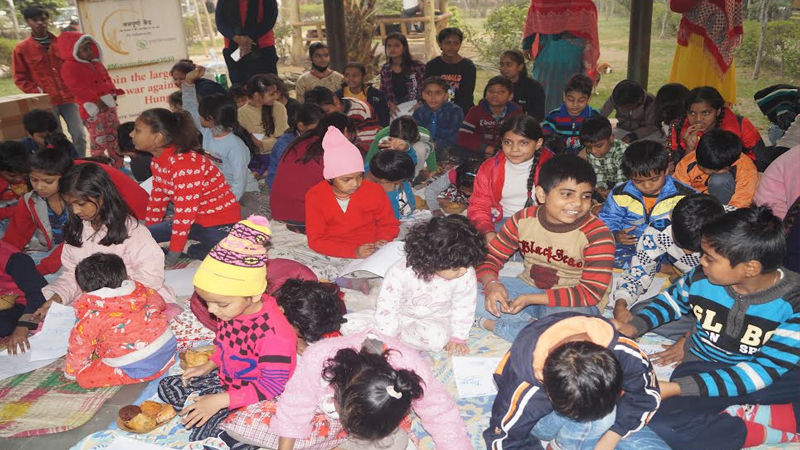
    Media Maniacs Group organised a new year charity drive to help underprivileged kids with food, clothes, and stationary in association with the Dulari Devi Foundation. The drive aimed to aid the well-being of the children and provide essential support to those in need. The drive provided the children with food, clothing, and an opportunity to enjoy fun activities. The Media Maniacs group doubled the amount of total donation generated for the charity drive.

    Dulari Devi Foundation strives to become the vital link and reach out to those who need help and uplift them as a whole. The foundation aims to uplift education and contribute towards women welfare. The foundation believes the change in society begins with individual effort, and if your cause is good people will automatically connect. The foundation has been actively working for the upliftment of women and children for many years.  They believe every child has the right to education and every woman has the right to her individuality. Their purpose encompasses the development of the lifestyle of women and children of all sections and tirelessly strive to achieve that.

    Founder Dulari Devi Foundation – political analyst, national media panellist & motivational speaker Preeti Pandey said, “We are delighted with the generosity of Media Maniacs Group in supporting such a noble cause. The drive has helped us to support our children better and fulfil vital requirements. We believe with determination and hard work nothing is impossible,” said  

    Media Maniacs co-founder Surabhi Trivedi said, “This drive aimed to bring joy in the lives of orphaned children during festive season. Our effort was to provide care and bring a sense of togetherness in these children’s lives. While we may not be able to provide financial assistance, we can make a significant impact in their lives by organizing a charity drive. It’s our duty to help those in need, and this event is an excellent way to do so.”

  • White Rivers Media gears up for the New Year by clocking 25 business accounts in Q4 2023

    White Rivers Media gears up for the New Year by clocking 25 business accounts in Q4 2023

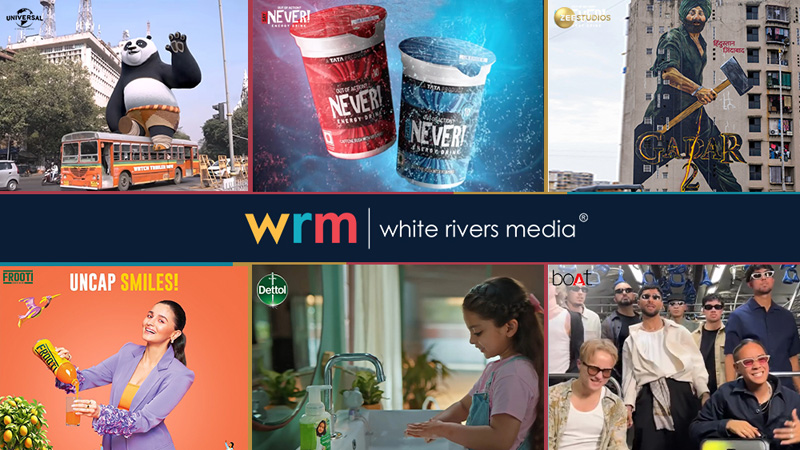
    Mumbai: The last quarter of 2023 saw White Rivers Media do campaigns for Frooti, Dettol, Tata NourishCo, Astral, Crunchyroll India, boat, Pass Pass Pulse, Chingles, Glenmark Pharmaceuticals, Zoomcar, Radico Khaitan amongst others. The agency has seen its business grow on the back of generative AI activations, trend-setting influencer-brand integrations, and evocative digital films, delivering a diverse set of strategic and tactical campaigns for brands across categories.

    This year also saw White Rivers Media launch WRM Digital Studios, an agile digital-first production arm. The studio brought to life Astral Foundation’s initiative to support Rajasthan’s eco-feminist Piplantri village, a drought-proof oasis that celebrates the birth of its daughters by planting saplings.

    Another original production, the #DettolProtectsTomorrow digital film, encouraged the nurturing of childhood curiosity and learning, empowering today’s parents to let their children explore without fear of germs, with the protection of Dettol.

    Swiggy Dineout captured hearts in the cluttered Indian festive season with the #TogetherWaliDiwali film. Reliance Jewels adorned their new collections with films that rekindled India’s love for traditional art. All were conceptualised and produced by WRM.WRM in collaboration with the curativity platform created from scratch the identity of ‘Say Never’, the brand-new caffeine-based energy drink from Tata NourishCo.

    The agency is also entrusted with expanding Frooti’s online presence, while tailoring a bespoke short-video content strategy for Zoomcar. In addition, the agency landed big hits in the AI and CGI arena with compelling content envisioned and engineered for DS Group’s Pulse Candy, Zee5 Global, and Universal Pictures India amongst many others.


    WRM also carved an all-new niche in the localisation of international internet sensations for India. They brought the multicultural international dance group The Quick Style to the country on multiple occasions, with their most viral piece of content coming from the boAt collaboration.

    The agency also collaborated with boAt to bring global YouTube superstar IShowSpeed to India, who thoroughly enjoyed getting caught up in World Cup fever.

    White Rivers Media co-founder & chief creative officer Mitesh Kothari said, “2023 has been a transformative year for us and for advertising as a whole. We made our aspiration of making WRM a nationwide tech-first creative powerhouse a reality. Given that generative AI is fundamentally altering global creative business models, I am grateful to all our clients who recognise our ability to ensure their brands set pace.”

    Reinforcing their leadership status in the entertainment marketing ecosystem, WRM splashed a larger than life Gadar 2 mural on Mumbai’s tapestry for Zee Studios, crafted a unique Oppenheimer experience on WeTransfer for Universal Pictures India, and spearheaded digital promotions for some marquee shows from Sony LIV and Amazon miniTV.

  • Why regional outreach is the way to go for brands this festive season?

    Why regional outreach is the way to go for brands this festive season?

    Mumbai: Historically, in India, during the three to four months of the festive season that stretches from August, starting with Raksha Bandhan, up until New Year’s eve in December, the marketing and advertising spending see their peak. This year, with the country nearly coming out of the pandemic hangover, the industry is buoyant and all set to launch an advertising blitzkrieg ahead of the celebrations. Brands are not only increasing their spending but are also aiming for deeper penetration and better engagement with their core consumers during this time. And towards this end, they are going beyond the metros to reach tier two and tier three towns to directly speak to them in a language they can relate to.

    Recently, Publicis Groupe-owned Leo Burnett India announced the launch of LB regional—a specialised division to help brands create localised content by understanding region-wise insights. The division that currently focuses on five languages—Tamil, Telugu, Malayalam, Punjabi, and Bengali—will have a team of creatives and writers who are experts in each of them to make content relatable and relevant. According to Leo Burnett India, the strategy and thinking are backed by an in-depth quantitative survey undertaken by the agency, spanning 10 states.

    “There is a growing demand for local, vernacular and Indianized content, which if done right, presents a big opportunity for brands to grow their audiences,” said Leo Burnett South Asia CEO & BBH India chairman Dheeraj Sinha, speaking about the launch of the division. “We have already created local level interventions for some brands and have seen great results in going region-up rather than national-down in our thinking and creation,” he added.

    Opportunities galore in regional markets

    The busy festive season serves as the perfect opportunity to tap into the regional market and cater to the needs of the customers. Speaking to a regional audience around a time that holds value to them helps brands grow their outreach. Digital reach and penetration have opened the doors for brands to reach out to a far bigger audience pool beyond metros. The growing popularity of online shopping in tier two and three towns of India too have made the top players sit up and explore avenues to further expand their consumer base into the country’s interiors, in time for the celebrations.

    Earlier last month, Parle Products launched three TVCs in Bengali to consolidate its position in the Bengal market. The new campaign, according to Parle, is in line with its belief in regional marketing, speaking in the voice of the local populace, using deeply relatable subjects, and in a tone that is immediately understood. Before that, in 2021, Parle launched three ads to celebrate their anniversary, and they were all in Marathi, targeting a specific audience.

    “In a nation as vast as ours, each region has its voice, values, and ideals,” said Parle Products senior category head Mayank Shah, weighing in on this subject. “A generic message addressed to the entire country may not always take root. Speaking to each consumer in his language, in idioms he understands, and in surroundings that he is familiar with, is a far better option.”

    It’s a known fact that a majority of consumer families are inclined to spend more during the festive season than during normal times, making it a no-brainer for brands to be in favour of investing greatly during this time of the year. This year’s festive ad spends are expected to range between 20-30 per cent of total annual spend for most product categories, with FMCG, e-commerce, lifestyle, and home improvement expected to be the top spenders.

    The festive season is the most cluttered time of the year for advertisers, and the need to measure ROI beyond just brand visibility is imperative for overall campaign efficacy, says BBH India VP strategy Radhika Burman. “Hyperlocal campaigns help brands reach out to captive audiences with high purchase intent and leverage these leads to push for conversions at a more affordable cost. Tools like Google My Business, geo-fencing, retargeted SMS/emailers, and push notifications help brands stay ahead of the curve.”

    Influencer marketing is gaining popularity

    Micro-influencer marketing is also changing the rules of brand outreach. “Going into the festive season, brands will try to break the clutter and maximise campaign efficacy by choosing regionally relevant content creators who create vernacular content that is seen as more authentic and credible. Across categories, brands are using platforms like TakaTak and Moj to leverage these micro-creator communities and reach out to younger consumers in a real, relevant and authentic way,” adds Burman.

    Reaching out to the right audience and brand connect remains a challenge for marketers. Often, marketing campaigns miss cultural nuances and appropriately generalised stereotypes of different communities. Region-specific marketing helps break this cycle and enables brands to think up appropriate content for each region.

    With influencer marketing on the rise, it has only helped brands further to be able to reach out to a more local and regional audience, which was not possible through conventional marketing. “This is quite evident from the fact that social media spends have surpassed TV media spends and are only going upwards here on,” opines DIZO digital marketing lead Sugandha Varshney.
    Furthermore, she says, “Brands have also started adopting more targeted campaigns instead of broadcast-to-all and hence it is boiling down to finding out and working upon the behaviours, demographics, and psychographics of the targeted market segment paired with the trends, attitudes, and perceptions of the customers towards the brand and the purchasing patterns of the consumers.”

    She adds that now either they target themselves or tie up with influencers or partner with other distribution networks who have already amassed relevant audiences for them to reach their targeted customers in a more connected fashion.

    Brands adopts hyper-local marketing strategies

    Brands have been actively including the vernacular aspect in a bid to reach out to the right audience set, corroborates Puretech Digital senior vice president-digital marketing, Kamaljit Saini. On the marketing strategies being adopted by brands to go hyper-local, he says, “Especially on connected TV or digital content publication mediums which allow to segment the audience based on consumption pattern and preferences far better than traditional TV approach, brands are consciously being vernacular in disseminating the message.”
    Be it in traditional TV commercials, connected TV ads, or content/commercial messaging on YouTube, Facebook, Instagram, etc., sharing the information in the language the audience understands has given brand adoption a boost. While this has helped in reaching out to audiences beyond the tier one and tier two circles, Saini believes brands can go one step ahead by not just incorporating vernacular adaptations but also being more regional. For instance, he says, simply dubbing the message in a regional language is not enough to create the connection.
    “Considering the overall persona of your audience at large, bringing in the cultural and human aspects is also critical for a much stronger brand connection.” The way personalisation in connecting with the audience is taking shape, in no time we will see information dissemination with a more precise regional and cultural mix, he adds.

    According to White Rivers Media creative director – design Bhushan Kadam, instead of just connecting with audiences pan-India in languages like Hindi or English, brands have started paying attention and money to campaigns that talk to people across areas by creating region-specific vernacular content and campaigns. “Investments in such vernacular campaigns have roughly increased by 20–30 per cent in the past few years.” When advertising for a festival specific to a particular region, regional campaigns pave the way for connections and conversations in a language that the people understand. It is an easy and effective way to build trust and brand recognition in regional or local parts of the country.

    However, Kadam believes the use of smartphones or access to the internet is still a challenge in small towns or rural parts of the country. But one thing that is still a big hit in these areas is television, he says. “Thus, creating TV ads for specific regions instead of just social media content makes sense for brands. It increases visibility by catering through a medium that is accessible there-TV. Advertisers are increasingly customising localised ads for regional markets because if spoken to customers in a language they understand, it’s a hit!”
    As for the ROI from investing in regional marketing so far this year, results are encouraging through the impact of localisation in one’s marketing mix. “We have seen encouraging numbers for early adopters. ROI is a direct function of how competitive the market is. Since the market is still opening up beyond metros, I’m sure brands who are early adopters and consciously taking steps towards localisation, will see greater ROIs than later comers,” says Saini.

    Optiminastic Media’s business development manager Aditya Pandey agrees and says, “ROI is one of the paramount metrics that a marketer relies on. The reason there has been a great shift of ad spending from national-level campaigns to regional says it all. Agencies and brands are working together to create regional content and integrate their brands organically.”

    The kind of outpour from the audience during the recent festivals like Eid and Raksha Bandhan have clearly shown how advertising during this season has increased sales volume and consumer loyalty, he adds.

    Today, 70 per cent of our total population lives in rural areas, with a substantial portion living in tier two, tier three, and tier four cities. They are the audience that makes or breaks a brand. Brands and marketers have understood the strength of regional audiences and how they can change the dynamics of a brand’s products and services.

    Increasing ad spends among brands

    “Brands have increased their marketing spend from 10 to 20 per cent and concentrated on regional audiences. 64 per cent of the rural population has access to connectivity and is spoilt for choice of content and offerings from the brand, says Pandey. According to Google, India will have 745 million internet users, with only 199 million of them speaking English. The rest of the consumer base is a big chunk where brands have shifted to advertise, Pandey adds.

    With the introduction of region-specific advertising, brands are consciously working towards targeting the various stratas of society as well as breaking the ideological and language barriers. Brands have understood the power of local reach and how making them happy would get them maximum reach and engagement. Taking cue, brands are not leaving any stones unturned to rope in regional content creators to engage with their consumers for relatability and promote new and old products alike.

    Ad films, social media posts, region-specific contests, campaigns, etc. are the various means that brands are using to reach out to regional audiences that comprise 70 per cent of India’s population. For instance, this Independence Day, we saw Prajakta Kohli, a social media influencer, in an ‘all Marathi’ reel with a subtle brand integration for Pepsi. “She has millions of followers on her social media handles and her YouTube channel, and that’s the reason Pepsi chose her for their brand,” says Pandey.

    “On the other hand, Diljit Dosanjh may not have been the main face behind Coca-Cola, but if you visit Punjab, you’ll see a lot of shops with his hoardings. And, as expected, the sales of the soft drink brand soared post-this association. That’s the power of regional marketing with the right stars,” he adds.

    Similarly, Parle leveraged the festive season by collaborating with Bombay Sweet Shop to create the special Geniusly Sweet Collection for Raksha Bandhan. Bhopal witnessed the highest sales during this time as they brought in sales worth Rs 20 crores in a week, according to Pandey.

    Marketers expect and anticipate a major uptick in consumer demand this holiday season as the country comes out of the pandemic. Most industry experts agree that with sales targets and industry benchmarks seeing consistent growth, it’s safe to assume that in the upcoming festive season, offline and online sales will exceed the numbers from last year.

  • We want to be the poster boy for Web 3.0-led marketing in India: WATConsult’s Sahil Shah

    We want to be the poster boy for Web 3.0-led marketing in India: WATConsult’s Sahil Shah

    Hybrid digital agency, WATConsult from the Isobar India group celebrated its 15th anniversary this month by launching an NFT (Non-fungible Token) in the form of digital artwork. Titled ‘Once a WATizen, always a WATizen’, it contained the names of all its 1500+ employees- past and present- to commemorate the milestone. The digital-first agency, which saw some downs but mostly ups due to the pandemic, brought 2021 to a wrap with double-digit growth and a host of new client wins including 59 new mandates. These include brands like Cricbuzz, Licious, Sava Herbals, UB Group’s Kingfisher Radler & Heineken, Joy Cosmetics, Lead School, India Circus, Dr Oetker, BIAL to name a few.

    A key founding member, Sahil Shah has been with the agency for the last 13 years, and is credited with playing a significant role in shaping and building it.. Having joined the agency as a social media executive in 2009, Shah moved from being chief business officer- to managing partner in September 2021. He credits the agency’s recent successful run to the fact that post-2020, with client businesses bouncing back, everybody wanting to get into digital. He, however, does not discount the effort that went into building the brand up over the years, which he says has played its part in influencing the adoption of digital in the country to a large extent.

    As we tread into 2022, IndianTelevision’s Anupama Sajeet caught up with the WATConsult head Sahil Shah spearheading the agency’s India operations for an extensive conversation on the agency’s foray into the metaverse and what it hopes to achieve by being a first-mover in the NFT space. He also shares forth on the rollercoaster of a year that 2021 was, his expectations from the new year, and insights on the trends that will dominate the digital marketing industry in the months to come …

    Edited excerpts:

    On the concept behind NFTs and how can marketers use NFTs as an opportunity for growth?  

    NFTS, in the simplest terms, is digital real estate that cannot be replicated and is owned by an individual or entity i.e. digital ownership. It’s on the blockchain in the Web 3.0 world, which of course on the internet itself, but a highly decentralised form of it. So, there you have this NFT marketplace such as the Opensea, on which you can list your NFT creative and it can be monetised by selling. And that’s the reason there is a humongous commerce opportunity with NFTs for even Brands, and brands need to realise this.

    Another usage of NFTs for Brands is as memorabilia or collectibles by using the power of its user community. Anything that’s ownable can be marketed this way- brand mascots or advertising creatives, or a public figure’s legacy in sports, entertainment or Bollywood. The collection would be unique – it is digital art and people want to own a piece of that art. For example, a brand like Amul, which has some iconic creatives, can list them on an OpenSea and get die-hard fans to actually auction for it and trade, resell and make a business of it! So the uses are many – as CSR, business, promotions, public figure marketing- the possibilities are endless.

    On celebrating the 15th anniversary with NFT

    As an agency, we have been known for doing a lot of new-age stuff. We have dabbled in and got into areas which the majority may not be cognisant of. So the thought behind such an initiative was to commemorate the 15-year milestone by actually building something that remains on the internet forever, and can be owned by each and every WATizen- past and present. And the answer was NFT because they are, by nature, “non-fungible” and the ownership lies within the people, the community, or the person who uploads or lists it on the marketplace.

    We came up with the idea of etching everybody’s name on the creative and making it a part of history and keeping it on the OpenSea marketplace Ethereum blockchain forever. So that way each and every one of us is a part of it and everybody has a part to play in it. Essentially, it’s a way to thank each and every person who built this company over the years by making them a part of our history forever.

    In fact, the same day we launched our NFT, one of our clients actually gave us a written brief on exploring something with an NFT for them. They want to be the first-movers in their industry in this space. So I’m excited about moving towards building not just “India-class” but “world-class” solutions for marketing in a Web 3.0 world. It’s of course early days, but we want to be the poster boy for everything related to Web 3.0-led marketing in India. In that sense, WATConsult has been the “blueprint” for other competing agencies to watch and learn, as we’ve been able to lead changes in the industry over the years. And with the NFTs we continue to do so.

    On his priorities since taking over as managing partner last year

    My priority is to make sure that we get three to four things very right: One, is everything that’s centered around the creative use of digital for, that’s the core of what WATConsult was, is, and will be. Second, we want to be extremely high on everything that’s around client delight and customer focus and make sure we deliver on it, which’s in a way linked to our revenue, growth, P&L, etc. Third, we always want to be the first movers and the early adopters, while continuing to be in the news for the innovations that we bring to the table. Additionally, ‘Talent’ and ‘People’ for me is a big focus area, besides revenue and recognition, and I want to make sure the company gives back to its people by different ways and means.

    On the industry’s new emerging categories

    I think one of the new and emerging categories is everything ‘new-tech’- so anything that’s born out of digital, such as financial tech or fintech, e-commerce, food tech- for instance, brands like Licious, Edtech, and so on. The kind of categories that are coming up are very exciting because they understand digital innately, being fully digital themselves.

    Having said that, while that’s one domain where digital businesses are booming and scaling up, there are also the businesses that are legacy brands but are wanting to embrace digital. For eg: One of our big wins in e-commerce solutioning was the UB Group, where we acquired the mandate for their entire commerce duties last year, which’s online selling of its Kingfisher Radler & Heineken non-alcoholic beverage category. We’ve been scaling up their business on Amazon, Flipkart, etc which has given great returns to a client whose business was 99 per cent offline. If we are able to move that metric from 99 to even 95 per cent and create like a 400 per cent growth in e-commerce sales then it would be a huge validation for both the client and us.

    On any major trends that the digital marketing industry witnessed this past year / is witnessing

    One big trend that sparked in 2020 was the fact that India woke up big time to short videos. For the TikTok revolution that started around 2018-2019 and then scaled up in 2020, 2021 has been by far the year for content consumption in a short format- which is a 5-20 seconder clips and visuals- that everybody from Facebook, Instagram to YouTube adopted. That was one clear shift in consumer content consumption that was happening. At the same time, users are also hooked on long-form web-based content on OTTs and online. The bottom line is that video in both short forms as well as the longest forms- kept on growing and it continues to do so as a primary piece of content consumption.

    The second was definitely ‘Bharat’, with the growing internet penetration in India’s hinterlands, which we were fortunate enough to latch onto and build a multi-lingual and regional/ localised service solution around it.

    Third is data-tech or data-led solutions. One of the things the industry is moving towards is everything that technology can aid. Technology today has the power to create a life-size, 3-D version of anything we want it to be, like a ‘Virtual Influencer’. This trend has already been explored in markets like the US, Korea, or Japan, and is an example of how Tech is going to influence a lot of content creation and even creatives per se, and this is just the beginning.

    Another thing that the world started opening up to towards the end of 2021 (the Oct-Nov-Dec period) was the idea of Web 3.0 with NFTs, Cryptos, the Metaverse etc. It’s still early stage and an up-and-coming trend, but I think in the next few years it will change the way we interact.

    On Expectations from 2022

    From the industry, my expectation is to continue the digital growth at around 40 per cent Y-O-Y. I know we are at scale but there is a lot that digital can still do for brands and marketers are realising it. So I just hope the digital part of the pie continues to grow.

    Secondly from a 2022 perspective and maybe for years to come, I think the world is going to be hybrid- the way we work is going to be hybrid. I don’t see the culture of people in offices from 9 to 5 for five or six days a week coming back. And it’s honestly okay and maybe even a good thing- it’s a healthy way to operate where people connect in groups, as well as, detach and work by themselves. So hybrid is here to stay, possibly even post-Covid.

    Additionally, adoption into Web 3.0 while we continue to do our campaigns in the Today. At least for WATConsult, I wish that we continue to think into the future while we execute in the present. So our focus will be to keep pushing the bar for creative use of technology in the marketing communications space and continue being the blueprint for others to follow.

    On any personal learnings, you will take into the next year

    Although I have seen various changes in the last 13 years with the agency, the last one and half to two years have been a huge shift in the way of working, and in my personal & professional beliefs. So one of the major learnings I want to take forward is to make sure I declutter from all the noise around and focus simply on just two or three things that I want to move towards, personally as well as professionally.

  • We want to grow our user base two-fold & daily rides by 3X in 2022: Rapido’s Amit Verma

    We want to grow our user base two-fold & daily rides by 3X in 2022: Rapido’s Amit Verma

    For those of us who have spent precious stretches of time stuck in traffic jams during rush hour, the thought of getting on a bike and zipping through the traffic has definitely looked appealing. It is this everyday challenge that Rapido, a bike taxi service seeks to help overcome. The company which was among the first to introduce the concept of bike taxis in India in 2015, has over one million ‘Captains’ (bike taxi drivers) today, out of this, nearly 15 per cent are women.

    Over the years, Rapido has emerged as a key player in India’s ride-hailing industry by focusing its operations on the two-wheeler taxi segment. The Bengaluru-based startup has expanded its presence to 100 cities across the country that include tier 1 to tier 3 cities. But faced challenges post-2020, as the pandemic forced most commuters to work from home. Things began to look up in 2021, as cases subsided, only to return to the same routine with a new wave of infections.

    As we roll into 2022, IndianTelevision’s Anupama Sajeet caught up with Rapido head of marketing and growth Amit Verma to talk about the seven-year-old startup’s advertising and marketing for the year amid the pandemic. An avid marketer with a decade-plus experience in performance & growth marketing, Verma was previously with self-drive car rental company Zoomcar, and took over the role of marketing head at Rapido right at the outset of the pandemic. In an extensive conversation, he shared the learnings of the past year and his insights on the trends that might dominate the commute and ride-sharing industry in the new year, including the two latest campaigns featuring actor Ranveer Singh and Allu Arjun.

    Edited excerpts:

    On Looking Back at 2021 as a year of disruption or opportunity for Rapido

    Looking back, last year was a blessing in disguise as we got plenty of time to introspect. Since we were not able to run our bike taxi business, because of the pandemic, we focused on launching new verticals like auto and C2C (Consumer-to-consumer) hyperlocal delivery services. On both fronts, we are doing really well and we have a presence in auto & C2C in more than fifty cities today, and it contributes to 30 per cent of our overall business. So that was really helpful to sustain operations amid the disruption in demand for bike taxis.

    From a business numbers point of view, we succeeded in resetting the 1 ½ years of the pandemic. But, today we stand at the same position where we were about two years back when the pandemic hit (in 2020) and our operations went for a toss. So, to be honest, 2021 was about trying to regain our pre-pandemic numbers, of which we have recovered 100 per cent. If you talk of daily levels, we are doing about four lakh rides every day. So apart from the three to four months of lockdown, 2021 has been a good year overall for us. We spent more than 150 cr in the past year on performance marketing, branding et al, which will again go up by 200 per cent this year. We now have close to a 25 million user base, which we plan to grow two-fold this year. 

    On the brand messaging or marketing strategy in 2021

    The two major campaigns we launched in March and November in 2021 were with the aim to sharpen our messaging of  ‘affordable, convenient, and time-saving commute’ options. Even in our previous brand campaigns, we have tried to highlight these three value propositions, and this time too, with our first celebrity campaign, ‘Smart ho, toh Rapido’ campaign featuring Ranveer Singh and Allu Arjun, we aimed to position Rapido as a customer-centric brand and highlight its key USPs, while doing the relative comparison with the different mode of commute, like bus and auto.

    On the response to the ‘Smart ho, toh Rapido’ campaign

    We got a pretty good response on both these campaigns. When we did the first campaign in March we got an approx. 50 per cent jump in upper funnel numbers, and it helped us to garner new users at a faster rate. But unfortunately, then Corona came into the picture and we were not able to fully reap the benefits of the ads. Again, in November we got tremendous results for the Ranveer-Allu Arjun ad campaigns.

    Although Rapido has a pan-India presence, within India one has to accept the fact there are different regions that talk in different languages and with different celeb-affinities. To encash that affinity, and increase the reach of our campaign so as to get good ROI out of it, we chose these two celebrities for the HSM (Hindi speaking market) & the non-HSM markets. Additionally, they also went well with our brand image of ‘young, vibrant and smart’ as they have a similar kind of value proposition as the brand.

    We have also taken up big properties like the recent T20 World Cup that happened in November which has been partially instrumental to bring really good ROIs. We have seen more than 100 per cent uplift on upper-funnel numbers, even the week-on-week growth which we witnessed during this campaign was more than 20-25 per cent.

    On the brand’s ad spend allocation across media: TV, digital, print, OOH

    We are a digital-first brand. Our 100 per cent revenue comes from online bookings, as we don’t do offline bookings. So digital is our first priority. But, we rely heavily on TV for branding. In terms of ad-spends on the campaign we launched to create awareness about the brand, then we spent 65-70 per cent on TV, 15 per cent on OOH, and the rest on Digital. Previously, we have explored Print too, but we did not get a good ROI out of it essentially because we are a non-seasonal brand, and for us, as a commuter category brand that never comes out with a seasonal or festive sale, it did not make sense. So apart from Print, we are using every other media.

    On tapping into influencer marketing

    Although we have not used influencers for the brand campaigns, from our overall marketing expenditure, nearly 5-10 per cent spend goes into micro-influencers and micro-bloggers. With the advent of short video platforms, a new set of micro-influencers have come up, and they have a pretty good reach. As a brand we are in the process of fully exploring influencer marketing, having seen that it not only increases brand awareness, but one can get a really good ROI from these influencer marketing campaigns.

    On the brand’s target audience and consumer demographic

    From a demographic point of view, we have bifurcated the category into two different sections – T1 and T2. In T1 we are mainly talking to those users who fall into the age group of 18-28 years, which is our primary TG and 80 per cent of our business comes from there. These are guys who don’t fall into the high-income bracket. In T2, 60 per cent of business comes from state capital cities- of which we have pretty good coverage. And then we have a long tail of tier 3 cities. We have witnessed really good growth from tier 2, tier 3 cities during the last two campaigns, so certainly we see a reasonable potential over there. Right now we are not looking at expansion into newer regions so much, as we are trying to capitalise on our presence in each and every city and garner good numbers from the growth point of view.

    On plans to cater to the female demographic in the near future

    We have female captains in multiple metropolitan cities like Hyderabad, Delhi, Bangalore etc, only their percentage might be lesser for the simple reason that you do not get female riders very easily. But we are focusing on increasing their numbers going ahead. Unfortunately, when you talk about travel or commute as a category, you’ll get 80-85 per cent of users who are predominantly male. Just because of that, whenever one is drafting one’s brand communication you have to focus more on your TG which is male-centric, due to which regrettably, there has not been much female-centric communication from our end. But in the near future, you will certainly see some communication go out from our brand which will cater to the female consumer also.

    On Looking Ahead at 2022 and goals for the brand

    We don’t have a major expansion plan with regards to new cities. But, we want to increase our user base by 2X and our overall daily rides by 3X, which means we will spend a lot of money on user acquisition and on the repeat users so that we can get more users to take rides, and increase their ride frequency. Also, with what we have witnessed over the last two years, the influencers and micro-influencers have started creating a lot of impact on the user base. So, we plan to leverage that by increasing spend there. So approx. 6-12 per cent spend might go on a regular basis on influencer marketing this year.

    On the key trends that you think might dominate in the industry this year

    I think the next big thing we are betting on is the EV ride, because of the environment-friendly and cost-cutting factors. Everyone in the industry, I think, is trying to enhance their EV capability and general EV mobility in the commute segment. We will also be focussing more on EVs, and on how we can increase the adoption of EVs in the overall commute and bike taxis. As of now, we do have some electric vehicles and we have also done a couple of partnership rides. Recently, we entered a tie-up, where we are providing EVs to our delivery boys that are being used to fulfill deliveries of Swiggy and Zomato.

    On any personal learnings, you would be taking into the new year

    If the last two years have taught us anything it is that- be it an organisation or individual- one should be quick, adaptive, and volatile. With the odds changing constantly, that’s the only way one can survive. That’s the lesson I have learnt and certainly going forward too, we will try to replicate all these qualities so that we can grow further and at a really good pace.

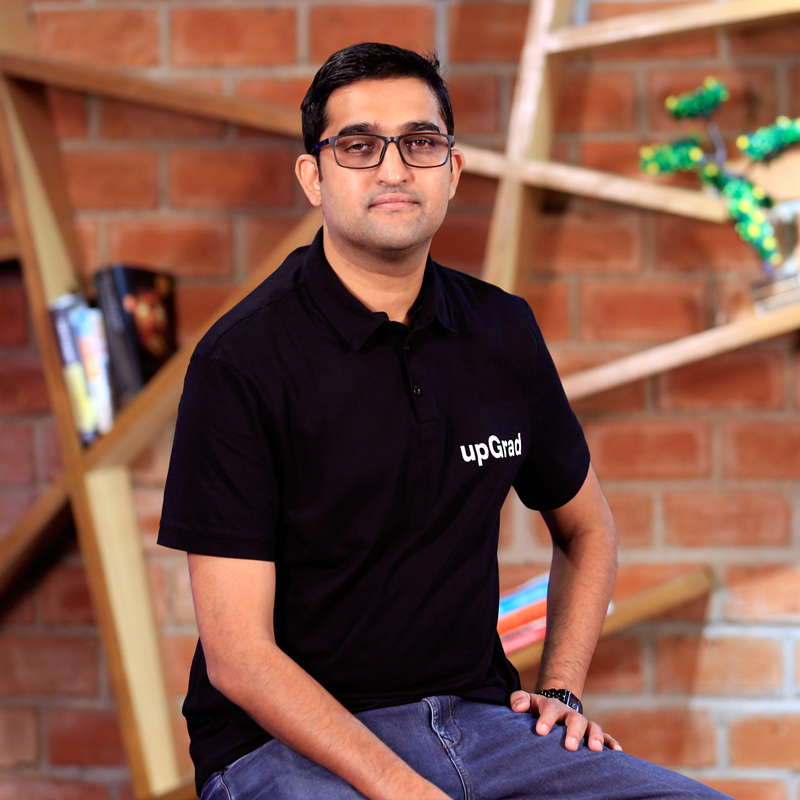
  • #Retrace2021: Associating with marquee properties on TV helped us take a quantum leap on digital: Arjun Mohan

    #Retrace2021: Associating with marquee properties on TV helped us take a quantum leap on digital: Arjun Mohan

    The only ed-tech “to have a ‘donkey’ as its brand ambassador”, upGrad has been hitting all the right notes, starting from its eye-grabbing ‘Don’t lick ass, instead kick ass’ 2020 ad to its fortune-teller donkey ad in early 2021 to drive across its “Sirf Naam Ki Nahi, Kaam Ki Degree” messaging. Having achieved the desired impact with its former campaign, the edtech consciously shifted its brand positioning to ‘Fast Forwarding’ one’s career with upGrad’s online courses, ending the year with a striking print campaign that took on CAT, while also tackling with humor the perception of ‘online’ MBAs not being effective.

    The seven-year-old start-up, known to make full use of its marketing channels to amp up the reach has crossed a subscriber base of two million learners at last count, and the jump from one million to two million came about in approx. eight months.

    As the person at the helm of upGrad’s India operations, Arjun Mohan has steered the edtech unicorn and helped put it on an upward trajectory. An experienced industry professional, Mohan has worked across domains spanning sales, marketing, and product development for over 15 years.  Before upGrad, Mohan worked with edtech major Byju’s as marketing vice-president and later as the chief business officer (CBO). A gold medallist from IIM Kozhikode, Mohan has worked with brands like Titan and Tata services.

    In a free-wheeling conversation with IndianTelevision’s Anupama Sajeet, the upGrad India CEO Arjun Mohan talks about steering the edtech brand through a post-pandemic world and on the key marketing innovations adopted by the brand in the past year. He also shares his thoughts on being a ‘hardcore optimist’ and the trends that might dominate the edtech industry in 2022.

    Edited excerpts:

    On looking back at how the year 2021 fared for upGrad

    In a growing industry, every year is a good year. So, from a business perspective, 2021 was a good year as overall business metrics have been quite good. But it was pretty challenging considering the multiple waves of Covid which struck us – the lockdowns, the inconsistencies of when to come to the office, and the problems that our consumers were facing. As a result, decisions were getting delayed. But then it was these challenges that pushed us and I believe as a result of that we were able to carve out several good ideas on all three aspects of business i.e. products, sales, and marketing. Hence we were able to create an impact in the market.

    On key innovations adopted by the brand in 2021

    Yes, between 2020 and 2021, there have been a lot of changes in the way upGrad communicated. That change is a testimony to consumer behaviour, where the association between education being something ‘serious’ is a thing of the past. And that is why we positioned the brand differently.  We realised that learning, upskilling, lifelong learning- all these aspects are no longer constrained to a few. There are guys who want to learn, upskill, and constantly improve themselves but at the same time, they want to enjoy life. We started talking to our consumers in a lighter vein, started communicating with working professionals in a language they connected to.

    One of the initial communications we did was on office politics- on how one should stop bothering about office politics and focus on specialisations and upskilling that will take your career ahead. The second campaign we built upon was ‘Sirf naam ki nahi, kaam ki degree’. We continuously heard from customers that “we would definitely think of doing this course, par ye degree koi kaam ki honi chahiye.” In India, a degree is associated with – a better job, a promotion, a better salary, a future, and so on. So, we worked on those insights and repositioned the entire company into offering courses that will actually be life-changing. That’s where we moved to our positioning of ‘kaam ki degree’.

    In 2022, we moved into phase two of it. Rather than just talking about online learning, we started focusing more on the value proposition part of it- On how the upGrad course/ degree is better than whatever options you have in the market. Thus, if you see our communication, it has also been based on the life-changing impact that upGrad courses have, followed by two or three shorties or 15-second films where we talk about the USPs. This format has been really helping us with the consideration part and we have been seeing that the conversion on the lead has been on the uptick. So, if last year the donkey was the high point from an ‘awareness’ perspective, then this year the MBA campaigns we did focusing on the ‘value proposition’ – that would be the highlight which saw a lot of impact for us. That’s been a big change in 2021. 

    On launching campaigns sans any celebrity endorsements

    While we do joke about it that every edtech out there has a celebrity brand ambassador- Byju’s has a SRK, Great learning has Virat Kohli, now Vedaantu has got Aamir Khan- and we have a donkey (!), it’s not been a conscious decision. If at a point in time we feel we need a celebrity vehicle we would do that. Currently, we are at an early stage of our brand building and the aspect we have been focusing on, as well as the TG we are talking about, is very different. This is not for mass India; this is for a smart audience. We didn’t see working professionals as the right vehicle for getting a brand ambassador. Even if you look at who or what they follow on OTTs or YouTube platforms – the kind of influencers these people follow are not celebrities. They are very individualistic and iconoclastic in that they follow what they think is right- they don’t believe they need to follow the crowd. And that’s why we stuck to the basics and the donkey!

    On exploring influencer marketing and subsequent ad-spends

    The way we look at brand marketing is that there are three pillars- The first pillar for us is ‘Content’ which includes social etc. Then comes the ‘Mass media’ which is where the TV and Print comes in and finally the ‘PR’ and all other aspects.

    For Content- we focus a lot on the content creators: influencers on YouTube, Instagram, OTT platforms, etc because our TG, especially the knowledge worker who is in IT/ ITES follows this segment a lot. We have started by working with multiple content creators like BeYouNick, Dhruv Rathee, who are very popular with this TG. We work with them on bringing Upgrad into their content very organically.

    Apart from relying on other content creators, we have also started creating our own original content called ‘the office canteen’. This again revolves around the theme of office politics, along with BeYouNick and YouTube, Google and has been a big success for us (trending with ten mn views).

    On the brand’s ad spend across TV, digital and print

    When it comes to mass media like TV and Print, rather than a ‘spray and pray’ our strategy has been focused on large properties.  When we do it, we do it big because we want to work on those properties which have a huge reach. So, we worked on IPL, the Test championship, UEFA, Wimbledon, and such. You can also see the sports association- as sport is connected with winners and ambitions so that works for us. Even in newspapers, our ad was an impact ad. It was more like moment marketing in that we took a dig at CAT, saying ‘CAT is so yesterday’. So that’s the kind of ‘big bang’ approach we are taking with mass media.

    We do digital marketing all the time and we’ve our leaps coming at particular CPL (Cost per lead) and traffic coming with a particular threshold. I want these brand properties on mass media to be at a point where I’ll get a quantum leap on the digital side of it. We plan it in such a way that our traffic moves a threshold and comes to a new benchmark. That’s been our larger strategy.

    Digital is where we get to do direct marketing. And we keep using large-scale marketing properties to get quantum jumps. Because, the kind of scale these properties give, digital will take years to reach there. We are also seriously looking at OOH. We shall do a clinical campaign, once our TG is back in the office, by trying to focus on places where we know our TG is- for instance, an IT park- and then do BTL inside such premises along with hoardings etc.

    So, all of this mass marketing is important to us, and we have a way to measure their impact. For that matter, even ‘Shark Tank’, where we are the title sponsors, we are quite sure that is the direction large-scale mass media is moving into. Rather than doing a couple of ads in between programs, writing your brand into the story is what really works. So that’s something we have really worked on and we have big plans for the show.

    On rising competition in ed-tech space and strengthening their USP

    We have complete confidence in our product. This product took almost five years to develop after multiple iterations. We were always clear that if we are able to get our customer to at least try our product then we can change his/ her perspective and even convince them that online is better than offline. There has been a lot of influx but if you see what’s happening today is that the players with a strong product, and sales & marketing capability are finally emerging out of this. So, I feel the solution for us is just to have our ears to the ground and keep on listening to the customer and then be ready with a solution that they will love. And that’s what we have been doing with our products, sales and marketing.

    On upcoming plans for 2022

    I am a hardcore optimist so I am sure 2022 will be superb for the brand. We are very clear we want to be the largest integrated edtech in the higher education space (post K-12) across the globe. Our international operations, which we started in 2021, is panning out well. We have our offices in the US, APAC and India where we have set up our subsidiaries. Post-India, our focus market will be the US- we really want to crack that market. So really looking forward to 2022 when we can take this to the next level.

    On key trends that might dominate the industry this year

    I think most of the ed-tech players in the K-12 segment will ultimately stabilise with the hybrid model, wherein there’s an offline component to it and an online component. But in higher edtech I don’t see that happening. Higher online learning has gotten established as a clear option or a side-by-side alternative to what used to exist earlier offline. There’s a very clear value proposition that you can continue upskilling even when you are working: ‘Learn while you Earn’.

    Hence, I believe, online education will be the preferred mechanism, at least from a Masters-degree perspective in India. The majority of Indians do not do a Master’s today because they are not sure whether thereafter, they will be able to get a job with that kind of a package. Even from a NNation-building perspective it is important for a country like India, with such a young population that we have highly skilled people. That’s when the country’s economy will move to the next level.

    Also, as we keep getting feedback from our learners, there has to be some social component to even online learning. So we are working to build a social module where learners can share their ideas, meet their lecturers, and have a session offline also. So that’s the way we see it and we will keep improving on it in 2022.

  • AIR doubles transmission time for programmes in six languages

    AIR doubles transmission time for programmes in six languages

    Mumbai: Stepping up its outreach to neighbours through airwaves, All India Radio (AIR) has decided to double its transmission time in six languages, starting 3 January.

    Making the announcement, the External Services Division of AIR said, the broadcast time has been doubled from the existing 1- 1.5 hours to three hours. The six languages include Dari, Pashto, Tibetan, Nepali, Baluchi, and Mandarin Chinese. The transmission would now be available daily for 1.5 hours every morning as well as evening.

    While Balochi is spoken in the Baluchistan province of Pakistan, Dari and Pashto are spoken in Afghanistan which is currently under Taliban rule.

    Keeping its mandate of reaching out to regions across the globe the External Affairs Division of AIR currently broadcasts in French, Sindhi, Indonesian, Tibetan, Mandarin Chinese, Baluchi, Urdu, Pashto, Arabic, Swahili, Punjabi, Saraiki, Bengali, Persian, Nepali, and Dari.
     

  • Burger Kings introduces ‘Sober Whopper’ to curb hangover this new year

    Burger Kings introduces ‘Sober Whopper’ to curb hangover this new year

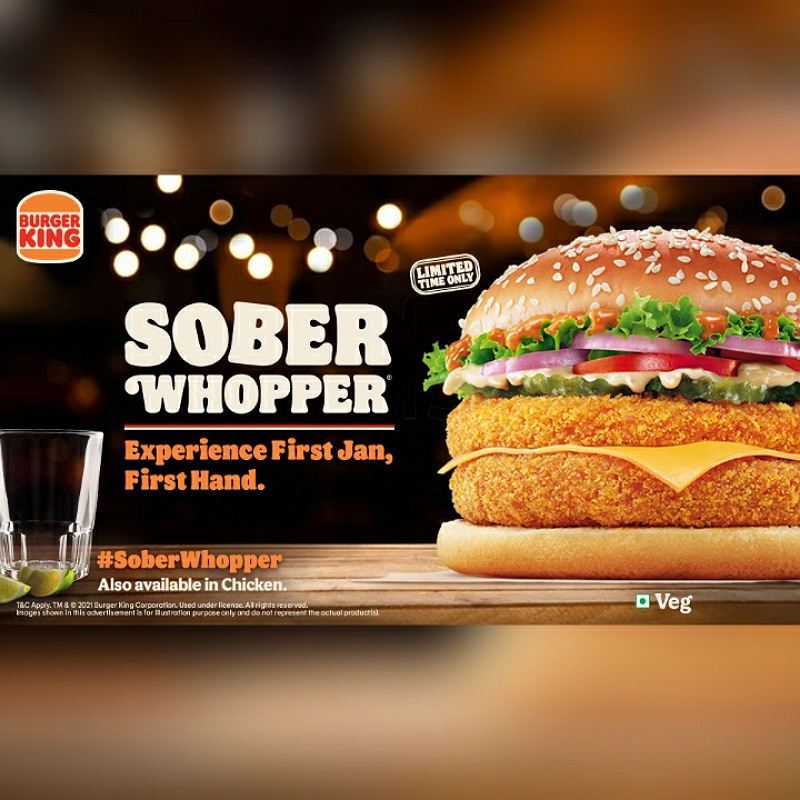
    Mumbai: New year’s evening is often associated with indulgence followed by a whopper of a hangover the next morning. So this new year, Burger King India has introduced the #SoberWhopper, which has been specially curated for guests to enjoy the first-hand experience of 1 January.

    Conceptualised and executed by FoxyMoron (part of the Zoo Media network), the #SoberWhopper campaign will be promoted with a digital film. The brand has activated the #SoberWhopper campaign on social media. 

    “Burger King as a brand has a unique way of connecting with its TG of GenZ and millennials,” said Zoo Media & FoxyMoron co-founder Pratik Gupta on the brand campaign. “While most brands focus on bringing in the new year, Burger King in its signature humour and topical lens, decided to focus on the unique touchpoint of the customer’s sentiment the morning after, when all the fun and frolic is over, and all you want is great food.”

    “Our strategy is to constantly hack contemporary moments and culture. The #SoberWhopper was designed to ensure that no matter how hard our guests party, they can start their new year on a Whopper note,” said chief marketing officer Kapil Grover.

    The limited-time ‘Sober Whopper’ is exclusively available on the Burger King mobile app between 28 December and 5 January 2022, said the statement.

  • #Retrace2021: The long road to recovery for the travel sector

    #Retrace2021: The long road to recovery for the travel sector

    Mumbai: ‘Tis the Season! To be jolly and ring in the holidays. Except that it is not.

    Just when it seemed like life was returning to normal, the spread of the omicron variant has once again put a question mark over the travel plans. The new restrictions being announced across states and countries have dashed hopes of a cheery festive season for many, including the travel sector that had just begun its road to recovery in 2021.

    “The year ushered in significant opportunities for the brand to leverage, but it remained challenging nonetheless,” summed up Thomas Cook president and group head, marketing, service quality, value-added services, and innovation Abraham Alapatt. “A big win for us is that it gave us the ability to rapidly accelerate our digital journey – to build scale and create a contactless journey through digital means for both our B2C and B2B customers.”

    The company worked on its conversation and brand messaging which underwent a major shift from price to safety-first and ease of travel.  Digital became the new normal, as companies experimented with online tools – self-service apps, AI-enabled chatbots, build-your-own holiday platforms for personalisation, and CRM connectivity across business lines to its leisure and corporate travelers. “We decided to educate customers on the most credible and updated travel restrictions and guidelines and become the first point of contact for our customers. We organised virtual events to showcase travel experiences in the new normal in Europe, Dubai, and the Maldives to encourage customers to travel,” he elaborated.

    From launching a series of campaigns to building consumer confidence, travel companies and hotels also invested in strengthening customer safety. There was continued emphasis on vaccinated hotel staff, drivers & co-travellers, offering facilities of flexible rescheduling and cancellation when required and travel insurance that covers Covid related quarantine and/or hospitalisation, with some even going the extra mile by offering 24×7 doctor-on-call and contactless Covid-negative certification services with doorstep delivery.

    Continued to pump money into advertising

    The year saw the travel-booking platforms pumping money into advertising across all media channels, and leveraging social media. There was a significant shift from print to digital/social media which was not only used to inspire travel, but more importantly to spread positive news on travel and thereby build customer confidence. Online travel brand Goibibo rolled out its campaign ‘Apna Rule Toh Full Vasool’, announcing ‘Daily Steal Deals’ for hotels and last-minute flight bookings on its platform. While, My Trip roped in the hit-duo of Ranveer Singh and Alia Bhatt for its campaign ‘JoHogaWOWHoga’ to encourage travellers to plan, book and travel once again without any worries arising out of cancellation or hassle of refund claims.

    Club Mahindra, the flagship brand of Mahindra Holidays & Resorts India also reached out to travel enthusiasts through its ‘Jaana Kahaan Hai’ campaign starring the ‘Shershah’ actor, Siddharth Malhotra. The campaign captured people’s desire to travel and explore new destinations and indulge in newer adventures in the new normal.

    “Our 2021 visibility is almost back to the pre-pandemic levels while our share of voice in print has almost doubled to that of pre-Covid levels,” said Thomas Cook president. 

    2021: The year of domestic tourism

    As most foreign destinations remained out of reach due to restrictions, 2021 emerged as the year for domestic tourism. There was a growing appetite for non-standard elements and a rising trend for deeper exploration of smaller yet undiscovered locales and a pronounced shift from micro-cations to in-depth stays. The trend also shifted from emergency travel to leisure travel, according to industry experts.

    “India’s growing appetite for outdoor and adventure is fuelled by the desire to get away from crowds,” said Alapatt sharing insights on the changing consumer behavior. “We are seeing a strong uptick for our camping, hiking, trekking, and biking trips; jungle and safari experiences too. Our biking trips are in high demand – equally from millennials as India’s C-suite, with routes across rugged yet spectacular terrain from Kashmir, Leh-Ladakh, Rajasthan, Sikkim to South India’s Madikeri, Yercaud, etc. and the option of riding your own bike or hiring a premium Ducati, Harley Davidson or equivalent.”

    According to Cleartrip chief business officer Prahlad Krishnamurti, there was at least 25 per cent improvement over 2020. “We have approximately doubled our user base from August to December which corresponds to a 30 per cent increase in conversion rates. There was a sharp recovery at almost 70-80 per cent pre covid levels in H2 2021. This recovery was stronger than what we saw post first wave in 2020,” he added.

    Apart from the metros commanding the usual high share, the leisure destinations preferred during the festive season during the second half of 2021 were Goa, Jaipur, Bhubaneswar, Chandigarh, Guwahati, and Srinagar- making up for nearly 15 per cent of the market share on the ClearTrip portal- with Goa and Rajasthan having the lion’s share in hotel bookings.

    “However, there was and still exists a lot of anxiety and uncertainty around travel due to the pandemic,” said Krishnamurti. But he remains optimistic about the prospects for next year. “ClearTrip spent 2021 ramping up and investing in building our flight and hotel products, with the goal of making travel simple for customers. We are looking to gain larger mindshare with our customers and expect this to translate into a sizable market share.”

    High hopes for 2022

    Despite the challenges, the industry remains hopeful that the pent-up demand for travel could drive rapid growth in travel ad-spend over the next few years, but it will no doubt, be a long road back to pre-pandemic spending.  According to Zenith’s latest Travel adspend forecast released in November, the fastest growth in travel advertising is expected to come from India, but it will take until 2023 for the travel ad spend to be 31 per cent above the 2019 baseline.

    Looking ahead at 2022, sustainable tourism could become a very important factor as travellers become environment-conscious.  According to industry experts, the post-pandemic travellers are going to be characterised by discerning, detail-driven, and discovery-oriented – seeing more value in depth of experience rather than whistle-stop ‘photo-op’ travel. Travellers will continue to depend on technological advancement to ensure reduced physical contact, even as safety and hygiene will remain the top most important factors in their 2022 travel decisions.

    So, here’s looking forward to a stronger and safer 2022.