Tag: New Tariff Order

  • Tata Sky reveals new channel prices after TRAI’s show-cause notice

    Tata Sky reveals new channel prices after TRAI’s show-cause notice

    MUMBAI: Leading direct to home (DTH) operator Tata Sky on Thursday finally unveiled the new pricing of channels and packs after it was served a show-cause notice by the Telecom Regulatory Authority of India (TRAI). With just a week for the new tariff order to kick in Tata Sky’s decision to announce its pricing comes as a relief to consumers, some of whom had even complained about the same to the TRAI.

    According to a report by news agency PTI, TRAI's show-cause notice said, "Tata Sky has failed to provide options to its 17.7 million subscribers in compliance with the new framework to exercise their choices for TV channels. Tata Sky has put its subscribers in a situation of great difficulty despite no fault of theirs by not complying with the provisions of the new regulations and the tariff order.”

    Despite the delay in announcing channel prices, Tata Sky MD and CEO Harit Nagpal is confident that his team can complete the tricky task of implementing the new norms within a relatively short span of time.

    “Tata Sky has always been compliant to regulatory requirements. We have gone live with our modes of communication across the Tata Sky website, Tata Sky mobile app and also equipped the dealers that subscribers can reach out to. We were confident that we would be able to complete the task in 1 week’s time. hence we used this time to create a seamless and smooth transition for all our subscribers. We have ensured that choosing channels and packs is as easy as 1, 2, 3 for any subscriber,” the veteran executive said.

    The DTH operator has come up with a number of packs that will serve consumers of different interests. The packs not only focus on several genres like entertainment, news, sports, and lifestyle but also on all the regions across the country. Even in terms of pricing, the packs provided by the DTH operator offers a wide variety. Apart from its own packages, Tata Sky has also updated the information about broadcasters’ packages and price of the channels available on a-la-carte basis.

    For making the transition easier for its subscribers, a dedicated pack selection portal has also been provided on the website. Users need to log in via their registered mobile number or subscriber ID, post which they can exercise the options.

    The DTH operator has also notified that users with long duration packs will be migrated to monthly packs starting 1 February and the remaining balance will be credited to their Tata Sky account.

    Tata Sky is currently embroiled in a legal battle, of which Bharti Telemedia-owned Airtel Digital TV and Sun Direct are a part, with the TRAI in the Delhi High Court. Unlike the position Star India had adopted, wherein it questioned the regulatory powers of TRAI, the matter in the Delhi HC questions the regulator’s power to wipe out deals that operators enter into to fix commissions and rates for customers. The court is likely to pronounce its verdict in the matter on 28 January.

    In a press release issued by the TRAI on Thursday, it had singled out one DTH operator for not providing options to its subscribers to exercise their choices. The press note also mentioned that the said DTH operator had assured in writing that it would comply with the new regulatory framework.

    TRAI wrote to all broadcasters and DPOs, asking them to comply by the new regulatory framework within the stipulated time. The regulator has also revealed that 40 per cent of consumers have exercised their option of selecting TV channels under the new tariff order.

  • TRAI says no blackout of TV channels on 29 December

    TRAI says no blackout of TV channels on 29 December

    MUMBAI: Speculations have been rife about a complete blackout of TV channels on December 29 following the Supreme Court orders of implementing a new tariff regime, as the system allegedly is not ready for such a big move. Squashing all such rumours, regulator TRAI has asserted that it has advised all the broadcasters, DPOs, and LCOs to ensure there is no disruption of TV services.

    It says in the release, “The authority is seized of the matter and hereby advises that all broadcasters/DPOs/LCOs will ensure that any channel that a consumer is watching today is not discontinued on 29.12.2018. Hence, there will be no disruption of TV services due to implementation of the new regulatory framework.”

    The release further reads, “Keeping in view the interest of the subscribers and to enable a smooth transition, the authority is preparing a detailed migration plan for all the existing subscribers. The migration plan will provide ample opportunity to each and every subscriber for making informed choice. This will also enable service providers in carrying out the various activities as stipulated in the new regulatory framework in a time-bound manner.”

    As per TRAI, the new tariff order will give consumers the power to choose and will also lower the prices for TV channels. This new framework allows them to select and pick channels that they like to watch and pay accordingly. It also requires the TV broadcasters to disclose maximum retail price (MRP) of their respective channels and also of the channel bouquets. As per the Supreme Court verdict of 30 October 2018, the service providers were advised to complete the preparation for migration to the new framework by 28 December 2018.

    Earlier, as well, TRAI had asked the broadcasters to work closely with all the service providers to ensure a hassle-free transformation, in the interest of the consumers.

  • Sudhanshu Vats on the TRAI tariff order, Viacom18’s channel pricing and strategy

    Sudhanshu Vats on the TRAI tariff order, Viacom18’s channel pricing and strategy

    MUMBAI: At 50, with sharp features, and a spring in his step, Viacom18 group CEO and managing director Sudhanshu Vats can simultaneously pass off as an enthusiastic, backslapping college professor and an intimidating corporate power player. Watch him in action, even briefly, and you can’t help but be struck by adjectives like efficient and disciplined. Despite his unassuming manner, Vats, I am reminded is always firmly in control.

    His six-year (and counting) stint as one of the most influential business executives in the country bears that impression out. A widely-respected thought leader and tactician, Vats has proved to be a highly effective occupant of the Viacom18 hot seat, corralling a cluster of brands and companies into an agile media and entertainment behemoth.

    He rarely ducks a question, often either plunging into a dissection of it or using short and succinct sentences to answer it. Unfailingly, however, he punctuates every response with a smile.

    Perhaps these qualities enable him to swing between an awkward but endearing dance at a kids' show awards and successfully present the intricacies of GST math on the entertainment media industry to the Prime Minister.

    More on that some other time. For now, however, the subject of my chat with Vats, in his office at Viacom18’s headquarters, located just off the Western Express Highway in Mumbai’s Andheri, is the much-debated tariff regime for the broadcast sector. The fundamental tenets of TRAI’s diktat is rooted in order and process, words Vats is all too familiar with.

    “The tariff order is a progressive document because it offers choice to the consumer, it attempts to bring in equity in the value chain and over a period of time brings in transparency and objectivity in the way we deal in the entire media and entertainment ecosystem,” he tells me.

    As 28 December 2018 nears, broadcasters and DPOs are working both frantically and frenetically to ensure that none of their consumers are deprived of their favourite TV channels. Friction and chaos notwithstanding, the ecosystem is making a concerted effort for a seamless transition.

    That, however, seems like a tall order for now considering the scale of the challenge. In fact, Vats puts his finger on two critical ones.

    “Education of the consumer, which is critical, is a key challenge,” he highlights.

    When talking about the second, Vats appears less a managing director of a giant corporation and more a statesman of India’s media and entertainment firmament and also its moral arbiter.

    “Second is, in these times, the ability of the industry and all the constituents of the industry to come together and to be able to support one another. Because we have to start thinking of ourselves as the industry and seek solutions rather than focusing on our individual constituency or the company. My idea is that it has to be a win-win-win formula. So everybody should win in the long-term. But in the immediate analysis we if start looking at it from our narrow boundaries then that could make the transition more difficult,” he points out.

    Viacom18 and TV18’s distribution arm IndiaCast has bundled the networks’ 57 channels (42 SD and 15 HD) in three packs – budget, value and family. The networks have also introduced 10 channel bundles, in SD and HD versions, mapped to its markets (Hindi, North East, Kerala, Karnataka, Gujarat, Bengal, Maharashtra, Orissa, Telugu and Tamil) to allow the consumer to choose from.

    “Anuj [Gandhi] and his team have done everything possible to make sure we are equipped,” the Viacom18 topper says.

    From a legal standpoint though, the matter is yet to be concluded. Earlier this month, TRAI filed a special leave petition (SLP) in the Supreme Court seeking clarifications on the 15 per cent cap on bouquet discounts. Currently, Viacom18 has not adhered to the cap. However, a favourable ruling for the regulator when the Supreme Court resumes after winter vacations next year  could lead to revision of channel pricing.

    “This is a debatable point and I will wait because the matter is sub-judice. I wouldn’t like to give a point of view at this moment and we will see how we adapt ourselves to that,” says Vats when asked whether he’s in favour of a 15 per cent cap or not.

    His network has launched a multi-media marketing campaign, titled ‘Ek Me Hai More Yahaan’, asking consumers to pick up the ‘Colors wala Pack’, designed for the Hindi speaking market (HSM) and priced at Rs 25 a month.

    Given that the top court pronounced its judgement in the matter relating to jurisdiction of TRAI on 30 October 2018, could the broadcaster have kicked-off its publicity blitzkrieg earlier?

    “As for the consumer campaign, the timing is broadly right. You can’t start telling the consumer in October and ask her to act in December. She has to act now and that’s why our campaign should be on now. That is why you’re seeing the timing the way it is,” says Vats adding that he’s committed to investing in such campaigns till it is required.

    The early success of the new tariff regime’s implementation hinges on consumer awareness and adaptability. In such a scenario, every constituent of the value chain needs to play their part. However, if industry sources are to be believed, it’s the broadcasters and MSOs doing the heavy lifting currently with the LCOs not upping their game.

    “If there is a gap in communication and things happen, there will be some loss in transition there is no doubt about it. But that has to be compensated with direct communication with the consumer. Supposing Colors wala pack or mention of some of our channels is missed out, then we keep it top of mind for consumers that there is a Colors wala pack which is very affordable. So our hypothesis is that we will have consumers being able to ask that question. And then we will be educating and training with the other part of the value chain to be able to fulfil this. So the demand should come from the consumer,” states the Indian Institute of Management – Ahmedabad alum, who has spent much of his stellar career at the mecca of marketing, Hindustan Unilever.

    The broadcast cognoscenti is fussing over the financial remodelling of the value chain. The good old consumer will now not only flip channels but also make or break businesses. She’s suddenly become more popular, more powerful and immensely more significant. How will this impact the ARPU of the broadcaster in the medium to long-term?

    Vats, as you’d expect, views this differently. He prefers restricting his focus to the systemic changes the order has induced rather than be lured by what its by-products, such as improved subscriptions numbers, have to offer.

    “With the improvement in the objectivity and transparency in the entire value chain and with the equity I think it bodes well for everybody in the value chain. It bodes well for the broadcaster also,” he says.

    Dealing with a radical change of this nature has several handicaps, the biggest being the unavailability of previous data. Therefore, predicting consumer behaviour can be a nightmare. Some believe that the tariff order will result in a shrinkage of broadcaster bouquets.

    Interestingly, Viacom18 has two fresh offerings – Colors Gujarati Cinema and Colors Bangla Cinema (yet to be launched) – as the broadcast sector readies for a regime change. The show must go on, is something Vats believes in.

    “My point view is that while the changes will happen, business has to go on. If there are people who would like to watch Gujarati films, they would like to watch Gujarati films, irrespective of what tariff order is there or what plans are there. So, I think it’s up to us to continue monitoring them as we go forward,” he argues.

    Another point Vats stresses on is the fact that people aren’t going to stop watching television. It’s a simple but significant assertion. He intends to maintain the rhythm of his business despite the uncertainties the order’s implementation is likely to throw up.

    “So some of the plans that we have are being rolled out. Whether it is channel launches or programs. The other thing you could also say as there is going to be some uncertainty, should we do programmes? But my point of view is that people are not stopping watching TV. And in the spirit of continuing the rhythm of our business we’ve go to the right level of new things whether it is new programs, new channels and new initiatives,” he adds.

    According to the 2018 FICCI report, the advent of OTT players has whetted Indian viewers’ appetite for differentiated content. While Indian broadcasters produce over 100,000 hours of content annually, newer players are investing more money per episode (though for much smaller content pieces) and are snapping up high-profile talent. Broadcast sector luminaries suggest the overall content cost is likely to rise by two to three per cent of their top line.

    Throw the tariff order into the mix, and networks could be forced to shell out a lot more than anticipated to line up engaging content on their ‘weaker’ channels. The other alternative, of course, would be yanking off the laggards.

    “The investments are business decisions and any channel which exists has to have the requisite set of viewers. If you don’t have the right set of viewership in your segment, then there will always be pressure on that channel. That we need to maintain and that will be there without doubt,” concludes Vats.

    The impending makeover of India’s broadcast sector has fuelled several questions, concerns and conspiracy theories. None of the protagonists of this play are certain of what to expect and how long it will take for dust to settle down. What’s clear, however, is the fact that this race of broadcaster reaching the consumer in her new avatar, isn’t a sprint. It’s going to be marathon, and few people know more about running long distances than Sudhanshu Vats.
     

  • ZEEL CMO Prathyusha Agarwal on TRAI tariff order, channel pricing and content strategy

    ZEEL CMO Prathyusha Agarwal on TRAI tariff order, channel pricing and content strategy

    MUMBAI: Just 10 days away from D-Day, Zee Entertainment Enterprises Ltd (ZEEL) has embarked on a mission to educate and enlighten consumers about the new Telecom Regulatory Authority of India (TRAI) tariff order and how it will benefit them.

    Till now, packs focused on family viewing and bundled channels keeping everyone in mind. Now, it has launched a new multimedia multi-stakeholder communication initiative ‘Channels Ka Chunaav 2019’.

    Talking to media, ZEEL CMO Prathyusha Agarwal said rather than looking at it as a multimedia campaign their approach is in the form of a behavioural change. While in terms of choosing channels broadcast sector had a very low involvement from consumers, the scenario is going to change soon as TRAI has put the power in the hands of consumers. Over a period of time, consumers will gradually start to evaluate what they are paying for. Explaining the structural change across the value chain, Agarwal spoke about ZEEL’s initiatives as well as the new regime’s impact on the industry.

    On the new behavioural change program

    We did a lot of work. We have done price modelling and consumer research in terms of path-to-purchase. The biggest worry is if they will end up compromising someone’s need in the family because budget remains the same. Is that a reality? Not necessarily true. Because once they start doing the exercise, they will realise that they are able to reallocate to the ones which they want. The entire behavioural insight focuses on the variety of needs of each family member and how to meet that demand.

    The other one we have realised while doing this is that TV is seen as a family asset. So, when they are titrating it, the optimisation happens on the person fulfilling the needs of the family and hence the pricing of the bouquet is based on which is optimised for everyday entertainment needs. This is the monthly fee someone is willing to shell out that has been optimised for the everyday needs of everybody in the family. This is the ZEE approach and the behavioural campaign.

    On readiness of DPOs

    The DTH guys have systems in place and DTH consumers are already equipped with this. In terms of LCOs, it’s not as if every LCO is unprepared. I met an LCO who had his own app which he would look at for collecting payments and what he is giving to consumers. I met another LCO who did not have a clue. People who are already attuned to viewers’ demand will be the first movers and gainers. The rest of the mass majority will follow after that. Those who haven’t taken technological support are still empowering their salesmen.

    On protests from LCOs

    Every time there’s a change, there will be protests. First, they will ignore things, and then they will be listening and gearing up for action. I don’t think anybody is not wanting to do. Moreover, many times education and understanding help in a big way. Things will fall into place in the 29th-5th cycle when they go to collect money. By 25-26th of this month, they have to take the call.

    On the change of pricing model

    Currently, based on the pricing modelling that has been done, our pricing has been put by ZEEL which we believe is the right demand-led pricing. This is the channel which has a certain love from its viewers hence certain pricing has been fixed. It will get titrated because it was never an open market pricing. Earlier it was always a fixed bundle or fixed fee which is never a true representation of value.

    On the change in subscription cost for consumers

    The narrative is about reallocation, not increase. There might be or might not be an increase. India is a country where we always have a habit of trading up for what we want and trading down what we don’t need. So that is going to play out even in this sector. They will reallocate their monthly budget. If it does not fall in their budget they are going to shell that incremental money for what they really love. For consumers paying Rs 350, it’s going to be in the budget. Among those paying Rs 200, a little bit of reallocation and titration will happen.

    On whether channel price will be relooked if SC strikes down 15 per cent cap

    In TV ecosystem, now subscription pricing becomes an open market variable and hence you need to be ready not just when regulator intervenes but you have to be thinking about it at a conscious variable and hence be geared for it. Your consumer understanding of what is demand-led pricing will keep you in a good state in the long run. Obviously what the regulator is saying will make you go back and look at pricing. But even otherwise, we are really looking at it as the first pricing that has gone out. There is a behavioural change and there is a certain feedback loop that will happen from consumers saying what I am willing to pay for you. That will take six months to settle down. We will do continuous research.

    Impact on advertising revenue

    It’s a virtuous cycle. Brands which have the strength, pull and reach are going to actually benefit because the reach will keep going up. Because consumers will pick and choose, the reach will keep galloping and hence advertising revenues will go up. Where the product is not good, obviously you will not anyway get advertising revenues for it because there’s no reach. If it’s an open market, your offering and its quality will make you stand in a good state in both places. Till now there’s an artificial not knowing whether your product is doing well or not from the subscription side, now it will get opened up.

    Content strategy

    You never had random content being pushed doing well. When they don’t work, we shut those channels. So any good broadcaster who is committed to good content offering has always evaluated if it is performing well. You had the reach numbers to tell you if it’s catching eyes or not. It isn’t as if because of the new regime people will start evaluating their content. The good thing is there will be feedback on what is being pulled or consumed which will refine your strategy.

  • TRAI secretary Sunil K Gupta explains need for tariff order

    TRAI secretary Sunil K Gupta explains need for tariff order

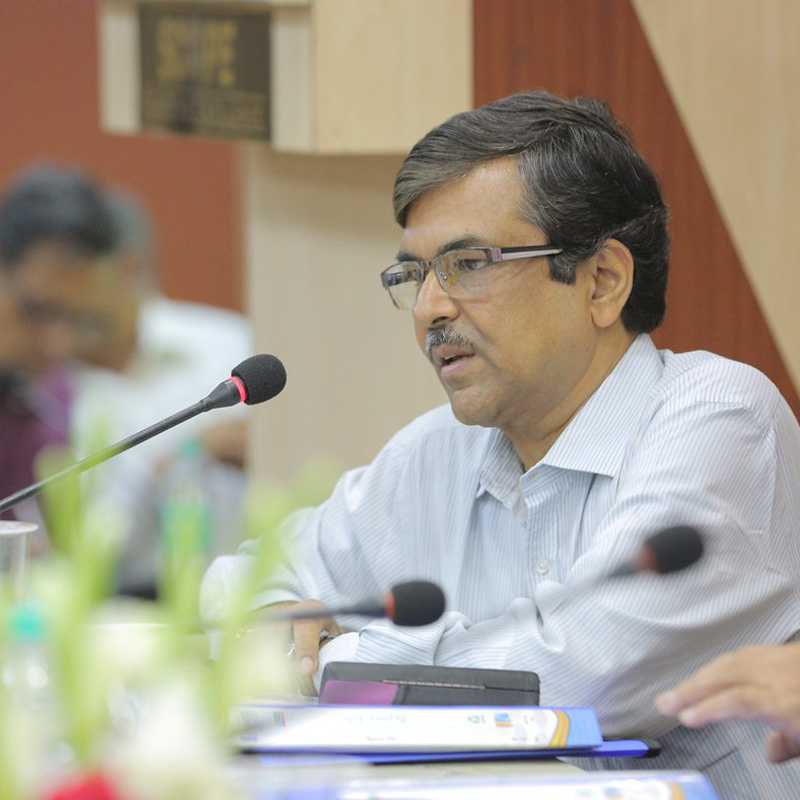
    GOA: After several twists and turns, Telecom Regulatory Authority of India’s (TRAI) new tariff order crossed its last legal hurdle in the Supreme Court on 30 October. Now, with less than one month left for the implementation of the regulations, several questions still concern the industry stakeholders. On the second day of the Video and Broadband Summit 2018, TRAI secretary Sunil K Gupta spoke on the new regime via Skype and answered questions raised by stakeholders. He also threw light on the initiatives taken by the regulatory body to make consumers aware of the radical changes.

    Indiantelevision.com needs to clarify here that since the VBS session was held in Goa last month, a development has taken place in the form of TRAI, last week, filing a fresh petition in the Supreme Court for review of the Madras High Court observations on a cap of 15 per cent discount on bouquet prices of TV channels.

    Gupta started the session explaining the need to have a comprehensive regulatory framework for dealing with the problems of the broadcasting sector. Talking about the problems faced by different stakeholders, he cited the example of the issues faced by MSOs and LCOs, broadcasters as well as consumers.

    In the case of MSOs and LCOs, the biggest problem was discriminatory treatment by broadcasters. As a result, it was almost impossible for smaller MSOs to get the content at the appropriate price from the broadcasters because the agreements were not transparent. Moreover, the problem was concerning customers as well due to the different rate of channels at different platforms. They didn’t have the power to choose and were forced to take channels provided by the DPOs.

    Broadcasters also faced various difficulties due to the lack of transparency in the entire ecosystem. While they were giving free-to-air channels, they felt that, in many cases, those channels were being actually charged. This menace reduced the probability of use of those channels resulting in fewer viewers. As the revenue of FTA channels is highly based on viewership, the business was getting affected.

    “Similarly, there were problems with broadcasters also as many time broadcasters were complaining that the content which is given to the consumers is not of high quality. Secondly, there are certain channels which were demanded by few stakeholders and because of the cap such channels could not be launched as there were serious issues particularly if you look at channels that are a requirement of a select class of stakeholders,” he said.

    “So considering all these issues and also the issues of non-transparency, we have come up with a very comprehensive framework. The comprehensive framework gives rights to the broadcasters to price their channels properly and transparently communicate to consumers,” he added.

    Gupta also explained that TRAI has made arrangements so that price of a particular channel can clearly be displayed on the electronic programme guide. He later added that due to the new regime, subscribers would have choice of channels as well as all the information. Moreover, Gupta said subscribers can get all the related information on the website of the MSOs in the tab which is called ‘customer corner’.

    “As far as MSOs are concerned, there were issues that they did not have funds to upgrade their network for good quality experience to consumers. Now, there will be dedicated money for MSOs and LCOs so the network can be upgraded and good quality service can be given to consumers. Broadcasters also have the freedom to choose what price they can get from subscribers and also appropriately optimise the prices so that they can get maximum revenue of advertisement as well as subscriptions from the consumers,” he added.

    Responding to a question from the audience, Gupta said there is no change in the license of the LCOs and they are supposed to take registration form from the post office only. But he also mentioned that they are working with MIB so that the process can be made online.

    Many MSOs and LCOs raised the concern that it looks like they are being reduced to merely a commissioned agent. Gupta said the functions of LCOs and MSOs have properly been described under the Model Interconnect Agreement (MIA) and the Standard Interconnect Agreement (SIA) divisions.

    “Here the framework is that a channel price which is being prescribed is the broadcaster’s understanding of the price of the particular channel. Now 20-35 per cent discount which is being given is to do certain work for that particular channel. Here, Rs 130 is being given differently and separately to MSOs and LCOs as they are providing the connectivity to consumers and consumers are getting the service from them. In addition to that, the portion of the discount on the content which is either 20 per cent or anything in between 20-35 per cent will also be accounted for sharing between the MSOs and LCOs,” he explained rejecting the claim that MSOs are only about to get commissions.

    TRAI is also taking measures to inform consumers properly about the upcoming change. There will be big campaigns as well as meetings in cities like Delhi, Jaipur, Hyderabad, Kolkata, Mumbai and Bhopal. In addition to that, TRAI is also going to start a programme to inform the consumers. Even jingles will be played on radio and other media to grab consumer attention.