Tag: New Tariff Order

  • TRAI tariff order’s impact on DD Free Dish’s growth

    TRAI tariff order’s impact on DD Free Dish’s growth

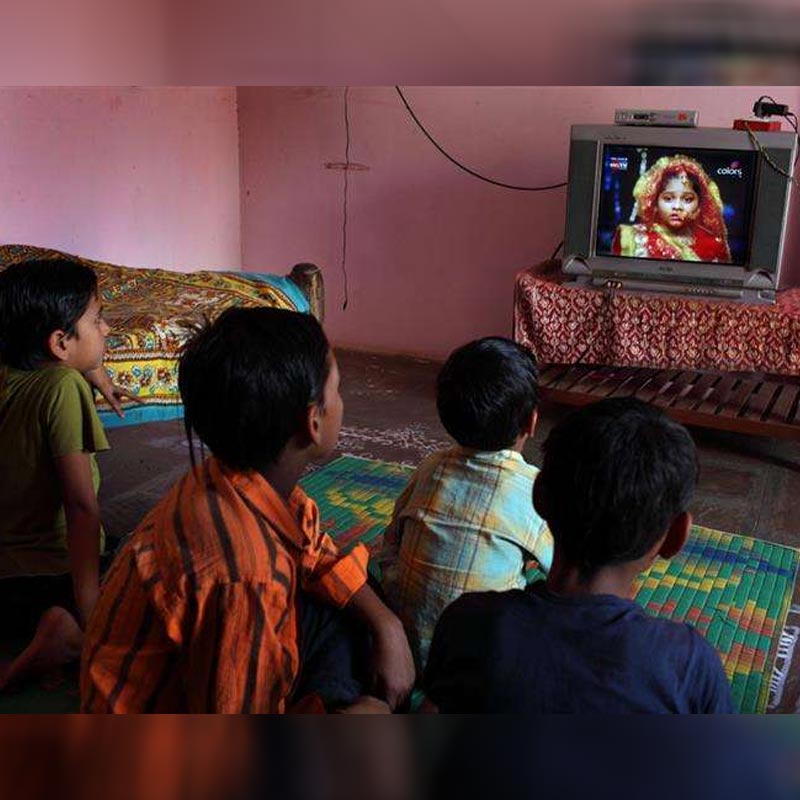
    MUMBAI: Prasar Bharati run direct-to-home (DTH) platform DD FreeDish’s success is evident from the estimated number of subscribers it boasts of. The free-to-air (FTA) DTH service, experts believe, commands close to 30 million subscribers, which could shoot up post TRAI tariff order’s implementation, the 2019 FICCI-EY report points out.

    According to the report, DD FreeDish has the potential to breach the 50 million subscriber mark if broadcasters continue to provide pay content on the platform.

    Another interesting point worth mentioning here is that the report suggests lower end consumers will increasingly shift to the free platform or even use it for their second television connection as a result of the new tariff regime.

    Last year at the Video and Broadband Summit, Doordarshan director general Supriya Sahu stated that FreeDish is not only used by a marginal section of the society but is also evolving as an alternative option for consumers. An older report of consulting firm EY predicted that the number of DD FreeDish subscribers is bound to cross 40 million by 2020.

    While the experts Indiantelevision.com spoke to were optimistic about the potential for robust growth, they seemed sceptical about the scale.

    Elara Capital vice president Karan Taurani did not agree with 2019 FICCI-EY report's observation about FreeDish, especially the figure of 50 million. Taurani rejected the possibility of a second home connectivity, adding that mobile is going to be the second screen for consumers. He said content consumption increment is happening on digital platforms.

    PricewaterhouseCoopers (PwC) partner and leader, media and entertainment Frank D’Souza, however, believes there is some merit to the argument.

    “Now the question is how many households who can get multiple connections will choose OTT rather than adding one more TV connection- that is little debatable. But the first argument has merit –lower-end consumers may shift to DD Free Dish. But the question is, will lower-end consumers be able to have multiple connections due to lack of physical space availability?” he asked.

    Travelxp CEO Prashant Chothani said the growth of FreeDish has so far been propelled by free content only. Now, however, major broadcasters have pulled off their content from the platform, he highlighted.

    The report also says that if large broadcasters continue to keep their content off the platform, television advertising revenues would be impacted and FreeDish’s future will be determined by the number of new channels that sign up on the platform.

    “FreeDish generated an estimated Rs 20 billion of advertising revenues. In February 2019, large broadcasters removed their channels from this medium and this could impact our ad revenue forecast by Rs 10-20 billion in 2019,” the report adds.

    Earlier this year, Prasar Bharati board gave a green signal to e-auctioning of DTH slots on DD FreeDish which was arbitrarily called off in October 2017. The first e-auction after recommencement witnessed intense competition. Under the revised guidelines, a total of 40 MPEG2 slots were successfully sold while the estimated revenue from the sold slots is Rs. 395 crore.

    The FICCI-EY report also adds that regional, news and niche channels, especially those impacted negatively by the TRAI tariff order, are bound to build their audience through FreeDish (subject to auction base prices).

    Industry experts, however, see things different in case of niche channels.

    “I don’t know how much they will try and do that because the market for niche channels is different and the people who are going to access DD Free Dish – the consumer is different. It may not fit the target segment of such channels,” D’Souza argued.

    According to Chothani, niche channels don’t see DD FreeDish as a viable option and are not going to jump on its bandwagon.

    In addition to that, he also pointed out that niche channels won’t be negatively impacted by the new tariff order. According to the 4k pioneer, niche channels will benefit from the new regime because consumers won’t shy away from paying for good content.

    “One of the fundamental premises of new tariff order is also to bring transparency in the system. Consumers’ habits build over time and also change. If they want to see the content which they were seeing earlier and now they are not getting because of NTO, in due course of time, they may subscribe. If the content is strong enough they will subscribe,” he opined.

    Taurani said niche channels opting for DD FreeDish remains a possibility mired in a couple of constraints. Apart from limited slots, what could also deter niche channels from staying off FreeDish is the high carriage fee.
  • Tata Sky announces special price slabs for multiple TV connections

    Tata Sky announces special price slabs for multiple TV connections

    MUMBAI: Tata Sky has recently announced special price slabs for customers with multiple TV connections. According to reports, the company is considering removing the network capacity fee, service charges and Tata Sky Binge service charge with the primary pack price as part of the new plan.

    The move is aimed at offering relief to customers who use multiple TV sets and separate connections. The DTH operator also announced that it will charge customers variable prices for their multiple connections.

    The primary connection pack price will be considered for calculation of multi TV prices, exclusive of network fee, Tata Sky service charges and Tata Sky Binge service charge. The company is claiming Rs 153 per month for the first 100 channels and Rs 23 per month for every slab of 25 additional channels. Both the prices are inclusive of all taxes.

    The company said, “One HD channel shall be treated equal to two SD channels for the purpose of calculating the number of channels within the distribution network capacity subscribed.”

  • TRAI tariff order shakes up pay and FTA channel uptake

    TRAI tariff order shakes up pay and FTA channel uptake

    MUMBAI: Six weeks into the new tariff order (NTO) and the television landscape is changing, says Chrome data analytics and media report. It says that 96.5 per cent of the consumers in India are aware of the NTO, with 83.6 per cent coming to know about it via television.

    The report also highlighted the packages that the consumers have chosen. It mentioned that 50 per cent has gone with the DPO-defined packages, packages defined by operators, leaving the balance 50 per cent split into two components– 25 per cent with packages from broadcasters and the rest from a la carte package. 26 per cent has exercised both, which is a combination of a DPO package along with some kinds of a la carte, 2 per cent don't remember what they exercised. The report signalled that the consumers felt that they were earlier paying for content that they were not willingly subscribing to. So that leaves the tariff order in the right spirit of transparency where consumers are getting an idea of what each channel and each bouquet costs and they feel empowered to pick what they want.

    Specifying about the reach or Chrome connectivity (OTS faired over the last six weeks), while broadly dissected into pay that observed a downfall and FTA which witnessing a hike. On one hand, pay channels with an average national connectivity of 75 per cent went down to an average of 51 per cent. FTA on the other hand, gained from 21 per cent to 26 which is a 23 per cent gain. 

    The report added that the operators right now are competing for consumers by providing the maximum number of channels within the fixed one hundred and thirty rupees. DTH –Tata Sky, Dish, Airtel – Average of 250 channels in the network capacity fee.

    Networks offering maximum channels within their Base pack

    HEAD END

    TOTAL FTA RUNNING

    TOTAL PAY RUNNING

    VISION POINT DIGITAL

    277

    23

    GAJANAN CABLE/NXT DIGITAL

    274

    180

    NXT DIGITAL

    264

    37

    AFTAB CABLE VISION

    230

    4

    JAK COMMUNICATION

    219

    48

    ATHULYA INFO MEDIA PVT. LTD.

    216

    14

    NXT DIGITAL

    190

    37

    CHIKHALI CABLE NETWORK

    186

    74

    KBC DIGITAL

    185

    110

    CRYSTAL CABLE

    185

    46

    PUNE CABLE SYSTEM

    185

    42

    VK DIGITAL NETWORK

    179

    71

    NXT DIGITAL

    177

    38

    MCBS DIGITAL

    176

    100

    ACT DIGITAL

    175

    32

    SITI DIGITAL

    174

    125

    KABLE FIRST DIGITAL

    173

    235

    GRAND GUMBER

    172

    8

    TATA SKY

    262

    135

    DISH TV

    202

    145

    AIRTEL DTH

    195

    125

    Source: Chrome LIVE, ALL India (Urban), WK 10, 2019

    State wise Package offtake status

    MARKET

    100 FTA CHANNELS RUNNING ON NETWORKS

    MORE THAN 100 FTA CHANNELS RUNNING ON NETWORKS

    LESS THAN 100 FTA CHANNELS RUNNING ON NETWORKS

    BIHAR

    17%

    67%

    17%

    GUJ, D&D & DNH

    9%

    55%

    36%

    KERALA

    3%

    72%

    25%

    MADHYA PRADESH

    5%

    31%

    64%

    MAH & GOA

    3%

    44%

    53%

    UP & UTTARAKHAND

    2%

    25%

    74%

    All INDIA

    2%

    46%

    52%


    MARKET

    100 FTA CHANNELS RUNNING ON NETWORKS

    MORE THAN 100 FTA CHANNELS RUNNING ON NETWORKS

    LESS THAN 100 FTA CHANNELS RUNNING ON NETWORKS

    AP & TELANGANA

    0%

    38%

    62%

    CHHATTISGARH

    0%

    60%

    40%

    DELHI

    0%

    42%

    58%

    HHPJ&K

    0%

    20%

    80%

    JHARKHAND

    0%

    17%

    83%

    KARNATAKA

    0%

    50%

    50%

    KOLKATA

    0%

    83%

    17%

    ODISHA

    0%

    53%

    47%

    PUN & CHA

    0%

    100%

    0%

    RAJASTHAN

    0%

    50%

    50%

    TN & PONDICHERRY

    0%

    100%

    0%

    WEST BENGAL

    0%

    89%

    11%

    Source: Chrome LIVE, ALL India (Urban), WK 10, 2019

    According to Chrome DM, in the long term, there is a price-quantity relationship which is already happening with operators putting in maximum number of channels to get maximum subscribers. On the broadcasting level, companies are graduating from pure distribution, lobbying driven business to consumer marketing organisations.

  • Uday Shankar, citing TRAI tariff order, suggests govt should unshackle instruments of monetisation

    Uday Shankar, citing TRAI tariff order, suggests govt should unshackle instruments of monetisation

    MUMBAI: Uday Shankar believes one of the most ‘powerful’ means of fuelling the next decade of growth for India’s media and entertainment industry is for the government to ‘unshackle the instruments of monetisation’. Driving home his point, the veteran executive cited the Telecom Regulatory Authority of India’s (TRAI) as an example.

    “Distribution regulation of television content, where what you can charge from the consumer regardless of how much you invest in the content, is determined by the regulator and not the market,” Shankar said on the opening day of FICCI FRAMES 2019, where he moderated a session titled ‘Global Goes Indian’ featuring MIB secretary Amit Khare and Prime Minister Narendra Modi’s Economic Advisory Council chairman Bibek Debroy as panellists.

    Shankar wondered whether there was a need for India to revise its ecosystem in order to compete in the global content market place.

    “When a Hollywood film is made, or when Netflix or Amazon produce a series, they are able to monetise it across the world and hence their ability to invest in that content is a great deal more. In India, especially for TV, because of restrictions on how and how much can you monetise, there is a cap on investment. There are regulations on the affiliate monetisation front. So, your ability to monetise is limited,” he argued.

    Shankar channelled his inner newsman as he highlighted some of the most pressing issues facing India’s media and entertainment industry. The recently appointed Disney APAC boss referred to a series of stumbling blocks across film, TV and digital content creation that could delay the sector from realising its true and full potential.

    The 56-year-old focused on three key areas that needed addressing for the Indian M&E to grow at a faster pace. The FICCI vice president drew the attention of the panellists and the audience to issues plaguing content creation, monetisation and the need for government policies and regulations to be consistent.

    Shankar rued the fact that India wasn’t adding more theatres in tune with the times. He pointed out that the increase in number of screens was a result of single screen theatres being converted to multiplexes.

    “New theatres are not coming and while more films are being released in Hindi and regional languages, it becomes a challenge for them to get exhibited because there are not enough screens. While the big budget films are still accepted by theatres, the smaller and regional films are struggling. This problem looks like it’s going to get more and more complex,” he said.

    Shankar then shifted his focus to the lack of adequate infrastructure, adding how this was preventing creators from scaling up their focus on local and city-specific content across the country. To further build on his perspective, Shankar offered the example of Mumbai’s film city.

    “We had one film city which used to cater to the needs of the film industry and a few TV channels. Now, we still have the same film city which has to cater to the needs of the much diversified industry,” he stated.

    Shankar asked whether policy development by the government, given that M&E is a major employer, would be a potential problem solver. However, he made it clear that the industry isn’t seeking any special favours from the government.

    “The entire content for whole Hindi heartland from Bihar all the way to MP, Rajasthan, Gujarat and Haryana is created out of Mumbai because it is the only city where basic infrastructure still exists. A decade ago, there were initiatives to launch Bhojpuri channels designed to cater only to the population of Bihar and some parts of UP. But all those channels turned out to be unviable because there was no facility to create content locally and all of them had to come and rent expensive facilities in Mumbai and create content here. There are no facilities available outside Mumbai. Is this a subject needs that needs to be addressed via policy intervention?” he asked the panel.

    Shankar then drew a parallel to how a complex process at every level had been a hindrance to investment in theatre infrastructure.

    “For instance, the reason malls are coming up everywhere and no theatre is being made is simply because the entire policy around building a new theatre, in terms of all requirements, is too complicated,” he said.

    Shankar made another critical point as he highlighted the need for government policies to be consistent.

    “There has to be certainty of regulation. You should know what is expected of you and what you need to deliver. There should be no surprises, because surprises create a shock in the system and everyone takes time to recover from that,” he stated.

    Earlier in the day, during his opening remarks, Shankar described India as one of the major media markets in the world. According to him, Indian M&E is at an inflexion point.

    “We are already seeing the innovations that are taking place in this country in the domain of sports or in digital, where Indian creativity is being talked about globally and attracting the interest of one and all. However, we need to make sure that our policies are aligned to accelerate creativity and growth,” he said.

  • TRAI tariff order’s impact on regional channels and ad rates

    TRAI tariff order’s impact on regional channels and ad rates

    MUMBAI: India’s regional broadcast sector has taken off in the last few years. With more investment pouring in, the quality of content and production has risen up a notch. While the regional language market has a lot going for it at the moment, the Telecom Regulatory Authority of India's (TRAI) new tariff order seems to have the potential to upset the apple cart. Industry experts believe that paid regional channels are likely to experience a dip in viewership compared to FTA channels with the implementation of the new framework.

    According to BARC India data, regional language viewership has witnessed a massive spike over the last two years. Bhojpuri saw a 134 per cent increase, followed by 125 per cent for Assamese, 89 per cent for Oriya, 81 per cent for Gujarati, 68 per cent for Marathi, 55 per cent for Bengali, 52 per cent for Kannada, 34 per cent for Punjabi, 23 per cent for Hindi, 18 per cent for Telugu and 17 per cent for Tamil. 

    Regional channels of late have been the bastions of growth not only in terms of viewership but also advertising revenue. Not only regional GECs, but regional movies, music and news have experienced growth in terms of ad volumes. However, niche and paid regional channels could be in for a bumpy ride going forward.

    Highlighting the impact of the new regime on these regional channels, Dishum Broadcasting COO Partha Dey said that if the carriage deals are in place with distribution platform operators (DPOs), viewership of regional FTA channels will not be affected. 

    “However, this may not hold true for long tail regional pay channels. Nevertheless, we may notice slight turbulence till the time TRAI guidelines are fully implemented,” he pointed out.

    Stratagem Media founder director Sundeep Nagpal voiced a similar view. Nagpal explained that the new tariff order is likely to adversely impact the penetration of regional channels in genres like music and movies as well as secondary GECs. However, the primary GECs or news channels that are not FTA may not be affected.

    Enterr10 Fakt Marathi MD Shirish Pattanshetty felt that the viewership in the regional cluster is likely to grow. He mentioned that multi system operators (MSOs) and local cable operators (LCOs) that are not educating the customers, and are trying to put together different packs by adding regional channels in it, which is against the new regime. 

    “If they are FTA and are included as part of the base pack, they are bound to grow so the essence of distribution and content will play a good game, but for the pay, they are bound to take a haircut. The customer should be given a choice of what he wants to pick and pay and then educate him on costing and give him options,” he stated.

    Meanwhile, Carat India SVP Mayank Bhatnagar said that the overall viewership and reach will get impacted but broadcasters will play it safe by having their most stable channels in the mix to minimise the risk. According to him, there is also merit to increase focus on digital to mitigate the risk.

    With the new regime, there will be a re-estimation of brand and content value, said HBC founder Harish Bijoor. According to him, consumers will contemplate the value of these channels. If two channels are regionally similar, they are likely to pick one.

    “So, a fair number of people have to take the decision about the entertainment repertoire as it need not include all these channels.” 

    The television industry in India has grown from Rs 58,800 crore in 2016-17 to Rs 66, 0007 crore in 2017-18 as per FICCI-EY Report 2018, thereby registering a growth of 12.24 per cent. The number of SD pay TV channels also saw a rise in the number from 147 in 2010 to 213 in 2018. 

    Dey and Pattanshetty believe that the reach of regional FTA channels is bound to grow subsequently leading to an increase in ad rates, with regional segment advertising rates likely to go up in all regional language markets.

    Nagpal, on the other hand, said that it wouldn’t be significant in the short run. However, it could lead to an increase of up to 25 per cent in some cases, if there’s a shakeup. 

    According to Bhatnagar, this will give an opportunity to the planners to rationalise the rates across channels.

    “Only those channels will be able to hold rates which add significant value and improve the effectiveness of the campaigns. Long tail channels will get impacted the most,” he highlighted.

    Hindi remains the preferred language of consumption for TV audiences in India, but growth is led by regional content. Rural India, at 99 million TV homes is 17 per cent higher than urban India but is only 52 per cent penetrated.

    When asked whether consumers from the rural areas would be willing to pay for the regional channels, Dey said that as per TRAI mandate of 100 FTA channels in base pack a rural or price-conscious consumer will first choose all FTA channels of the region and then go for top two or three regional pay channels and may forgo rest of regional pay channels, as FTA will suffice their consumption. 

    Similarly, Nagpal said, “Relatively speaking, rural penetration is likely to suffer more than the urban penetration, where the monthly subscription packages that will be developed by LCOs and MSOs, are likely to be even more attractive.” 

    Pattanshetty said that the rural audience might buy some of these channels but not all them. They will eliminate the ones that are not relevant to them. Furthermore, according to Bhatnagar, subscription rate will differ from region to region, given varied distribution and broadcast landscapes. Bijoor added that these rural homes are restricted as there is just one person in the whole family to decide as to which channel to watch and hence there will be a major impact on that front too.

    Stakeholders of the broadcast sector are hoping for some clear trends to emerge from the implementation of the new tariff order. While its no longer business as usual for most broadcasters, they will have to pay special focus to the developments in the regional language markets after the dust settles in the next few months.

  • TRAI asks DTH operator Independent TV to explain tariff plans

    TRAI asks DTH operator Independent TV to explain tariff plans

    MUMBAI: Telecom regulatory authority of India (TRAI), in a letter, has asked direct-to-home (DTH) operator Independent TV to explain whether tariff plans offered by it are as per the new regulatory framework.

    TRAI swung into action in the matter after it received several consumer complaints about the opaque nature of the break-up of Independent TV’s monthly tariff plans.

    “…You are hereby directed to provide all the information in the prescribed format as sought by TRAI…. Further you are also required to provide detailed justification that the present tariff plans, being offered by Independent TV are in line with the new regulatory framework clearly indicating the bifurcation of the Network Capacity Fee and other charges,” TRAI wrote in a letter, according to a report by news agency Press Trust of India (PTI).

    TRAI now wants the DTH platform, which is believed to have 0.83 million subscribers, to come clean on the consumer complaints.

    Recently, TRAI extended the deadline for consumers to select television channels under its new tariff regime till 31 March.

    Subscribers that don’t opt for new channels would be moved to ‘Best Fit Plans’, which would be developed as per usage pattern, language and channel popularity, the sector regulator said in its statement.

  • Broadcasters split over TRAI’s directive to BARC on TV viewership data

    Broadcasters split over TRAI’s directive to BARC on TV viewership data

    MUMBAI: The latest episode in the ongoing tariff order implementation saga saw industry watchdog and regulator, the Telecom Regulatory Authority of India (TRAI), direct TV ratings monitoring body – Broadcast Audience Research Council (BARC) – to publish ratings and TV viewership data from the week ending 8 February on its website with immediate effect. BARC, which was set up as an industry-funded body, citing the implementation of the new framework, has been releasing the data only to its subscribers. Earlier, the audience measurement firm published the weekly data on its website every Thursday.

    Indiantelevision.com spoke to several broadcasters, none of who wanted to be identified, about the latest development to gain perspective.

    “ISA has already advised that you should not use this data for planning. If there is a transition happening it will reflect in the data. Advertisers need to figure out how they want to maximise their investment in the market place. In my point of view, it (weekly data) should be used as a broad indicator. I’m in the favour of it being published,” the CEO of a news network said.

    “This is the transition period and they (BARC) are not publishing on the site but data is available between all the stakeholders, agencies, clients and broadcaster. In my opinion, the people who are not paying for the data should not get the data,” said another CEO of a news network.

    Recently, TRAI extended the deadline for consumers to select television channels under its new tariff regime till 31 March. Subscribers that don’t opt for new channels would be moved to ‘Best Fit Plans’, which would be developed as per usage pattern, language and channel popularity, the sector regulator said in its statement.

    “There are two ways to look at it—if the ratings are being published given the level of disruption, advertisers and marketers would want to know what is going on at the ground level. Implementation takes time and some markets may have done more implementation than other markets. So, if the data is viewed in that light then it is fine but if it’s not then it starts becoming a bit of an issue because people will plan based out of an erratic pattern and obviously no one wants that,” argued a business head of a major network.

    The Indian Society of Advertisers' (ISA) executive council had advised its members to not use the BARC data for media buying, planning and evaluation perspective during the transition period, which it feels will stretch up to six weeks.

    “If people view the interim data correctly and look at it and understand what it is over a period of time, then it is fine. But if they make decisions by viewing one week or two week data, then that’s when mistakes will be made. This is why there were two thoughts whether to publish the data or not. But on the other hand, it is good because people will see the progress of whether a channel is up or down. I think people should use this and make plans for the medium to long term,” he further added.

    The sector regulator had asked BARC to furnish compliance by 25 February 2019, "failing which, appropriate action would be initiated" under relevant sections of the TRAI Act.

    “According to me, BARC should publish the data. There’s no logic for them to not publish the viewership data. The only thing here is that consumers may be misguided because of the fluctuating viewership ratings of the channels,” opined the promoter of a regional network.

    According to TRAI, BARC has ignored its previous directives of publishing ratings and viewership data for television channels.

    Several industry watchers told Indiantelevision.com that it was in fact the broadcasters that weren’t keen on weekly data being published on the BARC website.

    “Yes, nobody was in favour of the data being published initially. Now that the system has somewhat stabilised, we are better equipped to tackle potential issues. TRAI’s directive is on expected lines,” said a senior executive of a major broadcast network.

    TRAI held a meeting on Friday with distribution platform operators (DPOs) where it was informed that almost all cable consumers have either made their channel preferences or moved to ‘best fit plan’ under the new tariff regime.

    The meeting was attended by multi-system operators (MSO) and all major DTH players to review the progress of migration of TV viewers under the new framework.

    "According to inputs received by the regulator from players, in the case of DTH services, about 43 per cent customers have made their channel preferences known. When combined with statistics for ‘best fit plan’, this number rises to 57 per cent," stated TRAI secretary SK Gupta.

  • Tariff order implementation: Pay channels’ connectivity drops ranging from 61% to 0.5% across genres

    Tariff order implementation: Pay channels’ connectivity drops ranging from 61% to 0.5% across genres

    MUMBAI: The ongoing flux in the broadcast sector due to the new TRAI tariff order implementation has had a significant impact on the connectivity of pay channels in the country. After the new regulatory framework kicked in on 1 February, pay channels’ connectivity witnessed a drop ranging from 61 per cent to 0.5 per cent across genres. Free-to-air (FTA) channels, however, seem to have benefitted under the new regime so far.

    “NTO deployment is creating massive nightmare for all DPOs, whether it is DTH or cable. The technology is unable to handle the massive data that is getting ported to these boxes. So what’s happening is the technology is collapsing, they don’t know what is happening in the data centres because of which the channels are dropped out,” CEO of a major broadcaster told Indiantelevision.com on the condition of anonymity.

    Chrome DM live data week 7 has reported a major change in consumption patterns across genres. Pay channels from the English news stable, endured a drop in connectivity by 24 per cent, while the FTA channels witnessed a growth of six per cent with Republic TV, News X and Channel News Asia being the biggest gainers. The kids’ genre channels saw an overall drop both across Pay and FTA of 34 per cent and three per cent respectively.  Interestingly, the connectivity of Maha Cartoon Network rose by eight per cent.

    While the connectivity of Hindi GEC channels connectivity reduced by 0.5 per cent, that of FTA Hindi GECs increased by 0.1 per cent. Dillagi was the top gainer in Hindi GEC FTA genre followed by Mubu TV. Among other genres, Hindi movie channels experienced a slight drop in FTA, with Hindi news pay channels sailing in the same boat. Hindi news FTA channels, however, saw a 0.4 per cent growth, with News 1 India, Bhaskar News, News World India and IND 24 being the bigger beneficiaries.

    The regional markets were a reflection of HSM trends. However, the drop in connectivity was lower. Tamil channels across genres were hit by a slight drop ranging from 0.1 per cent to 0.3 per cent.

    “Maharashtra saw a slight drop both across FTA and pay with Marathi GEC being mislaid by 0.5 per cent across pay channels, Marathi movies by 0.2 per cent and Marathi music by 0.1 per cent,” the report stated.

    The Chrome data week 7 has reiterated that the offtake of DPO designed packages continues to be higher, standing at 15.5 per cent rate in urban India. The data added that 73.5 per cent still haven’t gained access to the new packs and continue to receive the 300 odd channels as per their old packs. According to the data, only FTA channels packs have reached 5.3 per cent of the TV homes followed by broadcaster packs at 4.1 per cent and a-la-carte at two per cent.

    “Broadcaster packages offtake has a direct correlation of quantity and price with the India consumer – which is led by Zee (23 channels @ Rs. 39) followed by Sony, Star and Colors. For the Non-GEC category – Discovery, Disney and Times Network lead – however they are a distant second to the GEC offtake across HSM,” Chrome DM founder Pankaj Krishna said.

    “When TRAI channel tariff order is enforced, channel availability per home will reduce from approx. 350 channels to 100+50. So, today most GEC channels have 90 per cent + distribution and about 35 per cent weekly reach. After TRAI these channels could land up having 30 per cent distribution and 30 per cent reach,” Madison Group CEO Vikram Sakhuja said earlier this week at an event.

    In light of the new tariff order implementation, BARC released its weekly TV viewership data only to those that have subscribed to its service. The audience measurement company is yet to state until when it intends to continue doing so.

    “We need to stick to BARC guidelines because that’s the norm or benchmark we have in this country. I think TRAI is also in close conversation with the authorities that how much of migration has happened, how much of it is pending right now and that is why they have extended the deadline to 31 March 2019. Ultimately the system needs to stabilise. Till that time I don’t think the numbers will make any difference to any advertiser,” marketing head of an FMCD major had recently told Indiantelevision.com.

  • TRAI says 6.5 cr cable, 2.5 cr DTH homes under new tariff regime

    TRAI says 6.5 cr cable, 2.5 cr DTH homes under new tariff regime

    MUMBAI: Telecom Regulatory Authority Of India (TRAI) has stated that nine crore of the 17 crore television homes in India have migrated to the new tariff regime. TRAI chief RS Sharma, who has been monitoring the transition closely, said the nine crore figure included 6.5 crore cable TV homes and 2.5 crore DTH homes.

    "The speed [of onboarding] has increased as per our data and we expect the rest of the people to also register their choice of channels soon," he told news agency Press Trust of India.

    With DTH operating on a prepaid model, Sharma pointed out that consumers with long and short duration packs will soon opt for their new channel preferences.

    "We are guiding and helping the operators wherever required and are calling regular meetings to clarify matters," Sharma noted.

    The regulator intends to ramp up its consumer outreach and awareness programmes to further increase the speed of the transition.

    "TRAI will take up a massive campaign on consumer awareness, through social media, print, advertisements, jingles and other programs," he said.

    Last week, TRAI had asked distribution platform operators (DPOs) to respond on special schemes for TV households with multiple connections.

    Reiterating its stand, the sector regulator had said that DPOs should permit individual set top boxes (STBs), even within the same home, to have separate choice of channels, should the consumer wish so.

    As per the new norms, DPOs can provide discounts, and even forgo the network capacity fee (NCF) of Rs 130 for subsequent connections in the same household, provided these discounts are offered in a uniform manner in a region and clearly stated on the website.

    According to Sharma, three operators have already reverted on the special schemes and plans for TV households with multiple connections. TRAI, however, is unlikely intervene into the matter for now.

    The new framework that came into effect from 1 February has been widely debated over in the cable and broadcast circles.

    Last week, the executive council of the Indian Society of Advertisers (ISA) advised its members against using BARC India viewership date for media planning, buying and evaluation perspective during the transition period, which it believes could last up to six weeks.

    While TRAI has left no stone unturned to ensure a smooth and seamless migration, it continues to battle several legal cases in various courts across India.

  • Dish TV’s Jawahar Goel says cable bills won’t increase in new TRAI tariff regime

    Dish TV’s Jawahar Goel says cable bills won’t increase in new TRAI tariff regime

    MUMBAI: Managing director of Dish TV Jawahar Goel, on Wednesday, allayed fears of consumers, saying there was no question of cable and DTH prices increasing due to the TRAI tariff order. According to him, there has been a reduction in the bills of consumers who have moved to the new regime.

    “There have been rumours that cable bills will go up by 5-6 times. There is absolutely no truth to this. Bills of those subscribers (Dish TV or other DPOs) that have migrated to the new regime have in fact reduced. If you drop channels that you don’t watch, then your bill will further reduce. There is no question of bills increasing,” he stated.

    Goel drew a parallel with the telecom business to suggest that a radical change of this nature is bound to benefit the consumers.

    “Earlier in the telecom business, call rate was Rs 16 per minute. Today it isn’t even 10 paisa per minute. In the new tariff regime, you will only pay for channels you opt for,” he said.

    The Dish TV promoter also hit out at those spreading rumours with regards to the new tariff order.

    “Consumers should not fall for rumours and speculation. Those who feel threatened due to the new regulation are the ones fuelling these rumours and trying to mislead the consumers,” Goel highlighted.

    On Tuesday, Dish TV reported profit after tax (PAT) of Rs 152.69 crore for the quarter ended 31 December 2018 (Q3 2019, quarter under review) as compared to  loss of Rs 168.29 crore in the corresponding year ago quarter and a profit of Rs 19.73 crore in the immediate trailing quarter Q2 2109.  These PAT numbers were boosted by certain income tax adjustments of prior years.

    Dish TV and Videocon d2h were merged on March 22 2018 and hence Q1 2019 was the first full reporting quarter for the merged entity.

    Subscription revenue declined 2.1 percent q-o-q in Q3 2018 to Rs 141.26 crore as compared to Rs 1,453.6 crore in Q3 2018. Advertisement revenue for the quarter under review increased 26.2 percent y-o-y to Rs 30 crore from Rs 23.8 crore.

    “I am glad that all opposition to the tariff order has now finally been put to rest. We continue to strongly believe that the regulation should minimise discriminatory pricing by ensuring a level playing field between cable and DTH platforms and should be beneficial for the entire industry thus leading to higher earnings going forward,” Goel said.