Tag: New Tariff Order

  • Avinash Kaul on Network18’s news business growth, TRAI tariff order impact & landing page row

    Avinash Kaul on Network18’s news business growth, TRAI tariff order impact & landing page row

    MUMBAI: Propelled by the ad spend on general elections, subscription revenue growth and the strength of its regional network, the news business of Network18 delivered solid numbers in the first quarter. The television news business grew 29 per cent as compared to the corresponding quarter last year, with a rise in news viewership share to 10.1 per cent from 9.3 per cent post TRAI’s new tariff order implementation. The broadcaster witnessed a 48 per cent YoY improvement in subscription revenue and a doubling of the Hindi news ad-revenue. From an EBITDA loss last year, Q1 FY20 saw a jump in profitability to Rs 20 crore. For a deeper insight into the network’s performance, future growth and other issues faced by the news broadcast business, Indiantelevision.com engaged A+ E Networks | TV18 managing director and Network18 CEO broadcast news Avinash Kaul in a freewheeling chat.

    Standalone news business revenue grew 29 per cent. Can you give us some colour on that?

    Primarily, we have been reworking our channels and consolidating the regional and national networks. Our ratings have significantly improved over the last two-three years. All the effect of whatever we have done to propel ratings for in the recent past not only resulted in us being the number one news network, but also came in handy at the time of elections. When you have a large news network in the largest democracy, we were bound to get good traction from advertisers (ad spends during elections). In addition to that, there is obviously the new tariff order (NTO).

    The NTO obviously took away a lot of sheen from what our original plan might have been in its initial stages. It brought in some rough weather for everybody especially for pay channels including us. So there is no hesitation in saying that it did create a lot of rough weather for us initially. But thankfully we were able to surmount most of the challenges and by the end of the quarter we were back on top, but we did take a dip. We went down to 9.3 per cent of the overall channel share from around 10.1 per cent because of NTO transition and decision to stay pay. That call though eventually benefited us because it helped fetch us a 48 per cent growth in subscription revenue.

    Thirdly, we have continuously been on a path of cost-cutting, that’s been an ongoing effort. We integrated our regional and national networks and analysed the synergies and duplication. Those benefits are now starting to play out.

    Which segments have been the key growth drivers within the news business?

    Hindi and regional have been at the forefront of this growth. I am breaking Hindi and regional separately because Hindi grew on the back of the superlative performance of News18 India. Languages come second. English has been fairly muted especially because it also comprises business segment which is not an election mainstay. So, very clearly growth was driven by general news and within that, it was driven by Hindi and regional.

    Have you identified any standout regional language markets?

    Biggest advertising markets are Bengali, Marathi and the Southern states. There are no surprises there. Other markets are relatively small in nature like Assam and Odisha They are not as big as the established markets.

    Have you witnessed an advertising slowdown in the months of June and July?

    Yes if you see, after a high of the election, there has come a slowdown. There was also the World Cup. There is a certain amount of threshold which got built in the month of June, which also continues in July as well. There are no two ways about that. There are economic headwinds. But the festive season is also not too far away. So we are hoping we should see some revival in August which will continue in September and the rest of the year.

    You witnessed a 48 per cent growth in subscription revenues. Will you be able to carry forward this momentum or do you expect some churn going forward?

    If you remember the initial NTO days, there were people who did not have a clue what package to take or not to take. Even the subscriber management system, cable headends and the DTH operators were not ready to deliver that diversity. So, the settlement will take time. People will begin to figure out the prices. An aspect that has emerged through my conversations with most of the industry leaders is NTOs on dual TV homes. With increasing cable bills, they have taken a rational call on channel selection for the second TV. Several other factors like the conclusion of the World Cup, children’s holidays will contribute to the churn.

    Some consumers will make their choice, while others will opt for broadcaster packs or DPO packs. So, I don’t think everything is settled or everything is perfectly fine. The fine-tuning continues. I am expecting this entire fiscal will see some sort of settlement. The percentage has come down, you will not see that kind of volatility. The good part is despite the challenges, it’s a step in the right direction because subscription has got a boost. We are hoping that will continue in the next quarter. Unlike advertising scenario, which is dependent on events and situation of economy, this is more immune to those kinds of activities.

    The growth of business news channels has been fairly muted. How do you intend to deliver change this scenario?

    Business channels are facing a challenge not only for us but as a segment across. There is a certain amount of reinvention required in the entire genre whether it’s from a content or advertiser perspective. Now real-estate is in bad shape, automobile is not that great, banking sector has huge NPAs on its books, IPOs are not that great and general economy is not that great.

    There is a certain amount of cyclical softness that emerges and unfortunately, these cycles are not advertising cycles. These are business cycles. There is a need for a certain amount of introspection, cost control measures while trends like movement to digital and other things are happening. The challenge is to reinvent the product and see how we can make certain offerings to advertisers in the market in order for them to see things in a different light. It could also very well mean that more emphasis on subscription than advertising sales than ever before at least for this sector. So, it depends. For a business model to pivot, it takes a longer time and that’s the journey most of us are in.

    As a network, what do you expect from the remainder of the year?

    We continue to invest and stay invested in content. We have an ambition of not only maintaining our market share (currently around 10.3-10.4 per cent with all channels) but to make sure that we get higher. I would really peg it at 15 per cent by the end of this year. We are the largest player in the segment and by that, we have a certain amount of responsibility on us to make sure we reinvent and grow the genre along with us. That will keep us motivated for this year.

    What is your subscription to advertising revenue ratio?

    Honestly, this will be a better conversation to have at the end of this financial year. This is just the first quarter and it has several factors like cricket and elections influencing it. There is general stress in most English channels. Some of these models will pivot very differently. Several things like the effect of the best-fit plans need to settle down. So it’s early. Personally, I’m very keen to know what that ratio will be at the end of the year. It also has a bearing on all the employees of the sector.

    The ongoing landing page issue has the potential to impact the ecosystem’s dynamics. Your views?

    Either it works for all or works for none, we are okay either way. What we are not okay with is the manual intervention (BARC’s data validation and outlier policy), which benefits some people, not others. If it will completely go away, we have no qualms, we will be the happiest. We do want a level playing field. We do not want somebody getting extra benefits because of X or Y reasons. Primarily that’s what our standpoint is.

    So, your issue is at a systemic level?

    It is a systemic issue. There are channels that launched on the back of these things. Any kind of manual intervention is not good for any system. There is no document to see on what basis this manual intervention is happening. Even the (BARC) technical committee has not issued an advisory to state what the basis of these moderation policies are. We are not comfortable with this arbitrary situation. Why would anybody want to do that? We are not a fly-by-night operator; we want transparency in the system and a level-playing field.

    What has been the impact of the new tariff order on lifestyle and factual entertainment brands?

    The impact of the NTO varies from genre to genre. Both History and FYI are part of Colors value pack. So, they were available wherever Colors was available. Today FYI is the largest lifestyle channel in India and History is a very close second to Discovery. We cannot take away the fact that Discovery is in existence for more than 25 years now and History is eight years old. These things take time to catch up.

    From an advertising front, there are same issues that general English entertainment channels and factual entertainment channels are facing. So, business is not as usual. There is an impact but you cannot attribute it directly to NTO right now because there were elections, IPL and the World Cup. We are hoping for a certain amount of resurgence now. But obviously subscription comes in handy and our cost control measures are always there. So, from a profitability perspective, we are on track.

  • BARC week 29: English news ratings plunge further

    BARC week 29: English news ratings plunge further

    BENGALURU: The combined ratings of the top 5 English news ratings as per Broadcast Audience Research Council of India (BARC) plunged to their lowest in week 23 of 2019 (Saturday, 13 July 2019 to Friday, 19 July 2019, week or period under review) since week 13. The combined weekly ratings of the top 5 English news channels at 1.809 million weekly impressions was far lower than the earlier lowest of 1.848 million weekly impressions in week 24 of 2019. BARC had recommenced publishing limited data in the public data in week 13 of 2019 after stopping in week 6, ostentatiously to allow ratings to stabilise after implementation of the new tariff order, hence week 13 of 2019 has been used as a reference point.

    The list of channels in BARC’s weekly list of top 5 English news channels for week 29 of 2019  were the same as in week 28, except for a small shuffling in ranks. Four of the channels had a drop in viewership, while ratings of one went up.

    As has become a norm, the Arnab Goswami led Republic TV headed BARC’s weekly list of top 5 English news channels in week 29 of 2019 with 0.564 million weekly impressions as compared to 0.593 million weekly impressions in week 28. At second rank in week 29 of 2019 was Times Now with 0.404 million weekly impressions as compared to second rank and 0.424 million weekly impressions in the previous week.

    Also continuing on at its previous week’s third rank was pubcaster Doordarshan’s English news channel DD India in week 29 of 2019 with 0.367 million weekly impressions as compared to 0.345 million weekly impressions in the previous week. Climbing up a place to fourth rank in week 29 of 2019 was CNN News18 with 0.264 million weekly impressions as compared to 0.279 million weekly impressions in week 28. India Today Television dropped a place to fifth rank with 0.210 million weekly impressions as compared to fourth rank and 0.288 million weekly impressions in week 28.

  • BARC wk 28: English news ratings decline

    BARC wk 28: English news ratings decline

    BENGALURU: The combined weekly ratings of the top 5 English news channels declined to the third lowest total in week 28 of 2019 (Saturday, 6 July 2019 to Friday, 12 July 2019, week or period under review) since week 13 of 2019. Calendar year 2019 has been an eventual year as far as publication in the public domain of Broadcast Audience Research Council of India (BARC) weekly viewership data is concerned. First, the ratings agency stopped publishing ratings in the public domain from week 6 of 2019 after the implementation of Telecom Regulatory Authority of India's (TRAI) New Tariff Order (NTO), ostentatiously to give time for viewership to stabilise and hence prevent ‘misuse’ of data. On coercion from TRAI, BARC started putting up data in the public domain from week 13 of 2019 onward, only to revert to an older version of treating data on the landing and outliers from week 23 of 2019.

    During the six weeks since BARC’s adoption of the older method of treatment, ratings of a number of genres have been impacted. The three lowest combined ratings of the top 5 English news channels have happened post week 23 of 2019 – 1.948 million weekly impressions in week 24; 1.918 million weekly impressions in week 26 of 2019 and 1.929 million weekly impressions in week 28 of 2019.  However BARC’s reloaded method of treatment alone cannot be said to be the only reason for lowering of ratings – the last few weeks have seen the ICC’s World Cup 2019 being played in England and Wales, and the timings of cricket matches being played in the tourney often overlapped primetime of a number of genres. The week under consideration saw the last match being played by India – the rain affected match that India lost against New Zealand and was ousted from the tourney at the semi-final stage. The period over the past few weeks has also seen heavy rains and flooding in a number of places across the country. These factors and maybe some others could have had an adverse effect on television viewership.

    Let us see how the English news genre performed in week 28 of 2019

    As mentioned above the combined viewership of the top 5 English news channels was 1.929 million weekly impressions in week 28 of 2019, a decline of 1.8 percent from the 1.964 million weekly impressions in the previous week (week 27). Four channels saw their ratings decline, while one – India Today Television saw a 25.8 percent increase in viewership in week 28 of 2019.

    At its normal first place was the Arnab Goswami-led Republic TV which saw ratings decline of 5.7 percent in week 28 of 2019 to 0.593 million weekly impressions from 0.629 million weekly impressions in week 27. Also continuing on at its previous week’s second rank was Times Now with a 7.8 percent decline in ratings in week 29 of 2019 to 0.424 million weekly impressions from 0.460 million weekly impressions in week 27.

    Retaining its previous week’s third rank was pubcaster Doordarshan’s DD India with a 3.1 percent decline in ratings in week 28 of 2019 to 0.345 million weekly impressions from 0.356 million weekly impressions in week 27. Climbing up a place to fourth rank was India Today Television with a 25.8 percent increase in ratings to 0.288 million weekly impressions in week 28 of 2019 from fifth rank and 0.229 million weekly impressions in the previous week. Dropping a place to fifth rank with a 3.8 percent decline in viewership to 0.279 million weekly impressions in week 28 of 2019 from fourth rank and 0.290 million weekly impressions in week 28 was CNN News18.

  • Subscription drives Network18; TV18 revenues, EBITDA up

    Subscription drives Network18; TV18 revenues, EBITDA up

    BENGALURU: Network18 Media & Investments (Network18, N18) reported 10.8 pe rcent increase in consolidated operating revenue for the quarter ended 30 June 2019 (Q1 2020, quarter or period under review) as compared to the corresponding year ago quarter (y-o-y). TV18 Broadcast (TV18), a publically listed subsidiary of N18, is a major contributor to Network18’s numbers. TV18 reported 9.7 percent y-o-y increase in consolidated operating revenue for Q1 2020 as compared to Q1 2019. Subscription revenue increased 48.3 percent for the quarter under review to Rs 424 crore from Rs 286 crore.

    Company speak

    Network18 says in an earnings release that New Tariff Order (NTO) implementation pains have smoothened as the value-chain adjusts to the new regime, and its subscription income has received a boost. Nevertheless, some flux in distribution and viewership is lingering, which N18 expects to taper away in the near term. As consumers make their pack/channel choices, the company believes that strong content propositions and distinctive brands will continue to gain traction. The company says that its bouquet is well-placed to benefit, through leading channels and improved distribution tie-ups.

    Network18 chairman Adil Zainulbhai said: “Amidst a challenging advertising environment and the implementation of a new tariff regime, we have continued to focus on creating great content for all media. Our regional portfolio continues to grow across both broadcasting and digital, and we believe that the connect our growing brands enjoy with the diverse Indian populace shall stand us in good stead.”

    Speaking as chairman of TV18, Zainulbhai said “Our channel brands have witnessed a strong uptake in the new tariff regime which places the consumer even more at the center of the broadcasting business model. Class-leading value, genre-defining content and a pipe-agnostic approach are the tenets which we believe will continue to propel our portfolio forward.”

    Let us look at the numbers reported by the company

    Network18 operating revenue grew to Rs 1,245 crore in Q1 2020 from Rs 1,124 crore in Q1 2019. Consolidated operating EBIDTA for the quarter under review more than doubled (grew 137 percent) to Rs 46 crore from Rs 19 crore.

    The company says that operating revenues from its News business (TV18 standalone) grew 29 percent y-o-y to Rs 298 crore in Q1 2020 from Rs 232 crore in Q1 2019. The company reported a positive EBIDTA from its News business of Rs 20 crore in Q1 2020 as compared to a loss of Rs 1 crore in the corresponding year ago quarter.

    Revenue from its Entertainment business (Viacom18, AETN and Indiacast) grew 5 percent y-o-y in Q1 2020 to Rs 899 crore from Rs 857 crore in Q1 2019.

    TV18 consolidated revenue for Q1 2020 grew 10 percent to Rs 1,198 crore from Rs 1,088 crore in Q1 2019. Consolidated EBIDTA for Q1 2020 grew 96 percent y-o-y to Rs 77 crore from Rs 39 crore in Q1 2019.

    Network18’s Digital, Print, Others Business and intercompany eliminations (Digital) grew 32 percent to Rs 48 crore from Rs 32 crore. EBIDTA increased to a loss of Rs 128 crore in Q1 2020 from a loss of Rs 112 crore in Q1 2019.

    Network18’s total expenditure increased 10.8 percent y-o-y to Rs 1,308 crore from Rs  1,308 crore from Rs 1,181 crore. The company reported 11 percent higher operating costs for Q1 2020 at Rs 574 crore as compared to Rs 517 crore in Q1 2019. Marketing and distribution expenses during the quarter under review increased 33.3 percent y-o-y to Rs 252 crore from Rs 189 crore. Finance costs in Q1 2020 increased 53.7 percent y-o-y to Rs 63 crore from Rs 41 crore. Other expenses for the quarter under review declined 21.3 percent to Rs 100 crore from Rs 127 crore.

  • Cable TV subscription drives Hathway revenue growth in Q1 FY 2020

    Cable TV subscription drives Hathway revenue growth in Q1 FY 2020

    BENAGLURU: Hathway Cable and Datacom Ltd (Hathway) reported 38 percent growth in subscription revenue from its cable TV business (CATV) for the quarter ended 30 June 2019 (Q1 2020, quarter or period under review) as compared to the corresponding year ago quarter (y-o-y) Q1 2019. CATV subscription revenue for Q1 2020 grew 28 percent as compared to the immediate trailing quarter Q4 2019 (q-o-q). CATV subscription revenues for the period under review, the corresponding year ago quarter and the immediate trailing quarter were Rs 216.7 crore, Rs 157.4 crore and Rs 169.9 crore respectively.

    Placement revenue in Q1 2020 grew 5 percent y-o-y to Rs 78.7 crore from 75.2 crore and grew 35 percent q-o-q from Rs 58.2 crore. Activation revenue declined 13 percent y-o-y to Rs 15.3 crore from Rs 17.6 crore and declined 3 percent q-o-q from Rs 15.7 crore. The split of placement and activation revenues for iCATV and Broadband business has not  been mentioned.

    Overall, CATV business revenue in Q1 2020 grew 24 percent y-o-y to Rs 315.97 crore from Rs 254.91 crore and grew 27.1 percent q-o-q from Rs 248.51 crore. The company reported an operating profit (segment result) of Rs 2.82 crore from CATV business for Q1 2020 as compared to an operating loss of Rs 31.16 crore in Q1 2019 and an operating loss of Rs 333.89 crore for Q4 2019. The high losses for Q4 2019 were due to exceptional items to the extent of Rs 410.74 that included impairment of trade receivables, advances and exposure to certain entities including joint ventures, write down to property plants and equipment and expenses relating to equity infusion. The exceptional items for Q4 2019 were a one time expense and had non-routine material impact on financial statements says the company. Q1 2020 is the first full quarter after the implementation of Telecom Regulatory Authority of India (TRAI) New Tariff Order.

    Comparatively, the broadband business revenue of the country’s now fourth largest wired broadband internet services provider grew 3.1 percent y-o-y and 1 percent q-o-q. Hathway reported Rs 133.81 crore, Rs 129.8 crore and Rs 132.43 crore as broadband revenue for Q1 2020, Q1 2019 and Q4 2019 respectively. Hathway reported less than half the operating profit (segment result) from its Broadband business at Rs 9.14 crore for Q1 2020 as compared to an operating profit of Rs 19.89 crore for Q1 2019. The company had reported an operating loss of Rs 18.11 crore for the immediate trailing quarter from its broadband business.

    The company says that it has deployed 60 lakh (6 million, 0.06 crore) set top boxes and claims 8.4 lakh (0.84 million, 0.084 crore) broadband internet subscriber base at the end of the quarter under review in an investor presentation. Comparative broadband subscribers for Q1 2019 and Q4 2019 were 7.7 lakh (0.77 million, 0.077 crore) and 8.1 lakh (0.81 million, 0.081 crore) respectively. While data consumption per user has gone up, broadband ARPU has declined in Q1 2020 to Rs 650 in Q1 2020 from Rs 690 in Q1 2019 and from Rs 662 in Q4 2019. It says further that FTTH markets will be leading growth in customer acquisition and that its focus will be on doubling net additions momentum Q2 2020 onward.

    Let us look at the other numbers reported by the company

    All numbers in this report are consolidated unless stated otherwise.

    Hathway’s total operating revenue for Q1 2020 grew 16.9 percent y-o-y to Rs 449.78 crore from Rs 384.71 crore and grew 18 percent q-o-q from Rs 381.04 crore. Total income or revenue for Q1 2020 grew 29.2 percent y-o-y to Rs 506.68 crore from Rs 392.18 crore and grew 20 percent q-o-q from Rs 422.10 crore. The company reported a loss of Rs 9.38 crore for Q1 2020 as compared to a loss of Rs 51.72 crore for Q1 2019 and profit after taxes (PAT) of Rs 6.61 crore in Q4 2019.

    The company reported EBITDA growth of 15 percent y-o-y in its investor presentation for Q1 2020 to Rs 104.38 crore (23.2 percent margin) from Rs 90.5 crore (23.5 percent margin) and growth of 37 percent q-o-q from Rs 76.1 crore (20 percent margin). Simple EBITDA calculated from the company’s numbers reported to the bourses was Rs 93.14 crore (20.7 percent margin) for Q1 2020 which was 30.6 percent higher y-o-y than Rs 71.32 crore (18.5 percent margin) reported for Q1 2019 and was 11.2 percent more than the Rs 83.73 crore (22 percent margin) for Q4 2019.

    Total expenditure in Q1 2020 grew 16.1 percent y-o-y  to Rs 519.61 crore from Rs 447.52 crore and grew 19.2 percent from Rs 435.97 crore.

    Pay channel cost during the period under review declined 15.5 percent y-o-y to Rs 130.06 crore from Rs 153.88 crore and declined 1 percent q-o-q from Rs 131.41 crore. Employee cost in Q1 2020 grew 15.6 percent y-o-y to Rs 23.63 crore from Rs 20.45 crore and grew 6.3 percent q-o-q from Rs 22.22 crore. Operational cost in Q1 2020 grew 29.6 percent y-o-y to Rs 77.13 crore from Rs 59.51 crore and grew 16.5 percent q-o-q from Rs 66.23 crore. Finance cost grew 58.7 percent y-o-y to Rs 81.79 crore from Rs 51.53 crore and grew 47.7 percent q-o-q from Rs 83.28 crore. Other expenses in Q1 2020 grew 58.2 percent y-o-y to Rs 125.82 crore from Rs 79.55 crore and grew 62.5 percent q-o-q from Rs 77.45 crore.

  • No complaints of DTH companies defying new tariff order received by TRAI: MIB

    No complaints of DTH companies defying new tariff order received by TRAI: MIB

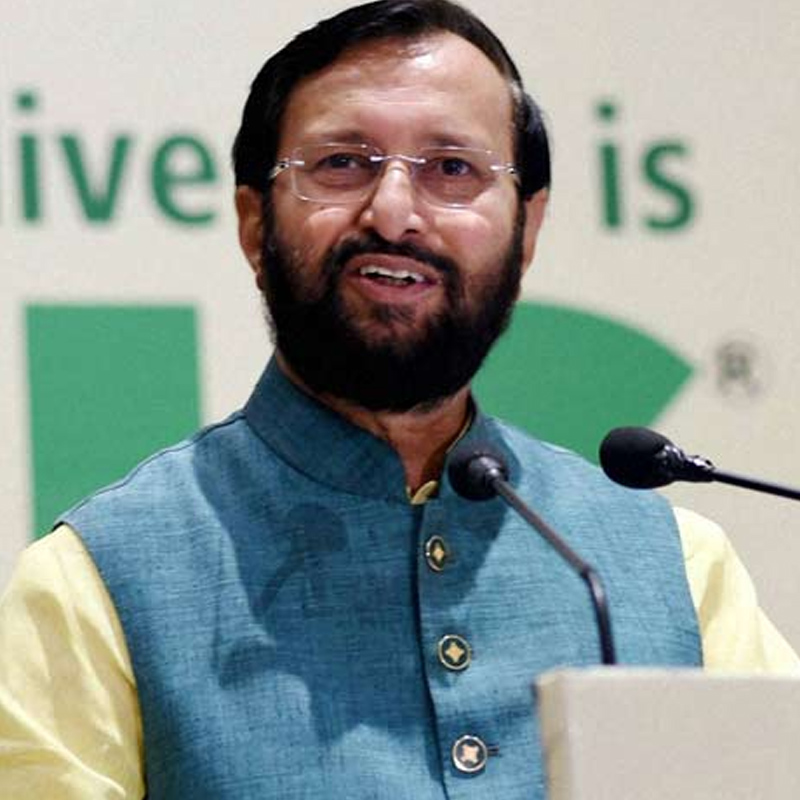
    MUMBAI: Telecom Regulatory Authority of India (TRAI) has not received any complaints against direct-to-home (DTH) companies not sticking to its new tariff order, the Information and Broadcasting Ministry told the Lok Sabha last week.

    “No incidence indicating that the DTH operators are not adhering to the TRAI’s norms with regards to pricing of channels has come to the notice of TRAI.

    “As per the new regulatory framework, every broadcaster is required to offer all its channels on a-la-carte basis and declare maximum retail price per month payable by a subscriber,” said Union I&B Minister Prakash Javadekar in response to a written question.

    The new tariff order had original come into force on 29 December 2018. TRAI then gave multiple extensions to stakeholders to fully implement the new rules for the broadcast and cable services sector.

    “However, keeping in view the consumer convenience and to provide sufficient time to consumers to exercise the options for the new tariff packs, TRAI provided time until March 31, 2019, to consumers for conveying their informed choices to service providers,” he further added.

  • Sanjeev Kapoor on FoodFood’s FTA avatar, DD Free Dish & TRAI tariff order impact

    Sanjeev Kapoor on FoodFood’s FTA avatar, DD Free Dish & TRAI tariff order impact

    MUMBAI: With the new tariff order bringing in a major change to India's television distribution, several broadcasters are adopting alternative ways to stay relevant in the ecosystem. Chef Sanjeev Kapoor-promoted FoodFood channel is among those trying to negate the impact of the new regulatory framework by converting it into a free-to-air channel from its current pay model to maintain its reach. Ahead of its 11 July FTA launch, Kapoor interacted with Indiantelevision.com to outline the reasons behind the decision and offered insights into the category his channels operates in.

    What was the objective behind taking this call?

    When the tariff order was released, we were contemplating how to approach this. We realised that we should keep it the way it was and when the dust settles, we will take the call depending upon which way the viewership is moving. We studied and evaluated what the viewership patterns are, how things are moving, what is happening in the market, what is happening to specialty content, what’s the best way to approach it and we realised that for a single channel without bouquet strength the best way is to approach it differently. When there are bouquets, no matter what the order says that this can not be done, the reality is that bouquets for large players are much simpler and easier. Whether it is through Facebook, Youtube, we see that food content consumption has gone up exponentially on digital whether. The only way to bring it at par with what the consumer needs and demands is to increase the reach and that’s why we took this call.

    What were your key observations from three-four months of tariff order implementation?

    So as we know the overall viewership has dipped, that is because the reach is not there because you aren't there. Then, how does the viewer find you? Whether it is an MSO, DTH, small LCO, how do you get discovered? In a-la-carte, when you try to educate a person, it takes time and effort and when a single channel does not have the power to fight that, then it becomes very difficult. Even in my house it took my personal intervention to get Food Food, so it would be difficult for normal viewers. So to break this resistance, one must go the FTA way. We believe it will be better now because if the pressure of paying the broadcaster is not there, hopefully, it will be better. We evaluated Free Dish as well. It format have any specific advantage for a smaller channel. For devotional channels, there is a lesser fee but for specialty channels like us it is not beneficial.

    Do you see consolidation, mergers or more channels being added in the category you are operating in?

    Difficult to say. Bigger broadcasters with 40-50 channels have their own challenges. Some of them are shutting down, some of them are rationalising. In such a case, consolidation is the most obvious choice but really we have not seen that happen yet because these are early days. For people like us, fortunately, it's not something that bothers us too much because we have over 1200 hours of high quality HD content. We have the ability to syndicate, licence and monetise through multiple ways. So we are not too worried.

    Do you have to spend more on content to attract consumers as the new tariff order puts power in their hands to pick and chose?

    I would say that even if the power is given, if the consumer cannot use it how is it going to help. You can be FTA and still not be present as the must-carry rule is no longer there. How do you ensure that? Though digital has come to the rescue but at whose cost? It’s not at the cost of content creators or at the cost of distributors. There used to be a normal camera now there are more digital cameras. There could be transitions. Three years ago when I visited the US, people were talking about cutting the cords and if that is a global phenomenon that has to come. The power of content will stay. We consider that as content creators we distribute content through different platforms and whenever consumers find it convenient to access our content, they will consume it there.

    How do you plan to monetise your content across digital?

    We already do. We have a fairly large plan on digital. So, our overall community including Food Food is over 20 million that across platforms could be Facebook, Twitter, YouTube etc. We use that community to reach out to core Food lovers. We work very closely with brands. We are launching a series on biryanis. We have Dawat Biryani Rice on board as a large partner for that.

    Do you see your revenue more skewed towards digital in the near future?

    I would guess so.

    Do you tweak your programming in terms of going from pay to FTA?

    Our focus does not change. We want to stay focused on who we are. We don’t want to really change the programming too much.

    Do you see a change in nature of your core viewer given that you are a free platform now?

    It’s difficult to say. We want to stay core to our value and we will see if in each market we have enough consumers. We want to work with all the distributors in creating something unique and special for them. So, we don’t want to change the core product. We want to give a few things which no other TV channel can do.

  • ZEEL CFO on TRAI tariff order impact on subscription revenue, advertising growth outlook & content cost inflation

    ZEEL CFO on TRAI tariff order impact on subscription revenue, advertising growth outlook & content cost inflation

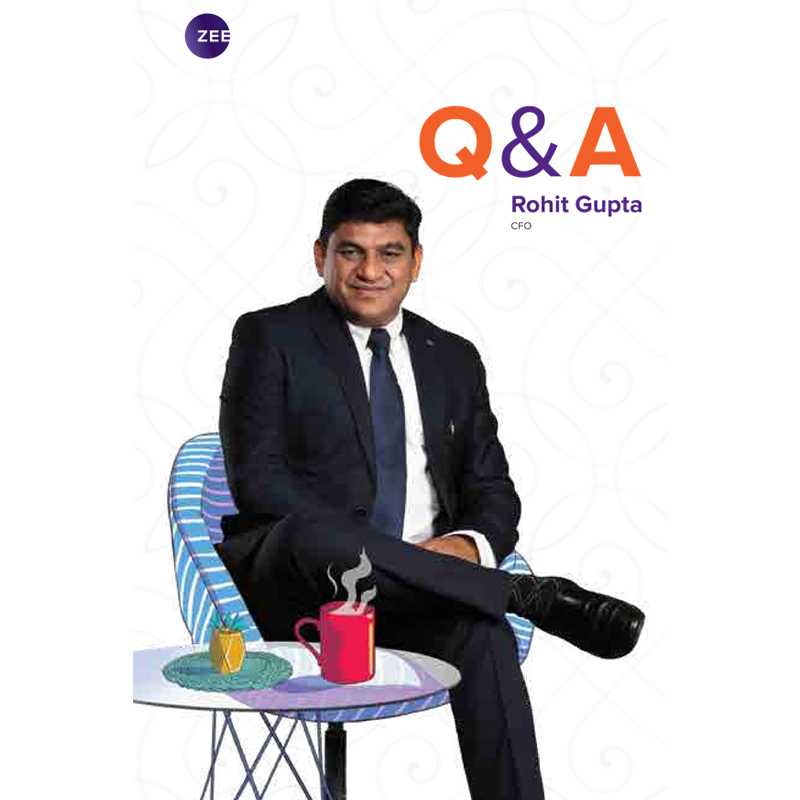
    MUMBAI: Zee Entertainment Enterprises (ZEEL) maintained its growth trajectory for the year end 31 March with an 18.7 per cent increase in y-o-y revenues. Advertising revenue for the financial was up 19.8 per cent on the back of consolidating the market share of its domestic broadcast business and monetisation of ZEE5’s consumer base. ZEEL's programming cost for FY19 increased by 21.7 per cent YoY largely due to the content cost for its streaming service. The media and entertainment conglomerate's numbers not only beat analysts' expectations but were impressive given the changes in broadcast and cable services regulation. It was an eventful year for the iconic brand given the news of its impending stake sale. However, moving forward, the Subhash Chandra-led company will continue to invest and scale up new businesses to widen its content offering. In a Q&A published in the company's annual report, ZEEL CFO Rohit Gupta commented on a wide array of subjects including its financial performance in FY19, outlook of advertising growth, new tariff order’s impact on subscription revenue among others

    Here are the edited excerpts.

    How was ZEEL’s financial performance in FY19?

    We are happy to deliver yet another year of industry leading performance. During the previous fiscal, our revenues grew by 18.7 per cent YoY, led by strong operating performance across all businesses. Advertising revenues for the year grew by 19.8 per cent driven by the viewership share gains in domestic broadcast business and monetisation of ZEE5’s fast-growing user base. Subscription revenues grew by 13.9 per cent during the year. While international subscription remained largely stable, domestic pay revenues witnessed a growth of 17.4 per cent, led by improved monetisation of phase-III markets. Our movie production and distribution vertical drove a strong 30 per cent growth in other revenues. During the year, our cost base was elevated due to higher content investments and increase in marketing spends for our digital and broadcast businesses. Despite these investments, our EBITDA margins expanded to 32.3 per cent, highlighting the underlying profitability of our business. Our FY19 results are consistent with the performance over the past five years. We have registered 16 per cent CAGR in both revenues and EBITDA during this period on the back of strong operating performance.

    Could you elaborate on the factors driving strong growth in domestic advertising revenues in FY19? What is your outlook for advertising growth?

    During FY19, domestic advertising revenues witnessed a growth of 20.9 per cent led by traction in both television and digital businesses. Our domestic broadcast business gained another 170bps viewership share led by the regional and movie channels. We became the leader in Bangla and Kannada markets and further strengthened our share in Tamil Nadu. This helped us to improve our monetisation and grow ahead of the industry. Additionally, advertising revenues from ZEE5 contributed to growth. During the first three quarters, growth was relatively stronger at 22 per cent, helped by a low base and increase in ad-spends by consumer companies. However, in the fourth quarter, the growth moderated as the advertisers reduced spends due to uncertainty related to implementation of the tariff order. We believe that once the disruption is behind us, the ad growth will return to its normal growth trajectory. As ZEE5 continues to scale up, it would witness a concomitant increase in ad revenues as well. The movement of two of our FTA channels out of DD Freedish will have some impact on ad growth in the near-term but we are working with our strategy to compensate for that revenue loss through other channels. Our endeavor is to continue growing ahead of the industry.

    What led to the acceleration in domestic subscription revenue growth in FY19? What are the implications of the TRAI tariff order on subscription revenue growth?

    Our domestic subscription revenue growth stood at 17.4 per cent in FY19, a significant acceleration from the previous year. The growth during the year can be divided into two parts – strong 22.5 per cent growth during the first nine-months and a muted fourth quarter. During the first nine-months, we benefitted from monetisation of the newly digitised phase III markets. However, during the fourth quarter, implementation of the long-awaited TRAI tariff order negatively impacted the growth. Given that this regulation allows the consumers to choose and select individual channels or bouquets, the distributors’ infrastructure was put under immense pressure as the back-end had to cope with implementing millions of combinations. This led to execution challenges and disruptions on the ground. That said, ZEEL has seen satisfactory uptake of its channels and bouquets. We are positive that once the impact of the regulation settles, subscription growth will revert to its normal course. Our medium-term guidance on domestic subscription revenues remain unchanged.

    Content costs have seen an increase in FY19. Is the company seeing content cost inflation, especially in the digital business?

    In FY19, our content cost increased by 21.7 per cent YoY, slightly ahead of revenue growth, resulting in our content cost-to-revenue ratio going up by 100bps to 38.8 per cent. Three factors contributed to this increase – ramp up of ZEE5 Originals, higher movie amortisation costs, and increase in content cost of Zee Studios. To understand the cost inflation, we can divide ZEEL’s content in three categories. First, fiction and non-fiction shows for our television audience, which accounts for a substantial portion of our total content cost. Cost per hour for this category is growing in line with inflation. Second, original content for our digital platform, ZEE5. Cost of ZEE5 Originals is increasing significantly as we are ramping up production across 6 languages. In the digital business, higher talent cost and amortisation of fixed costs over fewer episodes push up the cost per hour. Though ZEE5 produced 50+ original series/films till Mar-2019, it is still a small proportion of our total content bouquet. Lastly, the acquisition of movie rights for both broadcast and digital businesses contributed to cost inflation.

    What is the growth and investment outlook for new businesses and initiatives?

    At ZEEL, we continue to invest and scale up new businesses to widen our content offering. Our new businesses – digital, movies and music, and live entertainment have gained traction during FY19 and are heading in the planned direction. ZEE5 completed its first year of operations and the platform has witnessed very encouraging response. ZEE5 released 50+ original series/ movies to become the largest digital content producer in India. Investments in digital will further increase as we ramp-up production of ZEE5 Originals and movie offering across languages. These content investments will be complemented by marketing spends. Our domestic broadcast business is preparing to launch movie channels in regional markets for which we have been building a library for some time. Incremental investments in the domestic broadcast would be limited. These content and marketing investments are expensed above EBITDA. Despite these investments, the company expects to maintain healthy margins.

    Working capital saw a sharp increase in the past three years which has negatively impacted free cash flow. When do you expect cash generation to improve?

    The increase in working capital is primarily attributable to our strategy of building a strong movie library and scaling up of original content production for ZEE5. On the digital original content front, we have built a strong slate with plans to release over 70 series/ films across six languages in FY20. Investments in movies and original content for ZEE5 will continue, however, as revenues from these businesses grow, we will start seeing an improvement in cash generation.

  • Sony Sab’s Neeraj Vyas on brand repositioning, TRAI tariff order effect and content pull from consumers

    Sony Sab’s Neeraj Vyas on brand repositioning, TRAI tariff order effect and content pull from consumers

    MUMBAI: Amid the ongoing flux in the broadcasting industry post the implementation of the new tariff order (NTO), Sony Sab which is perceived as a “living room channel” aims to strengthen its position as a brand which has content to offer everyone in the family. Unveiling its new brand campaign with the ‘Khushiyon Wali Feeling’ tagline, Sony SAB, PAL and Sony MAX movie cluster business head Neeraj Vyas said that the aim is to get consumers to look at the channel as 'a brand with heart'. Vyas also emphasised on the importance of being distinct and relevant on the back of differentiated content in the post NTO era.

    “The buzzword is meaningful content. The consumer will only choose you if you make a meaningful emotional connect and I think for us, the mantra going forward is to be a meaningful and emotional brand for the consumer in the television landscape,” Vyas noted.

    Sony Pictures Networks India-owned Hindi GEC Sony Sab is now ready to redefine itself through a new philosophy which is driven on the insight that "jitni insaan ki khushi badhti hai, utni hee duniya mein insaniyat bhi badhti hai”. The channel will also launch exciting new shows in the upcoming months as the campaign launches on 10 July 2019 on-air.

    Vyas opined that the television industry has to wake up in the context of new price regime. He mentioned that due to having a distributor-led model for 25 long years, broadcasters mostly chased eyeballs and ratings. According to Vyas, television business now has to be looked at from two lenses. While clearly rating till stays one way to look at it, the second and the more important one should be from the perspective of paying consumers.

    “Consumers today have the choice to buy your channel or not every month. We as an industry have not seen this in the last 25 years. We took it for granted that we would be in people’s homes. That reality has completely changed. Television has to be mindful of the fact that it’s now a big shift and you have to be relevant in that context,” Vyas added.

    In the last five-six weeks, Vyas claims that the channel has seen a resurgence like never before. Terming time spent as the new important metre, he said that the time spent for Sony Sab is at a historical high of more than 160-170 minutes a week. He also explained that consumers with fewer channels of their choice are spending more time on preferred content. However, he also added that reach would be down because connectivity is not going to be the same as it was.

    “For us, the path is to make the consumer feel that he is a catalyst in this zone of paying forward. We believe, as the campaign says, if you are happy, you tend to do good things to others. The shows we will be launching will be entertaining, not preachy and not like other commonplace shows on TV,” he concluded.

  • BARC week 26: Star Vijay back in across genres list

    BARC week 26: Star Vijay back in across genres list

    BENGALURU: Star India’s flagship Tamil GEC Star Vijay once again made an appearance in Broadcast Audience Research Council of India's (BARC) weekly list of top 10 channels across genres in week 26 of 2019 (Saturday, 22 June 2019 to Friday, 28 June 2019, week or period under review). As was the case in the previous week, Star Vijay was also ranked seventh in BARC’s weekly list of top 5 Tamil channels in the Tamil Nadu/Puducherry market.

    Four Star India channels, two channels each from Sony Pictures Network India (SPN) and Zee Entertainment Enterprises Ltd (Zeel) and one channel each from Enterr 10 TV and Sun TV Network made up BARC’s weekly list of top 10 channels across genres in week 26 of 2019. From the genres' perspective, there were six Hindi GECs, two Tamil channels and one channel each from the sports and Telugu genres that comprised BARC’s weekly list of top 10 channels across genres in week 26 of 2019. Channels from rank one to six in week 26 of 2019 were the same as those in week 25.

    Continuing on at rank 1 in week 26 of 2019 was Star India’s Hindi sports channel Star Sports 1 Hindi on the back of the ongoing ICC Cricket World Cup 2019 in England and Wales. Two of the five matches during the week under review involved India, hence ratings pipped up for the channel. Star Sports 1 Hindi scored 1,263.932 million weekly impressions in week 26 of 2019 as compared to 1,186.783 million weekly impressions in week 25. Star Sports 1 Hindi was ranked first in BARC’s weekly list of top 5 sports channels and four of the top 5 sports programmes NCCS All : Prime Time (1800 – 2330 hrs) : 2+ Individuals featured on Star Sports 1 Hindi during the week under review.

    Also maintaining its previous week’s rank 2 was Sun TV Network’s flagship Tamil GEC Sun TV with 904.751 million weekly impressions in week 26 of 2019 as compared to 851.935 million weekly impressions in week 26. Sun TV also headed BARC’s weekly list of top 5 Tamil channels in the Tamil Nadu and Puducherry markets and four of the top 5 Tamil programmes in this market based on NCCS All : Prime Time (1800 – 2330 hrs) : 2+ Individuals were aired on Sun TV.

    At its previous week’s third rank was Enterr 10 TV’s Hindi GEC Dangal in week 26 of 2019 with 801.504 million weekly impressions as compared to 788.059 million weekly impressions in week 25. Dangal also headed BARC’s weekly lists of top 10 Hindi GECs in the combined urban and rural Hindi speaking market -HSM (U+R) and HSM (R). Dangal was ranked seventh in HSM (U). Indian mythology programme Mahima Shanidev Ki and a family drama Baba Aiso Var Dhundo on Dangal were in BARC’s list of top 5 Hindi GEC programmes based on NCCS All : Prime Time (1800 – 2330 hrs) : 2+ Individuals in HSM (R).

    Continuing on at fourth rank was Zeel’s flagship Hindi GEC Zee TV in week 26 of 2019 with 701.711 million weekly impressions as compared to 701.670 million weekly impressions in week 25. Zee TV was ranked second in HSM (U+R) and HSM (U) and third in HSM (R) in BARC’s weekly list of top 10 Hindi GECs. The Balaji Telefilms-produced Kumkum Bhagya, its spinoff  Kundali Bhagya and another drama  Tujhse Hai Raabta aired on Zee TV were among the top 5 Hindi GEC programmes based on NCCS All : Prime Time (1800 – 2330 hrs) : 2+ Individuals in HSM (U+R), HSM (R) and HSM (U).

    At fifth rank in week 26 of 2019 was Star India’ flagship Hindi GEC Star Plus with 688.432 million weekly impressions as compared to seventh rank and 682.166 million weekly impressions in week 25. Star Plus was also ranked third and fourth in BARC’s weekly list of top 10 Hindi GECs in HSM (U+R) and HSM (R) respectively and was ranked first in HSM (U). Yeh Rishta Kya Kehlata Hai on Star Plus was amongst BARC’s weekly list of top 5 Hindi GEC programmes on NCCS All : Prime Time (1800 – 2330 hrs) : 2+ Individuals in HSM (U+R) in HSM (U).

    At sixth place was Star India’s flagship Telugu GEC Star Maa with 651.535 million weekly impressions as compared to 663.013 million weekly impressions in week 25. Star Maa was also ranked first in BARC’s weekly list of top 5 Telugu GECs in the Andhra Pradesh/Telangana markets and all the five programmes in BARC’s weekly list of top 5 Telugu programmes based on NCCS All : Prime Time (1800 – 2330 hrs) : 2+ Individuals in these markets were aired on Star Maa.

    As mentioned above, Star Vijay re-entered BARC’s weekly list of top 10 channels across genres in week 26 of 2019 with 549.005 million weekly impressions at seventh rank. Star Vijay was also ranked second in BARC’s weekly list of top 5 Tamil channels in the Tamil Nadu and Puducherry markets.

    Dropping a place to eighth rank in week 26 of 2019 was Zeel’s Hindi GEC Big Magic with 536.294 million weekly impressions as compared to seventh rank and 566.278 million weekly impressions in the previous week. Big Magic was ranked fourth and second in BARC’s weekly lists of top 10 Hindi GECs in HSM (U+R) and HSM (R) respectively. Big Magic was ranked eighth in BARC’s weekly list of top 10 Hindi GECs in HSM (U).

    Climbing up a place to ninth rank was SPN’s flagship Hindi GEC Sony Entertainment Television (SET) with 529.078 million weekly impressisons in week 26 as compared with 479.487 million weekly impressions in week 25 of 2019. SET was ranked fifth and seventh in BARC’s weekly  lists of top 10 Hindi GECs in HSM (U+R) and HSM (R) was ranked third in HSM (U). The talent reality show Super Dances Chapter 3 on SET was among BARC’s weekly list of top 5 Hindi GEC programmes NCCS All : Prime Time (1800 – 2330 hrs) : 2+ Individuals in HSM (U+R) and HSM (U).

    Dropping down two places to tenth rank was SPN’s Hindi GEC Sony SAB with 525.403 million weekly impressions as compared to eighth rank and 536.918 million weekly impressions. Sony SAB was ranked sixth BARC’s weekly lists of top 10 Hindi GECs in HSM (U+R) and HSM (R) and was ranked fourth in HSM (U).