Tag: New Normal

  • You can be creative and edgy, without being insensitive: Dentsu Creative India CEO

    You can be creative and edgy, without being insensitive: Dentsu Creative India CEO

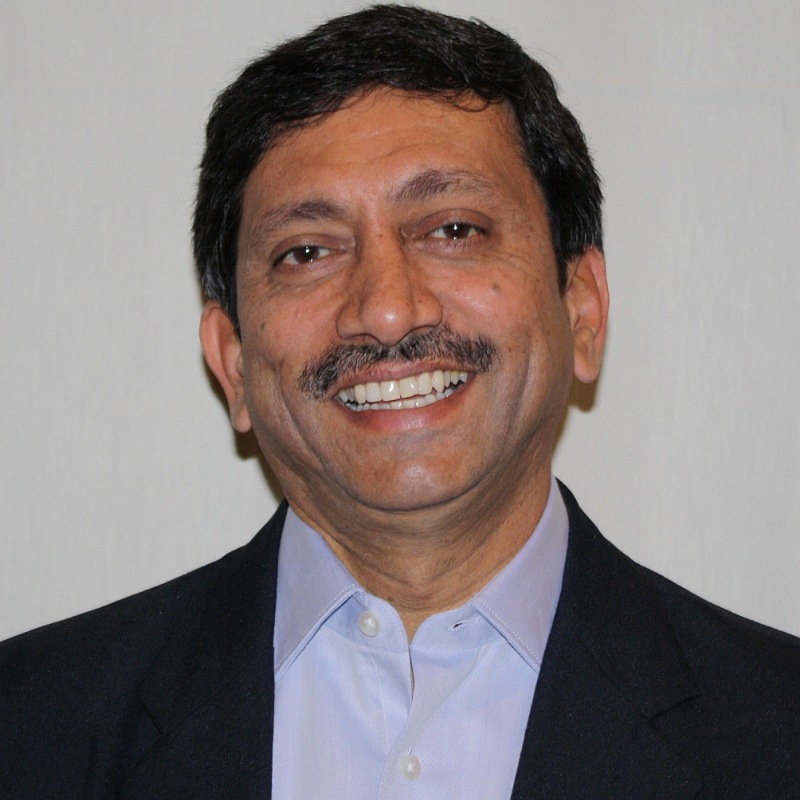
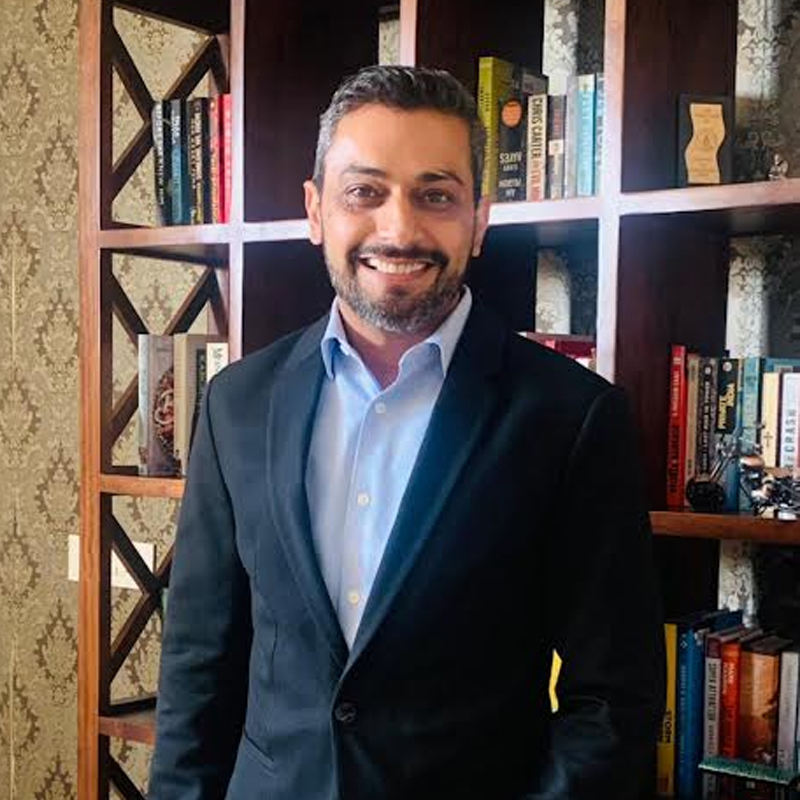
    Mumbai : Exactly a year back on 22 June 2021, erstwhile Dentsu Impact president Amit Wadhwa took on the mantle of chief executive officer (CEO) to lead the Dentsu India creative service line leadership team. The newly restructured creative service line in India, brought together brands from the house of Dentsu such as Dentsu Webchutney, Taproot Dentsu, WATConsult, Perfect Relations, Isobar, Dentsu One, Dentsu India and Dentsu Impact, along with their digital & PR capabilities- all under one umbrella of Dentsu Creative India.

    The past year also witnessed major upheavals, both, at the network which saw several high-profile exits, as well as in the advertising and media landscape with the pandemic rewriting the rules for the communication industry.

    The Dentsu Creative India CEO shares with Indiantelevision.com how the past year fared for the network as well as for him, amid the tumultuous new normal, and what his priorities were since taking over the creative agency mantle.

    Wadhwa also completed over a decade at the network last year, having joined Dentsu Creative Impact (now Dentsu Impact) in November 2011. With another five-year stint at JWT (J. Walter Thompson) in his kitty before that, he has literally seen the industry evolve over the past decade and a half.

    Despite challenges due to macro-economic uncertainties and global inflationary trends, Wadhwa remains buoyant and confident that the advertising and marketing industry will grow at a good pace “crossing double digits”.

    IndianTelevision.com’s Anupama Sajeet caught up with the advertising veteran and self-confessed ‘passionate brand builder’ for a free-wheeling conversation, where he also spoke about what has changed in adland and how the creative group is ensuring it keeps pace with the emerging new tech in the space.

    Edited excerpts:

    On his focus areas since taking on the helm of the Dentsu Creative Group

    Three things. Integration was the biggest objective. Secondly, making sure that we digitise everything and so we infused digital and technology in everything we do – whether it is creative, or PR- we have digitised it all- the entire system. And the third of course, was to make sure that the cornerstone of the entire offering is “creative”, and hence up the creative product. These were the three things I kept in mind as I took on the CEO mantle. Have I done that 100 per cent? Of course not. But I think we have moved leaps and bounds on all these fronts.

    On how the past year fared for the agency amid high profile exits and the uncertainty wrought on by the pandemic

    In terms of how we have fared, I think we are working in a far more unified manner for our clients. So, we have integrated to make sure the best experts come together and deliver as one single team for a client. There are many brands where earlier erstwhile different units of Dentsu Creative are now working together as one. For eg- we recently worked at Ikea where the Dentsu MB and Dentsu Webchutney worked as a single team. Then there was another instance where Isobar and Taproot Dentsu worked together as one unit. There are many such examples. That’s from the integration point of view.

    As far as creativity is concerned, one big yardstick is the awards and I think we have done fantastically well, led by the team at Dentsu Webchutney. Having said that, we have also invested in some great talent like Ajay (Gahlaut), Arjuna, Anu Gulati, along with the creative talent which is already there in-house such as Alaap, Anupama and loads of talent below them. So, I think we have upped the game on creativity. And it’s not just awards. Some of the campaigns that we rolled out I’m absolutely proud of. For instance, the campaigns we have done for Uber, Paytm, to name a few, have been great.

    And honestly, without being digital-first there’s no possibility of a business surviving. We have ensured that right from our PR to what we used to call our traditional agencies, every one of them is digitally savvy and understands the medium.

    So, on all these fronts, we are moving in the right direction and at the right pace.

    On whether the recently released ASCI guidelines on gender stereotypes (in the wake of the recent controversy over the Layer’r Shot deo ads) will lead to curbing creativity.

    We are in the business of creativity, we need to express ourselves. But at the same time, we are all living in a society and we need to be sensitive. Does that mean that we curtail creativity? No. But is that the only way to be creative?  Absolutely not. I don’t wish to comment on that ad, as enough has been said about it being in bad taste and stuff. But the point is you do not need to go that way to be creative. I don’t think to be creative, you need to be insensitive. You can be edgy without it.

    If you look at some of the works we have done recently, such as the ‘The Unfiltered History Tour’ or the Paytm creative we did on financial empowerment. These works are very edgy and creative at the same time. It also had a strong connection with people, without being insensitive. Having said that, do we put a gag on everything because of certain instances? I don’t see that happening either.

    On the evolving advertising & marketing (A&M) landscape in the past decade

    It’s absolutely true that the entire A&M landscape has changed in the last decade, from what it used to be to where we are today. I remember when I joined Dentsu (back in 2011), I was taking care of a small agency called Dentsu Creative Impact. We brought in a lot of exciting talent, and we did it at a small scale – whether it was in creative, planning or account management. And we picked up businesses like Ikea etc and made it into this exciting brand. But that was then. Digital was there, but it was a small part of mainstream media.

    Today, if I’ve to do a similar exercise for the Dentsu Creative Group (DCG), I cannot step up the game on creativity by having a good creative team alone. Of course, creativity is the key essential part of it. But what we are also trying to infuse is to ensure that we are way ahead when it comes to creative technology. And that’s the other aspect that we have invested in heavily. Led by Gurbaksh, who heads the innovation and tech team, it’s a critical part of our creative team. We also have editors and social media experts as a part of it. So, the complexity and composition of the team is very different from what it was, say, less than a decade ago.

    On any key trends or emerging category/s in the A&M industry that might dominate in the coming year

    If we talk about emerging or dominant new categories, Fintech, of course, is huge, so is gaming. Online gaming is breaking through the roof. But at the same time as all these new categories are popping up, the traditional categories like FMCG remain equally exciting. So, one can see a mix of it with everyone, including the traditional players, trying to do something different in their space, stepping away from the tried and tested.

    On how the agency is ensuring it keeps pace with the emerging new tech in the space

    There are two parts to it. One is that we need to be digitally first and technologically far ahead. But, is that good enough? Is that the only thing we need to do? Unless there’s a brilliant idea it all comes to nought. The expression of the idea could be on the digital platform or through an innovative technology but the idea is still absolutely important. We need to marry technology very strongly with creativity.

    That combination of creative and new-age tech is what gives me the confidence that we are poised for something very exciting. And that for me, honestly is the place where I always wanted to be.

  • GUEST COLUMN: Influencer marketing in ‘new normal’ digital domain

    GUEST COLUMN: Influencer marketing in ‘new normal’ digital domain

    Mumbai: Influencer marketing (IM) has made a big mark in the social media space. It has become a serious business and reached the multi-billion-dollar mark like any other industry and is estimated to surpass $37 billion by 2027, according to Statista report.

    IM platforms track these numbers with the help of analytical and influencer relationship management tools.

    Influencer marketing on the rise

    At the nascent stage about a decade ago, influencer marketing was all about celebrity names. Fast forward to today, influencers are not limited to only celebrities; they have become brands themselves with their appealing content. The authenticity and uniqueness of the content make influencers stand out among the crowd. The influencer marketing space has become competitive like never before, with brands’ adopting IM as an integral part of their digital marketing strategies.

    Brands calculated metrics like Return on Investment (ROI) in traditional marketing. When it comes to influencer marketing, the most effective way is to understand the influencer’s role on the conversion path, which goes way beyond the number of ‘Likes’ and ‘Shares.’

    Introducers introduce the brand in the consumers’ mind space

    Contributors ensure to create an impressive brand recall and are at the top-of-the consumer’s mind while they contemplate a purchase decision. Closers are the real deal closers and persuaders who drive the purchase decision.

    Influencers are often introducers and contributors, so evaluating their contribution is critical during the complete attribution plan. They are media partners who help the brand spread the message aloud.

    Creativity and social media are becoming one collaboration

    Creativity is prized above all, and influencers combining their creativity with social media reach is an incredible amalgamation. Collaborating with an influencer who is a celebrity with a massive following to create brand awareness or a micro-influencer targeting a specific audience depends on the brand’s ultimate goal.

    The lifestyle and fashion industry are at the forefront leveraging the benefits of influencer marketing. MAC Cosmetics India’s makeup tutorials, live sessions, and stories on social media platforms were instant hits among millennials.

    Daniel Wellington, the luxury watch brand, roped in influencers from all tiers to spread its brand awareness. The brand has successfully implemented this strategy for new product launches and upcoming sale seasons.

    The creative collaborations have helped brands monetise their marketing strategies and are gaining momentum in other sectors as well.

    Meta influencer – the new age influencers

    Creativity is set to reach another level with meta influencers in action. There were over 150 virtual influencers identified in 2021. The war between real and virtual influencers will be a tough one to watch out for in the future.

    Meta influencers have the might to identify the latest trends and share quantifiable results with Artificial Intelligence (AI) and Machine Learning (ML) techniques. Every part of the world is creating its meta influencers army.

    The first Indian meta influencer – ‘Kyra’ engages customers with her virtual avatar. She is an intelligent meta influencer who can create and publish her content. Kyra can be integrated with metaverses, music videos, 3D films, and so on.

    The real influencers are giving a tough fight with their digital doubles – a replica of real influencers to promote specific events and spur the excitement level. Amazon sponsored Justin Bieber’s virtual avatar to release a music album in November 2020.

    With the meta fever catching up, it will be fun to watch bespoke content in the metaverse.

    Inclusive marketing strategy

    An inclusive marketing strategy can create a 360-degree impact. Ethically it helps to imbibe inclusivity in the brands’ culture as the new normal, and strategically, it builds sustainable long-term growth. Brands must choose influencers that relate to the audience and a marketing plan reflecting their ideology. Influencer integration for inclusive marketing is the road ahead, whether in the real or the metaverse world.

    (About Author: Shuchi Sethi is an influencer marketing expert with over six years of experience in influencer marketing. She currently leads Anymind Group’s AnyTag’s influencer programme in India)

  • Innovation, design & experience tech needed to meet consumer expectations in new normal: Report

    Innovation, design & experience tech needed to meet consumer expectations in new normal: Report

    Mumbai: It is widely accepted that Covid-19 has accelerated digitisation across every industry in every market. 2020 saw marketers double down on innovating their products and services specifically to pivot in response to Covid-19. 83 per cent of marketers agree that there can no longer be any disconnect between what a brand promises and what it delivers for its customers, communities, and employees, according to a new annual study by global creative experience agency Isobar, assessing the evolution of customer experience design.

    The report ‘Isobar CX Survey 2021: The Rise of Connected Experience’ with insights from over 800 global CMO’s indicates clear agreement between CMOs globally of a permanently transformed approach to marketing post-covid. 86 per cent of marketers agree that every touchpoint can and should tell the brand story, from comms to commerce. Innovation, integration of the brand promise, and delightful interactions enhanced by technology were named as the top three key ingredients needed in the creation of brand experiences. 82 per cent of marketers revealed they are investing or have already invested in creativity and digital technologies to create brand differentiation. Research was conducted in August 2021 via online questionnaires completed by 800 CMOs and marketing directors in eight markets, including India, for this purpose.

    Alternative sensorial brand experiences are on the rise with 86 per cent of marketers saying creating brand design systems for a multi-sensory world is increasingly important, and 36 per cent asking specifically for new craft skills designed for a multi-sensory world from their agency partner. In a first for the industry, Isobar has validated some of these assumptions with CMOs stating that creativity is critical to differentiation in this digital world, with the boundaries of content, commerce, and culture blurring irrevocably.

    The results reveal a ‘new normal’ for marketers, with the overwhelming majority in agreement that innovation, design, and experience technologies are needed to meet consumer expectations post-covid. The results overwhelmingly show an increase in creating new sensorial experiences, delivered through experience technologies and demanding a new set of craft skills that are imperative to creating differentiation.

    Touch-free technologies, gestural technologies, voice interfaces, and virtual brand properties including avatars, idols, products experiences, and configurators are all being increasingly adopted. This is an extension of the findings of the report from 2020 that saw significant marketer adoption of ‘experience technologies’ such as voice, AR, and IoT alongside a significant increase in the value CMOs placed on ideas and innovation in shaping CX strategy. 

    “What stands out is that experience has become an even bigger focus for how consumers are making choices around the brands they invite into their lives. The connected future has arrived—innovation and new experience technologies are now critical in creating differentiation and growth. But it’s a connected experience – creativity that crosses touchpoints, senses, and communities, and that is driving this future. This survey is a call to arms for everyone in the industry to step up or be lost in a sea of sameness,” said dentsu head of innovation and design and Isobar managing partner Sven Huberts.

    Authored by Isobar’s global teams of creative and innovation experts, the report aims to offer insight into how the marketing industry is responding to the changing needs of brands today and to provide inspiration and tools to help the creation of delightful and differentiated experiences of tomorrow.

    “The term ‘Experience’ has changed forever. In a post-pandemic world, for a brand to lead from a customer-centric position, experiences can no longer afford to be one-dimensional. The findings of the survey published in ‘The Rise Of Connected Experience’ report, will give readers a more comprehensive view of a customer’s journey and deep insights into what is driving customer experience,” added dentsu Creative India CEO Amit Wadhwa.

    The report describes the fundamental changes to the way brands are increasingly being built and uses global case studies from Isobar’s client partners including KFC, Philips, Beats, and Volkswagen to illustrate how marketers are shifting strategy. Some of the key changes are that there can no longer be any disconnect between what a brand promises and what customer experiences, and virtual experiences will become as real, human, and valuable as offline experiences. It also summarised that the boundaries between content and commerce, shopping, and storytelling will be blurred beyond recognition. The report also predicts that as digital experiences are called on to build distinctive brand encounters, a new skill set will be needed at the intersection of craft and innovation.

    “The pandemic upended a marketer’s playbook, challenging leaders to position themselves at the forefront of the longer-term shifts in consumer behaviour that result from disruption. However, even at this time of flux, it’s possible to regain a strong foothold and find familiarity by keeping a real-time pulse on evolving customer preferences. Customers are more trusting of what technology can do and they are seeking new experiences that line up with their renewed way of life. I believe the Isobar CX Survey is the ideal destination to source for insights on driving growth in a post-Covid world,” Isobar India group CEO Heeru Dingra commented. 

  • Guest column: Trends that will rule consumer durables industry in the ‘new normal’

    Guest column: Trends that will rule consumer durables industry in the ‘new normal’

    NEW DELHI: 2020 will leave its mark in history as the year that altered lives and reshaped the business landscape across industries. The consumer durables industry has come a long way since the beginning of the pandemic. Companies have tapped into changing consumer sentiments by being more responsive and providing innovative solutions to address expectations. 

    Over the last decade, the consumer durables sector has grown at a steady rate, marking the scope of future prospects. This provides the industry with a great opportunity to build sustainable markets and tap into both urban and rural markets in the country. Last year saw a significant increase in e-commerce demand from tier-2 and tier-3 towns, in light of the pandemic. Brands are also moving toward a more customer-centric approach like never before. The ability to identify a customer’s emotional need, understand the reasons behind that need, and respond to it effectively goes a long way in building successful brands. 

    Keeping these factors in mind, we can anticipate certain trends in the consumer durables industry in the ‘new normal’:

    Enhanced focus on health and eco-friendly products

    Consumers are likely to prioritise health going forward and products that offer superior features protecting or enhancing health will become the popular choice. The outbreak of the virus has led to widespread health awareness with a direct correlation to safety, health and hygiene, making products like water purifiers and water heaters even more important. Also, with increased awareness around the environment, there is a greater focus on more energy-efficient and eco-friendly products to help reduce the carbon footprint.

    Digital integration will be key

    The need to ensure social distancing has given significant rise to online transactions.  Consumers will continue to use digital means to learn more about products. The emergence of more ecommerce channels has also provided convenience with quick delivery, more offerings and the ability for price comparison. Mapping the customer digital journey to create personalised experiences will be key.

    Tech products help shape the future

    Consumers are looking for products that are more technologically advanced, simple to use and easily accessible. We're privileged to be living in a time where science and technology can assist us, make our lives easier and help reshape the ways we go about our lives. The emergence of AI and IoT driven products has upped the scale and quality of communication between devices and humans with intelligent technology. This year, we will see technologies, such as robotics, AI, IoT and AR-VR moving to the forefront. The technology we're already accustomed to has paved the way for us to further innovate; and future technologies will have the potential to change our lives even more.

    Agility will be fundamental to success

    Life as we know it is constantly changing, driving the need for businesses to become more agile and adapt to change across functions – production, supply chain, marketing, sales, etc. There is growing recognition of its transformational benefits and its ability to bring flexibility to business quickly. The ongoing pandemic has highlighted the need for companies to be more agile. For example, a supply chain strategy that made sense before Covid2019 may no longer be applicable. Disruption to the supply chain brought several businesses in the country to a grinding halt. The need to be flexible, create the right business culture, and put customers first, while remaining profitable, will be the key to success. The important lesson is to deploy a combination of strategy and agility to weather strong currents.

    Customers are keen to purchase products that support hygiene and health. The exposure to global technologies and lifestyle has created a perception shift, and consumer durables are no longer viewed as utility products, but rather an extension of one’s personality. Consumers today are aware and equipped with information that helps them understand how opting for more efficient technologies can result in better usability. They seek products that enable both comfort and convenience and don’t hesitate to purchase at a higher cost if it adds value to their lives. Increasing electrification of rural areas and wide usability of online sales are also aiding this growing demand.

    Every crisis is an opportunity for unexpected growth and learning, and the pandemic has encouraged more companies to reinvent and evolve.

    (The author is managing director, A. O. Smith India. The views expressed here are his own and indiantelevision.com may not subscribe to them.)

  • #Throwback2020: For M&E industry, there’s no such thing as closing shop

    #Throwback2020: For M&E industry, there’s no such thing as closing shop

    MUMBAI: It has not been the easiest of years and none of us ever dreamt that the last couple of months would be the way they have been. But I always believe that there is always a silver lining and that there is a lot to learn from what has transpired in the last ten months. Having said that, I think we have stayed true to our promise of keeping our viewers entertained, even in a crisis situation. We made sure that we were there for them when they needed us the most because there were no other entertainment outlets available.

    We adopted different strategies across different genres to make sure that our viewers get what they want. But, the one big thing that stood out for us as an entertainment broadcast company and the franchise that I oversee, is that we were true to our DNA. We were true to our promise of continuing to narrate great and relatable stories and keep our viewers engaged and entertained in a time when they really needed us the most. That to my mind, brings true value to my organisation and our brand.

    Looking back at 2020

    We didn't have a single minute or day of blackout despite the lockdown, which happened overnight. We continued to run our channels with content that engaged and entertained our viewers across genres whether it was in GEC, Hindi movies, kids, music, English, youth and regional portfolio. So, I think, resilience, determination and entertainment stood out for us, as storytellers, to do what we do best. Definitely, we all pivoted our plans to adapt to the new normal.

    If you look at Hindi GEC, which is the biggest and the most mass genre of them all, a big surge in non-prime time viewing was noticed because of the lockdown. We did lose out on some viewership to the other genres in the primetime slot due to lack of original content as a result of the shoots coming to a halt for some time. We witnessed a comeback strategy in Hindi GEC because we realised that there was a lot of family bonding and family viewing happening – a big trend that has continued to stay. Keeping this trend in mind, we went back into our libraries and brought back shows like Mahakali, Shani Dev and Jai Shri Krishna. We even looked at external libraries as well and aired Om Namah Shivay and Mahabharat. Some of our old legacy shows that brought back a lot of nostalgia included Balika Vadhu, and Uttaran, to name a few.

    Post the opening of the lockdown, we launched many new shows. Some of them were shows that had a social commentary and became household conversations. With shows like Molkki, Namak Issk Kaa, which is a romantic drama, or Ishq Mein Marjawan which is a romantic thriller, or Pinjara Khubsurti Ka, we managed to launch a lot of new content including our biggest reality television show Bigg Boss. So, variety in entertainment was a trend that we managed to keep. With the resumption of original content, viewership during primetime and non-primetime have more or less gone back to pre-Covid2019 levels now.

    How shows have performed

    Colors has had a fantastic run. We were the first ones to start with original content once shoots resumed. We are slot leaders with Ishq Mein Marjawaan and are slot leaders at 7 to 7:30 pm with Choti Sarrdaarni and then at 8 pm with Shakti. Bigg Boss continues to rule the roost from 10:30 pm onwards which is a very good slot for us. Barrister Babu has also given us superb ratings. Post the unlock, we have a robust 19 per cent market share. We are also a very strong number two in our all-day primetime. With a 22 per cent market share, we had great launches and out of the top five launches in the unlock, three of the launches belong to us, which includes Naagin, Pinjara Khubsurti Ka and Namak Issk Ka. All the shows have propelled our prime time viewership on weekdays and weekend viewership with Bigg Boss.

    We couldn't be happier because our entire prime time from 7 pm onwards has kicked in. Molkki is doing very well for us at the 10 pm time slot. So, variety entertainment is at its peak across genres along with family drama, romantic thriller, romantic drama, social issues, and adventure. We even experimented and innovated during the lockdown with Khatron Ke Khiladi Made In India for the first time, followed by Hum Tum Aur Quarantine with Harsh and Bharati. 

    Some of these strengths have sort of rationalised themselves over a period and some of these trends, such as co-viewing, relatable, relevant characters and storyline continue in Hindi GEC. At Colors, we do our best in terms of fiction, as well as reality television. And we are hoping to launch our next reality show once Bigg Boss concludes.

    Biggest Trends

    Apart from that, we saw a lot of the viewership moving to kids, news and movies. Existing for almost two years now, Rishtey Cineplex, in a very short period of time, has acquired a seven per cent market share which is a great beginning as far as we are concerned. We have grown tremendously by focusing on premieres, festivals that we do every month. Movies is a genre that we at Viacom18 are very serious about. With the Freedish and FTA trend, we re-entered with Colors Rishtey and Rishtey Cineplex. I am glad we did so, because there has been a huge amount of growth in terms of viewership and in terms of monetisation in the FTA space. In a very short span both the channels have secured a 15 per cent market share in their respective genres. We are really very happy to see that because we are actually sweating our assets even more and that makes our ROI much better. So from that perspective, the Freedish trend is here to stay.

    I think the other big piece which cannot be denied, is that the last ten months have reaffirmed our view that in India, unlike the western countries, OTT and digital is going to co-exist with linear television and broadcast television. This is particularly a market, which is an ‘and’ market and not an ‘either-or’ market. Thanks to this co-existence of digital and linear, as storytellers and content creators it is a fabulous opportunity for us, since there is a huge growth in demand and consumption of content. Therefore, as an organisation, we are looking at creating stories, shows and content that is sometimes pipe or screen agnostic. This is a huge and I think 2021 will only reaffirm this further as a trend.

    Consuming content in regional languages is also seeing an upswing. As marketers, we have pivoted our plans to ensure that we engage and interact with our viewers outside of the formal mass media vehicle. We have moved our engagements to digital, to our websites and social media. We engaged and created communities in the online world and engaged our audiences and told stories with games, through Instagram and many other innovations.

    Adapting to the new normal

    We have already adapted to the new normal with shows that we launched in the recent past, which is Namak Issk Ka and Molkki. Some of these shows are already being stitched together with the fabric of the nation, which is about family bonding and family viewing. It is about catering to human emotions and narrating relatable and relevant stories. So, I think a large part of it has already been actioned. As far as we are concerned, I think we will continue to see this trend for a while until Covid2019 vaccines are in and life and economy comes back to normal. I think the economy is recovering and so is the broadcast industry and so is Viacom18 and all our brands.

    So, one is of course, to tell relatable and relevant stories. The other one is to cater to the need of action, adventure, and voyeurism reality, which Colors is known for. Coming up in 2021 is the finale of Bigg Boss, followed by the launch of several impact properties, including Dance Deewane. Our machinery is on and we will see some disruptive content coming this year as well.

    Performance in terms of revenue

    We did see a very soft q1 and Q2 because the economy had slowed down big time and now as the economy recovers and as unlock happens, we have had a great comeback in Q3. We saw a fabulous festive season. In fact, we were able to slightly surpass quarter three of last year. Q4 looks good. A lot of advertisers are coming back to us because we are the only means of reaching out to a mass audience in light of the other vehicles falling off. TV continues to deliver mass reach, relevant reach, captivated reach, and therefore a measurable reach as well. Due to this, advertisers have come back to us and continue to come back to us post festive season as well. When we launched Bigg Boss, we actually got 17 sponsors.

    Ad spends in the foreseeable future

    I think the ad spends will continue to remain stable because the economy is on a path of recovery. We have seen demand coming back, consumption going up. I think the power to spend is also returning and with that advertisers will have to continue to create and gain their share of voice. In my view, there is no better medium than television, which will continue to be one of the single largest mode of advertising in the future as well. There is a grown advertiser interest in digital too. But having said that, television will be advertisers’ favourite. We do see a trend of television continuing to monetise ourselves and advertiser interest continuing to be at an all-time high in Q4 as well.

    Investment in Hindi GEC

    When a lockdown happens, you can cut costs and you can shut down your factories and save and not spend or manufacture and therefore save your cost. But in the entertainment industry, there is no such thing as closing down a factory. We need to continue to grow and churn content every single day to ensure that we entertain our viewers. So there is no pulling back on content costs at all.  We are preparing to enter 2021 with a whole new plethora of primetime and weekday and weekend content. 

    There is no lack of good investment in any of the genres. We will continue to buy movies and movie catalogues and premieres.

    Creating other revenue streams

    I believe ancillary revenue streams are here to stay and I think they will only be more relevant in the years to come. Advertisers are looking at innovative ways of reaching out to their audiences and for me, brand integrations, product licensing, promo licensing and brand solutions and brand integrations are a win-win for all the stakeholders because the advertisers are able to convey the message to viewers in a very interesting and clutter-breaking manner.
    (The author is head of Viacom18 Hindi mass entertainment & kids TV network. Indiantelevision.com may not subscribe to her views.)

  • Guest column: 2020 has been full of new learnings for content creators

    Guest column: 2020 has been full of new learnings for content creators

    MUMBAI: Summer vacations typically start from the month of April leading up to June, a period when content consumption amongst children is usually at its peak for kids entertainment channels. This arrived as early as March this year owing to pandemic-induced lockdown and has continued since. To meet this increased consumption demand of our young viewers, our production houses worked remotely and delivered fresh content throughout the pandemic to keep them entertained. We utilised this time for reflection on the content mix and content journey, hence we have also given them brand new content with the launch of our first chase-comedy show, Pyaar Mohabbat, Happy Lucky; and continued it with another new show in the mythology genre – Krishna Balram.  We also expanded our language feed from seven to nine languages with the launch of Honey Bunny ka Jholmaal in two new language feeds, Gujarati and Kannada. The consumption pattern also moved towards consuming long forms, adapting to which Sony Yay! released 15 new Honey Bunny movies this season.

    We improvised our existing plans and adopted a fresh approach of omni-channel presence of our characters to keep up with our young viewers and entertain them throughout. We commenced this journey with our summer campaign – What’s Your Summer Plan? –announcing exciting new episodes, telemovies of our marquee characters along with new shows. We also launched a unique workshop series called Yay! Summer Camp brought together artists and experts from various fields to create videos on art and craft, Zumba, storytelling and more. In addition to this, the Yay! the ecosystem was expanded to cater the fans with special Honey Bunny themed mobile games and interactive Honey Bunny themed Instagram filters.

    Biggest takeaway from 2020

    Entertainment becomes transformative and necessary in the lives of people in times of crisis like the one we’ve witnessed. 2020 has been a year of learnings and thus, witnessing the shifts and increase in demand for fresh content, we quickly readapted to the situation to create more content thus, while also curating more potential ways to connect with our young audiences. While television continued to be the staple mode of entertainment, the digital medium also took huge precedence. Both kids and gatekeepers have had a dynamic shift in their behaviour, content consumption and perspective. This led us to create new ways of connecting with them through their favourite characters on television as well as digital.

    New skillsets learned during this time

    This year we have seen dramatic shifts in lifestyle and content consumption amongst kids. Thus, we understood that it is paramount to expand our ecosystem offerings and broaden our horizons beyond television. Sony Yay! also enhanced its digital outreach by creating a digital portfolio with immersive workshops, interactive Instagram filters, special Honey Bunny games, and extensive outreach for relevant influencers of the community. Furthermore, in 2020 we have also enhanced our engagement skills by creating experiences for kids in the form of virtual offerings.

    Technology has played an important role

    Apart from the tantamount benefits of technology, the one that stood out for the kids’ entertainment category during the pandemic is helping us stay connected to our young viewers and to our production houses. Our production houses operated remotely and kept creating fresh content meeting its increased demand in the category, thanks to the advancement in technology. This is an opportunity for content creators like us to collate all our experiences and package it into an interactive virtual ecosystem. Also, with higher internet penetration and multi-screen availability, online gaming has witnessed exponential growth and we have tapped into this trend with some of our popular games Honey Bunny ka Jetpack, Kicko & Superspeedo game, Merge Super Speedo exceeding expectations with an incredible one million+, 10 million+, one million+ downloads, respectively, so far.    

    Is TV being monetised enough?

    In India, TV has always been a staple in almost every household and accounts for nearly 40 per cent of the total advertising expenditure in the country in 2019. The kid's entertainment category is still extremely under-indexed with a huge gap in the ad rates compared to some other categories. That said, with high-quality engaging content, we have seen constant growth in viewership and brands also warming up to increase their spending.  

    (The author is business head, Sony Pictures Networks India kids’ genre. Indiantelevision.com may not subscribe to her thoughts.)

  • How ABP News Network helps employees cope with Covid2019 paranoia

    How ABP News Network helps employees cope with Covid2019 paranoia

    MUMBAI: Working in an office during a pandemic is not only stressful for employees but also for leaders. They are continuously committed towards emergency preparedness and at the same time looking at business continuity. Especially in a news organisation, when people are on their toes throughout the day, it is challenging to keep the workforce as healthy as possible. To create a better environment and more consistent systems in which employees can flourish are the topmost priorities of HR officials. In this interaction with indiantelevision.com, ABP News Network (ANN) spokesperson highlighted different initiatives taken by the management to safeguard the lives of its employees.

    Excerpts:

    What measures have you been taking so far to relieve your employees from mental stress?

    At ANN, we are trying to meet the challenges of this situation with compassion, heart, and kindness. We extend ceaseless support to all our employees via routine one-on-one communication to address their grievances and uplift their spirits during these challenging times. In terms of ensuring physical health and well-being, doctor-on-call service has been made available to all and in case of an employee testing positive for Covid2019, company mediclaim will cover the expenses.

    With an effort to help navigate their experiences in the new normal, all employees have been provided with a ‘Path Forward’ handbook. Additionally, the HR department will soon be launching a few special ‘Remote Employee Engagement Initiatives’ to cultivate a positive culture and help everyone unwind from the monotony.

    How are you planning to take care of employees’ psychological state as psychological safety will be more important than ever as they get back to work?

    Active measures to build psychological safety at the workplace will be taken up by establishing an ‘EAP Programme’.

    In order to build healthy coping skills, we will also be promoting practices of mindfulness and yoga among all our employees through dedicated efforts. Other programmes to reduce stigma around mental wellness will be initiated as often the fear of stigma prevents some people from getting the help they need.

    What will the world of HR look like after the lockdown is lifted?

    Much like other operating procedures that have witnessed disruptions, various HR practices will also remain fundamentally altered post-lockdown. The new normal will be defined by remote engagement mechanisms, revamping of existing skill sets, employing digital capabilities across all roles and identifying efficient automation practices. All of this would play a decisive role in long-term survival. Innovation and agility, coupled with compassion and empathy, will be instilled as essential organisational values.

    In fact, this new era will not only redefine our practices with regard to remote work but various additional roles such as ‘Crisis Management’ will have to be addressed.

    How are you preparing to bring back your workforce once the lockdown is lifted?

    The current situation is still volatile with no signs of when it plans to dissipate. So, better clarity will be established only as we proceed and as the government announces further regulations. Nonetheless, in any case, we will ensure a phased increase of manpower in our organisation.

    Any new practices being taken up for the betterment of employees by the HR?

    During a time of upheaval and isolation, it is pertinent to cultivate a positive culture. In this light, we have initiated a unique ‘RnR drive’ (Rewards and Recognitions Drive) to acknowledge special efforts of our employees in order to keep them motivated and engaged.

    What sanitization measures are in place in your company?

    We are taking an abundance of caution to ensure workplace safety including contactless hand washing mechanisms at the premise gate, thermal screening, and mandatory hand sanitization at office entry.

    Video conferencing in lieu of in-person gatherings are being carried out to ensure work goes on seamlessly. Reimbursements are also in place with regard to official travel.

    Are there changes to the timings/work structure to ease people’s psychological fear? Will there be any changes in the workspace considering the social distancing factor?

    ‘Flexi Working Hours’ have been already constituted in the organisation, which we will continue to follow as we proceed.

    Mechanisms of shift-working are also in place. However, space management will be a new area for us to explore. Moving forward, it is going to be essential to adhere to social distancing norms even as things get better, so our focus shall remain on reviewing existing office layout for reconfiguration.

    What segment of your workforce consists of elderly people? Will there be any extra measures to ensure their health and safety is well taken care of?

    Elderly staff (55-60 years) constitutes less than five per cent of our organisation. However, we extend our heartfelt support to all our employees with elderly parents, at all times.

    When in the future do you expect this fear receding and the entire workforce will be back?

    As we find ourselves muddled in the uncertainty of this health threat, change is going to be more of a process, which occurs gradually and takes its own course. Unanticipated twists and turns continue to emerge and we shall only have a complete outlook in retrospect. Having said that, this is undeniably an unprecedented setback and we do not foresee a complete reinstitution before the next financial year.

  • Gulf Oil, MS Dhoni release animated campaign on living positively in the ‘new normal’

    Gulf Oil, MS Dhoni release animated campaign on living positively in the ‘new normal’

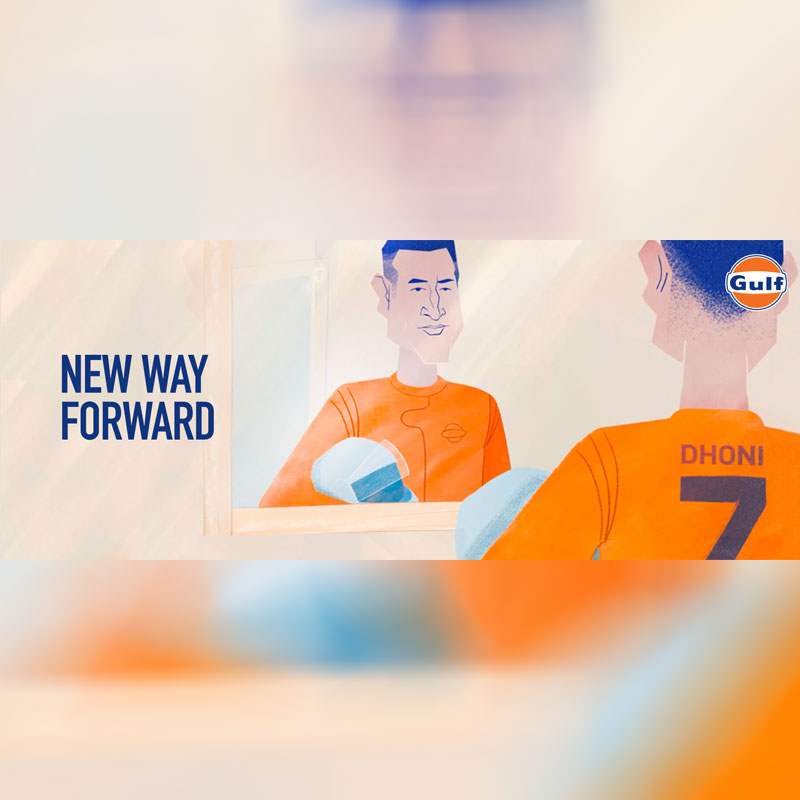
    MUMBAI: Gulf Oil Lubricants India Ltd has launched an animated video campaign featuring its brand ambassador MS Dhoni with the message #NewWayForward, emphasising the significance of having a positive outlook when we are all set to return to our daily routine post-lockdown.

    The campaign invokes optimism even as the world continues to combat Covid2019. People away from family and friends, are waiting for life to go back towards normalisation. However, the definition of normal has changed – a world with social distancing as the new norm, prioritising our health over everything, spending time with loved ones, being considerate towards others and being mindful of collective responsibility towards the environment, are what defines the new normal.

    The video focuses on the positive changes the pandemic will bring in our lives after the lockdown. It is a sensitive iteration of elemental and relevant actions that each one of us needs to remember going forward. Through this video, Gulf Oil and ‘Captain Cool’ MS Dhoni aim to restore hope in people readying to journey towards a better tomorrow.

    Gulf Oil Lubricants India MD Ravi Chawla said, “In these trying times, humankind has been facing some major setbacks. With the ‘new normal’, our lives won’t be the same. We must be conscious of our actions and collectively work towards crafting a better future. As a responsible brand, we urge our valued customers to stay strong and embrace these changes positively, so that we may emerge stronger than before.”

    Gulf Oil brand ambassador MS Dhoni said, “The world is going through an unprecedented event with Covid2019. While we tackle this situation, we have had some transforming share of learnings from it. As we move ahead, we should be thoughtful about and kind to one another. The all-new norms – social distancing, and sound physical, emotional, and spiritual health, will act as the cornerstone on which we will collectively lay the bedrock for a brighter tomorrow. Maybe this is the 2020 vision, not the one we hoped for but the one we actually need.”

    OPN Advertising creative head Chockalingam S said, “The idea for the film came from a meeting while we were discussing the way forward with the Gulf team and Ravi Chawla said “This crisis is an opportunity for us to strive better, and that essentially sets the tone for the film”. The film represents Gulf Oil’s spirit of being mindful, optimistic, and progressive, and stars the brand ambassador for more than ten years now – MS Dhoni. He has the ideal personality to spread positivity in these tough times.”

    Video link:  https://youtu.be/2H79lUwXLUE

    Follow Tellychakkar for the consumer facing news & entertainment

  • Missing brands must restart marketing to catch rising demand across categories

    Missing brands must restart marketing to catch rising demand across categories

    NEW DELHI: After a lull of more than two months, businesses in India are slowly getting back on track as lockdown restrictions ease. There is a positive sentiment among most brands and agencies that things will only get better from here on and there seems to be a plethora of opportunities waiting.

    According to FCB India group chairman and CEO Rohit Ohri and Havas Group India CEO Rana Barua, a lot of their clients have started getting positive responses from consumers in areas that fall under the green zone.

    Barua had told us in an earlier interview that one of its major clients, Hyundai, recorded 500 bookings in just two days of opening up of a limited number of showrooms. Ohri said that brands functioning in the essentials category, like food and hygiene, are getting a splendid rise in demand.

    Recently, Siyaram’s, one of the most prominent players in the Indian textile industry, said that the retailers in the green zones have started recording two-thirds of normal daily sales number already, indicating a positive sentiment amongst consumers. McDonald’s, too, had talked to Indiantelevision.com about an impending pent-up demand across industries.

    With a further change in lockdown rules, the industry is taking cognisance of several other possible trends. Barua now added, “I think (do not have data to back this) a lot of urgent categories would have opened up as many consumers would require change/service/repair of electronics, white goods, mobile accessories, home/kitchen accessories and appliances, etc. I say this because, with a, close to, 60-day lockdown and everyone at home using all the mentioned above more than ever, I am quite sure that this will be the need of the hour.”

    Madison Media chief analytics officer Nagaraj Krishnamurthy shared Bain & Company’s survey results that show demand for staples, household hygiene, food ordering-in, toys and even beauty products are improving in green zones.

    He said, “I do not foresee any issues concerning the demand for essentials. There is a lot of talk about revenge shopping of consumer discretionary items. My personal feeling is revenge shopping at best will provide a blip in the first week after easing is announced. On a medium-term basis, there will be demand contraction for luxury and discretionary products.”

    Dentsu One president Harjot Singh Narang elaborated that while essentials will surely be growing in sales; the fate of products and services like the purchase of automobiles and personal transport, new food experiences, travel and tourism will depend largely on consumer sentiment depending on how fast a vaccine is found and distributed, amongst other factors.

    He said, “There can be two broad scenarios on this. As we come out of it the sentiment could be of “fear and worry” which would lead to safety behaviour, putting off any non-essential expenditure, more investments in insurance products etc., or the sentiment could be that of “we dodged a bullet” leading to more of the YOLO (you only live once) behaviour of spending and enjoyment of experiences to celebrate the survival and resilience that led us out.”

    Whatever the case may be from the demand-side, advertisers suggest that it is high time that brands, which were missing from the public glare for the past two months or so, restart their advertising activities.

    Wunderman Thompson South Asia chairman and group CEO Tarun Rai shared, “The crisis took everyone by surprise. It is unprecedented and without any playbook. Some brands, sensibly, have been present through this crisis – whether in terms of communication or by actually doing positive things to help mitigate the crisis. The brands that have missed out should start getting visible now.”

    Krishnamurthy added, “Marketing and more specifically advertising is an investment. The golden rule to maximise return is to invest when costs are low. Marketers who did not invest in previous phases of lockdown missed a great opportunity to build brand love on a very cost-effective basis. I would urge all brands, especially those in FMCG business, where the top-of-the-funnel activation is critical to invest more. You rarely see an increase in media consumption that is accompanied by lower media cost.”

    About what should be the approach of brands to restart marketing, Rai said, “They still have to be empathetic and recognise that the crisis is not over. But after two months they can open up their marketing budgets as there are definite signs of consumers getting back to spending in many parts of the country. This could be a very important phase as there has to be a lot of pent-up demand. Marketers don’t want to miss out on it.”

    Barua highlighted that authenticity should be a key factor in brand communication today. “Brands and businesses have a huge and potentially vital role to play. But they must do so with authenticity because it is the right thing to do, not for themselves, not even just for their customers, but for society as a whole. In line with this, getting back to relevance and creating a compelling, engaging story to fit back into the consumer’s life is integral. Be meaningful for the consumer so that they clearly understand the void and reach out to buy the brand.”

    Narang further elaborated on a suitable strategy for brands to make a comeback in the marketing world through a two-pronged approach: first from the marketing impact on business perspective and second from the brand’s relationship with its consumers’ perspective.

    From an impact on the business perspective, he shared, “Teams would need to track sentiments very closely and pivot quickly to the changed needs of their consumers given these abnormal times. Responses could be different for different individual businesses and categories – from a changed product design perspective, a pricing/ SKU need matching perspective or even a new approach to distribution channel dynamics etc,., or a combination of such elements.”

    He insisted that brands go “deeply human” to address the situation from the relationship with consumers perspective. “Adapt as a brand to the new paradigm exactly like human relationships adapt and grow in uncertain times. This is the time that separates the wheat from the chaff for people at large and consumer segments in particular and relationships and brands that do not have a deep enough link will be left behind or even forgotten. Just see the personal relationships that will survive and even grow for your consumer segment and evolve your brand to be in sync with those patterns. At the very base level – out of sight and out of mind would be a big factor for people in what relationships survive and which ones fall behind as unimportant – the same will play out with brands.”

  • Limited workforce in office, copy fatigue: Immediate challenges facing ad industry

    Limited workforce in office, copy fatigue: Immediate challenges facing ad industry

    NEW DELHI: The past two months have been nothing short of a rollercoaster for industries across categories and nationalities. With most of the world under a strict lockdown, production halted, supply-chains blocked, and consumer demand shifting to only essentials, the economy went through a whirlwind of issues. Also greatly impacted was the marketing and advertising industry, as a result of the dwindling cash liquidity and many brands going silent in the time of crisis.

    However, things seem to be moving towards the better now. Lockdown restrictions have been eased greatly, green zones are already attracting consumers, and there is a lot of supposed pent-up demand to address. As brands start moving and earning, a lot of benefits will slowly be transferred to the advertising industry.

    Wunderman Thompson South Asia chairman and group CEO Tarun Rai said, “While the crisis in India is still far from over, the relaxation is a sign of hope. It is also a reflection on the strikingly varied impact the crisis has had on different regions of the country. While there are still issues regarding both production and distribution, the clients I have spoken to are finding innovative ways of getting around them. For many categories, this is the time to dust off their marketing campaigns and start getting ready for the beginnings of positive consumer sentiment. Like the crisis came upon us suddenly the rebound may surprise us too. Marketers and brands should be ready.”

    Dentsu One president Harjot Singh Narang added, “Investments in brand and marketing are sadly the first to go in a downturn but luckily come back really fast as soon as the businesses start seeing growth potential coming back. The relaxations are the first steps to inching back for now and so would be welcome by everyone. The real question would be how long before this inching ahead gathers some speed and opportunity to use brand and marketing as business drivers returns.”

     There, however, are still some impending challenges that await the industry. Havas Group CEO Rana Barua argues that the next few months will be more testing. “There will be numerous challenges going forward; going back to work poses more challenges than working from home. We cannot jump the gun and start behaving as normal. We need to collectively behave and act responsibly which will ensure compliance while we are planning to go back to work, safety for all employees, managing both offices and also working from home, balancing client needs and expectations.”

    Madison Media chief analytics officer Nagraj Krishnamurthy noted, “The industry is continuing to find it difficult to ensure supply chain continuity between the designated red, orange and green zones. Latest relaxation has eased the problem but not eliminated it.  It will be at least a quarter before the last mile link to the consumer becomes operational pan India.”

    Putting emphasis on the issues that the advertising industry will have to cater to, he added, “Usually, new copies are rolled out in the first quarter. However, this year, there are no new copies that are ready. Some clients are in a dilemma as to whether they can invest behind older copies. My suggestion to them is that they should unless the message is no more relevant. Analytics has proved that copy fatigue is a very rare phenomenon.”

    “Secondly, the situation on the ground is not uniform across the country. Marketers are wondering whether they should go on mass media like television. If the campaign is to activate top-funnel metrics, they should advertise on TV. However, brands advertising to activate lower-funnel metrics like retail or auto can look at geo-targeted digital approaches.”

    Rai highlighted that the safety and health of the agency’s employees are going to be of paramount importance. “We want to get back to our physical offices but want to be very sure that all the health protocols are in place. We are working effectively  from home but getting back to work will give everyone a sense of normalcy. We will start slow, in one city first, with around 30 per cent of our staff and move forward from there. The other important aspect is going to be when video production is permitted. We are managing even now but it is difficult.”

    Narang added, “Extended work from home, deeper thinking on brand relationships, strategies to navigate the months/full year of acute slowdown, strategies to tackle the adverse P&L impacts, and so many more immediate challenges face all of us in the industry. If change is the only constant then evolution and adaptation are the only necessities. Going ahead relaxations and new rules and ways will affect even more – how things change for the industry. However, the key will be to see how the industry and individual players in it evolve and adapt. In the next 18 months, leadership and thinking that enables pivoting to adapt to new realities will be the biggest need of this industry.”