Tag: Network18

  • CNN-IBN and IBN7 launch exclusive content on Facebook

    CNN-IBN and IBN7 launch exclusive content on Facebook

    MUMBAI: CNN-IBN and IBN7 have announced exclusive news formats to engage with audiences on Facebook. These fresh formats will enable the IBN news network to connect with the growing digital audience, who have a strong affinity for Facebook as a reliable source of news and entertainment. 

    CNN-IBN will also leverage the platform for its highly acclaimed ‘CNN-IBN Indian of the Year’ awards (IOTY).

    The arrangement will allow CNN-IBN to have dedicated segments through the voting period and showcase insights based on Facebook APIs. The channel will post native videos around the initiative, have nominee Q&A’s to build engagement and of course, conduct voting for the Popular Choice category of the CNN-IBN Indian of the Year 2014.

    In addition to this, CNN-IBN is also covering an array of news items from breaking news, special reports, top stories and exclusive interviews from the world of entertainment and sports in the form of native videocasts. These exclusive videos are produced for Facebook in the form of digestible 1 – 2 minute news segments titled CNN-IBN FB Special and posted multiple times a day. 

    Commenting on the partnership, IBN Network CEO Avinash Kaul said, “We are really excited to be working with Facebook to engage with our audiences in a relevant and meaningful way.

    In an effort to bring differentiated content for our Facebook audiences, IBN News Network is creating interactive engagement around India’s most credible awards in the domain of News television, the CNN-IBN Indian of the Year and posting exclusive content in the form of news videocasts exclusively for Facebook.”

    Facebook India media partnerships head Saurabh Doshi said, “Whether it is discovering information about a breaking news story or celebrities engaging with fans in authentic and meaningful ways, people use Facebook to connect with the things that matter to them most. More people than ever before are sharing, discovering and engaging with videos on Facebook.” He further added, “It’s exciting to see how the IBN Network has created content like news videocasts for Facebook and other exciting opportunities where people are not only able to watch news but also join in the conversation.”

  • Network18 enters into an agreement with Carnival Cinemas

    Network18 enters into an agreement with Carnival Cinemas

    MUMBAI: Multiplex chain Carnival Cinemas after having a great 2014 has set the right tune for the new year. While it was in December 2014 when Reliance MediaWorks (RMW) sold its multiplex business to Carnival Cinemas, 2015 has begun with Network 18 Media & Investments entering into an agreement with the multiplex chain. 

    The agreement has been done through Network 18’s venture capital arm, Capital18 Fincap. Network18 with this will divest its entire stake in Stargaze Entertainment, which operates multiplexes in emerging urban centers of India under the brand name ‘Glitz Cinemas.’ 

    Capital 18 is a majority shareholder at Stargaze and the transaction, expected to be completed within the current financial year, will result in a profitable exit for Capital18.

    It can be noted that the proposed transaction with Reliance MediaWorks had placed Carnival amongst the top three multiplex operators in the country, with over 300 screens nationwide.
    The agreement with Network 18 is yet another move by Carnival Cinemas to reach its target of 1,000 screens by 2017. 

  • Few shareholders tender Network 18 and TV18 shares against Reliance open offer

    Few shareholders tender Network 18 and TV18 shares against Reliance open offer

    BENGALURU: A small fraction of the shareholders tendered their shares to the Reliance Industries led Independent Media Trust (IMT), in its bid to acquire over 90 per cent stake in the two companies – TV18 Broadcast and Network 18 Media & Investments.

    Only 54 lakh TV18 Broadcast shares representing 0.32 per cent were tendered against the 44.65 crore shares representing 26 per cent that Reliance proposed to buy , and a meager 2.6 lakh Network 18 shares representing just 0.2 per cent of the shareholding were tendered. IMT spent just Rs 16.43 crore for the TV 18 tendered shares and Rs 1.06 crore for the Network 18 shares. IMT’s offer was Rs 30.18 per TV18 Broadcast equity share and Rs 41.04 per Network 18 equity share.

    The new acquisitions brought IMT/Reliance group’s stake in TV18 Broadcast to 60.29 per cent and to 78.07 per cent in Network 18.

    Reliance may have to sell off some Network 18 shares to meet the minimum shareholding norms of 25 per cent. At present, the public shareholding in the company stands at 20.27 per cent.


  • 2014: The year of big movements in the news channel space

    2014: The year of big movements in the news channel space

    MUMBAI: The year 2014 was an important year for the news channel industry, monetarily and otherwise. The bonus for the industry was the national election which not only kept them busy for the first half of the year, but also sent all the networks into profits for the first financial quarter. However, several changes took place on the people front with numerous big names moving out from their associated companies.

    The biggest shocker that hit the industry was the acquisition of Network18 by Reliance Industries’ subsidiary Independent Media Trust, putting the entire TV18 (news channels) section under the Mukesh Ambani conglomerate. Network18 founder and chairman Raghav Bahl, this year sold his baby to Ambani for a whopping Rs 4000 crore. Bahl has now set up his own new venture in the mobile space called Quintillion Media.


    What followed this was an upheaval of sorts, as one by one, the main pillars of the company began to fall. As soon as the meeting concluded between Bahl and the management of Network18, departures began which included group CEO B Sai Kumar, COO Ajay Chacko, CNN-IBN deputy editor Sagarika Ghose, IBN Network editor in chief Rajdeep Sardesai, Network18 Media CEO Sanjay Dua, Network18 digital CEO Durga Raghunath, Network 18 CFO RDS Binni Bawa and deputy foreign affairs editor Suhasini Haidar.

    Soon after, the discussion circled the possibilities of news manipulation by the conglomerate as well as editorial interference started cropping up. In order to assuage the racing thoughts of the employees, the newly formed management took a town hall meeting. A new set of executives joined the company including former Zee Media CEO Alok Agrawal who took charge as Network18 group COO, Umesh Upadhyay as news director, Rohit Bansal as non executive director, Hariharan Mahadevan as CFO and Deepak Parekh and Adil Zainulbhai as independent directors.

    The year also saw several people shifting loyalties due to various reasons. The biggest of them were Rajdeep Sardesai joining India Today as consulting editor and primetime anchor, Dilip Venkatraman and Savvy Venkatraman joining ITV Network as group COO of strategy and business development and group chief marketing officer respectively, former Indian Express editor in chief Shekhar Gupta moving to India Today as the vice chairman and editor in chief of news properties but within two months relinquishing his positions and becoming editorial advisor to the group and Sanjay Dua joining ITV Network as NewsX CEO and ITV network chief revenue officer.

    Months after Times Television Network MD and CEO Sunil Lulla was elevated to BCCL Group president of corporate development, he quit the company to join Grey group India as chairman and managing director.  Meanwhile, Times Now, ET Now and Zoom CEO Avinash Kaul went to IBN18 Network as CEO. ITV Network elevated CEO RK Arora to group CEO and soon after Arora quit to join News Nation as its CEO, which had been vacated by Shailesh Kumar, the former CEO and editor in chief of the channel. Kumar recently joined Focus Group as the managing editor for regional channels. Neeraj Sanan who headed distribution and marketing for MCCS that operates ABP news channels, quit and went to Focus Group as group CEO.

    News Xpress CEO and editor in chief Vinod Kapri decided to step down as well and was replaced by Prasoon Shukla. Early in the year, CNN-IBN managing editor Ashutosh quit to join the Aam Aadmi Party (AAP) and was replaced by Vinay Tewari who after several months shifted to Headlines Today as managing editor, a place left vacant by Nalin Mehta. Radhakrishnan Nair was appointed in place of Tewari.

    On the business side, Bloomberg TV India editor in chief Vivek Law quit to pursue entrepreneurial activities and the position was filled by Siddharth Zarabi. Zee News resident editor Sumit Awasthi joined IBN7 as deputy managing editor. News24 managing editor Ajit Anjum joined India TV in the same capacity. QW Naqvi who joined India TV as editorial director, left after a few months’ stint.

    On the international channels side, Naveen Jhunjhunwala replaced Preet Dhupar as BBC Global India COO while Ravi Agrawal was appointed as CNN International bureau chief for India. Bhupendra Chaubey who became executive editor of CNN-IBN, post takeover by Reliance, decided to shift his role to consulting editor. The year also saw the demise of veteran journalist Jehangir Pocha.

    The News Broadcasters Association (NBA) has been fighting tooth and nail for keeping news broadcasters out of the 12 minute ad cap. The case is still being heard in the High Court for more than a year. NDTV executive vice chairperson KVL Narayan Rao, after four years of heading the NBA as president was succeeded by India TV chairman and editor in chief Rajat Sharma. A new entity called the All India News Broadcasters Association (AINBA) was formed for the regional news channels with Azad News chairman MS Walia as its chairman.

    The other big takeover rumour that was making rounds was about the Adani group trying to stake claim in NDTV (which completed 25 years) which the company vehemently stated as a false one.

    The year also saw a few channel launches such as CNBC Bajar, News Nation UP/Uttarakhand, several regional news channels under the ETV group (now under Network18), Zee Purvaiya and Zee Kalinga which have now been converted into fully entertainment as against the earlier format of 50 per cent news and 50 per cent entertainment.

    2014 was also the year of revamps, with India TV, IBN7, NewsX, News Xpress and Zee News changing the look and feel of the channel. NDTV Profit converted into a dual channel NDTV Profit/Prime, with Prime operating as a fully sponsored channel, aimed at easing out the losses being made by Profit over the years.

    The 16th Lok Sabha general election added the much needed boost to the balance sheets of news channels that have been cribbing about high carriage fees, low subscription fees and advertising rates. CNN-IBN and Times Now came up with their election apps. The latter also tied up with north east channel News Live for poll coverage. Network18 tied up with Microsoft to set up an analytics centre for the elections while BBC used WhatsApp and WeChat for getting more traction from Indian audiences. This election season saw a new trend: that of editors moving out of the comfort zone of their studio and reporting from ground zero.

    As we approach the new year, burning issues are yet to be resolved such as the ad cap, carriage fees, paid news as well as foreign direct investment in news channels which is still stuck at 26 per cent and does not seem to have a better future any time soon.
  • Star’s RIO approach should form template for other broadcasters: MPA

    Star’s RIO approach should form template for other broadcasters: MPA

    MUMBAI: Leading broadcaster Star India’s move towards a more transparent and uniform template for distribution deals with cable multi-system operators (MSOs) should form a template for other major broadcast groups (i.e. Zee, Network 18 / IndiaCast, Discovery) to follow over 2015.

    According to a report released by Media Partners Asia (MPA), over the next few months, all eyes will be on the MSO’s readiness to rollout channel packages and related consumer acceptance of price increases as well as potential churn to DTH.
    Also critical will be the rollout of prepaid services for legitimate pass through of subscription revenues to MSOs and broadcasters. “If executed successfully, these new mechanisms will help bring in long-awaited addressability across the cable industry, reduce dependence on carriage fees while also drive ARPU growth to improve economics for all industry stakeholders,” the MPA reports says.

    Star’s decision of providing channels on Reference Interconnect Offer (RIO) came after the Telecom Regulatory Authority of India (TRAI) came up with its regulation to unbundle channel aggregators, which further raised the prospect of a level playing field between broadcasters and distributors.

    The unbundling of aggregators, according to MPA, exposed platforms favoured by vertically aligned broadcasters, thereby bringing to the fore the disparity of content costs amongst operators.

    In the midst of the dissolution of top channel aggregator MediaPro in April 2014, major MSO Hathway levied a charge of disparate pricing by MediaPro in DAS (Digital Addressable System) markets, offering favourable channel rates to Den, which had an effective 25 per cent stake in MediaPro, as well as Siti Cable, a sister concern of the Zee group. “Hathway, despite having more digital subscribers in DAS markets than both Den and Siti Cable was asked to pay a ~15 per cent higher cost per sub or CPS (at Rs 35 per sub per month) for MediaPro channels,” the report reveals.

    Hathway referred the matter to Telecom Disputes Settlement and Appellate Tribunal (TDSAT), claiming a refund of Rs 700 million from MediaPro.

    It was In November that Hathway, which had been receiving channels from Zee on a RIO basis, settled with Zee and signed a CPS-based agreement.

    Star, however, to bridge the divide on disparate pricing for operators, subsequently filed an affidavit making all its channels (including sports channels) available only at RIO rates. And since 10 November, all Star channels have been available, on a RIO basis, for cable operators.

    Implications of Star’s distribution strategy for DAS markets

    According to MPA, Star’s filed RIO rates are steep and are not reflective of the actual fees collected from subscribers. As a result of this Star rolled out an incentive scheme (based on number of channels carried, logical channel number and channel penetration) for MSOs. “The existing DAS markets remain characterised by an absence of tiers and limited addressability to monetise on subscription income; therefore, MSO dependence on carriage in these markets remains high,” says the report.

    As per MPA, Star’s “RIO-only but incentivised distribution approach” is a bold step as it deprives cable operators of carriage fees. “In addition, we expect Star’s content cost for all MSOs to increase by at least 15-20 per cent, at a minimum. Therefore, in order to absorb the increase in net content costs and benefit from available price incentives, MSOs have been forced to introduce tiering and implement rate hikes in DAS markets,” highlights the report.


  • Network18 appoints new directors and a CFO

    Network18 appoints new directors and a CFO

    MUMBAI: New appointments have been made at the Reliance Industries’ controlled Network18.


    Rajiv Luthra and Dhruv Kaji have been appointed as independent directors of the company. Additionally, Hariharan Mahadevan has been appointed as the chief financial officer (CFO) and Kshipra Jatana as manager.


    The appointments are effective from 27 November. Earlier this year when Reliance Industries’ took over Network18, CFO RDS Bawa quit along with a host of other executives including CEO B Sai Kumar, COO Ajay Chacko, editor in chief Rajdeep Sardesai etc.


    As of now, founder Raghav Bahl, Rohit Bansal, Vinay Chhajlani, Deepak Parekh and Adil Zainulbhai are the directors of Network18.

  • Bhupendra Chaubey is now CNN-IBN consulting editor

    Bhupendra Chaubey is now CNN-IBN consulting editor

    MUMBAI: After being elevated to executive editor of CNN-IBN a few months ago, Bhupendra Chaubey has now shifted his role to consulting editor.


    He will now do only one show a week and appear on screen for big days such as elections but will not be looking at hourly/daily management of news. He will also be focusing a lot on the digital space.


    In a series of tweets, Chaubey said that ’24 hour management doesn’t leave you any space to unlearn and learn again.’ He also tweeted ‘Journalism without passion and processes of enquiry isn’t journalism. I believe new age media platforms do provide you with that space.’


    While several media reports suggested that Chaubey would be leaving the organisation, following the footsteps of Rajdeep Sardesai, Sagarika Ghose, Vinay Tewari etc, it seems like he is still committed to Network18.


    Chaubey has been in the field from the past 17 years, starting his career with NDTV post which he joined TV18 in 2005 as chief political correspondent. 

  • Pressure of work before HC leads to adjournment of ad cap hearing to 21 January

    Pressure of work before HC leads to adjournment of ad cap hearing to 21 January

    NEW DELHI: The ad cap case has been adjourned yet again – this time to 21 January – in view of a large number of pending cases before the High Court.

     
    During the last hearing on 25 September, News Broadcasters Association counsel Nisha Bhambani had sought adjournment in view of the senior counsel S Ganesh not being in Delhi.

     
    Earlier on 15 July, the Court had adjourned the case as the final hearing of the bunch of petitions challenging the ad cap sort to be imposed by TRAI as the authority had not finalised its rejoinder.

     
    The case had been previously heard in the High Court on 17 December last year and 13 March this year.

     
    While TRAI had earlier given an assurance that it would not take any action against any channel pending the petition, the Court had at the regulator’s instance directed that all channels keep a record of the advertisements run by them.

     
    The NBA had challenged the ad cap rule, contending that TRAI does not have jurisdiction to regulate commercial airtime on television channels.

     
    Apart from the NBA, the petition have been filed by Sarthak Entertainment, Pioneer Channel Factory, E24 Glamoru, Sun TV Network, TV Vision, B4U Broadband, 9X Media, Kalaignar, Celebrities Management, Eanadu Television and Raj Television.

     
    The news and regional broadcasters fear that the capping of commercial airtime will curtail their ad revenues. They also argue that the ad cap must be brought only after the benefits of cable TV digitisation start kicking in.

     
    Earlier this year, the Court also granted interim relief to Hyderabad-based MAA Television Network against the ad cap regulation. However, the court had also observed that the cap on advertisements is a ‘reasonable exercise’.

     
    Four major broadcast networks—Star India, Zee Entertainment, Multi Screen Media and TV18 Group—are following the regulations.


  • Reliance brings with it the zest to win, says Sudhanshu Vats

    Reliance brings with it the zest to win, says Sudhanshu Vats

    MUMBAI: On 29 May 2014, Reliance Industries Limited (RIL) had announced that it would spend Rs 4,000 crore to take complete control of Network18, the company which Raghav Bahl founded in 1993.


    The takeover labeled as the biggest takeovers in India’s media industry, followed the announcement with an open offer to the public.


    Since then, not much has been spoken about the management changes, cultural changes in the companies or the working.


    So, when indiantelevision.com met Viacom18 group CEO Sudhanshu Vats, we couldn’t help but ask.


    Answering the obvious question of has there been any management changes post the takeover of Network 18 by Reliance, Vats says, “No, there have been no changes at Viacom18. The same management team continues to drive Viacom18.”


    Vats goes on to add that Reliance is a very large and successful company. It believes in scale and has strong leading position in all the business segments in which it operates. “The good news from our point of view is that we now have two industry giants – Reliance and Viacom as partners. Reliance brings with it scale, resources and the zest to win. Those are good traits for us to gain new heights in the media sector,” he emphasises


    For the record, Network18 owns news TV channels (including CNBC-TV18, CNN-IBN, CNBC Awaaz etc), websites (firstpost.com, moneycontrol.com), magazines (including the license for Forbes India), entertainment channels (including Colors, MTV and Homeshop18) among other businesses. And Viacom18 founded in November 2007 is a 50:50 joint venture operation in India between Viacom and the Network 18’s subsidiary TV18, based in Mumbai.

  • Wanted to name my book ‘TsuNaMo’, says Rajdeep Sardesai

    Wanted to name my book ‘TsuNaMo’, says Rajdeep Sardesai

    MUMBAI: “I had initially thought of naming it ‘TsuNaMo: The Election That Changed India’,” says one of India’s most recognised journalistic faces on television.

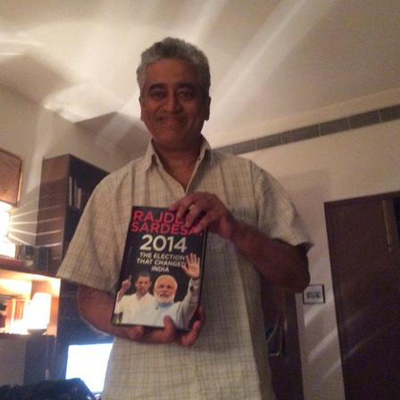
    Rajdeep Sardesai, who quit Network18 as IBN18 editor in chief in July this year and later on joined the India Today Group as consulting editor, recently launched his book ‘2014 : The Election That Changed India’.  The book tracks the story of the 16th Lok Sabha elections with a media insider’s view.

    The man with over 26 years of experience in the field first thought of writing a book last year but it was only in July, this year that he thought of penning his expertise. Sardesai was initially approached by Penguin Publishers to write a biography on Prime Minister Narendra Modi but he says he felt that he was more qualified as a journalist to write about the elections than just a biography.

    When asked why he chose 2014 elections to write the book on, he informs “I have been covering elections since 1989, but this was a historic election. For the first time, we had a non-Congress single political party winning by a huge and thumping majority. It was an election that saw the emergence of a larger than life Modi image, extensive media coverage along with new styles of campaigning that were very different from the past. The book while focuses on the 2014 elections has slices of elections from the previous years as well,” says the veteran.

    He provides three reasons why journalists and media students should pick up the book. “First, this was the biggest election we have seen so far. It documents a slice of history that people would want to be a part of. Secondly, people love to read good stories. With my 26 years of journalism experience, I have compiled interesting anecdotes of many years that bring to life many personalities from the political field. Thirdly, TV programmes today are like fast food while a book is like good wine that people will enjoy indulging in,” he says.

    Sardesai who singlehandedly wrote the book of 135,000 words without a team, informs that he was helped by Centre For The Study of Developing Societies (CSDS) for valuable statistics and insights. CSDS along with CNN-IBN together kept audiences abreast about election trends. He mentions that his wife Sagarika Ghose was the one who helped boost his confidence and pushed him to write the book. “She really energised me. She, in fact, is the book writer in the family. My daughter helped me out on the computer and printouts while my son set the deadline for me that was before his holidays began,” adds Sardesai.

    He is extremely happy with the response that the book has garnered, so far, as audiences have already termed it as a page turner. “One does not have to be politically obsessed to read the book. It is accessible for all to read,” he says.

    He is glad that even politicians have taken a liking to the book which goes for its second print next week.

    Talking about the marketing aspect for the book he says that while films by actors like Shah Rukh Khan need marketing to promote a film, for a book it boils down to the quality of prose and content.

    When asked if he plans to write another book on the elections or his autobiography, he chuckles and says “No, not for now. I will take a break of at least one year from book writing,” he concludes.