Tag: Network18

  • BARC week 29: Rural drives Hindi news viewership up

    BARC week 29: Rural drives Hindi news viewership up

    BENGALURU: The combined viewership of the top 5 Hindi news channels across the urban and rural Hindi speaking markets or HSM (U+R) grew 4.7 per cent in week 29 of 2019 (Saturday, 13 July 2019 to Friday, 19 July 2019, week or period under review) as compared to the previous week according to Broadcast Audience Research Council of India (BARC) data. Combined weekly viewership of the top 5 Hindi news channels for week 29 of 2019 was 476.727 million weekly impressions as compared to 455.410 million weekly impressions in the previous week. Viewership growth in week 29 of 2019 was led by the rural Hindi speaking market or HSM (R), which grew by 8.9 per cent from week 28. Urban viewership in the Hindi speaking markets grew by 1.5 per cent during the week under review as compared to the previous week. The combined weekly impressions of the top 5 Hindi news channels in HSM (R) was 200.340 million weekly impressions as compared to 183.955 million weekly impressions in the previous week. Combined viewership of top 5 channels in HSM (U) was 277.783 million weekly impressions in week 29 of 2019 was compared to 273.724 million weekly impressions in week 28.

    Viewership growth could be attributed to the fact that only the final match of the ICC World Cup was played during the week under review. Since India was not involved in the final of the premier global cricket tourney, interest and hence viewership must have petered out. Earlier, cricket did eat into the viewership of many genres because of overlap of timings with primetime in India. Viewership could climb further with improved weather across the country. All the Hindi news channels in the three BARC weekly lists – HSM (U+R), HSM (R) and HSM (U) in week 29 of 2019 were the same as in week 28 with a slight shuffle in ranks in HSM (R). All three lists were led by Aaj Tak.

    Hindi news viewership in HSM (U+R)

    All the five channels in BARC’s weekly list of top 5 Hindi news channels in HSM (U+R) witnessed growth in viewership. The list and ranks of channels in week 29 of 2019 were the same as in week 28.

    Aaj Tak at rank 1 in week 29 of 2019 witnessed a growth of 3.5 per cent at 123.173 million weekly impressions as compared to 118.957 million weekly impressions in week 28. At second rank, News18 India saw viewership grow by 8.3 per cent to 96.403 million weekly impressions in week 29 of 2019 as compared to 88.974 million weekly impressions in week 28.

    India TV, ranked three, saw a growth of 2.6 per cent in viewership in week 29 of 2019 at 90.012 million weekly impressions as compared to 87.736 million weekly impressions in week 28. At fourth rank, ABP News witnessed a growth of 6.1 per cent in viewership in week 29 of 2019 at 89.531 million weekly impressions as compared to 84.397 million weekly impressions in the previous week. At fifth rank, Zee News saw viewership grow by 3 per cent in week 29 of 2019 at 77.608 million weekly impressions as compared to 75.346 million weekly impressions in the previous week.

    Hindi news viewership in HSM (R)

    All the five channels in BARC’s weekly list of top 5 Hindi news channels in HSM (R) witnessed growth in viewership. The list and ranks of channels in week 29 of 2019 saw a slight shuffling of rank as compared to week 28.

    At rank 1, Aaj Tak witnessed a growth of 7.6 per cent in viewership at 53.977 million weekly impressions in week 29 of 2019 as compared to first rank and 50.149 million weekly impressions in week 28. Continuing on at second rank, ABP News saw a growth of 12.9 per cent in week 29 of 2019 to 41.047 million weekly impressions in HSM (R) as compared to 36.355 million weekly impressions in week 28.

    News18 India climbed a place to third rank in week 29 of 2019 with 20.1 per cent viewership growth to 38.136 million weekly impressions as compared to fourth rank and 31.751 million weekly impressions in week 28. India TV climbed down a place in week 29 of 2019 to fourth rank with a growth of 4.1 per cent at 36.078 million weekly impressions as compared to third rank and 34.671 million weekly impressions in the previous week. Retaining fifth rank in week 29 of 2019 was Republic Bharat with a growth of 0.2 per cent at 31.102 million weekly impressions as compared to 31.029 million weekly impressions in week 28.

    Hindi news viewership in HSM (U)

    All the five channels in BARC’s weekly list of top 5 Hindi news channels in HSM (U) witnessed growth in viewership. The list and ranks of channels in week 29 of 2019 were the same as in week 28.

    At rank 1 in HSM (U), Aaj Tak saw growth of 0.6 per cent in week 29 of 2019 to 69.196 million weekly impressions as compared to 68.808 million weekly impressions in the previous week. News18 India was ranked second in week 29 of 2019 with a 12.9 per cent growth in viewership to 58.266 million weekly impressions as compared to 57.223 million weekly impressions in the previous week.

    At third rank, India TV witnessed a growth of 1.6 per cent to 53.934 million weekly impressions in week 29 of 2019 as compared to 53.065 million weekly impressions in week 28. Ranked four, ABP News saw growth of 0.9 per cent in viewership in week 29 of 2019 to 48.484 million weekly impressions as compared to 48.042 million weekly impressions in week 28. Completing the quintet at fifth rank was Zee News which saw growth of 2.8 per cent in week 29 of 2019 to 47.903 million weekly impressions as compared to 46.586 million weekly impressions in week 28.
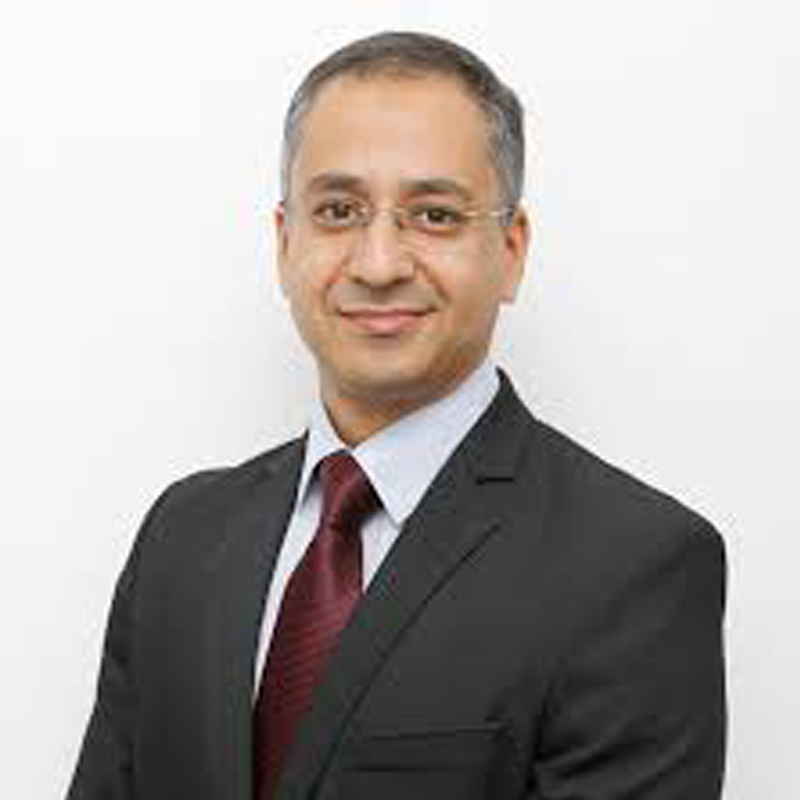
  • Network18 Digital’s Puneet Singhvi on customised mobile ads, growth drivers & leadership consolidation

    Network18 Digital’s Puneet Singhvi on customised mobile ads, growth drivers & leadership consolidation

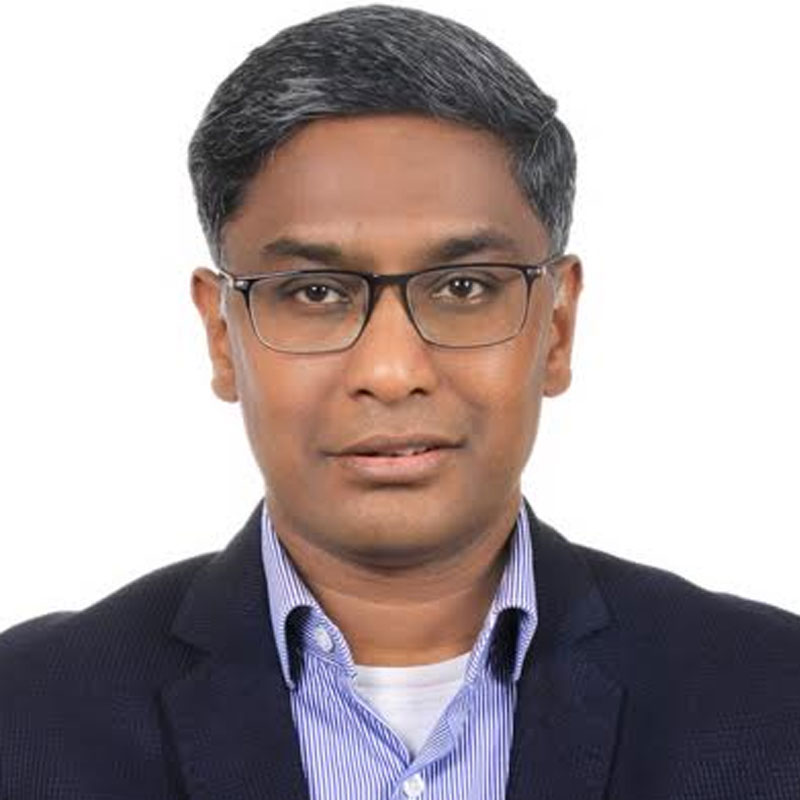
    MUMBAI: The general elections is the best time for news channels and the past four-five months have been a big gain for news broadcasters. A few months ago, Network18 group elevated Puneet Singhvi as president- digital and corporate strategy. Network18 Digital also set an all-new benchmark in election results coverage with 56.2 million users on Network18 Digital’s websites on 23 May (the result day of general election 2019).

    In an interaction with Indiantelevision.com, Singhvi spoke on the strategies to drive growth across the digital platform of Network18. Apart from the regular display advertising on the sites, Singhvi also wants to focus on adding customised solutions for mobile advertising, driving audiences on digital platform and extend some of its brand beyond online. Seeing the growth on various digital vertical Singhvi also revealed that this year the focus would be more on consolidation and obtaining a stable leadership position on the digital front.

    How are you strategising the growth of Network18’s digital platform?

    Over the last couple of years, we had a fairly strong momentum growth or build – Money Control, News18- English and regional languages, CNBC and CricketNext. In the last three to five months, we have built a strong tech backbone and invested in building a fairly robust technology stack behind all of these sites. We also focused on doing editorial in an innovative way in terms of the way we do stories, analysis, infographics, data analytics and data presentation across the network and we get ourselves aggressively around some of the big event coverage and it makes a network-wide initiative rather than doing it in silo. All of these have contributed well. On the sales side, we have streamlined the verticals a little bit; we combined certain sales team to finally end up with 3G verticals of sales. That helped us to get a deeper reach in the market and now we can also deliver our audience on a much bigger scale. On the branded content side or IP side, we have seen a little bit of success with the kind of work the team has done in terms of revenue traction and also in terms of recognition for the quality of work and creativity that we have done. All these combined have given us that momentum and we are able to capitalise on a lot of opportunities that are there on the internet.

    Which digital vertical has been the growth driver for Network18?

    We see robust growth across the platform. Moneycontrol continues to be our flagship and our business vertical is very big. We are growing fairly aggressively on English news and News18 languages are the verticals where the growth is fastest and highest but that is because advertising on the regional language internet has been on the lower base compared to English internet and that is the factor to consider when we look at the overall growth. We are the largest multi-language news publisher in the country and that has helped us ride that wave more aggressively than people who are there in one or two languages. So that’s the kind of reach that we are able to drive through our language verticals and on-air coverage that is provided through our television network that we have across 20 states. That helps us with the overall growth there. English News and CricketNext combined continue to do well. So does the business news vertical which is showing a consistent year-on-year growth trend. In the business news vertical, we are already talking about the diversification of revenue, so we launched Moneycontrol Pro, which is a subscription-based version of Moneycontrol where we have exclusive insights, data analytics etc. That is something which has done very well; we are the largest financial news tool and market news subscription service in the country now.

    What are the challenges you come across on the digital platform?

    The core display business, which has been the bread and butter for digital, is starting to slow down. So it is very important for the publisher and players within the ecosystem to adapt to one – whole programmatic buying or advertising tact and second is we have to constantly think of branded content and creating IPs that can be recurring annual revenue. So those are the two or three risk mitigation areas. All of the publishers work in the 15 per cent market which is outside of Google and Facebook, so it’s really important to be creative. What helps the fact is we are the firmly-established number two engaging network in the country that gives us the scale and position on the table to have a chat with the advertisers.

    How do you see responses coming in from advertisers on the digital platform?

    Digital is now 17 per cent of the total advertising market and it’s just a matter of time that it comes in the top two or three medium of advertising. There have been advertisers who are pioneers in digital advertising and there have been a fair bit of new advertisers that are getting added. There are certain segments which can continue to be more traditional but that’s just a matter of time before they start testing out things on digital and then hopefully convert into more regular advertising over the period of time. It also depends on the kind of solutions that we give and the kind of reach metric we can provide and also the kind of target audience that we are able to deliver to these advertisers. But I think that evolution has happened fairly well on the English internet side of it and it will also happen to the rest of the brands.

    Who are the major advertisers on the platform?

    Traditionally BSFI and auto have been big advertisers but given the circumstances that the auto industry is going through, they have their own challenges. E-commerce is another big advertiser, FMCG is fairly large, tech and IT service is quite big and broking companies are also advertisers for us. These are the four-five sectors that are significant.

    Brief us on the monetisation methods that you look at for digital?

    Basically, all across the board are as simple as selling the banners, display advertising, sponsorship, selling space through programmatic, selling performance advertising, key event sponsorship and creating IPs for digital and getting sponsorship around that. Pretty much every revenue stream that is out there, we go across the board with them. Probably what we do least is performance-based advertising because we believe our audience here is premium and we want to be able to drive returns that one should be getting from those kinds of audiences.

    Brand collaborations are of two kinds- one is- creating customised content and running it across our network, which is the part of regular advertising portfolio that we have and another collaboration that we have is around the IPs that we create. For example, Vanity Dairies had got partners from the cosmetic side. There is a fairly vast opportunity of collaboration there if we are able to drive interesting ideas. Our success had been tough for what we did for Flipkart Fashion. We created the storyboard and a series of videos for them around what the fashion fundas are for various people. It did significantly well for them. That kind of collaboration is at a completely different level where we start utilising our studio capabilities too on conceptualising and creating an interesting reach for them. Obviously, this kind of project drives disproportionately higher revenue compared to the project of standard advertising but they require a significant amount of work as well.

    As you mentioned earlier about subscription-based version of Money Control i.e is called as Money Control Pro. Will you also switch to the subscription model for Network18’s other brands as well?

    We are constantly evaluating the opportunities for alternate revenue streams and one of the more established streams on digital is subscription. So for our brand also it is under the helm of possibility. But as I keep saying, the core is the kind of value proposition that we are able to drive which is interesting enough and has enough traction for the users to pay us month on month and keep paying us over the period of time to subscribe and renew those services. As and when we evolve and create those capabilities given our verticals and when we are able to create those USP we will continue evaluating values around subscription. We are very enthused by the kind of responses that we got for Money Control and that is the interesting space to explore within the larger network.

    News 18 is currently available in 12 languages; will you add any other languages this year as well?

    We might look at one or two additional languages but this year the focus is really on consolidating and establishing significant or a stable leadership position across the board because on the back of that one is able to drive revenue. For us, that would be the really big focus to grow. The kind of responses that we have seen in the last three to five months has been very good. We are the top three players, if not the number one player in almost all the languages that we are present in, which is the significant achievement because in those cases we are up against most of the traditional print brands and most of that we have done in the last two years. So we want to drive that momentum and consolidate it further. Obviously, we will look at adding more languages which are not in the portfolio but this year our focus would be more on consolidation.

    What will be your roadmap for driving growth and revenue on digital?

    Apart from doing display in a more interactive and interesting way, adding customised solutions for mobile advertising would be one focus area. Second focus would be more on driving audience on the digital platform. We are also looking at extending some of our brands beyond online either it could be a knowledge series or events or ground IPs, something like what we have done very successfully with Tech and Auto Awards. So all of these combined could be the growth drivers for the next couple of years.

  • Avinash Kaul on Network18’s news business growth, TRAI tariff order impact & landing page row

    Avinash Kaul on Network18’s news business growth, TRAI tariff order impact & landing page row

    MUMBAI: Propelled by the ad spend on general elections, subscription revenue growth and the strength of its regional network, the news business of Network18 delivered solid numbers in the first quarter. The television news business grew 29 per cent as compared to the corresponding quarter last year, with a rise in news viewership share to 10.1 per cent from 9.3 per cent post TRAI’s new tariff order implementation. The broadcaster witnessed a 48 per cent YoY improvement in subscription revenue and a doubling of the Hindi news ad-revenue. From an EBITDA loss last year, Q1 FY20 saw a jump in profitability to Rs 20 crore. For a deeper insight into the network’s performance, future growth and other issues faced by the news broadcast business, Indiantelevision.com engaged A+ E Networks | TV18 managing director and Network18 CEO broadcast news Avinash Kaul in a freewheeling chat.

    Standalone news business revenue grew 29 per cent. Can you give us some colour on that?

    Primarily, we have been reworking our channels and consolidating the regional and national networks. Our ratings have significantly improved over the last two-three years. All the effect of whatever we have done to propel ratings for in the recent past not only resulted in us being the number one news network, but also came in handy at the time of elections. When you have a large news network in the largest democracy, we were bound to get good traction from advertisers (ad spends during elections). In addition to that, there is obviously the new tariff order (NTO).

    The NTO obviously took away a lot of sheen from what our original plan might have been in its initial stages. It brought in some rough weather for everybody especially for pay channels including us. So there is no hesitation in saying that it did create a lot of rough weather for us initially. But thankfully we were able to surmount most of the challenges and by the end of the quarter we were back on top, but we did take a dip. We went down to 9.3 per cent of the overall channel share from around 10.1 per cent because of NTO transition and decision to stay pay. That call though eventually benefited us because it helped fetch us a 48 per cent growth in subscription revenue.

    Thirdly, we have continuously been on a path of cost-cutting, that’s been an ongoing effort. We integrated our regional and national networks and analysed the synergies and duplication. Those benefits are now starting to play out.

    Which segments have been the key growth drivers within the news business?

    Hindi and regional have been at the forefront of this growth. I am breaking Hindi and regional separately because Hindi grew on the back of the superlative performance of News18 India. Languages come second. English has been fairly muted especially because it also comprises business segment which is not an election mainstay. So, very clearly growth was driven by general news and within that, it was driven by Hindi and regional.

    Have you identified any standout regional language markets?

    Biggest advertising markets are Bengali, Marathi and the Southern states. There are no surprises there. Other markets are relatively small in nature like Assam and Odisha They are not as big as the established markets.

    Have you witnessed an advertising slowdown in the months of June and July?

    Yes if you see, after a high of the election, there has come a slowdown. There was also the World Cup. There is a certain amount of threshold which got built in the month of June, which also continues in July as well. There are no two ways about that. There are economic headwinds. But the festive season is also not too far away. So we are hoping we should see some revival in August which will continue in September and the rest of the year.

    You witnessed a 48 per cent growth in subscription revenues. Will you be able to carry forward this momentum or do you expect some churn going forward?

    If you remember the initial NTO days, there were people who did not have a clue what package to take or not to take. Even the subscriber management system, cable headends and the DTH operators were not ready to deliver that diversity. So, the settlement will take time. People will begin to figure out the prices. An aspect that has emerged through my conversations with most of the industry leaders is NTOs on dual TV homes. With increasing cable bills, they have taken a rational call on channel selection for the second TV. Several other factors like the conclusion of the World Cup, children’s holidays will contribute to the churn.

    Some consumers will make their choice, while others will opt for broadcaster packs or DPO packs. So, I don’t think everything is settled or everything is perfectly fine. The fine-tuning continues. I am expecting this entire fiscal will see some sort of settlement. The percentage has come down, you will not see that kind of volatility. The good part is despite the challenges, it’s a step in the right direction because subscription has got a boost. We are hoping that will continue in the next quarter. Unlike advertising scenario, which is dependent on events and situation of economy, this is more immune to those kinds of activities.

    The growth of business news channels has been fairly muted. How do you intend to deliver change this scenario?

    Business channels are facing a challenge not only for us but as a segment across. There is a certain amount of reinvention required in the entire genre whether it’s from a content or advertiser perspective. Now real-estate is in bad shape, automobile is not that great, banking sector has huge NPAs on its books, IPOs are not that great and general economy is not that great.

    There is a certain amount of cyclical softness that emerges and unfortunately, these cycles are not advertising cycles. These are business cycles. There is a need for a certain amount of introspection, cost control measures while trends like movement to digital and other things are happening. The challenge is to reinvent the product and see how we can make certain offerings to advertisers in the market in order for them to see things in a different light. It could also very well mean that more emphasis on subscription than advertising sales than ever before at least for this sector. So, it depends. For a business model to pivot, it takes a longer time and that’s the journey most of us are in.

    As a network, what do you expect from the remainder of the year?

    We continue to invest and stay invested in content. We have an ambition of not only maintaining our market share (currently around 10.3-10.4 per cent with all channels) but to make sure that we get higher. I would really peg it at 15 per cent by the end of this year. We are the largest player in the segment and by that, we have a certain amount of responsibility on us to make sure we reinvent and grow the genre along with us. That will keep us motivated for this year.

    What is your subscription to advertising revenue ratio?

    Honestly, this will be a better conversation to have at the end of this financial year. This is just the first quarter and it has several factors like cricket and elections influencing it. There is general stress in most English channels. Some of these models will pivot very differently. Several things like the effect of the best-fit plans need to settle down. So it’s early. Personally, I’m very keen to know what that ratio will be at the end of the year. It also has a bearing on all the employees of the sector.

    The ongoing landing page issue has the potential to impact the ecosystem’s dynamics. Your views?

    Either it works for all or works for none, we are okay either way. What we are not okay with is the manual intervention (BARC’s data validation and outlier policy), which benefits some people, not others. If it will completely go away, we have no qualms, we will be the happiest. We do want a level playing field. We do not want somebody getting extra benefits because of X or Y reasons. Primarily that’s what our standpoint is.

    So, your issue is at a systemic level?

    It is a systemic issue. There are channels that launched on the back of these things. Any kind of manual intervention is not good for any system. There is no document to see on what basis this manual intervention is happening. Even the (BARC) technical committee has not issued an advisory to state what the basis of these moderation policies are. We are not comfortable with this arbitrary situation. Why would anybody want to do that? We are not a fly-by-night operator; we want transparency in the system and a level-playing field.

    What has been the impact of the new tariff order on lifestyle and factual entertainment brands?

    The impact of the NTO varies from genre to genre. Both History and FYI are part of Colors value pack. So, they were available wherever Colors was available. Today FYI is the largest lifestyle channel in India and History is a very close second to Discovery. We cannot take away the fact that Discovery is in existence for more than 25 years now and History is eight years old. These things take time to catch up.

    From an advertising front, there are same issues that general English entertainment channels and factual entertainment channels are facing. So, business is not as usual. There is an impact but you cannot attribute it directly to NTO right now because there were elections, IPL and the World Cup. We are hoping for a certain amount of resurgence now. But obviously subscription comes in handy and our cost control measures are always there. So, from a profitability perspective, we are on track.

  • Network18 writes to I&B ministry over BARC’s data validation and outlier policy

    Network18 writes to I&B ministry over BARC’s data validation and outlier policy

    MUMBAI: News broadcasting network Network18 India has shot off a letter to the Information and Broadcasting Ministry (MIB) raising concerns over Broadcast Audience Research Council (BARC) of India’s data validation and outlier policy, Indiantelevision.com has learnt.

    According to those in the know, the network has brought to the ministry’s attention the subjective nature of BARC’s implementation of outlier policy and its impact on TV ratings of channels with a relatively smaller viewership base.

    On its part, BARC has consistently maintained that it cannot identify landing pages. Hence, reliance on manual intervention in weeding out outliers makes the process susceptible to bias is a view held by a section within the industry.

    Indiantelevision.com reached out to Network18 for a comment, the network, however, did not confirm this development.

    BARC’s treatment of landing pages has raised a furore among broadcasters over its approach post TDSAT’s order on landing pages.

    Reacting to stakeholder concerns, the BARC board gave its nod to form a two-member committee to carry out an independent review of BARC’s data validation and outlier policy.

    With opinion divided within the industry, some broadcasters have also written letters, highlighting the negative impact of landing pages, to TRAI and BARC’s technical committee.

    On 28 May 2019, TDSAT set aside TRAI’s 3 December 2018 direction to rule in favour of landing page placement of channels.

    Data for week 22, first since the landing page ruling, saw CNN News 18 upset the English news apple cart to top the chart, followed by Republic TV, Times Now, DD India and India Today Television.

    BARC switched back to its previous methodology from week 23 onward claiming it had received multiple representations from stakeholders and the mandate of its board.

    BARC’s flip-flop with its outlier policy implementation further fuelled the landing page row.

    With the two-member committee now reviewing the policy, industry hopes for a speedy and acceptable resolution.

  • Subscription drives Network18; TV18 revenues, EBITDA up

    Subscription drives Network18; TV18 revenues, EBITDA up

    BENGALURU: Network18 Media & Investments (Network18, N18) reported 10.8 pe rcent increase in consolidated operating revenue for the quarter ended 30 June 2019 (Q1 2020, quarter or period under review) as compared to the corresponding year ago quarter (y-o-y). TV18 Broadcast (TV18), a publically listed subsidiary of N18, is a major contributor to Network18’s numbers. TV18 reported 9.7 percent y-o-y increase in consolidated operating revenue for Q1 2020 as compared to Q1 2019. Subscription revenue increased 48.3 percent for the quarter under review to Rs 424 crore from Rs 286 crore.

    Company speak

    Network18 says in an earnings release that New Tariff Order (NTO) implementation pains have smoothened as the value-chain adjusts to the new regime, and its subscription income has received a boost. Nevertheless, some flux in distribution and viewership is lingering, which N18 expects to taper away in the near term. As consumers make their pack/channel choices, the company believes that strong content propositions and distinctive brands will continue to gain traction. The company says that its bouquet is well-placed to benefit, through leading channels and improved distribution tie-ups.

    Network18 chairman Adil Zainulbhai said: “Amidst a challenging advertising environment and the implementation of a new tariff regime, we have continued to focus on creating great content for all media. Our regional portfolio continues to grow across both broadcasting and digital, and we believe that the connect our growing brands enjoy with the diverse Indian populace shall stand us in good stead.”

    Speaking as chairman of TV18, Zainulbhai said “Our channel brands have witnessed a strong uptake in the new tariff regime which places the consumer even more at the center of the broadcasting business model. Class-leading value, genre-defining content and a pipe-agnostic approach are the tenets which we believe will continue to propel our portfolio forward.”

    Let us look at the numbers reported by the company

    Network18 operating revenue grew to Rs 1,245 crore in Q1 2020 from Rs 1,124 crore in Q1 2019. Consolidated operating EBIDTA for the quarter under review more than doubled (grew 137 percent) to Rs 46 crore from Rs 19 crore.

    The company says that operating revenues from its News business (TV18 standalone) grew 29 percent y-o-y to Rs 298 crore in Q1 2020 from Rs 232 crore in Q1 2019. The company reported a positive EBIDTA from its News business of Rs 20 crore in Q1 2020 as compared to a loss of Rs 1 crore in the corresponding year ago quarter.

    Revenue from its Entertainment business (Viacom18, AETN and Indiacast) grew 5 percent y-o-y in Q1 2020 to Rs 899 crore from Rs 857 crore in Q1 2019.

    TV18 consolidated revenue for Q1 2020 grew 10 percent to Rs 1,198 crore from Rs 1,088 crore in Q1 2019. Consolidated EBIDTA for Q1 2020 grew 96 percent y-o-y to Rs 77 crore from Rs 39 crore in Q1 2019.

    Network18’s Digital, Print, Others Business and intercompany eliminations (Digital) grew 32 percent to Rs 48 crore from Rs 32 crore. EBIDTA increased to a loss of Rs 128 crore in Q1 2020 from a loss of Rs 112 crore in Q1 2019.

    Network18’s total expenditure increased 10.8 percent y-o-y to Rs 1,308 crore from Rs  1,308 crore from Rs 1,181 crore. The company reported 11 percent higher operating costs for Q1 2020 at Rs 574 crore as compared to Rs 517 crore in Q1 2019. Marketing and distribution expenses during the quarter under review increased 33.3 percent y-o-y to Rs 252 crore from Rs 189 crore. Finance costs in Q1 2020 increased 53.7 percent y-o-y to Rs 63 crore from Rs 41 crore. Other expenses for the quarter under review declined 21.3 percent to Rs 100 crore from Rs 127 crore.

  • Sangeetha Aiyer to head brand marketing at Network18 Digital

    Sangeetha Aiyer to head brand marketing at Network18 Digital

    MUMBAI: Network18 Digital has promoted Sangeetha Ayer as head of brand marketing. She will be leading Network18’s digital verticals such as moneycontrol and Firstpost among others.

    Indiantelevision.com has also learnt that Aiyer will be reporting to the company’s president—digital and corporate strategy Puneet Singhvi. 

    Aiyer commenced her career in 2006 as brand manager at Reliance Broadcast Network. After a year or so, she joined Star India as senior manager marketing at channel V. After spending eleven months at the organisation, she made her move to Times Television Network as senior manager brand and marketing. In 2011, she was the VP and head marketing at A+E Networks and later got elevated to head marketing and digital initiatives.  

    Earlier Network18 had decided to suspend the publication of the weekly newspaper Firstpost Newspaper that was launched on 26 January 2019. Network18 said in a statement that Firstpost in Print was one such experiment to provide a weekend reading experience to a different audience than online. It also mentioned that the brand has believed in constantly experimenting and re-investing itself and it has provided the company with good learning.

  • Republic TV tops as most-watched private English news channel in new TRAI tariff regime

    Republic TV tops as most-watched private English news channel in new TRAI tariff regime

    BENGALURU: In week 5 of 2019 (Saturday, 26 January 2019 to Friday, 1 February 2019), the last week that Broadcast Audience Research Council of India (BARC) had published data on its website before the implementation of the new TRAI tariff regime, pubcaster Doordarshan’s English news channel DD News had sprung a surprise. DD News had run ahead of all its private peer genre channels and was the most-watched English news channel based on viewership data with 1.503 million weekly insertions in BARC’s weekly list of top 5 English news channels  (All India (U+R) : NCCS AB : Males 22+ Individuals). The private English news channel Republic News was the second most-watched channel in the English news genre with 0.725 million weekly insertions. Both the top English news channels, public as well as private, in week 13 of 2019 are free-to-air (FTA).

    BARC has recommenced putting up weekly viewership data on its website starting with week 13 of 2019 (Saturday, 23 March 2019 to Friday, 29 March 2019). The ranking status quo for the top three was the same – DD News topped viewership data in week 13 with 0.737 million weekly impressions, followed by Republic TV at second spot with 0.618 million weekly impressions. Hence, the Arnab Goswami headed Republic TV was the most watched private English news channel in the country.

    At third place was Times Now with 0.421 million weekly impressions. At fourth spot was Network18’s CNN News18 with 0.286 million weekly impressions very closely followed by India Today Television with 0.284 million weekly impressions. In week 5 of 2019, it was India Today Television that was ranked fourth followed by CNN News18.

  • Network18 appoints Maruti Indoria as business head for CricketNext

    Network18 appoints Maruti Indoria as business head for CricketNext

    MUMBAI: Network18, India’s most diversified media conglomerate today announced the appointment of Maruti Indoria as Business Head for CricketNext. CricketNext is one of Indian sub-continent’s most read and followed cricket website. A dynamic website, which offers its viewers live ball-by-ball coverage of all international matches and news ranging from match reports to inside scoops on cricket stars and the functioning of cricket associations across the globe, CricketNext is every cricket lover’s one-stop destination. Anil Kumble is the brand ambassador for the site.

    With over fifteen years of experience across Ad Sales, Digital Marketing and Social Media Marketing, Maruti joins Network18 from SonyLIV Sports. He was heading monetization for SonyLIV Sports, where he was responsible for driving revenues from marquee properties like FIFA World Cup, multiple India Cricket series, and other premium sports like MotoGP, NBA, WWE etc. Before SonyLIV, he has worked with Times Internet, DB Digital, Sify Technologies and Business Standard in revenue roles. Along the way he also had his own start-up in Social Media Marketing.

    Maruti is a post-graduate in Marketing from Mumbai University. He will be based in Network18’s office in Mumbai and report to Puneet Singhvi, Head – Network18 Digital.

  • Firstpost print launches campaign trails, a unique campaign that enables readers to cover elections as reporters

    Firstpost print launches campaign trails, a unique campaign that enables readers to cover elections as reporters

    MUMBAI: Firstpost print, the weekly newspaper recently launched by Network18, has announced a unique campaign – FP Campaign Trails. Building on its promise of giving readers a ringside view of news and key events driving the current political narrative in the country, the campaign will give selected readers an opportunity to accompany seasoned journalists into the field and experience the heat and dust of elections first hand. For most people, elections are typically limited to armchair discussions – the only on-field experience they get is through the actual act of voting. This campaign will allow readers to experience the actual workings of democratic processes and electioneering like never before.

    The campaign will have 5 different trails from across the country – Coastal Karnataka, Marathwada, Kashmir valley, Bengal and Varanasi. These areas have been selected as much for their political significance as also to give the campaign a pan India spread. Each trail will be for 3 nights & 4 days and will run from April 8th to May 6thduring the last stages of campaigning in each region. Each trail will try to cover an election rally by a big national leader; enable interactions with local leaders and party functionaries; and most importantly, with various communities that represent the key issues at stake in the chosen region.

    Towards the end of each trail, participants would take part in a short workshop, when they report their observations on the trail. The reports would be collated and presented on Firstpost, with due attribution to contributing participants.

    Commenting on this programme, Rahul Kansal – Business Head Firspost print and Group Brand Advisor, Network18 said, “Firstpost’s mission as a newspaper, is to help its readers 'get inside the news’. It tries to do so not just through its editorial content, designed to give readers a ring-side view of what’s going on. But also through programs like Firstpost Campaign Trails, which take readers physically to the ringside, to experience the heat and dust of India’s elections”.

  • Monetisation is the biggest challenge for regional industry

    Monetisation is the biggest challenge for regional industry

    MUMBAI: The growth of the regional sector in the media industry was discussed on the third day of FICCI Frames 2019. Experts from the television sector discussed on the topic ‘Regional: is it the giant waiting to be awakened?’ It had panellists Viacom18 head regional entertainment Ravish Kumar, Reliance Broadcast Network Thwink Big country head Sunil Kumaran, Discovery communication VP head of advertising sales and business head of regional cluster Vikram Tanna, Westland Publications head language publishing Minakshi Thakur, Network18 CEO languages Karan Abhishek Singh and Google industry head media and entertainment Sandeep Ramesh.

    Talking about the challenges in the industry while creating the content as against monetisation, Ramesh said that the latter depends on macroeconomic conditions which are the GDP, per capita income, advertising or subscriptions coming in as a source of income.

    Tanna highlighted that looking at the overall scenario of English as against regional languages, perception is bigger than performance and that will change over a period of time. “If you look at pure regional form in TV or digital, there are two markets of monetisation—one is coming in from the regional local businesses and the other is coming from the national advertisers. If you actually add the pricing of both these buckets in any medium, the indexes for regional are quite higher and the reason is that this hyper looking market can calculate ROI much better beyond a simple measurement ROI system,” he added.   

    Singh chipped in and said that it is also incumbent upon them as content creators to do what it takes. “We need to create an environment where regional content formats are not seen as ‘long tail’ for media planners,” he said.

    Meanwhile, an interesting observation was put across where a homogenisation culture was happening, such as the influence of Diwali, Holi and other festivals are witnessed in the Bengali culture these days, which in reality are not so famous in these cultures. Speaking about the trend, Kumar said, “These festivals are actually making the culture larger than life. Of course, there is homogenisation in these cultures, consciously or unconsciously, but it’s the desire to be larger than life because people want entertainment and we look at it very differently.”

    Though Baahubali is one regional movie that has travelled internationally the question still remains as to why we can’t make more such innovative content. Kumar replied that we are lazy. He added that we are very good at learning the markets or develop from the ecosystems but not as good as putting out originality. “I would love to see Indian dramas like Turkish content and these are not just working in one market, they are working in multiple markets. We need to come up with something new and innovative and way bigger than what it is.”

    A major reason why no content is created for the north-eastern part of the country is budget constraint. Kumar added, “But we can’t put the blame just on budgets. Give us four to five years to offer the content of your choice.”