Tag: Netflix

  • Cyrus Oshidar launches youth centric digital venture 101India.com

    Cyrus Oshidar launches youth centric digital venture 101India.com

    MUMBAI: Digital ventures are mushrooming in the country nineteen to a dozen. With the big daddys of Indian media and entertainment like Raghav Bahl and Ronnie Screwvala leading from the front in the space with new ideas and bags full of investment, it doesn’t take much to figure that digital is where the future lies. And another such media personality, who is putting his money where the mouth is, is the former MTV man Cyrus Oshidar.


    When it comes to interacting with the youth in India, there’s no bigger name than Oshidar. Under his supervision at MTV India, iconic creative series targeted at the youth were launched, which successfully managed to garner the TG’s attention. Be it Roadies, or the musical voyage in Sound Trippin, uniqueness was forever visible in each and every concept.


    The man who played a pivotal role in establishing youth market in India with multiple innovations, is now set to connect with the youth yet again and this time with the digital portal 101India.com. The portal was launched a month ago with the aim of providing unique and differentiated content for young Indians. What’s more, his team’s unique skill sets were also used to create deeper and more relevant brand solutions. With 101India, Oshidar and his team aim to lead the digital content movement in India.


    Speaking exclusively to Indiantelevision.com, 101India.com MD and chief creative officer Oshidar says, “It was at the 2012 Cannes’ first branded content and entertainment contest that the concept of 101digital.com came into my mind. It’s time for the movement to begin. We need to talk to the youth in a creative manner, which they will acknowledge and then eventually interact with.”


    Combining adverts in a subtle manner with content on the platform is how the portal will look at making an impact on the youth’s mind. Oshidar says, “We are not a million hits platform and hence we are not going to go pitching to advertisers with promises to millions in return for their crores. We know how to speak to the youth of the country and that’s all we will do. Gone are the days of putting ads in between content. Now we have to fit the brand in the content itself and that’s what we will do in 101India.com.”


    The content publishing platform will target educated metro youth aged between 21 – 25 years and hence majority of the marketing and promotional activities to promote the venture will revolve around social media.


    Broadband speed in the country is poised to get a major fillip what with Airtel 4G already hitting the market and Reliance Jio impending launch by year end. Oshidar is of the opinion that these rollouts will enhance the infrastructure and bridge the gap between quality streaming and content.


    While internationally acclaimed over the top (OTT) venture Netflix is speculated to start its India operation in 2016, another player HOOQ has already launched its India ops. The space is getting cluttered by the day with the addition of Indian OTT players like Ditto TV, Hotstar and Eros Now amongst others. There’s cut-throat competition in the market and established ventures can often overpower startups. However, Oshidar believes that quality content will always sustain. “Game Of Thrones will remain Game Of Thrones and people will consume it irrespective of the platform. So we need to have premium content to sustain in the long run,” he asserts.


    101India.com will soon launch an app to reach out to more mobile customers. In terms of content, the venture has created a documentary on the issue of transgenders in association with Times of India’s online venture Indiatimes.com. Also in the pipeline are a series of fiction shows along with a few short movies.


    The entire production is taken care of by the in-house team at 101India.com. “We are blessed to have a group of creative talents, who have worked closely with me at MTV and we execute the production all among ourselves,” Oshidar concludes.


    More digital power to Oshidar we say!

  • “If OTT players offer a unique proposition, all of them can co-exist:” Debashish Ghosh

    “If OTT players offer a unique proposition, all of them can co-exist:” Debashish Ghosh

    ditto TV – India’s first OTT venture owned by media mogul Subhash Chandra – is all set to thrust forward in the space with a strong focus on innovation and fresh content. The OTT player has launched its international operations and will soon have content from across the globe. 


    In conversation with Indiantelevision.com’s Anirban Roy Choudhury, ditto TV CEO Debashish Ghosh shares his vision and thoughts on the emerging OTT market in India. Prepared to take on international players entering the market, he says that Zee Entertainment Enterprises does not believe in loss making business propositions. Every business under the conglomerate is financially independent. The emerging market not only has the potential to grow rapidly but also offers ample scope for innovation.


    Excerpts:


    Is India ready for OTT platforms? How is the market shaping up?


    The Indian market is surely getting ready for OTT. The only challenge that Indian OTT players face is that of bandwidth. The cost of data be it mobile or cable is high. For an average Indian to shell out Rs 2000 individually to have internet on their mobile is still a challenge. Yes, things are improving and it’s but natural that penetration will increase. Statistically, we are going over the US when it comes to penetration of the Internet.


    We at ditto TV are cognizant of the bandwidth condition in the country from the very beginning. Hence, we are not a platform that only works on 3G or Wi-Fi. ditto TV also works on 2G, WAP as well as on feature phones. The OTT market in India is growing and has great growth opportunity. The infrastructure will get better and data will become cheaper as we go along. The growth of OTT will also be interconnected with the new set of consumers that are coming in. Anybody born post 1990s and is above 25 years old doesn’t really watch TV today. They watch all their content on the digital platform.


    Which revenue model will sustain in the long run for OTT players in India and which model will ditto TV follow?


    I don’t believe any one model will work. It has to be a hybrid scenario. Advertising revenue for at least next three – five years is not the proposition that will be sufficient to offset the cost, so if the business strategy is to incur huge losses then going with the advertising platform is okay. We don’t believe in such loss making propositions. We believe in that whatever business we do, must pay for itself and that’s the reason why we follow the subscription model. I think we are one of the two players, who follow a subscription revenue model. World over the subscription based revenue model is something that’s proven to be sustainable and I don’t see that changing in India.


    What kind of advertising can OTT platforms offer? What is the advertiser’s overview on the platform?


    If today India is paying for TV that means they are paying for content. The way digital platforms have progressed in this country, creates a challenge. So far the advertising model was working but we all know that it’s stagnating now. Display advertising by its own nature isn’t attractive anymore on digital for brands. As digital is a measurable medium, people over the platform want to target a specific audience and hence the funda of mass roll-out does not work here. That’s why a proposition like native advertising is coming in and innovations like brand solutions, integrated marketing and most importantly proposition like highly targeted advertising will work. Now when a brand wants to advertise, they won’t say “I want ‘X’ GRP” or “‘X’ circulation of a medium,” but will instead say “I want to target 1 million Male, who are aged between 24-32 and are interested in sports.”


    BARC is scheduled to release data for all screens which will also include screens that OTT caters to. Do you feel we have enough data to provide brands with a platform for targeted advertising?


    Even if BARC provides data for all screens, it will still remain a sample based proposition.


    On the other hand, publishers today have the capacity to roll out empirical data. We can give empirical data of the number of people watching our content, how they are watching it, how much time they are spending and how many of them are coming back. Based on this data, we can target specifically. That infrastructure is a function of technology and technology exists today. There are many data management companies like Lotame and Bluberry, which are in play today. So it is possible to fulfil advertisers’ demand and those who can fulfil this will remain in play or get premium CPM for their inventory. The growth will come from targeted advertising. But I believe that India is a market where if the content is original, attractive and effective, people will pay for it.


    What’s your take on the current content on OTT platforms? What will be ditto TV’s content strategy and what kind of content is likely to work?


    Largely, OTT players today are going for pre-produced TV content, which is easily available. At the same time, brands, freelancers and MCNs are also creating a lot of original content. ditto TV has also invested in creating original content. We launched a music show, which is exclusively for digital and then we are also moving towards producing a whole lot of original shows in different genres like humor, horror, short series and short movies etc. This is sharable content that resonates with consumers, which is not necessarily long. 


    I believe that the debate between long and short show is a wrong one. Content is what is important. If the content has quality, short will also work. We can take example from Sujoy Ghosh’s Ahalya, which got more than two million views in three days. So if the content has quality, it will fly. We make so many long movies but how many do we actually remember at the end of the day?


    Do you think an ‘only original’ content strategy is monetarily sustainable at this stage?


    Creating content cannot be the only strategy. Producing content is also a strategy. One must have all sorts of content including original content. You cannot drive something only on the basis of original content. Let’s face the reality, TV content is still attractive and liked by the mass so there is no point in saying that we will only create original content and dump TV.


    Also if you create content, you have to find different ways of monetizing it and that’s where syndication comes in. If you are stuck to a particular model, it’s highly unlikely that you will recover money. Also, the more the content is watched, the more relevant it becomes. House of Cards, Game of Thrones and Orange Is The New Black are examples that we already seen.


    Do you feel post the 4G launch, there will be more mobile consumption?


    I am keenly waiting for 4G to roll out. But I believe that content will be consumed on both mobile as well as broadband devices. Expecting someone to watch content full day standing on one leg is a little too much as entertainment is not only about content quality but also experience. So group viewing will continue but at the same time when someone is travelling, instead of missing the content because they are in transit, they will watch it on mobile devices, which they wouldn’t be able to do if OTT wasn’t present. In my opinionm consumption is never a ‘or’ but is always an ‘and’ proposition.


    Do you feel that the launch of global OTT players Netflix and HOOQ can pose a threat to existing Indian OOT platforms?


    India is a very big market and there is scope for everybody to play, provided you are unique. Whether you are ditto TV, HOOQ, Netflix or Hotstar, your USP should be clear to the consumers. The consumer is fickle, so if these players bring in a unique proposition in terms of content and entertainment, all of them will reside simultaneously.


    However, in the long run, there will be players who will survive and those who will perish. The platform offering the best holistic experience will survive and hence OTT players will have to keep innovating and setting benchmarks.


    Was ditto TV’s new TVC with the tagline ‘Who watches TV alone?’ launched with the aim of taking a dig at Hotstar’s ‘Go Solo’ campaign?


    If you don’t go only by the last line, with this campaign what we are actually trying to convey is that television viewing is a collective experience. Initially when TV came to India, it used to be a community viewing. We all used to go to the neighbour’s place and watch Mahabharat. I believe that has not changed significantly because it’s entertainment at the end of the day.


    Entertainment is consumed with people one cares for and that’s what we wanted to communicate. In today’s world, where cultures are shifting, people are moving out of their families, nuclear families are mushrooming but relationships do not change. So if people have separated due to circumstances, they don’t need to change their habit of watching TV together. That’s why we showcased mother – daughter, fiancé, brother and sister as well as friends in our campaign. This campaign was executed after research and has nothing to do with Hotstar or its campaign.


    With the campaign, was the aim to reach a particular milestone in terms of downloads? What is ditto TV’s subscriber base at this stage?


    Downloads mean nothing to us. Ideally, download should mean nothing to everybody. It is just an eyewash. Being a subscription based platform, we analyse ourselves on the basis of the number of active subscribers we have and our target is always to enhance the subscriber base, not the downloads.


    We have 1.5 million monthly paid subscriber base out of which most of them are based in India. We have just launched our international operations and have around 20,000 international subscribers. We believe that international operations will play a big role in our growth in terms of monetisation. 


    What is the roadmap ahead for ditto TV?


    Our goal is to have a worldwide presence with a versatile range of content, which includes both regional as well as international content. We will keep innovating and offering people an exquisite experience. We will make subscription easy and have a wide range of packs, which will make people pay for what they want.


    A Bengali has no necessity of a South Indian pack and vice versa, so we will make sure that channels are not forced on to consumers. We allow users to download shows and watch them at their leisure. So overall, we will keep innovating and I believe that’s something that the OTT sector also needs to do non–stop.
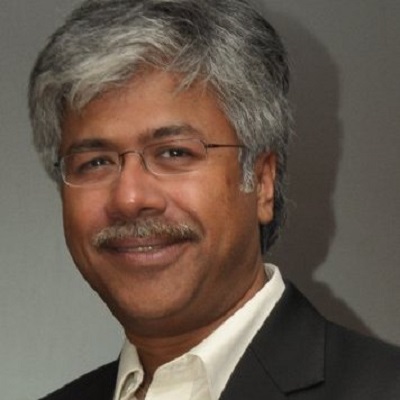
     

  • #fame is an amalgamation of technology and content: Saket Saurabh

    #fame is an amalgamation of technology and content: Saket Saurabh

    MUMBAI: The staircase to fame is less steep and wider today than it used to be a couple of decades ago. In the era of digital adeptness, a person sitting in Bangalore or Bokaro, Jalandhar or Jamshedpur, Mumbai or Mussoorie, Delhi or Daman has an equal opportunity to showcase talent and content to the world at the click of a few buttons.


    Over the years, from hoardings to cinema to television, the medium through which fame can be achieved has changed drastically. Today, with the emergence of the digital medium, talent no longer needs to follow the long and tedious process. The ‘funda’ is simple: If you if have quality content, all you need is a hashtag to become famous.


    At a time like this, armed with the motto of providing a platform to talent that has the quality content, To The New Ventures’ (TTN Ventures) platform – #fame is making waves in the digital world.


    With the launch of its new app a couple of months back, #fame enabled users to stream content live, which can be consumed real time.


    Speaking to Indiantelevision.com, #fame CEO Saket Saurabh says, “We started our journey as an entertainment network by creating digital first content, which was exclusively for digital. The app, which is India’s first live-streaming app, has seen half a million downloads since launch and that is very encouraging. The app is dedicated to talent where anyone can live beam their performance, find an audience, interact and create a marketplace.”


    “As a company we are focused on talent. Our aim is to ensure that we discover emerging talent using the power of digital and give them a platform to showcase their skills and find an audience. We have two fundamentals: one is content and the other is tech. The #fame app is an amalgamation of both,” Saurabh asserts.


    Currently, the company’s main focus is to create a quality wave of supply, which can meet consumers’ demand. “We have more than 15000 unique performers and we’re adding 500 new performers every day. In this business, supply is most important and hence having good supply was always our priority,” adds Saurabh.

    Forging multiple tie-ups since inception, #fame’s biggest association so far has been with the IIFA Awards. “We are getting a lot of engaging content. This year we partnered with IIFA and with that we changed IIFA from a two hours prime time show to a three-day entertainment gala. We created content that would never find a television spot and consumers lapped it all up. From the green carpet to behind the scenes, the who’s who of Bollywood were chatting with subscribers and that’s the power of the app,” Saurabh explains.


    Today, the Indian youth is constantly interacting across various mediums while consuming content and constant partial attention has become a primary discussion for the ad fraternity. In the age of real time interaction and trending hashtags, consumers are giving their opinion across social medium. The digital medium, be it over-the-top (OTT) or video-on-demand (VOD) platforms, has the infrastructure to provide brands an opportunity to be a part of the real time interaction.

    Saurabh is of the opinion that this phenomenon is poised to get a major impetus in India due to various factors, technological advancement being one of them. “The primary reason for real time interactive mediums to grow is the overwhelming penetration of smartphones. Secondly, the impending launch of 4G will play a pivotal role in ensuring feature phone users’ move towards the smartphone. Last but not the least, access cost will come down while the intensity and quality of streaming will enhance. So interactive mediums will enhance their base and become more mass. The digital medium gives marketers the option to target and analyse specifically because of its interactive nature,” he says.


    A key reason for the digital medium’s success is its ability to catapult a person to instant fame. Moreover, according to Saurabh, it definitely has the potential to sustain in the long run. “There is a sea of content creators who are looking towards digital to communicate, which in return is spelling success for the likes of YouTube, Facebook or even #fame for that matter. Talent like All India Bakchod and The Viral Fever are coming to the forefront gaining national and international attention thanks to the medium. What this phenomenon tells us is that there is a wave of talent using digital to come to the fore and connect directly with the audience, which has never happened before. A couple of decades back when television and films were the only medium of exposure for talent, the success ratio of people making it big was very small. The digital medium has multiplied the ratio by 100x if not more. Now all people need to do is shoot and upload. If it has quality, it will get the wings to fly. Digital made things more meritocratic and reduced the reluctance on luck,” Saurabh adds.


    #fame, which follows the advertising revenue model, is not looking at the subscription based revenue model as of now. The venture’s focus is to create exclusive content, which can be a great platform of promotion for brands too and help in creating a value proposition for advertisers.


    “We have had a very strong relationship with advertisers right from the beginning. Being a talent management company, we indulge in creating a lot of properties, which helps us to discover talent. We created a fashion property where Karan Johar was a mentor and editor. We recently launched a musical property called Web Singer with Pritam Chakraborty, where the focus is on discovering young singing talent. Being an interactive medium, we interact with audiences in many different ways and brands associated with us also become a part of the interaction,” informs Saurabh.


    Speaking on the growth of digital medium, he says, “The time of digital boom has come. We have to follow consumers wherever they are going and they have now moved towards the mobile medium. There’s always a debate about whether mobile is the second screen or the third screen. Well, I think mobile is the first screen. The line between television and digital has blurred over the time. All we need to do is create specialized content for consumer to consume in digital mediums.”


    With the influx of new players like HOOQ, Hotstar and Ditto TV amongst others, India has become a battlefield of OTT and VOD platforms. Moreover, with the speculated launch of Netflix in India by 2016, the competition is only set to get tougher. Speaking on the same, Saurabh says, “The players that are already present will spur the ecosystem and competition will only go on to ensure that better quality is presented to consumers. So I don’t think one will demolish the other. Rather in my opinion, one will subtly compliment the other and at the end of the day, it’s the survival of the fittest.”

  • Netflix plans ‘Mr. Peabody & Sherman’ series from DreamWorks Animation

    Netflix plans ‘Mr. Peabody & Sherman’ series from DreamWorks Animation

    MUMBAI: Netflix will introduce a new original series for kids – The New Mr. Peabody & Sherman Show from DreamWorks Animation.


    Mr. Peabody, the smartest dog in the world, and his boy Sherman host a zany late-night comedy show broadcast from their swanky penthouse in front of a live studio audience. Anything can happen in this show jam-packed with exciting segments, great musical acts and very special guests like outrageous neighbors and hilarious time travelers they meet with the WABAC machine.


    Netflix has planned 13 episodes for season 1 of the show.

  • ITV threatens legal action if pvt channels brought under BBC licence fee ambit

    ITV threatens legal action if pvt channels brought under BBC licence fee ambit

    NEW DELHI: British commercial broadcaster ITV has threatened to go to court in case the government implements its proposals to force digital catch-up TV users to purchase a TV licence.


    The proposals are part of plans to overhaul the funding of BBC, which has recently issued a Green Paper to discuss various issues on how it could improve.


    As per a Sky News report, ITV CEO Adam Crozier had written to the government expressing concerns over the proposals that will impact broadcasters with a public service broadcasting remit.


    The terrestrial TV industry as subscription-based services such as Netflix and Amazon Prime Video will be exempt from the rules.


    A commercial broadcasting executive told reporters it was ‘wholly unreasonable’ for users of ITV catch-up services to fund the BBC and accused the government of creating an ‘unlevel playing field.’


    The Green Paper said the BBC’s licence fee will be under severe pressure come 2020-21.

  • Strong subscriber growth boosts Netflix revenue in Q2 but profit declines

    Strong subscriber growth boosts Netflix revenue in Q2 but profit declines

    MUMBAI: Movie streaming service provider Netflix has added as many as 2.5 million new subscribers in Q2 2015, taking its total subscribers worldwide to a whopping 65.6 million and counting.


    However, while the company’s Q2 revenue saw a boost at $1.5 billion as compared to $1.223 billion last year, its profit showed a decline by almost 63 per cent. The company earned $26.3 million (6 cents per share), in the second quarter, which was down from $71 million (16 cents per share) during the corresponding period last year.


    Of the 65.6 million subscribers, 42 million are in the US, whereas the remaining 23 million were from international markets. By the end of the third quarter, Netflix predicts that its subscriber number would touch 69 million. The company has ambitious growth plans and plans to make its service available throughout the world by the end of 2016.


    Q2 results and Q3 forecast:


    Netflix’s higher than anticipated level of acquisition was fuelled by the growing strength of its original programming slate, which in Q2 included the first seasons of Marvel’s Daredevil, Sense8, Dragons: Race to the Edge and Grace and Frankie as well as season 3 of Orange is the New Black.


    US revenue growth was also driven by a five per cent year over year increase in ASP due to uptake in its HD 2-stream plan. The company will continue to target a 40 per cent US contribution margin by 2020, even though it is running ahead of plan given stronger than expected top line performance and lower content and other streaming costs. Netflix forecasts Q3 US net adds of 1.15 million, which is slightly higher than the year ago period.


    “Our international segment is growing at a rapid pace. We did not add additional markets in Q2 but saw continued improvement across existing markets, including a full quarter of additions from our successful 24 March, 2015 launch in Australia/New Zealand. We project Q3 international net adds of 2.4 million,” Netflix CEO Reed Hastings said.


    International revenue grew 48 per cent year over year, despite an -$83 million impact from currency (+five per cent ASP growth x-F/X). “As we expected, international losses increased sequentially with a full quarter of operating costs in AU/NZ. We expect this trend to continue in the second half as we launch additional markets (Japan in Q3 and Spain, Italy and Portugal in Q4) and prepare for further global expansion in 2016, including China as we continue to explore options there,” Hastings added.


    EPS for Q2 amounted to $0.06 after adjustment for our 7-for-1 stock split (EPS would have been $0.42 using pre-split share count). Netflix said it remained committed to running around break-even globally on a net income basis through 2016, and to then deliver material global profits in 2017 and beyond.


    Content:


    Netflix is making progress shifting to exclusive content and expanding its original content, which differentiates its service, drives enjoyment for existing members and helps motivate consumers to join in.

    In Q2, Netflix launched its largest number of original series to date. On 10 April, Marvel’s Daredevil debuted to strong audience engagement, particularly for a new show. Grace and Frankie, the bittersweet comedy starring Lily Tomlin and Jane Fonda, which launched on 8 May, also has found a broad and appreciative audience around the world. Both series have already begun their second season of production.


    The company’s global expansion extends to its content strategy as well. Sense8, the mind-bending cinematic thriller from the Wachowski siblings and J. Michael Straczynski that debuted 5 June, is an ambitious, truly international show with talent behind and in front of the camera from multiple countries. Similarly, on 7 August, Netflix will launch in all territories its first non-English language original, Club de Cuervos, a family comedy set in the world of futbol from Mexican filmmaker GazAlazraki, and on 28 August, Narcos, a gripping account of the roots of the cocaine trade, shot in Colombia and starring the great Brazilian star Wagner Moura as Pablo Escobar.


    The original documentary Chef’s Table and its latest DreamWorks Animation series Dragons: Race to the Edge are among its most viewed new originals to date.


    Netflix closed the quarter with season 3 of Orange is the New Black, which went live on 11 June and set off a social media shockwave around the world. On the following Sunday, Netflix members globally watched a record number of hours in a single day, led by Orange, despite the season finale of HBO’s Game of Thrones and game five of the NBA finals also falling on that Sunday.


    “Global enthusiasm for the third season of Orange underlines our ability to create franchise properties that bring new members to Netflix as well as delighting current ones. Nearly ninety percent of Netflix members have engaged with Netflix original content, another indicator that we are on the right path,” Hastings said.


    “We anticipate that as our global content spend approaches $5 billion in 2016 on a P&L basis (over $6 billion cash), we will devote more investment to originals both in absolute dollars and percentage terms. This includes not only series, documentaries and stand-up but also original feature films,” Hastings added.


    Netflix is moving into the original film business in order to have new, high-quality movies that can be found only on its platform. “As with series, we’ve chosen to take a portfolio approach covering a wide variety of genres and based around creators with great track records and stories they are passionate about. The first of our films, Beasts of No Nation, a gripping war drama from the award-winning director Cary Fukunaga and starring award-winning Idris Elba will be available to all Netflix members and in select theaters in October. In June, we announced War Machine, a provocative satirical comedy starring Brad Pitt, which will be exclusively available to Netflix members and in select theaters next year,” Hastings said.


    Strong Net Neutrality:


    “Charter Communications made net neutrality history by committing to open and free interconnection across the Charter/TWC network, if their pending merger is approved. This move ensures that all online video providers can aggressively compete for consumers’ favour, without selective and increasing fees paid to ISPs. Charter’s interconnection policy is the right way to scale the Internet. It means consumer will receive the fast connection speeds they expect. The Charter/TWC transaction, with this condition, would deliver significant public interest benefits to broadband consumers, and we urge its timely approval,” said Hastings.


    DVD:


    The company’s DVD-by-mail business in the US continues to serve 5.3 million members and provided $77.9 million in contribution profit in Q2. 

  • Mr. Netflix, are you ready for India?

    Mr. Netflix, are you ready for India?

    After tasting global success, Mr. Netflix is revving up to thrust into India by 2016. But let’s take a breather here. We are talking about a country which debates about Bharat and India and where a part of the demography still views its favourite content in black and white CRT TV.


    While youngsters these days are widely speaking about Game of Thrones, Breaking Bad, House of Cards and Orange Is The New Black, dear Mr. Netflix wait before you get buoyed by all these series that generates millions for you, as Indians still believe in ‘torrent’ing .


    In India, while some of the best movies, made by the greatest filmmakers have been uploaded on YouTube, what has worked is the bathroom comedy by All India Backchod. Why do I talk about this, because if one has to believe the sources, Netflix is meeting a lot of producers across India to rope in quality content for the subscription based video on demand (SVOD) platform. 


    I know that the unprecedented number of downloads of Hotstar has tested your temperament and you can’t wait to enter the lucrative Indian market, but this video on demand (VoD) platform from Star India, got most of its downloads, thanks to Cricket, a religion in India. The app has so far been downloaded by more than 10 million Android users.


    Hotstar was placed in the top spot in the Google free app category even taking over Facebook and Whatsapp while the ICC Cricket World Cup was on. Now that the World Cup and IPL are over, the platform is not even in the top 10. This substantiates the fact that Hotstar’s unprecedented success was because of the two cricketing events.


    So what are you thinking now, Mr Netflix? Hotstar does not have adequate content? Hold on, the platform has 20,000 hours of content spread across seven languages. This includes 120+ full length TV shows and 500+ movies. This apart, the app also live streams popular sports like Cricket, Football, Tennis and Kabbadi. In short, Hotstar caters to a very large and diverse audience.


    Hotstar is not the only VOD platform India has. Right from Zee’s DittoTV, Spuul, Zenga, YupTV to the speculated Viacom 18’s soon to be launched VOD platform, competition will be tough. So, Mr Netflix it’s not just another regular expansion of business, you are going to enter a war: A war of over the top (OTT) services.


    Not only domestic players, but international ones like HOOQ and Vuclip among others have already entered the Indian market. HOOQ launched in India in May 2015 with a subscription plan of Rs 199.


    The subscription based platform has managed to secure 10,000 downloads in the two months since its launch. So Mr. Netflix, you may just have to change your strategy and become an ad based VoD platform, to woo Indian consumers. If industry sources are to be believed, Netflix is looking for a possible tie up with HOOQ for its India launch.


    Mr Netflix if you are thinking you will change your strategy and take the ad route let me throw a few numbers. Of the Rs 414 billion Indian advertising budget, only 10.5 per cent is expected to be spent on digital. Eating into this 10.5 per cent will be giants like Google, Yahoo and Bing among others, leaving you with a meager percentage share of the ad pie. If this satisfies you, join the fight and prepare yourself with some melodrama content that can please the advertiser.


    By now you must be thinking: what do 1,280 million people in India do and what about the 300 million smartphone exaggeration? Let’s take the number route again. Yes it’s true that India is about to dethrone the US and become the second largest mobile internet market by having more than 300 million wireless internet users and the year-on-year growth rate stands at 31 per cent. The main reason behind it is availability of smartphones at a low price which is enabling the penetration in rural India. But Mr Netflix what content will you provide in rural India? Malgudi Days? And you think rural India will accept it? On a Rs 5,000 smartphone Malgudi Days will look like Guilever Travels and produce sound like a radio. So not convincing!


    I know what is lucrative — 210 million wireless internet connections which is estimated to reach 402 million by 2017 and 528 million by 2019. While urban India widely speaks about 3G, majority of them disable their 3G service and stay satisfied with Edge or 2G service. 3G is largely alien to rural India. To add to your vivid imagination, while you are widely reading about smartphone penetration, 66 per cent of the urban internet traffic comes from desktop. 11 per cent of active urban consumers use tablets to access internet of which only 16 per cent consider tablets as their primary device for internet access.


    So Mr Netflix, if you still have zest let me present to you the fiercest competition: Television, which you think will diminish with the emergence of digital. Yes, there are close to 300 million internet users whereas only 168 million television households in India. But if one takes a closer look, the168 million households amount to 825 million television viewers.


    The growth rate of internet users is also expected to be much higher compared to that of television. From 2014-19 television is expected grow at a CAGR of 3 per cent, when pitched against the huge CAGR 18 per cent for internet users. The television growth can go much higher if more areas are empowered with electricity.


    So, only if there is a complete paradigm shift, with five national MSOs and six DTH players committing a bundle of mistakes and a Tsunami of technology comes in to change the entire infrastructure, a concept like SVOD may work, otherwise it may just perish.


    Mr Netflix let me introduce a term to you which you might have never come across throughout your journey – ‘buffering’. To watch a video at 144p one has to go through numerous buffering so guess what will happen to someone who wants to watch an Argo or Apocalypse Now.


    The only ray of hope for you Mr. Netflix is 4G. Airtel has already launched 4G in some parts of the country and Reliance Jio is expected to launch by 2015 end. 4G is supposed to be a lot faster compared to 3G but the price is yet to be determined. Why did I mention price? As the current scenario goes, to watch 1GB of content one has to pay around Rs 300. So for 10 GB worth of content, one has to pay approximately Rs 3,000 — an amount that can give 500 channels on television for 10 months.


    The other ray of hope is Prime Minister Narendra Modi’s ‘Digital India’ vision.


    Mr Netflix don’t worry India believes in Atithi Devo Bhava (Guest Is God) and hence will welcome you with grace and gratitude, like the nation did with Starbucks and Dunkin Donuts.


    But at the end of the day as Charles Darwin said ‘Survival of the fittest.’

  • Netflix teams with Plan B to produce movie starring Brad Pitt

    Netflix teams with Plan B to produce movie starring Brad Pitt

    MUMBAI: Netflix has teamed up with Brad Pitt’s company Plan B to produce an original film War Machine starring Pitt.


    The provocative satirical comedy from David Michôd will be exclusively available to members of Netflix globally and in select theaters next year.


    Produced by Netflix and Pitt alongside his Plan B partners Dede Gardner and Jeremy Kleiner, and producer Ian Bryce, War Machine brings together Pitt with Michôd, the acclaimed Australian writer and director. Principal photography is scheduled to start in August.


    Inspired by the best-selling book The Operators: The Wild and Terrifying Inside Story of America’s War in Afghanistan by the late Michael Hastings, War Machineconcerns a four star, “rock star” general whose lethal reputation and impeccable track record vaults him to command the American war in Afghanistan.


    War Machine is a rip-roaring, behind-the-facade tale of modern war decision-makers, from the corridors of power to the distant regions of America’s ambitions. Brad and David are a perfect team to make this timely, compelling and entertaining film,” said Netflix chief content officer Ted Sarandos.


    “We are so excited to be a part of the inspiring commitment by Netflix to produce cutting-edge content and to deliver it to a global audience,” added Pitt.


    Michôd said, “I’m humbled to be making a big, bold movie about the whole sprawling, complex, cumbersome and crazy machinery of modern war and the many lives it touches.”   

  • Netflix to launch in Italy in October 2015

    Netflix to launch in Italy in October 2015

    MUMBAI: After targeting to launch in Spain this October, Netflix Inc is also looking at arriving in Italy in October 2015.


    This autumn, Internet users in Italy will be able to subscribe to Netflix and instantly watch a broad selection of TV series and movies in high-definition or even Ultra HD 4K on nearly any Internet-connected screen.


    At launch, the Netflix offering will include such original series as Marvel’s Daredevil, Sense8, Bloodline, Grace and Frankie, Unbreakable Kimmy Schmidt and Marco Polo and critically acclaimed documentaries Virunga, Mission Blue and docuseries Chef’s Table as well as various stand-up comedy specials. Additionally, younger viewers will find a wide selection of programming for kids. Netflix is fully localized, offering Italian subtitles and dubbing.


    Viewers will continuously be offered new titles. Among the shows scheduled for launch later this year are Netflix Original series Narcos and Club de Cuervos as well as Marvel’s Jessica Jones, the second of four Marvel series that will be available exclusively on Netflix, leading up to the mini-series event The Defenders, which reunites characters from the previous four.


    Netflix members can also look forward to the first Netflix Original feature films, with announced titles including Beasts of No Nation, Crouching Tiger, Hidden Dragon The Green Legend, Jadotville and The Ridiculous 6.

  • Netflix to launch four new original animated series for kids

    Netflix to launch four new original animated series for kids

    MUMBAI: Netflix will premiere four new animated shows, adding to its line-up of original television series for kids.


    The shows range from action adventure stories Kulipari: An Army of Frogs and Edgar Rice Burroughs Tarzan and Jane to preschool shows Cirque du Soleil – Luna Petunia and Puffin Rock. Each show will launch all of its episodes at the same time around the world.


    “We couldn’t’ be more excited to be partnering with such a diverse group of creative talent on these new Netflix series for kids. The flexibility of our platform allows us to continually bring the best TV shows from around the world to our members, and these titles compliment and extend what we currently offer – particularly for preschoolers and grade school adventure fans,” said Netflix VP of global independent content Erik Barmack.


    In addition to the new original titles, Netflix is also adding three new first-run exclusive series for kids to enjoy. The award-winning Russian phenomenon, Masha and the Bear, will premiere this August in the United States. This month, Canadian animation company Nelvana Studios introduces The Day My Butt Went Psycho to grade-school kids in the US, UK, and Mexico. And Elias, the little rescue boat from the popular Norwegian preschool series of the same name, is now streaming exclusively on Netflix in US, Canada, UK, Ireland, Australia, New Zealand.


    Cirque du Soleil – Luna Petunia will launch in Fall 2016, Edgar Rice Burroughs Tarzan and Jane along with Kulipari: An Army of Frogs ill launch later this year, whereas Puffin Rock will air on Netflix from 1 September, 2015.


    Netflix has a dedicated section for kids under 12 years old featuring dozens of original series for kids as well as TV shows and movies from great partners such as PBS, Disney Channel, DreamWorks Animation, Mattel, Hasbro, LEGO and Scholastic – all in a commercial free environment.