Tag: Netflix

  • Netflix appoints Anthony Zameczkowski as vice president, business development for Asia-Pacific

    Netflix appoints Anthony Zameczkowski as vice president, business development for Asia-Pacific

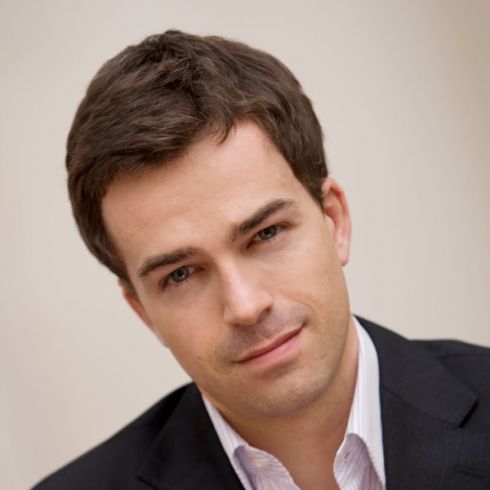
    MUMBAI: Anthony Zameczkowski has joined Netflix as vice president, business development for Asia-Pacific. A senior executive with more than 17 years’ experience in the media and technology industry, Zameczkowski’s new role at Netflix includes leading and managing strategic partnerships and business development in the region.


    Since its global launch in January, Netflix has already concluded partnerships with leading infocomm players in Asia including Singtel and StarHub in Singapore and PCCW Media’s now TV in Hong Kong.


    Prior to Netflix, Zameckowski was running the international operations of Victorious, a Kleiner Perkins-backed startup in the mobile video space with a focus on building new business and international partnerships for the US-based digital company.


    Before Victorious, Zameczkowski spent eight years at Google/YouTube both in Europe and Asia, where he most recently managed the YouTube Music business across the APAC region based out of Singapore. He was among the first few employees to be part of the video-sharing platform, when it was acquired by Google, and first came to Asia close to five years ago when he was based in Hong Kong in his capacity as Head of Partnerships for Greater China and Southeast Asia. He also worked for six years at Warner Bros. Television as Sales and Business Development Manager, licensing content to broadcasters and VOD platforms in Europe.


    “One of the next steps in Netflix globalization is about building and leveraging strategic partnerships in the region that will drive our memberships in Asia-Pacific,” Zameczkowski said.


    Zameczkowski is based in Singapore and reports to US-based Bill Holmes, Global Head of Business Development at Netflix.  He holds an MBA from the Kellogg School of Management and The Hong Kong University of Science and Technology, as well as a Master’s degree from ESSEC Business School.
     

  • Netflix appoints Anthony Zameczkowski as vice president, business development for Asia-Pacific

    Netflix appoints Anthony Zameczkowski as vice president, business development for Asia-Pacific

    MUMBAI: Anthony Zameczkowski has joined Netflix as vice president, business development for Asia-Pacific. A senior executive with more than 17 years’ experience in the media and technology industry, Zameczkowski’s new role at Netflix includes leading and managing strategic partnerships and business development in the region.


    Since its global launch in January, Netflix has already concluded partnerships with leading infocomm players in Asia including Singtel and StarHub in Singapore and PCCW Media’s now TV in Hong Kong.


    Prior to Netflix, Zameckowski was running the international operations of Victorious, a Kleiner Perkins-backed startup in the mobile video space with a focus on building new business and international partnerships for the US-based digital company.


    Before Victorious, Zameczkowski spent eight years at Google/YouTube both in Europe and Asia, where he most recently managed the YouTube Music business across the APAC region based out of Singapore. He was among the first few employees to be part of the video-sharing platform, when it was acquired by Google, and first came to Asia close to five years ago when he was based in Hong Kong in his capacity as Head of Partnerships for Greater China and Southeast Asia. He also worked for six years at Warner Bros. Television as Sales and Business Development Manager, licensing content to broadcasters and VOD platforms in Europe.


    “One of the next steps in Netflix globalization is about building and leveraging strategic partnerships in the region that will drive our memberships in Asia-Pacific,” Zameczkowski said.


    Zameczkowski is based in Singapore and reports to US-based Bill Holmes, Global Head of Business Development at Netflix.  He holds an MBA from the Kellogg School of Management and The Hong Kong University of Science and Technology, as well as a Master’s degree from ESSEC Business School.

     

  • Mukesh Ambani 20 billion investment plans in television and telecom

    Mukesh Ambani 20 billion investment plans in television and telecom

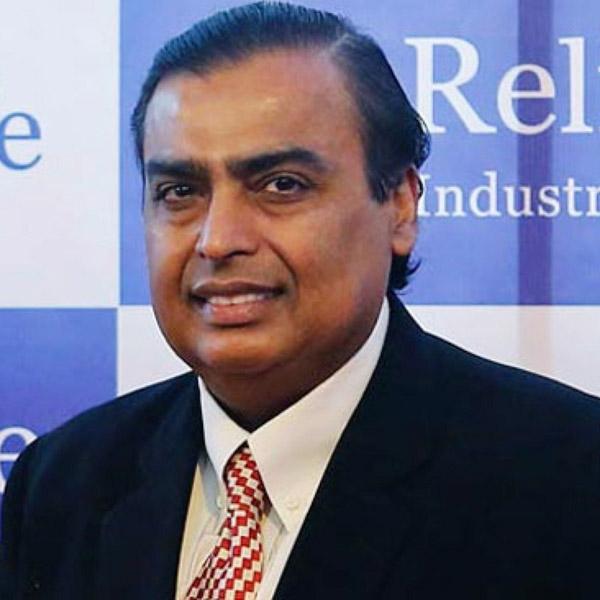
    MUMBAI: Mukesh Ambani’s recent focus in the telecom sector hasn’t gone unnoticed, where he has spent at least $18 billion ($1,800 crore) on 4G telecom brand RJio. Industry insiders observe that Mukesh Ambani’s aggressive take on the telecom and television sector may also pit him against his brother Anil Ambani and his company.

    Now reports are out that he intends to spend another $2 billion ($200 crore) over three years to capture TV sets as he eyes an opportunity to use his financial clout in what is a highly fragmented sector.  To put matters into perspective, Mukesh Ambani’s television unit has been aggressively signing up deals with hundreds of small players in a street-by-street effort to root out any final hurdle in its cable TV drive, reported Reuters.

    Industry observers note that this could also snap up rival operators as part of that push, those sources and analysts said, driving tie-ups in a crowded sector that includes Hathway Cable, Den Networks and Siti Cable.

    Industry sources quoting un-named Reliance officials say that Reliance’s mid-year goal of 1 million (10 lakh) subscribers would rise to 5 million (50 lakh) homes in the medium-term. Within three years, the aim is 20 million (2 crore).

    With only 20 million (2 crore) homes in India having a broadband or another Internet connection, it goes without saying that there is a huge growth potential in a country with a population of some 1.3 billion (130 crore).

    “Once the company manages to crack the last mile… it will be a formidable player,” Den Satellite Network MD Rajev Gavi shared with Reuters.

    Reliance executives say it will offer a bundled package with hundreds of channels and video-on-demand in high definition, along with broadband Internet, a landline phone and home surveillance. It will also offer Jio Play, its version of the Netflix movie and TV series streaming service.

  • Mukesh Ambani 20 billion investment plans in television and telecom

    Mukesh Ambani 20 billion investment plans in television and telecom

    MUMBAI: Mukesh Ambani’s recent focus in the telecom sector hasn’t gone unnoticed, where he has spent at least $18 billion ($1,800 crore) on 4G telecom brand RJio. Industry insiders observe that Mukesh Ambani’s aggressive take on the telecom and television sector may also pit him against his brother Anil Ambani and his company.

    Now reports are out that he intends to spend another $2 billion ($200 crore) over three years to capture TV sets as he eyes an opportunity to use his financial clout in what is a highly fragmented sector.  To put matters into perspective, Mukesh Ambani’s television unit has been aggressively signing up deals with hundreds of small players in a street-by-street effort to root out any final hurdle in its cable TV drive, reported Reuters.

    Industry observers note that this could also snap up rival operators as part of that push, those sources and analysts said, driving tie-ups in a crowded sector that includes Hathway Cable, Den Networks and Siti Cable.

    Industry sources quoting un-named Reliance officials say that Reliance’s mid-year goal of 1 million (10 lakh) subscribers would rise to 5 million (50 lakh) homes in the medium-term. Within three years, the aim is 20 million (2 crore).

    With only 20 million (2 crore) homes in India having a broadband or another Internet connection, it goes without saying that there is a huge growth potential in a country with a population of some 1.3 billion (130 crore).

    “Once the company manages to crack the last mile… it will be a formidable player,” Den Satellite Network MD Rajev Gavi shared with Reuters.

    Reliance executives say it will offer a bundled package with hundreds of channels and video-on-demand in high definition, along with broadband Internet, a landline phone and home surveillance. It will also offer Jio Play, its version of the Netflix movie and TV series streaming service.

  • Vice Media partners with A+ E Networks to launch own cable TV channel Viceland

    Vice Media partners with A+ E Networks to launch own cable TV channel Viceland

    MUMBAI: Vice Media is all set to launch its cable TV channel in partnership with A+E Networks. With this move, Vice will become the first digital media company to have its own cable TV channel. The new channel, Viceland will go live from 14 March 2016. Catering to a younger audience, the channel aims at reinventing traditional TV ad model and has rostered majority advertisers.

    The channel will carry only about half of the 18 minutes of ads that most cable networks air in an hour of programming. Advertisers on board are Unilever PLC, Bank of America Corp., Smirnoff maker Diageo PLC, watch and apparel maker Shinola, Bushmills whiskey, Mailchimp, Samsung Electronics Co., T-Mobile US Inc. and Toyota Motor Corp.

    Within six months’, Viceland wants roughly half its advertising inventory to be made up of native ads packaged to look like editorial content and keep audiences from tuning out. These spots will frequently be longer than a typical 30-second ad and will be tailored specifically for the network.

    Talking about the new launch, Viceland co-president and Vice chief creative officer Eddy Moretti informed the Wall Street Journal, “We are trying to displace the clutter by injecting some humanity and authenticity.” He further added, “If we create a user experience that is more engaging than what else is on the dial, people won’t flip.”

    Vice, which was valued at nearly $4.5 billion last year in a recent funding round, isn’t alone in identifying that the barrage of traditional ads that appear on most cable channels are a turnoff for viewers, particularly younger ones who have grown up with Netflix, DVRs and ad-blocking software.

    This is Vice’s second foray into content, when Vice Media had made its first foray into basic cable nearly a decade ago, with programming on MTV2, but its  scrappy documentaries sent advertisers fleeing. 

  • Vice Media partners with A+ E Networks to launch own cable TV channel Viceland

    Vice Media partners with A+ E Networks to launch own cable TV channel Viceland

    MUMBAI: Vice Media is all set to launch its cable TV channel in partnership with A+E Networks. With this move, Vice will become the first digital media company to have its own cable TV channel. The new channel, Viceland will go live from 14 March 2016. Catering to a younger audience, the channel aims at reinventing traditional TV ad model and has rostered majority advertisers.

    The channel will carry only about half of the 18 minutes of ads that most cable networks air in an hour of programming. Advertisers on board are Unilever PLC, Bank of America Corp., Smirnoff maker Diageo PLC, watch and apparel maker Shinola, Bushmills whiskey, Mailchimp, Samsung Electronics Co., T-Mobile US Inc. and Toyota Motor Corp.

    Within six months’, Viceland wants roughly half its advertising inventory to be made up of native ads packaged to look like editorial content and keep audiences from tuning out. These spots will frequently be longer than a typical 30-second ad and will be tailored specifically for the network.

    Talking about the new launch, Viceland co-president and Vice chief creative officer Eddy Moretti informed the Wall Street Journal, “We are trying to displace the clutter by injecting some humanity and authenticity.” He further added, “If we create a user experience that is more engaging than what else is on the dial, people won’t flip.”

    Vice, which was valued at nearly $4.5 billion last year in a recent funding round, isn’t alone in identifying that the barrage of traditional ads that appear on most cable channels are a turnoff for viewers, particularly younger ones who have grown up with Netflix, DVRs and ad-blocking software.

    This is Vice’s second foray into content, when Vice Media had made its first foray into basic cable nearly a decade ago, with programming on MTV2, but its  scrappy documentaries sent advertisers fleeing. 

  • India’s OTT paid video subscribers pegged at 1.3 million: Frost and Sullivan

    India’s OTT paid video subscribers pegged at 1.3 million: Frost and Sullivan

    MUMBAI: OTT (over-the-top) was the buzzword in the Indian media and entertainment sector in 2015 with multiple players firming up their game plan to tap into the lucrative and booming digital space. With the emergence of numerous OTT service providers in the past two years coupled with the entry of Netflix in India, the space is poised to grow at a fast pace in the years ahead.

    According to Frost and Sullivan’s market insight on the OTT video market in India, there are about 66 million unique connected video viewers in India every month, and about 1.3 million OTT paid video subscribers. Growth in the space can be attributed to increase in smart-phones penetration as well as the improvement in Internet speed in India.

    Despite facing several challenges today, the OTT market growth will be fuelled by various disruptive innovations in technology and business models over the next five years, as per Frost and Sullivan. 

    “With an increase in the use of smart devices in India, content owners and aggregators are using non-TV platforms to improve reach and generate revenues through subscription and advertisement. However, it’s hard to woo the Indian consumer. Success in OTT video distribution will depend on the ability to offer variety of content, new content, at a reasonable price and impeccable user experience,” said Frost and Sullivan research director Vidya Subramanian Nath. 

    While today a few broadcasters such as the Star TV Network and Zee Entertainment are driving services as well as viewership for OTT video with Hotstar and DittoTV respectively, over the next five years, there will be more broadcasters as well as cable and DTH operators expanding their OTT services. However, inadequate bandwidth speeds and the incumbency of YouTube in the market have challenged market participants.

    “India may have over 225 million Internet users, but for consuming video, one needs high-speed broadband access and only about 35 per cent of these users have access to it, informed Nath. “OTT video subscription numbers fluctuate dramatically every month. We find that advertising video on demand (AVOD) is the most preferred mode of OTT video delivery in India currently,” she said.

    Among content types, there is an increasing demand for short duration video content. This is primarily attributable to the average low Internet speeds and changing preferences of many Indian viewers. It is common to find online viewership peak during major sports events like the IPL, elections, or breaking news.

    Platforms such as YouTube offer opportunities for independent content creators who can publish their videos online without the hassles of negotiation with large networks. Now, with the entry of Netflix in India, independent professional content production will continue to grow. Broadcasters who have their own content or video platforms with a variety of publishers are driving the market. While Viacom18 is all set to launch its service called VOOT next month, Ekta Kapoor’s Balaji Telefilms is also burning the midnight oil to launch its OTT platform – ALT Digital by June this year. Balaji Telefilms CEO Sameer Nair has huge expectations from the platform and expects ALT Digital to have a whopping four million paid subscribers globally by 2020. 

    With substantial investment being pumped in by companies like by Star India (Hotstar), Sony Pictures Networks India (Sony Liv), Zee Enterprises (dittoTV), Eros International (ErosNow) and Singtel, Sony & Warner (HOOQ) amongst others, the competition in the OTT space is set to intensify with the key differentiators being user experience and variety of content offering.

  • India’s OTT paid video subscribers pegged at 1.3 million: Frost and Sullivan

    India’s OTT paid video subscribers pegged at 1.3 million: Frost and Sullivan

    MUMBAI: OTT (over-the-top) was the buzzword in the Indian media and entertainment sector in 2015 with multiple players firming up their game plan to tap into the lucrative and booming digital space. With the emergence of numerous OTT service providers in the past two years coupled with the entry of Netflix in India, the space is poised to grow at a fast pace in the years ahead.

    According to Frost and Sullivan’s market insight on the OTT video market in India, there are about 66 million unique connected video viewers in India every month, and about 1.3 million OTT paid video subscribers. Growth in the space can be attributed to increase in smart-phones penetration as well as the improvement in Internet speed in India.

    Despite facing several challenges today, the OTT market growth will be fuelled by various disruptive innovations in technology and business models over the next five years, as per Frost and Sullivan. 

    “With an increase in the use of smart devices in India, content owners and aggregators are using non-TV platforms to improve reach and generate revenues through subscription and advertisement. However, it’s hard to woo the Indian consumer. Success in OTT video distribution will depend on the ability to offer variety of content, new content, at a reasonable price and impeccable user experience,” said Frost and Sullivan research director Vidya Subramanian Nath. 

    While today a few broadcasters such as the Star TV Network and Zee Entertainment are driving services as well as viewership for OTT video with Hotstar and DittoTV respectively, over the next five years, there will be more broadcasters as well as cable and DTH operators expanding their OTT services. However, inadequate bandwidth speeds and the incumbency of YouTube in the market have challenged market participants.

    “India may have over 225 million Internet users, but for consuming video, one needs high-speed broadband access and only about 35 per cent of these users have access to it, informed Nath. “OTT video subscription numbers fluctuate dramatically every month. We find that advertising video on demand (AVOD) is the most preferred mode of OTT video delivery in India currently,” she said.

    Among content types, there is an increasing demand for short duration video content. This is primarily attributable to the average low Internet speeds and changing preferences of many Indian viewers. It is common to find online viewership peak during major sports events like the IPL, elections, or breaking news.

    Platforms such as YouTube offer opportunities for independent content creators who can publish their videos online without the hassles of negotiation with large networks. Now, with the entry of Netflix in India, independent professional content production will continue to grow. Broadcasters who have their own content or video platforms with a variety of publishers are driving the market. While Viacom18 is all set to launch its service called VOOT next month, Ekta Kapoor’s Balaji Telefilms is also burning the midnight oil to launch its OTT platform – ALT Digital by June this year. Balaji Telefilms CEO Sameer Nair has huge expectations from the platform and expects ALT Digital to have a whopping four million paid subscribers globally by 2020. 

    With substantial investment being pumped in by companies like by Star India (Hotstar), Sony Pictures Networks India (Sony Liv), Zee Enterprises (dittoTV), Eros International (ErosNow) and Singtel, Sony & Warner (HOOQ) amongst others, the competition in the OTT space is set to intensify with the key differentiators being user experience and variety of content offering.

  • Netflix to launch original anime series ‘Perfect Bones’ globally

    Netflix to launch original anime series ‘Perfect Bones’ globally

    MUMBAI: Netflix has inked a deal with Production I.G that sees the upcoming original Anime series Perfect Bones to premiere only on Netflix. This marks the first ever original Anime title to debut all episodes simultaneously in 190 countries around the world.

    Directed by Kazuto Nakazawa, the 12-episode series is set in the future where scientists have tried to create the ‘perfect human’ in hopes of keeping peace in the universe. After nearly achieving their goal through several children, the scientists send their ‘new humans’ for further training where they are kidnapped by an evil organisation set on using their powers to implement their own concept of a new world order.

    “We are incredibly excited to work with Production I.G, who have worked on hit series such as Attack on Titan and Psycho-Pass, in bringing one of the most daring new Anime titles produced today to all Netflix members and Anime fans around the world,” said Netflix vice president, international originals Erik Barmack. “In an era where the Internet knows no bounds, we are proud to deliver high quality original Anime to fans all over the world, at the exact same time, no matter where they live whether it be Japan, France, Mexico, the US, and beyond.”

    Production I.G president & CEO Mitsuhisa Ishikawa added, “Among all the tv series and films Netflix offers, the titles I personally find the most amazing are Netflix originals. Production I.G is eager to present another impactful title brought through our creators’ passion and imagination. We’re very excited about Perfect Bones!”

    This marks a milestone in Anime distribution innovation for Netflix – enabling members around the world access to great stories faster.

  • Netflix to launch original anime series ‘Perfect Bones’ globally

    Netflix to launch original anime series ‘Perfect Bones’ globally

    MUMBAI: Netflix has inked a deal with Production I.G that sees the upcoming original Anime series Perfect Bones to premiere only on Netflix. This marks the first ever original Anime title to debut all episodes simultaneously in 190 countries around the world.

    Directed by Kazuto Nakazawa, the 12-episode series is set in the future where scientists have tried to create the ‘perfect human’ in hopes of keeping peace in the universe. After nearly achieving their goal through several children, the scientists send their ‘new humans’ for further training where they are kidnapped by an evil organisation set on using their powers to implement their own concept of a new world order.

    “We are incredibly excited to work with Production I.G, who have worked on hit series such as Attack on Titan and Psycho-Pass, in bringing one of the most daring new Anime titles produced today to all Netflix members and Anime fans around the world,” said Netflix vice president, international originals Erik Barmack. “In an era where the Internet knows no bounds, we are proud to deliver high quality original Anime to fans all over the world, at the exact same time, no matter where they live whether it be Japan, France, Mexico, the US, and beyond.”

    Production I.G president & CEO Mitsuhisa Ishikawa added, “Among all the tv series and films Netflix offers, the titles I personally find the most amazing are Netflix originals. Production I.G is eager to present another impactful title brought through our creators’ passion and imagination. We’re very excited about Perfect Bones!”

    This marks a milestone in Anime distribution innovation for Netflix – enabling members around the world access to great stories faster.