Tag: Netflix

  • Vibrant Indian policy-making will ensure non-discrimination: Netflix APAC MD

    Vibrant Indian policy-making will ensure non-discrimination: Netflix APAC MD

    NEW DELHI: Netflix is not only upbeat on the Indian market, but feels the vibrancy in policy-making process here will ensure non-discriminatory access to the Internet for all.

    Pointing out that India is a place where many innovations are being witnessed, Netflix APAC managing director Yu-Chuang Kuek said that regulatory organisations (like TRAI) should take a wholistic view on issues like net neutrality and nuance the policies in such a way so as “not to stifle innovations.”

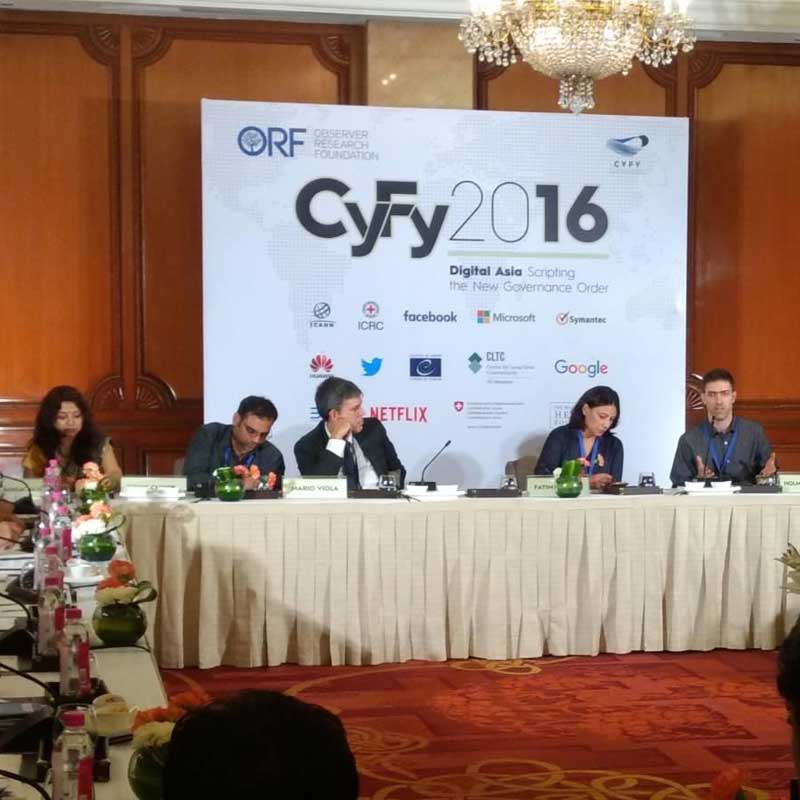
    Speaking as a panellist at a session on `The Future of Entertainment’ at ORF-organised `CyFy 2016: Digital Asia Scripting the New Governance Order’ here on Thursday, Kuek suggested Indian policy-makers should flesh out a policy after looking at all issues.

    Telecom Regulatory Authority of India (TRAI), the broadcast and telecoms regulator, is in the process of coming out with a set of guidelines for OTT services and net neutrality issue after lengthy debates with stakeholders. A section of the entertainment and telecoms industry in India has been lobbying hard to regulate mushrooming OTT services that have been claiming a growing subscriber base despite challenges of inadequate bandwidth and high cost of data.

    As to whether challenges of possible over-regulation (by TRAI), slow internet speed and high cost of data could pose a problem for the growth of OTT services like Netflix in India, Kuek emphasised that he’s much “heartened” by the ongoing “vibrant discussion” on net neutrality.

    He, along with another panellists, went on to clarify that regulations need to be “principled and technology-based” without “overreaching” as restrictive regulations were not good for the industry as a whole.

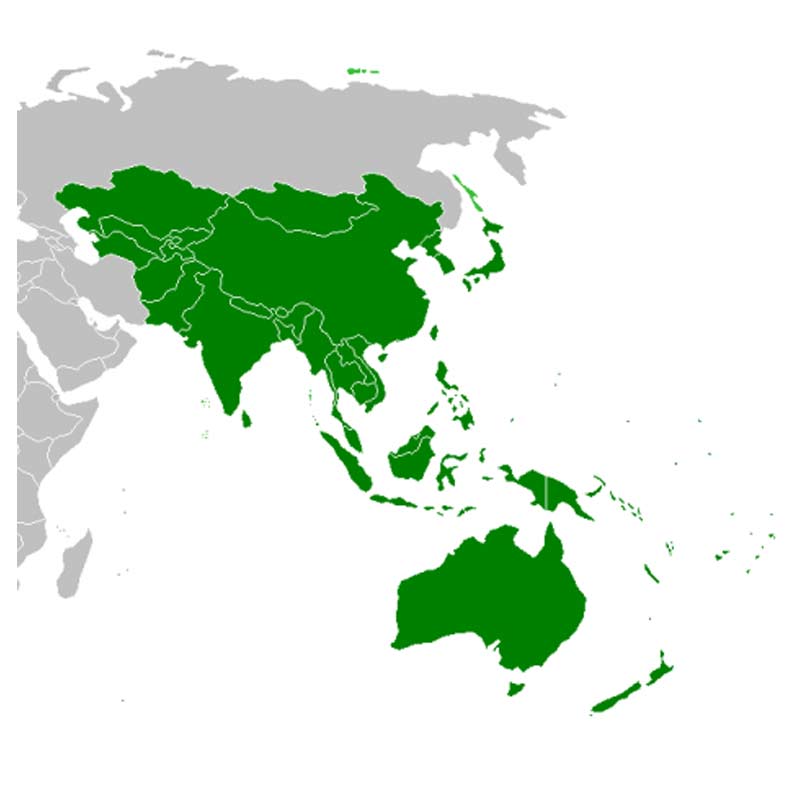
    Holding forth on Asian and global trends, the Singapore-based Kuek said that “entertainment and video consumption online is irreversible” and it becomes the “first point of contact for Internet adoption.” He added: “There has been an annual growth of 22 per cent in data consumption in Asia.”

    According to another panellist, Santa Clara University Associate Professor of Communication Rohit Chopra, the lines between entertainment and news have blurred (in the US) and the second wave of Internet has caused India to “jumpstart” to this trend.
  • Vibrant Indian policy-making will ensure non-discrimination: Netflix APAC MD

    Vibrant Indian policy-making will ensure non-discrimination: Netflix APAC MD

    NEW DELHI: Netflix is not only upbeat on the Indian market, but feels the vibrancy in policy-making process here will ensure non-discriminatory access to the Internet for all.

    Pointing out that India is a place where many innovations are being witnessed, Netflix APAC managing director Yu-Chuang Kuek said that regulatory organisations (like TRAI) should take a wholistic view on issues like net neutrality and nuance the policies in such a way so as “not to stifle innovations.”

    Speaking as a panellist at a session on `The Future of Entertainment’ at ORF-organised `CyFy 2016: Digital Asia Scripting the New Governance Order’ here on Thursday, Kuek suggested Indian policy-makers should flesh out a policy after looking at all issues.

    Telecom Regulatory Authority of India (TRAI), the broadcast and telecoms regulator, is in the process of coming out with a set of guidelines for OTT services and net neutrality issue after lengthy debates with stakeholders. A section of the entertainment and telecoms industry in India has been lobbying hard to regulate mushrooming OTT services that have been claiming a growing subscriber base despite challenges of inadequate bandwidth and high cost of data.

    As to whether challenges of possible over-regulation (by TRAI), slow internet speed and high cost of data could pose a problem for the growth of OTT services like Netflix in India, Kuek emphasised that he’s much “heartened” by the ongoing “vibrant discussion” on net neutrality.

    He, along with another panellists, went on to clarify that regulations need to be “principled and technology-based” without “overreaching” as restrictive regulations were not good for the industry as a whole.

    Holding forth on Asian and global trends, the Singapore-based Kuek said that “entertainment and video consumption online is irreversible” and it becomes the “first point of contact for Internet adoption.” He added: “There has been an annual growth of 22 per cent in data consumption in Asia.”

    According to another panellist, Santa Clara University Associate Professor of Communication Rohit Chopra, the lines between entertainment and news have blurred (in the US) and the second wave of Internet has caused India to “jumpstart” to this trend.

  • India, China to propel APAC, beat CAS Europe market share

    India, China to propel APAC, beat CAS Europe market share

    MUMBAI: APAC is expected to overtake the market share of Europe in future due to an increasing demand for digital TV set-up boxes in countries such as China and India. North America and Europe dominated the global CAS market in 2015. APAC region is estimated to mark a growth rate of 12.0 per cent CAGR during the forecast period 2016 to 2025.

    As per market research by ‘the Insight Partners’, increased digital TV penetration in households coupled with rising internet users will boost the CAS market at a CAGR of 9.1 per cent.

    North America is one of the key regions with the highest demand for CAS due to high adoption of internet services, followed by Europe. Developing countries in APAC and MEA are anticipated to experience significant adoption of CA systems, due to growing internet infrastructure and modernizing traditional TV services. Thus, North America and Europe dominated.

    Conditional Access System (CAS) offers a secure platform to broadcast the digital content through subscription based plans. CAS has set new dimension to the end user viewership and also has set up new revenue opportunities to operators and others who broadcast digital content. Today, CA technology and services are sophisticated, and are more than ever mission-critical for a successful pay TV business venture. In a growing competitive environment, in order to attract customers, traditional pay TV operators have had to diversify their offering from the original idea of offering premium content, to pay per view (PPV).

    The global conditional access systems market was estimated to be $ 2.32 billion in 2015, and is expected to reach $ 5.53 billion by 2025.

    Internet services exhibits a tremendous global growth and creating plethora of opportunities for the CAS market in near future along with increasing number of subscribers. This would also help the CAS market to continue its growth despite of declining STB market. The demand for internet TV and videos for home entertainment would become the prime factor driving the CAS growth. Internet service providers are using CAS for secured content delivery to subscribers. Increasing demand for personalized services and applications such as Netflix, Voot, Hot Star, etc. will accelerate the demand for CAS going ahead.

    Germany Conditional Access Systems market is expected to exhibit highest growth rate of 11.2 per cent during 2016 – 2025. This will outpace the growth rate of the U.K., thereby Germany leading the Europe CAS market by 2025.

    Some of the key players profiled in the report are Nagravision SA, Verimatrix, Inc., Irdeto, Viacess-Orca, Cisco, Inc., Coretrust, Inc., Conax AS, China Digital TV, Wellav Technologies Ltd. and ARRIS International plc.

  • India, China to propel APAC, beat CAS Europe market share

    India, China to propel APAC, beat CAS Europe market share

    MUMBAI: APAC is expected to overtake the market share of Europe in future due to an increasing demand for digital TV set-up boxes in countries such as China and India. North America and Europe dominated the global CAS market in 2015. APAC region is estimated to mark a growth rate of 12.0 per cent CAGR during the forecast period 2016 to 2025.

    As per market research by ‘the Insight Partners’, increased digital TV penetration in households coupled with rising internet users will boost the CAS market at a CAGR of 9.1 per cent.

    North America is one of the key regions with the highest demand for CAS due to high adoption of internet services, followed by Europe. Developing countries in APAC and MEA are anticipated to experience significant adoption of CA systems, due to growing internet infrastructure and modernizing traditional TV services. Thus, North America and Europe dominated.

    Conditional Access System (CAS) offers a secure platform to broadcast the digital content through subscription based plans. CAS has set new dimension to the end user viewership and also has set up new revenue opportunities to operators and others who broadcast digital content. Today, CA technology and services are sophisticated, and are more than ever mission-critical for a successful pay TV business venture. In a growing competitive environment, in order to attract customers, traditional pay TV operators have had to diversify their offering from the original idea of offering premium content, to pay per view (PPV).

    The global conditional access systems market was estimated to be $ 2.32 billion in 2015, and is expected to reach $ 5.53 billion by 2025.

    Internet services exhibits a tremendous global growth and creating plethora of opportunities for the CAS market in near future along with increasing number of subscribers. This would also help the CAS market to continue its growth despite of declining STB market. The demand for internet TV and videos for home entertainment would become the prime factor driving the CAS growth. Internet service providers are using CAS for secured content delivery to subscribers. Increasing demand for personalized services and applications such as Netflix, Voot, Hot Star, etc. will accelerate the demand for CAS going ahead.

    Germany Conditional Access Systems market is expected to exhibit highest growth rate of 11.2 per cent during 2016 – 2025. This will outpace the growth rate of the U.K., thereby Germany leading the Europe CAS market by 2025.

    Some of the key players profiled in the report are Nagravision SA, Verimatrix, Inc., Irdeto, Viacess-Orca, Cisco, Inc., Coretrust, Inc., Conax AS, China Digital TV, Wellav Technologies Ltd. and ARRIS International plc.

  • Comcast to launch wireless service using Verizon

    Comcast to launch wireless service using Verizon

    MUMBAI: Here is good news for all Comcast subscribers. The US cable giant’s chief executive Brian Roberts has announced the launch of a wireless service by mid-2017. It plans to create a service that would run on its 15 million WiFi hotspots and use Verizon’s wireless network through a deal struck in 2011. Under that deal, a consortium of cable companies led by Comcast sold nationwide spectrum licenses to Verizon for $3.6 billion and secured wireless-resale rights.

    This new business line will in-turn help the company to better retain its cable customers in the pay-TV market.

    Roberts said that they believed there would be a big payback with reduced churn, more stickiness and better satisfaction. Comcast would market the wireless service inside their footprint, to existing and potential Comcast cable customers, as opposed to nationwide. The company was interested in up-selling customers to a bigger bundle of services.

    Roberts also introduced Comcast’s newly integrated Netflix experience on its next-generation X1 set-top box and guide. It is in discussions with several other video streaming providers to integrate their services into the X1 box.

    Over the past several years, Comcast has been replacing its cable customers’ routers with new ones doubling as public Wi-Fi hotspots. It is also among the potential bidders for wireless airwaves in a current federal auction. With this move, Comcast is trying to be the first successful cable mobile virtual network operator (MVNO), a concept pioneered by Virgin Mobile UK in 1999.

  • Comcast to launch wireless service using Verizon

    Comcast to launch wireless service using Verizon

    MUMBAI: Here is good news for all Comcast subscribers. The US cable giant’s chief executive Brian Roberts has announced the launch of a wireless service by mid-2017. It plans to create a service that would run on its 15 million WiFi hotspots and use Verizon’s wireless network through a deal struck in 2011. Under that deal, a consortium of cable companies led by Comcast sold nationwide spectrum licenses to Verizon for $3.6 billion and secured wireless-resale rights.

    This new business line will in-turn help the company to better retain its cable customers in the pay-TV market.

    Roberts said that they believed there would be a big payback with reduced churn, more stickiness and better satisfaction. Comcast would market the wireless service inside their footprint, to existing and potential Comcast cable customers, as opposed to nationwide. The company was interested in up-selling customers to a bigger bundle of services.

    Roberts also introduced Comcast’s newly integrated Netflix experience on its next-generation X1 set-top box and guide. It is in discussions with several other video streaming providers to integrate their services into the X1 box.

    Over the past several years, Comcast has been replacing its cable customers’ routers with new ones doubling as public Wi-Fi hotspots. It is also among the potential bidders for wireless airwaves in a current federal auction. With this move, Comcast is trying to be the first successful cable mobile virtual network operator (MVNO), a concept pioneered by Virgin Mobile UK in 1999.

  • Netflix aims at 50% original programming

    Netflix aims at 50% original programming

    MUMBAI: Challenge for few, exhilaration for many. Netflix CFO David Wells has shown a keen interest in expanding its library of original content. The streaming service is driving towards having half the content to be original production over the next five years. The rest will represent licensed TV shows and movies.

    Wells said that they had been on a multiyear transition and evolution toward more of their owned content. Marking a shift in the balance between licensed and commissioned content, the service is already one-third to halfway towards reaching this target.

    According to Wells, the goal for Netflix was to release something that appeals to each individual subscriber. On that front, they had got ways to go across different genres and formats. The nice thing about the platform was that it allows a lot of creative freedom, allowing for episodes of varying lengths.

    It’s been three years since Netflix started making original programming with House of Cards, Daredevil and more recently Stranger Things. In the movie space, the service has Adam Sandler’s The Ridiculous 6.

    Internationally, Netflix aims for about 80 per cent Hollywood content and 20 per cent local programming. Wells said that the exception was Japan, where Netflix bent more toward 50 per cent local content. About having an ad-supported model, Wells said that there was no such immediate plan.

  • Netflix aims at 50% original programming

    Netflix aims at 50% original programming

    MUMBAI: Challenge for few, exhilaration for many. Netflix CFO David Wells has shown a keen interest in expanding its library of original content. The streaming service is driving towards having half the content to be original production over the next five years. The rest will represent licensed TV shows and movies.

    Wells said that they had been on a multiyear transition and evolution toward more of their owned content. Marking a shift in the balance between licensed and commissioned content, the service is already one-third to halfway towards reaching this target.

    According to Wells, the goal for Netflix was to release something that appeals to each individual subscriber. On that front, they had got ways to go across different genres and formats. The nice thing about the platform was that it allows a lot of creative freedom, allowing for episodes of varying lengths.

    It’s been three years since Netflix started making original programming with House of Cards, Daredevil and more recently Stranger Things. In the movie space, the service has Adam Sandler’s The Ridiculous 6.

    Internationally, Netflix aims for about 80 per cent Hollywood content and 20 per cent local programming. Wells said that the exception was Japan, where Netflix bent more toward 50 per cent local content. About having an ad-supported model, Wells said that there was no such immediate plan.

  • How will Jio’s launch impact the digital ecosystem?

    How will Jio’s launch impact the digital ecosystem?

    MUMBAI: Jio’s launch last week has caused a stir in the telecommunications industry. Calls and messages on the new network are free while mobile data is 3 to 5 times cheaper compared to competitors. For Jio as a disruptor this is a reasonable strategy: Silicon Valley’s leading VC Peter Thiel has said that “[start-ups] have to be 10 times better than second best”.

    But in addition to rattling up the stock market, Jio’s strategy is likely to have a longer and beneficial impact on India’s digital ecosystem.

    Jio has thrown a glove to other mobile operators by slashing service costs for consumers. While Jio’s offering is only available to LTE customers, that is not relevant: consumers on 2G or 3G will ask their carrier, why do they need to pay 3x to 5x more for slower internet speeds? This is likely to create a pricing war between India’s mobile operators. Such price wars have been commonplace across the world, latest example being Singapore just a few months ago.

    As prices go down, more people will switch on their mobile data services for the first time. GSMA Intelligence estimates only 15% of people in India used mobile broadband in Q4 2015, while smartphone ownership would allow much higher rates already today. Cheaper data increases the share of smartphone users who use mobile data but also incentivizes feature phone owners to upgrade to a smartphone as the main benefit (online access) becomes affordable.

    It wouldn’t be an exaggeration to say that this would accelerate the progress of digital democracy or the vision of digital India by breaking the perception barrier among the bottom of the pyramid. “Data is for everybody” would be the new mantra.

    This will also spur the growth of affordable 4G devices and a multi-SIM environment; further reducing the customer loyalty towards the network. Customers will keep on switching for better price or data bandwidth.

    This in turn helps the digital ecosystem grow. While India’s own services like Ditto TV, Hooq and Gaana are already present in the market, a majority of global digital merchants do not have India in their sights yet. Beside few smartphone owners and lack of access to online payment methods, low mobile data penetration has been one of the key roadblocks.

    Globally, average Netflix users watch 133 hours of video per month which translates into roughly 133 gigabytes (GB)  of data consumed. The average Spotify user listens to 28 hours of music (34-35 GB data) per month. In Western markets a large portion of this content is consumed through landline internet, so such data volumes are not an issue. But for a mobile-first market like India, they have so far made such digital services inaccessible to a large part of the population.

    Reduced cost of data will then result in a bigger uptake of digital content services as users can consume more for less. Local providers will be able to increase their audience while international merchants like Netflix, Spotify, Apple and Amazon are going to reconsider their strategy for India in light of the changing ecosystem.

    With the challenges of mobile data considerably reduced, all other factors point to growth and make India one of the most attractive markets for global merchants.

    Another consequence of the data revolution is voice over IP services like Skype, Viber, and others will get more acceptance in the eco-system from the telecom operators; while this will create more opportunities for them we can see many home-grown companies ready to challenge their hegemonies. Obviously, for customers the more means the merrier.

    While the pricing war will create a temporary setback for carriers, in the long run everyone will benefit. Consumers get affordable internet and access to more digital content. Carriers will be able to increase user stickiness (by negotiating and offering exclusive deals and co-promotions with digital service providers) and average revenue per user (from both increased data consumption and from providing carrier billing for these services).

    (The author is the general manager of Fortumo India Mobile Payments. The views expressed are entirely his own and Indiantelevision.com does not subscribe to them)

  • How will Jio’s launch impact the digital ecosystem?

    How will Jio’s launch impact the digital ecosystem?

    MUMBAI: Jio’s launch last week has caused a stir in the telecommunications industry. Calls and messages on the new network are free while mobile data is 3 to 5 times cheaper compared to competitors. For Jio as a disruptor this is a reasonable strategy: Silicon Valley’s leading VC Peter Thiel has said that “[start-ups] have to be 10 times better than second best”.

    But in addition to rattling up the stock market, Jio’s strategy is likely to have a longer and beneficial impact on India’s digital ecosystem.

    Jio has thrown a glove to other mobile operators by slashing service costs for consumers. While Jio’s offering is only available to LTE customers, that is not relevant: consumers on 2G or 3G will ask their carrier, why do they need to pay 3x to 5x more for slower internet speeds? This is likely to create a pricing war between India’s mobile operators. Such price wars have been commonplace across the world, latest example being Singapore just a few months ago.

    As prices go down, more people will switch on their mobile data services for the first time. GSMA Intelligence estimates only 15% of people in India used mobile broadband in Q4 2015, while smartphone ownership would allow much higher rates already today. Cheaper data increases the share of smartphone users who use mobile data but also incentivizes feature phone owners to upgrade to a smartphone as the main benefit (online access) becomes affordable.

    It wouldn’t be an exaggeration to say that this would accelerate the progress of digital democracy or the vision of digital India by breaking the perception barrier among the bottom of the pyramid. “Data is for everybody” would be the new mantra.

    This will also spur the growth of affordable 4G devices and a multi-SIM environment; further reducing the customer loyalty towards the network. Customers will keep on switching for better price or data bandwidth.

    This in turn helps the digital ecosystem grow. While India’s own services like Ditto TV, Hooq and Gaana are already present in the market, a majority of global digital merchants do not have India in their sights yet. Beside few smartphone owners and lack of access to online payment methods, low mobile data penetration has been one of the key roadblocks.

    Globally, average Netflix users watch 133 hours of video per month which translates into roughly 133 gigabytes (GB)  of data consumed. The average Spotify user listens to 28 hours of music (34-35 GB data) per month. In Western markets a large portion of this content is consumed through landline internet, so such data volumes are not an issue. But for a mobile-first market like India, they have so far made such digital services inaccessible to a large part of the population.

    Reduced cost of data will then result in a bigger uptake of digital content services as users can consume more for less. Local providers will be able to increase their audience while international merchants like Netflix, Spotify, Apple and Amazon are going to reconsider their strategy for India in light of the changing ecosystem.

    With the challenges of mobile data considerably reduced, all other factors point to growth and make India one of the most attractive markets for global merchants.

    Another consequence of the data revolution is voice over IP services like Skype, Viber, and others will get more acceptance in the eco-system from the telecom operators; while this will create more opportunities for them we can see many home-grown companies ready to challenge their hegemonies. Obviously, for customers the more means the merrier.

    While the pricing war will create a temporary setback for carriers, in the long run everyone will benefit. Consumers get affordable internet and access to more digital content. Carriers will be able to increase user stickiness (by negotiating and offering exclusive deals and co-promotions with digital service providers) and average revenue per user (from both increased data consumption and from providing carrier billing for these services).

    (The author is the general manager of Fortumo India Mobile Payments. The views expressed are entirely his own and Indiantelevision.com does not subscribe to them)