Tag: Netflix

  • ‘Udta Punjab’ exclusively available on Netflix Worldwide

    ‘Udta Punjab’ exclusively available on Netflix Worldwide

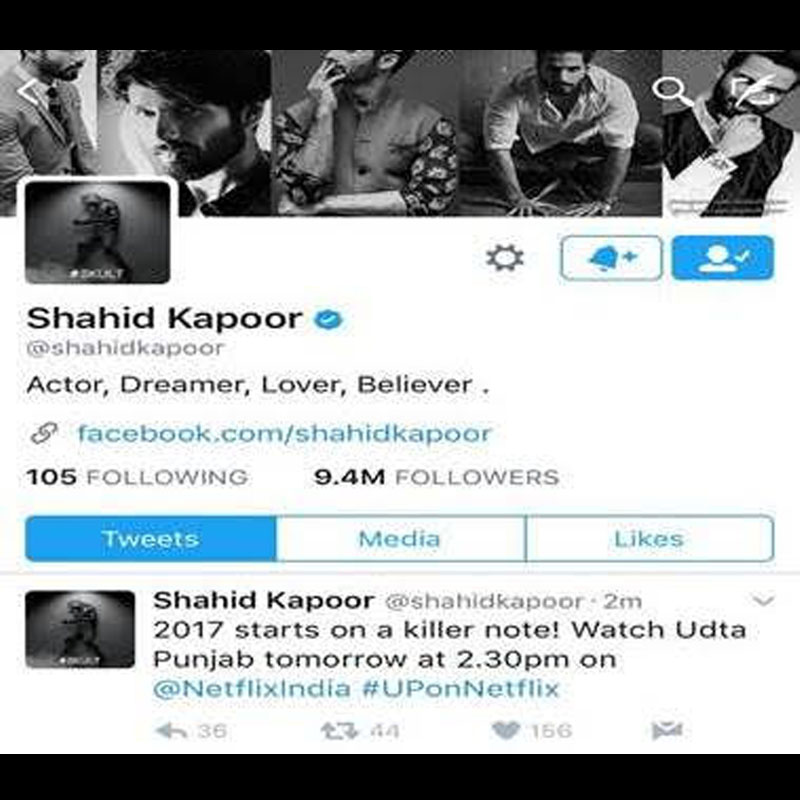
    MUMBAI: Netflix is the exclusive home of critically-acclaimed crime film Udta Punjab from 1 January. Netflix members in 190 countries around the world will be able to stream the original film for the first time after its theatrical release.

    Udta Punjab tells the story of socio-economic decline in the affluent north Indian state of Punjab due to drug abuse. Shahid Kapoor, Kareena Kapoor, Alia Bhatt and Diljit Dosanjh in the lead roles play characters from different walks of life, and the film journeys into the artificial highs and the real lows they face in their fight against drugs.

    Above all, the movie explores that the famed Punjabi spirit – you may be knocked down, but this never-say-die attitude means you’ll have the audacity to look drugs in the eye and say, “Drugs di maa di!”

    Directed by Abhishek Chaubey, Udta Punjab is produced by Balaji Motion Pictures in collaboration with Phantom Productions.

    Video:

    Watch the trailer here.

  • ‘Udta Punjab’ exclusively available on Netflix Worldwide

    ‘Udta Punjab’ exclusively available on Netflix Worldwide

    MUMBAI: Netflix is the exclusive home of critically-acclaimed crime film Udta Punjab from 1 January. Netflix members in 190 countries around the world will be able to stream the original film for the first time after its theatrical release.

    Udta Punjab tells the story of socio-economic decline in the affluent north Indian state of Punjab due to drug abuse. Shahid Kapoor, Kareena Kapoor, Alia Bhatt and Diljit Dosanjh in the lead roles play characters from different walks of life, and the film journeys into the artificial highs and the real lows they face in their fight against drugs.

    Above all, the movie explores that the famed Punjabi spirit – you may be knocked down, but this never-say-die attitude means you’ll have the audacity to look drugs in the eye and say, “Drugs di maa di!”

    Directed by Abhishek Chaubey, Udta Punjab is produced by Balaji Motion Pictures in collaboration with Phantom Productions.

    Video:

    Watch the trailer here.

  • Indian players have an edge over global OTT platforms: Akamai’s Sidharth Pisharoti

    Indian players have an edge over global OTT platforms: Akamai’s Sidharth Pisharoti

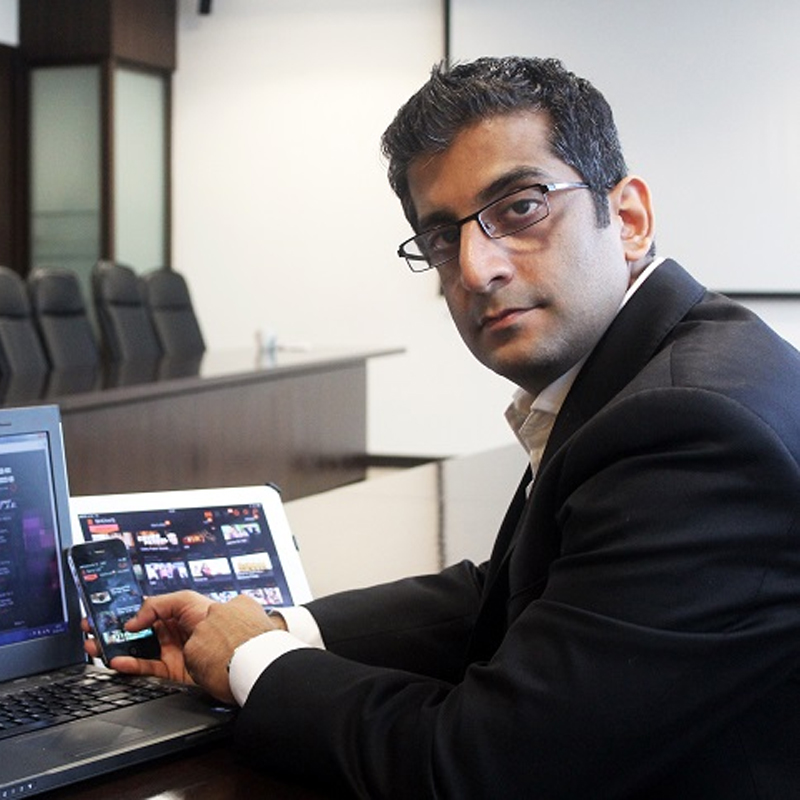
    Starting from one of the biggest Information Technology companies, Wipro Technologies, as a technical facilitator, he pursued young professionals program in general management from Indian Institute of Management, Calcutta. Soon after attaining a degree, he joined American content delivery network (CDN) and cloud services provider Akamai Technologies, Inc. as a relationship manager of emerging customer group in December 2006. Presently serving the company as the regional VP for media in APAC and Japan, Sidharth Pisharoti is a goal-oriented professional known for his alertness in innovating and bringing in new ideas to improve business processes.

    In an interview with indiantelevision.com’s Megha Parmar, Pisharoti shares interesting insights on a variety of topics, including the growing OTT space in India, impact of 4G, changing consumer behavior and the way forward for the entire digital eco-system. Edited excerpts from the interaction:

    Akamai Technologies, Inc. is an American content delivery network (CDN) and cloud services provider headquartered in Cambridge, Massachusetts. The company’s advanced web performance, mobile performance, cloud security and media delivery solutions are said to be revolutionizing how businesses optimize consumer, enterprise and entertainment experiences for any device, anywhere.

    Edited excerpts from the interview:

    Q: Akamai provides several products like web performance, cloud security, media delivery, etc. In a country that’s increasingly getting digital, who would be your Indian customers and how are each of these products faring?

    Akamai is very focussed on India. We are the largest content delivery platform in the world, which also applies to India. We have 3000+ servers, 59 networks across 14 cities in India. If you look at our customer base, we probably have 265 customers here and these are across different industry verticals. We have the customers who are amongst the top five IT services, media services, commerce services segments, apart from top three three stock exchanges in the country. So, whether you talk about IT, media and entertainment, e-commerce, retail or finance, we have customers across all these verticals.

    Q: Over The Top (OTT) is the new buzzword in India as the number of players, both global and local, grows. What is your take on it?

    If we focus on the media and OTT space, it is growing at   fast pace in India. If you look at the number of OTT platforms that are providing content, it is increasing by the day and so are the audience. The good news here is that not just the services are available, but the consumer pattern, behaviour and the adoption too are growing by the day. Earlier, there was a notion that mostly sports, cricket and live cricket are in demand. But that notion has changed a lot in the recent past. It’s not just live content but also on-demand content, episodic content and anytime content that is available out there which is being consumed by the users.

    Q: What could be the reasons for this change in consumer behaviour and consumption patterns?

    What is happening now is that there are more smart phones being available in the market. Even at Akamai, a big chunk of our delivery is happening to smart phones apart from the traditional internet devices. There are two major developments in India.

    First, the smart phone market has changed and accessibility has improved. Today, you can get a decent Android device at Rs 4,000, which is pretty affordable as compared to what it was four-five years ago. Second, the overall infrastructure has improved. Not just launch of Reliance Jio has spurred on other players, but availability of 4G across the different networks has improved too as compared to what it was one year ago. Today, 4G is available almost throughout the country and with Jio’s arrival the reach has further improved.  

    Both the factors are equally important for any kind of content to be consumed, especially when you are talking about OTT, which is primarily consumed by personal computing devices. The screen size is getting smaller and the consumers are increasing. We are moving away from demography of people who believed in the family viewing experience to having a personal single screen for each member in the house.

    Q:When you say more people are consuming more on smart phones, is the time spent on viewing too increasing? If yes, who are these people and what are they watching?

    The viewing time is definitely increasing. If we look at purely episodic content as video on demand (VOD), the viewing time has increased from what it was 18 months ago.  The average time spent was 5-7 minutes, but it has gone up to as high as about 18-20 minutes now. This is a three-fold jump than what the average session brings in. We are seeing an improvement in the viewing time because of these two reasons. Content providers are ready to provide good quality videos without any buffering or start time. That is the experience the consumer wants — he wants a television-like experience. Because content creators are able to provide uninterrupted content, the viewership is going up. It is not yet as big as TV’s, but it is getting there.

    People are watching from across various demographics though we are yet to nail down a particular type of individual watching. We are having difficulty in pinpointing that as of now, but consumers from tier 2 and tier 3 cities and towns are increasing and are coming to our platform.

    Q: What do you think will be the impact of 4G in India? Do you think it will open up choked and inadequate availability of bandwidth?

    Absolutely. We are already seeing 4G’s effects. More and cheaper bandwidths are available with consumers that are improving consumptions. The consumption was not that great earlier because of two factors. One, the availability and affordability of good quality phones and, second, data costs were high. Even four month back, before the launch of Jio, we were talking about Rs 200/ GB. Today we are talking about Rs 50 per GB. I think, in a year from now even this is going to substantially come down. Data has to become like any other affordable commodity. When it becomes the new normal for the consumers, the industry is obviously going to be impacted.

    Q: While players are still experimenting with their models, what, according to you, will stay in long term?

    See, you have to shift the deal. The consumer will either pay for content or for data. Expecting them to pay for both the things is pushing it a bit too much. Today, the reason behind content creators predominantly offering ad-driven content is because they can’t charge for it as the consumer is already paying for the data. When data becomes cheaper, that is when these creators or broadcasters with their platforms can charge for the content.

    To answer your question, it has to be a dual approach. There has to be content that is available on the `freemium’ model with some part being free of cost, that is advertising-supported, and some behind the pay wall for which the subscribers will need to pay. The Indian consumers will adapt to this model slowly. The day data becomes cheaper and easily accessible, that day content providers can make lot more earnings from subscription perspective.

    Q: When you talk about `freemium’ model, payment gateways remain a crucial part. Will making payments online become easier with ongoing digitization and government push towards cashless transactions in the aftermath of currency demonetisation?

    If you had asked me that question a month ago, I would have said this is definitely a challenge. But, now with demonetization happening and the country trying to moving to a cashless economy, cajoled by the PM Modi government to increase of digital wallets, etc, the scenario is undergoing a change. That is good news for all the online players. Not just OTT, but anyone who is selling or buying online benefits from these changes.

    I think in the medium to long term, the problem will resolve, but, right now, not many consumers are comfortable transacting online. It’s less of being comfortable or paying than choosing what they should pay for. For them, paying for data and content is like a double whammy. With data becoming cheaper, consumers will be willing to pay for content. With the new norms that the government is pushing, it will be easier for the consumers to pay through digital wallets.

    Q: A lot of online content creators are betting big on the kids’ space with original content. Do you think there’s demand for kids’ content in India?

    I think it’s a very good genre to be in. If you remove T-Series and Eros content, some of the biggest YouTube channels in India focus on kids’ content and would definitely have large subscriber base. Such channels have original content created by small companies who are purely creating it for kids. So people who are producing kids’ content are going to be benefitted. It is a big genre, which is has eluded the focused of big OTT players.

    Q: What about the regional markets in India?

    Not many players have looked at it separately and are primarily providing content in Hindi or English. If you look at the OTT space today, some of the big players do have regional content, but their catalogue of regional content is not as complusive as their Hindi catalogue. Though a small quantity of original regional content is being produced, OTT platforms are also syndicating it content from some of the south  Indian media houses. Eventually, each of these markets, for example states of Kerala,  Andhra Pradesh or Tamil Nadu, will have one local OTT player who will be the biggest local player in that market with local content. And, there will be cross syndication. So the national players will definitely syndicate content of all languages, but local players will focus on content of their region’s language and will syndicate content from other languages. I think that is the future. Just like the television space where there a few national level TV channels and many in local languages.

    We will have one or two big OTT players — we are already seeing the emergence of two very big ones platforms at a national level — and then we will see each of the Indian states having one big local player.

    Q: But will that not clutter the space or confuse the consumers? What if they want international as well as their regional content together on one platform?

    The current and future generations are the new subscribers or consumers who are getting online. They are already digital and understand only the digital language.  For many of these consumers TV or cable is non-existent as most of their video consumption is online. Unlike in the US, where there are two large players who are catering to the whole market, the scenario in India is different because in the West primarily there is one language (English) that is popular. We have a huge population with different cultures, speaking different languages and dialects and, hence, there is space for more than just two local players.

    Q: Apart from infrastructure problem, what are the other challenges in the current digital space?  

    Another challenge is to put together the video eco-system. Most of these OTT  companies or the media houses are used to broadcast business because that is their bread and butter. In the last 20 years, they have been working on broadcast and they know that after the content is ready, they have to push it through satellite or cable to people’s homes. But digital is a different ball game. Once the content is prepared, it has to go through its own video platform for it to be ready for a satellite or mobile phone. The biggest challenge is the digital media workflow. The first step is content preparation, which basically means that once you get content that’s to be broadcast, you have to encode it or convert it into a format that can be consumed digitally. Then, you have to re-package it to ensure that it fits all the different softwares on different devices.

    The next step is to transport it to all these formats, repackage it again to make sure storage is proper for a content management system and then send it to a content delivery platform. Then you have to get it on your video player and how do you plan to use it in your analytics and reports. This entire media platform workflow is not easy to manage and is a big challenge when lot of people move from traditional broadcast or regular online streaming to a pure OTT platform. The complexities are very high and that is a challenge.

    Q: Online video consumption has also increased digital piracy. Isn’t this a big challenge for content owners too?

    The good news is that there are lot of companies, including us, who offer security services. Using these services combined with DRN, content protection is possible. Security is like insurance. Can someone give you a 100 percent security? No. But, can you give 99.9 per cent security? Yes. Simply because technology is available today. Whether it is securing your application or data centre or media content, Akamai has a a range of security offerings, which help the media customers to help the customers.

    Second, I also believe that piracy exists when there is non-availability of content or when it is expensive to acquire or view. It happens when someone finds some content at a cheaper price than the legal content. But, today content providers are either giving it for free or are offering it at a very nominal price. Hence, they are killing piracy by making content more accessible. People who are involved in digital piracy are not succeeding because that content is anyway available in high quality on a particular device at affordable rates. So, why would a person go and buy pirated content? This is the case for majority of content. Digital piracy is slowly getting killed. The only problem is movies. But again with platforms like Hotstar, they are releasing movies within four-five weeks of a movie’s release.

    Q: Different mix of companies have got into digital space with even DTH operators now active in this space. Who will be the next bunch of customers for them? What is the scenario there?

    It’s an interesting proposition. I believe you will probably have only one leader in that space too. On one hand, you have folks like Tata Sky who have already moved to that model and are leading in that space. On the other hand, you have dittoTV , which offers you a TV-kind of a service. And, then you have telcos like Reliance Jio, which gives similar kind of service. It will be interesting to see how that plays out. I think there will be a consolidation eventually. I don’t think that for a pure play of a bouquet of channels service,  like each of these players are offering, you can have three to four players.

    It’s about curated content, original content and watching content from wherever the consumer wants. As the market is so fragmented, some of the content syndication deals will be interesting. But, I think they will all reach a point wherein they will realise that rather than syndicating the content, it is better to have it under own network as it is more lucrative. When this happens, you will stop seeing content syndication as well. We have to wait and watch. From DTH point of view, we can have more than one large player.

    Q: Do you see Netflix becoming successful in India? Should the Indian platforms worry about its entrance?

    Netflix, as of right now, is a very urban Indian phenomenon. It produces some original content and some premium content that is consumed by a certain section of the population. It can also turn out that their content strategy for India changes in the longer run. As of now, Netflix is not eating into the viewership base of a Hotstar or a Voot. Both these platforms have their separate viewership base, but that might change when the content that they offer changes or gets popular in India.

    I think these Indian players air some of the shows on their platform first before they go on TV. They air some shows before 24-hour of its TV release. Though it is premium subscription, it is available. So, it is not catch-up television. Their strategy is if-you-want-content-before-TV- we-are-providing-it. Eventually, consumers will start accepting that. That is the plan — consumers should first come to a digital platform and then move on to traditional TV broadcast.

    In the longer run, unless global players have a different content strategy for India, I don’t think they can have (subscriber) numbers like some of these local players do. I think the local players have a big edge over Netflix or any other global platform. Incidentally, globally too Netflix has changed its strategy and has started producing original content. It could be either the studios have stopped giving them content or are giving content at a that makes it difficult for content to be monetised by the OTT platform. So, Netflix has started becoming a media house itself. Same thing has to be India specific.

    Q: What are your predictions for the digital eco-system in the year 2017?

    The future should see is decent amount of consolidation.  In terms of pure play Indian content, I think the players who are leading, will continue to lead at a national level. Locally, there is space for few players that will cater to certain languages. Over the next two to three years, content syndication will go down as each of these platforms will get more consumers and, in turn, generate revenues through subscription. Global players will definitely enter India and will get only a handful of subscribers unless their content strategy is different. To achieve that, they will have to spend a lot of energy, resources and money in India. We can probably have maximum of 10 OTT players — three at national level, two global and couple of local providers.
  • Indian players have an edge over global OTT platforms: Akamai’s Sidharth Pisharoti

    Indian players have an edge over global OTT platforms: Akamai’s Sidharth Pisharoti

    Starting from one of the biggest Information Technology companies, Wipro Technologies, as a technical facilitator, he pursued young professionals program in general management from Indian Institute of Management, Calcutta. Soon after attaining a degree, he joined American content delivery network (CDN) and cloud services provider Akamai Technologies, Inc. as a relationship manager of emerging customer group in December 2006. Presently serving the company as the regional VP for media in APAC and Japan, Sidharth Pisharoti is a goal-oriented professional known for his alertness in innovating and bringing in new ideas to improve business processes.

    In an interview with indiantelevision.com’s Megha Parmar, Pisharoti shares interesting insights on a variety of topics, including the growing OTT space in India, impact of 4G, changing consumer behavior and the way forward for the entire digital eco-system. Edited excerpts from the interaction:

    Akamai Technologies, Inc. is an American content delivery network (CDN) and cloud services provider headquartered in Cambridge, Massachusetts. The company’s advanced web performance, mobile performance, cloud security and media delivery solutions are said to be revolutionizing how businesses optimize consumer, enterprise and entertainment experiences for any device, anywhere.

    Edited excerpts from the interview:

    Q: Akamai provides several products like web performance, cloud security, media delivery, etc. In a country that’s increasingly getting digital, who would be your Indian customers and how are each of these products faring?

    Akamai is very focussed on India. We are the largest content delivery platform in the world, which also applies to India. We have 3000+ servers, 59 networks across 14 cities in India. If you look at our customer base, we probably have 265 customers here and these are across different industry verticals. We have the customers who are amongst the top five IT services, media services, commerce services segments, apart from top three three stock exchanges in the country. So, whether you talk about IT, media and entertainment, e-commerce, retail or finance, we have customers across all these verticals.

    Q: Over The Top (OTT) is the new buzzword in India as the number of players, both global and local, grows. What is your take on it?

    If we focus on the media and OTT space, it is growing at   fast pace in India. If you look at the number of OTT platforms that are providing content, it is increasing by the day and so are the audience. The good news here is that not just the services are available, but the consumer pattern, behaviour and the adoption too are growing by the day. Earlier, there was a notion that mostly sports, cricket and live cricket are in demand. But that notion has changed a lot in the recent past. It’s not just live content but also on-demand content, episodic content and anytime content that is available out there which is being consumed by the users.

    Q: What could be the reasons for this change in consumer behaviour and consumption patterns?

    What is happening now is that there are more smart phones being available in the market. Even at Akamai, a big chunk of our delivery is happening to smart phones apart from the traditional internet devices. There are two major developments in India.

    First, the smart phone market has changed and accessibility has improved. Today, you can get a decent Android device at Rs 4,000, which is pretty affordable as compared to what it was four-five years ago. Second, the overall infrastructure has improved. Not just launch of Reliance Jio has spurred on other players, but availability of 4G across the different networks has improved too as compared to what it was one year ago. Today, 4G is available almost throughout the country and with Jio’s arrival the reach has further improved.  

    Both the factors are equally important for any kind of content to be consumed, especially when you are talking about OTT, which is primarily consumed by personal computing devices. The screen size is getting smaller and the consumers are increasing. We are moving away from demography of people who believed in the family viewing experience to having a personal single screen for each member in the house.

    Q:When you say more people are consuming more on smart phones, is the time spent on viewing too increasing? If yes, who are these people and what are they watching?

    The viewing time is definitely increasing. If we look at purely episodic content as video on demand (VOD), the viewing time has increased from what it was 18 months ago.  The average time spent was 5-7 minutes, but it has gone up to as high as about 18-20 minutes now. This is a three-fold jump than what the average session brings in. We are seeing an improvement in the viewing time because of these two reasons. Content providers are ready to provide good quality videos without any buffering or start time. That is the experience the consumer wants — he wants a television-like experience. Because content creators are able to provide uninterrupted content, the viewership is going up. It is not yet as big as TV’s, but it is getting there.

    People are watching from across various demographics though we are yet to nail down a particular type of individual watching. We are having difficulty in pinpointing that as of now, but consumers from tier 2 and tier 3 cities and towns are increasing and are coming to our platform.

    Q: What do you think will be the impact of 4G in India? Do you think it will open up choked and inadequate availability of bandwidth?

    Absolutely. We are already seeing 4G’s effects. More and cheaper bandwidths are available with consumers that are improving consumptions. The consumption was not that great earlier because of two factors. One, the availability and affordability of good quality phones and, second, data costs were high. Even four month back, before the launch of Jio, we were talking about Rs 200/ GB. Today we are talking about Rs 50 per GB. I think, in a year from now even this is going to substantially come down. Data has to become like any other affordable commodity. When it becomes the new normal for the consumers, the industry is obviously going to be impacted.

    Q: While players are still experimenting with their models, what, according to you, will stay in long term?

    See, you have to shift the deal. The consumer will either pay for content or for data. Expecting them to pay for both the things is pushing it a bit too much. Today, the reason behind content creators predominantly offering ad-driven content is because they can’t charge for it as the consumer is already paying for the data. When data becomes cheaper, that is when these creators or broadcasters with their platforms can charge for the content.

    To answer your question, it has to be a dual approach. There has to be content that is available on the `freemium’ model with some part being free of cost, that is advertising-supported, and some behind the pay wall for which the subscribers will need to pay. The Indian consumers will adapt to this model slowly. The day data becomes cheaper and easily accessible, that day content providers can make lot more earnings from subscription perspective.

    Q: When you talk about `freemium’ model, payment gateways remain a crucial part. Will making payments online become easier with ongoing digitization and government push towards cashless transactions in the aftermath of currency demonetisation?

    If you had asked me that question a month ago, I would have said this is definitely a challenge. But, now with demonetization happening and the country trying to moving to a cashless economy, cajoled by the PM Modi government to increase of digital wallets, etc, the scenario is undergoing a change. That is good news for all the online players. Not just OTT, but anyone who is selling or buying online benefits from these changes.

    I think in the medium to long term, the problem will resolve, but, right now, not many consumers are comfortable transacting online. It’s less of being comfortable or paying than choosing what they should pay for. For them, paying for data and content is like a double whammy. With data becoming cheaper, consumers will be willing to pay for content. With the new norms that the government is pushing, it will be easier for the consumers to pay through digital wallets.

    Q: A lot of online content creators are betting big on the kids’ space with original content. Do you think there’s demand for kids’ content in India?

    I think it’s a very good genre to be in. If you remove T-Series and Eros content, some of the biggest YouTube channels in India focus on kids’ content and would definitely have large subscriber base. Such channels have original content created by small companies who are purely creating it for kids. So people who are producing kids’ content are going to be benefitted. It is a big genre, which is has eluded the focused of big OTT players.

    Q: What about the regional markets in India?

    Not many players have looked at it separately and are primarily providing content in Hindi or English. If you look at the OTT space today, some of the big players do have regional content, but their catalogue of regional content is not as complusive as their Hindi catalogue. Though a small quantity of original regional content is being produced, OTT platforms are also syndicating it content from some of the south  Indian media houses. Eventually, each of these markets, for example states of Kerala,  Andhra Pradesh or Tamil Nadu, will have one local OTT player who will be the biggest local player in that market with local content. And, there will be cross syndication. So the national players will definitely syndicate content of all languages, but local players will focus on content of their region’s language and will syndicate content from other languages. I think that is the future. Just like the television space where there a few national level TV channels and many in local languages.

    We will have one or two big OTT players — we are already seeing the emergence of two very big ones platforms at a national level — and then we will see each of the Indian states having one big local player.

    Q: But will that not clutter the space or confuse the consumers? What if they want international as well as their regional content together on one platform?

    The current and future generations are the new subscribers or consumers who are getting online. They are already digital and understand only the digital language.  For many of these consumers TV or cable is non-existent as most of their video consumption is online. Unlike in the US, where there are two large players who are catering to the whole market, the scenario in India is different because in the West primarily there is one language (English) that is popular. We have a huge population with different cultures, speaking different languages and dialects and, hence, there is space for more than just two local players.

    Q: Apart from infrastructure problem, what are the other challenges in the current digital space?  

    Another challenge is to put together the video eco-system. Most of these OTT  companies or the media houses are used to broadcast business because that is their bread and butter. In the last 20 years, they have been working on broadcast and they know that after the content is ready, they have to push it through satellite or cable to people’s homes. But digital is a different ball game. Once the content is prepared, it has to go through its own video platform for it to be ready for a satellite or mobile phone. The biggest challenge is the digital media workflow. The first step is content preparation, which basically means that once you get content that’s to be broadcast, you have to encode it or convert it into a format that can be consumed digitally. Then, you have to re-package it to ensure that it fits all the different softwares on different devices.

    The next step is to transport it to all these formats, repackage it again to make sure storage is proper for a content management system and then send it to a content delivery platform. Then you have to get it on your video player and how do you plan to use it in your analytics and reports. This entire media platform workflow is not easy to manage and is a big challenge when lot of people move from traditional broadcast or regular online streaming to a pure OTT platform. The complexities are very high and that is a challenge.

    Q: Online video consumption has also increased digital piracy. Isn’t this a big challenge for content owners too?

    The good news is that there are lot of companies, including us, who offer security services. Using these services combined with DRN, content protection is possible. Security is like insurance. Can someone give you a 100 percent security? No. But, can you give 99.9 per cent security? Yes. Simply because technology is available today. Whether it is securing your application or data centre or media content, Akamai has a a range of security offerings, which help the media customers to help the customers.

    Second, I also believe that piracy exists when there is non-availability of content or when it is expensive to acquire or view. It happens when someone finds some content at a cheaper price than the legal content. But, today content providers are either giving it for free or are offering it at a very nominal price. Hence, they are killing piracy by making content more accessible. People who are involved in digital piracy are not succeeding because that content is anyway available in high quality on a particular device at affordable rates. So, why would a person go and buy pirated content? This is the case for majority of content. Digital piracy is slowly getting killed. The only problem is movies. But again with platforms like Hotstar, they are releasing movies within four-five weeks of a movie’s release.

    Q: Different mix of companies have got into digital space with even DTH operators now active in this space. Who will be the next bunch of customers for them? What is the scenario there?

    It’s an interesting proposition. I believe you will probably have only one leader in that space too. On one hand, you have folks like Tata Sky who have already moved to that model and are leading in that space. On the other hand, you have dittoTV , which offers you a TV-kind of a service. And, then you have telcos like Reliance Jio, which gives similar kind of service. It will be interesting to see how that plays out. I think there will be a consolidation eventually. I don’t think that for a pure play of a bouquet of channels service,  like each of these players are offering, you can have three to four players.

    It’s about curated content, original content and watching content from wherever the consumer wants. As the market is so fragmented, some of the content syndication deals will be interesting. But, I think they will all reach a point wherein they will realise that rather than syndicating the content, it is better to have it under own network as it is more lucrative. When this happens, you will stop seeing content syndication as well. We have to wait and watch. From DTH point of view, we can have more than one large player.

    Q: Do you see Netflix becoming successful in India? Should the Indian platforms worry about its entrance?

    Netflix, as of right now, is a very urban Indian phenomenon. It produces some original content and some premium content that is consumed by a certain section of the population. It can also turn out that their content strategy for India changes in the longer run. As of now, Netflix is not eating into the viewership base of a Hotstar or a Voot. Both these platforms have their separate viewership base, but that might change when the content that they offer changes or gets popular in India.

    I think these Indian players air some of the shows on their platform first before they go on TV. They air some shows before 24-hour of its TV release. Though it is premium subscription, it is available. So, it is not catch-up television. Their strategy is if-you-want-content-before-TV- we-are-providing-it. Eventually, consumers will start accepting that. That is the plan — consumers should first come to a digital platform and then move on to traditional TV broadcast.

    In the longer run, unless global players have a different content strategy for India, I don’t think they can have (subscriber) numbers like some of these local players do. I think the local players have a big edge over Netflix or any other global platform. Incidentally, globally too Netflix has changed its strategy and has started producing original content. It could be either the studios have stopped giving them content or are giving content at a that makes it difficult for content to be monetised by the OTT platform. So, Netflix has started becoming a media house itself. Same thing has to be India specific.

    Q: What are your predictions for the digital eco-system in the year 2017?

    The future should see is decent amount of consolidation.  In terms of pure play Indian content, I think the players who are leading, will continue to lead at a national level. Locally, there is space for few players that will cater to certain languages. Over the next two to three years, content syndication will go down as each of these platforms will get more consumers and, in turn, generate revenues through subscription. Global players will definitely enter India and will get only a handful of subscribers unless their content strategy is different. To achieve that, they will have to spend a lot of energy, resources and money in India. We can probably have maximum of 10 OTT players — three at national level, two global and couple of local providers.
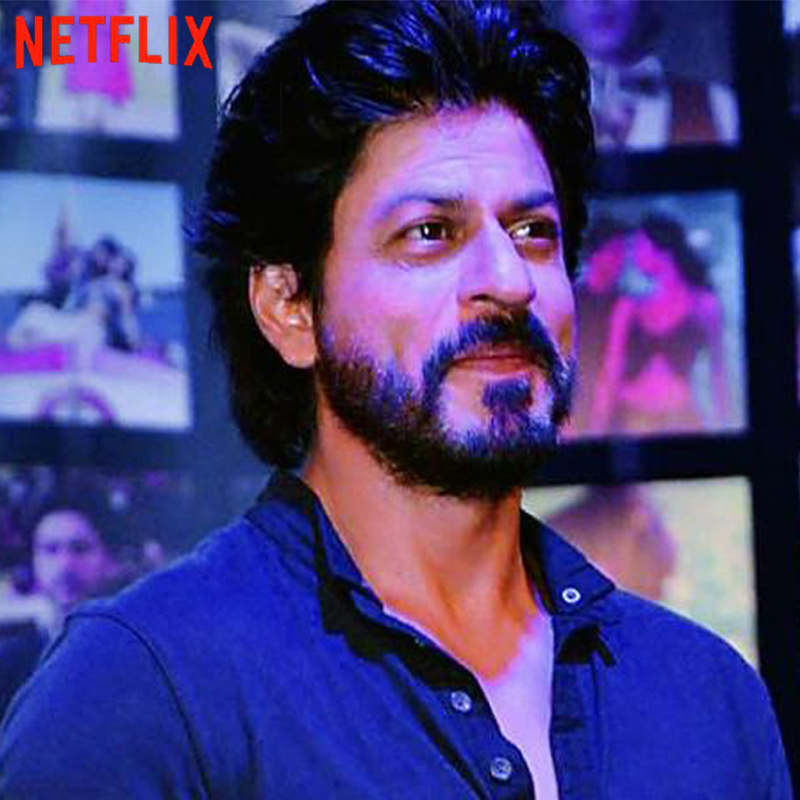
  • Best of SRK movies now available on Netflix

    Best of SRK movies now available on Netflix

    MUMBAI: What happens when the world’s leading internet TV network becomes the new home for one of India’s biggest film star? In one such deal of providing premium quality entertainment, Netflix and Red Chillies Entertainment (RCE) have announced a tie-up. All the new films starring Indian movie superstar Shah Rukh Khan will be exclusively available to more than 86 million members globally on Netlix.

    This association marks the beginning of a long-term relationship between both companies and the first of its kind with any Indian film production company. 

    “Shah Rukh Khan is the most sought-after actor in the Indian film industry, and has played a huge role in bringing Indian cinema to the world stage,” said Netflix chief content officer Ted Sarandos. “His monicker “King Khan” speaks to his status as a cultural icon and to the incredible popularity of his films among audiences worldwide”.

    The partnership will also give Netflix members both in India and around the world exclusive subscription video-on-demand access to dozens of RCE films as well as new films that will hit Indian theaters within the next three years.

    “Red Chillies is surging ahead in global entertainment and for the first time, our great stories are going global on Netflix all at once and crossing all geographical barriers, waiting to be discovered over the world. No more waiting for our fans wherever they are,” said Khan.

    The first title that will come on Netflix is Dear Zindagi which was released theatrically on 25 November. The highly-anticipated film directed by Gauri Shinde stars Shah Rukh Khan and Alia Bhatt.

    Among other Red Chillies titles available on Netflix will be box office hits including Happy New Year, Dilwale and Om Shanti Om.

  • Best of SRK movies now available on Netflix

    Best of SRK movies now available on Netflix

    MUMBAI: What happens when the world’s leading internet TV network becomes the new home for one of India’s biggest film star? In one such deal of providing premium quality entertainment, Netflix and Red Chillies Entertainment (RCE) have announced a tie-up. All the new films starring Indian movie superstar Shah Rukh Khan will be exclusively available to more than 86 million members globally on Netlix.

    This association marks the beginning of a long-term relationship between both companies and the first of its kind with any Indian film production company. 

    “Shah Rukh Khan is the most sought-after actor in the Indian film industry, and has played a huge role in bringing Indian cinema to the world stage,” said Netflix chief content officer Ted Sarandos. “His monicker “King Khan” speaks to his status as a cultural icon and to the incredible popularity of his films among audiences worldwide”.

    The partnership will also give Netflix members both in India and around the world exclusive subscription video-on-demand access to dozens of RCE films as well as new films that will hit Indian theaters within the next three years.

    “Red Chillies is surging ahead in global entertainment and for the first time, our great stories are going global on Netflix all at once and crossing all geographical barriers, waiting to be discovered over the world. No more waiting for our fans wherever they are,” said Khan.

    The first title that will come on Netflix is Dear Zindagi which was released theatrically on 25 November. The highly-anticipated film directed by Gauri Shinde stars Shah Rukh Khan and Alia Bhatt.

    Among other Red Chillies titles available on Netflix will be box office hits including Happy New Year, Dilwale and Om Shanti Om.

  • Amazon Prime to explore sports genre & catch-up TV

    Amazon Prime to explore sports genre & catch-up TV

    MUMBAI: Prime subscribers in India are in for a treat. Nearly a year after preparations, American e-commerce giant has finally launched its Prime Video service in India. At an introductory price of Rs 499 a year (Rs 42month) and a month’s free trial as reported by Indiantelevision earlier, Amazon Prime Video gives users access to latest Hollywood movies, Bollywood blockbusters, TV shows, Amazon original series and kids’ programming. For those who already have an Amazon Prime subscription, they get video streaming as well for no extra charge.

    As many as nine original programs have been produced with the first slated to launch early next year and nine under production. Its original series are produce by Ram Madhwani, Prasoon Joshi, All India Bakchod (AIB), Vikram Malhotra, OML, Ritesh Sidhwani, Farhan Akhtar, amongst others.

    The subscription based video-on-demand service is now available in 200 territories. With learnings from its other markets and the lavish content portfolio, one can ensure that it is here to stay.

    “For now, the number of international shows will be slightly greater than the ones produced in India. As we get into this, the ratio of Indian content will get higher and higher. After the US and Japan, India is the third country wherein we are betting high,” said Amazon Prime APAC head of content James Farrell.

    Given the huge appetite for sports content in India and the lack of sports content being offered by the current OTT platforms, abreast its current offering, the service might also look at providing compelling sports programming and catch-up television to its customers.

    “I perceive that Indian customers want to watch great movies and shows at a decent value and that is what we are providing. Prime is an amazing deal in shopping and watching at an affordable price. We are focused on providing compelling content to our customers. So, today we are announcing licensed movies and TV shows apart from original content and foreign content. Sports is a compelling category for customers and we will consider that,” said Amazon Instant Video International VP Tim Leslie.

    As broadcast and digital continue to converge within sport, fans demand more access to content at their fingertips on any device. There is a clear need for the next step in providing customers direct propositions in sports media. Sports federations, leagues and brands are already looking to harness the power of OTT content and the opportunities it offers. The one who adopts first will rule.

    “Sports is important for India and we will evaluate it. We will let you know as we decide on sports,” added Amazon Video India director and country head Nitesh Kripalani.

    In addition to its current content offering, if there is a demand to provide next day television of their favorite channels in India, the service will definitely look into it.

    “Catch-up is one category where we are trying to talk to everybody. So, whether it is movies, kids, sports or catch-up television, if our customers want linear television’ catch-up the next day, we will talk to those channels and look at a partnership. We will definitely explore that,” added Farrell.

    “India has one of the richest and most vibrant entertainment industries in the world—Amazon is energized by the talent and the passion of India’s film industry and is excited to be making multiple Indian original shows already, with more to come. We are also making a commitment to our Indian customers to deliver high-quality, binge-worthy shows that they’ll love to watch,” said Amazon Studios VP and head Roy Price.

    After tying up with film makers and film studios since September, Amazon Prime’s video content portfolio has 2016’s top Indian and Hollywood blockbusters. It also has top kids shows like Doraemon, Chhota Bheem and Oggy & the Cockroaches and Indian shows like Taarak Mehta Ka Ooltah Chashmah, CID and Crime Patrol. Titles like Salman Khan starrer Sultan, Rajnikanth’s Kabali and Hollywood blockbuster Batman vs Superman – Dawn of Justice, has made it to its offering. Its international bouquet includes shows like The Good Wide, Two and a Half Men, Mr. Robot, etc. Many US TV shows will premiere on Prime Video within a day of its broadcast in the US.

    “We don’t look to create disruption in the entertainment space but we want to listen to our customers and their needs. We are in a customer revolution in India in the way people watch content in India, which has happened in US, UK and recently in Germany. It is starting to happen in Japan. The customer revolution is that why be bound to watch shows at certain days and time, why do not you watch it wherever and whenever you want to watch. That is very important. Other point is that content creators don’t have to fine huge audience on linear TV. They can make ambitious and ground-breaking shows and find their audience,” voiced Leslie.

    Some selected Prime Video international content is also available in dubbed Indian languages and subtitles. In addition to English and Hindi films, the service will also offer regional movies in Tamil, Telugu, Bengali and Marathi. It also promises movies and TV shows from top Indian and international studios.

    “We want to solve customer problems and we took it in three ways – selection, convenience and value. We are focused on getting the widest selection of exclusive and latest content. We want to solve the problem of data usage and too many advertisements playing. All at the same time of shipping guaranteed in one or two days and the best content. We are enablers of the market; we are enablers who want to consume great content, we are enablers of creators who want to create great content without having the constraints of the duration. We want to change the way customers consume and creators create content,” added Kripalani.

    It is also looking to offer TVOD in its other prime markets. “We will always look at more ways to watch content. It not just includes devices but more ways to purchase content. So, we want to provide customers lots of choice,” asserted Leslie.

    Besides Netflix’ subscription plans which start from Rs 500 and go up to Rs 800 per year, India has online streaming platforms like Star India’s Hotstar with its premium service at Rs 199 per month. Compared to this, YuppTV charges consumers Rs 99 a month whereas Eros Now has a daily pass for Rs 10 and a weekly pass for Rs 30 and a weekend pass for Rs 20. The annual subscription is available for Rs 1,000.

    Hooq starting at Rs 199 per month which is popular among movie buffs and Spuul which offers a Premium subscription option in monthly, annual, and multiple smaller packages, along with pay-per-view movies as well.

    “Globally, viewership is moving towards VOD and one can also see this increasing adoption of digital video consumption in India too. This has thrown the field open for a lot of players in the country and the entry of Amazon Prime is a welcome and much anticipated move for the VOD space in India. With robust smartphone penetration and the launch of 4G, one can foresee a tectonic shift in consumption that will forever change the entertainment industry. With the entry of the likes of Amazon Prime, the VOD space will be poised for growth as video content will be created and marketed specifically for the web and devices. However content, accessibility and overall user experience will be a game changer for any player to succeed in India. Currently at Spuul we have ~18m users of which 80% consume content on smartphones and we expect this to grow exponentially in 2017. We will continue to execute on our focus of providing the best quality Indian content and superior user experience to the masses, and our upcoming product releases and content additions will reflect that,” said Spuul India CEO Rajiv Vaidya.

  • Amazon Prime to explore sports genre & catch-up TV

    Amazon Prime to explore sports genre & catch-up TV

    MUMBAI: Prime subscribers in India are in for a treat. Nearly a year after preparations, American e-commerce giant has finally launched its Prime Video service in India. At an introductory price of Rs 499 a year (Rs 42month) and a month’s free trial as reported by Indiantelevision earlier, Amazon Prime Video gives users access to latest Hollywood movies, Bollywood blockbusters, TV shows, Amazon original series and kids’ programming. For those who already have an Amazon Prime subscription, they get video streaming as well for no extra charge.

    As many as nine original programs have been produced with the first slated to launch early next year and nine under production. Its original series are produce by Ram Madhwani, Prasoon Joshi, All India Bakchod (AIB), Vikram Malhotra, OML, Ritesh Sidhwani, Farhan Akhtar, amongst others.

    The subscription based video-on-demand service is now available in 200 territories. With learnings from its other markets and the lavish content portfolio, one can ensure that it is here to stay.

    “For now, the number of international shows will be slightly greater than the ones produced in India. As we get into this, the ratio of Indian content will get higher and higher. After the US and Japan, India is the third country wherein we are betting high,” said Amazon Prime APAC head of content James Farrell.

    Given the huge appetite for sports content in India and the lack of sports content being offered by the current OTT platforms, abreast its current offering, the service might also look at providing compelling sports programming and catch-up television to its customers.

    “I perceive that Indian customers want to watch great movies and shows at a decent value and that is what we are providing. Prime is an amazing deal in shopping and watching at an affordable price. We are focused on providing compelling content to our customers. So, today we are announcing licensed movies and TV shows apart from original content and foreign content. Sports is a compelling category for customers and we will consider that,” said Amazon Instant Video International VP Tim Leslie.

    As broadcast and digital continue to converge within sport, fans demand more access to content at their fingertips on any device. There is a clear need for the next step in providing customers direct propositions in sports media. Sports federations, leagues and brands are already looking to harness the power of OTT content and the opportunities it offers. The one who adopts first will rule.

    “Sports is important for India and we will evaluate it. We will let you know as we decide on sports,” added Amazon Video India director and country head Nitesh Kripalani.

    In addition to its current content offering, if there is a demand to provide next day television of their favorite channels in India, the service will definitely look into it.

    “Catch-up is one category where we are trying to talk to everybody. So, whether it is movies, kids, sports or catch-up television, if our customers want linear television’ catch-up the next day, we will talk to those channels and look at a partnership. We will definitely explore that,” added Farrell.

    “India has one of the richest and most vibrant entertainment industries in the world—Amazon is energized by the talent and the passion of India’s film industry and is excited to be making multiple Indian original shows already, with more to come. We are also making a commitment to our Indian customers to deliver high-quality, binge-worthy shows that they’ll love to watch,” said Amazon Studios VP and head Roy Price.

    After tying up with film makers and film studios since September, Amazon Prime’s video content portfolio has 2016’s top Indian and Hollywood blockbusters. It also has top kids shows like Doraemon, Chhota Bheem and Oggy & the Cockroaches and Indian shows like Taarak Mehta Ka Ooltah Chashmah, CID and Crime Patrol. Titles like Salman Khan starrer Sultan, Rajnikanth’s Kabali and Hollywood blockbuster Batman vs Superman – Dawn of Justice, has made it to its offering. Its international bouquet includes shows like The Good Wide, Two and a Half Men, Mr. Robot, etc. Many US TV shows will premiere on Prime Video within a day of its broadcast in the US.

    “We don’t look to create disruption in the entertainment space but we want to listen to our customers and their needs. We are in a customer revolution in India in the way people watch content in India, which has happened in US, UK and recently in Germany. It is starting to happen in Japan. The customer revolution is that why be bound to watch shows at certain days and time, why do not you watch it wherever and whenever you want to watch. That is very important. Other point is that content creators don’t have to fine huge audience on linear TV. They can make ambitious and ground-breaking shows and find their audience,” voiced Leslie.

    Some selected Prime Video international content is also available in dubbed Indian languages and subtitles. In addition to English and Hindi films, the service will also offer regional movies in Tamil, Telugu, Bengali and Marathi. It also promises movies and TV shows from top Indian and international studios.

    “We want to solve customer problems and we took it in three ways – selection, convenience and value. We are focused on getting the widest selection of exclusive and latest content. We want to solve the problem of data usage and too many advertisements playing. All at the same time of shipping guaranteed in one or two days and the best content. We are enablers of the market; we are enablers who want to consume great content, we are enablers of creators who want to create great content without having the constraints of the duration. We want to change the way customers consume and creators create content,” added Kripalani.

    It is also looking to offer TVOD in its other prime markets. “We will always look at more ways to watch content. It not just includes devices but more ways to purchase content. So, we want to provide customers lots of choice,” asserted Leslie.

    Besides Netflix’ subscription plans which start from Rs 500 and go up to Rs 800 per year, India has online streaming platforms like Star India’s Hotstar with its premium service at Rs 199 per month. Compared to this, YuppTV charges consumers Rs 99 a month whereas Eros Now has a daily pass for Rs 10 and a weekly pass for Rs 30 and a weekend pass for Rs 20. The annual subscription is available for Rs 1,000.

    Hooq starting at Rs 199 per month which is popular among movie buffs and Spuul which offers a Premium subscription option in monthly, annual, and multiple smaller packages, along with pay-per-view movies as well.

    “Globally, viewership is moving towards VOD and one can also see this increasing adoption of digital video consumption in India too. This has thrown the field open for a lot of players in the country and the entry of Amazon Prime is a welcome and much anticipated move for the VOD space in India. With robust smartphone penetration and the launch of 4G, one can foresee a tectonic shift in consumption that will forever change the entertainment industry. With the entry of the likes of Amazon Prime, the VOD space will be poised for growth as video content will be created and marketed specifically for the web and devices. However content, accessibility and overall user experience will be a game changer for any player to succeed in India. Currently at Spuul we have ~18m users of which 80% consume content on smartphones and we expect this to grow exponentially in 2017. We will continue to execute on our focus of providing the best quality Indian content and superior user experience to the masses, and our upcoming product releases and content additions will reflect that,” said Spuul India CEO Rajiv Vaidya.

  • YouTube contemplates YRF, Shemaroo, Sony, Zee & studio tie-ups

    YouTube contemplates YRF, Shemaroo, Sony, Zee & studio tie-ups

    MUMBAI: With competition in the OTT space getting tougher every passing day, the players have to ensure that they boast an edge over the rest. In a move to compete with its rivals – Netflix and Amazon Prime, Alphabet’s YouTube is in talks with some of India’s biggest production houses and broadcasters.

    Yash Raj Films, Shemaroo, Sony, Zee, etc are some of the big banners the streaming service is considering to partner with. It also plans to possess exclusive content for its Indian viewers from a large number of south Indian studios.

    Though, the deals could be different in nature. YouTube APAC regional director Ajay Vidyasagar in an interview with Hindustan Times has stated that some of the deals may bundle the content for YouTube first followed by TV while, some can tweak it for YouTube.

    YouTube is facing serious competition from rivals — Netflix and Amazon Prime not just in India but also in America. Globally, YouTube added 400 hours of content every minute to its platform last year. With Amazon signing a deal with Dharma Productions for exclusive content, with few more to be added soon, YouTube has competition knocking at its door. Even Netflix is closing in deals with studios like Phantom Films apart from its original production.

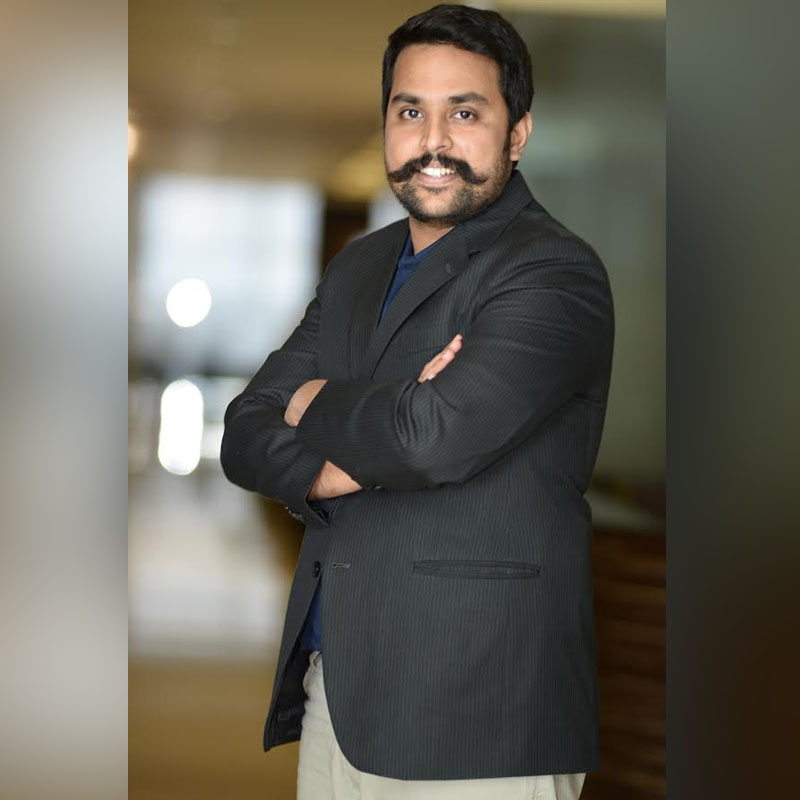
    Though, Vidyasagar is not letting the players affect his brand. He believes that Netflix is a high-value, low-volume business with limited reach. It creates content in one place and makes it globally available globally.

    But, YouTube claims to have found its way in having large volume and diverse content catering to local needs. According to Vidyasagar, it is expanding to become a local player in every country. Even in small towns, YouTube is the default native video platform that everyone chooses.

    Even after Star India taking away its famous talk show, Koffee with Karan which airs on Star World, off YouTube, Vidyasagar asserted that they have an extraordinary volume and in a few quarters time, they might look at the traffic.

    YouTube will also look more at exclusive content. In India, it will keep the business free, dependent on ad revenue. Even after having a Netflix-like subscription model in some countries, YouTube does not plan to do the same in India at least in the next few months.

  • YouTube contemplates YRF, Shemaroo, Sony, Zee & studio tie-ups

    YouTube contemplates YRF, Shemaroo, Sony, Zee & studio tie-ups

    MUMBAI: With competition in the OTT space getting tougher every passing day, the players have to ensure that they boast an edge over the rest. In a move to compete with its rivals – Netflix and Amazon Prime, Alphabet’s YouTube is in talks with some of India’s biggest production houses and broadcasters.

    Yash Raj Films, Shemaroo, Sony, Zee, etc are some of the big banners the streaming service is considering to partner with. It also plans to possess exclusive content for its Indian viewers from a large number of south Indian studios.

    Though, the deals could be different in nature. YouTube APAC regional director Ajay Vidyasagar in an interview with Hindustan Times has stated that some of the deals may bundle the content for YouTube first followed by TV while, some can tweak it for YouTube.

    YouTube is facing serious competition from rivals — Netflix and Amazon Prime not just in India but also in America. Globally, YouTube added 400 hours of content every minute to its platform last year. With Amazon signing a deal with Dharma Productions for exclusive content, with few more to be added soon, YouTube has competition knocking at its door. Even Netflix is closing in deals with studios like Phantom Films apart from its original production.

    Though, Vidyasagar is not letting the players affect his brand. He believes that Netflix is a high-value, low-volume business with limited reach. It creates content in one place and makes it globally available globally.

    But, YouTube claims to have found its way in having large volume and diverse content catering to local needs. According to Vidyasagar, it is expanding to become a local player in every country. Even in small towns, YouTube is the default native video platform that everyone chooses.

    Even after Star India taking away its famous talk show, Koffee with Karan which airs on Star World, off YouTube, Vidyasagar asserted that they have an extraordinary volume and in a few quarters time, they might look at the traffic.

    YouTube will also look more at exclusive content. In India, it will keep the business free, dependent on ad revenue. Even after having a Netflix-like subscription model in some countries, YouTube does not plan to do the same in India at least in the next few months.