Tag: Netflix

  • Indian content at Netflix to be creatively lead by Disney’s Simran Sethi

    Indian content at Netflix to be creatively lead by Disney’s Simran Sethi

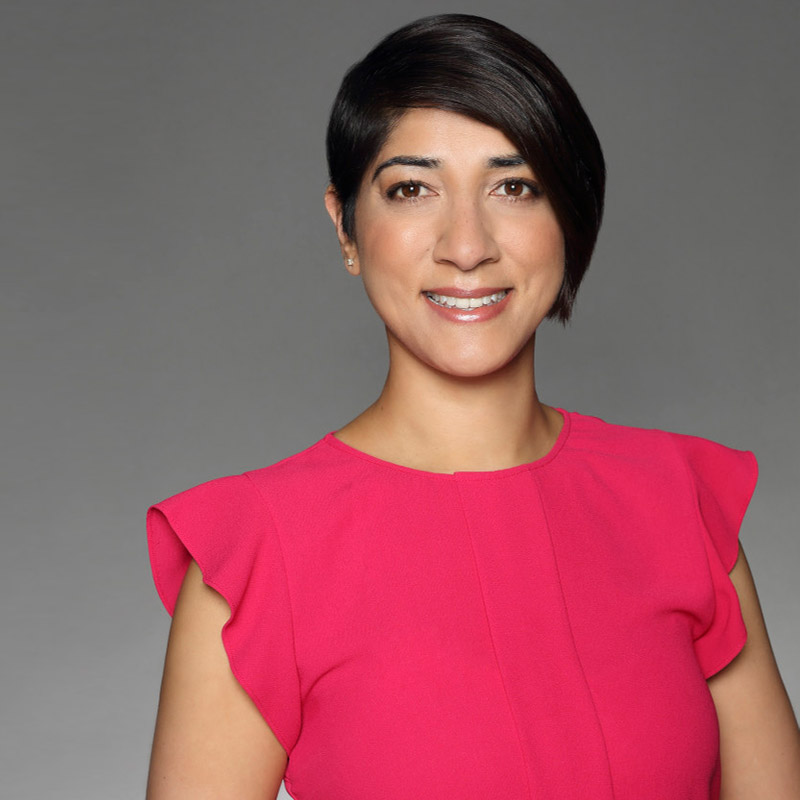
    MUMBAI: Netflix is plumping up on executives of Indian origin as it continues to build its content catalogue targeted at the 1.3 billion strong population nation. Amongst the first to be hired for India was former Star TV-exec-turned-independent film producer,  Swati Shetty, who has been shuttling between Los Angeles and India. The latest to be recruited is experienced programming executive from traditional media, Freeform’s SVP – scripted development Simran Sethi. Sethi has left the Disney-owned network Freeform (earlier ABC Family)  to join Netflix International Originals Production Group in its in the Los Angeles office as the creative executive for India. Her immediate reporting superior is executive Erika North.

    Netflix, in the past couple of years, has been employing executives from traditional TV networks and studios.

    It, along with Amazon Prime Video, sees India’s 300 million smartphone users  as the great hope for global expansion.

    Netflix, which rated India’s Spectranet speed in July as climbing up to 3.19 Mbps, recently unveiled the Gateway Shows that lead to a heroic binge as it seems to know what viewers watch. Viewers are finding their way to the adventures of Daredevil, Jessica Jones, Luke Cage and Iron Fist through shows as diverse as the Defenders crew. And, it’s by design – more than 80 per cent of the shows are discovered through Netflix recommendations.

    “At Netflix, we know genres are just wrappers, which is why we work hard to create algorithms that help members break these pre-conceived notions and make it easier for them to find stories they’ll love, even in seemingly unlikely places,” said Netflix VP of product Todd Yellin.

    A couple of months ago, Netflix head honchos Ted Sarandos and Reed Hastings met with Indian filmstars Aamir Khan and Shah Rukh Khan as a part of its effort to break through in the subcontinent before competition does. Now, Netflix is bringing in experts such as Sethi to head India content.

    Sethi had joined Freeform in August 2015 where she helped lead the programming rebrand of ABC Family to Freeform, including developing the new series Famous in LoveThe Bold Type, late-night show Truth & Iliza,  the upcoming Marvel series Cloak and Dagger,  the mermaid thriller Siren, and the Black-ish  spin-off, among others. Before joining Freeform, Sethi worked at NBC, Sony Pictures Television and Adam Sandler’s Happy Madison after receiving her MBA from Stanford Business School.

    ALSO READ :

    Race hots up: Netflix announces two India originals – ‘Selection Day’ & ‘Again’

    Disney parts ways with Netflix, plans sports & TV shows VoDs, buys BAMTech majority

    Can’t wait to harness Millarworld’s creativity, says Netflix’ Sarandos


  • Kumar Mangalam Birla charges into content creation, hires TV vet Sameer Nair

    MUMBAI: Sameer “Sam” Nair has made it a habit to go where many  a man has gone before and failed. The only difference: he has made what he has been charged with a success.

    Now, the former Star TV COO and former Balaji Telefilms group CEO, is headed to the $43 billion Aditya Birla group to revive chairman Kumar Mangalam Birla’s long harboured ambitions to chew away a piece of the fast growing Indian entertainment business through his company Applause Entertainment.

    Earlier, attempts by Birla under Applause were abject financial failures, though the company churned out films such as the Amitabh Bachchan-starrer Black and Dev.

    The reason: Birla did not have a strong platform 10 years ago, and attempts to create for cinema and television were challenging. However, with the upcoming Idea-Vodafone giant (around 400 million subs when the two merge by 2018) under his belt, he won’t be facing that challenge in his fresh attempt to build the entertainment side of his business. Additionally, he has  Sam who has a track record of turning around struggling entertainment companies.  Finally,  global platforms such as Amazon, Netflix and Hotstar will be another window of opportunity for revived entity.

    Thus, Kumar Mangalam has kept aside an initial  investment  war chest of  Rs 2-3 billion this time around.

    Sam  and Applause will be focused on creating premium drama series, in multiple genres and languages (Tamil, Hindi and Telugu) in the shorter format with seasons to feed the new emerging audience which is currently gorging on shows such as House of Cards and Game of Thrones. The idea, according to Sam is to work with content producers in the established studio structure to roll out the first batch of shows rather quickly in the next six months. Around 20-30 series  across romance, drama, crime and thriller genres will be delivered over the next 18 months.

    Dropping data prices on mobile and increased consumption of video while on the move are factors which will fuel the explosion in content in India going forward, points out Sam.  Content, he says,  has to play catch-up with technology.

    Also Read :

    ALTBalaji is essentially everything that Balaji on TV is not: Sameer Nair

    Just 11% video viewership is on OTT: Akamai’s Reddy

    Synergy between quality content & branding workable in digital space, feel industry experts

  • Can’t wait to harness Millarworld’s creativity, says Netflix’ Sarandos

    MUMBAI: Streaming giant Netflix is making great strides both, in India and abroad. It has made its first-ever acquisition, buying comic book publishing powerhouse Millarworld. Netflix recently announced two new original series from India — Selection Day and Again. Netflix vice president of international original series Erik Barmack said the India projects had specifically local subjects, but would be great for its global audience.

    Millarworld’s seems like a natural progression in Netflix’s effort to work directly with skilled creators and also acquire intellectual property which has stories having compelling characters and timeless, interwoven fictional worlds.

    Millarworld was founded by Mark Millar, the legendary creator of iconic characters and stories such as Kingsman, Kick-Ass, and Old Man Logan, Advanced Television reported. Netflix and Millar together will bring Millarworld’s portfolio of critically-acclaimed character franchises to life through television series, films and kids’ shows to global Netflix members. Millarworld will be continuing to create and publish stories and character franchises — now under the Netflix label.

    Netflix chief content officer Ted Sarandos said, as creator of the most memorable characters and stories in recent history, ranging from Millarworld’s Kick-Ass, Kingsman to Marvel’s The Avengers and Wanted and Reborn franchises, Mark was as close as one can get to a modern-day Stan Lee,.

    Millar said that it was the third time in history a major comic book company was bought at this level. He believes: Netflix is the future, and Millarworld couldn’t have a better home.

    In his eight years at Marvel, Millar developed books that inspired the first Avengers movie, Captain America: Civil War, and Logan (Wolverine), which together grossed over $3 billion in worldwide box office.

  • Eros stock gains even as it denies being privy to parent’s talks with Apple or Netflix

    MUMBAI: Shares of Eros International gained 4.5 per cent on Monday even as it clarified that it was not privy to any strategic discussion that its NYSE-listed parent Eros International PLC may be having with various potential partners.

    There were speculative reports that the Mumbai-based film production house Eros was in talks with the tech giant Apple to sell its 3,000-plus film and music library including ‘Bajrangi Bhaijaan’, ‘Dabangg’ and ‘Bajirao Mastani’ for around $1 billion (Rs 63.7 billion).

    The unconfirmed potential deal, for which Eros reportedly started exploring six months ago, could include Eros Now — Eros’ digital OTT platform. Discussions were also reportedly being held with competitors — Netflix and Amazon. Eros Now, having 55 million global users, has rights to over 5,000 movies in 10 Indian languages and over 250,000 audio tracks from 13 Indian music labels.

    Eros’ parent, which is facing a class-action lawsuit for allegedly overstating Eros Now’s subscriber base, had attempted engaged with broadcasters including Sony, Viacom, 21st Century Fox’s Star India and Zee to sell the library, it was reported.

    AlsO Read :

    Eros Now available with free Amazon Fire TV subs

    Zee gets Sarkar3 & Munna Michael syndication rights in deal with Eros

    Eros International signs co-production deal with Turkish co Pana Film

  • Race hots up: Netflix announces two India originals – ‘Selection Day’ & ‘Again’

    MUMBAI: The race hots up. Close on the heels of Amazon Prime and vying with 30-odd other OTT / VoD players in India, Netflix too has announced two new original series from India — Selection Day and Again.

    The former is based on the book by the acclaimed author Aravind Adiga (White Tiger) and the latter, a supernatural, female-led detective series set in New Delhi and written by Marisha Mukerjee (of Quantico fame).

    Amazon Prime recently launched its first original — Inside Edge — with all of its 10 episodes across 240 countries. Inside Edge has been produced by Farhan Akhtar and Ritesh Sidhwani’s Excel Entertainment and the storyline brings together the world of cricket and entertainment.

    Amazon’s 17 more originals  are in various  stages of development.  “We are trying to get three to four originals beyond Inside Edge in a few months (this year) since there are different projects in various stages of development (casting or post-production, etc),” Amazon Prime country head Nitesh Kripalani had told Indiantelevision.com.

    Netflix too is gung-ho. “We are excited to be expanding our slate of originals in India. These projects have specifically local subjects, but will be great for our global audience, and are supported by world class talent.” said Erik Barmack, vice president of international original series at Netflix.

    Selection Day, a compelling story of cricket and corruption, is based on Booker Prize-winning author Aravind Adiga’s novel of the same name. This coming of age tale depicts the glory and rivalry in the city of Mumbai.

    Fourteen-year-old Manjunath Kumar knows he is good at cricket — if not as good as his elder brother Radha. He knows that he fears and resents his domineering and cricket-obsessed father, admires his brilliantly talented sibling and is fascinated by the world of CSI and by curious and interesting scientific facts. But there are many things about himself and about the world that he doesn’t know. When Manju begins to get to know Radha’s great rival, a boy as privileged and confident as Manju is not, everything in Manju’s world begins to change and he is faced with decisions that will change both his sense of self and of the world around him.

    Selection Day will be produced in partnership with Seven Stories.

    “When I first read Selection Day I was completely overwhelmed by the scale and ambition of Aravind’s vision – and moved to my core by its emotional power.….” said Anand Tucker, CEO of Seven Stories. “We are delighted to be working with Netflix on what feels like a new chapter in the age of global storytelling, and we are bowled over by Erik and his team’s passion for this story.”

    Seven Stories is the UK based production company of Directors Sharon Maguire and Anand Tucker, and is part of the ALL3Media group.

    Set in the busy and colourful city of New Delhi, detective series Again tells the story of a female homicide detective who must put her career and life on the line when a recent murder connects to closed cases from her past, proving she has a serial killer on her hands. As she seeks justice, the answers she uncovers along the way not only affect her life, but also challenge the faith, beliefs, and relationships of everyone surrounding her.

    “When it comes to telling groundbreaking evocative stories, I cannot think of a better partner than Netflix to bring this show to India and to audiences across the globe” said Marisha Mukerjee. “Again not only speaks to my own duality and cultural heritage, but also to the universal grey that exists between life and death, where religion intersects justice.”

    All leading OTT / VoD players seem to be eyeing a significant share of the 70-million unique connected video viewers (F&S) in India.

    ALSO READ :

    Just 11% video viewership is on OTT: Akamai’s Reddy

    Amazon India head Nitesh Kripalani’s amazing growth recipe


  • UK’s TV & online habits revealed, 40 mn watch episodes back-to-back

    MUMBAI: The UK has become a nation of binge-viewers, Ofcom research has revealed, with eight in 10 adults now watching multiple episodes of their favourite shows in a single sitting.

    The findings are part of Ofcom’s annual Communications Market Report 2017, which reveals stark differences in how older and younger people watch television.

    Eight in ten adults in the UK (79 per cent) – or 40 million people – use catch-up technology such as BBC iPlayer, or subscription services such as Netflix, to watch multiple episodes of a series in one sitting, wiping out the wait for next week’s instalment. One third (35 per cent) do so every week, and more than half (55 per cent) do it monthly.

    public://f1_3.jpg

    Most binge viewers (70 per cent) find this type of viewing relaxing and enjoyable, and for others it’s an opportunity to discuss with friends (24 per cent). But around a third (32 per cent) of adults admit the temptation to watch another episode has cost them sleep and left them feeling tired.

    Perhaps as a result, more than a third (35 per cent) of binge viewers, and almost half (47 per cent) of young adults aged 16-24 are trying to cut down their viewing in some way. This includes rationing their viewing (19 per cent), finding an alternative hobby (10 per cent), or even cancelling a TV subscription (4 per cent).

    Binge viewing has such a strong allure that many viewers say they don’t intend to do it, but the pull of the next episode keeps them tuned in. More than seven in ten (74 per cent) say they sometimes watch more than they intend to, while 18 per cent say this always happens.

    Bingeing is most popular among young people: more than half (53 per cent) of those aged 12-15 enjoy weekly watch-a-thons, compared to just 16 per cent of over-65s. For that older age group, more than half (59 per cent) prefer a traditional release of one episode per week.

    The trend has been driven, in part, by the availability of faster home internet speeds, a rise in the number of connected TVs, and increased take-up of smartphones and tablets.

    public://f2_3.jpg

    11 per cent of people aged 16-24 watch TV every day, compared to 0 per cent of people aged 65 per cent

    Spoiler alert!

    For many binge viewers, the desire to keep up with programmes is driven by fear of someone spoiling a programme’s ending (25 per cent). This can result in some (16 per cent) feeling under pressure to keep up with the viewing habits of family or friends.

    public://f3.jpg

    And for some, the days of being tied to the TV schedule are fading, as UK viewers take advantage of being able to watch whenever, wherever they like. More than a third of people watch TV on the move – while on holiday (24 per cent), while commuting (16 per cent) or even in the pub (7 per cent).

    Just over a half of people (51 per cent) watch TV in their bedroom, while others watch in the kitchen (16 per cent), the garden (9 per cent) or the bathroom (9 per cent).

    Adults in the UK watch programmes/films on any service or device in the bedroom 51 per cent of the time

    For many, watching TV is now a solo activity. Two in five adults say they watch TV alone every day, and almost nine in ten watch programmes alone at least once a week. One third of people say members of their household sit together, in the same room, watching different programmes on separate screens.

    public://f4.jpg

    Despite this, nine in ten people watch live TV every week, and family viewing is still an integral part of family life. Three in ten (30 per cent) adults say their family still watches the same programmes or films together every day, while 70 per cent do so at least once a week. Nearly seven in ten (68 per cent) say watching TV can bring the whole family together for a shared viewing experience.

    public://f5.jpg

    Ofcom’s research also reveals differences between the viewing habits of older and younger people, with the latter far more likely to take advantage of streaming services such as Amazon Prime.

    More than seven in ten (76 per cent) young people aged 16-24 use a subscription streaming service, compared to less than two in ten (19 per cent) older people aged 65 and over.

    68 per cent of adults in the UK agree that watching TV programmes/films brings the family together

    However, BBC iPlayer is the most popular on-demand service with 63 per cent of adults saying they use it, followed by ITV Hub at 40 per cent and then YouTube at 38 per cent and Netflix at 31 per cent.

    The public service broadcasters’ on-demand services, such as All 4 and ITV Hub, are popular with all age groups – 75 per cent of young adults aged 16-24s, and 59 per cent of over-65s, use these services.

    63 per cent of adults in the UK use BBC iPlayer for watching TV programmes/films

    Meanwhile, nearly six in ten (59 per cent) over-65s prefer a TV series to be released in the traditional manner, week by week, compared to 40 per cent and 36 per cent of young people aged 12-15 and 16-24 respectively.

    Lindsey Fussell, Consumer Group Director at Ofcom, said: “Technology has revolutionised the way we watch TV. The days of waiting a week for the next episode are largely gone, with people finding it hard to resist watching multiple episodes around the house or on the move.

    “But live television still has a special draw, and the power to bring the whole family together in a common experience.”

    Sharenting – a modern dilemma

    This year’s Communications Market Report also examines our online habits – looking particularly at the sharing of images, and wide differences in people’s approach to online privacy.

    public://f6.jpg

    It reveals that more than half (56 per cent) of parents don’t indulge in ‘sharenting’, the common practice of sharing pictures of children on social media. Among those who do not share, the main reason (87 per cent) is a wish to keep their children’s lives private.

    In contrast, 42 per cent of parents do share photos of their children, and half of these share photos at least once a month.

    Of those parents who do share photos, just over half (52 per cent) say their children are happy for them to do so, and eight in ten (84 per cent) say they only share photos or videos their children would be happy with. A large majority (85 per cent) of these parents say they are careful about who can access the material.

    Privacy know-how

    Understanding the privacy implications of sharing images is a critical media literacy skill, and some people are aware that, once they post an image, they no longer have control over it.

    Half of people understand that an uploaded photo is difficult to delete because it may have been shared or saved by someone else, but 17 per cent think it is easy to delete, and a further 16 per cent didn’t know.

    Older people are far less confident about using privacy settings than younger internet users. The large majority (81 per cent) of 18-24s feel comfortable changing settings, but this falls to 37 per cent of over-55s.

    70 per cent of people do not think that it is OK to share a photograph or video of other people without their permission. 36 per cent strongly agree that personal photographs should only be shared with friends and followers

    Most people are aware of other people’s privacy, with seven in ten (70 per cent) saying they wouldn’t share photos of other people without their permission, and three-quarters saying that personal images should only be shared with friends or followers.

    And six in ten (62 per cent) people who post photos of themselves (‘selfies’) say they have ‘untagged’ themselves from someone else’s photos or videos of them.

    Younger people are more relaxed about sharing photos. Almost two in ten (18 per cent) people aged 18-24 don’t mind sharing with everyone, compared to just 5 per cent of people over 35.

    The power of self-image

    More than a third (34 per cent) of those aged 18-24 say the pictures they post and share most often are selfies – more so than landscapes/buildings (32 per cent) and holidays (31 per cent).

    But among the wider population, holidays are still the most popular online snaps (24 per cent).

    People who post/share photos online like to post/share holiday images the most (24 per cent)

    Most selfie-takers (71 per cent) say it’s important to look their best in photos, and nearly half (47 per cent) feel pressure to look good online. This is more common among young people aged 18-24 (77 per cent), and significantly more so among women (82 per cent) than men (58 per cent).

    Almost three-quarters (74 per cent) are cynical about the photos that other people post. Seven in ten say other people’s photos offer a ‘rose-tinted’ view of that person, or make their life appear more exciting than it is. This view is strikingly high among younger people – 85 per cent of 18-24s, and 88 per cent of 25-34s, agree with it, compared to only 65 per cent of over-55s.

    Unfortunately, despite knowing that these photos might not be realistic, viewing these photos can have a negative impact. One third (32 per cent) say looking at other people’s photos makes them feel that their life doesn’t match up, rising to more than half (53 per cent) of 18-24s.
  • 17 mn SVoD homes to generate $ 1.8 bn in West Asia & Africa by ’22

    MUMBAI: Middle East (West Asia) & North Africa OTT TV episodes and movies will generate revenues of US$1.75 billion by 2022; more than quadruple the US$428 million recorded in 2016.

    According to the Middle East and North Africa OTT TV & Video Forecasts report, SVoD’s dominance of the sector will grow. SVoD revenues will reach $1.23 billion by 2022 (or 70% of the OTT total); nearly $1 billion more than the 2016 total (56% of OTT revenues).

    Digital TV Research forecasts 17.27 million SVoD homes by 2022, up from 3.74 million recorded by end-2016. Turkey will remain the leader by some distance, having established a major local player as far back as 2011.

    The top six regional platforms (Netflix, Amazon Prime Video, Icflix, Starz Play, Iflix and Shahid Plus) will account for 39% of the region’s SVoD subscribers by end-2022, up from 34% in 2016. Extracting Israel and Turkey, these six platforms will account for 78% of SVoD subscribers by 2022 – down from 88% in 2016.

    Netflix will be the largest pan-regional SVoD platform by 2022, with an expected 3.26 million paying subscribers. This is more than quintuple the 2016 total. Longer-established Icflix will cross 2 million subscribers by 2022 – quadruple its 2016 total. Starz Play will add a further 1.60 million. Our forecasts of 695,000 subs for Iflix by 2022 only cover six of its eight current countries in the region.

    Digital TV Research principal analyst Simon Murray said: “A handful of mobile operators such as Orange, Zain, Ooredoo, Etisalat and Vodafone have assets across several countries. SVOD platforms can gain considerable economies of scale by signing distribution deals with mobile operators. Deals between mobile operators and SVoD platforms are already prevalent in the Middle East and North Africa – offering an example for the rest of the world to follow.”

    ALSO READ :

    Just 11% video viewership is on OTT: Akamai’s Reddy

    Synergy between quality content & branding workable in digital space, feel industry experts

  • Ditto TV has the largest paid OTT subscriber base in India, says Zeel’s Z5 head Archana Anand

    MUMBAI: Even as Zee Entertainment Enterprises Ltd has got it right on the television front, questions have time and again been raised that it has not got its act together on digital. However, ever since the digital business was handed over to Essel Group chairman Subhash Chandra’s younger son Amit Goenka, the company has been working on redoing its roadmap for VoD and streaming. 

    Hence, last year, it took a major punt by relaunching its platform Ditto TV as a live television platform. The sticker price was Rs 20 a month. And, the water cooler talk is that Goenka and team Z5 have got   a handle on the direction they would like to steer Ditto TV. More action and announcements are slated to follow.

    Goenka’s point professional is Archana Anand who serves as Z5 Business EVP and  head of digital. It is Anand who is executing strategy on the ground. And, she believes that the Rs 20 decision has proved to be a wise one, as it  has helped it reach newer audience who are not watching TV.

    Anand was one of the speakers at indiantelevision.com’s second edition of Vidnet2017. She had a one-on-one conversation with Indiantelevision.com consulting editor Anjan Mitra.  Excerpts from the conversation:

    What are your views on the OTT landscape in India?

    I think we are going through the best time possibly can have for the industry. Jio has played an immense part in easing out the the ecosystem and making it much more viable for people to consume OTT.

    More importantly we have had some international players coming in and setting up  shop here, Netflix and Amazon, I think that’s wonderful in the sense as the category has got evangelised so that people who will be coming later will don’t have go to explain what it is.

     With Jio and all the international players coming in it’s a fantastic time for somebody to do interesting things in this space. 

    Would you like to share some insights from your work with Ditto?

    People have been questioning whether going the SVoD way in a market like India where consumers are still hesitant to pay and that mindset is that content should come to us for free. If not, we are okay to get it from pirated sites. At  DittoTV, we were pioneers when we launched in 2012 for quite some reasons we couldn’t make the impact which we wanted to.

    Last year, we re-launched with a very gutsy call. We re-launched Ditto at a very radical price of Rs 20 and our catch phrase was ‘BeesKa TV’ and industry asked how we would make a profit out of it  – at so low a price.

    I am delighted to say this was the most successful thing we ever thought through.

    The concept was to democratize television. With this Rs 20 price point, our thought process was we will actually create penetration and get television to be used by all of those little markets and people who couldn’t afford.

    Our campaign was pretty thought thourgh that I didn’t believe I was reaching out to the urban audience. I was very clear that I am reaching out the audience for whom digital is fuzzy word.

    More importantly with the 20 bucks price point what I got to do we were able to get it from telco’s mobile wallet which is the most ubiquitous in this country and that helped to partner with telcos and get immediate distribution. So today i have tied up with all the four telcos of this country. Subscription base comes (read: is growing month to month) because of the promotions done by the telcos. The highest cost is cost for acquisition and I don’t have any acquisition cost  – the telcos are giving it free to the consumer and paying.

    It was our good fortune that Reliance launched their Jio Play with live television and suddenly the other telcos needed Ditto. My guess is we would be highest or the biggest paid subscriber OTT in this country.

    Despite that,  as an ordinary consumer I am confused about your brand. Why so many brands in a space which is already littered with other brands?

    For starters, I understand it’s a bit confusing. In a short time, people will see our thought process and strategy for OTT very differently. We are going to get these multiple brands under a single umbrella and we will do a exciting launch in the near future.

    What will be your go-to market strategy then? 

    One should not view this market (in India) purely as AVoD or SVoD or TVoD. All of those models will still be exist because we are seeing the potential.  

    BARC recently put out some numbers saying there are some 103 million home who still don’t have access to television. So, what happened to those homes do they leapfrog to digital for they have already done so?

    Going by our Ditto expereince, I do believe we have reached out to a far greater audience than currently being targeted by BARC. Once EKAM (BARC’digital video measurement service) comes in, I hope you will realize that the last mile has expanded a little more because of the option of being able to watch live television on digital.

    Will OTT and traditional linear television both survive or cannibalise?

    Look at the consumer eyeballs around you and you resist all you want but the fact is this little device becomes the single point for us for most of our  content. Huge brands across the globe are now revisiting the way they are spending advertising money saying they wanted a particular urban audience or millennial audience. For the youth, they are possible smarter to put it on OTT.

    Having said that, while one is not making big prophecies about the death of television but you are going to see a trend. We have over 30 OTT players today. It doesn’t make any sense, it’s a loss pool today, and more and more people are jumping in. But, everybody is making a punt for the future.

    Zee Group, the parent company, completely got out of owning sports content. Aren’t you losing on a huge chunk of young audience who are digitally literate and could be your subscribers.

    It might be true but there are choices you make. You can’t do everything and so, I think, the concept was very clear if you couldn’t be the leader or number two in that space we rather move on and use the investment in the other areas.

  • Spectranet ranked as fastest FTTH for June 2017

    Spectranet, India’s first 100% fibre broadband service provider today announced that it has been ranked as the fastest FTTH provider by Netflix. They have been ranked number 2 in the overall ISP rankings basis their primetime performance on Netflix, world’s leading internet television network with over 83 million members in over 190 countries.

    Spectranet is ranked number 2 for its superior service provided through its cutting-edge fibre network that delivers speeds of 100 Mbps and beyond and offers truly unlimited downloads & uploads without any speed capping.

    public://Untitled-3_18.jpg

    Courtesy: Netflix

    On this feat, Mr Udit Mehrotra, CEO, Spectranet said, “As we are trending upwards every month since the inception of this ranking in India, we are proud to be the fastest FFTH provider in the ranking and we are looking forward to attain the fastest ISP ranking in the near future. We have already been the fastest fibre based internet service provider basis our performance in the month of September to December 2016. This has been made possible by our sustained efforts to deliver innovative and disruptive services to our customers at amazingly affordable price. Being the only ISP with 100% fibre network we believe that we can advance the lives of people in urban India by creating and delivering the best internet services which has become a basic necessity for people in this era of Third Age of Connectivity’.

    About Netflix survey:

    Netflix ranks performances of prominent ISPs across the globe for their ‘Prime Time Netflix performance’ and the ratings for ISPs in India were introduced first in the month of May 16.  Netflix introduced ‘fast.com’ to provide quick and simple way for any internet user to test their current internet speed.

    About Spectranet

    Spectranet is an innovative and disruptive technology company dedicatedly working to deliver joy, advantage and success for people through and by, the continuous pursuit of excellence in Internet services. It is India’s only end to end pure optical fibre network enabled Internet service provider, capable of delivering speeds of 1 Gbps for home & 10 Gbps for business customers.  With headquarters in Gurgaon, its fibre network presence is currently spread across eight major cities.  For further information, please visit http://www.spectranet.in/


  • Netflix’s Nick Nelson joins Ownzones Media as head of product innovation

    MUMBAI: In a move to bolster its in-house product and innovation development, Ownzones Media Network, the OTT EntTech company, has appointed former Netflix executive Nick Nelson as the new Head of Product Innovation. Nelson, who will be based in Los Angeles, reports to Aaron Sloman, Chief Technology Officer at Ownzones.

    In making the announcement, Sloman stated, “We are thrilled that Nick has joined us to further develop and refine our consumer OTT interface and user experience. He’s highly regarded in the industry for his knowledge to build and rollout brilliant OTT and streaming offerings, most notably in the early days of Netflix and recently with Seeso. I look forward to working closely with him on the innovation and strategy around our company’s products.”

    In this newly created post at Ownzones, Nelson will oversee the innovation of Ownzones’s suite of products and services, and helping to develop novel concepts that furthers Ownzones’s pursuit of connecting people with the content they love. He will also help evolve the consumer facing discover experience, A/B testing framework and product data intelligence.

    Nelson brings a wealth of valuable experience having served as Head of Product Creative at Netflix from 2012 to 2016. During the evolutionary years of the streaming giant, Nelson grew his Netflix team from 5 to 50+ employees to support the increasing responsibilities, volume, and international expansion of the company. Nelson was also responsible for transforming the Creative Services department at Netflix from a process-driven acquisition operation to a highly strategic, cross-functional team focused on improving creative while simultaneously operating at a global scale.

    Nelson has also held key positions at other leading digital rights management organizations including Cognizant Technology, Deluxe Entertainment Services and Ascent Media.

    Most recently, Nelson served as the Owner of Technically Creative, a company he founded in October 2016 in Los Angeles. For the past year, he consulted with Seeso, the OTT subscription streaming service owned by Comcast through NBC Universal.

    Nelson is a graduate of University of California – Santa Cruz, earning a Bachelor of Science degree in Information Systems and Technology Management.