Tag: Netflix

  • Original Indian kids’ animation content is the need of the hour

    Original Indian kids’ animation content is the need of the hour

    MUMBAI: There is a dire need for creating home-grown content when it comes to kids’ entertainment. The scope for reducing the dependence on acquired content is immense especially since India has loads of unexplored talent.

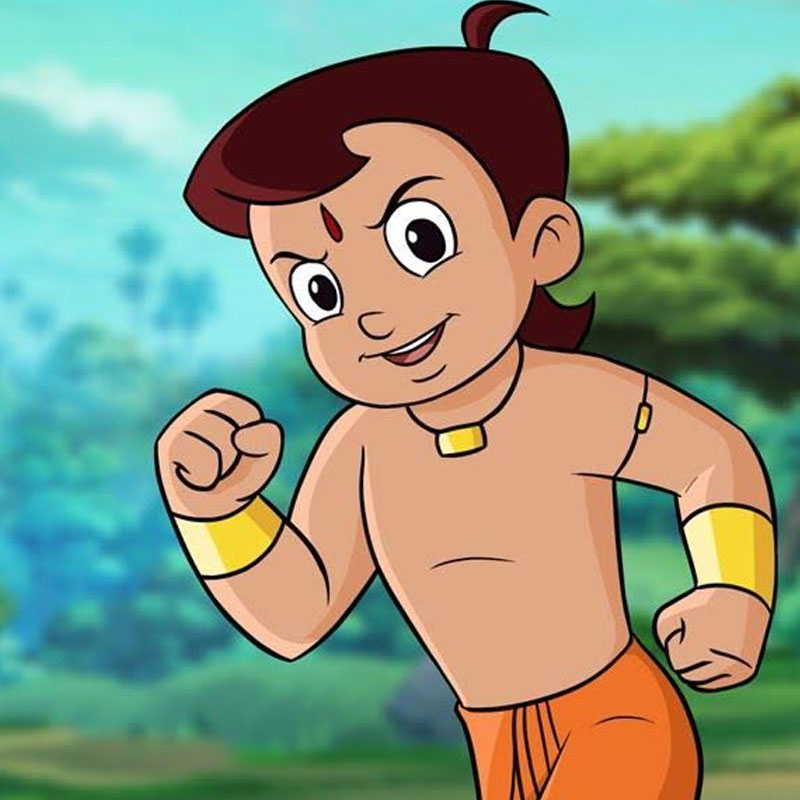
    Brand extension, merchandising and marketing sponsors’ products are compelling reasons to produce original Indian shows and for this intellectual property (IP) rights are crucial. Shaktimaan was probably the first Indian superhero on TV but today’s popular figures are Chhota Bheem and Motu Patlu.

    “The amount required for one single episode of animation content production abroad will suffice for making the entire series in India,” says Toonz Media country business head development Kishor Chandra Shrivastav, who was speaking on a panel recently.

    A big boost to India’s animation industry came when recently Netflix announced it will be creating a spinoff of Green Gold Animation’s popular show Chhota Bheem as Mighty Bheem.

    Animation production is expensive in comparison to a general entertainment channel (GEC) shows with the former requiring Rs 25-28 lakh an episode as against Rs 5-6 lakh for the latter. The advertising rates, however, commanded by the two are inversely proportional according to estimates.

    The type of content and the investment in it also attracts the right kind of sponsors. ICOM Global vice chairman and South Asia Kushal Sanghvi says that low budget content will only get a handful of sponsors while big budget and sponsors will require the storyline to be universal. He gives the example of Disney’s Jungle Book that was a hit in India.

    Sanghvi also highlighted that Indian shows lack merchandising power with the notable exception of Chhota Bheem. For great quality content and merchandising, investment needs to touch Rs 40-50 lakh an episode.

    Punnaryug Artvision founder Ashish Kulkarni differed in his opinion. He said, “I don’t agree completely. In India, there are characters which get licensed. Sometimes, just the character is licenced and not the content. We do not have interesting brands for Indian cinema.”

    The supply of India-produced shows is very limited compared to the unlimited growth of Japanese and other foreign language cartoons such as Doraemon and Shinchan. Since Japan has 15-20 years of headstart over India, their library is massive. In 2016, Cartoon Network had 91.61 per cent foreign shows, Pogo had 82.67 per cent while Disney had 60.61 per cent shows from abroad.

    Licensing can happen only if the character is extremely popular for which it needs to be present on both TV and OTT.

  • Apple commits $4.2 bn for original content

    Apple commits $4.2 bn for original content

    MUMBAI: Apple can’t get enough of taking more bites. The Cupertino-based company is reportedly spending a whopping $4.2 billion a year on coming up with original content by 2022.

    According to a report in Variety, this amount is much higher than the original commitment of $1 billion in 2018. Despite the effort, Apple will still lag the budgets set by video on demand giants Amazon and Netflix. Amazon’s pocket will turn up $8.3 billion for original video content, the highest for any tech giant. This will also shadow Netflix’s $6.8 billion margin.

    Much of Apple’s current programming has been music-based but the company is looking at looking eye-to-eye with contemporaries – Amazon, Netflix and Hulu. This will involve beating them where are best – shows and movies. Apple Music will be rebranded in the next 2-3 years which will also give it a headstart with its 30 million subscriber base. They will get video content access at just $10 a month.

    The idea behind focussing on a new territory is to give a boost to its services vertical, which is expected to make up 14 per cent of the revenue in 2017.

    For now the company has planned two offerings, Amazing Stories reboot from Steven Spielberg and a news-business comedy with Jennifer Aniston and Reese Witherspoon.

  • ‘It is criminal for TV not to think of social change’ – PMC’s Kriss Barker

    ‘It is criminal for TV not to think of social change’ – PMC’s Kriss Barker

    For most programming executives and management in TV companies today, television is all about running on a treadmill chasing ratings, viewership, and the concomitant revenues, followed by the next bonus and promotion. Every trick in the creative book and outside it is resorted to, to keep the ratings of a show on a high.

    Hence, it comes as a breath of fresh air when one comes across a senior media professional who does not care much about ratings or twisted elongated plots, rather focuses on helping the creation of TV and radio content with meaning, which has an impact on society and sparks off social change. US-born Population Media Centre vice-president international Kriss Barker has been behind creative initiatives on TV and radio in 56 countries over her 20-year career.

    She is in India at the invitation of a Hong Kong-based financing and production house and Indiantelevision.com’s founder Anil Wanvari to train Indian TV writers to produce entertainment education, which is based on the PMC Methodology. The latter itself is based on the Sabido scriptwriting methodology, which has been used to write television shows in about 80 languages and more than a 100 countries. The workshop is underway in Mumbai currently and ends on 3 December. Indiantelevision.com ‘s Kirti Chauhan got into a conversation with Barker – who is a PhD in public health  and has made Cape Town South Africa as her home , but travels 300 days each year, preaching the gospel of television with purpose – on the importance of TV as a medium to spark social change and how it can be done in India. Excerpts:

    What are the factors behind your shift from being a health practitioner to a media practitioner and scriptwriter trainer?

    My background is in public health and I have spent a lot of time working on public health inventions. And you find that you are spending so much time treating illness and diseases which are preventable. Public health has avoided doing it for years. We are treating conditions at the very end of the situation, rather than at the beginning. We do not focus so much on prevention, rather we have our eyes on treatment.

    When I found this powerful communication tool, which we call the Sabido or PMC methodology, it really helps to motivate change that can lead to prevention using media.

    Miguel Sabido – a TV researcher from Televisa in Mexico in the sixties and seventies – created this methodology, which focuses not on the story – but the social issue or problem. The story comes last. First, I first need to get ‘what’ is the real problem, and ‘why’ does that problem exist. And then look at ‘positive’ and ‘negative’ values that people in society hold around that. We need to honour these values and we need to integrate those people holding those into the TV show’s script and let those voices be heard.  Sabido or PMC methodology believes there are three characters every story or TV show has: positive, negative, and transitional. The transitional character is the one who has the journey – it is the one, the audience has to identify with. That is the doubting character, who does not know what to do. The positive and negative role models are almost like archetypes – they are too bad and too good to relate to me, but the one in the middle is exactly like me. He or she is the one I relate to.

    In Toilet Ek Prem Katha, the father is the negative character, the daughter is the positive one, and Akshay Kumar is the transitional. You love him.  All three are needed to help tell a story that in turn helps influence and bring about the desired social change.

    There are socially relevant shows being made on TV? What’s so special about a Sabido methodology show?

    A lot of people think they are doing social shows but this is not done effectively. I think it because only some (not all of them) of a whole gamut of theories and golden rules have been captured and used in these shows. You feel you have mastered the techniques but the fact is that you have not mastered the refinements. And you know that a lot of these programmes fail because of this. People have made music videos, short films around responsible parenting etc. Over the years, what we have learnt is that it needs to be a long running TV series, it needs to be a serial drama. You can’t do this in film or documentary, music video or a short number of episodes. You can’t cut short this; everybody is looking at a shortcut. But like in life, you get what you put in and hence, they have failed.

    When we go into a country we do a lot of formative research which helps creative people, the writers, to understand the realities of the situation of the social issues. But we have to be very careful all along the way. For example, we design a show about women inequality, women’s empowerment, the question is how far do you go before women say: no, no, that’s not me! So you have to take it a little bit aspirational, but you can’t take it too far or it is no longer believable.  And it is no longer even desirable.

    How important is it for TV channels and OTT platforms in the modern world to engage in social change shows? Why should they do it?

    It is criminal not to. Media is such an important powerful tool, and it has been misused a lot. We just play with it. And then we get things like the Columbine shooting or people going and shooting a cinema because they saw it in a movie or in a TV show.

    If you want to make a powerful product even more popular, make it more relatable. That’s the big disconnect. That is why the biggies are losing to Netflix and Hulu in the US because the former decide what they want people to see and they forgot that people really want to see themselves.

    What are the challenges you have faced?

    Funding is the big challenge. For example, a radio programme running at least twice a week over a year needs at least 104 episodes. In television, it is at least for a season. However, to get an investor or donor to commit to that is challenging. A radio show of that duration in Africa takes around $1.5-2 million. This is a lot of money for even a donor or investor, or a bucket of investors. They would rather do billboards or a comic book is what we hear sometimes.  The biggest challenge is to convince the investors that if they really want mass change on a big scale, this approach is cost effective as you can reach out to millions of people.

    How receptive have television stations and research been to using television as a tool for changing society?

    They are getting more so now because they have started realising that by not doing this, they would lose the market. For example, we are currently negotiating with Televisa Mexican, they are struggling (especially younger market) to find a way to get back into the market because of Netflix. We come in, and we say that the way to get back that market is to make a show about them.

    We had a hit show in LA, East Los High and the reason behind its popularity was that it was the only show ever produced in LA by Latinos and for Latinos. The whole production and acting cast and crew were Latinos. That’s the first this had ever happened. It seems nuts to me because this was in East LA where the majority of the population is Latino. People will watch shows of a lower production quality as long as they see themselves in the characters and the story. Like in Nollywood where the production quality is not great, but some of them connect so well.

    You have had a legacy relationship with India? Can you elaborate?

    Our predecessor organisation worked here many years ago and helped produce Hum Log, Humrahi on Doordarshan. Since about 2003, we have been wanting to get into India and just haven’t managed to get any inroads. Right now, we have been engaged by south-east Asian investment organisation One Talk Media and then they partnered with Indiantelevision.com. We are training some of the writers in our methodology and we hope to carry something to fruition with the two partners. India is a sophisticated market like Mexico and the US, and this is a model we will follow here. 

     Tell us about your reason to enter India.

    We have been trying to get into India for a long time – it’s a huge-huge market. The reason behind PMC is to try and create a sustainable population for the world. Whether you like it or not, India has a huge demographic impact on world sustainability. So, to be here and looking at societal behaviour change and looking at family planning and population dynamics, looking at women’s empowerment, children’s health – these are exactly the kind of things we need to be doing in a huge powerhouse like India.

    Have you ever cast big stars or are you planning to cast in your social issues related shows?

    We tend not to. And one of the reasons is cost. Our shows are trying to be a slice of life. We want you to believe that these are real people and if you get a big star or a known person, whether for the radio voice over or for a TV show, our viewers are not going to believe that the character is real no matter how good the actor is. So, we tend to take younger, less known voices and faces because we can make him who you want him to be.

    How effective has the Sabido method been in attaining its objective of social change?

    50 of the 55 shows that have been made using the Sabido or PMC methodology have achieved the desired social change objective. So the method works. The four or five that did not work was because we deviated from the methodology or put them in the wrong time slot.

    We lowered the fertility rate in Ethiopia by over a child and a half in a period of two and a half year period.  So it works.

    What is the relevance of societal change in a world of so much audio-video content? What role can it really play?

    A couple of things. Identification is big, these shows are built around that. So it’s entertainment that has a purpose and I feel most of us, I believe, like to be entertained. We want to go in that space where we can just relax, not want to think, but at the same time most of us like learning something. There is no preaching. These are ‘educational’ shows, social change content shows but we are not doing a good job if anybody recognises it to be that. For instance, a viewer in Africa should not tell me that the show is about female genital mutilation. Rather she should tell me it is about Fatima (a character) who had a rough time in her life. Just the educational content should be a part of the entertaining story. If you can build a story about someone who is like ‘me,’ then you have me in. 
  • Netflix expects rapid content growth from India

    Netflix expects rapid content growth from India

    MUMBAI: When Netflix CEO and president Reed Hastings comes calling—and it was his second visit to India this year—you know it means serious business. On a content partnership and library programming hunt, the video-streaming service’s team met up with several Indian media houses, including Shah Rukh Khan-promoted Red Chillies Entertainment and other independent production houses last week.

    Hastings and the Netflix team had a meeting late last week with the editorial team of Network18, a part of Viacom18, an equal Indian joint venture of the US media giant Viacom and a group company of India’s oil-to-energy-to-telecoms-to-broadcast conglomerate Reliance Industries Limited (RIL).

    Netflix later clarified on Monday to Indiantelevision.com that Hastings met up with the editorial team of Network18 before his interview was conducted on the business news channel last week and that no business was discussed.

    Incidentally, Viacom18 not only sits on a huge library of Indian language programming and the ability to produce fresh shows but is also active in the studio business having produced several Hindi blockbusters. Its latest production Padmavati, though, has run into a history vs. fiction controversy and, according to an official statement from the company, the 1 December 2017 release of the film has been voluntarily deferred.

    Both RIL chief Mukesh Ambani and Hastings believe that digital holds a great future for content distribution. Ambani on Friday at the Viacom18 10th anniversary bash here extolled the “synergies” that can come from the talent in the “Viacom18 family and digital distribution” (of Voot and Reliance Jio) where there’s “no limit to growth”. Hastings, in an interview to CNBC-TV18 channel last week, said Netflix “makes TV watching so easy because it is on the internet.”

    Expect Rapid Content Increase from India, says Hastings

    Excited about the one billion plus Indians who “are just wild about entertainment and television market,” Netflix CEO Reed Hastings is betting big here and wants to source more content—originals and Bollywood related—even as his team hunts for partnerships. 

    “You should expect rapid increase (in Indian content on Netflix), dozens of series a year from now will be underway,” Hastings told business news channel CNBC-TV18 in an interview aired late last week when asked to give a sense of investments being made in content from India for the rest of the world. “Of course, there are the global shows we have like Narcos, filmed in Columbia, popular all around the world. We have got a new German original Dark…and then we are adding more Bollywood films. We are also adding Sacred Games and originals that we are doing here in India.”

    Though he has “never completed a whole Bollywood movie” having sampled several of them, Hastings said he does “get the subtlety” of the content and it was fascinating to see the “breadth of entertainment (in India) and how that works”.

    According to Hastings, Netflix is a comparatively new player in India, being active for just two years, but would be indulging in producing more content for the Indian market and simultaneously the world too.

    He also did not envisage that uneven bandwidth infrastructure in India could pose problems to streaming services. “We launched in Mexico five years ago, which had a relatively slow internet, and it has just accelerated tremendously because people want to watch Netflix, YouTube, other content sourced online and it is moving to the internet life,” he said. “In India, in last two years with Reliance Jio, just the biggest explosion in bandwidth (has happened) that the world has ever seen. It is just incredible what is happening here in India. As we go to other countries, (we are) saying an investment like Reliance Jio is transformative for the society.a”

    Though Netflix globally is spending crazy amounts on content and customer acquisition—its content budget is approximately $8 billion—analysts say the company is also adding to its liabilities.

    Despite reporting an impressive earnings report for Q3 of 2017 in October, analyst Ryan McQueeney of US’ Zacks Investment Research pointed to some shortcomings: “Netflix’s third-quarter report revealed that its long-term debt now totals $4.89 billion. This is up nearly 46 per cent from the $3.36 billion in long-term debt that it started the year with, and it marks a 106 per cent growth in debt from the end of the year-ago period. Investors should also note that Netflix said its total liabilities have reached $13.62 billion, up from $10.91 billion at the end of 2016 and $9.82 billion in the prior-year quarter.”

    However, such criticism hasn’t deterred Netflix or its co-founder yet. “Content is best when it really has a local flavour, but then it is approachable by other people,” Hastings said in the CNBC-TV18 interview, adding, “We have an American comedian, Hasan Minhaj, who does stand-up in California and he is popular all over the world now on the Netflix platform. Same is with Narcos. So you get all these interesting crossovers.”

    Netflix relies a lot on data and technology to source and create content. Pointing out that the 110 million-member global company has reached its position because it was producing content that people were “excited about”, Hastings said that they use artificial intelligence to help them figure out what was best.

    “We call it informed intuition. While we want the creatives to have a lot of data but ultimately, it is a judgment call of a human being with a creative vision and that is the intuition. The intuition is the most important part but we would like it to be informed by how other shows have done,” he explained.

    Like a true champ, Hastings did not shy away from giving credit to his competitors where due. “Hotstar is doing a great job here in India. They are leading in the subscription internet category. There are a lot of other global internet companies, YouTube, Facebook, Amazon and Apple. So there are many competitors – the traditional media companies and the entire internet sector. And what that is doing is everybody is bidding to have the most valuable content. So the prices now for creators are increasing,” he told the TV channel interviewer.

    Netflix-Red Chillies Partner For Multilingual Spy Series

    A new multilingual Netflix original series, based on the book Bard of Blood, in partnership with Shah Rukh Khan’s Red Chillies Entertainment has been announced. Penned by young Indian author Bilal Siddiqi, the book will be brought to life as an eight-episode high-octane political espionage thriller series for more than 109 million Netflix members around the world.

    Khan said in a statement, “We have always tried to create world-class content and entertainment from India. Netflix has shown that Indian stories have a global audience and we would love to use this platform and its reach to tell more stories.”

    Set against the backdrop of the Indian sub-continent, the multilingual series will tell the story of an expelled spy, Kabir Anand, who is recalled from his new life as a Shakespeare professor in Panchgani to save his country and long-lost love. A combination of combat skills, intellectual background and personal circumstances propel Kabir to avenge the past and face his deadliest enemies in a race against time. The series will be shot on location and the characters will interact in Hindi, Urdu, English and other languages.

    “We believe in the global vision of Red Chillies to create groundbreaking content out of India. It’s exciting to deepen our relationship with Red Chillies and expand our slate of originals in India,” Hastings said.

    In a series of tweets, dwelling on the partnership, Khan said “Netflix and Red Chillies chill” and later joked “think will cast Reed Hastings in the series too. He is a natural.”


  • Netflix’s international streaming boosts rev in  Q3, op income almost doubles

    Netflix’s international streaming boosts rev in Q3, op income almost doubles

    BENGALURU: Global internet entertainment company Netflix, Inc., (Netflix) reported 30.3 per cent year-over-year (y-o-y) increase in consolidated operating revenues for the quarter ended 30 September 2017 (Q3-17, current quarter) as compared to the consolidated revenue for the corresponding year-ago quarter. Consolidated revenue increased y-o-y to $2,984.86 million from $2,290.19 million.

    Global streaming revenue in Q3-17 increased 33.2 per cent y-o-y to $2,874.65 million from $2,351.13 million driven by a 24 per cent increase in average paid memberships and 7 per cent growth in ASP. Netflix’s international streaming revenue increased 55.5 per cent y-o-y to $1,327.44 million from $853.48 million. Domestic streaming revenue increased 18.6 per cent y-o-y to $1,547.21 million from $1,304.33 million. Domestic DVD sales and rental business (DVD business), the company’s initial business model when it started, has been declining. DVD business revenue declined 16.7 per cent y-o-y to $110.21 million from $132.28 million.

    Netflix’s operating income almost doubled y-o-y in the current quarter (up 96.8 per cent) to $208.63 million from $106.04 million. Net income more than doubled (up 2.51 times) y-o-y to $129.59 million from $51.52 million. Contribution profit from total streaming increased 51.6 per cent y-o-y to $616.26 million from $406.60 million. Domestic streaming contribution profit increased 16.6 per cent y-o-y to $553.91 million from $475.18 million. International streaming contribution profit was a positive $91.91 million as compared to a loss of $68.58 million in the corresponding year-ago quarter. DVD Business contribution profit declined 8.1 per cent y-o-y to $63.13 million from $68.70 million.

    Netflix says that it added a Q3-record 5.3 million memberships globally (up 49 per cent year-over-year) as it continued to benefit from strong appetite for its original series and films, as well as the adoption of internet entertainment across the world.

    The company says that it has been focused on growing global operating margin as a primary profitability metric since hitting its 2020 US contribution margin goal of 40 per cent this past Q1. This allows it to avoid near term optimization for specific domestic or international contribution margin targets which could impede its long term growth. For instance, Netflix anticipates its Q4-17 US contribution margin will be 34.4 per cent (a decline both year-on-year and sequentially) as it boosts its marketing investment against a growing content slate. It says it spends disproportionately in the US to generate media and influencer awareness for its programming which it believes, in turn, is an effective way to facilitate word of mouth globally. In its international segment, Netflix says that it is on track to generate positive contribution profit for the full year. As it moves into 2018, the company aims to achieve steady improvement in international profitability and a growing operating margin as its success in many large markets help fund investments throughout Asia and the rest of the world.

    This quarter, Netflix says it has launched several new series such as the gritty drama Ozark and comedy Friends from College by Nick Stoller as well as Marvel’s The Defenders and returning seasons of fan favorites like Narcos and Fuller House. The company says that it is also making good strides on original films (as measured by member viewing relative to our investment) with the debut of Death Note (based on the popular Japanese IP), Naked (a romantic comedy featuring Marlon Wayans) and To the Bone (an intense drama starring Lily Collins).

    Among other new offerings, Netflix says that it is releasing the second Netflix original series from David Fincher (Mindhunter), new seasons of its globally acclaimed franchises Stranger Things and The Crown, its first Italian and German original shows ( Suburra and Dark) and its most ambitious film yet, Bright, starring Will Smith and directed by David Ayer.

  • OTT players claim voluntary compliance as TRAI petitioned on anti-tobacco norms breach

    OTT players claim voluntary compliance as TRAI petitioned on anti-tobacco norms breach

    MUMBAI / NEW DELHI: Even though the Indian government has asked the broadcast carriage and telecoms regulator TRAI to rein in OTT platforms for alleged flouting of norms relating to tobacco and alcohol advisories in programmes, a majority of digital players claim to be voluntarily adhering to government directives meant primarily for TV shows despite absence of regulations for the sector.

    “As we belong to the traditional medium of television, it comes from within to carry Indian government-advised disclaimer (relating to scenes in TV shows and films involving tobacco and alcohol consumption),” Alt Balaji CMO Manav Sethi told Indiantelevision.com, adding, it is “not mandatory” for OTT platforms to do so, though.

    According to Arre co-founder and CEO Ajay Chacko, “OTT platforms are regulated under the Information Technology Act, but carrying a disclaimer relating to tobacco and alcohol consumption in shows depends upon the online content creators. We certainly carry a disclaimer highlighting the negative effects of alcohol and tobacco on health in our shows as done in films.”

    In a controversial and much-debated move, which some critics dubbed as killing creative freedom, the ministry of health and family welfare, some years ago, had come out with a directive stating that all films and TV shows had to carry a disclaimer regarding the negative effects of tobacco and alcohol consumption during scenes where artistes were shown doing the same.

    But why a hue and cry now relating to shows on OTT platforms?

    The ministry of health, according to a report in Millennium Post yesterday, has written to TRAI to ensure that OTT players such as Amazon Prime, Netflix, Hotstar, Reliance Jio and Voot adhere to the ministry’s directive relating to anti-tobacco and alcohol norms. The ministry felt that OTT and digital platforms were not running health-related disclaimers as done by movies and traditional TV shows. 

    But, why lobby with TRAI, which doesn’t regulate or govern content-related issues? In the opinion of the ministry of health, as enunciated by the newspaper report, internet-based services fell within the purview of the Telecoms Ministry and Telecom Regulatory Authority of India and the issue was flagged with TRAI since anti-alcohol and anti-tobacco agencies were finding it difficult to enforce the rule on errant OTT players.

    Though a source in Voot said it voluntarily runs during shows a health warning ticker — like “Smoking is injurious to health” — as part of “best practices”, the health ministry’s letter to TRAI highlights the conundrum of content regulation relating to OTT platforms.

    Indian films and TV programmes started carrying disclaimers on the negative effects of alcohol and tobacco consumption to adhere to the health ministry directive, indirectly enforced by the ministry of information and broadcasting (MIB), but at present there are no regulations relating to OTT platforms in India.

    TRAI has been debating the issue of OTT regulations, as part of net neutrality, with the stakeholders for over a year now but is still in the process of finalising its recommendations, which are expected to be unveiled some time soon.

    However, it is pertinent to point out that TRAI’s jurisdiction doesn’t extend to content regulation and is limited to content distribution and distribution platforms. As there’s no official content regulator like the Ofcom or the FCC, Indian TV channels broadly follow industry-formulated self-regulation norms, guided by pointers enumerated in the Cable TV Networks Regulation Act that’s enforced by MIB.

    ALSO READ :

    TRAI’s final recommendations on net neutrality likely by September

    Net neutrality: TRAI recommendations likely to keep Indian context in mind

    Surrogate liquor advertising: Time for change?


  • Niche regional OTT player Hoichoi offers Bengali content on iOS, Android and Chromecast

    Niche regional OTT player Hoichoi offers Bengali content on iOS, Android and Chromecast

    MUMBAI: As predicted by most observers, regionalisation as well as niche services are coming to the VOD or OTT ecosystem in India. It’s happening at a trickle now, but could gain momentum over the next few months. For with its large population of more than a billion mobile users, there is room for more — for sure. Kolkata-based Bengali entertainment major Shree Venkatesh Films (SVF), is the latest to take the plunge with its OTT play called Hoichoi.

    Vishnu Mohta – one of the promoters – who has worked with KPMG Risk Advisory and Lloyds TSB corporate strategy in their London offices, is the driving force behind the new platform which is targeting 220 million Bengalis globally. With original web-series, short films, and documentaries exclusively for Hoichoi in the pipeline, the service will also offer over 500 Bengali Movies and 1000 songs for subscribers. Recently, in the run-up to the Hoichoi launch, SVF had rolled out an innovative social media campaign to promote its upcoming original web series, an adult-comedy, Dupur Thakurpo.

    Among the big players in the game figure global players such as Amazon Prime and Netflix, and homegrown startups such as Hotstar, dittoTV, Voot, ALT Balaji and SonyLiv, as well as independent platforms such as TVF Play and Spuul. The congested Indian OTT market has around 32 plus players – some with an overwhelming or exclusive content, some with niche content or pricing plans and others who want to be counted.

    SVF, on its part, had selected ViewLift, a global content distribution and monetisation platform, as its technology partner. The VOD service claims to provide the largest collection of the best in Bengali entertainment content on Web, iOS, Android, and Chromecast. ViewLift CTO Manik Bambha states, “Hoichoi is well positioned to capture significant opportunities in the space with a niche offering meant for Bengali consumers. Hoichoi will benefit from our extensive marketing, data and analytics tools that will help them enhance interaction with their audience.”

    “ViewLift is an expert in the OTT space,” says Vishn, who has a Bachelor of Commerce degree from Bond University Australia and MSc in International Business from Aston University Birmingham, UK. With enhanced service architecture, extensive data and analytics insights, and global client support, ViewLift delivers high quality video consumption experiences worldwide.

    SVF is helmed by Shrikant Mohta, Mahendra Soni and Vishnu. Shrikant is SVF’s creative muscle who produced the internationally acclaimed ‘Chokher Bali’ and five other national award-winning films — ‘Raincoat’, ‘Memories in March’, ‘Apur Panchali’, ‘Chotoder Chobi’, and ‘Chander Pahar’. President of Eastern India Motion Pictures Association (EIMPA), and an active member of Kolkata International Film Festival (KIFF), he initiated the shooting of Bengali films abroad.

    Under Soni’s leadership, SVF distributed almost 900 films including blockbusters like ‘Dangal’, ‘Sultan’, ‘Dabangg’, ‘Ghajini’, ‘’Ae Dil Hai Mushkil’, ‘Kahaani 2’, ‘The Jungle Book’, ‘Kapoor & Sons’, ‘Neerja’, ‘Airlift’ and Drishyam.’ He also drives satellite and music syndication deals, along with film acquisitions.

    Mohta and Soni are pretty gung-ho about Hoichoi. The Indian consumer who has access to OTT entertainment — with internet penetration around 32-34 per cent today, and one-third owning smartphones — may well be spoilt for choice, now.

  • Netflix: DreamWorks’ Cobb to lead kids, family content team, deal with Orange renewed

    Netflix: DreamWorks’ Cobb to lead kids, family content team, deal with Orange renewed

    MUMBAI: Two significant developments have taken place at Netflix, a leading internet entertainment service with 104 million members in over 190 countries, including India, enjoying over 125 million hours of TV shows and movies per day, including originals.

    Orange and Netflix have inked a major agreement and Melissa Cobb will lead Netflix kids and family content team.

    Orange, one of the leading telcos with sales of 40,9 billion euros in 2016, and Netflix have renewed the agreement signed in 2014 for the distribution of Netflix for Orange TV customers in France, and have expanded their partnership to all countries in which the Orange Group is present.

    This strategic partnership will enable the Group’s subsidiaries in Europe, Africa and the Middle East to distribute Netflix in the future, bringing their customers exclusive content of this service to all their screens.

    Netflix will be offered to Orange Poland customers in the coming months as part of its TV offers. Other launches will follow in 2018.

    “We want to offer the best content,” notes Orange CEO Stéphane Richard.

    Netflix CEO Reed Hastings said, “This partnership offers the possibility for millions of our customers to enjoy the leading entertainment service seamlessly, in one place.”

    Cobb has joined Netflix as vice-president, kids and family, overseeing the creation and acquisition of series and films for children and families. Based in the Los Angeles office, Cobb reports to the chief content officer Ted Sarandos.

    In her role, Cobb leads the content team responsible for bringing kids and family titles to Netflix members with an expanded focus on high quality series and event programming across the spectrum of kids and family entertainment, including both animation and live action.

    Cobb joins Netflix from DreamWorks, where most recently she was the chief creative officer and head of studio for Oriental DreamWorks. Based in Shanghai, China, she oversaw all aspects of running the studio and U.S./China collaboration including creative oversight of all projects in development and production, business strategy, production strategy and more for a slate of high quality animated feature films targeted to a global audience.

  • Netflix plans to become leading producer & distributor of high-quality Indian content

    Netflix plans to become leading producer & distributor of high-quality Indian content

    MUMBAI: Online properties are gradually overtaking television in the race to become video content leaders. From mass programming, entertainment now is moving towards personalised experience curated for each individual. Netflix plans  to become a leading producer and distributor of high-quality Indian content. In 2017, it has been doubling down on Indian investment and looking to put together a good content library.

    This year, it announced partnerships with Videocon, Airtel and Vodafone — which would help Netflix go deep into the diverse Indian market, taking in up millions of users to watch Netflix on a mobile phone, TV or through a set-top box.

    Netflix, although, very expensive as compared to the monthly subscription of other OTT / VoD players in India came to the rescue of content lovers, Netflix Asia vice president of communications Jessica Lee tells Verve.

    Be it TV shows or movies, Netflix, which closed Q2 2017 with 104 million members globally, has revolutionised video watching. It offers movies such as Okja and War Machine (both 2017) to a battery of shows such as House of Cards, Narcos and The Crown. Even though Netflix India charges the steepest subscription, it remains popular owing to its content.

    A viewer earlier spent months following a TV series to conclusion, but now, Indians are finishing a series in three days (although, the global average is four days) such as Unbreakable Kimmy Schmidt, Narcos, Bloodline Jessica Jones. The most-loved genre in India is sci-fi, Netflix believes.

    Netflix believes it is touching a pool of consumers in India with a great passion for diverse entertainment.  The VoD service offers global original shows from The Crown and Stranger Things to mainstream, star-driven Indian films such as Shah Rukh Khan movies, Baahubali and Dangal.

    It is also working on independent films with film-makers in India. Comedy is another popular genre in India which Netflix is thriving on with original specials from Aziz Ansari, Russell Peters, Ali Wong, Chris Tucker, Hasan Minhaj and Dave Chappelle.

    Some of the popular Netflix originals in India, one of its heaviest users of the ‘download’ feature, are Daredevil, Luke Cage, Narcos, House of Cards, The Crown, Stranger Things and Master of None. As a global platform, Netflix sees great stories travelling across regions which is a huge opportunity for Indian content creators.

    Indian content is a part of Netflix’s global plan. For 2017, its content budget is USD 6 billion for both, licensed and original content. It plans to reach over 1,000 hours of original content this year — about 400 original TV series and films including ones from India.

    On the originals front, Netflix is focused on finding great Indian stories – for the world to see, ‘Sacred Games’ being the first. It recently announced two other originals, Selection Day and Again. Another area for Netflix is top-quality local stand-up originals with, for example — Aditi Mittal and Vir Das.

    Netflix believes watching together is becoming a trend in India, with 79 per cent of couples surveyed saying that streaming is a way to spend time together. It has gathered that India is a nation of commute streamers. Indians, it says, are 82 per cent more likely to stream at 9 am, and the peak streaming time in India is 5 pm.

    An interesting habit Netflix has observed in India is that while 31 per cent of its subscribers sign up on mobiles, they move to TV around six months later. While sign-ups on television are lower (at 12 per cent), within six months that behaviour grows to about 32 per cent. Netflix concludes that consumers are taking advantage of the flexibility it allows — to watch on multiple devices.

    ALSO READ :

    Netflix to premiere multilingual original The Eddy by Academy award-winner Chazelle

    Indian content at Netflix to be creatively lead by Disney’s Simran Sethi

    Disney parts ways with Netflix, plans sports & TV shows VoDs, buys BAMTech majority


  • Netflix to premiere multilingual original The Eddy by Academy award-winner Chazelle

    Netflix to premiere multilingual original The Eddy by Academy award-winner Chazelle

    MUMBAI: Netflix, a leading internet entertainment network, has announced The Eddy, a new Netflix original series from Academy Award-winning director Damien Chazelle. The eight-episode series comes from IMG and will premiere exclusively to Netflix members around the world.

    Executive produced by Damien Chazelle, who will direct two of the episodes, and written by five-time BAFTA Award-winning and Olivier-winning writer Jack Thorne (National Treasure, This is England, Wonder), The Eddy is an eight-episode musical drama series that will be shot in France and feature dialogue in French, English and Arabic. Emmy-winning producer Alan Poul (Six Feet Under, The Newsroom), will also executive produce, and original music will be written by six-time Grammy Award-winner Glen Ballard (Alanis Morissette’s Jagged Little Pill, Michael Jackson’s Bad). Following on the heels of other productions in Europe, including The Crown and the upcoming Dark, The Eddy continues Netflix’s investment in international and French content.

    The Eddy is a musical drama set in contemporary multi-cultural Paris revolving around a club, its owner, the house band, and the chaotic city that surrounds them.

    Said Chazelle, “I’ve always dreamed of shooting in Paris, so I’m doubly excited to be teaming up with Jack, Glen and Alan on this story, and thrilled that we have found a home for it at Netflix.“

    Erik Barmack, Vice President of International Originals at Netflix says, “From the intense, complex relationship between a jazz drummer and his instructor in Whiplash to his dazzling duo of lovelorn Los Angelenos in La La Land, Damien’s work is emotional and electrifying. His projects have a rhythm all their own, and we’re incredibly excited for him, Jack, Glen, Alan and the production team to bring their vision for The Eddy to Netflix. We couldn’t be happier that he will be shooting The Eddy in France and that we will bring this bold, global and multilingual series to our members around the world.”

    Chris Rice, WME | IMG Partner says, “The creative team behind ‘The Eddy’ is truly visionary, and we can’t wait to see the world that they create. This project is the definition of premium, global programming, and as one of the first projects of its kind from IMG, we couldn’t be happier to have Netflix as the home to take it to audiences around the world.”

    The series will be produced by Patrick Spence and Katie Swinden’s Fifty Fathoms. BAFTA-winning producers Spence (Guerilla, Fortitude) and Swinden (Luther, Peaky Blinders) will executive produce along with Chazelle, Thorne, Poul and Ballard.