Tag: Netflix

  • Endemol Shine sees scripted shows as new area of growth

    Endemol Shine sees scripted shows as new area of growth

    MUMBAI: Endemol Shine India (Endemol Shine), best known for producing shows such as Bigg Boss, Master Chef, Khatron Ke Khiladi and Dance India, has a lot going for it this year. The company will produce the second season of The Test Case for Balaji Telefilms’ OTT platform ALTBalaji after tasting success in the first season. Moreover, the production house is planning a slew of originals after securing book rights from Indian authors and publishers.

    In an interaction with Indiantelevision.com, Endemol Shine CEO Abhishek Rege said that while the focus remains on unscripted shows, it is the scripted shows that will help the company grow leaps and bounds. During the conversation, Rege revealed that Endemol Shine could dabble into owning an IP for a show if there is scope for pre-selling the material to broadcasters.

    Recently, the company joined hands with the premium video-on-demand service Viu to produce a localised, ten-episode adaptation of global phenomenon The Bridge. Going forward, the production house has set its sights on producing more original shows.

    Edited excerpts:

    Tell us about your plans for 2018.

    We are discussing the next subsequent series for The Test Case with ALTBalaji. We are also looking at a lot of developments in terms of originals, based on book rights with Indian authors; I think we will be able to make an announcement by May. We have tied up with Indian authors and publishers for the same. It’s still in the development stage; it could be in the international production level as well. We have reached non-scripted shows and will continue to grow with the same format. Having said that, what will help us grow is scripted shows. We treat digital or traditional TV platforms as scripted. Those are the growth areas that we see. As a company, we want to produce more original shows. We are expecting an increase, both in terms of revenue and bottom-line.

    What is your take on production houses retaining show IPs?

    If a project comes by and if we are allowed, we could take that risk but, ideally, not right now. The story should be good enough to take it to the international markets. We could do a pre-sale because we have the backend to do that. We could flip the model a bit, but broadly the same model applies that the Indian broadcaster would be paying much lesser than the cost.

    What do you think about GEC viewership being impacted during IPL season?

    We have probably moved past that thanks to the second screen. Largely, sports and news are already consumed on the phones. At the end of the day, traditional TV still survives because it’s the mass promotion mix. Whatever you do with the IPL, you have to advertise on the screens. Every individual will have their own screen. They have sports, Olympics to watch on one screen, they will have traditional TV to watch for something else. So, Amazon and Netflix are not affected and TV is also not affected.

    What is your take on mythological shows?

    As they say ‘old is gold’, all the old songs still work. Ten to fifteen years back, 18-20 year olds also watched that. Your grandparents taught you about mythology for your understanding; some are forced to consume these shows, while some willingly watched it. For instance, take a show named Jai Malhar, grandparents forced the youth to watch this show. The youth didn’t go to watch it, it was the pre-teens and the younger lot, in the evening, after coming back from playing or school, their grandparents have the TV on with Jai Malhar.

    What is your thought on content segmentation strategy?

    I don’t think that really exists. It used to be 10 years back. The assumption was that the channel wanted to keep their viewers to them, it was never a fight about the product, it was a fight about the channel. So, the idea behind it was, no one moves to another channel as the control shifts, the housewives will take over or the grandparents will take over…that was the theory earlier as it was channel to channel. Later there were many shows on different channels. So, right now it is more of a psychological thing rather than a strategy.

    Also Read :

    History TV18 focuses on relatable local content

    Cartoon Network HD+ adds Tamil, Telugu feeds

    Sony Yay banks on originals with a slew of fresh content

    No reason for GECs to panic as IPL grabs eyeballs

  • Netflix hires Shrishti Behl to build original Indian slate

    Netflix hires Shrishti Behl to build original Indian slate

    MUMBAI: For some time now, Netflix has, slowly and steadily, been building its India team. Now the latest to be roped in is veteran content creator Shrishti Behl in the critical position of director for international originals. Both Behl and Netflix were not available for a response but her hiring was confirmed by a source close to the development to Indiantelevision.com. 

    Behl’s joining date has not been announced but she has been charged with helping creating global quality original content out of India, working closely with Indian producers. It is expected to invest close to $100 million  in originals from India to start with over the next couple of years.

    She was to the film industry born. Daughter of producer Ramesh Behl and sister of filmmaker Goldie Behl who is married to Bollywood actress Sonali Bendre. Behl has been an independent go-getter since her teenage days when she jumped into the marketing world at the tender age of 15. It was the sudden demise of her father that compelled the young Behl and her brother Goldie Behl to shoulder the responsibility of their production house Rose Movies.

    The spunky lady has made a name for herself on the small screen when she floated Rose Audiovisuals in partnership with Goldie. With thousands of hours of programming delivered across all channels namely Star Plus, Life OK (Star One), Sony, SAB TV, Colors, ZeeTV, Zoom, Star Gold, Channel V and EPIC. Behl was the brain behind Star Plus’s mega mythological show, Aarambh. 

  • Netflix deal will help in customer retention, revenue enhancement: Tata Sky’s Harit Nagpal

    Netflix deal will help in customer retention, revenue enhancement: Tata Sky’s Harit Nagpal

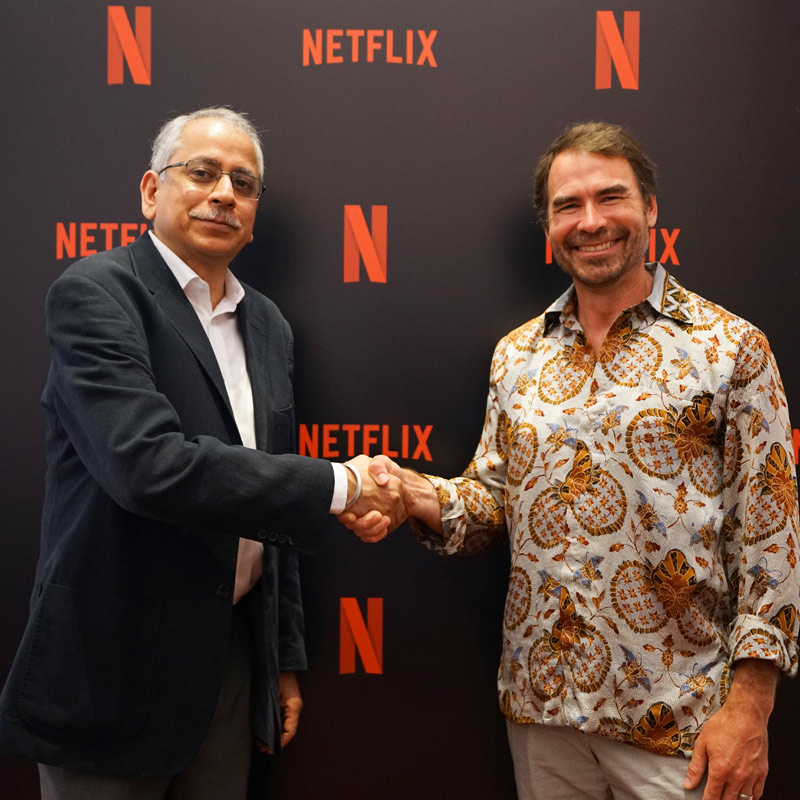
    Tata Sky MD and CEO Harit Nagpal has been a bit of an early mover in terms of innovation and building a world-class satellite TV operation. Whether it has been in the case of HD or VAS or top-notch customer services, Tata Sky has been driving many of the path-breaking initiatives in the DTH sector. Nagpal announced a major strategic partnership with Netflix under which Tata Sky subscribers will be able to watch the world-class streamer’s on-demand content, including TV shows, films and documentaries, in the coming months through the direct-to-home operator’s platforms.

    Nagpal was in APOS Bali and was on stage for a conversation with MPA’s Vivek Couto. He openly spoke about the reasons behind the Netflix partnership, how it will benefit customers, what it means for Tata Sky and how does he see the satellite TV leader continuing with its leadership status. Sources indicate that Tata Sky is generating close to a billion dollars in revenue from about 15 million subscribers. Excerpts from the conversation:

    Why the Netflix tie-up?

    We don’t look at us as satellite TV platforms, we look at ourselves as the equivalent of grocers in this industry that produce and distribute content. We are a distributor part of the content, depending on the customer, whenever he wants to buy wherever he wants to watch we are privileged to provide him that—that was our thinking.

    Some customers of ours—not all, a very small fraction in India—are having access to good quality broadband, which can carry video. Also, they have the capability of paying for the broadband. And third, they don’t have the time to watch when it is broadcast; they’d rather watch it at their time.

    Who are these customers?

    Unlike the western world, where almost everybody falls in this category, in our country, a very small fraction falls in this group. Fortunately, we are providing linear television services to this kind of customers and today there are about 3.5 million such customers who are paying about $10 plus per month on content in a country whose ARPU is much lower. We have two million of these customers. So, it’s been our endeavour to create a platform. Because the lunch is lying in front of me, I would rather eat it rather than wait for someone else to come and eat it. We met Reed (Hastings) and Bill two years ago at their villa in Bali during APOS. And the rest is history.

    How will you differentiate from other service providers and mobile companies?

    We are going to distribute almost everything but not on-demand content like the mobile guys did. Mobile guys could best take a phone and put in five, six, seven eight apps. We were distributing television very differently. We were going to Sony, Star, Zee, Colors and buying content in bulk but providing it to the customer by genres making content discovery easy. That means if a linear TV customer says I don’t have kids, I like music, I don’t like sports, and I speak Malayalam, then I see no reason why he should not be watching on-demand content in the same way.

    It is my job to get all the content from various sources or on demand platforms and make the content discovery as easy as I have made it on the TV screen. We are giving him probably seven days catch-up TV for what he is subscribing on linear. To that you add Netflix, Amazon, Hotstar, YouTube, and whatever else become the prominent apps. You distribute that content via genre and offer it to him for a little over what he is willing to pay for linear TV.

    Is the Netflix addition mostly about ARPU enhancement in India?

    It’s retention and revenue enhancement. We have noticed that a customer when he gets into one of our services, his inclination to churn reduces. To the extent of around 75 per cent. The moment he gets dependent on a DVR, the 12 per cent churn becomes three per cent churn.

    So one more dependency for another service which is OTT will drive down the churn or deactivation even if it is for a short duration. The premium segment which accounts for 15-20 per cent of our base, there is no more price increases you can take on them and hence grow revenue.

    They are also consuming almost every single genre of content that is there. There is no genre to go into and select. We can lure in these guys by giving him additional services.

    Will the tie-up work against Tata Sky? Don’t you fear competition?

    Competitive intensity is good for the industry especially at the stage we are in. We need more high-quality competition to come into this business. I don’t want to run a monopoly because monopolies become very lethargic and they don’t feed the customer and they don’t grow the industry. At this stage, the more, the larger number of good quality competition that comes in it will keep us on our toes it should be there. It will help get good quality of product to the customer and is welcome.

    It’s not going to be a single platform. It’s going to be a combination. Just like a set top box is HD, DVR, SD and all those kinds of things. It’s going to be low cost to high cost. Even the customer price models will be different. You pay upfront a lot and don’t make me subsidise, you pay less per month. You make me subsidise the equipment, you pay me more per month.

    Has not the pay TV market slowed down in India? What about free to air?

    Deceleration is not happening. First of all the pay TV mass in India was not growing. What was happening was the transition from analog cable to digital platforms. If you look at the last five or six years, the pay TV base has not grown tremendously. 50 million people we have migrated from cable TV to DTH. That was growing at a pretty fast pace earlier. In the last two years, it slowed down. First year was because of free to air (FTA). We licked that problem in May last year. And since that the FTA growth has been curbed.

    There has been a lack of competitive intensity amongst the DTH competitors in the last one year. Primarily because a couple of them were busy panning out the merger and they were not participating in the competition in the market. Which has probably led to the slowing down of migration from cable TV to DTH. It’s a momentary thing, I guess. It’s going to come back.

    We don’t treat FTA as competition. FTA is a good thing. FTA provides me a pool from which I can source customers from. Because the customer does not buy a TV and decide to pay subscription simultaneously. He first buys it as subscription is going to be free. Then some of them upgrade to a paid service and that’s the pool we can tap into.

    Where do you see growth coming from?

    I see growth coming from phase IV. Two thirds of India lives in phase IV. They

    live in small villages which have 50 and 100 households. Drawing a cable to that village is uneconomical. If the cable operator who was serving those 150 households, if he loses 50 households then serving the balanced left-over subs become uneconomical.

    Will the march of the telcos like airtel, Jio, Idea Vodafones into content and distribution also impact your business?

    I welcome the telcos getting into the content business because it will keep the addiction to content alive. Compare it to the time when we only had land lines, we talked for 200 minutes a month. And we added mobiles, we are talking for 600 minutes a day. Because I am not restricted to my sofa and talking. I can be in the car, on the road, in the loo, wherever. Similarly, if I am restricted to my living room, then there are chances of addiction not become addictive enough.

    If I have the option I am watching something on the phone then I come back and again watching it on the TV, the addiction will stay. So, it’s additive not subtractive. And nobody has watched content on a six-inch screen if a 42-inch was available in front of him. You will watch it if the remote is taken from you by your wife or the kid, you will watch it on the mobile sitting in the same room: I am not deprived of the content I want to watch.


  • Tata Sky brings Netflix content for customers

    Tata Sky brings Netflix content for customers

    MUMBAI: Streaming giant Netflix and DTH operator Tata sky have entered into a strategic partnership for easy access to a world of content through future Tata Sky platforms.

    “We are delighted to partner with Tata Sky to bring great content under the same roof. With this new partnership and Netflix’s stellar line up of original content from across the world, Tata Sky’s customers will be able to seamlessly access and enjoy all the best entertainment they love in one place,” Netflix global business development head Bill Holmes said.

    Tata Sky subscribers will be able to browse and access the entire Netflix service, including TV shows, films, documentaries, stand-up comedy and kids’ titles. Netflix’s service includes over a thousand hours of ultra HD content, complementing Tata Sky’s extensive high-quality programming.

    “Tata Sky’s partnership with Netflix adds another dimension to providing world-wide quality content on-demand for our subscribers. Keeping up with our promise of pioneering innovation, we will soon announce the offering that is possible with this partnership. We are glad to include Netflix in our family and look forward to keep offering an extraordinary entertainment experience to all our subscribers,” Tata Sky CEO Harit Nagpal said.

    Also Read :

    Tata Sky woos new customers with free Star Sports channels

    Indian content at Netflix to be creatively lead by Disney’s Simran Sethi

  • India fastest-growing market in first year for Amazon: Jeff Bezos

    India fastest-growing market in first year for Amazon: Jeff Bezos

    MUMBAI: Amazon’s unstoppable march continues worldwide, including India. Putting an end to the speculation around the number of Amazon Prime subscribers, Amazon CEO Jeff Bezos has finally revealed the data in a letter to shareholders. The e-commerce giant has crossed 100 million subscribers for its Prime service globally. In the letter, Bezos specifically talks about its India feat to shareholders: “Prime added more members in India in its first year than any previous geography in Amazon’s history.”

    The letter includes an entire mention to India, not given to any other country, including the US. He said, “Amazon.in is the fastest-growing marketplace in India and the most visited site on both desktop and mobile, according to comScore and SimilarWeb. The Amazon.in mobile shopping app was also the most downloaded shopping app in India in 2017, according to App Annie.”

    He went on to state that Prime selection in India now included more than 40 million local products from third-party sellers and that Prime Video was investing in India original video content in a big way, including two recent premiers and more than a dozen new shows in production.

    For the first time, after 13 long years of the service’s launch, the company has shared such a figure publicly. The reason could also be to counter Netflix’s revelation earlier in the week when it said that its subscriber numbers were up from 117.6 million a year ago to 125 million globally. Bezos started off the letter by congratulating its people for making Amazon rank first on the American Customer Satisfaction Index for the eighth year in a row.

    In the letter, Bezos said that Prime Video continued to drive Prime member adoption and retention, countering analysts who said that Prime Video acts as a catalyst to boost its e-commerce business.

    Since its entry in the Indian market, it has left Netflix behind in the race, its prime competitor in the international market. To strengthen its foothold in the Indian market, it launched original shows for Indian audiences last year. It recently announced a new Prime Original reality show Hear Me. Love Me. It also announced the second season of Inside Edge after the show created a stir after its first season.

    Bezos lauded his customers in his letter. He said, “One thing I love about customers is that they are divinely discontent. Their expectations are never static–they go up. It’s human nature. We didn’t ascend from our hunter-gatherer days by being satisfied. People have a voracious appetite for a better way and yesterday’s ‘wow’ quickly becomes today’s ‘ordinary’. I see that cycle of improvement happening at a faster rate than ever before. It may be because customers have such easy access to more information than ever before.”

    He went on to state that the only way to stay ahead of rising customer expectation is by giving them high standards. He didn’t shy away from admitting that Amazon had seen ‘billions of dollars worth of failures’ on its way to meet this target.

    Amazon Music is also doing well globally. “Amazon Music continues to grow fast and now has tens of millions of paid customers. Amazon Music Unlimited, our on-demand, ad-free offering, expanded to more than 30 new countries in 2017, and membership has more than doubled over the past six months,” the letter read.

    Moreover, Amazon has managed to reduce the amount of time required to teach Alexa new languages using machine translation and transfer learning techniques that has helped it to serve countries such as India and Japan.

    In India, other than competing with local and global OTT players, it is also fighting its domestic e-commerce rival Flipkart. According to a Mint report, Amazon India nearly doubled its authorised capital to Rs 31,000 crore ($4.74 billion) last year. As India is a large market, the company is trying to explore every opportunity to woo more subscribers with better infrastructure and technology.

    “We continue to aspire to be Earth’s most customer-centric company, and we recognise this to be no small or easy challenge. We know there is much we can do better, and we find tremendous energy in the many challenges and opportunities that lie ahead,” Bezos said concluding the letter.

    Also Read :

    Amazon India to launch 10 originals in 2018

    Amazon Prime Music ties up with Saregama

  • Introducing Mobile Previews

    Introducing Mobile Previews

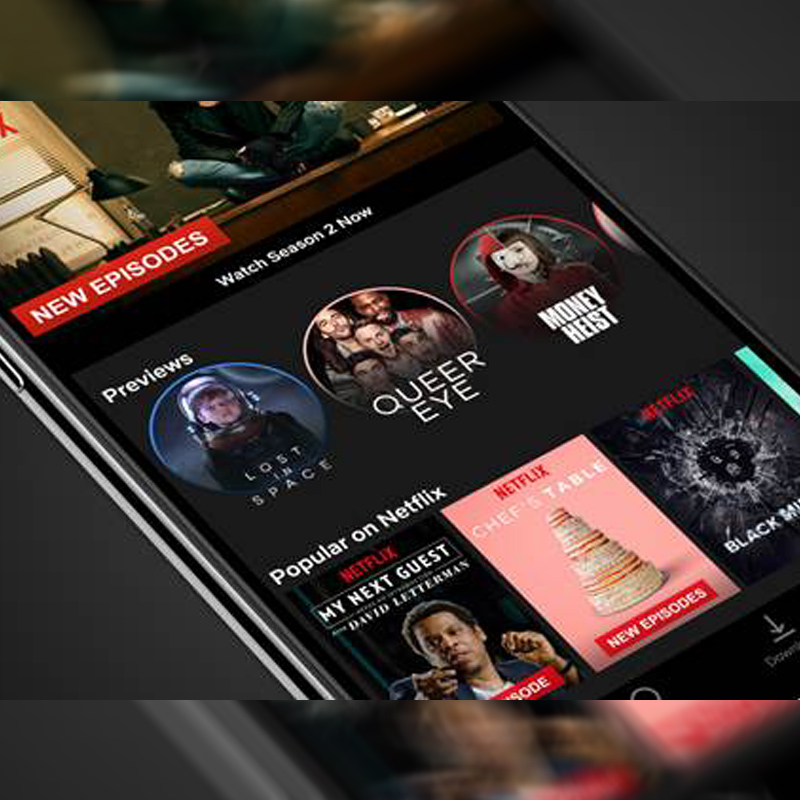
    One of the best ways to know if you’ll like a new series or movie is to watch a quick trailer. Today, we are excited to introduce mobile previews (launching today on iOS and coming soon to Android) to the mobile experience. Mobile previews present members with a fun, simple, and easy way to learn about all the new content on Netflix — and find something great to watch even faster.

    Each preview is about 30 seconds long and presented in a vertical format, so you can watch them without turning your phone. The previews are shown like a slideshow, so if you see something you like, you can tap play or add to your list. If not, you can swipe or tap the screen to advance to the next preview.

    Last year, we introduced video previews to the TV experience, which brought dynamic and engaging video to the TV interface. Years of testing has made it clear that video previews help our members browse less and discover new content more quickly. With the launch of mobile previews, we are bringing a video browse experience to your mobile phone in a fun and mobile-optimized way.

    Mobile previews load very quickly, are personalized to your specific tastes, and are easy to use. We hope you like using this new feature and that mobile previews help you find your next favorite show!

  • Netflix beats earnings forecasts riding on global user additions

    Netflix beats earnings forecasts riding on global user additions

    MUMBAI: Exceeding user addition forecasts, Netflix’s first quarter (Q1) earnings were in line with expectations while revenue bettered estimates.

    Revenue grew by 43 per cent year over year in Q1 due to a 25 per cent increase in average paid streaming memberships and a 14 per cent rise in the average selling price (ASP). Operating margin of 12 per cent rose 232 bps year over year. This was higher than the company’s quarter guidance, due primarily to the timing of content spend.

    Global net user adds totalled a new Q1 record of 7.41 million, up 50 per cent year on year and higher than the forecast of 6.35 million.

    “The variance relative to our guidance was driven by continued strong acquisition trends across the globe which we attribute to the growing breadth of our content and the worldwide adoption of internet entertainment,” Netflix said in its statement.

    In the US, it added 1.96 million memberships (compared with forecast of 1.45 million). Outside of the US, membership grew by 5.46 million (forecast of 4.90 million). Our international segment now accounts for 50 per cent of revenue and 55 per cent of memberships

    Netflix has relied on international growth and heavy investments in original content to drive subscriptions — and Monday’s results provided an update on their effectiveness.

    Netflix’s addition of 7.41 million international subscribers set a new record, marking growth of 50 percent from a year ago.

    Chief content officer Ted Sarandos said Netflix has shot original content in 17 countries as it focuses more on local programming, and that many of Netflix’s foreign-language shows would be considered “big hits” on American cable channels, thanks to artful subtitling. CEO Reed Hastings added that Netflix has also seen success on its international mobile app offerings. But Hastings also said that the company hadn’t changed its view on expanding in China, and will continue to license content.

    The company also said it expects to have $7.5 billion to $8 billion of content expenses this year, in line with previous estimates. Netflix had said it expects to grow to 60 million to 90 million members in the U.S. over time and that it would spend $8 billion on content and $2 billion on marketing this year.

    The company highlighted Spanish-language hit La Casa de Papel, unscripted series Queer Eye and franchises such as Marvel’s Jessica Jones, Grace and Frankie, Santa Clarita Diet and A Series of Unfortunate Events. Netflix also credited new talent, such as Shonda Rhimes and Jenji Kohan, for their “proven track record of success” and for allowing Netflix to cut back “reliance on third-party studios.”

    “We’re investing in more marketing of new original titles to create more density of viewing and conversation around each title,” the company said.

    The marketing spending comes after Netflix was barred from competing at the Cannes film festival due to a rule change — a setback the company called unfortunate.

    One thing that’s not on the spending slate, Sarandos said, is news programming.

    “Our move into news has been misreported over and over again. We’re not looking to expand into news beyond the work that we’re doing in long-form and short-form documentary,” Sarandos said. “Topical interview shows, absolutely, but keep in mind, those are entertainment.”

    Netflix faces increasing competition from Amazon and Disney, which have their own offerings, as well as traditional media companies and technology companies such as Apple. Hastings said the company still has a long way to go to compete with the likes of YouTube and noted that Netflix’s ability to raise prices depends on providing more value than competitors.

    At the same time, Netflix is expanding into cable bundles and recently announced a new offering with Comcast, in addition to bundles with Sky, T-Mobile and Altice.

    Netflix said on Monday the bundles allow the company to upsell existing subscribers. Executives said on a conference call that the “new wave” of operator partnerships was a consistent shift across all geographic markets.

    “We remain primarily a direct-to-consumer business, but we see our bundling initiative as an attractive supplemental channel,” the company said.

    public://f_5.jpg

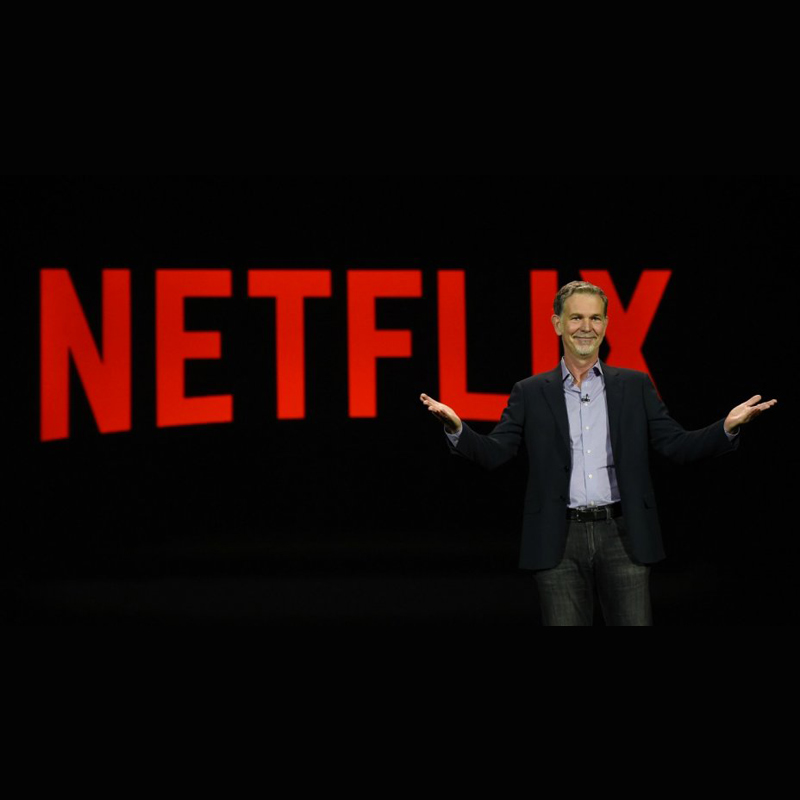
    In February this year, Hastings, at a business summit in India, said that  Netflix saw a potential of adding 100 million customers in India. “It definitely helps to have confidence on the growth of the internet. Even we couldn’t predict the last two years of Indian internet growth,” he had said.

    Also Read :

    Localised content the way forward for Netflix in India

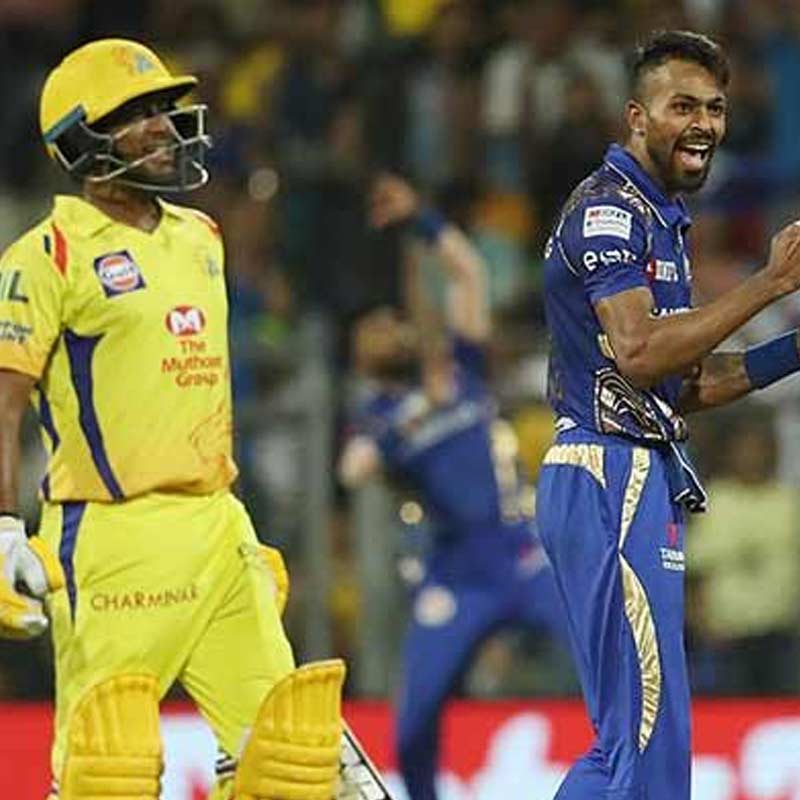
    Netflix announces unscripted series on Mumbai Indians

  • Netflix pulls out of Cannes Film Festival

    Netflix pulls out of Cannes Film Festival

    MUMBAI: Putting an end to speculation, Netflix has confirmed that it would pull out of the Cannes Film Festival entirely. The streaming giant won’t bring any film to the esteemed film festival following a rule change. In an interview with Variety,  the company’s chief content officer, Ted Sarandos, spoke about the decision.

    Last year, Netflix came to the festival with two movies Bong Joon-ho’s Okja and Noah Baumbach’s The Meyerowitz Stories. French theatre owners did not take it very well and protested the inclusion of these movies as the law in the country requires movies to not appear in home platforms for 36 months after their theatrical release. The rule is contradictory to Netflix’s day-on-date release.

    In addition to that, a new rule from this year imposes a ban on any film in the competition without theatrical distribution in France from playing. Though Netflix could screen films out of competition, Sarandos says that doesn’t make sense for the company.

    “There’s a risk in us going in this way and having our films and filmmakers treated disrespectfully at the festival. They’ve set the tone. I don’t think it would be good for us to be there,” he said. He also said that the new rule was implicitly about Netflix.

    “We loved the festival. We love the experience for our filmmakers and for film lovers. It’s just that the festival has chosen to celebrate distribution rather than the art of cinema,” he added later.

    Though Sarandos himself won’t attend the festivals, some employees from the company will be there to acquire films among the bunch that would be there without distribution.

    Also Read :

    Netflix to boycott Cannes Film Festival 2018?

    Localised content the way forward for Netflix in India

  • Netflix announces unscripted series on Mumbai Indians

    Netflix announces unscripted series on Mumbai Indians

    MUMBAI: Netflix is targetting India’s love for two things – entertainment and cricket – in one fell swoop. The leading over the top (OTT) platform has announced the production of an original unscripted series revolving around the Mumbai Indians, three-time winner of the Indian Premier League (IPL).

    The platform has collaborated with Condé Nast Entertainment for the upcoming production. The show will be available exclusively on Netflix to over 117 million members in 190 countries around the world.

    Players from MI will be followed both on and off the field. The show attempts to take a deeper dive into the cricketing values and traditions of the successful IPL franchisee while it embarks on the eleventh edition to attempt a fourth win.

    “The series will bring viewers a never-before-seen look at the richest tournament in cricket–the world’s second most-watched sport–covering unseen aspects of the team, the compelling stories and characters that bind them with the vibrant city they call home,” an official statement from the company read.

    To make the local connection strong, the streaming giant is coming up with several Indian originals. Netflix India recently premiered Love Per Square Foot, a full-length Hindi romance. The platform will premier Sacred Games on 6 July. Now, it has chosen India’s most popular sport as the central theme for another original.

    Also Read:

    Localised content the way forward for Netflix in India

    Indian content at Netflix to be creatively lead by Disney’s Simran Sethi 

  • Netflix to boycott Cannes Film Festival 2018?

    Netflix to boycott Cannes Film Festival 2018?

    CANNES: Netflix is known to do things differently. While almost everyone trips over every hurdle to get into the Cannes Film Festival, the world’s largest streamer is mulling over giving it a miss this year.

    The reason: festival director Thierry Fremaux’s announcement last month that he would not open the doors to any producer to enter the Cannes official competition selection if the film does not have a theatrical release in France.  It had enforced the stricter regulations in 2017 and Fremaux reaffirmed that the regulations would stay last month.

    And that seems to have got the Netflix management, led by Reed Hastings and Ted Sarandos, agitated as one of the world’s largest creators of content releases most of its films on its over the top (OTT) platform for consumption by its 117 million paid users.

    The film festival’s team, however, has allowed studios, without a French release for a film, to submit it for screening but not take part in the Palm D’Or competition.

    French law forbids films released theatrically in France to be shown online until a three-year window since the first exhibition is crossed; which does not make for a good business model for Hastings, as subscribers pay anywhere between $9 and $14 for a Netflix subscription, depending on whether pricing plan is basic or premium. And the streaming service is not about to change its biz model for the festival. Last year the Cannes Film Festival competition jury president Pedro Almodovar had raised a stink that having a film win the Palm D’Or without a theatrical release was unthinkable. French theatrical exhibitors have been fuming that Netflix films are not being released in their cinemas, thus cutting them out of potential revenues. 

    Hastings and Sarandos were not available for comment at the time of writing. But Reed unequivocally had stated at the time when the rules were announced last year by the festival that the “establishment” was “closing ranks” on his company.

    Also Read :

    Siddharth Kumar Tewary features among Asian producers to watch at MIPTV

    Cannes Lions awards lifetime achievement to Piyush & Prasoon Pandey  

    TVF’s ImMature first Indian show to reach Canneseries