Tag: Netflix

  • Broadcasters aiming at quality content on both TV, digital

    Broadcasters aiming at quality content on both TV, digital

    MUMBAI: The impending death of the television is something people have been talking about but that future is yet to arrive. However, one can’t ignore the fact that today’s audiences do consume content anywhere and from any platform.

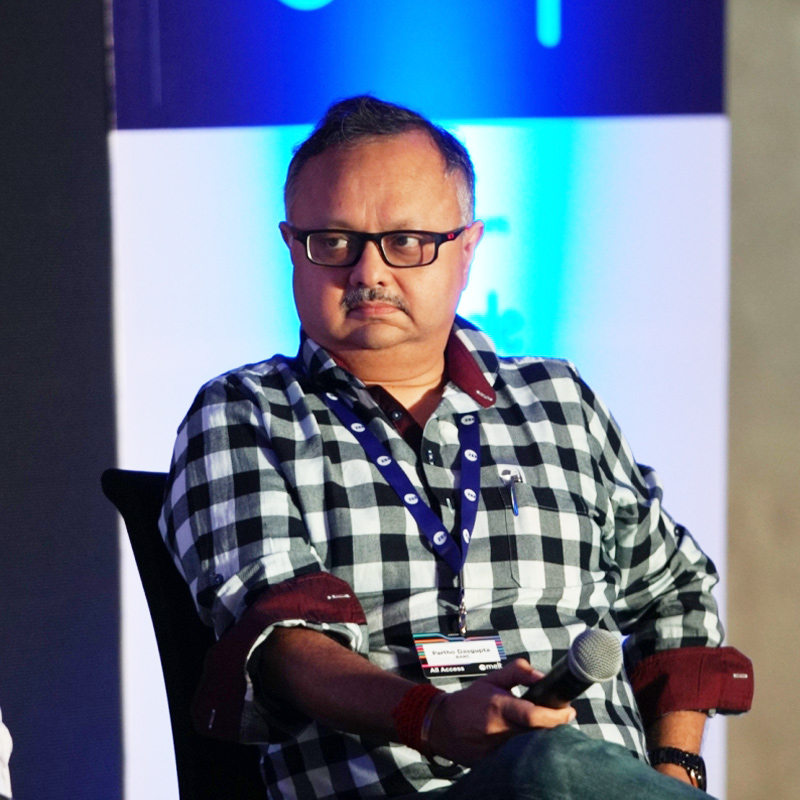
    Zee Melt 2018 saw a session on ‘The Next Seismic Shifts in Television’ with panellists Zeel domestic broadcast business CEO Punit Misra, Mediabrands IPG CEO Shashi Sinha and BARC CEO Partho Dasgupta. Provocateur Advisory principal Paritosh Joshi moderated the panel.

    When asked about the move to launch Zee5 as being a defensive strategy or a move to be at the front foot in the industry, Misra said, “Advertisers look for ROI. ROI on TV is significantly higher than any other. But it is a business of content and there is huge consumption happening on digital. However, if you do just digital, ROI can go horribly wrong.”

    He added that consumers would find ways and means to consume content as long as it is great content. “I see the synergistic benefits of having an OTT platform which will benefit from the content that is being made for the consumers as they want and equally we will create content which is tailor made for the audiences. In fact, I am thinking of how to bring digital to television again,” he said.

    Sharing his views on the path proposed by BARC to tackle non-TV screens, Dasgupta said, “It is all about how you measure content. Unfortunately, it needs to be discreet in this digital space. Although there is a convergence at every level, which makes it important to measure what India watches today now more than ever.”

    Dasgupta further explained that TV ratings body BARC is moving towards convergence, where telecom operators are moving towards distributions and distributions are moving towards telecoms. “You’ll see convergence at every turn,” he said.

    Sinha said that cost per thousand (CPT) as a currency for buying commercial time on TV has its own advantages. “I believe for a variety of reasons that CPT is a way of life. A lot of advertisers in the country use CPT and so too do agencies. CPT has multiple advantages. I presented a tool to a client that makes cross-media comparison much easier. For planning, CPT is there. But don’t mistake that for negotiations that happen. By and large, as markets evolve and as digital gets more share it is a matter of time where the agency and clients move towards gross impressions. It is happening.,” he said.

    The panellists agreed to one point that it is too soon to say whose future is brighter –TV or digital. But content will be the winner as people will consume content by any means and ways.

    Also Read :


  • Netflix most valuable media company for a short while

    Netflix most valuable media company for a short while

    MUMBAI: Netflix’s aggressive growth is becoming increasingly inevitable. For a brief period, the streaming giant emerged as the most valuable media company in the world on Thursday with a record high stock value. On Wednesday, it was already closely approaching Disney’s market value and the very next day it surpassed Disney’s market capitalisation. However, at the end of the day, Disney recovered enough to march past Netflix again.

    Netflix ended its day up 1.3 per cent with a market value of $151.8 billion. Disney ended its day with $152.2 billion market cap. With an increase in share, Netflix reached a market value of $152.6 billion as per reports.

    It surpassed Comcast’s market value on Wednesday owing to a new record high of its stock price. Netflix’s market value stood closer to Disney then. However, Disney is also becoming more aggressive in online video market to give a tough struggle to Netflix.

    Netflix’s market cap milestone reflects the seemingly voracious investor enthusiasm for the company’s growth prospects. In terms of revenue, Netflix is way behind Disney or Comcast.

    Also Read:

    Netflix beats Comcast in market value

    Now, Comcast in talks to buy 21st Century Fox

  • Netflix beats Comcast in market value

    Netflix beats Comcast in market value

    MUMBAI: Streaming giant Netflix, on its upward journey, has surpassed Comcast’s market value owing to a new record high of its stock price. Netflix’s market value stands closer to Disney now. While Netflix ended yesterday with a total market cap of $152.8 billion, Comcast ended with $147.15 billion.

    Since the beginning of this year the company has been showing good financial performance. Its stock has been up 70 per cent since the beginning of 2018. Its Q1 2018 earnings report showed it making a net profit of $290 million.

    Netflix has stuck a production deal with former US president and his family – the Obamas – which has led to a four per cent increase of its stock. On the other hand, Philadelphia-based cable TV conglomerate Comcast’s stock ended the day down around 2 per cent.

    Meanwhile, Comcast has confirmed it is in advanced stages of preparing an offer for the businesses that Fox had agreed to sell to Disney. The former is gearing up to top Disney’s $52 billion (€44.4bn) offer for 21st Century Fox.

    “Comcast Corporation confirms that it is considering, and is in advanced stages of preparing, an offer for the businesses that Fox has agreed to sell to Disney (which do not include the Fox News Channel, Fox Business Network, Fox Broadcasting Company and certain other assets),” it said in a statement.

    “Any offer for Fox would be all-cash and at a premium to the value of the current all-share offer from Disney. The structure and terms of any offer by Comcast, including with respect to both the spin-off of New Fox and the regulatory risk provisions and the related termination fee, would be at least as favourable to Fox shareholders as the Disney offer,” it added.

    Also Read:

    Now, Comcast in talks to buy 21st Century Fox

    Comcast may renew bid for 21st CF

  • How Harit Nagpal plans to keep Tata Sky ahead

    How Harit Nagpal plans to keep Tata Sky ahead

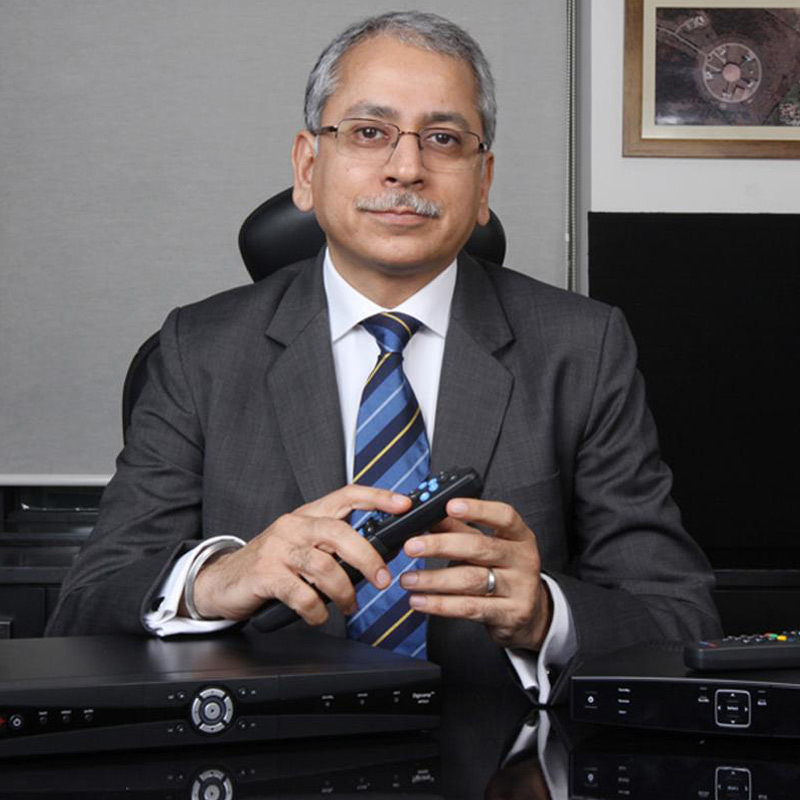
    MUMBAI: The DTH sector. What once seemed a lucrative arena has now seen companies getting acquired and merging, the competition being intense . Today, India is the largest DTH market in the world by number of subscribers. As on 30 September 2017, there were 66.99 million active pay DTH subscribers in the country. This does not include subscribers of free DTH services.

    A recent report published in Livemint sees Tata Sky CEO and MD Harit Nagpal stating that DTH has become a completely commoditised industry, like selling coal or steel, as everyone has access to everything today. He said, “If I drop prices, everybody will drop prices. So, there is really no differentiation. The only sustainable differentiation is process-centred, which is largely service. So, your boxes should fail less often, your picture quality should be good, your user interface should be better than anyone else’s, wherever there’s a failure, your response time should be the fastest.”

    Nagpal also revealed that Tata Sky’s current revenue is in the region of Rs 6000 crore where the current run rate (everyday recharge) is worth Rs 20 crore per day. Its revenue and profitability are increasing by 15-20 per cent y-o-y. The DTH player is witnessing subscribers mushrooming by 15-20 per cent every year. 

    Dismissing the general perception that Tata Sky is a premium service, he says that it isn’t so. However, the company has a higher proportion of high definition subscribers who pay Rs 500-600 every month. In the past five years, Tata Sky recorded 60 per cent new subscribers coming in from smaller towns and villages who pay Rs 200-220 per month, which is also a huge amount for them. For a business to be successful there has to be a balance of low, medium and high paying subs, Nagpal told Mint. Too many low-end customers will hamper profit and too many high-end ones will curb growth.

    The merger of Dish TV and Videocon to become India’s number one DTH entity has been of the key highlights of 2018 but Nagpal does not view the situation as a challenge and rather thinks Tata Sky’s numbers are equal to theirs or higher. 

    Cord cutting is a rage in the US with subscriber after subscriber giving up traditional TV services for OTT platforms like Amazon Video, Hulu, Netflix and Youtube. The internet content is either free or significantly cheaper than the same content provided via cable.

    In the US, cable costs $100 per month whereas in India it’s a mere $5. So, when Netflix or other OTT platforms are available at $10 each, a consumer would rather prefer watching the latter. But this won’t be the case in India due to the low pricing. Nagpal is of the opinion that India will never give up on TV even if people get on to watching OTT.

    Tata Sky recently tied up with OTT platforms Netflix, Hotstar, Youtube and Amazon Prime Videos in order to make them available to its subscribers. The DPO  says simply changing the customer premise equipment will allow Tata Sky subs to  receive both the signals—from the satellite and from  broadband, enabling viewers to watch on TV screen, live TV via satellite whenever they want to, and OTT via broadband whenever they want to.

    Nagpal concluded by saying that he does not feel pressure from OTTs since he is in the content business. “My life depends on the customer. I was buying content from broadcasters earlier and supplying it to the customer via satellite. The customer sometimes wants to watch the content of his choice, my job is to fetch that content for him. I am not wedded to the satellite,” he stated.

  • Netflix’s 85% spending towards original content

    Netflix’s 85% spending towards original content

    MUMBAI: Worldwide Netflix lovers will have a gala time as the content provider will launch 1000 originals on its platform by the end of 2018.

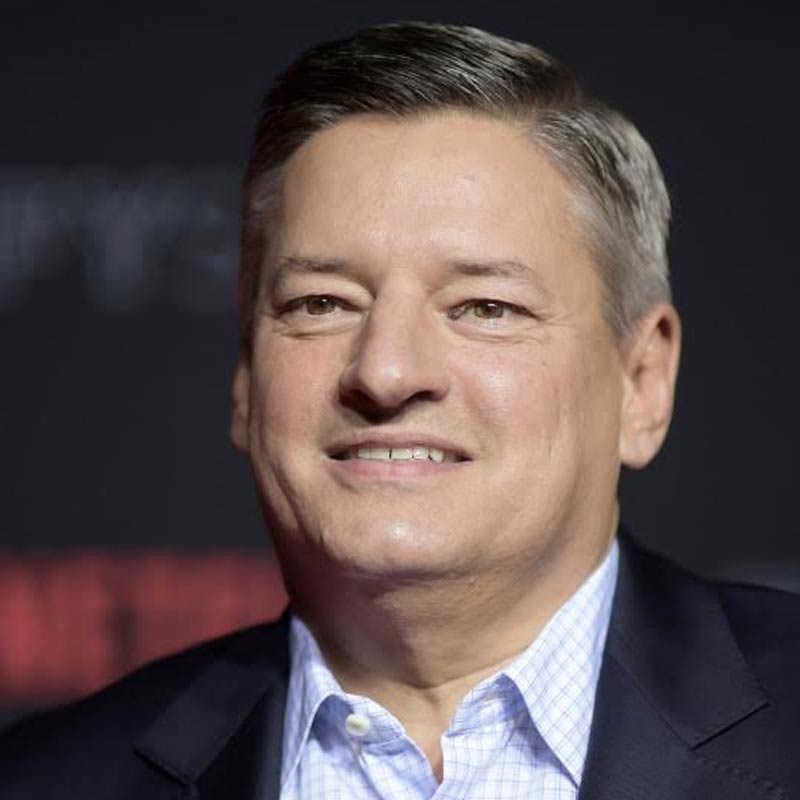
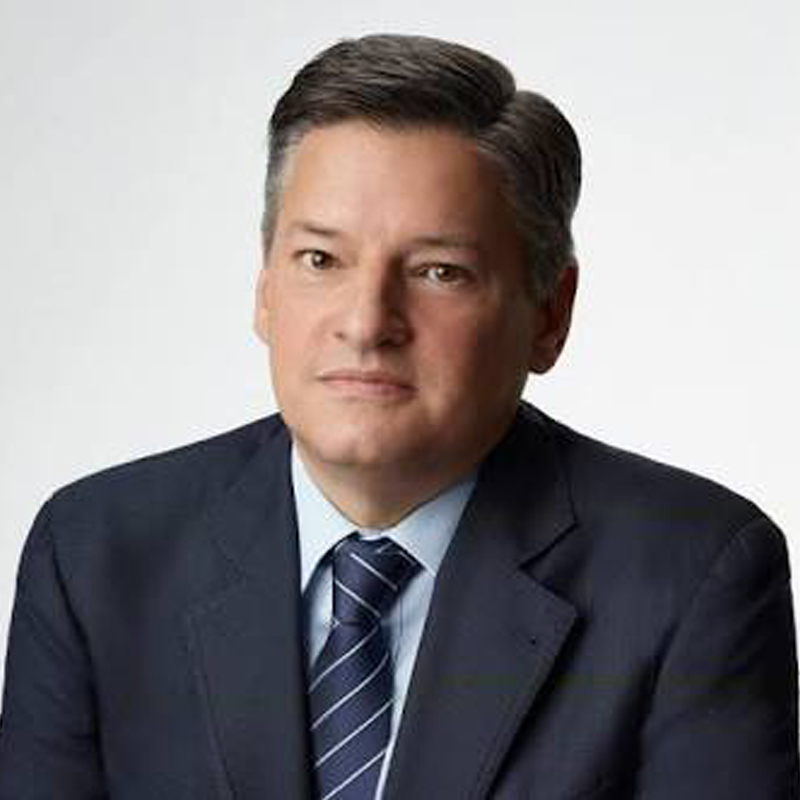
    Speaking at a conference, Netflix CCO Ted Sarandos said that 85 per cent of Netflix’s new spending on content is going toward the company’s own original works. Netflix already revealed that it would spend $8 billion this year for overall content.

    The streaming giant is increasingly shifting to its own content instead of reruns and movies made by others. The direction is more driven by economic reasons as there are predictions that big media companies would eventually go for their own streaming subscription services.

    However, earlier there were reports that only 20 per cent of US users’ viewing is made up of originals. Sarandos reacted that more than 90 per cent of Netflix’s customers regularly watch original programming. Some of this investment is recovered through the monthly subscription fees people pay.

    Usually SVOD platforms raise their subscription rates seldom but a recent survey found that Netflix subscribers might be willing to pay even more than they do now. Another survey found that two-thirds of Netflix’s US subscribers would stick with the service even if it raised prices to $15 a month or more.

    Also Read:

    Netflix hires Shrishti Behl to build original Indian slate

    Localised content the way forward for Netflix in India

  • Netflix CCO Ted Sarandos says India is ‘TV starved’

    Netflix CCO Ted Sarandos says India is ‘TV starved’

    MUMBAI: This could really make television executives in India, who have built a multi-billion dollar business, gnash their teeth. We are referring to Netflix chief content officer Ted Sarandos’ comment at the fifth MoffettNathanson Annual Media & Communications Summit, which is on in New York between 14 and 15 May.

    “There is no real great local television in India,” he said. “It is a television starved market.”

    He went to add that the interesting thing about the Indian market is that it is a culture that loves cinema. “What we are trying to do is bring something new to the country with cinema-infused television. Bit budget big scale productions in long form storytelling. We think this is going to differentiate us from the market,” he explained. “We believe that it is the big budget production with scale and local stars  which I think people like as much as the movies.”

    Sarandos went to explain that the streaming app has six tent pole shows under various stages of production in India and the first one to see the light of day will be Sacred Games.

    The streaming service obviously has got big plans under its sleeves for India. Amongst the senior professionals that it has hired for India  and is currently training in its US HQ figure Shrishti Behl, the Netflix director for originals, and former Fox senior executive Swati Mohan, who will be looking after marketing for Netflix as a brand in India.

    Sarandos added that productions are underway in 17 countries. And the reason that the streaming app is getting into originals is that clearing rights from existing content owners and studios was getting tooi expensive compared to the value they offered. Netflix has no control over the quality of the shows or the structure, hence that was a chellenge, he explained. Also  being able to get early windows was challenging. Additionally, Netflix users were increasingly watching original programming, hence the drive will be more towards creating new shows.

    He pointed out that the French press  read  Netflix’s  withdrawal from the Cannes Film competition wrongly. “We are totally interested in complying with the law that says that films need to be released in theatres and cannot be streamed online on a subscription model until three years between theatrical release is complete,” he said. “That law means we do not release our films in France in theatres. The past year the Cannes Film Festival applied this rule that we have to introduce our films in theatres in France to be eligible for the competition. We decided to pass because we would rather release our movies for millions oif viewers online in France than a limited number involved with the Cannes Film Festival.”

    Also Read :

    Netflix announces unscripted series on Mumbai Indians

    Localised content the way forward for Netflix in India

    Indian content at Netflix to be creatively lead by Disney’s Simran Sethi


  • Three years down, YouTube Kids unable to make an impact

    Three years down, YouTube Kids unable to make an impact

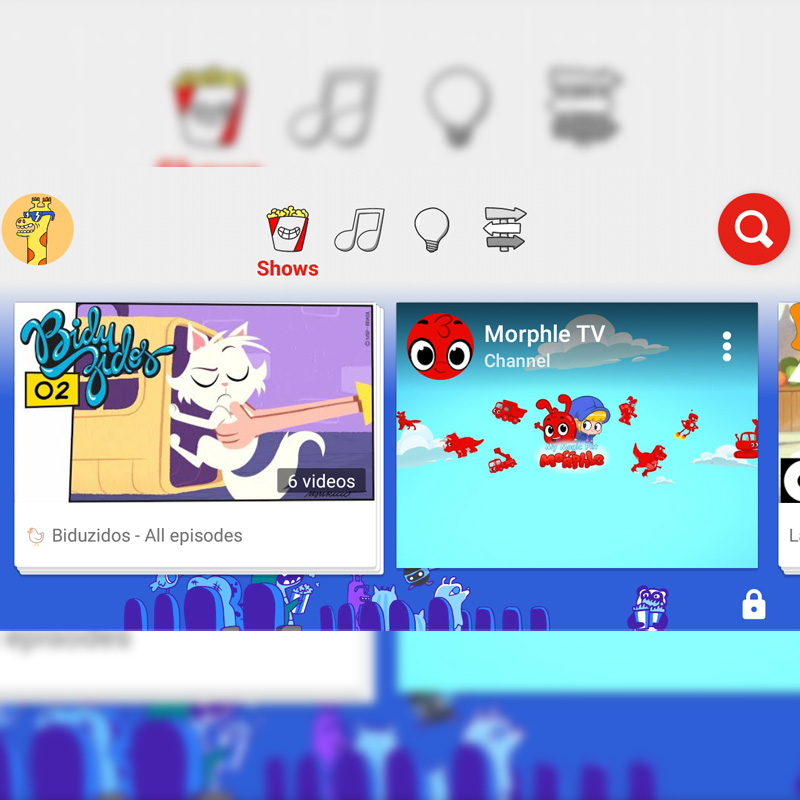
    MUMBAI: Generation Z has grown up with mobile phones and even smartphones in their hands. What TV was to the older generations, the phone was to these kids who grow up with YouTube. In 2015, YouTube Kids was launched promising filtered content and parental control but Indian viewers seem to have given it a pass.

    “The app makes it safer and easier for children to find videos on topics they want to explore,” YouTube Kids group product manager Shimrit Ben-Yair said in a blogpost when the app was first unveiled. In 2016, the app was officially launched in India. Parents can keep a timer restricting the usage as well as limiting the content kids can search with a “turn off” option. There are four sections in the app offering different kinds of content- shows, music, learning, explore.

    YouTube along with other OTT platforms targeting kids has become a ‘digital babysitter’. Though, according to a recent survey, even in developed countries, big screens remain a favourite of kids, the trend of consuming content on portable screens is rising expediently. Turning away from linear TV content, kids are increasingly flocking towards digital content globally. In such a scenario, YouTube Kids definitely has a promising market but there are several factors stunting the growth, especially in India.

    In India, YouTube has not aggressively started any campaign till now for its standalone app. While YouTube itself offers a wide range of kids’ content, other OTT platforms such as Viacom18’s Voot have done extremely well in terms of views. It has popular shows such as The Powerpuff Girls, Ben 10, Roll No. 21 and Chotta Bheem alongside Dora, Spongebob, Motu Patlu, Shiva and Pokemon.  Amazon and Netflix also have rich content—both commissioned and original.

    In addition to that, YouTube itself is a competition to YouTube Kids with children having plenty of entertainment options. Sparky short form content channels like ChuChu TV, LittleBabyBum, ToyPudding TV, Marsha and the Bear, Ryan ToysReview have more than 13 million subscribers and are thriving. The numbers show how many kids flock to these channels. Whereas, YouTube Kids is restricted. It can be accessed only on mobile devices and smart TVs making it less accessible than the parent site.

    “From collections of channels from trusted partners to enabling parents to select each video and channel themselves, we’re putting parents in the driver’s seat like never before,” YouTube Kids product director James Beser said after the recent announcement of introducing several ways for parents to limit what can be watched on the popular app after receiving huge criticism. After three long years, at least YouTube has acknowledged it needs better policing for the kids app.

    While YouTube has marketed its kid-specific app as a safer place for children, it has to walk a long way to prove itself safer. With its main site being unbeatable in the competition, amidst outcries from child rights groups, the presence of several other players offering various range of kids’ content, YouTube Kids is still not a primary option for kids.

    One of the main reasons behind the launch of YouTube Kids was to make it a safer platform for parents, who didn’t want their children using the main site unsupervised. Since the launch of the app, advocacy groups listed several serious problems. Amidst cartoon animation, explicit sexual language was used, graphic adult discussions about family violence, pornography and child suicide were noticed, modelling of unsafe behaviours, even jokes about paedophilia and drug use were discovered. Along with that, through the commercials, there are enough potential risks for kids to watch inappropriate content.

    Despite not tasting the kind of success YouTube is accustomed to, especially in India, YouTube Kids finds itself to be under promoted. Though more kids are hopping on board digitally, the lack of success of YouTube Kids is a glaring anomaly. YouTube has to ramp up the offering and make the app a safer place for kids, thereby giving usage a shot in the arm in a cluttered market.

  • Swati Mohan quits Nat Geo, to join Netflix

    Swati Mohan quits Nat Geo, to join Netflix

    MUMBAI: Nat Geo and Fox Networks Group India country head Swati Mohan is serving her notice period that ends in June. She will be joining global streaming platform Netflix as marketing director.

    Under her leadership, Nation Geographic underwent a rebranding exercise in 2016, wherein, among other things, ‘Channel’ was dropped from the nomen clature. This was a part of a global exercise that took place. Earlier this year, lifestyle channel Fox Life also got a brand and content refresh in order to remain in tune with the changes in the category.

    Mohan has over 16 years of experience in the industry, with a wide spectrum of work across companies, including Group M, O&M, FBC Media and Endemol.

    Recently, Netflix also appointed Srishti Behl as director, international originals, Netflix India, in order to build its original content portfolio in the country.

    Also Read:

    Netflix hires Shrishti Behl to build original Indian slate

    Tata Sky brings Netflix content for customers

  • Netflix, Amazon may contribute to rising production cost in India

    Netflix, Amazon may contribute to rising production cost in India

    MUMBAI: Netflix and Amazon Prime Video are known for loosening their purse strings when it comes to production cost. The threat of driving up costs is already looming over the Hollywood industry. As the OTT giants have begun to mark their territory in India, there is a concern that production cost may rise here as well.

    Recent reports state that Netflix and Amazon are throwing money to lure top talent from Hollywood. In addition to that, Netflix is also driving up Hollywood salaries by offering big pay rises. Traditional players have been sweating it out in competing with the rising cost. Netflix’s $300 million deal to poach Ryan Murphy from 21st Century Fox was a classic example of this development. Robert Kirkman, the creator of the hit show The Walking Dead, signed a two-year deal with Amazon last August.

    Both companies have renewed their focus on India and, in order to understand the market, it is likely that they will look to poach talent from rival companies. The quest to offer premium content will also lead to higher production cost.

    When Eros Digital COO Ali Hussein was asked if because of Netflix and Amazon’s higher investment the overall cost of Indian ecosystem will go up or not, he said though there’s not a definitive answer to this. But, in general, the cost will definitely go up. Along with that, he also feels that it depends on how smartly the work is being done in the existing ecosystem to have a certain amount of control over the cost.

    “If in any business, the demand is high, the supply chain cost will go up. Across all businesses, when there is a large demand for episodic or original web content, how do you ensure you are able to maintain a certain quality of production with a growing talent pool? It’s not just the cost of the celebrities or directors, it is the technical cost and that of the entire process,” says Hussein.

    ALTBalaji CMO Manav Sethi thinks the cost has already increased due to international players splurging but the output quality has not increased much. In addition to that, the companies have less understanding of the Indian market, which has unorganised, segmented content making.

    According to Bodhi Tree Multimedia founder Mautik Tolia, the increasing number of productions from Netflix and Amazon will not have any short-term impact on overall production costs. This is because the volume of content being produced at the moment by the duo is very limited compared to overall content production in India.  It will only drive the premium talent costs upwards such as A-list actors and directors. But at the same time platforms are providing opportunities for new and fresh talent, making the content creation process more inclusive and might actually bring down the talent costs as a fresh pool of talent will get injected in the system. “It all depends on what path the platforms will take forward whether they emulate the traditional studio systems going for safer bets with established stars and directors or punting in and promoting new talent. This remains to be seen,” Tolia says on the possible future scenario.

    However, one of the main reasons for spending more money on production is to increase premium quality content. “Overall, I believe that content quality in digital both for domestic as well as international players is improving and there will be a premium for quality content,” Arre co-founder Ajay Chacko says.

    Endemol Shine CEO Abhishek Rege also thinks Netflix is only shelling out money to get premium content. “Costs in digital will be higher than that of what we see in television because digital needs better quality of content,” he says.

    Where there’s a fear that Netflix and Amazon may shake up the Indian ecosystem like they are doing in Hollywood, the scenario is less viable in India despite the fact that production cost will definitely go up. Indeed, the streaming giants will aggressively try to acquire top talent from the industry but other OTT players can opt for fresh talent. In the next four to five years, the traditional players, including Bollywood and broadcasters, will face a tough challenge from these international players. However, with new content strategies, the cost can be controlled to a certain level.

  • Owning IP not priority for Big Synergy

    Owning IP not priority for Big Synergy

    MUMBAI: Broadcasters today are experimenting with a new type of show ownership–that of allowing the creators to hold the intellectual property (IP) rights. Most recently, Swastik Productions decided to own 100 per cent of its magnum opus Porus, which airs on Sony Entertainment Television in India, setting a benchmark in the industry as it went around the world gathering new broadcasters in new countries.

    In an interaction with Indiantelevision.com, Big Synergy partner producer Namit Sharma, however, said that the concept of owning an IP was a very subjective conversation and not too relevant in present times. “A lot of people hype it to make themselves look good, so it makes you look like a kingpin when in actuality, the real monetary value of that IP could be nothing,” he said.

    “I feel that the whole conversation in the industry is overrated. We want to be careful about when we do it and how we do it. We are a production service company. If we wanted to own an IP, we would have started making films, raised Rs 800 crore and taken the risk,” he added.

    Digital players are furiously churning out new formats to attract the moving eyeballs of younger audiences. New formats, ideas, execution–you get it all. But TV isn’t far behind. TV today has innumerable reality shows to pick from and is not restricted to saas-bahu sagas, sitcoms and period dramas.

    Sharma, feels that the Hindi GEC genre will not be experimenting anymore but this will be the prerogative of the digital industry. “They [Hindi GECs] are going to try and stick to what they have, whereas now all the experiments will start happening in the over the top and regional. We have a lot of developments happening in both these spaces,” he said.

    Shedding light on his plans for digital space, he said that talks with industry daddies Amazon and Netflix are on. “As part of a two-year plan, we intend to focus on getting together with storytellers; they could be filmmakers, writers, book authors, film writers, and they could be people who may have never written anything.” Big Synergy will set the ball rolling in the regional market with South India.

    Big Synergy, a part of the Anil Ambani-led Reliance Group, had tied up with Phantom Films, led by Anurag Kashyap, to create entertainment content across television and digital media. Speaking about the partnership, he said that there wasn’t any phenomenal interdependence apart operational synergies between the two entities. Both production set-ups co-ordinate in interesting ways behind the scenes.

    Recently, Big Synergy produced a web series for Viu named Kaushiki that has garnered a lot of traction for the OTT platform. The production company is looking to produce five marquee web series, such as Bose: Dead/Alive, in the next one year along with its slate of regular shows for OTTs.  

    Also read:

    Sony Yay banks on originals with a slew of fresh content

    No reason for GECs to panic as IPL grabs eyeballs

    The era of dance reality shows