Tag: Netflix

  • Netflix targets anime fans with ‘Ingress: The Animation’

    Netflix targets anime fans with ‘Ingress: The Animation’

    MUMBAI: A new animated series based on the world famous augmented reality mobile game Ingress is coming to Netflix, according to a report published by Variety. Ingress is developed by Niantic, the developer of Pokemon Go. Animation studio Crafter, Japanese TV station Fuji TV and streaming giant Netflix are collaborating for the ongoing project.

    Famous computer-graphics artist Yuhei Sakuragi is directing the anime show Ingress: The Animation and Takeshi Honda is in charge of character designing. “The anime peers into the ‘Ingress’ universe and allows viewers to see a part of that universe that is uniquely expressed,” Niantic founder John Hank said as quoted by Variety.

    Makoto and Sarah are the main characters in the story who are impacted by the effects of the exotic matter spreading across the earth in the Ingress story. There’s a new antagonist as well.

    The over-the-top (OTT) platform has been expanding its anime slate. Earlier Netflix announced two new anime (Japanese animation) series, as well as the renewal of popular series Aggretsuko for a second season.  

    “As Netflix has grown around the world we have been astounded by the broad reach and great depth of anime fandom. We are partnering with the best global creators to produce a diverse slate of shows that we hope will excite the boundless passion of anime fans and make Netflix a premier destination for this beloved art form,” Netflix Japan and Anime content director John Derderian said earlier.

  • Prime Focus extends service to Netflix, Amazon Prime

    Prime Focus extends service to Netflix, Amazon Prime

    MUMBAI: Prime Focus Ltd (PFL), an independent integrated media powerhouse, has broadened its horizon by expanding its services by providing high-quality post-production services to global leaders and on-demand content providers, Netflix and Amazon Prime.

    Prime Focus recently took on the charge of delivering VFX and DI (Digital Intermediate) work for eight episodes of Netflix India’s first original series for the country, titled Sacred Games.

    Speaking on the new developments, PFL business head Niraj Sanghai said, “With digital content consumption gaining impetus across the globe, it was an exciting opportunity for us to team up with Anurag, Vikramaditya and Netflix on this classic Mumbai noir tale. There is a huge potential in the digital space and with our expertise in movies, we intend to reach out to a wider demographic and content creators. We are looking forward to bring our multiple projects with OTT platforms in the coming year for our audiences.”

    In addition to Sacred Games, Prime Focus has also been working on director Kabir Khan’s first-ever original digital series for Amazon Prime The Forgotten Army, depicting a war epic that will showcase many aspects of the Indian National Army.

  • Netflix streams first Indian original series ‘Sacred Games’

    Netflix streams first Indian original series ‘Sacred Games’

    MUMBAI: Netflix has finally started streaming its much-hyped first Indian original series Sacred Games. After two and a half years of its entry in the crowded Indian OTT (over-the-top) market, the streaming giant has tuned in to Bollywood flavour by starring Saif Ali Khan, Nawazuddin Siddiqui and Radhika Apte.

    In the Indian OTT market, almost every player is betting big on originals. Ekta Kapoor-owned ALTBalaji has emphasised on originals as well. Netflix’s international rival Amazon Prime has already launched two Indian original series Inside Edge and Breathe along with one non-scripted show Remix. Though Netflix has won the heart of viewers with original US shows like House of Cards, Orange is the New Black and Stranger Things, it has realised the importance of local content to woo Indian audience.

    Netflix: Kashyap, Motwane to direct parallel ‘Sacred Games’, targeting 5-6 originals in a year

    The crime thriller is based on the critically acclaimed novel, Sacred Games by Vikram Chandra. Vikramaditya Motwane and Anurag Kashyap, co-founders of Phantom Film co-directed the new series.

    “There are great stories everywhere, but there are really four or five centers of TV and film (globally). Mumbai (Bollywood) is certainly one of them, and it is important for us, because we are going to be actively invested in India,” Netflix international originals VP Erik Barmack said as quoted by Reuters.

    Still now Netflix is far behind in the competition in the Indian market compared to Hotstar, Voot and Amazon Prime. A KPMG-FICCI report read that Netflix’s total active subscriberswas 4.2 million in January 2017 while Hotstar had 63 million, Voot had 13.2 million and Amazon Video had 9.5 million. However, Netflix CEO Reed Hastings has high hopes as he said earlier that the next 100 million subscribers of the company would come from India.

    Given the dominance of regional languages apart from Hindi, domestic players have already been very bullish about regional content too.

    “There is an argument to be made that each region in India is rich enough to be developing series, as if it is its own country. We should and we will. It is a matter of sequencing,” Barmack commented on the issue.

  • Netflix outperforming traditional TV, YouTube in the US

    Netflix outperforming traditional TV, YouTube in the US

    MUMBAI: Netflix is outperforming traditional TV in the US. It has reached the top spot among platforms for watching entertainment on TV leaving traditional cable and broadcast television networks as well as YouTube and Hulu behind. A recent survey of US consumers by Wall Street firm Cowen & Co. has revealed the fact.

    The survey conducted in May included 2,500 US adults. The participants were asked which platforms they use most often to view video content on TV. 27 per cent of the total respondents choose Netflix. Other sources of entertainment like basic cable, broadcast and YouTube stood at 20 per cent, 18 per cent and 11 per cent respectively.

    More importantly, millennials give Netflix higher preference. 40 per cent of adults aged 18 to 34  prefer the platform most often to view video content on their TVs. Only 17 per cent of them use YouTube, 12 per cent basic cable, 7.6 per cent Hulu and 7.5 per cent broadcast.

    “Over the long term, assuming [Netflix] is able to continue to increasingly offer great content, this lead clearly bodes well for further value creation,” Cowen & Co. analysts led by John Blackledge wrote in a research note as quoted by Variety.

    Other than US, Netflix is trying to strengthen its foothold in other countries too. In India, it has recently launched Lust Stories that has been critically acclaimed. It’s also being very bullish about its original content. The company hopes to add five million international subscribers at the end of this quarter.

    “Owning a leading international content-production footprint and ramping relationships across the talent ecosystem should prove beneficial to Netflix’s ability to increase production in those markets, much of which is produced at a lower cost than similar content produced in Hollywood,” the Cowen & Co. analysts wrote.

    Also Read:

    Netflix CCO Ted Sarandos says India is ‘TV starved’

    Netflix announces new Indian original film ‘Lust Stories’

  • Amazon could bid for La Liga media rights

    Amazon could bid for La Liga media rights

    MUMBAI: Global tournament and league rights are no longer only within the reach of big broadcasters. Social networks and e-commerce portals too are now in the running to stake a claim in rights acquisition. One of the big names that come to the mind is Amazon. After acquiring a package of 20 football matches from the English Premier League, industry observers are now predicting that the Jeff Bezos-owned company will turn its attention to the Spanish market and seek to acquire minority lots of La Liga football TV rights over the next three seasons, Advanced Television reports.

    La Liga has four lots of football TV rights for sale after granting majority of the rights to Telefónica. The Spanish telecommunications company has outbid its main rival Mediapro for the bulk of broadcast rights to La Liga, the top-flight of Spanish soccer, in an auction that raised €3.4 billion (US$3.98 billion).

    Telefonica was awarded the two main packages, for nine matches each week in the recent auction. Mediapro got the right to one match each week, along with highlights and broadcasts in public spaces such as bars and restaurants. However, rights to Spain’s Copa del Rey were not included in the package offering.

    In India, Sony Pictures Network (SPN) owned the telecast rights until 20 May 2018.

    La Liga hopes to get €120 million for these rights, which will be added to €980 million paid by Telefónica and €160 million already paid by Mediapro.

    La Liga may still meet its target with the sale of the four packages that were withdrawn (only four out of eight have been awarded) to new companies like Amazon, Facebook or Netflix.

  • Appeals Court allows Netflix to proceed with lawsuit challenging Fox’s employment contracts

    Appeals Court allows Netflix to proceed with lawsuit challenging Fox’s employment contracts

    MUMBAI: A California court has finally paved the way for Netflix to take on 20th Century Fox. Cancelling an appeal from Fox, a three-judge panel has allowed the streaming giant to take forward a lawsuit that seeks to invalidate Fox’s fixed-term employment agreements.

    The conflict between the two giants in the global entertainment industry started back in 2016. Two executives of the company including Tara Flynn, a former development executive at Fox 21 TV Studios and Marcos Waltenberg, a former Fox film marketing executive left the company in that year.

    Fox, infuriated by the incidents, sued Netflix blaming the latter for illegally poaching two of its executives and encouraging to break employment contracts. 

    Following the suit, Netflix responded with a counter-suit alleging those deals were unenforceable. It also argued that Fox was compelling employees to stay in the company against their will.

    Fox sought to throw out the Netflix countersuit with an anti-SLAAP motion arguing that it concerned protected speech. However, a Los Angeles Superior Court judge rejected the motion. Again, the appeal court judges upheld the ruling. After the decision, the initial suit and the counter-suit will now proceed at the trial court level.

    “The acts that supply the elements of Netflix’s claims are Fox’s alleged business practices of utilizing fixed-term agreements with allegedly unlawful and restrictive clauses and selectively determining which employees will be allowed to terminate those contracts early,” the judges found as per media reports.

  • Jonathan Friedland, Netflix PR chief, sacked over racial slur

    Jonathan Friedland, Netflix PR chief, sacked over racial slur

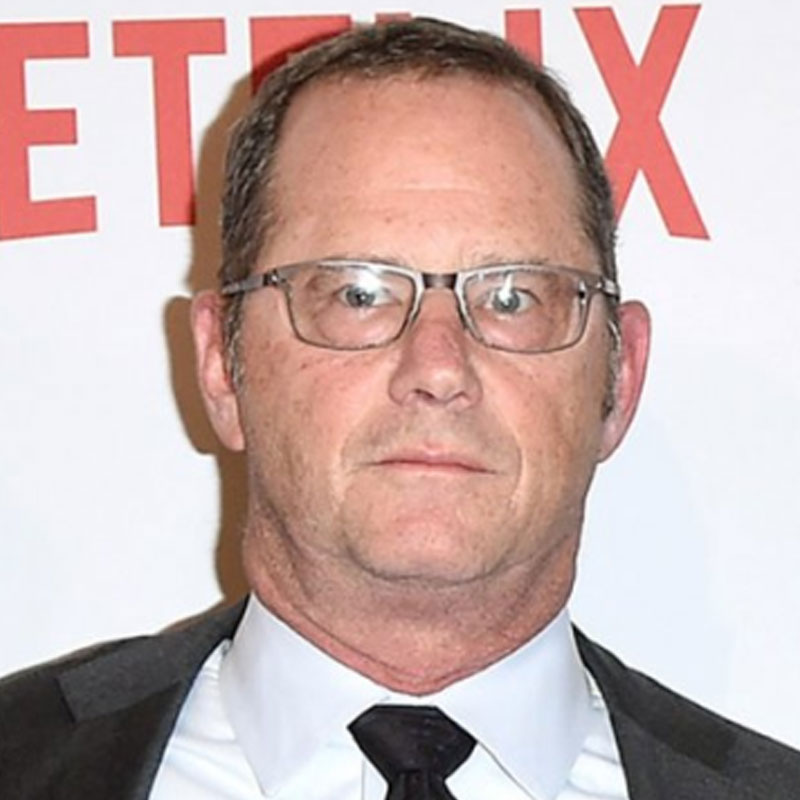
    MUMBAI:  Netflix has fired its chief public relations executive Jonathan Friedland for repeatedly using the N-word slur during company meetings.

    Friedland first used the word in a meeting with employees and then repeated it in a follow-up discussion with the human resource department. 

    ‘I’ve made a decision to let go of Jonathan Friedland.  Jonathan contributed greatly in many areas, but his descriptive use of the N-word on at least two occasions at work showed unacceptably low racial awareness and sensitivity, and is not in line with our values as a company,” Netflix CEO Reed Hastings stated in an email to his employees, according to The Hollywood Reporter.

    Friedland first joined Netflix in February 2011 after working for Disney. He oversaw media and content publicity for the streamer’s original series, films and specials in 190 countries around the world.

    Friedland took to Twitter to inform his followers about Netflix and him parting ways after seven years. The company is yet to name his replacement.

    Also Read:

    Netflix deal will help in customer retention, revenue enhancement: Tata Sky’s Harit Nagpal

    Netflix CCO Ted Sarandos says India is ‘TV starved’

  • More than 85% of US millennials tune in to OTT platforms

    More than 85% of US millennials tune in to OTT platforms

    MUMBAI: Over-the-top (OTT) platforms have become the new opium for millennials. According to a new report from the analyst firm Parks Associates, more than 85 per cent of millennials in the US subscribe use at least one OTT video service. Interestingly, the number of OTT subscribers among other generations is also growing gradually.

    An earlier report from Parks Associates showed that the number of households worldwide with an OTT video service subscription will exceed 265 million by 2022. Since 2010, a steady increase has been noticed in the adoption of smartTVs and streaming media players.

    Many of the millennials opt for more than one platform for browsing. More than one-fourth of millennials subscribe to three or more OTT services, and more than 50 per cent subscribe to at least two. OTT service penetration among ‘Baby Boomers’( 1946-64) and older generations grew more than 10 per cent between the two groups as a whole between 2016 to 2017.

    public://gr_2.jpg

    “Overall penetration of subscription OTT video services among millennials has topped out, suggesting that those households that want such a subscription already have one or more. The more interesting and important question is how many subscriptions they will keep,” Parks Associates research senior director Brett Sappington said.

    Millennials are more prone to consume online content not only because of a personalized experience but also due to the flexibility it offers. Various reports since 2014 have highlighted how millennials are opting for streaming services like Netflix, Hulu, Amazon over television.

    Parks Associates researcher Hunter Sappington thinks self-aggregating content is simply a part of the entertainment experience, particularly in millennial households. 

    “Their evaluation criteria for services, and brand loyalty, differs from that of previous generations. To take advantage of this self-aggregation trend, providers need to understand the evaluation criteria consumers use for their OTT services, which can vary from household to household,” he commented.

    Also Read :

    Global OTT subs to cross 265 mn by ’22: Park Associates 

    India to enter top 10 OTT video markets in 2022: PwC

  • PwC predicts global emergence of ‘Convergence 3.0′ as services’ distinctions blur

    PwC predicts global emergence of ‘Convergence 3.0′ as services’ distinctions blur

    MUMBAI: PwC’s Global Entertainment and Media Outlook 2018-22 has predicted global revenues are expected to grow with a CAGR of 4.4 per cent from 2017-22 to $ 2.4 trillion in a digitally-driven world where the distinction between print and digital, video games and sports, wireless and fixed internet access, pay TV and over-the-top (OTT), social and traditional media will blur in what has been described as `Convergence 3.0’.

    Explaining the new concept, PwC said that `Convergence 3.0’ is redefining the competitive playing field. Differing from earlier waves of convergence, it’s creating an ever-expanding group of “supercompetitors” and specialized, niche brands that are striving to “secure the engagement and spending of increasingly demanding consumers”.

    The fastest growth will be in digitally driven segments, with virtual reality leading the way, followed by over-the-top content (OTT). Esports will be the second fastest-growing segment if it were separated from the overall video games and e-sports segment. By contrast, newspapers and magazines will see declines in revenues to 2022.

    public://pc1.jpg

    While the sector is largely dominated by Netflix, Amazon, and Hulu, PwC said SVOD revenue accounted for 79.6 per cent of OTT revenue in 2017 as niche players increasingly make a dent in the overall business. 

    The potential power of artificial intelligence or AI in E&M is further increased by the opportunity to combine it with other emerging technologies, especially virtual reality and augmented reality. Revenues from VR apps, gaming and video, which were US$3.9bn in 2017, are expected to soar more than fivefold by 2022.

    The VR revenue is expected to grow at 40.4 per cent CAGR till 2022 in the 10 key markets including US, Japan, China, South Korea, UK, France, Germany, Russia, Italy, Spain. The revenue will be close to $ 170 million.

    Even among the most dynamic segments, there are sharp differences among sub-segments. Although the video games and e-sports segment will grow at an overall CAGR of 7.2 per cent, the e-sports component will leap by 20.6 per cent compounded annually. Conversely, global recorded music is projected to rise at a robust 6.1 per cent CAGR, but three of its sub-components – physical, downloads and ringtones/ringbacks – will see significant declines. 

    According to Ennèl van Eeden, Global Entertainment & Media Leader, PwC Netherlands: “The story behind the Outlook’s global figures is a near-infinite accumulation of micro-stories, and a dizzying array of different trends, at a territory and segment level. For almost every trend, there’s a counter-trend somewhere among the 15 segments and 53 territories. Also, the pace of change isn’t going to let up: technologies such as artificial intelligence and augmented reality will continue to redefine the battleground. Across all segments, technology is enabling content delivery to become progressively cheaper and more personalised. This heightens the urgency for companies to invest in technologies that will enable them to compete more effectively.”

    public://pc2.jpg

    The global internet advertising revenue is expected to grow with a CAGR of 8.7 per cent from 2017-22 and will be around $ 345 billion, whereas the broadcast TV advertising revenue will grow by CAGR of 2.3 per cent and reach till $180-200 billion.

    public://pc3.jpg

    Smartphone data consumption will see a huge spike and will overtake fixed broadband by 2020, according to the PwC report. Smartphone data consumption will reach around 650,000 billion megabytes with a CAGR of 33.3 per cent from 2017-22. Whereas the fixed broadband data consumption will grow at a CAGR of 18.8 per cent in the same time span and will reach till 500,000 billion MB. 

    public://pc4.jpg

    As people continue to change the way they access content across increasingly sophisticated devices, more robust data is required to build a deeper understanding of consumer habits.

    Christopher Vollmer, Global Advisory Leader for Entertainment and Media, PwC US, in a statement said: “To succeed in the future that’s taking shape, companies must revisit every aspect of what they do and how they do it. This means going ‘above and beyond’ in how they envision their business, generate revenues, create and organise their capabilities and build and retain trust. And given the pace and scale of change under way, speed is vital. For many companies, the models, assets, practices and capabilities that support their businesses today will simply not be enough in the future. Standing still is not an option.”

    Also Read :

    India to enter top 10 OTT video markets in 2022: PwC

  • Netflix stock hits 121 per cent YOY growth

    Netflix stock hits 121 per cent YOY growth

    MUMBAI: Following a Barclays Capital analyst report, which said Netflix’s “aggressiveness” could reshape movie distribution, the giant subscription video service soared to another stock market record. On 5 June 2018, Neflix’s stock closed up 1.1 per cent to $365.80– a new record. The stock is up 91 per cent year-to-date, and 121 per cent year-over-year.

    Barclays Capital media analyst Kannan Venkateshwar wrote, “We believe the economics for companies with global streaming scale like Netflix may be more favourable than theatrical releases, over time.”

    He added that Netflix is scaling up its theatrical film business to focus on a small subset of movies over time.

    “We believe Netflix’s increased aggressiveness around original movies and its emphasis on nontheatrical releases, if sustained, is likely to make this skew worse and could reshape the nature of movies and its economics in the coming years.”

    Venkateshwar feels that the troubling economics for theatrical producers will push legacy studios to do things differently like as releasing movies simultaneously on TV and theatrical.

    “Day-and-date movie releases or films released simultaneously theatrically and across different windows, could become a way for companies such as Disney to drive global growth for its streaming business,” he added.

    “Movie distribution could, in general, follow much more of a barbell distribution — with the big movies needing to get bigger to justify the cost of theatrical releases while small movies go direct to consumers through streaming services.” said Venkateshwar.

    Given the frequency of digital disruptions, there is a real chance that the movie business could witnessed a transformation much like the pay TV industry.