Tag: Netflix

  • Netflix’s ‘Sacred Games’ is most in-demand digital original in India

    Netflix’s ‘Sacred Games’ is most in-demand digital original in India

    MUMBAI: Sacred Games has turned out to be a divine providence for streaming giant Netflix. Barely two years into its India foray, this single show has helped the US-based OTT platform to increase its subscribers and has even aided its performance in other countries. This was affirmed by a Parrot Analytics study. As per the report, it emerged as the most in-demand digital original in India in the third (July-September) quarter.

    The first Indian original of Netflix is not only the most in-demand among Indian digital originals but also among all digital originals available. It had over twice the average demand of 13 Reasons Why which acquired the second place in the list. However, the streaming giant’s second Indian original Ghoul also performed strongly, becoming the 11th most in-demand original in the country despite not being released until halfway through Q3.

    “The Indian market was also well served by Amazon Prime Video’s Indian digital original titles like Comicstaan, Inside Edge and Breathe. These series are all in the top 30 digital original series in the market, with Comicstaan the highest at 19th most in-demand,” the study added.

    As streaming platforms are increasingly investing in local content globally, the number of digital originals in a variety of languages has increased. Thanks to localisation, local titles are becoming hits according to the top 20 digital original charts for each market.

    Netflix’s Orange Is The New Black has emerged as the most in-demand digital original series in most markets this quarter topping the chart in four countries including the United States, Denmark, Finland and Sweden. Stranger Things topped three markets including Chile, Argentina and Singapore.

  • Media consumption in India growing @9% in last 6 years: CII-BCG report

    Media consumption in India growing @9% in last 6 years: CII-BCG report

    MUMBAI: The Indian media industry, experiencing disruptions, is witnessing an increase in consumption that has been facilitated by proliferation of broadband too and over the last six years has been growing at the rate of nine percent.

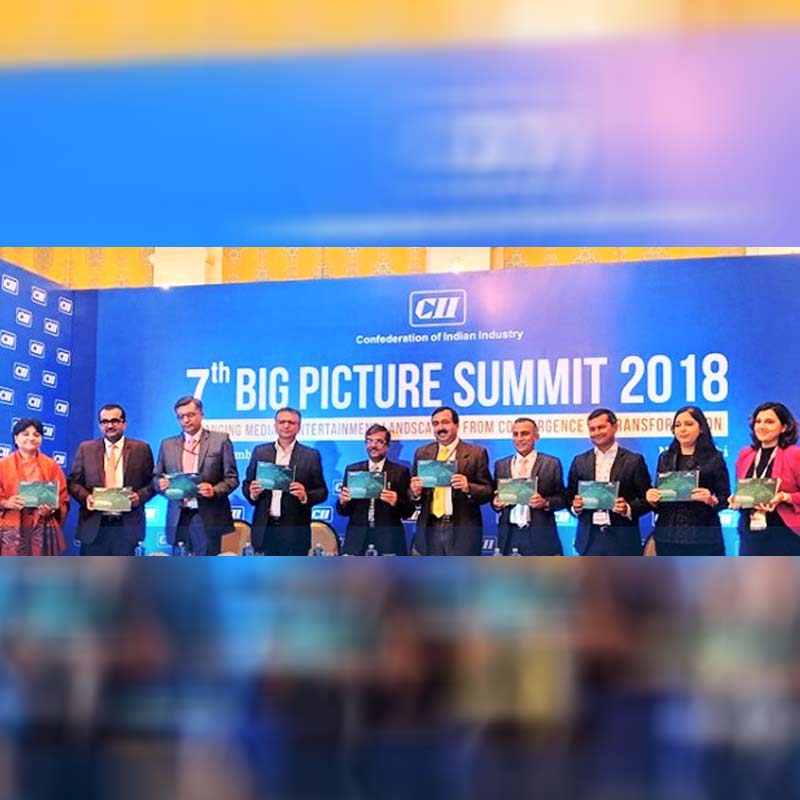
    According to a CII_BCG report released today at CII Big Picture Summit event in New Delhi, at 4.6 hours of consumption per capita per day, India is still behind China (6.4 hours) and US (11.8 hours), suggesting further headroom for growth.

    “Unlike in developed countries, in India this growth has been additive and not cannibalising traditional media, yet. For the next several years, we expect India to remain a multi-modal market where all forms of media, including traditional media like TV and digital will continue to co-exist," the report states.

    In 2012, total media consumption per capita per day was 2.7 hours which was further distributed into print (0.2 hours), radio (0.2 hours), TV (1.9 hours) and digital (0.4 hours). On the other hand, 4.6 hours consumption per capita per day has increased to print (0.3 hours), radio (0.3 hours), TV (2.7 hours) and digital (1.3 hours).

    Over the past 2-3 years, the number of broadband users has become 2X (~480 million broadband users across mobile and fixed) and the data consumption has become 10X (~10 GB per user per month).

    Indian media formats are primarily advertising driven and consumer costs are minimal. Unlike the US where the cost of a cable connection can be as high as $80 per month, India with $3 cost of cable per month doesn’t have the need for skinny bundles.

    India is undergoing a video explosion. Indian consumers are consuming ~190 minutes of video per day per user across platforms, which has been growing at ~8 per cent over the last five years. 30+ digital platforms have been added to the wide range of TV channels. While an average consumer consumes 10-15 channels per day and 2-3 apps in any given month, the overall spectrum of platforms from a content creators/curator’s perspective is massive.

    Global players are realising the importance of creating curated content, in line with viewer preferences. Players like Netflix invest aggressively to match 3X the investment made by top players like Amazon Prime and Hulu. Top 5 global players as per their annual content budget are Fox ($16.7 biilion), Comcast ($15 billion), Disney ($12.7 billion), Time Warner ($12.4 billion) and Netflix ($12 billion).

  • CONTILOE PICTURES’ HISTORICAL PERIOD DRAMA ’21 SARFAROSH SARAGARHI 1897′ TO NOW STREAM ON NETFLIX

    CONTILOE PICTURES’ HISTORICAL PERIOD DRAMA ’21 SARFAROSH SARAGARHI 1897′ TO NOW STREAM ON NETFLIX

    With the aim of bringing untold and unique stories to audiences all over the country, Contiloe Pictures, premium broad-based entertainment content Production Company, introduced a show based on the bravery 21 soldiers in British Indian Army – 21 Sarfarosh: Saragarhi 1897. Having wowed audiences on television, the show is now streaming on online streaming giant Netflix.

    The show has 65 episodes and stars Mohit Raina and Mukul Dev in principal roles.

    “Battle of Saragarhi is considered as one of the bravest days in the Indian history. It was a pleasure telling a story of such importance and creating something at this scale. Having run all episodes on Discovery Jeet, a platform like the Netflix will only help widen the audience, reaching out to global netizens”, says Abhimanyu Singh, Founder, and CEO of Contiloe Pictures.

    21 Sarfarosh: Saragarhi 1897 is based on the real-life story of 21 soldiers of 36th Sikh regiment of the British Indian Army which defended an army outpost at Saragarhi in the North-West Frontier Province against an onslaught by over 10,000 Pashtun and Orakzai tribals in September 1897.

    The production house has won multiple awards for the show in various categories including Best Teleplay, Special-Visual Effects for Television, Art Direction (Fiction) and Background Music (Fiction). 

  • Get ready to laugh, cry and cringe!

    Get ready to laugh, cry and cringe!

    MUMBAI: Today, Netflix unveils the premiere date and the first images of Sex Education, a distinctively honest and witty look at the universally awkward coming-of-age experience. Launching globally with eight, one-hour episodes on January 11, 2019, the dramedy delivers a healthy dose of nostalgia, taking you back to your high school days, with a fresh postmodern take on young adult life, friendships, and attitudes towards sex, identity, love and everything in between.

    Set in the fictional English town of Moordale and shot entirely in Wales, UK, Sex Education is a contemporary British love-letter to the classic American high-school story starring Asa Butterfield ("Ender's Game," "Miss Peregrine's Home For Peculiar Children" and Martin Scorsese's "Hugo") as Otis Milburn, the only child of two sex therapists, and award-winning actress Gillian Anderson ("The X-Files," "American Gods," "The Spy Who Dumped Me") as Jean Milburn, his mother, a larger-than-life sex therapist with no filter. Newcomers Ncuti Gatwa and Emma Mackey star in key roles throughout the series — Gatwa as Otis’ best friend "Eric" and Mackey as "Maeve," the mastermind behind Otis’ underground sex therapy clinic. The series also features Kedar Williams-Stirling ("Jackson Monroe"), Aimee-Lou Wood ("Aimee Gibbs") and Connor Swindells ("Adam Groff") as Otis, Maeve and Eric’s Moordale classmates.

    SEX EDUCATION SYNOPSIS:

    Meet Otis Milburn – an inexperienced, socially awkward high school student who lives with his mother, a sex therapist. Surrounded by manuals, videos and tediously open conversations about sex, Otis is a reluctant expert on the subject. When his home life is revealed at school, Otis realizes that he can use his specialist knowledge to gain status. He teams up with Maeve, a whip-smart bad-girl, and together they set up an underground sex therapy clinic to deal with their fellow students’ weird and wonderful problems. Through his analysis of teenage sexuality, Otis realises he may need some therapy of his own.

    Sex Education is created and written by Laurie Nunn and executive produced by Jamie Campbell, and co-executive produced by Sian Robins-Grace. The series is a production of Eleven Film for Netflix, and was directed by Ben Taylor ("Catastrophe") and Kate Herron.

  • 75% Indians trust tech companies with their personal data

    75% Indians trust tech companies with their personal data

    MUMBAI: The million dollar question today for any brand or company is ‘How can you decipher your customer?’ In its second edition of Me, My Life, My Wallet, KPMG explored the multidimensional customer, what truly drives behaviour and choices and how this is set to change as the customers of tomorrow emerge.

    The research explores the 5 Mys – my motivation, my attention, my connection, my watch and my wallet. It is the way in which the organisation’s clients should be viewing its customers.

    Indians, it seems, give away data to get a better experience while respondents of most of the developed countries aren’t really interested to trade data about themselves. 75 per cent of the consumers trust the technology companies for the data whereas they don’t trust the government (51 per cent) which is a high figure compared to the global average (37 per cent).

    87 per cent people would trade their personal data to a company for better customer experience and personalisation, better products and services and better security. The attention of 58 per cent people is grabbed by brands that offer deals or discounts on social media.

    KPMG in India partner and head, consumer markets Harsha Razdan said, “Consumers are anxious, with younger generations feeling it the most. They like new technology but are concerned about handing over personal data, and what that could mean for their privacy and security. Our research demonstrates that organisations should be aware of the heightened awareness people have about the value of their data; they want to feel that they are in control at every stage of the business relationship.”

    Among the sectors seeing the toughest competition is digital entertainment, with more than 20 players vying for attention. Telecom provider Reliance Jio, with its global and local tie-ups, has changed the way in which the populace uses its phones. Local players with rights to Hindi blockbusters and IPL cricket tournament that transfixes the nation's attention in April and May are going up against Netflix and other major video streaming services.

    There are many other sectors where services have yet to scratch the surface of the vast potential, such as healthcare and education. Globally, 66 per cent of consumers are keen on technology. The interest in technology leaps in the fast-growing economies of China (81 per cent), and India (83 per cent). 47 per cent of the consumers in India are anxious about unauthorised tracking of their online habits by companies, governments and criminals.

    “With digital services moving from the big cities into India’s heartland, the type of growth that we will witness will change. The consumer in a second-tier city will be very different to the one in Mumbai and the rural consumer is different again. This makes the Indian market yet more complex,” said KPMG in India partner and head, customer and channel, management consulting Abhijeet Ranade.

    When the wallet comes into picture, 24 per cent indicated that advertising influences their buying/spending decisions, which is the highest out of all eight markets.

    “Many companies haven’t yet fully grasped the concerns consumers have about sharing their data, or how this could affect consumer loyalty. Yet more and more businesses are looking to monetise the data they hold – whether that’s what we put in our shopping basket, how many times a week we exercise, or what we choose to watch. Consumers are more aware of the value of their data, and businesses need to be responding to this new, tech-driven, data-savvy type of customer,” Razdan added.

    The research across eight global markets provides an in-depth look at the STEP (social, technological, economic and political) events influencing consumers of today and tomorrow. The survey included nearly 25,000 consumers across Brazil, Canada, China, France, India, the UAE, The UK and the US. Out of the 25,000 consumers, 3000 participated in India between the age group of 25-40.

    KPMG in India chairman and CEO Arun M Kumar said, “The Indian consumer is difficult to understand, and as the online revolution progresses beyond the big cities and starts gaining momentum in the country’s heartland, they are getting more complicated still. The rewards for companies who take time to learn, though, are substantial.”

    The research focused on six key themes of critical importance to organisations and institutions around the world, namely; trust, data, wealth and retirement, generational surfing, the customer of the future and the B2B customer.

    Ranade said, “The idea and concept that the physical world will get replaced completely by the digital channel, that’s not happening and it’s not happening for quite some time.”

  • BJP most advertised in BARC week 46

    BJP most advertised in BARC week 46

    MUMBAI: The Broadcast Audience Research Council (BARC) India has released its data for top advertisers and brands between 10 November 2018 – 16 November 2018.

    The data is a reflection of top 10 advertiser and brands across genre on Indian television (U+R): 2+ Individuals.

    The data demonstrates ads that were inserted the most in week 46 of 2018.

    Top Advertisers:

    For week 46, Hindustan Unilever Ltd stays on first position as the top advertiser and led with 1,30,795 ad insertions on television. HUL's products include foods, beverages, cleaning agents, personal care products and water purifiers.

    Reckitt Benckiser Ltd, maker of Dettol, Veet, Durex condoms, Strepsils, Air Wick, Harpic came in second with 81,467 ad insertions followed by ITC Limited with 39,506 insertions.

    Procter & Gamble stood fourth followed by Ponds India with 37,611 and 32,491 insertions.

    Top Brands:

    Surprisingly, Bharatiya Janata Party, the political party, took the first spot with 22,099 insertions. Netflix stood second followed by Trivago with 12,951 and 12,795 insertions respectively.

    Santoor Sandal and Turmeric took the fourth position with 11,222 insertions followed by Dettol Liquid Soap with a mere 9,487 insertions.

  • Netflix announces Indian original series ‘Leila’

    Netflix announces Indian original series ‘Leila’

    MUMBAI: Leila, a Netflix Original series from India, is now in production and will be available exclusively to Netflix members around the world in 2019. The series is based on the widely popular book by Prayaag Akbar. Deepa Mehta (Earth, Midnight's Children) is the creative executive producer for the show and Urmi Juvekar (Oye Lucky! Lucky Oye!, Detective Byomkesh Bakshy!) is the showrunner.

    A dystopian work of fiction set in the near future, Leila is the story of Shalini: a mother in search of her daughter Leila whom she lost one tragic summer. Shalini deals with various hardships in the course of her search, in a story of longing, faith and loss. The series is directed by acclaimed filmmaker Deepa Mehta, Shanker Raman and Pawan Kumar.

    Leila will be a 6-episode series available only on Netflix globally in 2019.

  • Hulu Japan says hello to Indian content

    Hulu Japan says hello to Indian content

    MUMBAI: The world has been amazed with Japan's anime and now it's time for role reversal. While international over the top (OTT) giants like Netflix and Amazon are already playing an active game in India, Hulu Japan has also arrived in search of content.

    A fireside chat with Hulu Japan CCO Kazufumi Nagasawa was conducted at Vidnet 2018 hosted by Indiantelevision.com powered by Verizon which had ZEE5 as title partner. The session was moderated by Indiantelevision.com founder and CEO Anil Wanvari.

    Nagasawa said that the Japanese market is crowded with OTT platforms, majority focusing on SVOD service and a few on AVOD model. He claimed Hulu Japan stands with 1.8 million paying subscribers with more than 50,000 hours of content. Talking about the company making room for Indian content in the Japanese market, Nagasawa said that the plan is to offer Swastik Productions' Porus in its content line-up with Japanese subtitles.

    He added, “We prefer period drama and are usually not excited for miniseries. Moreover, I got a chance to look at the Porus trailer at Mipcom and I was fascinated by it.” Baahubali was also another option that the company had offered to the Japanese viewers which worked well with them.

    Apart from this, Hulu acquired Turkish and Russian shows and its performance did better than their expectations. “The reason for acquiring Indian content is because it is affordable as compared to Turkish content. Because of the given resources that we have, we need to be very choosy. In the next two years, we might acquire Indian shows including Tamil, Telugu and Kannada among others but with subtitles as we cannot afford to dub them.” He also said that in 2019, its plan is to focus on developing original content and to be less dependent on studio content (American).

    Hulu Japan was initially launched in the US in 2011. Then it got acquired by Nippon TV in 2014. Nagasawa said that Hulu is a pure SVOD service and that is its primary focus. “We have 50,000 hours of content and out of that, 3000 are films and the rest are series. As far as content from domestic and international markets is concerned, 60 to 65 per cent are from domestic and the rest is from international, which is mostly from US. We actually launched our service with pure US content initially because we couldn’t get local content, especially from broadcasters.”

    He further said that now most of the content the company gets is from its parent Nippon TV and the content that it provides is catch-up, exclusive content, drama series, extra footage etc.

    When it comes to age diversification, Nagasawa said that initially, men were majority users. Right now it is 50:50 and especially the audience from Nippon TV has a big skew to women. "This happened because we started US drama series. Half of the consumption comes from living room set and majority of the users are watching on mobile that means many users are using multiple devices to watch content. In terms of hours, living room is most important but that doesn’t mean people doesn’t use mobile,” he concluded.

  • Netflix Confirms All-Star Hindi Talent for Original Film Mowgli: Legend of the Jungle

    Netflix Confirms All-Star Hindi Talent for Original Film Mowgli: Legend of the Jungle

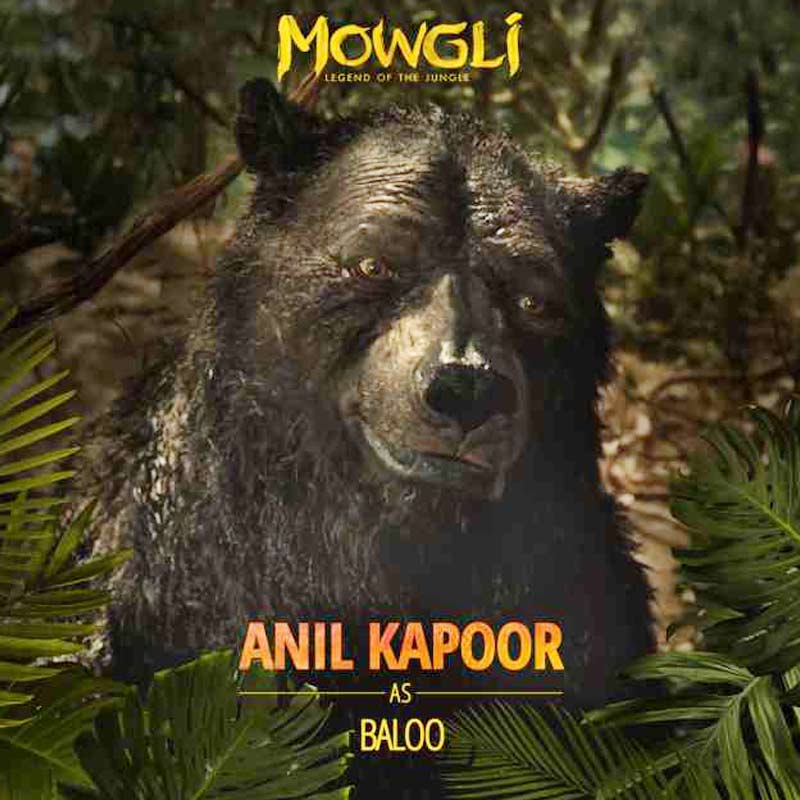
    MUMBAI: Bringing together an all-star cast of talent, Netflix announced today Abhishek Bachchan, Madhuri Dixit, Kareena Kapoor, Anil Kapoor and Jackie Shroff as the lead Hindi-language talent for the upcoming Netflix film, Mowgli: Legend of the Jungle.

    The star-studded cast will comprise the following roles from the classic tale:

    ·       Abhishek Bachchan as Bagheera

    ·       Kareena Kapoor as Kaa

    ·       Anil  Kapoor as Baloo

    ·       Madhuri Dixit as Nisha

    ·       Jackie Shroff as Shere Khan

    The actors of the Hindi version of Mowgli: Legend of the Jungle join an equally impressive international cast of Christian Bale (Bagheera), Andy Serkis (Baloo), Benedict Cumberbatch (Shere Khan), Cate Blanchett (Kaa), Rohan Chand (Mowgli), Matthew Rhys (Lockwood) and Freida Pinto (Messua) who also fulfills the role in Hindi.

    Mowgli: Legend of the Jungle premieres globally on Netflix on 7 December, 2018.

  • Guest Column: The role of digital marketing in achieving better ROI during festive seasons

    Guest Column: The role of digital marketing in achieving better ROI during festive seasons

    When it comes to the world of marketing and advertising, festivals provide a unique opportunity to reach a wide audience with an almost singular emotion- “celebration”. And while in western markets, this peak season is predominantly during Christmas, it is a completely different ball game in India. From Diwali and Dusshera to Holi, Eid and Christmas, festivals and their corresponding festivities and celebrations abound through the year. This creates an interesting opportunity for marketers to drive engagement and sales through several periods of the year, while also keeping an eye on brand building.

    In the pre-digital era, this indicated large sweeping mainline campaigns that aimed at targeting as wide an audience as possible. However, this strategy often hit a speedbump because being part of a diverse country such as this, the celebrations and cultures associated with each festival vary from region to region. And that is the issue that the digital space has resolved for brands as well as marketers. Instead of just one blanket campaign, we are finally able to customise and channel the right message to the right individual. 

    This is especially important when you consider that festivals are more about pushing for sales rather than mere brand building. Take the recent Big Billion Day Sale campaign by Flipkart, with a plethora of influencers and creatives that generated every aspect of every point of sale was covered across regions and demographics. Although not around a specific festival, the ‘festive season’ as it is popularly known to be allows us to widen the reach of this messaging further, and the fact that it is not a singular creative asset-led campaign helps maintain freshness in the content.

    Now combine this with strong consumer data and deeper insights on culture, and what you have is the opportunity to build messaging basis a prevalent conversation or sentiment online. And by mapping these two well with nimble content creation capabilities where assets are created, not in weeks or months, but a few days and at times even hours, one can deliver creative assets that engage consumers while not only providing value, but also propagating the brand’s values.

    What this understanding of culture also does is to help brands focus on deep consumer insights about what a festival truly means to people today. An interesting case in point was Netflix’s film around the worry everyone has with respect to gifting during festivals,which led to a widely enjoyable creative that had its sentiment analysis spot-on, generating a smile across everyone’s face.

    The above example also showcases that the era of wider reaching creatives isn’t over.In fact, while the digital space allows us to hyper target and create content that is well aimed, it also allows us to not lose what the larger message of the brand is. This is because when the avenues to propagate a message increase and the data allows one to target, then you can both, deliver a wider message for brand building along with smaller, more targeted content for sales. In other words, the digital platform allows you to have your cake and eat it too.