Tag: Netflix

  • Netflix ropes in BBC Studios’ Jackie Lee-Joe as CMO

    Netflix ropes in BBC Studios’ Jackie Lee-Joe as CMO

    MUMBAI: Amid intense competition in the streaming market worldwide, the streaming giant has made another important move by appointing Jackie Lee-Joe as chief marketing officer. Lee-Joe who has been CMO of BBC Studios since 2015 will take up the new role in September.

    “Jackie is a truly original thinker with a wealth of global experience — making her the perfect fit as our next chief marketing officer. I’m excited to work with her in promoting our brand and original programming in new and creative ways to our members all around the world,”  Netflix chief content officer Ted Sarandos said.

    Lee-Joe replaces Netflix’s CMO of seven years Kelly Bennett who left the company in March. Earlier this year, Spencer Neumann was appointed as chief financial officer in the organisation.

    “Netflix is a much loved and respected brand, entertaining audiences everywhere with it’s rich and thought provoking original programming. I’m thrilled to be joining one of the world’s most creative, dynamic and fearlessly innovative companies,” Lee-Joe commented.

  • Netflix announces the launch date for Bard of Blood

    Netflix announces the launch date for Bard of Blood

    MUMBAI: The first original that Netflix announced in India, now has a launch date! Bard of Blood is all set to launch on the 27th September, 2019 on the service. All episodes of the series will be launched at the same time exclusively on Netflix to 149 million users across 190 countries. 

    The series features a commercially successful and critically acclaimed and cast comprising Emraan Hashmi, Vineet Kumar Singh, Shobhita Dhulipala, Kirti Kulhari and Rajit Kapoor  amongst others. Directed by Ribhu Dasgupta and produced by Shah Rukh Khan’s Red Chillies Entertainment, the series is based on the best selling and loved book of the same name written by Bilal Siddiqui.

    The story is about four Indian intelligence officers belonging to the Indian Intelligence Wing (IIW) who are compromised, before they can relay an important piece of information to India. They get captured and are about to be decapitated. The stakes are high.

    Back in India, the intelligence veteran Sadiq Sheikh, the handler of the captured agents, realizes he must spearhead a clandestine mission to rescue his men. He reaches out to a former spy and now professor of Shakespeare, Kabir Anand – a man who knows the terrain and politics of Balochistan inside out. Kabir must connect the dots from the cryptic information that he has at his disposal. The only way for Kabir to get the answers is to embark upon a dangerous journey and complete unfinished business.

  • Netflix India ropes in Aashish Singh as director, original film

    Netflix India ropes in Aashish Singh as director, original film

    MUMBAI: Streaming giant Netflix continues to keep its foot on the pedal when it comes to arming its India team with some serious talent. The latest high-profile addition to the streamer’s stable is Aashish Singh, who has been roped in as director, original film. "We can confirm that Aashish Singh has joined Netflix as Director, Original Film," the company told Indiantelevision.com.

    The arrival of Aashish seems to be in line with Netflix’s ambitious Original film play in India. The media veteran was CEO of Balaji Motion Pictures in his last gig, where he had joined in September 2018. Prior to that, he spent over 15 years with Yash Raj Films, occupying the position of vice president, production.

    Netflix has announced 22 original films in India, with nine out of those already streaming on the service. Serious Men, Bulbul, Upstarts, Cobalt Blue, Ghost Stories, Class of '83, Mrs. Serial Killer, Guilty, Yeh Ballet, House Arrest, Kaali Khuhi, Maska and Freedom are the next big Indian Original films that are slated to be launched soon.

    Aashish and Srishti Behl Arya (director, original film), both of whom report to Los Angeles, will play key role in helping the company accomplish its vision as it continues to be the only streaming service investing in original films in India.

    As a percentage of overall time spent on Netflix, film viewing in India is the highest in any country. 70 per cent Netflix members in India watch at least one film a week. The number of films watched per month/per member has grown 50 per cent since last year.  

    In a bid to add further value to its content proposition, Netflix is creating mainstream original series and movies in India apart from adding top quality, big budget licensed content. In an effort to add Indian subscribers, the Reed Hastings-led company is delivering an increasingly high volume of films to position Netflix the destination for finest films.

    Having identified India as a key growth market, the company is investing significantly in Indian films and talent. Going forward, this focus is only bound to get more intense.

  • Netflix testing pop-out video player

    Netflix testing pop-out video player

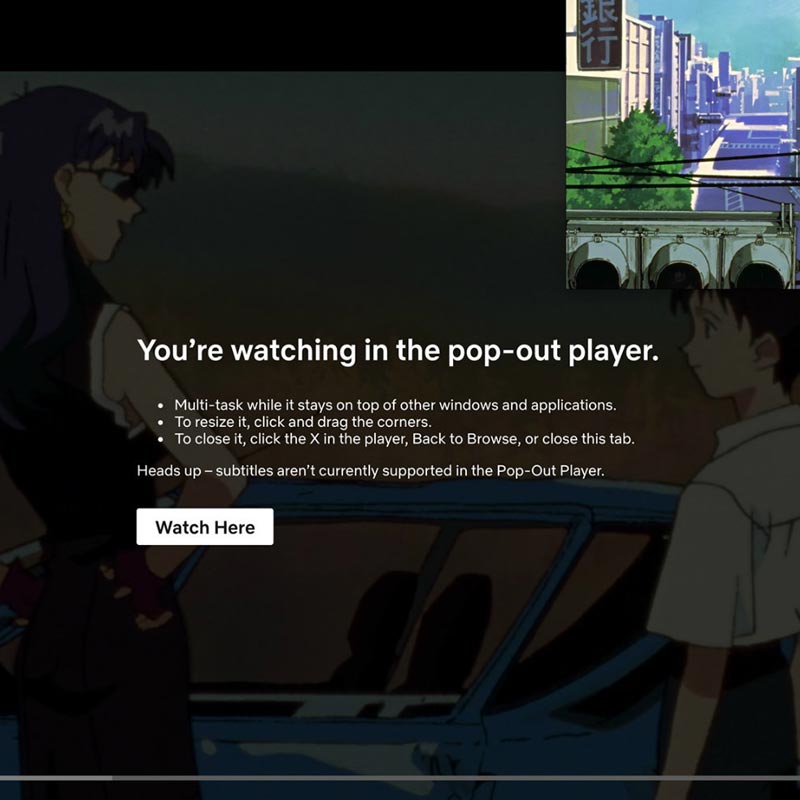
    MUMBAI: Netflix seems to be testing a new feature, a pop-out video player, that will allow users to stream videos in a small floating box that hovers above other windows and applications. The new feature means a user can watch videos on Netflix while doing other work, a perfect tool for multi tasking.

    According to engadget report, users will have to click on a small icon along the bottom of the screen to use the pop-out player. Users can resize it and position it according to their own choice once the window appears. However, subtitles are not yet available in the window.

    Although Netflix has yet to formally announce the feature,  the pop-out player seems to be rolling out slowly. But Netflix has confirmed to engadget that it is testing a pop-out player.

  • Netflix may hit critical point of business very soon

    Netflix may hit critical point of business very soon

    MUMBAI: Netflix may soon witness a crucial moment in its business soon. After William Blair analyst Ralph Schackart said on Monday that the stock can rise 22 per cent by the end of the year, shares of the streaming giant gained more than 3 per cent.

    Since the gain in stock in the first two weeks of 2019, Netflix stock has been stuck in a tight trading range without actually moving towards higher or lower direction. Hence, Monday’s suggestion has come as a significant boost to the OTT platform.

    According to a report from CNBC, research firm Bespoke said that this is Netflix’s tightest trading range on record and after such a long period of consolidation the stock could be poised for a big move higher or lower.

    The report also added that another analyst, Fairlead Strategies’ Katie Stockton is predicting a higher move as the stock has reached oversold levels. Moreover, the media giant is also trading above its 200-day moving average which she believes also indicates the continuation of a long-term uptrend.

    “There are a couple of things working for the chart. It’s in a long-term uptrend. We do tend to look at ranges within long-term uptrends as continuation patterns, and of course strong support and a strong tape,” she said as quoted by CNBC. But according to her, the stock needs to surpass $387 to climb even higher.

    “We need to see some kind of breakout of course from this range for a positive long-term technical catalyst, but Netflix is oversold after having underperformed, so it’s at this proving ground right now on its chart,” she added.

    While Netflix, the most expensive of the FANG stocks, trades at 78 times forward earnings, Point View Wealth Management’s John Petrides thinks the valuation is unjustified because of slowdown in subscriber growth and an increase in streaming competition.

    “The market knows that they have a first-mover advantage in streaming, but that’s really discounting very high future cash flows,” he commented as quoted by CNBC. He also thinks that Netflix is in an unfavourable position compared to peers in terms of content as “they don’t have a library” and instead buy original content.

    “They’re burning through $2 – $3 billion a year in free cash flow. The moment that stops is when I think ironically the valuation comes flying out of the stock,” he added.

  • Netflix starts testing Rs 65 mobile-only weekly plan for Indian users

    Netflix starts testing Rs 65 mobile-only weekly plan for Indian users

    MUMBAI: Taking note of mobile’s popularity for digital content consumption, streaming giant Netflix has started testing mobile-only subscription plans in India. According to media reports, the company has started testing a mobile-only weekly plan priced at Rs 65 in the country. However, it has also been confirmed by the OTT platform that it is only a test, not a price cut.

    Although users will get access to the entire catalogue of films and TV shows under this plan, it does not offer HD or Ultra HD content. The mobile-only plan will allow users to access the platform on mobile phone and tablet but only on one screen at a time.

    Last month, it was reported that Netflix is testing a mobile-only monthly plan priced at Rs 250 for users in India. According to reports, the plan will be rolled out to everyone in phases.

    "We are always looking for ways to make Netflix more enjoyable and accessible. We will be testing different options in select countries where members can, for example, watch Netflix on their mobile devices for a lower price and subscribe in shorter increments of time. Not everyone will see these options and we may never roll out these specific plans beyond the tests," the company also said.

    Netflix has significantly upped its game in India since last year. Along with launching hits like Sacred Games, it has also come up with original movies. But in India, it is competing with a number of homegrown players such as ZEE5, Voot, ALTBalaji along with its international rival Amazon Prime Video.

  • Netflix India’s Abhishek Nag on streaming challenges, connected TVs and local stories

    Netflix India’s Abhishek Nag on streaming challenges, connected TVs and local stories

    MUMBAI: Internet network speed hasn’t kept pace with the growth of internet adopters in India. Hence, streaming giant Netflix, which sees the potential of its next 100 million subscribers from this country, is heavily investing in compression technology to provide good viewing experience of high quality video even without a fast connection. Along with that, the OTT platform is highly committed to delivering locally relevant stories.

    “There was a time when if you watched a high quality video on Netflix you will be on a 750 kbps connection. Today you can watch extremely high quality video on Netflix at 270kbps. You can do this because we invest significantly on compression technologies,” Netflix India business development director Abhishek Nag said while speaking at The Future Of Video India 2019 summit organised by the Asia Video Industry Association (AVIA).

    Nag also emphasised on the importance of connected TVs as the partner of the OTT platform. Although handheld devices have emerged as the most popular medium to consume digital content, the Netflix executive said that users are gradually watching the streaming platform on large screens. He added that 42 per cent of accounts’ primary viewing in India became connected TVs within six months of activating subscription for the first time. Even broadband partnerships are extremely important for the company to provide a good viewing experience.

    According to him, the dichotomy between OTT and broadcaster is outdated now. He opined that the industry today is bifurcated as content creators and distributors. Rather than the medium and the delivery pipe, consumers ultimately care about content.

    Nag also reiterated the importance of locally relevant stories. Along with Sacred Games’success outside India, he also cited the example of Dark which had a successful run in its home country Germany but garnered more viewership across the globe. According to him, as the company continues to diversify content and personalise the service people will see value in subscribing.

    When it comes to the issue of censorship, which has become the centre of attraction for regulation since last year, OTT players teamed up to create a self-regulation code. Nag is of the view that the code balances creative freedom and expression along with getting consumers' choice to watch what they feel is right.

  • Netflix amends law to let shareholders nominate board members

    Netflix amends law to let shareholders nominate board members

    MUMBAI: Streaming giant Netflix has amended its bylaws to allow its shareholders with a 3 percent stake to nominate board members. This move is definitely a victory for the stakeholders on a key corporate-governance issue after a year of voting for such proposal known as proxy access.

    The amendment allows a shareholder, or a group of up to 20 stakeholders, owning at least 3 percent of its outstanding shares for at least three years may nominate up to two directors, or can have a representation of up to 20 percent of the company’s board.

    “The board periodically reviews our corporate governance, and determined that adopting proxy access is appropriate at this time, ” the streaming platform said in a statement. At Netflix’s annual meeting in last June, a non-binding proposal to adopt the proxy access bylaw was approved. Previously, the company opposed the proposal by shareholders.

    “By enacting proxy access, Netflix is finally giving investors a meaningful voice in board elections and they are no longer an outlier holding out on their long-term shareowners,” New York City Comptroller Scott Stringer commented on the move.

  • Draft National e-Commerce Policy: Why international OTT platforms need not worry just yet

    Draft National e-Commerce Policy: Why international OTT platforms need not worry just yet

    MUMBAI: The national e-commerce policy draft appears to have created quite a stir in India's OTT business. In its current form, the proposed policy is bound to pose a regulatory hurdle to international streaming giants, some say. Despite the clear distinction in the dynamics of OTT and e-commerce sector, the policy appears to bring the former under its ambit. That has given rise to speculation over the future of popular OTT platforms like Netflix, Amazon Prime Video and Hotstar.

    At the heart of the problem is the way e-commerce has been defined in the ‘Draft National e-Commerce Policy’ by the Department for Promotion of Industry and Internal Trade (DPIIT). The draft says, e-commerce is “buying, selling, marketing or distribution of goods, including digital products and services; through electronic network". Notably, it also refers to the FDI policy in e-commerce which restricts platforms with foreign direct investment to “exercise ownership or control over the inventory sold” on it. This poses a threat to Netflix Originals, Amazon Prime Video Originals and Hotstar Specials, argue some.

    The situation, however, isn't as dire as it is being made out to be.

    Given the obvious dissimilarities between the two services, there is a need to craft a separate policy for OTT platforms, if at all. Content consumption and buying products online doesn't make for a fair comparison.  When it comes to OTT apps, there is no fixed delivery period unlike an e-commerce platform. OTT platforms cannot swap the inventory model of business with an instant delivery model.

    While subscription based video-on-demand services carry out transactions, they don’t provide an option for permanent download of digital goods that could be regarded as a replacement of physical goods. Unlike e-commerce companies, OTT apps also don’t connect companies while providing content to subscribers.

    Policies of this nature don’t get finalised without struggle in the Indian regulatory system. The authority itself will go through multiple layers of discussions before sending off the final draft. In addition to that, stakeholders also have a fair chance to argue against what they'd like to believe are the flaws in the draft. The upcoming Lok Sabha election will also offer a breather to stakeholders when it comes to any potential forward movement on the bill. Industry sources Indiantelevision.com spoke to claim there is a good chance we may not see a final policy even before 2020.

    According to legal experts, the intent of the policy is good for small retailers in the country. But bringing digital services and data storage issues along with e-commerce platforms will cause more ambiguities for the entire digital economy. Moreover, lack of clarity on how the implementation will happen is being highlighted as a major problem of this draft. They have also pointed out the need for open house discussions to address some of these issues.

    However, it is certain that if the draft in current form becomes the law of the land, international OTT players will be left with no option than to adopt a marketplace model. That, however, would make little sense, as it would force them to showcase their content on other OTT platforms, as per the definition of what constitutes e-commerce. The micromanagement of ownership and control over content will only harm the industry, which is still at a nascent stage of growth.

    While there is a perspective that the proposed policy will help homegrown OTT players, there is also a danger that a less competitive market may lead to fall in quality content. Along with the emergence of homegrown players, the localisation strategy of international OTT players has driven the growth of demand for original conten. Depriving Indian viewers of international shows and original programming may also reduce their enthusiasm for streaming platforms overall.
  • Netflix global marketing chief exits

    Netflix global marketing chief exits

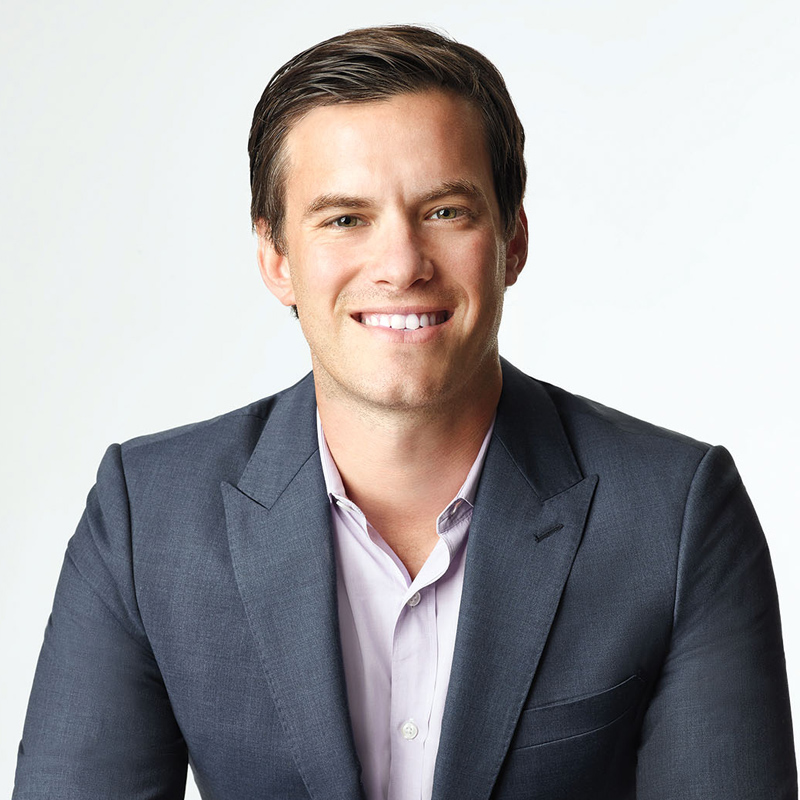
    MUMBAI: Netflix global marketing chief Stephen Bruno has exited the company, according to reports. The veteran will join MGM and will be named chief marketing officer (CMO) to advise on both its film and television ambitions.

    He’ll work closely with MGM COO Chris Brearton, as well as MGM Worldwide TV Group chairman Mark Burnett — in addition to MGM Motion Picture Group chairman Jon Glickman and TV executive director Nancy Tellem.

    Bruno had served as VP creative marketing at Netflix since 2015. There, he executed campaigns for a broad range of original series, including Stranger Things, 13 Reasons Why, Orange Is the New Black, The Crown and Narcos. He also handled Netflix features like Bird Box, Mudbound and To All the Boys I’ve Loved Before, as well as high-volume documentaries and comedy specials. Before heading to the Ted Sarandos-led company, Bruno worked at the Weinstein Company and Miramax Films.

    His exit comes within two weeks of the departure of Netflix CMO Kelly Bennett who had been with the streaming giant for over seven years.