Tag: Netflix

  • Peak TV and the year of the sheroes

    Peak TV and the year of the sheroes

    A barrage of shows from across the globe has left a thin line between pampering and spoiling our consumers for choice. It, infact, nudged the coining of the term, Peak TV.When John Landgraf, the King of FX, at an industry event for TV critics uttered the phrase “Peak TV”, he was trying to address a problem, a problem all of us face in our lives these days … WHAT TO WATCH? He was only trying to get our attention to the fact that with the volume going up, audiences will find it difficult to find good shows they can enjoy. There is so much of good television around, that at times it is exhausting catching up to these shows.

    New streaming services will add to the existing list of services already present in the country from the ever-popular Hotstar to international services like Amazon Prime and Netflix. 20+ OTT players, pivoting business models, regional explosion, self-censorship, and the classic AVod vs SVod debate will continue for the time to come. In the West, Christmas came early to content lovers with the arrival of 2 more platforms Apple TV and Disney Plus. In this battle of the giants, we will see a few smaller platforms perish and the strain on niche English TV channels will only continue to grow in India. But I am not going to jump onto numbers of platforms and who stands where and who caters to what. As famously said, people watch shows not channels and so I am going to stick to what shows made news this year. But is a burnout in the horizon and will the hyper competition see fewer active players in 2020?

    “Sheroes in Spotlight”

    It’s been the year of the “Writer” along with the Year of the “Female hero”. From Phoebe Waller-Bridge picking up outstanding lead actress to outstanding writing for a comedy series to writing the new Bond Franchise  and Susannah Grant’s “Unbelievable, it’s been a definite year of the Female Hero, whether she has been in front of the camera or behind.These women have been behind some of the biggest hits of the year. Big Little Lies, Watchmen, Dead to Me and Glow Russian Doll were all shows led by female stars. But,also do imagine a year forcontent, where one forgets to actually talk about the last season of Game of Thrones or the last year of the 3 Masterchef Judges.

    If in 2018 Wild Wild Country was the standout documentary series, 2019 was the year of the Fyre Festival and Elizabeth Holmes, the founder of blood-testing technology company Theranos, who went from the tech industry's darling to a pariah in just a matter of years. The streaming giants have exposed us to series of documentaries in 2019 from the ever popular All or Nothing to Drive to Survive or the much awaited docu-series on the Australian Cricket Team. Hopefully, these shows will continue to pave the wave for more docu-series, a genre which is under serviced in nature. It couldn’t reinforce Peak TV any better, not only is there an explosion of scripted content but also genres like documentary series which have added to the ever-expanding wish list.

    The 200 million TV homes market

    If anyone remotely thought the streaming hype and the world of OTT will dent the ‘bhagya’ of the popular soaps, they were mistaken. Even in 2019, we have an ‘Icchadari Naagin’ that continues to garner attention on primetime television sharing space with Yeh Rishta and Kumkum Bhagya. India will continue to remain a single screen market for the time to come and nothing will take away Indians from their staple diet of daily mother in law and daughter in law drama. This drama will continue to fold in front and behind the TV for the years to come. The mobile screen is going to compliment the TV screen, but not replace it in the next few years.Along with mainstream television, regional television is flourishing whether it is the nth year of the popular Marathi Show Chala Hawa Yeu Dya or the popular Tamil daily shows. The staple diet for most viewers is their daily soaps, which are complemented by the popular big-ticket shiny floor shows with big names like Salman Khan on the weekend on Bigg Boss, the popular TV format Big Brother is now in its 13th season or KBC which is now in its 11th season with megastar Amitabh Bachchan. These shows continue to rule weekends for the audience while the bahus take care of weekdays.

    This is what makes India such an exciting market to work in for content producers. At one end of the spectrum, you have Taarak Mehta, Kundali Bhagya, and Kumkum Bhagya to a small show like Little Things that explodes suddenly as a Netflix original in season 2 to Family Man and Made in Heaven picking up all the accolades in their debut season. Delhi Crime was a standout female cop drama on the backdrop of the Nirbhaya case.

    The phrase Peak TV suits India very well, with the mega bucks IPL cricket tournament attracting millions of eyeballs in the summer has made Hotstar a name to reckon with among the streamers in India. There is just so much to watch in these months with Cricket and Kabaddi leagues mushrooming in India. Hotstar launched its set of originals this summer in the middle of IPL and 2 shows that became household names were the popular BBC Drama series Criminal Justice and the popular Israeli drama Hostages, both launched with the same names in India. 

    The obsession of franchises will not fade so easily, whether it is Kasautii Zindagii Kay, Love Lust and Confusion 2, Nagin 4, Inside Edge 2, the yearning to attract audience in a cluttered market will always remain high. This hype supersedes the reality in this Indian market.

    The Chinese year of the pig has ended well for Hotstar and it abodes well for the theme of the “Sheroes”.Out of Love starring Rasika Dugal has emerged as an outright winner in the year, based on the popular BBC Drama series Dr. Foster, starring Suranne Jones who won the Bafta in 2016 for Best Actress. The show has put Rasika Dugal on the top of the list of female actors in the country and has only strengthened her case after Delhi Crime and Mirzapur. The real pleasure after watching this series lies in the fact that a powerful female protagonist is at the center of it all and the series has not treated the character like a victim, which not many players were willing to experiment with, at least with Indian originals to begin with.

    Will the audiences continue to be pampered with more quality shows? Will mainstream TV get their ratings mojo back? Will English cluster in India survive the heat from the streaming giants? Will mobile phones become replacement devices? Will more platforms launch content services? A lot will unfold in 2020.

    Let’s see what content choices it leaves for us in 2020 from being a year of sequels like Family Man, Delhi Crime, Mirzapur, Hostages, Criminal Justice, Out of Love to Peak TV staying  for a couple of more years, only time will tell.

    (The author is business head, Productions BBC Studios. The views expressed are his own and Indiantelevision.com may not subscribe to them.)

  • Does India need a Hallmark-like channel?

    Does India need a Hallmark-like channel?

    MUMBAI: Is there scope for a local TV channel developed along the lines of the Hallmark Channel in India?

    We, at indiantelevision.com think there is. There was a time in the eighties when Hiba Video – part of Nari Hira’s Lana group – churned out low cost thrillers for the home video and cable TV market. They were reasonably successful. Then came Amit Khanna’s Plus Channel group in the nineties that too produced low cost films which notched up some success.

    Since then, there have been no initiatives in this direction in India. Maybe because the Bollywood star system is too strong. However, in recent times films with lesser known faces and good storylines have been rocking it at the box office. Hence, we believe it is time to ponder over the potential of the opportunity.

    Let’s take a look at what Hallmark – remember the greeting card company – has been doing. Part of American media entity Crown Media the cable TV channel turns out a menu of low cost, quickly made formulaic films, with predictable storylines. This year, Hallmark  and a sister TV channel, Hallmark Movies and Mysteries, produced 103 original movies, 40 of them revolved around Xmas. Since 2011, it has been telecasting these movies around the clock, seven days a week during the Christmas season.

    The tack seems to be working: the programming band called Countdown to Christmas has helped Hallmark Movie Channel become the No 1 cable TV network amongt women 25 to 54, and in some time slots No 1 in households and total viewers. 72 million viewers tuned into Hallmark in 2018 during the Countdown to Christmas Special.

    Its revenues too have been rising: Crown Media group notched up sales of of $214 million with a net of some $94 million in 2014 ( the last year for which its financials are available. )

    What’s the secret sauce behind the success of Hallmark Movies?

    According to the The New Yorker magazine, Hallmark shoots its Christmas movies in just about 15 days, with minimal takes and maximum efficiency, in affordable, often Canadian locations, and they are shot on location – not expensive sets – all with a distinctive Hallmark feel. The films tend to centre on indpendent women with interesting jobs (novelists, designers, bakers, chocolatiers) and appealing romantic prospects (royalty, firemen, bakers, chefs). Programming is seasonal; as the year progresses, characters pair up amid winter wonderlands, Valentine’s Day chocolate-making contests, fireworks celebrations, pumpkin patches, and Christmas parties.

    “The familiarity of the films is essential to their success. Hallmark screenplays have nine acts, each of which hits specific plot points—a meet-cute in Act I, before the first commercial, an “almost kiss” in Act VII. The shots are lit with a distinctive warmth. Actors recur,” explains The New Yorker.

    “Hallmark Channel fare has always struck a delicate balance between realism and something more idealised. A paradox of the channel is that the artificiality of its content, which offers predictable pleasures—the “almost kiss,” interrupted by a ringing phone or a bleating goat; the ubiquitous baking contests—is often delivered alongside surprisingly realistic performances. Unlike modern rom-coms, Hallmark plots—which almost always feature romance, even alongside the murder investigations—are driven not by arch concepts, high jinks, or panic about being single but by what one can describe to me as “a voyage of self-discovery.”

    “In Hallmark films, townspeople care for one another, run viable small businesses, and compete in gingerbread bake-offs – America as we might wish it were, and as some believe it once was. It has thrived in the Trump era. Last year, it was one of the only networks to gain viewers besides Fox News and MSNBC. It also depicts a purple America, without guns, MAGA hats, rage.”

    So in effect it offers America an escape from the harshness of life that most Americans face on a daily basis. And the audiences lap it all up like there is no tomorrow.  Hallmark’s mark is being left not just on TV. Streamers have also taken note and Netflix and others have been picking up their films or Lifetime TV’s (which too has taken to making similar kinds of films) movies to serve the mushy viewers.

    Then, Hallmark has taken to sponsoring  a Christmas convention called Christmas Con which brings together 17 of its movie stars at a modest convention centre in Edison, New Jersey. Thousands of Americans descended to meet their favorites wearing reindeer antlers, pro-Hallmark T-shirts, and posed inside a Christmas ornament-shaped frame while guzzling cider.

    It’s not as if Hallmark always had it so good at the movies. It began as a greeting card company more than a century ago. It was only in 1951, that it ventured into TV by sponsoring the first original opera written for television, “Amahl and the Night Visitors.” It followed by sponsoring TV productions of literary adaptations, Broadway plays, and, in time, original films under the band Hallmark Hall of Fame. “It became the most award-winning franchise in television history, with eighty-one Emmys,” says The New Yorker.  “The origin of the films lies in the distinctive two-minute Hallmark-card commercials that had aired during the Hall of Fame broadcasts, starting in the sixties, which became famous for making viewers cry. In “The Music Professor,” from 1983, a girl races to arrive at a piano lesson before her teacher and hides a card between the pages of her sheet music. When he finds it, both struggle to contain their emotions.”

    The channel has its fans in producers, directors, and actors who find it steady pay and steady work, thanks to the flurry of movies it produces.

    The Hallmark Channel ran in India for quite a while a decade or so ago. It finallly shut down. The service is available as an OTT subscription service in the US as well as.

    Now we are not arguing for a Christmas-movie filled channel; what we are talking about is a season-driven channel. India has more festivals than probably any country. And one could have Diwali, Eid, Ganesh Chaturthi, and Onam and other festival-linked special tightly-budgeted themed films – some could be romantic – targeted at the stay-at-home-work- at-home women.  

    And it’s quite possible such a channel could do well courtesy the differentiated content it offers.

    Any takers?

  • Netflix Originals most in-demand among OTTs: Report

    Netflix Originals most in-demand among OTTs: Report

    MUMBAI: At the moment, the future of streaming services' uncrowned king Netflix has been over-discussed due to the entry of deep-pocket competitors. But till the third quarter of 2019 (July-September), Netflix has been able to retain its leadership position. A report from Parrot Analytics says that Netflix digital originals has the highest share of demand for digital original series around the world.

    According to the report, 61.3 per cent of the global demand for all digital originals is expressed for Netflix originals. However, despite the dominance of Stranger Things this quarter, the 61.3 per cent figure for 2019 Q3 is 1.3 per cent lower than the 62.6 per cent Netflix share in 2019 Q2. On the other hand, Amazon Prime Video has the largest demand gain in this period as its share grew 1.6 per cent from the previous quarter’s (2019 Q2) 10.8 per cent demand share. Across all other platforms the demand share has been relatively stable across quarters.

    The report also provided an insight into how the genres and subgenres of digital originals performed in the quarter. In all the markets, undoubtedly drama was the highest in-demand genre. While US has the highest digital original drama demand share at 66.9 per cent, with 63.8 per cent of demand, Columbia acquires the second position. Peru is one of the three most drama dominated markets in the report where drama captures a robust 62.3 per cent of demand share. In all the ten markets- United States, Argentina, Colombia, Peru, United Kingdom, Poland, Greece, Vietnam, Malaysia, The Philippines- Stranger Things was highest in-demand digital original in the quarter.

    Among the sub-genres, sci-fi genre dominated the top position in almost all the markets. In Malaysia and the Philippines superhero series just edged out sci-fi drama for the top spot in the most in-demand subgenre ranking. On the other hand, fantasy drama acquired the top spot in Vietnam. In Greece, Argentina and Peru crime drama peaked as the second most in-demand subgenre.

    In the US market, Amazon Prime Video and Hulu are neck and neck to be the platform with the second highest share of demand for digital original drama series. Prime Video surged in the final month of the quarter to overtake Hulu. Other than in the US, Prime video witnessed good growth in the UK, Greece, Vietnam. 

  • Netflix discloses paid subscriber number region wise

    Netflix discloses paid subscriber number region wise

    MUMBAI: For the first time, streaming giant Netflix has disclosed operating results for international business. Although Asia-Pacific till now stands as the smallest market of Netflix with 14.5 million subscribers, the market boasts of highest growth.

    In the region, the revenue over the past two years grew at 153 per cent to $382 million at the end of the third quarter of 2019 while the streaming subscribers grew 148 per cent  over that time period. Netflix’s average revenue per subscriber in Asia-Pacific markets is $9.29 (Approx. Rs 650).

    According to the statistics shared by the platform, it has 67.1 million pay subscribers in the United States and Canada. In the Middle East, Europe and Africa region, the paying subscriber number currently stands at 47.4 million members. The region has seen a growth of 105 per cent compared to the same quarter two years prior.

    The paid membership grew by 61 per cent to 29.4 million over the same time period in its third largest market  Latin America while streaming revenue increased 71 per cent  from the end of the third quarter of 2017 to $741 million the end of the third quarter of 2019.

    The United States and Canada have the most revenue per subscriber at $13.08 (Approx. Rs 929) followed by EMEA’s $10.40 (Approx. Rs 739). Latin America has the lowest revenue per subscriber at $8.63 (Approx. Rs 613).

  • Netflix, Viacom18 Studios partner for three original series

    Netflix, Viacom18 Studios partner for three original series

    MUMBAI: Netflix has announced three new original series in partnership with Tipping Point, the digital content arm of Viacom18 Studios. The three inventive series join the diverse and growing slate of Netflix’s original productions made in India and watched by the world.These boundary-breaking stories, ranging from thriller to romance to drama, are produced by Tipping Point. 

    The series are helmed by some of India’s finest storytellers. Jamtara – Sabka Number Aayega explores the conflicts that emerge when a small town is identified as India’s phishing capital. She is a gritty story of an undercover cop’s journey discovering her sexuality and breaking stereotypes while taking down a drug cartel. Taj Mahal 1989 is a nostalgic exploration of love and longing set against the monument of enduring love. 

    Netflix International Originals Director Monika Shergill said, “We believe that great stories can come from anywhere and be loved everywhere. It’s exciting to partner with Viacom18 Studios and take these gripping stories to our members across India and the world. We can’t wait for fans to discover these beautifully crafted, well-produced series made by passionate and incredibly talented teams.”  

    Viacom18 Studios COO Ajit Andhare said, “I am delighted to partner with Netflix to debut Tipping Point’s series to the world. Each series is motivated by a film-scale mindset, honed over many years at Viacom18 Studios. We look forward to these distinctive series, with our trademark narratives, entertaining audiences in India and around the world.”

  • Netflix to spend Rs 3000 crore on Indian content

    Netflix to spend Rs 3000 crore on Indian content

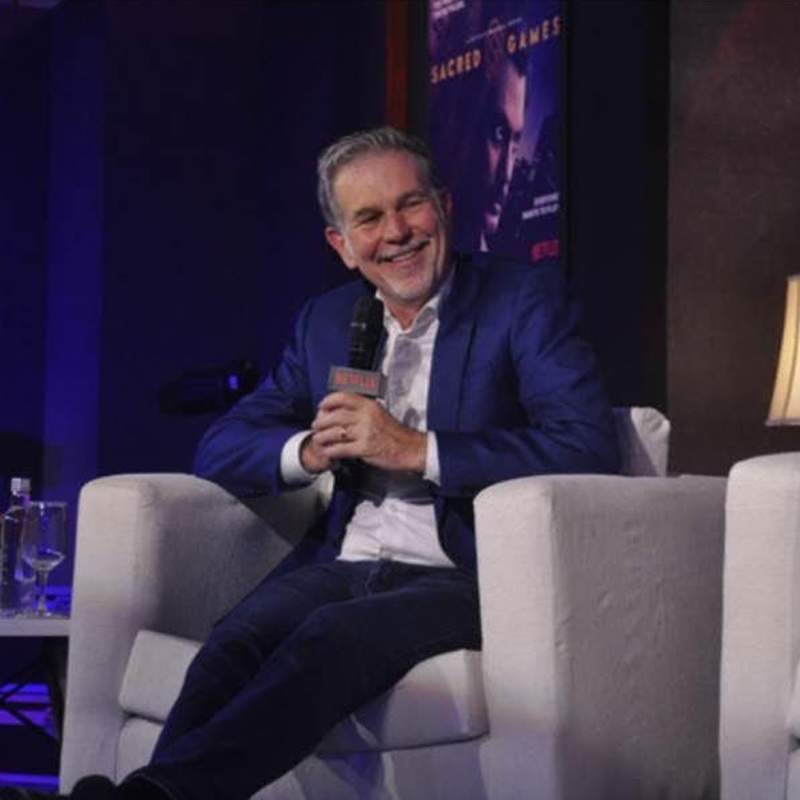
    MUMBAI: Netflix is upping its India game significantly as the streaming giant is ready to spend Rs 3000 crore on Indian content for this year and the next. Netflix founder and CEO Reed Hastings spoke about the investment during his India visit on Friday while illustrating the country’s important in their business.

    "We launched in 2016 and we have continued to invest. So we have a lot of content from the United States, the UK and Spain. We are developing our Indian content here,” Hastings said at the Hindustan Times Leadership Summit, according to media reports. "This year and next year, we will spend about Rs 3,000 crore developing content and you will start to see a lot of stuff hit the screens," he added.

    He also added that top performing Netflix shows from India include Sacred Games, Little Things and Delhi Crime. Talking about content made in India and watched by the world, Reed highlighted Mighty Little Bheem, which since its release in 2019,  has been watched by 27 million households around the world, including Latin America, Australia and New Zealand.

    Since launching here four years ago, Netflix has licensed hundreds of Indian films and shows, and invested in over 40 Netflix originals – almost all of which have been commissioned by Indian executives who live locally, know the culture and speak the language. These originals have been shot in over 20 cities across the country, including Delhi, Jaipur, Mumbai, Hyderabad, Lucknow, Kolkata, and Kochi.

    "The next 5-10 years will be the golden age of television. You are seeing unbelievable and unrivalled levels of investment. Partially from the global companies like Apple, Amazon, Disney and Viacom. There are all investing here in India as well as in the UK and the US. We are seeing more content made than ever before. It's a great export,” he said.

    "The internet has the possibility to really transform the Indian content market to be export-driven. So far, we have had some amazing successes. Sacred Games travelled around the world. We are really excited about those stories," he added.

  • Netflix available in more than 300 mn pay-TV households

    Netflix available in more than 300 mn pay-TV households

    MUMBAI: A new report from UK research firm Ampere Analysis has said that Netflix is available in more than 300 million pay-TV households. It also added that more than 50 million of those have come during 2019.

    The reach through Pay TV partnerships is almost double the company's current global subscriber base of 158 million. Netflix has been active in signing deals with pay-TV operators to extend its global reach. This year also, Netflix has signed more than 15 deals with major international pay-TV operators.

    While Western Europe has highly contributed to the growth, Netflix is available in about 86 per cent of all pay-TV homes in North America. The report also found that the streaming platform was available in about one-quarter of pay TV households in the Middle East and North Africa at the end of 2018, driven by its regional partnership with operator OSN. However, the partnership ended in August 2019, leaving Israel as the only market in the region with existing deals.

    The scenario is different in Central and South America, Asia Pacific and Central and Eastern Europe are blank canvases for Netflix. There are 400 million pay-TV subscribers in the region excluding China but Netflix has availability to about 40 million of those. While India is a key market for Netflix, fewer than one per cent of all pay-TV households in India subscribe to the OTT platform.

    “These onboarding deals give Netflix pay TV reach in every region bar SubSaharan Africa, while the Western European pay TV market has shown the most rapid growth for these deals,” the report said.

  • Is TV Still The Most Effective Ad Medium?

    Is TV Still The Most Effective Ad Medium?

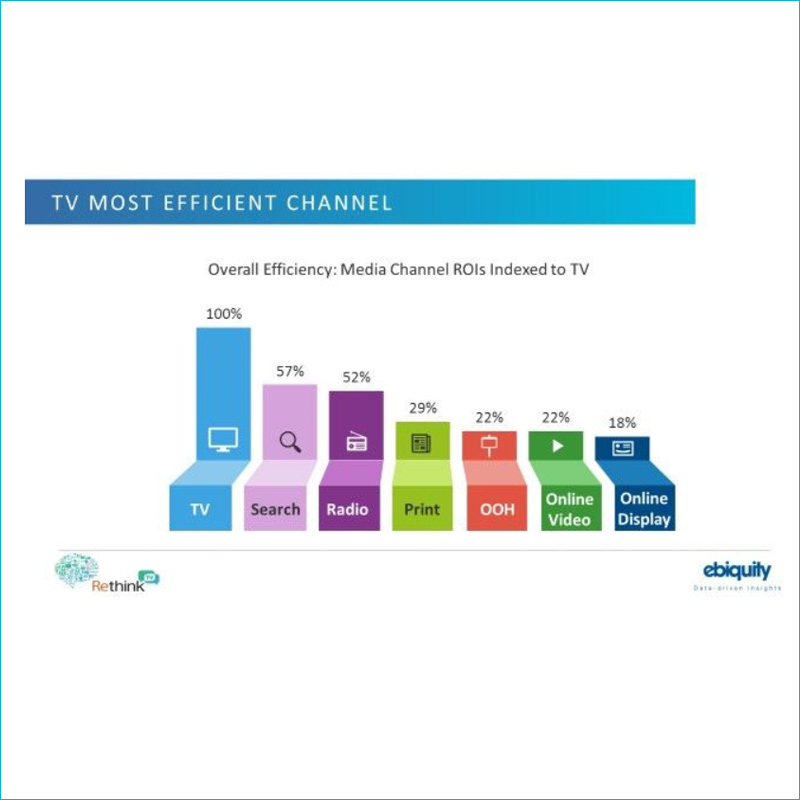
    "TV not only remains the most effective medium – almost twice as much as the rest, making advertisers earn more money than any other medium – but it is also the most efficient in terms of retention rate."

    Television generates a higher ROI than the rest of the media in three of the four categories ($ 1.70 return for every dollar invested in the consumer sector, $ 8.90 in the automotive sector and $ 5.3 in the finance sector) and it is also the medium with better long-term behavior (effect of advertising on consumer buying behavior).

    I believe these facts are quite heavy to support the article's statement.

    There is much talk about the power and scope of the new digital platforms and the different consumption habits that they generate; nevertheless, it is not easy to forget the importance that traditional media still possesses.

    TV, though, is counted amongst the conventional media type, the world hasn't let down its significance and scope it has for reaching the global audience.

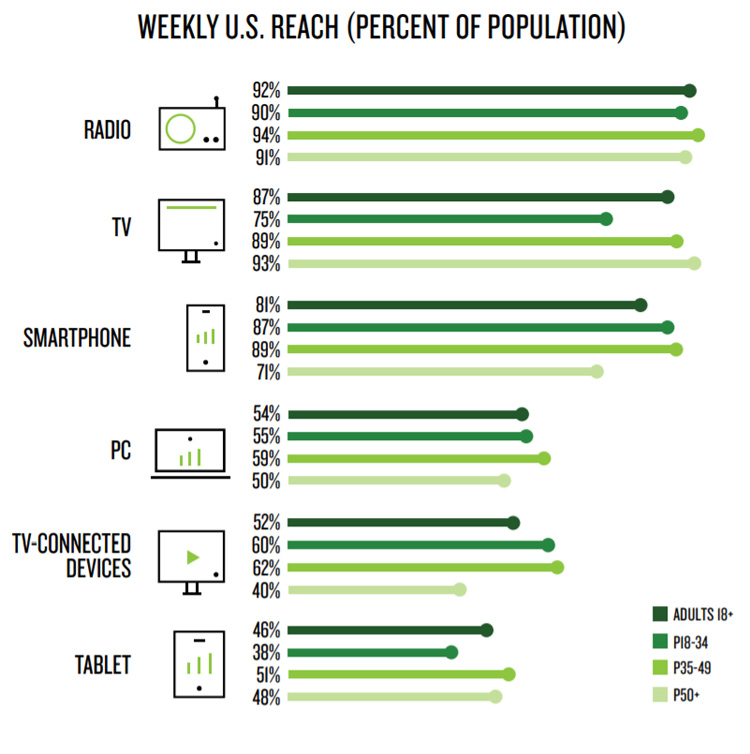
    At least in the United States, the reach of the radio is still significantly higher than the rest, even 5 points above the television, says the Nielsen Audio Report for 2019.

    On the one hand, where the radio earns status as a powerful medium, the other hand also tries to balance the equation where television remains unbeaten in terms of its average weekly usage. According to Nielsen, Americans have spent during this first quarter, on average, 36 hours a week watching television, which is more time than they spend with the rest of all other platforms together.

    So don't you think that TV purchase is a worth deal to seal? If you are looking for buying a TV but restrict yourself looking at the budget, go for renting it online. You can look out for tv on rent in Pune, Mumbai, Bangalore, Delhi Gurgaon, and many other metropolitan cities where you get easy accessibility with door to door product deliveries.

    Currently, one of the most serious challenges of the media industry in the digitized world is to ensure the security of brand communication. It is worth emphasizing that television, due to its specificity, has never met and will not be accused of a lack of control over the context in which the brand is shown.

    Television, today, can be characterized by:

    • 100% transparency
    • the highest viewer confidence index,
    • control (legal regulations), and
    • measurability

    If it is believed that television is one of the most powerful assets for advertising, then this statement is made true by some of the facts mentioned below, take a look:

    • The TV is the medium that brings more visibility and the most profitable
    • TV helps reduce costs per acquisition.
    • It offers one of the best ROI.
    • Ability to reach a mass audience.
    • Television is the catalyst for other media
    • A TV is a medium on which the relevance of a brand is based.
    • Television is the medium where emotional campaigns are most effective.

    Now let's see what makes the television the most important advertising medium besides the security of the message.

    Let's take a paper tour:

    #Range

    According to the data, television reaches about 70% of the country's population per day, 90% during the week, and almost every month. The unique combination of coverage with a huge amount of time spent watching TV makes it one of the most reach advertising media.

    #Stability

    Over the past decade, television has proved to be extremely resistant to enormous interference. Despite the constant development of new SVOD services such as Netflix and the emergence of online video platforms such as YouTube, television consumption remains unwavering worldwide, even in such developed markets as the UK or US.

    #Popularity

    Television is the most popular video format of all available forms. According to world data, on average, TV accounts for 90% of the time spent watching the video by the average viewer. For Poland, it is almost 89%.

    # Impact Force

    Communication on TV as a medium most evokes emotions such as laughter or tears among consumers. It also strongly influences viewers' purchasing decisions.

    #Efficiency

    Research around the world indicates the positive effects that TV has on other media. Online brands show particular interest in TV advertising.

    There are also brand icons, which help to have a simple link, with the creative content presented, all ads have a legacy that revolves around this brand icon, to be recognized by everyone.

    Through studies, it has been identified that viewers show higher rates of commitment, with an advertisement, during their first ten seconds, and in these, they must build an emotional connection with the public.

    There are two ways to buy television advertising:

    #The Discount Purchase

    In this case, the television network sets a fixed rate for a specific program or schedule for a specific day, and the advertiser negotiates a discount to broadcast the advertisement.

    #Advantages:

    • The flexibility of purchase, regarding programs and days of issuance.
    • If the audience of the program goes above the average, the same is paid.

    #Disadvantages:

    • You run the risk of lowering the hearing and continuing to pay the same.
    • It has less negotiation capacity.

    #Purchase at GRP cost

    A cost is negotiated with the chain for each GRP ( Gross Rating Point), which is obtained for a target offered. This negotiation includes qualitative and quantitative variables.

    #Advantages:

    • Only what is issued is paid, so if the audience goes down, the budget is not affected.
    • Relative security when reaching coverage rates.

    #Disadvantages:

    • Less flexibility of purchase, in terms of programming, due to the conditions of purchase of the chains.

    In the increasingly connected society in which we live, advertising is everywhere. It is virtually impossible to escape it despite the progress of phenomena such as Ad Blocking.

    It is present in all devices and media. It is omnipresent. But, despite everything, television continues to be positioned as the best platform when it comes to reaching large crowds. It comes as no surprise if we consider the advertising investment figures.

    The Final Say

    As we initiated with facts, we'll end the tradition in the same way:

    • In Australia, an average television campaign achieves sales revenue of $ 1.70 for every $ 1 invested.
    • In Belgium, television generates almost three times the brand memory that on YouTube (42% vs. 15%),
    • While in France, the traffic of an advertiser's website during a television campaign increases by 44%.

    Thus, it is proved that the greatest weapon of television is its effectiveness, which ultimately derives the results as intended.

  • Big Boy Toyz partner with Dharmatic Entertainment for Netflix

    Big Boy Toyz partner with Dharmatic Entertainment for Netflix

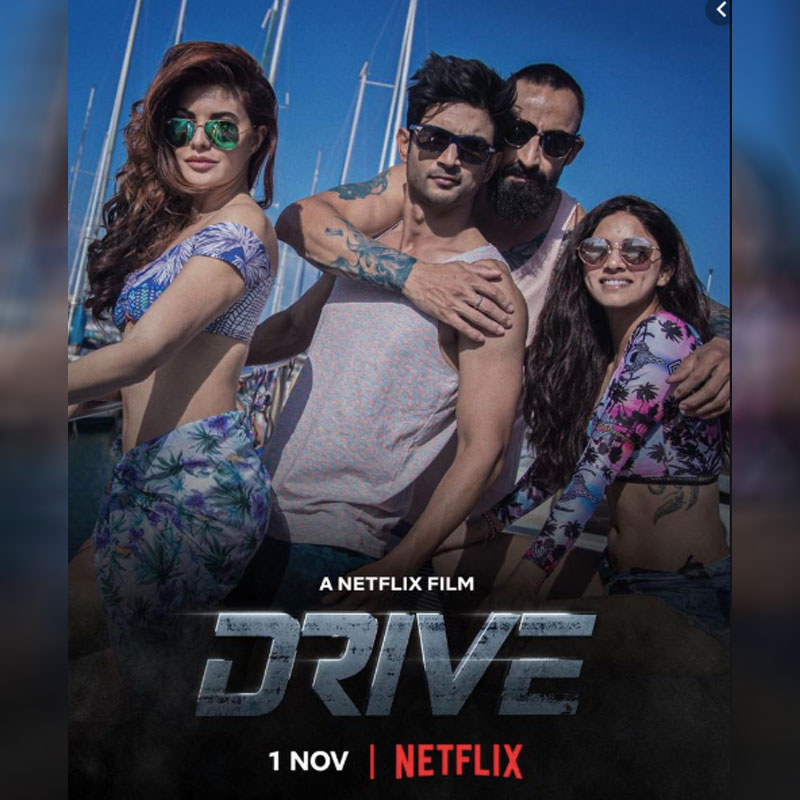
    MUMBAI: Dharmatic Entertainment and Big Boy Toyz, Delhi’s most trusted pre-owned luxury cars hub, partnered for former’s action film on Netflix. The film, Drive, showcased some of the best keeps of Bog Boy Toyz that were used in many high-speed chases and over-the-top stunts.

    Karan Johar has had a track record of making top-notch films and telling stories that resonate with people from all around the world. As for Netflix and Dharma Productions, their relationship is even stronger. Both Netflix and Johar have been working together since 2018, starting with the film Lust Stories and going on to create other much-loved films such as Ghost Stories and Guilty.

    Big Boy Toyz Founder and MD Jatin Ahuja said, “For us, this was a breakthrough since partnering with Karan who has an innate sense of what people want to see on screen helped us offer our best performances. I was and I am super excited about this opportunity and the kind of possibilities it holds for our franchise in the Bollywood industry.”

    Written and directed by Tarun Mansukhani and led by Sushant Singh Rajput and Jacqueline Fernandez, the film is spin chilling rough thriller that can drive even the most undemanding Bollywood fan up the divider with its blend of speed, lust for money and crazy pursuits. It is the kind of film where a variety of luxury cars have no issue in placing the actors and actresses on-screen in the shade. A sizeable level of the film's chief characters is either renowned racers in their big toys or are individuals who hold the aspiration become one.

    In all, it is a wild combination of India’s greatest storytelling franchise and a popular retail brand for pre-owned luxury cars and the same could be see in the movie sequences as well.

  • Strong Netflix growth underlines OTT growth potential in India

    Strong Netflix growth underlines OTT growth potential in India

    MUMBAI: Netflix India has just posted its earnings with the registrar of companies and reportedly, the video streaming giant has grown more than 700 per cent in the past 12 months.

    While the company doesn’t share these details publicly, an ET Tech report, quoting Netflix’s annual filing, says that the Indian-arm of American video streaming giant recorded overall revenues of Rs 466.7 crore with a net profit of Rs 5.1 crore. In 2018, the company had a turnover of mere Rs 58 crore with Rs 20 lakh net profit.

    No doubt, Netflix has upped its game in India by investing in expanding local content, a high-stakes marketing blitzkrieg and the launch of mobile-only plans starting at as low as Rs 199 per month, Netflix’s lowest subscription plan anywhere in the world. The strong growth posted by Reed Hastings-owned company, however, only underlines the tremendous growth potential for OTT platforms in the Indian market.

    As per EY and FIICI 2019 report – ‘A Billion Screens of Opportunity,’ the OTT sector in India grew by a whopping 59 per cent in FY2019, growing from Rs 13.5 billion in 2018 to Rs 17 billion in 2019. The sector is estimated to reach Rs 24 billion by 2021. PwC, in its 2019 annual report – ‘Global Entertainment & Media Outlook 2019-2023,’ estimated that the Indian OTT market will grow to Rs 11,976 crore by 2023, growing at a CAGR of 21.8 per cent. During that period, India is also slated to be the eight biggest OTT market overtaking South Korea.

    OTT platform expansion in India is also supported by rising digital penetration and disposable income. In 2018, digital media grew 42 per cent to reach Rs 169 billion. As per the FICCI 2019 report, paid video subscribers grew from around 7 million in 2017 to around 12-15 million in 2018. The report further estimates that India could have 30-35 million paying OTT subscribers (and a further 350+ million subscribers accessing bundled OTT services from telcos) by 2021.

    All these market studies only buttress one point, i.e. there is enough space for over 30 OTT players in India, both home-grown like Zee5 and AltBalaji, as well as global-giants like Netflix, Amazon and Hotstar, to co-exist and grow simultaneously. The same is also reflected in the ever-increasing subscription base of all these platforms.

    While Netflix in India registered near 700 per cent growth, in terms of subscribers, it’s still dwarfed by Hotstar that has upwards of 300 million active monthly users in India. In comparison, both Netflix and Amazon, the two global-giants in video-on-demand industry, together have less than 30 million subscribers in India. Even the home-grown late-entrant to the party, ZEE5, digital-arm of Zee Entertainment Enterprises Ltd's (ZEEL) launched in February 2018, increased its monthly active users from 21.7 million in the first quarter of 2018 to 76.4 million in the first quarter of 2019.

    It’s pertinent to note that different OTT platforms in India are also adopting different expansion strategies. While global premium content was Netflix’s strength, Amazon expansion was helped by its clubbing of Amazon prime video with its online-retail service. Hotstar banked on sports telecast, whereas ZEE5 launched in 12 different languages, making it a strong player in the expanding regional market.

    To be sure, though, the road-ahead for OTT platforms in India is not all that rosy. For one, no OTT platform has yet cracked the perfect monetisation model. While revenue and subscriber base are, indeed, increasing at a healthy pace, net profits are still meagre. Even Netflix, despite registering a 700 per cent growth rate, has posted a net profit of only Rs 5 crore. Barring Hotstar, that generates revenue through advertising during live sporting events, no other OTT player has successfully integrated advertising on their platforms.

    For now, Netflix India is reaping dividends of being the early-mover in the market, as well as strong global premium content combined with local original shows and movie titles. Last fiscal, Netflix released six original films, five web-series and one docuseries in Hindi. The company has also signed an exclusive output deal with Karan Johar's Dharmatic Entertainment. However, the OTT war for subscribers in India is only heating up. With the foray of global players like Apple TV+ and Disney+, as well as region-specific OTT platforms like Hoichoi and Simply South, the Indian OTT market may see further segmentation, forcing companies to constantly innovate, expand and experiment with a variety of new advertising models.