Tag: Netflix

  • Disney+ launches in seven European countries

    Disney+ launches in seven European countries

    MUMBAI: Disney+ has launched in Europe as the coronavirus continues its macabre journey at different parts of the world. It may be recalled that just a few days ago, the streaming platform launched in India, only to withdraw abruptly the next day.

    The Walt Disney Company’s streaming service will launch in France on April 7.

    The European launch of Disney+ means that it will be available in the UK, Ireland, Germany, Italy, Spain, Austria and Switzerland. Disney+ will come with a comparatively lower bandwidth utilisation in view of the growing worries about the capability of some broadband infrastructure to manage the likely surge in consumer demand.  

    In 2019 November, Disney+ launched its service in the US, Canada, the Netherlands, Australia, New Zealand and Puerto Rico. 

    Disney+ provides a treasure-trove of more than 26 original movies and series, films, and television episodes and much more. The launch means that audiences in the UK, Ireland, Germany, Italy, Spain, Austria and Switzerland will be able to enjoy streaming of Disney+ on almost all major mobile and connected TV devices, which include smart television, streaming media players and gaming consoles. Disney+ provides commercial-free viewing and unlimited downloads on up to 10 devices, in addition to customised recommendations. While subscribers may set up to seven different profiles, parents are at liberty to set Kids Profiles which feature child-friendly interface. It enables parents to restrict inappropriate content.

    Kevin Mayer, Chairman of Walt Disney Direct-to-Consumer & International, said that launching in seven markets simultaneously is a new milestone for Disney. “As the streaming home for Disney, Marvel, Pixar, Star Wars and National Geographic, Disney+ delivers high-quality, optimistic storytelling that fans expect from our brands, now available broadly, conveniently and permanently on Disney+. We humbly hope that this service can bring some much-needed moments of respite for families during these difficult times.”

    Meanwhile, the streaming platform (DIS +14.5%) is enjoying its best day as a stock since October 2008. Though at $98.18, it's still significantly off a 52-week high of $153.41, or even the $140 mark of a month ago.

    According to MoffettNathanson, Disney was unencumbered by language barriers unlike Netflix which had to localize its content for various non-English-speaking regions. Moreover, Disney+ is rolling out in Europe at a time when a large part of the population is staying at home due to the COVID-19 pandemic. The lockdown is likely to help the service to boost its subscriber uptake. 

    Unlike other international markets, Disney already has its OTT presence in India through Hotstar which came under its umbrella after the 21st Century Fox acquisition. Bob Iger, the ideator of Disney’s streaming journey, wanted to exploit Hotstar’s popularity in the country and launch the merged and rebranded service during IPL. Due to the outbreak of Coronavirus pandemic, the cricket tournament has been postponed and the entry of Disney+ got delayed in India.

  • Netflix and its India story

    Netflix and its India story

    MUMBAI: Netflix has been making  a good catch wherever it has been spreading its net over the past three years. But viewers in Indian waters do not get snared easily by the bait of snazzy and edgy content like in other parts of the world and that is something the streamer learned the hard way. It made a scratchy debut with just a handful of original shows and a thin catalogue of local content in 2016. Net result: only the top sliver (in the hundred thousand or so) of India’s 1.3 billion populace bit and it was left wondering why the service was not getting traction like it was elsewhere.

    The answer lay in localisation: India’s masses care very little about Stranger Things or Black Mirror – Bandersnatch – two series that fired viewers’ imaginations in several countries. Indians would rather watch a Naagin or a Nazar. And just having a Sacred Games and a couple of local movies and shows were not enough to make Indians flash out their check books or credit cards to pay the stiff Rs 700- plus monthly fee in a market where cable TV offered a smorgasbord of 700 channels at less than half that price. And CEO Reed Hastings' promise to shareholders that India would bring in the next 100 million subs seemed like an empty one.

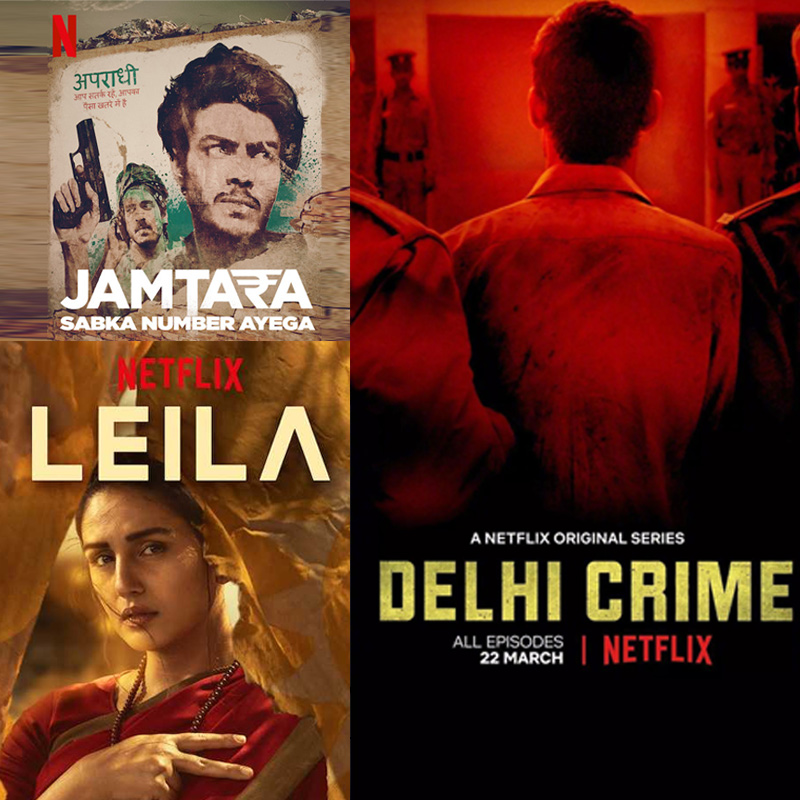
    Cut to 2020: the SVOD platform seems to be getting its act right and has rolled out a slate of local originals –both films and series – like Yeh Ballet, Sacred Games, Jamtara , Leila, Delhi Crime – and many more are in pre-prod stage or on the shooting floor.

    According to media reports, its financials too are getting better. Netflix’s India business grew more than 700 per cent during financial year 2019 recording revenues of Rs 466.7 crore and a net profit of Rs 5.1 crore. Hastings continues to have lots of faith in India’s entertainment-hungry viewers: he has kept a stash of Rs 3000 crore to invest in original content over the next two years.

    India needs that kind of investment; maybe more. There are more than 150 free-to-air channels offering TV shows (fiction and drama), movies and a lot more. Premium cable and satellite pay TV general entertainment channels at Rs 12 to Rs 19 also don’t cost that much. And they offer entertainment which suits the milieu that they are living in and even meets their aspiration needs. The main Indian broadcasters Zee TV, Sony, Star and Viacom18 have strong streaming services, ZEE5, SonyLIV, Hotstar and VOOT, which not only serve the linear feeds of the GECs but also offer the shows and movies on demand, apart from offering premium digital-only originals. Then there are independent streamers like AltBalaji, MX Player, hoichoi and ShemarooMe, which too have interesting programmes for their viewers.

    What bodes well for Netflix is that it has invested in local hires like Monika Shergill, Srishti Behl Arya, Aashish Singh with lots of experience in the local media and the entertainment industry. Earlier, for the first two years, Netflix executives in Los Angeles had oversight over the India office and the content that was being acquired and churned out. The perks of a team familiar with local content is already reflecting in the recent content slate.

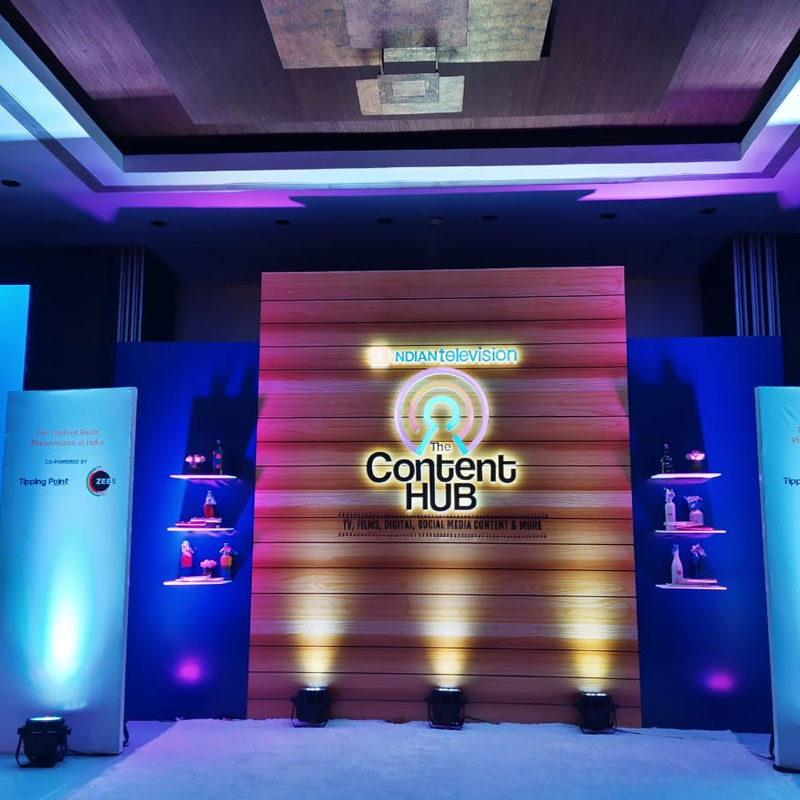
    Since the end of 2018, the dramatic change in the overall approach has become noticeable. The platform has joined hands with big names of B-Town like Karan Johar, Shah Rukh Khan, Anurag Kashyap, Dibakar Banerjee and Vikramaditya Motwane. Kashyap’s Sacred Games was the first Indian original series to give the platform prominence in the cluttered market. While Red Chillies Entertainment’s Bard of Blood was critically acclaimed, Dharmatic Production’s Drive received negative feedback. At Indiantelevision.com’s The Content Hub 2020, Netflix’s Aashish Singh said that a number of people watched the film adding that the service does want to create content for every mood of the member and every segment.

    The diversity of Indian audience may sound a cliched and over-stated fact but no one can deny the truth. Film-buff Indians can now watch erstwhile star Manisha Koirala in its upcoming original film Maska. The platform has also slated a comedy special original Ladies Up. Mighty Little Bheem will also get a new season soon. To battle with the broadcaster-led platforms like Zee5, Hotstar, Voot, which have legacy content and international rival Amazon Prime Video with its shopping benefits, Netflix must reach into the heartland or Bharat as it is called. Especially when it looks to sign on that humongous 100 million subscribers from the country.

    Indians are price-sensitive consumers and it's a well-known fact. As is the fact that India is a mobile-first video consumption market thanks to cheap handsets and almost-free data plans. Last year, Netflix hit both these peculiarities by launching a mobile-only pack for Rs 199 per month as against the Rs 799 for the premium large screen experience. In its latest investor conference call, Netflix chief product officer Greg Peters said that thanks to this, they have been able to add incremental subscribers along with an increase in retention.

    The platform is also coming up with more innovative marketing strategies. Over the last year, Netflix India’s social media presence has also started gaining more word of mouth in the vast e-universe of the country. It is also recently testing a Rs 5 plan for the intial month which has again created good chatter. Moreover, it recently added a feature which allows users to make their watchlist decision easier. On the back of the new top 10 feature, Netflix members will notice a newly designed row that will show them what's popular in India.  

    One of the major challenges for Netflix is increasing its awareness to beyond tier-I and tier-II cities. More vernacular, localised content may give the platform a fillip in India’s interiors where smart phones work, even if TVs don’t because of frequent power outages. Although competition is bound to rise for the streaming service in India with the entry of Disney+, there’s optimism abounding about Netflix’s Indian journey in the days, months and years ahead. It looks like its story will have a happy ending.

  • We want to be future-protected: Netflix’s Aashish Singh

    We want to be future-protected: Netflix’s Aashish Singh

    MUMBAI: Netflix India’s recent film Yeh Ballet has received critical appreciation. It is a story of two boys from humble backgrounds who go on to become dancers. On the contrary, critics did not hold a very high view of Drive. The streaming service has kicked off March with another film Guilty. Along with churning out premium episodic content like Sacred Games, Jamtara, the ambition of Netflix to make a mark in digital original films is very evident.

    At Indiantelevision.com's The Content Hub 2020, Netflix India original film director Aashish Singh in a candid chat with Indiantelevision.com founder, CEO and editor-in-chief Anil Wanvari spoke about Netflix’s upcoming diverse slate of films to offer its subscribers content for every mood.

    Singh said that they are looking for content creators to create the best work of their lives. The platform is looking at a very diverse slate including films that can work across all genres for any audience that they can watch, anytime, anywhere. Singh is of the view that good stories could come from anywhere and can be watched everywhere. 

    “We do look at quality in terms of the technical requirements of a film, in terms of the cameras because we want to be future-protected. We want our films to be watched even ten years later, for that matter. So definitely quality is something that we definitely look at. We want to work with the best creative talent,” Singh commented.

    Netflix is also expanding its funnel by getting to know the Indian market better. 

    "So you will get to see a very diverse state going forward. And we have a wonderful slate already that's in process for 2021 and 2022,” he added.

    Singh also reaffirmed that the platform is not only looking at big names and they are working with ten new directors, nine new writers, eight women as new writers and directors this year itself. He added that Netflix is hungry for people who have not yet been discovered. According to him, those are the people who can come up with shows like Jamtara.

    When it comes to filmmaking, Netflix helps filmmakers throughout the process right from pre-production. The streaming service has a production team, finance team, post production team, VFX team that supports the entire filmmaking process. He notes that it helps in quality production. He also mentioned that they support creators to make it the best experience for them but they do not interfere in the process.

    “I liked Yeh Ballet a lot. And it's a very authentic story which talks about dance form that's not very common. The feedback that I got from a lot of people is that they didn't know much about ballet but after they saw the film, they want their kids to probably go and learn ballet,” he added. He also stated that Drive has also performed well on the platform.

    Although Netflix has not announced any animated content in terms of films, the platform is exploring things that could do well in the animation space and is in talks with a lot of people who are creating animation content in the country.

    Talking about challenges, Singh mentions that awareness of Netflix is an issue in India. Although the tier one cities and most of the urban people know about Netflix, Singh thinks they still have a long way to go as far as reaching out to the tier two cities or tier three cities. 

  • The Content Hub 2020: Creators emphasise on importance of content quality over formats

    The Content Hub 2020: Creators emphasise on importance of content quality over formats

    MUMBAI: It was an exciting morning session on the first day of the Indiantelevision.com’s fourth edition of The Content Hub 2020, hosting discussions across a wide array of content-creation topics. Some of the most successful and powerful names from the content industry shared secret recipes and insightful and incisive analyses of churning out engaging stories.  The conversations revolved around every genre of content like long-form episodic, short-format videos and digital-original movies.

    The Korean connection!

    The session started with an investment banker-turned-film maker from South Korea who has now expanded his creative horizon to India. In conversation with Indiantelevision.com founder, CEO and Editor-in-Chief Anil Wanvari, Kross Pictures co-founder Thomas Kim stated how he started his career as an investment banker and then working in Walt Disney and Pirates of the Caribbean inspired him to become a filmmaker.

    ”I was working on a project where I realised that movies can be made with any kind of story. This thought stuck with me and I decided to become a filmmaker. So, I quit Disney and started my company in 2003. I am mostly active in Korea and China in making films and TV series based on famous IPs, mostly in comics and novels. In 2015 I had the pleasure to come out to India and worked on a film project called ‘Teen’ with Amitabh Bachchan. This was my first experience in Bollywood. Today I have offices in Seoul, Los Angeles, Mumbai and Hyderabad," Kim stated.

    Kim believes that not all stories are able to resonate in foreign countries, except some. He is currently working on the adaptation of the Bollywood film Kahaani and finds Indian films exciting and emotional. However, he feels there is a lack of disciplined storytelling in India. That's what Kross Pictures can bring to India.

    ZEE5’s content strategy relies on consumer understanding

    ZEE5 programming head Aparna Acharekar said that the core values of ZEE5 are based on three Cs – compelling content, convenience and the consumer-viewing experience.

    Acharekar said that the content must eventually give value for their money while increasing the viewing experience.

    “Relatable content that is real and resonates with the audience is going to work,” Acharekar says. She believes that convenience is the basic reason we see the shift of audience towards over-the-top platforms.

    The golden age of content

    Sooni Taraporevala, an Indian screenwriter, photographer and filmmaker best known for her work in Mississippi Masala, spoke on The Golden Age of Content at the Content Hub 2020. Taraporevala also shared her experience on the making of Salam Bombay and how a rejection from National Geographic changed her fate.

    Sooni Taraporevala believes it’s a golden age of content for writers and others as suddenly they are in demand. Yeh Ballet, currently on Netflix, proved to be a game-changer for her. A Harvard University student, Taraporevala came to movies both by chance and destiny. Her biggest lesson, ‘never hate the naysayers and never give up,’ made her successful and relevant in the industry.

    Uncovering opportunities to create great content

    The first panel discussion discussed uncovering opportunities to create great content. The panel was moderated by Bulldog Media and Entertainment co-founder and producer Akash Sharma. The panelists included: Zee Studios VP & head Ashima Avasthi, SonyLiv original content head Saugata Mukherjee, and Contiloe Pictures CEO Abhimanyu Singh.

    The panel discussed the drivers of content boom, how creating great content differs between TV and digital and content strategies adopted by production houses.

    Avasthi said:  "As technology grows and boundaries demolish, content boom has to happen. In our country it's fabulous to see how we have gone from television to every person watching content on mobile."

    According to Singh, the number of screens has increased as well as the number of audiences, and therefore, there is more requirement for content today.

    The panelists also said that there are opportunities in creating any kind of content as audiences are open to experience different genres. They also believe that the focus should be on telling the story and not on what the audience wants.

    We are hungry for people who have not been discovered yet: Netflix Aashish Singh

    Netflix, the streaming colossal that revolutionised the way of consuming content, is now trying to make inroads in India, said Netflix India original film director Aashish Singh, during an interaction with Indiantelevision.com founder, CEO and Editor-in-Chief Anil Wanvari. Along with long-format episodic content, the streaming giant promises a slate of 15 new original films by the end of 2020.

    Singh revealed the platform’s intent to work with new talent while not overlooking content quality.

    Singh reemphasised that good stories can come from anywhere and can be watched everywhere.

    Talking about new talents, he said the platform is working with ten new directors, nine writers, eight women directors and writers this year. “We are hungry for people who have not been discovered yet," he said. He made it clear that Netflix does not want to keep working with the same faces repeatedly.

    Once a film gets the nod, Netflix will have a positive involvement, helping the filmmakers throughout the project across segments including pre-production, post-production, VFX and finance, he said.

    TikTok has a comprehensive set of community guidelines: Nikhil Gandhi

    TikTok has taken the Indian social media universe by storm. Although TikTok India head Nikhil Gandhi did not reveal the exact numbers, he said that the platform has witnessed massive growth in the last two years in terms of the user base in India.

    He mentioned that the platform lends a lot of support for anyone with talent, which is unlikely on other platforms and provides huge discoverability too.

    He also added that short-form content is being enabled with the growth in vertical video format, which, according to him, was pioneered by TikTok.

    While there are a number of controversies around TikTok videos, Gandhi noted that it has a comprehensive set of community guidelines which it keeps updating every year. “We do a lot of social campaigns for creators to make them conscious about posting responsibly and be sensitive to issues relating to India,” he said.

  • Solo video viewers on the rise in India: Ampere Analysis research

    Solo video viewers on the rise in India: Ampere Analysis research

    MUMBAI: Going solo! That’s something Indian streaming services have been working hard to get viewers to do with their video apps – especially in a mobile-first country like India.

    Apparently, it seems to be working, according to a new research report put out by UK research firm Ampere Analysis, late last month.

    It stated that 15 per cent of viewers in India went in for solo viewing of video content in Q3 2019-2020 as against 10 per cent in Q1. While 50 per cent growth in two quarters will have the streaming service heads grinning in glees, the Indian consumer has some way to go before reaching the high solo viewing habits of those in Europen markets.

    In Sweden, for instance 45 per cent of internet users watched video and TV alone in Q3 2019, up from a little over 40 per cent in Q1; in Denmark, the figure went up to 35 per cent in Q3 2019 from 30 per cent in Q1-2019. The Netherlands had a smarter jump growing from 25 per cent in Q1 to 35 per cent in Q3. The UK shares similar numbers.

    The research revealed that solo viewing is high in markets where OTT usage is high clearly indicating that video on demand content is driving this behaviour. Research also showed that these viewers believe that family viewing is no longer important.

    This trend will only gather momentum as existing leaders like Netflix, Amazon Prime, Hulu and new streamers like Disney+, Peacock, HBO Max, and other country players like Hotstar, Zee5, Voot, SonyLiv aggressively roll out and push their offerings globally and localise content.

    The trend must specially give some satisfaction to Star India and Disney APAC big boss Uday Shankar. It was in 2015 that the network had launched its Hotstar  “Go Solo” campaign.

    “We were talking to young Indians, who prize individuality and non-conformity. Those who weren’t satisfied with the traditional viewing in India, sitting around a living room TV set, watching a channel that someone else had chosen,” the network says.

    “She is always on top of news and opinion articles, yet I have never seen her hold a physical newspaper,” Uday is quoted as saying on the Star website, referring to the young women in India who are changing how they consume media. "Her daily dose comes exclusively from the digital universe. She is a voracious consumer of movies and drama; yet goes to theatres more for fun than for creative consumption. Fixed schedule programming sounds as bizarre to her as silent movies to us.”

    With Disney announcing the launch of Disney+ as a tab on Hotstar by March 2020, this solo viewing trend can only head further northwards.

  • Apple TV recruits Netflix engineer to enhance subscription services

    Apple TV recruits Netflix engineer to enhance subscription services

    MUMBAI: Apple has hired one of Netflix’s top engineers Ruslan Meshenberg. He joined the technical team working for the company’s newly launched TV-streaming and subscription services. Ruslan Meshenberg was responsible for building Netflix’s platform, especially creating a speedier and consistent service for audiences. He helped build out a smoother platform with higher latency.

    According to reports, Michael Abbott, a former engineer with twitter who joined Apple last year is recruiting experienced engineers for Apple’s technical team. With Apple’s services expanding in recent times higher revenue generation, its decision to strengthen the technical department is no surprise.

    Meshenberg joins Apple at the time when it is expanding its $4.99-a-month TV+ service, bringing in additional movies and originals. This comes out as a complex move that has tripped up other competitors in the streaming world.

    Apple seems to have learned its lesson from Disney’s streaming platform Disney + who had a failed launch with subscribers not being able to login due to technical issues.

    In the past couple of years, Apple has struggled to keep up with its technology rivals in terms of its performance and newly launched services like iCloud, Maps and its music-streaming business. For example, its subscription-based magazine service; News+ faced heavy criticism from analysts and reviewers for its default sync system.

    However, Apple TV+ has not faced any major issues since its launch. Meshenberg has the expertise to help address the company’s technical challenges. While being at Netflix, he managed to run most of the infrastructure enabling to increase the streaming with more than one billion hours of weekly programming.

    Moreover, Apple TV+ which started in November with few shows in its kitty is now prepping up to add a bundle of TV movies and shows to its bucket and tapping the international market. It will help Apple to compete against streaming giants including Netflix, HBO, Amazon and Disney.

    This kind of talent acquisition is certainly helpful for strengthening the end-user experience, which is beneficial for consumers who are paying hefty amounts to enjoy a better quality product.

  • Regional to prevail as 2020 buzzword for OTT

    Regional to prevail as 2020 buzzword for OTT

    MUMBAI: All major streaming services in India are keeping regional markets at the heart of their expansion strategy. In the last two years, regional has persistently guided the contenders in the over-the-top (OTT) ecosystem and 2020 is not going to be an exception. Some of the major platforms have already tasted success in the regional markets while others are looking at those markets as the next growth frontier. South Indian languages are undoubtedly the ones getting higher priority but other markets like Marathi, Bengali, Punjabi are also emerging gradually.

    Since its grand entry in the crowded OTT space, ZEE5 has emphasised on three ‘Vs , one of those is vernacular. In 2019, ZEE5 had at least one original web series come out in six different languages each month on an average in regional languages including Marathi, Bengali, Telugu and Tamil. The parent company also mentioned in its third quarter result – Kaale Dhande in Marathi, God of Dharmapuri in Telugu and Karoline Kamakshi in Tamil received positive reviews.

    ZEE5 India programming head Aparna Acharekar also explained while talking about the regional strategy that it definitely differs across the markets. Factors like penetration of data or adoption of OTT services, that particular language consumer’s affinities for his language, openness to other languages, etc., influence the strategy widely.

    “I cannot have a one size fit approach for everyone. I am looking at the show that has to cut across say largely Hindi speaking audiences, then my themes will be different because they are exposed to a whole lot of that. Today other competition also, who has entered the OTT space, is largely first creating Hindi content. So whatever I create as a benchmark starts getting compared in Hindi to another benchmark created by another OTT. But we are leaders in other languages and no one has actually come closer, the smaller players have tried little, local players are there. But there is no national-level player who can say let me try to take on the regional market. So, each market has to be looked at differently,” she added.

    Moreover, ZEE5 provides an option to change the display language of the app. If a consumer is not comfortable navigating in English, he can change the display language to Hindi or other regional languages. The platform has seen an uptake in that alternative display adaptation. “In fact with every passing month, we see more uptake of this and we see the relative share of English as a display language is going down and regional language is actually going up,” Aparna said in an earlier interview.

    The young player on the block which already has created a buzz with its Hindi shows, MX Player also has “a very clear regional strategy”. MX Player chief content officer Gautam Talwar stated that a big show is coming up in Marathi including big names Swapnil Joshi, Satish Rajwade along with two other big shows in pipeline. The platform is focusing highly on south-Indian languages, as Talwar shared.

    “We have some shows in Punjabi, which are in the pipeline. And we have two interesting shows in Bhojpuri coming up. I am so sure that if these two shows are so interesting that if we dub them in other languages, we will get the extraordinary viewership in other regional languages as well. Regional is a big strategy for us moving forward,” Talwar added.

    As per a recent report unveiled by Hotstar, 63 per cent of total online entertainment consumption happens in the non-metro centres of India, and Lucknow, Pune and Patna rank above Hyderabad, Bengaluru and Kolkata in consumption of content. YouTube also reported over 95 of its users watched videos in a regional language.

    Other than home-grown players, international streaming services that are keen on Indian expansion are also looking at regional content. According to media reports, a robust content licensing both in Hindi and other regional languages is in Netflix’s pipeline. Amazon Prime Video has a robust catalogue of blockbuster movies across languages. Amazon Prime Video India content director and head Vijay Subramaniam said that the platform will ramp up its language catalogue in Malayalam, Kannada, Gujarati and Punjabi while they want to take up Tamil, Telugu further a few notches. While it tasted the water with one Telugu show, he added that Tamil and Telugu shows are in development.

    Smaller players like The Viral Fever (TVF) are not ignoring the promising sector. “We are actually looking at regional shows in 2020. We are working on Marathi shows. We want to line up shows in Tamil and Telugu. In 2020, we will get into regional space and we will later expand into other languages,” TVF chief content officer Sameer Saxena commented.

  • What factors drive content commissioning decision of OTT platforms?

    What factors drive content commissioning decision of OTT platforms?

    MUMBAI: From the later part of 2017, streaming players have delivered many “blockbuster originals”. Social media chatters, peer groups, office rooms see numerous discussions on premium content available on ZEE5, Netflix, Amazon Prime Video, Hotstar, Voot , MX Player and so on. But what are the key factors that help OTT platforms to wisely craft their content library?

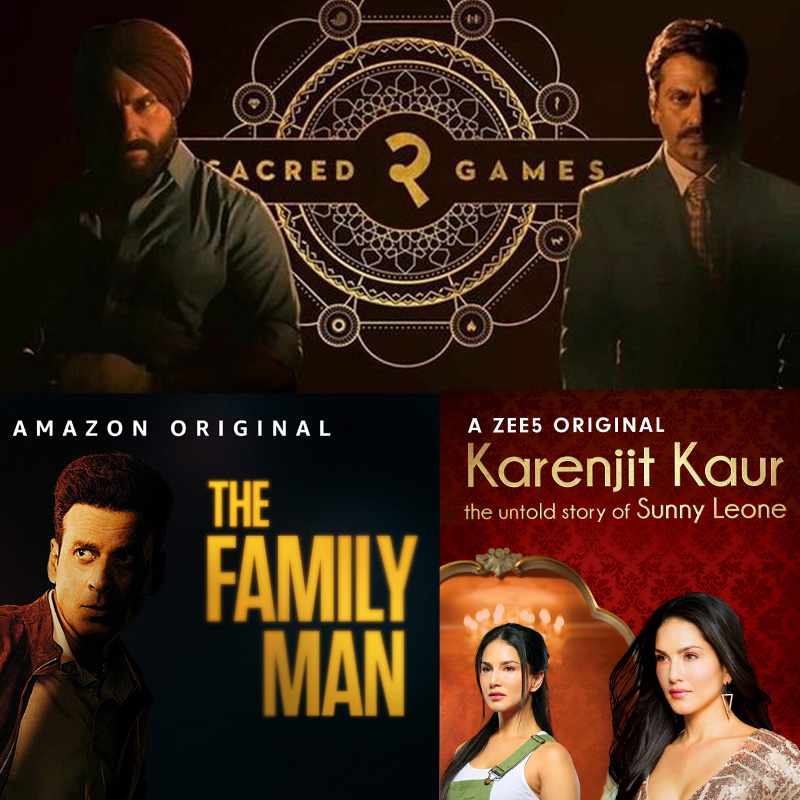
    In the last two years, a plethora of content was churned out by over-the-top (OTT) players in the country. Despite high investment in production, and marketing, not every show could create a buzz like Sacred Games, Inside Edge, The Family Man, Mirzapur, Karenjit Kaur, Rangbaaz, Thinkistaan. With a curiosity to find the secret sauce of this success, Indiantelevision.com spoke to experts on what are the prime factors they focus on while content commissioning as well as licensing. However, it was evident from the discussions that one simple factor stays at the centre of it – user taste and preference.

    ZEE5 India programming head Aparna Acharekar says data is the first benchmark and the decision starts with that, and ends with that. She reaffirms that data is the new oil that runs the entire industry. According to her, whether it is acquisition or buying, filters will have to be the same. The process has changed massively compared to one or two years back. A lot of their earlier commissioning was based on the overall knowledge of what consumers in OTT like.

    “Depending upon who I have on the platform, who I want to be on my platform, which is that most valuable group that I want to cultivate, acquisition also happens, commissioning happens, green lighting of original projects happen. Everything is guided by that one. Finally who we do this for, the consumer, the demand that is fuelling the supply,” she adds.

    Amazon Prime Video India content director and head Vijay Subramaniam says the decision of content commissioning starts with the customer, understanding her tastes and preferences, looking at how its evolving and what meaning the platform makes of it. Accord to him another input is diversity as India has multiple communities, several micro cultures. Hence, he adds it's important to recognise the nuanced changes between all of these communities and be able to tell stories that matter to all. He also says that it's important to respect diversity of individuals as well.

    “What do Indians care about? We know they care about movies. And so then they care about the latest and the greatest movies. It's important to be able to provide that to our customers, you know, young adults care about comedies, making selection there. So I think all this comes from an innate understanding of customers preferences towards content, also looking at everything else that's available to them, and where are the open spaces where there is a need and that is unfulfilled,” he states.

    “User is going to be at centre of this. Product, marketing, tech, content revolves around him. Either it can get me a lot of new users which are not there on my platform today or to my existing audiences it will drive higher views,” VOOT AVoD business head Akash Banerji comments.

    After announcing Q3 result, ZEEL MD and CEO Punit Goenka said that the network would continue to invest in original content for ZEE5 to create a rich content library that will make it a compelling offering for consumers. Recently, Netflix founder and CEO Reed Hastings said that the online video streaming company is investing Rs 3,000 crore in 2019 and 2020 to create more original content from India. Amazon chief Jeff Bezos also recently revealed his intention to double down the investment for the company's streaming service, Prime Video.  Moreover, Times Internet-owned OTT platform MX Player also announced recently a $110 million (INR 775 crore) funding round from Tencent and its parent entity. Hence, it is strongly clear that both homegrown and international players will be churning more premium quality content in the coming years.

    “Content commissioning takes a lot of time but you have to really look at who the show is being made for. We are overall a very consumer and customer-centric company,” MX Player chief content officer Gautam Talwar says.

    Talwar points out another important fact. “We also look at, are we overindexed or under for a certain genre? So we have to look at what is the balance required per genre,” he adds.

    Acharekar notes another clichéd but important factor. Content strategy is derived from business strategy. So what is the business need, how will the platform get more subscriptions? It’s not about getting accolades for content. But it’s about what is that content able to get for the platform as a business.

  • Ad spend on mobile to hit $240 billion globally: App Annie

    Ad spend on mobile to hit $240 billion globally: App Annie

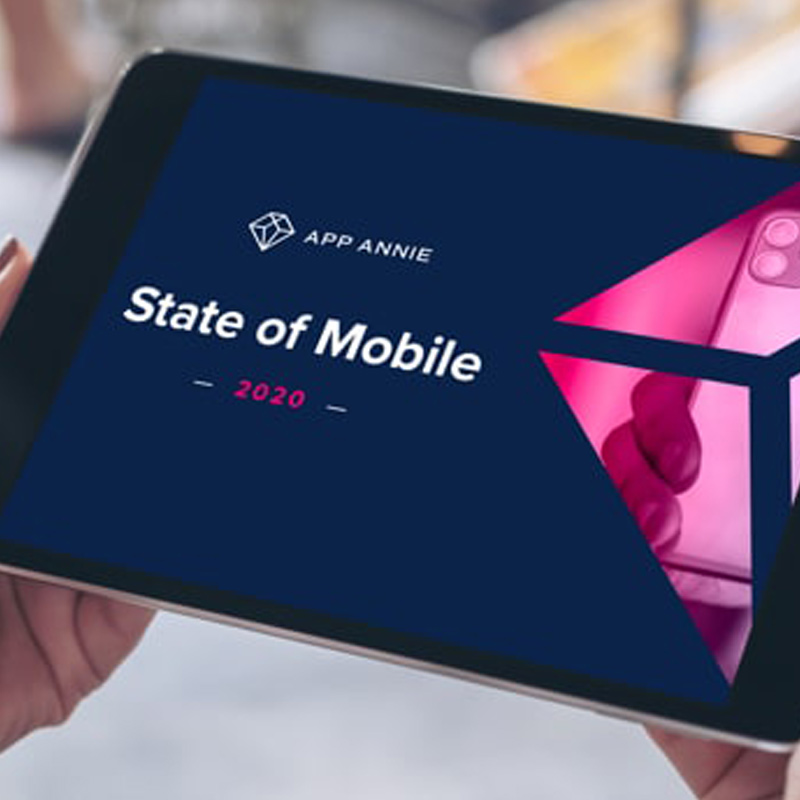
    MUMBAI: According to the State of Mobile 2020 report by App Annie, this year comes out to be the biggest year for mobile, with advertisers fuelling the revenue. Mobile ad spends reach $240 billion as brands utilise mobile’s potential. The report also states that the war between streaming giants will heat up in 2020 and consumers will ultimately decide where they want to spend 674 billion hours on mobile.

    Apple arcade and Google play Pass will act on creating innovative new games for consumers and generate new revenue streams for publishers. After 2G, 3G, and 4G, 5G is the next battleground, and the gamers will be first to reap the benefits. Consumer and mobile ad spend to top $380 billion globally in 2020. 

    The report further stated that consumers have spent 50 per cent more sessions in entertainment apps in 2019 as compared to 2017. The increase in the adaptation of video streaming apps on mobile devices to watch movies, TV shows, concerts, and live events on-demand helped bolster demand for Entertainment apps.

    Availability of high-quality streaming platforms, increase in user-generated content, and offline mode becoming standardised were seen as the industry advancements that helped tip the scales from screen size to on-the-go viewing.

    As per the report, competition in the streaming space will help better user experiences to drive growth in downloads, revenue, and usage, which will ultimately lead to partnerships and consolidation to win the wallets of consumers long term.

    The report also stated that the entry of Disney+ into the streaming space along with other streaming colossal Netflix, Amazon Prime and HBO now as incumbents, AppleTV+ as a new entrant, HBO max and NBSUniversal’s peacock set to launch in 2020 has increased the competition.

    Around 25 per cent of Netflix’s iPhone users have also used Disney+ in Q4 2019, its highest overlap of users among top video streaming apps in the US.

    According to TikTok, it  saw the greatest two-year growth in cross-app usage of Netflix at over 135 per cent, enticing that the current competition in the video streaming space is heating up not only by traditional companies launching a standalone streaming service but from social media companies carving new mobile-first consumption pathways.

  • “Most of the SVOD businesses are not going to be viable” -Tubi’s Farhad Massoudi

    “Most of the SVOD businesses are not going to be viable” -Tubi’s Farhad Massoudi

    Streamers such as Netflix, Disney+, Amazon Prime, Apple Plus, HBO Max – have been capturing headlines across the world, including in India. But one service which has been growing silently – probably the first totally reliant on advertising – has been Tubi. Launched in America around five years ago, it has caught the US consumers’ fancy with more than 20 million actives users every month.

    Tubi CEO Farhad Massoudi sat down with Variety’s Todd Spangler during the Variety conference at the Consumer Electronics Show in Las Vegas earlier this month and spoke at length about his vision for the free ad supported streaming service. Indiantelevision.com was there at the CES recording the conversation. Farhad was pretty open about his views on the streaming ecosystem.

    Prior to founding Tubi and ad tech company adRise, Farhad was the VP of engineering at socialmedia.com and he also worked as an engineer with Yahoo!Read on for excerpts of the interview:

    Tell us a little more about Tubi?

    Tubi is the largest movie streaming service in the country. We offer over 20,000 titles to our consumers in the United States. We are expanding globally. It’s completely free at no cost.

    What’s the content on Tubi?

    Traditional TV is in a secular decline. In the third quarter of last year, we had over two million consumers cut the cord. This is a record and up from half a million the year before. So in an era where consumers are watching less and less traditional TV, it’s being replaced by VOD services. Obviously Netflix and many others are leading that effort. In the world of subscription video on demand, their job is to offer you originals to justify themselves on your bills at the end of the month. So, we expect the average consumer to have a few subscription services whatever that number maybe. So as a result these services become shallower and shallower with more expensive originals. Netflix’s library is shrinking over time.

    So the job of AVOD services to be included is to complement these services with a massive library of content – a subset of which is relevant to you. We have a massive diverse kind of content. We have horror movies like Friday the 13th to award winning titles like Catch me if you can, Pulp Fiction, and many others to anime to African American titles to Spanish and many other. We launched Tubi kids in the summer. So it is a vast library of content.

    You have deals with a lot of the major studios. Not with Disney.

    Yes that’s true. We work with most major media companies.  We deal with over 250 companies video content. Lionsgate, MGM, we have deals with all of them. And they are investors in Tubi.   

    So you don't see Netflix, Hulu, Disney+ – the premium SVOD services as competitors?

    We all compete for share of time. That includes Instagram, Facebook, ESPN. But we don’t see Netflix as a direct competitor in fact we compliment them in most households where Tubi is consumed. They offer originals and I am a big fan of Netflix originals.  But we offer a library that deserves to be watched – that we give it a voice, that is otherwise not accessible to our viewers. I think that’s really important for the media industry, that’s important for society. And it obviously adds a lot of value to advertisers.

    What is the typical profile of the Tubi viewer?

    Let me contrast it to traditional TV. The median age in TV is about 58; half our viewers are 18 to 34. So the median age is in the low thirties. They represent the breadth of America. We are all over the United States. In the summer we mentioned we had over 20 million monthly active users. So there is a very large percentage of the American population, which is using us. 

    How much do people watch?

    We have millions of consumers using us everyday for hours and it is a very engaged audience.

    You are an ad supported service. What does the ad load look like compared to other media?

    First of all most of the successful internet companies are advertising based – Facebook, Google, Instagram to YouTube,  Pinterest –  so we are just like them. I think it’s very important to offer the service at no cost to the consumer. In regards to the ad load, we offer an ad load of four to six minutes as compared to traditional TV, which is 14-18 minutes per hour. So it’s a substantially lower ad load and it’s important we don’t mess up the experience.

    What are the ad formats you are offering advertisers?

    What we offer advertisers is pretty straightforward: brand safe. We have no UGC content, no short form content that is traditionally on the web. Most of the consumption is on premium TV screens. So it is a TV commercial experience with an ability to do targeting and measurement. So it is the best of both TV and digital. We offer access to consumers who are watching less and less TV.  So that’s a huge extended reach for national advertising. We are expanding beyond US borders. There are a lot of sophisticated targeted measurement capabilities; there are some interactivity capabilities. So we offer access to consumers who advertisers will not be able to access through traditional TV anymore.

    What is your business need in terms of the ecosystem to really make a difference?

    We started AVOD nine years ago. The concept of ad supported TV is what people made fun of five six years ago. We have had a phenomenal couple of years and it would be shocking if we did not have any competitors. People have noticed that AVOD is a huge opportunity in the US and are launching services similar to us. We still are the largest, the most watched. We have the largest library, the most sophisticated machine learning recommendation engine. We are really comfortable where we are. We welcome all the new players.

    What are your biggest challenges?

    Look our team doubled in the past year. So maintaining the momentum, the culture, the innovation, and the cutting edge is not easy. So a lot of my attention is on making sure that we keep that culture and we continue pushing the edge.

    In the backdrop of the streaming wars are you going to increase the spend on content?

    We have been. We announced a nine figure spending for last year. We are going to significantly increase it. The library has more than doubled in the past year. The quality has never been as good as this. The depth of our library in any genre is at level with any streaming service out there. That is going to continue to grow. The thing that we do best and we specialise in it is that we use technology, data and machine learning to figure out what content to license, what do our customers want, and how much we should pay for it so that we can have a sustainable business and continuously grow it.

    The originals on Netflix require spends of  billion  and to license content, don't you need to more capital to break out?

    No. Here's what we do and we have been successful doing it. The playbook for SVOD is a content forward playbook, which means you need originals to drive subscribers. So if HBO were to remove their top 10 titles, I don't think they will be worthwhile.

    AVOD is the opposite: it is about giving access to the consumer to content that otherwise you won't  have access to through SVOD services because it does not drive subscribers. Some of our titles don't appeal to everybody. We have anywhere from documentaries you won’t find anywhere else. To horror movies. And that is something Tubi offers at no additional cost. We are on a mission to aggregate about 99 per cent of TV shows and movies in the market. The top one per cent is going to be the streaming wars – the Netflix, the Amazon and HBO going at each other. Our job is to aggregate that other 99 per cent and personalise it so that you find the titles that are relevant to you as opposed to the rest of it.

    99 per cent sounds expensive, you are going to need investment.

    We are growing our revenue, and we are going to invest in the library and 20,000 titles is by far the largest library in the market. For any service – AVOD or SVOD. Netflix has about 5,400 titles. We have 4X or 5X Netflix’s titles. We are not the long tail. Long tail video suggests cat videos, which is not what we offer. We are not about the top one per cent of content – I call those the shiny titles, the ones that win awards, that get a lot of headlines. The subscription services need those to convince you to pay. We will focus on the rest.

    Will you focus on original content? And do you require exclusivity for your content licensing deals?

    No. We will not to do originals for the reasons I just mentioned. I get these pitches for original content and I tell them sorry we are not the right partners.  If we can get exclusivity for licensed content, sure. Ultimately what matters is that on a Friday night you put on Tubi and we pair you up with the content that is relevant to you.

    What developments are you looking at to make personalisation better?

    The sophisticated machine we have built to pair the right content with the user, needed a lot of content. We have been working on our machine learning recommendation engine for five years. We are the only AVOD service or the most sophisticated with a recommendation engine. That is critical to our success.

    Tubi originated from adRise – an adtech company. How did that happen?

    The fun story is I was in school college many years ago. And I took a business class that the CFO of Netflix attended. And I remember students were grilling him that the more your consumers use your product, the more you have to pay for shipping them and they were a DVD by mail service. And he said the future of TV is streaming and the apps will replace TV channels. And that stuck with me.

    Years later I was in adtech and in advertising and I realised that advertising as long as we know is going to be dominated by TV. So I put two and two together and I said TV app replaces TV channel. The domestic $70 billion ad market and the global $200 billion one is going to be completely be disrupted.  And consumers still want more content that is subsidised. So that was the hot moment for me.

    So I launched in 2011, the first AVOD OTT business and it was called adRise. It was a white label streaming platform that powered other media companies’ apps behind the scenes. The thinking then was that I would not be able to license content with no money for my free streaming service. Which certainly was the case back then. And most people thought streaming was not going to happen and this concept of ad-supported service is ludicrous. Five years ago we saw an opportunity to launch our own brand called Tubi TV, which we then renamed to Tubi and we stopped doing the adRise business.

    Your partners who distribute your content – Comcast and Cox. How is that going?

    We love our partners. Our MVPD partners in cable and satellite. And we are going to expand that. We are happy with the two. We are the third app after Netflix and YouTube to launch Xfinity set top  boxes. We complement Comcast and Cox and offer their customers 20,000 titles.

    In your ad campaign, you are directly saying you are not Netflix. Is it a good idea to name a competitor?

    On notonnetflix.com, there are a few celebrities like Terence Howard, Nicole Scherzinger, Carment Electra  talking about us. It has been a phenomenal campaign and has been very successful for us. And again we have highlighted that we have content that is not on Netflix which means we complement it. If you want to watch 13 reasons why, go for it. For everything else, there is Tubi. 

    What’s you forecast for SVOD?

    The idea of a consumer having to subscribe to a Netflix, Amazon, Disney+, Hulu, ESPN, HBO Max, HBO Now, Starz, CBS All Access – it is ludicrous. It is not going to happen. Most of these businesses are not going to be viable. A lot of these businesses are going to fail because they just won’t have scale.  Consumers are not going to subscribe to all of these services. The jury is out which ones are going to build a viable business and which ones are going to spend billions and stop doing it. The reality is we will know in the next couple of years. In the meantime, you pick the few you really like, because they have oriignals you really like and you complement it with Tubi.