Tag: Netflix

  • Netflix sees 60% surge in Twitter discussions in last 90 days

    Netflix sees 60% surge in Twitter discussions in last 90 days

    KOLKATA: As the lockdown opened up the corridors to OTT content, several reports suggest that Netflix has been one of the top gainers. This was reflected on Twitter as well, where the influencer discussions related to ‘Netflix’ spiked more than 60 per cent during March-May 2020, over the previous 90 days, according to GlobalData, a leading data and analytics company.

    There is a huge spike in influencer conversations in April, when the company announced that it added an eye-popping 15.8 million new subscribers in the first quarter of 2020 due to home restrictions and reported quarterly revenue of $5.77 billion against the estimated $5.76 billion. In addition to this, the Covid2019 crisis has a positive impact on the company’s stock price as it is up by almost 14 per cent since the beginning of 2020.

    GlobalData influencer expert Prashant Saxena says: “Due to Covid2019, people are streaming more content online as they spend more time at home, bringing companies like Netflix to a bright spot in the entertainment sector, with significant growth in new subscribers and higher viewing time.”

    In March, there was another spike in conversations on Twitter when the company announced that it agreed with EU in a deal to slow down the speed of its streaming service for 30 days to reduce traffic across Europe by 25 per cent and ensure that broadband networks perform adequately as millions of people were confined to their homes.

    Saxena concludes: “As the world starts easing lockdown restrictions and slowly reopening restaurants and other recreational destinations, it is expected that the viewership and membership numbers for Netflix will likely be impacted in the next coming months.”

  • Impact of Covid2019 on global ad spends on Indian ad industry

    Impact of Covid2019 on global ad spends on Indian ad industry

    The Covid2019 pandemic has presented serious challenges when it comes to stabilising the overall economy amidst lockdown, one of which is changing industry dynamics. Covid2019 has impacted the way brands, agencies and various other businesses work which disrupted the ever-evolving advertising and marketing industry. The world’s leading economies have witnessed a downfall in the revenue as the businesses are shut. While there is no handbook that one can follow in such crisis, it is essential for advertisers to re-calibrate their entire approach and connect with the right target audience.

    Since people spend maximum time staying at home during the quarantine, connecting with them through digital media is convenient. In such cases, advertiser’s needs to know the tactic of how to keep their audiences engaged through right media platforms and how to make the brands invest through them.

    Are brands taking a responsible route? Shifts that were witnessed

    Restrictions on travel due to lockdown have posed to be a threat for Out-of-home (OOH) advertising and seems to be a medium that has no realistic lockdown replacement as it has majorly been impacting revenues. But what has actively taken over the current scenario during these tough times and has saved brands from sinking is the way online advertising is responding to it. Brands have started focusing on alternative ways of boosting their businesses online by taking a different approach towards dealing with the current scenario.

    Is global ad spends sinking?

    Spending has now made a shift from the traditional means of advertising from newspaper ads, hoardings, printed pamphlets etc., to digitally active platforms. These include social media like Youtube, Instagram, Facebook, Snapchat and also digital OTT Platforms like Netflix, Amazon Prime, Spotify, Voot etc. 

    Global ads are expected to sink this year as the pandemic has led to dip in travel and tourism and entertainment industry among others, all of which has impacted demand. This change in the global ad spending is what is been highlighted in the way brands have chosen to spend particularly on platforms as a means to increase their sales during and post lockdown. One of the major reasons why ad spends are sinking is because of the attitudinal shift in consumer behaviour. Most advertising companies will experience negative impacts on their business as ad revenues are dropping at a faster pace.  

    Even when sales are at halt because of the pandemic, what was to be noticed is the way how brands did not stop advertising. They continued to create awareness through digital platforms by posting TVCs and coming up with creative ways on Instagram pages which strongly depicted how brands are posing to be with their audience even during these tough times. 

    Creatives from various brands like Metro, Mochi, Burger King, Swiggy, Zomato, Audi etc., have found different ways and means to stay connected with their audiences on typical topics like lockdown, quarantine, isolated, pandemic while playing around strategically with these terms. Changing their logos to promote social distancing, etc brands like Dominos, Swiggy, Big Basket have even started safely delivering groceries by following WHO's guidelines at your door steps to hold credibility in the eyes of its consumers.

    Impact on Indian advertising industry

    While industry is actively dealing with the challenges of OOH during these challenging times, advertisers have now realised that digital progression is the only savior. Digital is the best medium for advertisers to reach their end users. We can already see a shift in Flipkart’s Big Billion Day sale, Myntra’s end of reason sale, etc has always happened in a particular way, but have a possibility of changing due to the crises.

    (The author is co-founder and managing director, Makani Creatives. The views expressed are his own and Indiantelevision.com may not subscribe to them.)

  • Are brands ready to make the most of Twitter fleets?

    Are brands ready to make the most of Twitter fleets?

    MUMBAI: Recently, micro-blogging site Twitter joined the likes of Instagram, Snapchat and Facebook by launching fleets, stories which will disappear in 24 hours. The purpose is to encourage timid Twitter users to post their drafted thoughts without the social pressure of public likes and replies.

    The stories function is a popular feature on other platforms, especially Instagram, where brands and users have used it to craft different interactions than just a picture one can like. On the arrival of fleets in India, many social media users took at dig at Twitter for recycling features but experts are of the opinion that fleet is here to stay and it opens a new door for content creators and brands to engage with their audiences.

    AdLift co-founder and CEO Prashant Puri says, “Just like Instagram stories have been usefully leveraged by brands and influencers (over 500 million Instagram accounts use stories) – we see that fleets would also be leveraged by both brands and content creators. Short video (three to six seconds), text content, offers and sales (by brands), breaking news by content creators are some of the content that will be shared.”

    According to GenY Medium VP strategy Niki Singh, fleets look like a great opportunity to share more authentic, real and behind the scenes content with the audience hence, making the brand more relatable. It gives the brand a more human touch, thus making the viewer feel ‘this brand is for me.’ Disappearing story format is a great way to build urgency for time-bound offers. Think coupons, flash sales, giveaways, announcements or information that is relevant only for that day, Singh states.

    BC Web Wise creative director Yorick Pinto believes that the disappearing stories format is here to stay. However, he says that it’s too early for brands to use this opportunity as they are still getting used to Instagram stories even as Facebook stories hasn’t been leveraged much. Some of the names that come to his mind are magazines and other content portals that can make use of fleets.

    He adds that fleets will be another way for Twitterati to express themselves, especially if it’s a more fleeting story like a picture of them enjoying a coffee during the rains. This is to be noted since Twitter has been viewed as a more serious platform compared to its peers.

    “I can expect to see a lot of fleets on monsoons, memes, gifs, etc., anything that’s in the fun space and is topical, as opposed to tweets that would remain on their timeline. I’m also guessing that there could be a behavioural change in the way Twitterati use the platform,” he says.

    Adding to this, Pulpkey founder Amit Mondal says that influencers, who predominantly have their primary channel on other social networks, now have a way to be more active on Twitter. A fashion influencer can share his or her visual lookbook, a food influencer can share recorded recipes, etc. It opens a new door for Twitter to onboard newer influencers. Influencers always had a mindset that Twitter was serious copywriting, breaking news-heavy, so getting a casual feature like fleets will make them share their daily life updates, behind the scene etc more comfortably.

    So, will fleets surpass Instagram or Snapchat in terms of popularity? “Each platform has its own unique features and influencers. So, I might follow a journalist or a business leader on Twitter, whereas I’m more likely to follow a musician or a sportsperson on Instagram, and the ones I follow on TikTok would be a completely different set. So, comparing fleets to stories on the platforms is not an apple to apple comparison. Only time will tell as to how popular will fleets become,” Pinto responds.

    While perishable content has proven to work well for all major social platforms including Snapchat, Facebook, Instagram and LinkedIn, Twitter is a fairly busy platform.

    According to growth marketer Rohan Chaubey, the lifespan of a tweet is between 15 to 20 minutes, so Twitter’s fleet gives content creators and brands an opportunity to enjoy extended lifespan and visibility for their content.

    “Fleets will help brands and creators have more direct and personal conversations as their fans and followers will be able to reply or react to the fleets. Creators can share more personal thoughts and brands can leverage perishable content by sharing glimpses from behind-the-scenes. Fleets will be suitable for live reporting on any news or events. They can post a series of fleets sharing live updates,” he says.

    Since its launch two days ago, celebrities and brands alike have made a smashing debut on fleets. The announcement received a resounding response and instantly piqued the curiosity of Twitter enthusiasts, including Amitabh Bachchan, who expressed his desire to learn more about fleets in a good old tweet.

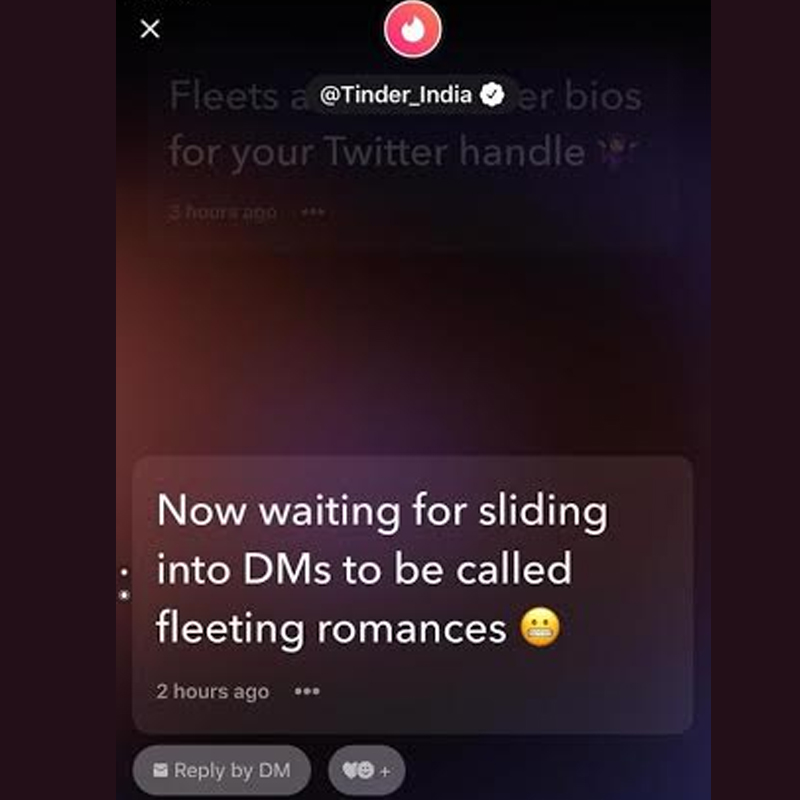
    Brands like Netflix, Zomato, Amazon Prime Video and Tinder made the most of fleets too.

  • Modi 2.0: The year gone by for I&B ministry

    Modi 2.0: The year gone by for I&B ministry

    MUMBAI: The ruling Bharatiya Janta Party (BJP) recently completed one year in its second term in office at a time when the world reels under the novel SarsCoV2 crises. Through this year, the government has taken several key decisions and measures which have kept the ministry of information and broadcasting (MIB) busy.   

    Under the leadership of Prakash Javadekar, MIB doled out various significant measures and guidelines that will have a lasting impact on the media and entertainment industry. Here are some key announcements and proposals by the MIB in the past year.  

    OTT industry in self-regulatory mode

    Javadekar stressed on the importance of self-regulation rather than setting up a statutory body for the OTT industry and also assured stakeholders such as Netflix, Amazon Prime, Zee5, MX Player, ALTBalaji, Hotstar, Voot and Jio regarding the same. MIB had asked OTT content players in March this year to set up an adjudicatory body and decide on a code of conduct within 100 days. Most OTT players are in favour of mutually agreeable terms and not an imposing statutory body.

    Fake or fact?

    In 2019, the Press Information Bureau (PIB) decided to fight fake news by setting up a fact-checking unit. Aiming for better communication around the pandemic between citizens and the government, PIB also launched a Covid2019 fact check unit. In addition to that, it launched a Twitter handle, @CovidnewsbyMIB, and started #IndiaFightsCorona to share all pandemic-related updates.

    A year of guidelines, advisories and new policies

    From issuing several guidelines and regulations to implementations of advisories and policies, MIB under Javadekar, had a lot to offer in the past year.

    In June 2019, the ministry issued an advisory to all private television channels to carry end credits of the programmes in the language that they are being telecasted in. The step was an initiative towards promoting Indian languages.

    Following this, MIB announced the implementation of accessibility standard for TV programmes for those with hearing disability. It became mandatory for all news channels to carry at least one programme a day with sign language broadcast and subtitles, while other channels were asked to have at least one show a week with similar features.

    MIB also recently issued draft policy guidelines stipulating that social media platforms with 25 million monthly unique users will be eligible for government ads. Under the new policy, the bureau of outreach will also partake in the bidding process, including buying inventory or space for government messaging. To bring community radios at par with TV channels, Javadekar proposed to raise advertisement air time to 12 minutes from seven minutes.

    The ministry has also been issuing advisories to private satellite TV channels to adhere to the Programme and Advertising Codes as prescribed in the Cable Television Networks (Regulation) Act 1995.

    Staying informed

    In an effort to keep spirits uplifted during the pandemic, the MIB directed broadcasters and distribution platform operators (DPOs) to ensure uninterrupted supply of services to subscribers and to cooperate with other players. It also requested all states and union territories to provide a constant flow of authentic information for the public by ensuring operational continuity of the print and electronic media.

  • Indians lead amongst 70 mn global OTT account password sharers

    Indians lead amongst 70 mn global OTT account password sharers

    MUMBAI: Indian streaming service subscribers lead the world in lending their accounts to others who don’t have one, says a report by market research firm Ampere Analysis. Next in line are OTT subs in Netherlands and France with the Japanese expectedly being the country where the least number of users borrow OTT accounts. The UK, China and Indonesia are nations where account borrowing is growing the fastest.

    That’s good news and it’s bad news too. It clearly shows how much in demand, the content on streaming services is; it’s bad especially for SVOD platforms as they are losing subscription revenue on account of this tendency.

    Ampere estimates there are 70 million households in 22 countries who are borrowing one or more accounts. It also stated that the trend has picked up in the past 12 months, with the growth in popularity of existing services and the launch of new services from eight per cent of global internet users in Q1 2019  to 11 per cent in Q1 2020.

    The market research firm expects this tendency to increase with the proliferation of OTT services worldwide.

    Ampere further highlighted in the report that  SVOD service providers should see the glass half full not half empty as far as the borrowers are concerned. There’s a possibility to convert some of them into subscribers. Reason: almost three-quarters of them representing 50 million subscribe to at least one OTT service and more than two-thirds of them have pay TV at home. Additionally, half of these borrowers acknowledged that they would not mind paying extra for something that gives them exactly what they want.

    And guess what, a large subset of borrowers are viewing mainly sports and that too for specific periods during the seasons when their favourite games are aired. 

    Netflix has raised concern about shared accounts in the past. In a Q3 2019 financial investor call interview in October 2019, Netflix chief product officer Greg Peters had observed that the streamer was looking at consumer-friendly ways to push back at the edges of password sharing.

    Some surveys have revealed that just under 10 per cent  of Netflix subscribers are not paying for their accounts, even as millennials are rampantly  sharing their passwords around. Estimates are that the loss accruing on account of this, to Netflix, would be in the region of $150 million every month.

    That is not something anyone can sniff at. 

  • Disney+ and Apple TV+ see success during first six months

    Disney+ and Apple TV+ see success during first six months

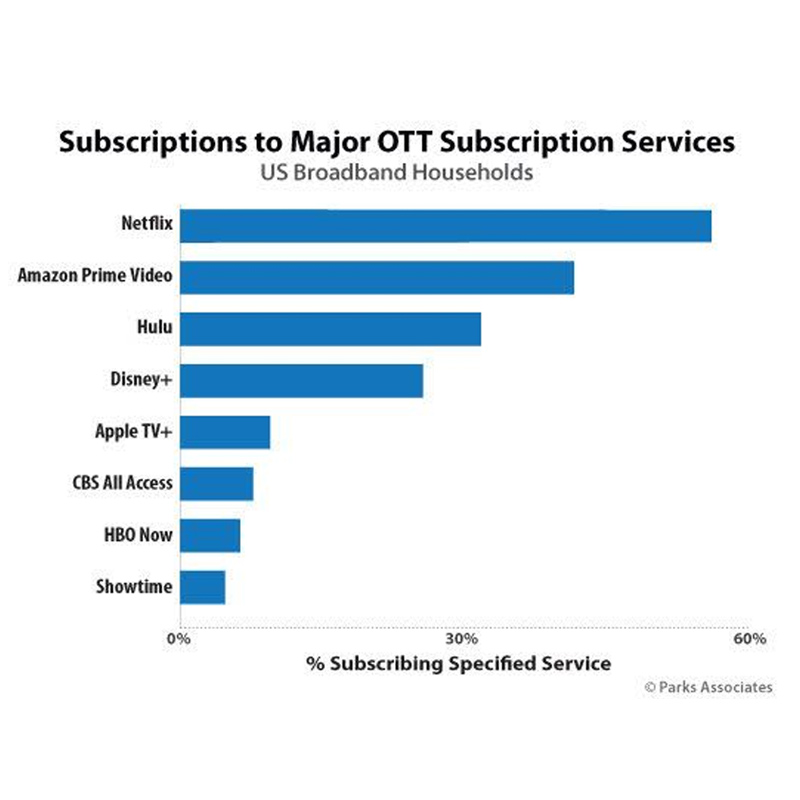
    MUMBAI: New OTT services Apple TV+ and Disney+ have captured significant market share in the streaming video space, rounding out the top five behind the "Big 3" Netflix, Amazon Prime Video, and Hulu, according to a recent consumer survey research by Parks Associates.

    The research firm's Market Snapshot: Disney+ and Apple TV+ highlights the impact of the entry of Disney+ and Apple TV+ in the OTT market, including insights into the factors driving their growth.

    Disney+ has skyrocketed to 25 per cent adoption among US broadband households after just six months in the market. Apple TV+, which launched around the same time, has reached nearly 10 per cent adoption. Disney+ and Apple TV+ are fourth and fifth, respectively, among SVOD services adopted by consumers.

    Data presented in this market snapshot were drawn primarily from an online survey of more than 10,000 consumers fielded between 8 March and 3 April to heads of broadband households, after the Covid2019 crisis had begun in the United States.

    Additional data from the market snapshot:

    Nearly three in ten broadband households report their use of online video services has increased because of the Covid2019 outbreak.

    81 per cent of Disney+ subscribers subscribe to Netflix, as do 72 per cent of Apple TV+ subscribers.

    Nearly one-half of Disney+ subscribers cancelled another OTT service over the last 12 months, as did roughly two-thirds of Apple TV+ subscribers.

    "Disney took a broad-based content approach to its Disney+ service, including its Pixar, Stars Wars, Marvel, Nat Geo, and 20th Century Fox properties to make it broadly appealing, far beyond its traditional audience of families with young children," said Parks Associates research director Steve Nason. "Very few Disney+ subscribers subscribe only to this service, so households are not picking up Disney in place of another service but adding to their home's other OTT services. We will see, as household budgets tighten up, if Disney+ has done enough to become an 'essential service' for its subscribers."

    Disney+ also benefited from promotions such as the introduction of the Disney+/Hulu/ESPN+ bundle and its partnership with Verizon where unlimited mobile subscribers and new internet subscribers get a free year of the service.

    "Apple TV+ promoted a small stable of original programming and is now looking to supplement that with more third-party content," Nason said. "Apple TV+'s growth is due largely to a free year of service for those who recently purchased an Apple device, which brings the firm's brand loyalists into the service. Apple TV+ does have a higher percentage of exclusive non-Netflix subscribers, plus a higher number of households that recently cancelled another OTT service, so it appears Apple does have a core group of dedicated subscribers. Apple's challenge is to expand beyond that group."

    Parks Associates is an internationally recognized market research and consulting company specializing in emerging consumer technology products and services. The company's expertise includes digital media and platforms, entertainment and gaming, home networks, Internet and television services, etc. 

  • We are in the race to build a niche product, not to increase user numbers: Aditya Pittie

    We are in the race to build a niche product, not to increase user numbers: Aditya Pittie

    “We are not in the race of having x million DAUS or MAUS or active users. We are in the race of building a niche product.” IN10 Media Network managing director Aditya Pittie is pretty much clear about where he wants to position the network’s OTT business in an ever-growing market. Anand Mahindra- and Aditya Pittie-promoted IN10 Media has a bouquet of varied media offerings such as television (Epic TV), OTT platforms (Epic On and Docubay), and production house (Juggernaut).

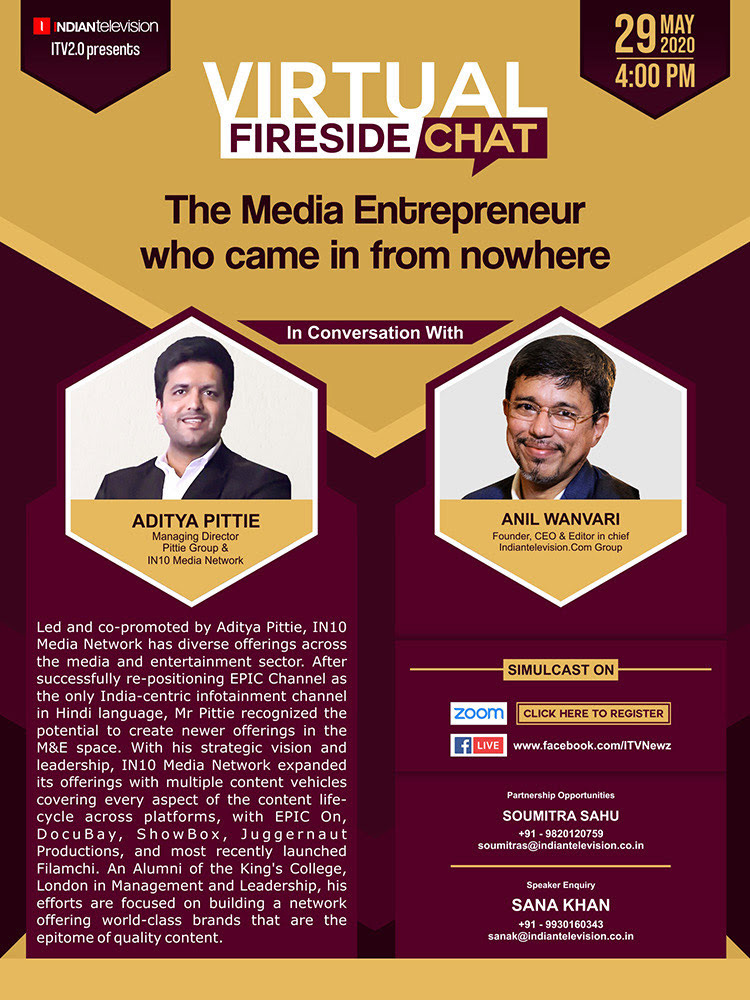
    During a virtual fireside chat with Indiantelevision Group founder, CEO and editor-in-chief Anil Wanvari, Pittie asserts that Epic On and Docubay are not driven by number of users. They are rather driven by time spent, organic tractions, etc. Instead of increasing the number of users, the aim is to build a niche product as a vertical player. That is the OTT strategy the company is following. He is also bullish about Juggernaut, which is going to be one of the company’s key businesses going forward. He says that having an asset like Juggernaut will definitely be a big value addition. “We have the probably largest order book in the industry right now with more than 11 shows confirmed for production,” he states.

    Here he dwells at length on the network’s OTT business, strategy, etc.

    Excerpts:

    After the successful entry into the broadcast business, you launched Docubay. Tell us about it.

    Docubay came about because of our love for factual entertainment. We were very interested in documentaries and we believed that as a genre it is the most popular in the world. Prominent OTTs like Amazon have a good library of documentaries. A lot of people across the world enjoy watching them. Then we thought: why don’t we look at a dedicated platform for documentaries. Then we thought of going global, instead of making India-centric. Today, Docubay is a very powerful product; the experience of watching documentaries on Docubay is far superior than any other platform. And we don’t call our subscribers. We call them members, because the idea is to build a community. That’s why it has the tagline of ‘one tribe, many stories.’ The message is that there are many things to explore in this planet, but we are all one tribe. That is the message of Docubay. We just went live on Roku in North America.  And we are one of the very few companies – in the smaller media networks segment – in India that has its own OTT technology in-house. We spent almost a year and a half in building that technology. As an organisation we are really proud of both our OTT products.

    How are Epic On and Docubay faring in terms of pricing and number of subscribers?

    As regards the KPIs and metrics, Epic On and Docubay are not driven by number of users. They are driven by time spent, how many organic tractions, etc. We are not in the race of having x million DAUS or MAUS or active users. We are in the race of building a niche product.  The pricing of Epic On or Docubay is far higher than any of the horizontal or generic OTT. We are very clearly a vertical player. We have very specific offering and then charge a premium for that offering. That is the model we are working on. By no way we try to fret about how many users we have or how faster our user base is growing. We are not hungry just to drive traffic. We wanted quality traffic. Some of the conversion rates that we have in terms of install vs number of people who are subscribing is probably one of the best in the industry. Those are the kind of models we try to work on. Stickiness, higher paying members who are looking for a specific service as opposed to getting everybody to come on the platform and give what they like. That is not our strategy.  

    Since you are not looking at metrics, what is your business game plan to monetise?

    Profitability in the media business is about how much content you want to put out. We have a business plan in place. We believe in a direction we want to take. Going forward, 15 to 20 years from now, when OTTs become mainstream, there will be a big market for vertical OTTs where people will subscribe and pay you a premium for the kind of content you create and curate for them, which is dedicated to the genre they prefer focusing on. So the differentiation is that in horizontal you have all kind of content under one umbrella, whereas vertical is slightly more focused on niche. That is the base model behind our OTT strategy. There are various other vertical OTT players all over the world. They have less number of users, but very viable business model.

    But here you have entered a global space. So are you competing with Curiosity Stream?

    Curiosity Stream has a lot of short-form content and docu-series. Docubay is a feature platform. We only do films. We carry content that has minimum duration of 20-25 minutes. The product offering thus is very different. Theirs is a very knowledge-based, and about science, research, etc. On the other, we give perspective for you to form your own opinion. That is how the documentary genre should be. If you look at the content at Docubay you will realise that they give perspective but let you form your own opinion about the topic. While they are in some degree competition to us, we believe that we are a completely different platform than Curiosity Stream. And we don’t necessarily consider them to be a competition.  

    What is the thinking behind having own production company and forging partnership with Applause?

    I think we need to separate the Applause Entertainment deal from us being in production. While they are connected they are two separate business models. We were able to foresee last year that the demand for content for OTT platforms is going to skyrocket. Unfortunately, good content creators who understand what kind of content works for OTTs are limited in our industry. There are only a handful of players that are able to create good quality content. As an organisation we have created so many hours of content for our broadcasting business. We felt that we could leverage that knowledge and expertise to build successful production business for other platforms. In terms of scale, we felt that the business can be large enough to justify our resources, time, and energy. That’s why we hired Samar Khan to lead our production business for OTT. And Code M was a super-hit (which came on ZEE5 and Balaji).
    And we have the probably largest order book in the industry right now. We have more than 11 shows confirmed for production, with an order book of over Rs 100 crore for the next one year. Juggernaut is going to be one of our key businesses going forward. We are really excited about the ability to create content at scale. Samar and his team have really worked hard to build our good talent of writers and convince OTT platforms that we have the ability to deliver solid products. I am really excited about the Juggernaut business. Having an asset like Juggernaut in our portfolio will definitely be a big value addition.

    You work for local OTTs or big international ones like Amazon, Netflix, etc.?

    I won’t be able to divulge specific contract details because that will be breach of confidentiality with them. We have one or two shows with every Indian platform. We are obviously in conversation with international OTT players. While Samar has a very big pedigree of content creation, Juggernaut as a company is new. So we are building some traction. Our aim is to deliver some hits this year and then start working with OTTs like Netflix, Amazon, Hulu, HBO Max, etc. at some point as well.

    What genre is Juggernaut positioned in?

    We have seen the success of Code M and Samar as a content creator has been very good at certain shows, but we don’t want ourselves to be restricted to that. Content creation is a collective effort. Success in content creation happens by bringing the right people together for the right type of project. So we are not focussed on just doing thriller shows, fiction or non-fiction. The idea is to create good content that is in demand by platforms. OTT is such a fast-feedback medium. It is not like television. You come to know the feedback – whether it works or not – the same day of launching the show. And there is so much data. The platforms specifically know what they want, what kind of content works, and in which region. So rather than focusing on a particular genre like thriller or non-fiction, etc., we want to focus on knowing what works with audiences, learning from experiences in creating good content, working closely with the platforms, leveraging our relationships to pre-empt what kind of concepts and stories are going to work down the lane and prepare our content bank to cater to that need. That’s the broad strategy we are looking at. You can see that we are creating shows across genres.  
  • Netflix buys Hollywood’s classic Egyptian Theatre

    Netflix buys Hollywood’s classic Egyptian Theatre

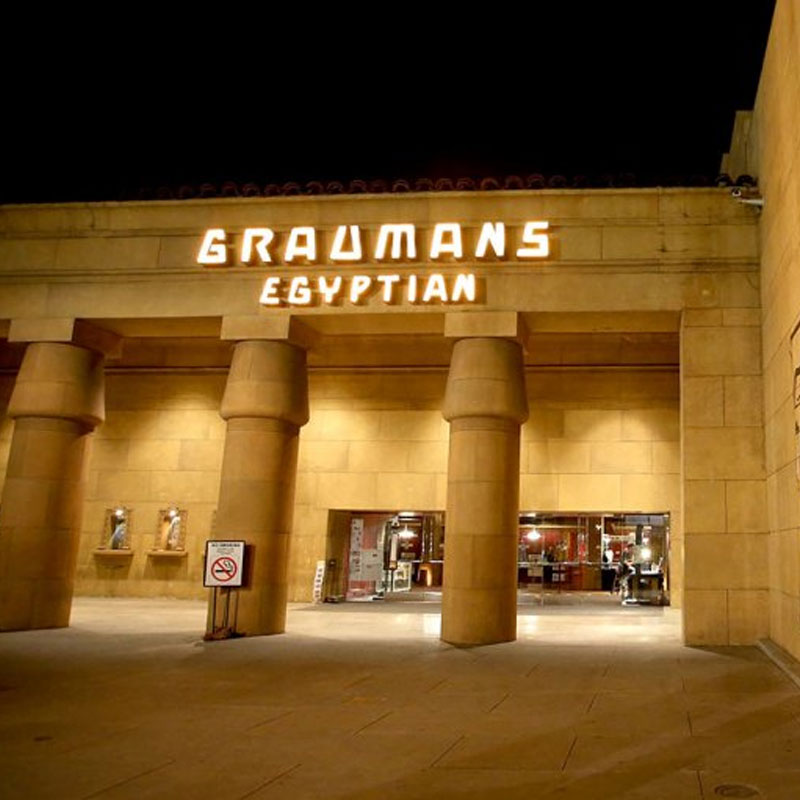
    MUMBAI: Netflix has just bought a classic edifice from Hollywood’s Golden Age, the Egyptian Theatre, reinforcing the streaming giant’s interest in the movie industry.  

    The historically significant Egyptian Theatre is a classic and esteemed movie palace originally built in 1922 during the silent film era. Located in Hollywood, the movie palace was the site of the first-ever Hollywood movie premiere, of Robin Hood, starring Douglas Fairbanks.  At the premiere, Fairbanks was joined by Charlie Chaplin, Cecil B. DeMille, Jesse L. Lasky, and Mary Pickford. Other notable silent-era premieres held at the Egyptian include: Cecil B. DeMille’s The Ten Commandments (1923), Charlie Chaplin’s The Gold Rush (1925) and Don Juan (1926) starring John Barrymore and Mary Astor.

    The storied theatre was owned and operated by a member-based cultural outfit named American Cinematheque between 1998 and 2020.

    “The Egyptian Theatre is an incredible part of Hollywood history and has been treasured by the Los Angeles film community for nearly a century,” said Netflix Films head Scott Stuber.  “We’re honoured to partner with the American Cinematheque to preserve the theatre’s storied legacy and continue providing remarkable film experiences for audiences. We look forward to expanding programming at the theatre in ways that will benefit both cinema lovers and the community.”

    Netflix, which did not reveal the quantum of money in the deal, will invest in the theatre’s renovation and will use the revitalized space for special events, screenings and premieres during the week.

    “This collaboration will enable the non-profit American Cinematheque to expand the scope and diversity of its widely praised movie and event programming, its filmmaker-centric festivals and its educational outreach at the beloved theatre,” said a Netflix press release.

    Established in Los Angeles in 1984 as a non-profit, member-supported cultural organisation, the American Cinematheque creates spaces where both the public and members of the film industry come together as a community with the common language of film.  The Egyptian Theatre will remain the home of the American Cinematheque with the organisation’s celebrated curation team continuing to autonomously program Friday, Saturday and Sunday. 

    “The American Cinematheque was honoured to bring the Egyptian back to life in 1998, and together with Netflix we are thrilled to continue this stewardship by restoring it once again for a new generation of film fans to experience movies on the big screen,” said American Cinematheque chairman Rick Nicita.  “The Egyptian Theatre remains our Hollywood home and we are grateful to both the City of Los Angeles and the Attorney General of the State of California as we accept this incredible opportunity that will greatly benefit the American Cinematheque.”

    “Love for film is inseparable from L.A.’s history and identity,” said mayor Eric Garcetti. “We are working toward the day when audiences can return to theatres –– and this extraordinary partnership will preserve an important piece of our cultural heritage that can be shared for years to come.” 

    "The Netflix and American Cinematheque partnership at the Egyptian Theater is a win-win for film, historic preservation, and the arts,” said council member Mitch O’Farrell, Los Angeles city council 13th District.  “The collaboration ensures the cultural destination remains in the Heart of Hollywood for decades to come."

    Moviegoers’ destination

    The historic venue remains to this day an ultimate destination for moviegoers, where it has hosted groundbreaking film festivals and incredible cinematic experiences over the near-century it has been in Hollywood, the movie-making capital of the world.  In 1996, the City of Los Angeles sold the building to the American Cinematheque as part of the City’s Hollywood Revitalization project.  The Cinematheque then raised the extensive funds to renovate and restore the theatre to its original grandeur and reopened it as a movie theatre showcasing the long-time organisation’s celebrated public programming.

    In 2016, with the generous support of the Hollywood Foreign Press Association, Turner Classic Movies and The Film Foundation, the projection booth at the Egyptian Theatre was retrofitted to begin screening 35mm nitrate film and is now one of only four theatres in the United States capable of showing this rare, ultra-fragile and flammable film stock. Part of the new plans include upgrading equipment to enhance the audience experience, and renovating and restoring the theatre.

    The Cinematheque will continue to programme and operate a second historic theatre, the Aero in Santa Monica.


  • FilmKaravan Originals, makers of ‘Delhi Crime’, releases first feature presentation

    FilmKaravan Originals, makers of ‘Delhi Crime’, releases first feature presentation

    MUMBAI: FilmKaravan Originals, the producers of the Netflix Original Delhi Crime, is in it for the long haul. The much-talked about taut thriller based on the investigation of the 2012 Delhi gang rape case had been widely praised and lauded by critics and audiences alike.  Moving to a completely different turf, FilmKaravan Originals, , now releases its second offering, a full-length feature film titled, What Are The Odds?, exclusively on Netflix worldwide. The film is also backed and co-produced by matinee idol Abhay Deol while reprising a pivotal role of a rock star in the film.

    A consolidated content distribution, marketing and delivery service house, FilmKaravan diversified into production with Delhi Crime and now with the release of What Are The Odds? the company has cemented itself as a bonafide content production house in the digital space.  The company operates from two of the largest entertainment hubs in the world- California and Mumbai. In the past, the company has also produced two short films, titled Leeches and Grant Street Shaving Co. Leeches is currently streaming exclusively on Amazon Prime. The film had won a National Award for its music and premiered across multiple prestigious international film festivals. Grant Street Shaving Co. is live on both Amazon Prime and Mubi. The music for the film was given by Sagar Desai who was also given the music for What Are The Odds?

    Sanjay Bachani stated, “Production had always been on the cards and we were scouting for stories that we would be compelled to back. Our effort will always be directed towards being diversified while working with a wide array for makers and talents. We are currently developing a slate across genres and different formats of story telling which are at various stages of production."

    Set in a whimsical version of Mumbai and peopled with characters and incidences personifying the title, 'What Are The Odds?' is an honest, often hilarious and rapt exploration of growing up in contemporary India devoid of its cultural specifications and celebrating unusual friendships. Directed by Megha Ramaswamy, the film features Karanvir Malhotra (Selection Day, Forgotten Army) and Yashaswini Dayama (Delhi Crime, Dear Zindagi) in lead roles. The film also stars Monica Dogra Priyanka Bose, Jugal Hansraj and Manu Rishi Chadha.

    FilmKaravan boasts of tie-ups with the largest streaming platforms to reach maximum viewers and specialises in release over EST, VOD and SVOD services. The company has more than 1000 films and episodic TV catalog (Indian and international) and has successfully executed worldwide Day and Date digital film releases simultaneous to their theatrical release.

  • SonyLIV 2.0 embarks on a journey with brand new identity, original premium content

    SonyLIV 2.0 embarks on a journey with brand new identity, original premium content

    MUMBAI: One of the early movers in the Indian over-the-top (OTT) ecosystem set out on its quest to reimagine the business in the latter part of 2019. Starting with a rejig in leadership last year, SonyLIV has now brought one of the most noticeable changes to its look: content strategy.

    Sony Pictures Network India (SPN) on Tuesday revealed a brand new look of its digital arm.

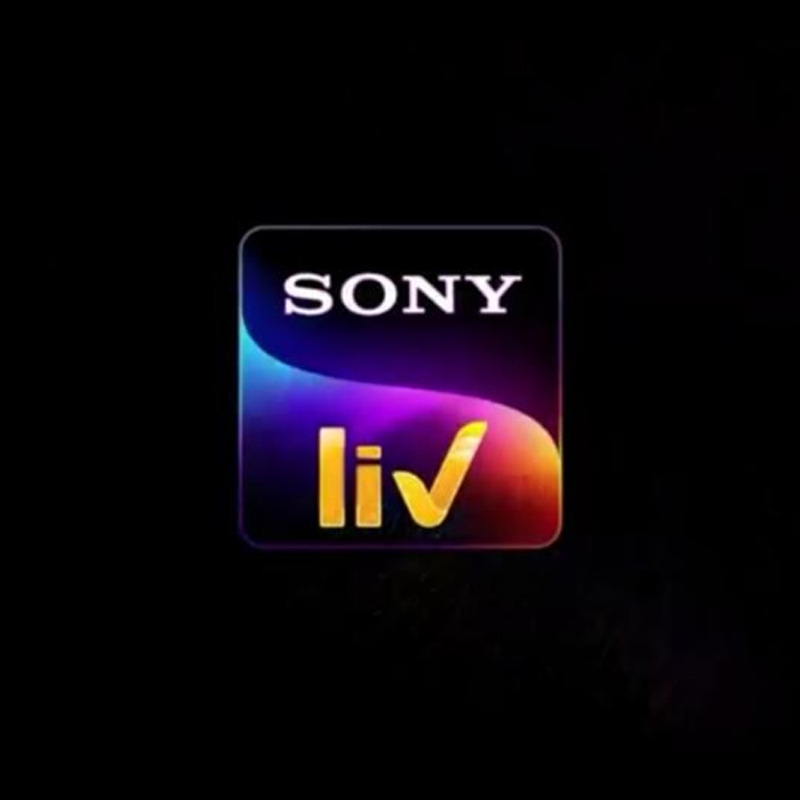
    A video on its social media gives glimpses of the redesigned logo which will replace its yellow background logo with a vibrant colourful one. The new logo emphasises the ‘liv’ part in a bright yellow colour in contrast to a colourful background with streaks of purple, blue, orange. Compared to the earlier one, it looks thinner and more refined reflecting warmth.

    Although being one of the oldest contenders, the platform has not been able to create much buzz lately. The ecosystem has not only grown but also the competition from both homegrown and international players. Netflix and Amazon Prime Video have started upping their investment in local content aggressively. Another giant player Disney+ also made its much-awaited entry into the market in March. Other broadcast-led players like ZEE5 and VOOT have also brought premium content to woo users, the former going deeper into the vernacular market.  Amidst all these ambitious players, a reimagining was required to make a mark and stand out.

    Better late than never. Along with re-designing, its content strategy is also set for an overhaul. Earlier, the new faces of SonyLIV spoke about the plan of focusing on originals. As the video reveals, the platform is going to bring original stories from the well-known storytellers in the country including Ashwini Iyer Tiwari, Ajay Monga, E Niwas, Hansal Mehta, Samar Khan, Nikkhil Advani, Nitesh Tiwari, Saumya Joshi, Tigmanshu Dhulia, Sachin Pathak, and Vir Das. It will also premiere international series including For Life, The Tudors. However, it promises to stay committed to the core strength, and sports content, too.

    The platform has struck a deal with Applause Entertainment announcing a content licensing deal of four premium drama series: Your Honor, Avrodh,  Undekhi and Scam 1992.  It has started its gradual rollout of its refreshed SonyLIV 2.0. app with the new visual identity and a distinct user interface.

    SPNI rejigged its digital team last year, with old-time SPNI executive Danish Khan leading it, with added responsibilities as business head of its leading GEC Sony Entertainment Television. Khan roped in his A Team who worked with him at SET, Ashish Golwalkar and Aman Srivastava, to also help him out to revitalise SonyLIV. The new faces revealed the wish for a rekindled focus on subscription-based service which just took off last year.

    Before this overhaul in brand identity, SonyLIV went through a change in 2016, after three years of its launch. The latest change comes at a time when all the OTT platforms have seen a huge surge in the viewership due to ongoing lockdown.

    At the time of publication of this story, the platform was reached for more details, but denied response.