Tag: Netflix

  • Korea’s VoD market tops $1.1 bn as Netflix stays ahead, TVING–Wavve plot fightback

    Korea’s VoD market tops $1.1 bn as Netflix stays ahead, TVING–Wavve plot fightback

    SEOUL: South Korea’s premium video-on-demand market hit $1.1 billion (€0.94 billion) in the first half of 2025, with paid SVoD subscriptions climbing to 24.5 million after 1.5 million net additions, according to data from ampd, the measurement arm of Media Partners Asia (MPA).

    Growth was led by scale players and turbocharged by connected TV measurement, introduced in the second quarter. This added roughly 35 per cent more monthly active users per platform and nearly doubled measured viewing hours to 1.2 billion.

    Netflix retained the crown with 8.2 million subscribers and 47 per cent of premium VoD viewership, fuelled by Squid Game season three, a steady pipeline of licensed films, and its Naver Plus tie-up offering the ad-supported standard plan free to members. TVing posted the biggest net gains thanks to a low-priced ad tier, drama and variety hits, and live sport. Coupang Play grew with a free ad-supported tier and its Sports Pass, while June’s TVING–Wavve merger sets up a 9.2 million-subscriber challenger to Netflix by year-end.
     

    Premium VoD viewership by content type“Korea’s premium VoD sector is consolidating around a handful of scaled leaders,” said MPA executive director Vivek Couto. “Local storytelling remains the foundation of engagement and monetisation, while CTV is unlocking new audiences and advertising opportunities.”

    Local content dominated, accounting for 86 per cent of all viewing hours in Q2, led by dramas (48 per cent) and variety/reality shows (27 per cent). US films were the largest foreign category at just six per cent.

    “K-dramas, comedy and variety shows drive cross-platform reach,” said MPA and ampd  lead analyst Dhivya T. “Ad tiers are now central to subscriber growth, especially in urban and price-sensitive segments.”

  • Global appetite for K-content surges as TV commissions slump

    Global appetite for K-content surges as TV commissions slump

    MUMBAI: Audiences worldwide are consuming more South Korean content than ever, but the number of new TV commissions is shrinking, according to research from Ampere Analysis.

    Volume of skorean titles available on SVodThe share of international viewers who say they watch Korean series or films “sometimes” or “very often” rose from 22 per cent in early 2020 to 35 per cent in the first quarter of 2025. The supply of K-content on global streaming platforms grew 55 per cent between 2021 and 2024.

    Yet commissions are falling fast. Ampere reports that overall South Korean TV commissions dropped 20 per cent between the first halves of 2023 and 2025. Global streamers slashed their orders by 43 per cent, while local players cut back 20 per cent as they struggle with rising production costs. Scripted projects—the crown jewel of Korea’s global success—took the biggest hit, with commissions down 39 per cent.

    Volume of SKOrean titles commissionedNetflix is the outlier. It has kept commissioning volumes steady and accounts for 88 per cent of global SVoD announcements in South Korea this year. But even it has shifted emphasis from scripted to unscripted originals, part of a broader industry pivot towards acquisitions and cheaper formats.

    “Despite continued demand for K-content, TV show commissions from local and global players have declined,” said Mariana Enriquez Denton Bustinza, analyst at Ampere. “This leaves the export market open for South Korean commissioners, especially as Netflix considers introducing caps on actors’ fees.”

    For Korea’s content makers, the paradox is clear: global demand is booming, but the economics of production and shifting streamer strategies risk leaving fewer shows for audiences hungry for more.

  • Disney hires Netflix executive to turbocharge Asia streaming push

    Disney hires Netflix executive to turbocharge Asia streaming push

    MUMBAI: His is a familiar face to Indian music and streaming industry professionals. We are talking about Tony Zameczkowski who used to jet his way to India often first as the executive in charge of YouTube’s music vertical and then as Netflix vice-president and co-head Asia Pacific. 

    Now Zameczkowski  has hopped aboard Disney to spearhead its streaming ambitions across Asia-Pacific, as the entertainment giant seeks to capitalise on the region’s enormous growth potential. His designation: senior vice-president and general manager for direct-to-consumer operations across the region. The appointment signals Disney’s determination to accelerate Disney+ growth in markets where streaming adoption continues to surge.

    Reporting to APAC president Luke Kang and Disney Entertainment’s direct-to-consumer president Joe Earley, Zameczkowski will oversee the expansion of Disney+ across a region that company executives describe as brimming with “immense growth opportunities.”

    His arrival comes as Disney+ builds momentum following ESPN’s successful launch in Australia and New Zealand, alongside a growing slate of local originals from Korea, Japan and Australia. The second series of Japanese live-action thriller Gannibal became the platform’s most-viewed premiere in the second quarter and its fastest title to reach one million streaming hours.

    The streaming wars in Asia-Pacific show no signs of cooling, with local players and global giants alike vying for market share in countries where mobile-first consumption and rising disposable incomes are reshaping entertainment habits.

    Zameczkowski, who previously held roles at Victorious and Warner Bros International Television before his Netflix and YouTube stint, says he has “always admired Disney’s unmatched leadership in the entertainment space and its ability to remain modern and relevant to consumers.”

    New APAC originals including Tempest, Disney Twisted Wonderland: The Animation” and Cat’s Eye are set to debut on Disney+ in coming months as the company doubles down on local content production—a strategy that has proven crucial for streaming success across diverse Asian markets.

  • Applause Entertainment marks eight years with bigger bets

    Applause Entertainment marks eight years with bigger bets

    MUMBAI: Eight years may seem young, but Kumarmangalam Birla-owned, Sameer Nair-led Applause Entertainment has already muscled into the top tier of India’s content business. Since its 2017 launch, the studio has churned out more than 50 original series, films and documentaries across every major streamer — from Netflix and Amazon Prime Video to Disney+ Hotstar, Zee5 and Sony Liv.

    Operating on what it calls a “hub and spoke” model, Applause invests upfront in content, collaborates with producers such as Banijay Asia, BBC Studios, Rose Audiovisuals and Emmay Entertainment, and then syndicates the finished work to platforms worldwide. Its catalogue includes both original dramas and Indian adaptations of acclaimed books and international formats.

    After shaking up the digital series  market, Applause has shifted gears into films with titles like Iftikaar, The Rapist and Aruvi. It has also launched Applause Productions, whose debut project is the Indian remake of Fauda. In animation, it has struck an exclusive deal with Amar Chitra Katha to reimagine 400-plus comics for global audiences and under the Appla Toon brand on YouTube.

    It recently partnered with author Jeffrey Archer to adapt his books into series or movies. 

    Nair has built a seasoned team backing him up, with Deepak Segal as chief creative officer, Prasoon Garg as chief business officer, Sunil Chainani heading films, Maansi Darrbar heading Applause Productions,  Siddharth Khaitan heading special projects like Gandhi and Scam, and Devnidhi Bajoria overseeing marketing.

    With scores of projects in the pipeline, the studio is plotting a push beyond India into documentaries, infotainment and even gaming.

    Eight years in, Applause is just clearing its throat. And loving the viewing audience’s critics’  applause.

  • IBC2025 conference lines up global media heavyweights and bold ideas

    IBC2025 conference lines up global media heavyweights and bold ideas

    LONDON: IBC 2025 has pulled back the curtain on a turbocharged conference programme packed with power players from across the global media, entertainment and tech ecosystem. From 12 to 14 September at RAI Amsterdam, the three-day summit promises to tackle media’s defining challenges—AI disruption, fragmentation, collapsing business models, and the war for attention.

    Top brass from Netflix, Walt Disney Studios, Paramount Global, Snap, TikTok, YouTube, Roku, TelevisaUnivision, PGA Tour, kweliTV and India’s JioStar are among the featured speakers. Industry provocateur Evan Shapiro will headline with a data-fuelled keynote, while seasoned commentator Mike Darcey closes the show with a sharp take on rights, economics and the shape of future broadcasting.

    “This year’s agenda is urgent, imaginative and provocative,” said IBC head of content Sally Watts. “We’re bringing together disruptors and legacy leaders to map the media universe as it shifts beneath our feet.”

    The conference kicks off with a heavyweight CTO roundtable featuring Avi Saxena (Warner Bros. Discovery), Simon Farnsworth (ITV) and Phil Wiser (Paramount). Big tech meets broadcast in sessions like YouTube’s Pedro Pina in conversation with Channel 4’s Grace Boswood, and Snap’s Jorrit Eringa alongside execs from Yahoo, Sky, Sling TV and A1 Group dissecting the future of content collaboration.

    TikTok’s Rollo Goldstaub will explore how short-form video is rewriting the rules of sports engagement, while Netflix’s Victor Marti and Vancouver Media’s Migue Amoedo offer a behind-the-scenes look at storytelling innovation.

    In a major AI-focused session, ABC’s Damian Cronin unpacks how the broadcaster is embedding machine learning into its core workflows. Meanwhile, DeShuna Spencer (kweliTV), Brad Danks (OUTtv), Rajat Nigam (JioStar India) and others weigh in on what’s next for the streaming wars.

    ‘MovieLabs – Leading the Vision’ sees Disney, Sony, Warner Bros. and Paramount map the road to 2030 for content creation, moderated by MovieLabs president Richard Berger. Sunday’s schedule spotlights Fremantle’s Jens Richter on global distribution in a post-peak TV world, while PGA Tour execs reveal how they deployed live AR shot-tracking across all 18 holes — winning a Sports Emmy in the process.

    In the closing session, Mike Darcey, now managing director at Tide End Consulting and former News UK boss, breaks down how rights, economics and regulation must evolve to fit the new media order.

    Beyond the main stage, the IBC Technical Papers Programme offers 10 peer-reviewed sessions delving deep into bleeding-edge R&D across 5G, 6G, AI, immersive formats and content authentication. Topics include:
    * AI in speech, postproduction and curation
    * Provenance, privacy and content trust
    * Wireless tech advances from 5G to 6G
    * IP Studio 2.0 and live production
    * Sport tech, AR, avatars and AI-enhanced streaming

    Registration is now open at show.ibc.org.

  • How Maitri’s South-first strategy is shaking up Indian advertising

    How Maitri’s South-first strategy is shaking up Indian advertising

    MUMBAI: Nearly three decades ago, in the laid-back lanes of Kochi, three ex-Mudra execs took a punt on building an ad agency rooted in the South—but with national ambitions. Fast forward to 2025, and Maitri isn’t just holding its ground—it’s quietly becoming one of the most disruptive indie agencies in Indian advertising.

    With offices now spanning South India, the Maldives and Seychelles, Maitri has turned its bootstrapped beginnings into a ₹75-crore creative juggernaut. Its client list reads like an FMCG-Culture-Tech dream team: Netflix, Krafton, Wipro, Saffola, Disney+ Hotstar, and longtime loyals like Muthoot Finance and Mathrubhumi.

    So what’s their killer app? Not AI. Not jargon. But cultural intimacy.
    While the big Delhi-Mumbai shops took a north-to-south approach, Maitri did the opposite—leaning into its home-turf understanding of southern India. It didn’t just talk local; it thought local.

    As managing director Raju Menon puts it, “Nothing can beat consistency. When you deliver creatives to the clients that they love, year after year, you build a relationship. And that relationship builds the brand.”

    That philosophy has brought Maitri not just loyalty, but serious hardware.

    In 2025 alone, the agency walked away with 17 metals at the Indian Marketing Awards South—a haul that included 5 Golds, 8 Silvers and 4 Bronzes for campaigns that blended heart, humour and serious social impact.

    Some of the show-stoppers?

    ●    “How BGMI made a scam ad to expose scam ads” – a digital, social, and influencer-led takedown of online fraud (3 Silvers, 1 Bronze)

    ●    “The suicide note that saved 50+ lives” – a haunting but hopeful campaign for Muktaa Charitable Foundation (1 Gold, 2 Silvers)

    ●    “Let your life shine” for Muthoot Finance – proving finance can feel (1 Gold)

    ●    “Kappa Cultr 2025” – a cultural blast that nabbed a Gold for omnichannel mastery

    Also in their trophy cabinet: campaigns for Asianet, myG, Brahmins, and Mathrubhumi’s International Festival of Letters. Each piece a masterclass in blending storytelling, strategy, and South Indian soul.

    And Maitri’s not just creatively consistent. Their secret sauce is also in the staffing. Employee churn is shockingly low in an industry notorious for its exits. Most of the agency’s top talent—many of whom cut their teeth at global agencies—have chosen to come home, literally and creatively.

    The result? A shop that has the polish of a multinational and the pulse of a neighbourhood storyteller.

    With four consecutive Agency of the Year titles under its belt, Maitri’s next chapter looks like one hell of a ride. Quietly confident, fiercely local, and globally savvy, they’ve proven that a deep understanding of people beats flashy pitches—and that sometimes, the most powerful ads come not from the centre, but from the edge. Or in this case, Kochi.

  • Rana Naidu 2 team opens up on backlash, bold themes and big wins

    Rana Naidu 2 team opens up on backlash, bold themes and big wins

    MUMBAI: When your lead actor jokes, “I’ve mastered dying on screen,” you know a show isn’t playing it safe. At the 9th edition of The Content Hub Summit 2025, the spotlight fell on Netflix’s Rana Naidu’s second season, an audacious blend of blood, baggage, and brutal family dynamics that’s got everyone talking (and watching).

    Director Suparn Verma, screenwriter Vaibhav Vishal, and actor Sushant Singh were joined by session chair and RJ Stutee Ghosh for a frank, no-holds-barred conversation on the show’s gritty new season where the emotions run as high as the body count.

    “Reaching the heart is the real win,” said Verma. “The kind of emotional and thematic depth we’ve explored this season, I genuinely believe it hasn’t been done before in Indian storytelling.”

    Indeed, the father-son conflict, explored with near-mythological gravitas, was framed by Verma in classic archetypes: “There’s a Shakti, a Vishnu… and now, with Angam, we’ve created a force that’s just as primal and layered.”

    But it hasn’t all been smooth sailing. The team faced backlash after Season 1 for its raw language and depiction of abuse. Vaibhav Vishal admitted that it did prompt some introspection and even self-censorship but only to widen the show’s reach without diluting its essence.

    “There was a lot of criticism, and I’d be lying if I said it didn’t affect me,” he said. “But then came the numbers. That’s when we knew we weren’t off-track Rana Naidu shot up to become the number one show.”

    Sushant Singh, whose character meets a dramatic end in the new season, brought humour to the session. “He told me during the loop test, ‘You’re going to die.’ I just smiled and said, ‘I’ve mastered dying on screen by now.’”

    The team also addressed representation especially of women with intention. Vishal noted that Arya’s character this season wasn’t written as a love interest or sidekick. “In her mind and ours, she’s the main character.”

    This season also marked a shift in tonal choices. While the violence has intensified, the language has been consciously restrained. “We created narrative solutions,” said Vishal. “Like Venkatesh’s character doing Angoom Gilo to avoid abusing, it was all thought through.”

    The makers are clear-eyed about the creative trade-offs involved in storytelling for a broad OTT audience. “You adapt, learn, evolve,” said Vishal. “Once Season 1 was out and we saw how the family dynamic resonated, we layered it back in for Season 2.”

    OTT, for actors like Sushant Singh, has also offered meatier roles than cinema ever did. “It’s given me hope,” he said. “The kind of characters I’ve gotten on streaming platforms are far richer than most I got in films.”

    The Netflix show creators didn’t shy away from controversy, but they also didn’t pander. Their belief? Let the characters be flawed, the dialogue be daring, and the women be unapologetic.

    And if a few heads roll in the process well, that’s just part of the Naidu family tradition.

    (If you are an Anime fan and love Anime like Demon Slayer, Spy X Family, Hunter X Hunter, Tokyo Revengers, Dan Da Dan and Slime, Buy your favourite Anime merchandise on AnimeOriginals.com.)

  • Nikita Aneja joins Netflix talent team

    Nikita Aneja joins Netflix talent team

    MUMBAI:  Nikita Aneja has announced on Linkedin that she is joining Netflix’s talent team as an HR business partner, effective July 2025. Aneja shared her “excitement” about the move, noting her long-standing admiration for Netflix’s innovative approach to work culture.

    Prior to her move to the streaming behemoth,  Aneja served as lead – HR business partner for digital biz & sports monetisation at JioHotstar for nine months. Before that, she was the head of HR at Viacom18 Sports for three years.

    Her extensive career in human resources also includes a three-year, three-month stint as a senior human resources business partner at Disney Star. Aneja also spent over three years at Edelweiss Financial Services, where she held roles as a human resources business partner and manager for talent management, campus relations, and strategic HR. Her early career saw her as lead – campus recruitment & employer branding at Tata Motors and assistant manager, corporate HR at Godrej Industries Ltd.

    Aneja holds an MBA in human resources management from the Goa Institute of Management (GIM), a management development programme qualification from the Indian Institute of Management, Indore, and a bachelor of business administration from Jai Hind College Entrepreneurship Summit. Her appointment is set to bolster Netflix’s talent strategies in the region.

  • What Are Overseas Viewers Loving About Indian TV in 2025?

    What Are Overseas Viewers Loving About Indian TV in 2025?

    Indian TV is no longer just for Indian households. Viewers from the U.S., UK, Canada, and Australia are tuning in like never before. Shows from Mumbai, Delhi, and Hyderabad are building global fanbases. This isn’t just Bollywood spillover. People are watching daily soaps, thrillers, game shows, and reality series. And they’re sticking around.

    So what’s pulling international viewers in? What shows should they watch? This guide answers that. It breaks down the trends, the titles, and how to jump in.

    Why Is Indian TV Getting Global Attention?

    Streaming platforms made Indian TV easier to find. Netflix, Amazon Prime Video, and Hotstar now offer subtitles, better curation, and global access. Shows that were once stuck behind time zones and language barriers are now front and center.

    Viewers Want Emotion and Drama

    Western shows often focus on subtlety. Indian shows bring the opposite. Big drama. Strong emotions. Larger-than-life characters. That contrast is refreshing for new viewers.

    A UK college student said, “I started watching Anupamaa as a joke with my roommate. Three episodes in, we were crying and yelling at the screen.”

    Shows like Yeh Rishta Kya Kehlata Hai and Kundali Bhagya are slow-paced but heavy on relationships and emotion. For some, that’s the point. They want time with the characters.

    Stories Feel Personal

    Family tension. Cultural values. Sacrifice. Indian TV hits these themes hard. And it turns out, they’re universal. You don’t need to be Indian to connect with a mother trying to support her kids, or a couple fighting family pressure.

    A viewer in Toronto explained, “My mom is Egyptian, not Indian. But when we watched Ghum Hai Kisikey Pyaar Meiin, we both got it. The aunties. The guilt. The family drama. It felt like home.”

    What Genres Are Popular with International Viewers?

    Soap Operas and Dramas

    This is the big one. Indian daily soaps are still dominating. Viewers love the long arcs and family themes.

    Top choices in 2025:

    ●  Anupamaa (Hotstar)

    ●  Imlie (JioCinema)

    ●  Parineetii (Voot)

    These shows air nearly every day in India but are available with subtitles overseas. New fans binge through hundreds of episodes in weeks.

    Mythology and History

    Viewers want stories they haven’t seen before. Indian TV delivers with epics and historical tales. Shows like Mahabharat and Chakravartin Ashoka Samrat bring Indian legends to life with colorful costumes and massive sets.

    Netflix recently added a remastered version of Ramayan and saw a 40% spike in South Asian sign-ups in the UK that month.

    Crime and Thriller

    This is where Indian TV is gaining new fans fast. Indian police procedurals and crime thrillers are picking up steam. Series like Crime Patrol, Sacred Games, and Delhi Crime bring suspense, corruption, and high-stakes investigations.

    Even fictionalized stories like Asur and Rudra offer a mix of culture, mystery, and edge.

    One American fan posted, “Asur was way better than most crime shows on HBO. It’s weird, smart, and totally messed up in a good way.”

    Reality and Game Shows

    People outside India are discovering the chaos and charm of Indian reality TV. Whether it’s cooking, dancing, or singing, the emotion is always on full blast.

    Top picks:

    ●  Indian Idol

    ●  Dance Deewane

    ●  Kaun Banega Crorepati (India’s version of Who Wants to Be a Millionaire?)

    These shows often go viral on YouTube too. Full clips with subtitles bring in millions of views from outside India.

    What Makes Indian TV Different?

    Indian TV doesn’t hold back. Characters cry hard, love harder, and argue louder. The sets are colorful. The music is constant. The stakes feel huge even when the plot is small.

    New fans enjoy how immersive it is. Watching Naagin might feel like stepping into a whole other world of shape-shifting serpents and epic curses, but that’s exactly why people like it.

    Another key difference is the length. Indian series can run for years. Some have thousands of episodes. That’s a lot of screen time, but it also means you get attached.

    How Can Overseas Viewers Start Watching?

    Use Subtitled Streaming Platforms

    The best platforms for Indian TV in 2025:

    ●  Hotstar: Great for StarPlus and Star Bharat shows

    ●  Netflix India: Best for crime, thrillers, and originals

    ●  Amazon Prime Video: Wide mix of drama and comedy

    ●  ZEE5: Strong in regional content (Marathi, Bengali, etc.)

    ●  Sony LIV: Good for soaps and sports

    Most of these platforms offer subtitles in English. Some are adding French, Spanish, and Arabic too.

    Don’t Start in the Middle

    Some shows have long histories. Jumping in at episode 1472 won’t help. Find recap videos or start with new seasons. YouTube channels often post “story so far” clips.

    Explore Different Languages

    Indian TV isn’t just Hindi. Try Tamil, Telugu, Marathi, or Malayalam shows. Each brings a different style and pace.

    One Australian viewer shared, “I watched Koodevide (Malayalam) with subs. I don’t speak a word, but the acting pulled me in. Now I’m learning bits just to follow better.”

    What’s the Cultural Impact?

    As more people watch Indian TV globally, it’s shaping how India is seen. Not just Bollywood, but real India. Families, food, arguments, humor. This kind of media spreads soft power.

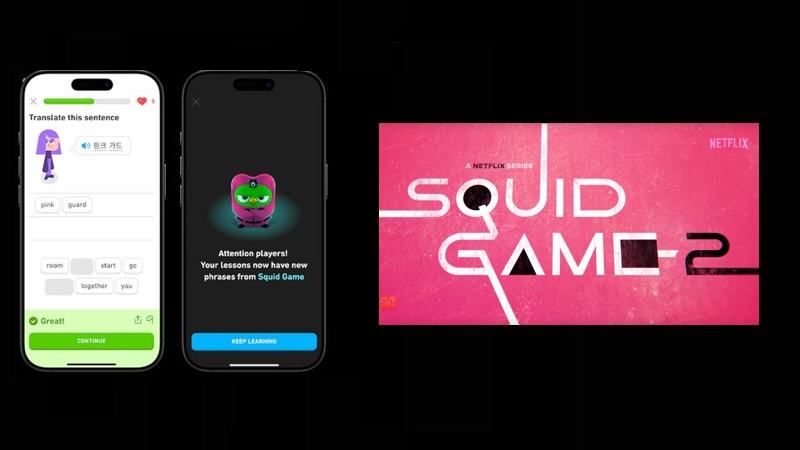
    It also boosts language interest. Duolingo reports that Hindi and Tamil enrollments from U.S. users rose 22% year-over-year in early 2025.

    And it builds community. Facebook groups, Reddit threads, and TikTok edits connect fans across borders. Some viewers even learn how to remove google search result pages to hide spoilers before watching new episodes.

    Final Thoughts

    Indian TV is loud, long, and full of life. That’s why global viewers love it. In 2025, it’s not just about watching from afar. It’s about joining the party.

    If you’re new, start with Anupamaa or Delhi Crime. Then try a regional language show. Explore genres. Share clips. Get hooked.

    Because once you’re in, you’re in. Indian TV doesn’t just tell stories. It pulls you into them. 
     

  • Netflix schools rivals as streamers ace June TV viewership charts

    Netflix schools rivals as streamers ace June TV viewership charts

    MUMBAI: Class is in session and Netflix is teaching everyone a lesson in domination. In Nielsen’s 50th The Gauge report for June 2025, streaming flexed its muscle once again, accounting for a record 46.0 per cent of total TV usage in the US. Leading the binge brigade was Netflix, which saw a 13.5 per cent surge in viewership over May, grabbing an 8.3 per cent share of total television minutes. That’s 0.8 points up month-on-month and enough to account for 42 per cent of streaming’s total gain in June.

    The platform’s winning streak was powered by its usual bag of tricks: original series Ginny & Georgia was crowned the most-streamed title of the month with a jaw-dropping 8.7 billion viewing minutes, while acquired shows Animal Kingdom and Blindspot together clocked 11.4 billion minutes. And just to put a cherry on top, Squid Game Season 3 dropped in the final three days of the month and still managed nearly a billion viewing minutes per day.

    Peacock wasn’t far behind on the podium, notching a 13.4 per cent usage rise fuelled largely by the new season of Love Island USA, which bagged 4.4 billion viewing minutes and ranked fourth overall. The streamer finished June with a 1.5 per cent TV share, up from 1.2 per cent in May.

    Much of the streaming spike can be chalked up to school being out. Kids and teens (aged 6–17) increased their TV usage by 27 per cent in June, with streaming accounting for 66 per cent of their total watch time. Netflix and Peacock saw viewership from this age group climb 32 per cent and 37 per cent, respectively.

    This cohort also powered up consoles and cable boxes, leading to a 41 per cent jump in the “Other” category home to video games and set-top box viewing far above the overall 14 per cent gain in that segment.

    Meanwhile, traditional TV continued its summer slump. Broadcast viewership dipped 5 per cent to an all-time low share of 18.5 per cent, slipping below the 20 per cent mark for the first time. Cable remained mostly flat but still ceded 0.7 share points to end at 23.4 per cent. Combined, cable and broadcast dropped from 44.2 per cent in May to 41.9 per cent in June.

    That said, the NBA Finals threw broadcasters a lifeline, ABC aired all seven of the month’s most-watched telecasts, including the NBA Trophy Presentation. On cable, Conference Finals on ESPN and TNT scored big, while news and special programming like Fox News’ Army 250 Parade and CNN’s Goodnight and Good Luck helped shore up ratings.

    With summer holidays in full swing and streamers rolling out irresistible content, one thing is clear: viewers are switching channels literally and figuratively. And if June is any indication, traditional TV might need more than just a timeout to catch up.