Tag: Netflix

  • Netflix elevates Ankit Gokani to India director – VFX

    Netflix elevates Ankit Gokani to India director – VFX

    Mumbai: Netflix has elevated Ankit Gokani to the position of India director – VFX, according to his LinkedIn update.

    Gokani has been associated with the streaming platform for more than three years. He joined Netflix as VFX specialist – international originals, India. He was later promoted to India manager – VFX in November 2019.

    He has more than a decade of experience working in the film industry, with a thorough understanding of post-production and VFX.

    Prior to Netflix, he worked with production houses such as Method Studios, Industrial Light and Magic, Double Negative, Jar Pictures, and Rhythm and Hues.

  • Srishti Behl Arya takes over as Phantom Films CEO

    Srishti Behl Arya takes over as Phantom Films CEO

    Mumbai: Film production company Phantom Films has appointed Srishti Behl Arya as its new CEO. She has moved from Netflix India as director – international original films, after a three-year-long stint, that ended in May last year.

    During her tenure with Netflix, Srishti played a key role in building the platform’s original film bouquet including more than 35 original films like “Guilty,” “AK vs AK,” “Bulbbul,” “Serious Men,” and the first Tamil and Telugu films “Paava Kadhaigal” and “Pitta Kathalu,” respectively. Prior to this, she was an independent producer in the Indian film and television industry.

    Founded by Anurag Kashyap, Vikas Bahl, Madhu Mantena, and Vikramaditya Motwane, Phantom Films has produced landmark Bollywood films like “Queen,” “Masaan,” “Lootera,” “Udta Punjab,” among others. The company was launched in 2012 in a 50 per cent partnership with Reliance Entertainment.

  • Netflix acquires Boss Fight Entertainment, its third game studio

    Netflix acquires Boss Fight Entertainment, its third game studio

    Mumbai: Streaming major Netflix has announced the acquisition of Texas-based independent video game developer Boss Fight Entertainment. This is the streamer’s third studio purchase since it revealed the plans to enter the lucrative mobile game market last year.

    The financial terms of the agreement are kept under wraps.

    ALSO READ | Netflix launches first two mobile games in Poland

    Boss Fight Entertainment was founded in 2013 by David Rippy, Bill Jackson, and Scott Winsett. The Boss Fight Entertainment team will continue to operate out of their current studios in Allen (Dallas), Austin, and Seattle.

    “Since we launched mobile games to our members around the world just four months ago, we’ve been expanding our games catalog bit by bit as we build out our in-house creative development team,” said Netflix VP of game studios Amir Rahimi. “Through partnerships with developers around the world, hiring top talent, and acquisitions like this, we hope to build a world-class games studio capable of bringing a wide variety of delightful and deeply engaging original games.”

    “Boss Fight’s mission is to bring simple, beautiful, and fun game experiences to our players wherever they want to play,” said the founders of Boss Fight Entertainment in a joint statement. “Netflix’s commitment to offering ad-free games as part of members’ subscriptions enables game developers like us to focus on creating delightful game play without worrying about monetisation. We couldn’t be more excited to join Netflix at this early stage as we continue doing what we love to do while helping to shape the future of games on Netflix together.”

    Earlier this month, Netflix had announced the purchase of the game studio Next Games and in September it had bought Night School.

  • Know the story behind Netflix’s ‘skip intro’ button

    Know the story behind Netflix’s ‘skip intro’ button

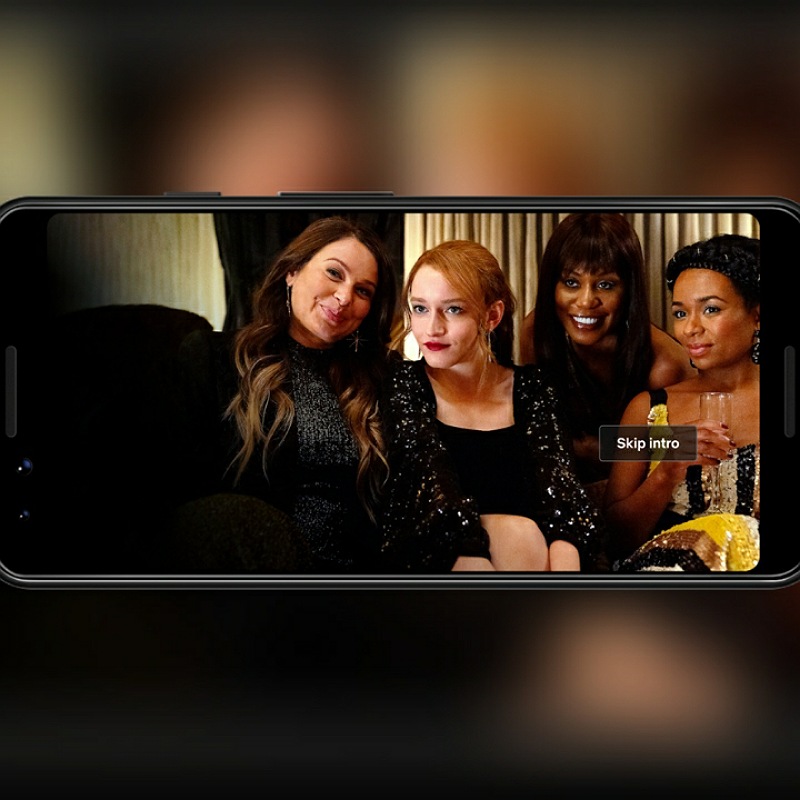
    Mumbai: Streaming major Netflix, in a blog post, revealed that its ‘skip intro’ is pressed 136 million times in a typical day by its members. The platform claims that the feature has saved its members 195 years in cumulative time.

    The germ of the idea was conceived six years ago by the Netflix team. The intention was to help members get the most out of their experience on the platform, it said.

    “An idea was floated to add skip forward and skip backward buttons in 10-second increments,” stated Netflix director product innovation – studio product management Cameron Johnson. “The reason to offer a skip back 10 seconds was obvious: maybe you got distracted and missed a particular moment.”

    “But why skip forward 10 seconds?” Netflix asked themselves. “Well, you might want to skip the opening credits. But no one could come up with any other compelling reasons,” said Johnson.

    “At the same time, I was watching Game of Thrones, which has a famously long (and beautiful) opening credits sequence. I found the show so compelling that I wanted to skip the credits and jump right into the story, and I found it frustrating to try to manually jump forward to the just the right place. Sometimes I would jump too far, and sometimes I would jump too short. I wondered whether other people felt the same,” he added.

    Netflix research showed that 15 per cent of their members at the time were manually advancing the series within the first five minutes. “This gave us confidence that a lot of people wanted to skip the intro,” noted Johnson.

    Instead of building a general purpose solution that may help with several different needs, Netflix designed a single purpose solution that did one thing well.

    A little known hack unknown to many Netflix users is that they can press the ‘s’ key on the keyboard to trigger the ‘skip intro’ feature without having to move the mouse.

    “To find a name for the button, we brainstormed a few options including ‘Jump Past Credits,’ ‘Skip Credits,’ ‘Jump Ahead,’ ‘Skip Intro’ and simply ‘Skip’ and then started to test the feature with a random set of members,” recalled Johnson.

    Netflix initially tested the feature on the web across 250 series excluding films in the US and Canada. According to an engineer, “I’m not sure that if you put a button that said ‘free cupcake’ that it would get more clicks than ‘Skip Intro.’”

    “We quickly added ‘Skip Intro’ to TV in August 2017 and mobile in May of the following year. The rest is history,” said Johnson.

  • Pamela Anderson to ‘tell the real story’ in new Netflix documentary

    Pamela Anderson to ‘tell the real story’ in new Netflix documentary

    Mumbai:  “Baywatch” star Pamela Anderson is keen to set the record straight with a new documentary on Netflix. 

    The star, whose life story, tumultuous marriage to rocker Tommy Lee, and the controversy surrounding the leak of their sex tape in the 1990s is the subject of the recently released Hulu series “Pam & Tommy,” announced the news about her documentary on social media with a handwritten note.

    “My life/ A thousand imperfections/ A million misperceptions/ Wicked, wild and lost/ Nothing to live up to /I can only surprise you /Not a victim, but a survivor /And alive to tell the real story,” she said in the note.

    Anderson’s son Brandon Thomas Lee, who serves as a producer on the project, reposted the note on his Instagram Story and captioned it: ‘The real story,’ as did her younger son Dylan Jagger Lee.

    Dubbed the definitive documentary about the pop culture icon, the film has been in the making for several years. Directed by Ryan White, the yet-to-be-titled project will feature exclusive access to Anderson, as well as archival footage and her personal journals, reported Variety.

    The documentary has been dubbed as an intimate portrait embedded in the life of Pamela Anderson as she looks back at her professional and personal path and prepares for the next steps on her journey.

  • Netflix elevates Marian Lee as chief marketing officer

    Netflix elevates Marian Lee as chief marketing officer

    Mumbai: Streaming giant Netflix has elevated Marian Lee to the role of chief marketing officer. Lee succeeds Bozoma Saint John, who has moved on from the company.

    Lee will be Netflix’s fourth chief marketing officer in three years.

    She joined the company in July 2021 as vice president of marketing in the United States and Canada overseeing marketing for the streaming service. She was previously associated with Spotify for eight years. She has held leadership positions in fashion brands such as J Crew and Gilt.com and publisher Conde Nast.

    Saint John, who joined Netflix in 2020, is a high-profile marketer who was CMO at Endeavour, chief brand officer at Uber and head of global consumer marketing for Apple Music and iTunes after Apple acquired Beats by Dre in 2014.

  • Netflix to acquire Finnish mobile game developer Next Games

    Netflix to acquire Finnish mobile game developer Next Games

    Mumbai: Streaming giant Netflix has entered into an agreement to acquire mobile games developer and publisher Next Games based in Helsinki, Finland. The transaction is expected to close in the second quarter of 2022, subject to customary closing conditions.

    “Next Games has a seasoned management team, strong track record with mobile games based on entertainment franchises, and solid operational capabilities,” stated Netflix vice president games Mike Verdu. “We are excited for Next Games to join Netflix as a core studio in a strategic region and key talent market, expanding our internal game studio capabilities. While we’re just getting started in games, I am confident that together with Next Games we will be able to build a portfolio of world class games that will delight our members around the world.”

    Founded in 2013 and led by Teemu Huuhtanen, Next Games creates and operates engaging mobile games with an authentic and social fan experience at the heart. The company’s strategy is to develop games on popular entertainment IP with fans across the globe, including “Stranger Things: Puzzle Tales,” a story-driven puzzle role playing game (RPG) inspired by one of Netflix’s most watched series. The company had approximately 120 employees at the end of 2021 and reported sales of approximately €27.2 million in 2020, with 95 per cent of revenues generated from in-game purchases in 2020.

    “We have had an unwavering focus to execute on our vision: to become the partner of choice for global entertainment businesses and craft authentic and long-lasting interactive entertainment based on the world’s most beloved franchises,” said Next Games chief executive officer Teemu Huuhtanen. “Joining forces with the world’s largest streaming service, Netflix, presents an opportunity for a logical and exciting continuation of our strategy to craft interactive experiences for the world to enjoy. Our close collaboration with Netflix on ‘Stranger Things: Puzzle Tales’ has already proven that together we create a strong partnership. This is a unique opportunity to level-up the studio on all fronts and continue on our mission together.”

  • Tarak Mehta anime to stream on Netflix from 24 February

    Tarak Mehta anime to stream on Netflix from 24 February

    Mumbai: An animated series based on Indian television’s daily sitcom “Taarak Mehta Ka Ooltah Chashmah” will stream on Netflix from 24 February, the makers of the show Neela Films have announced.

    Titled “Taarak Mehta Kka Chhota Chashmah,” the family comedy entertainer show is created and authored by Asit Kumarr Modi and stars a host of actors including Dilip Joshi, Shailesh Lodha, Munmun Dutta, and Mandar Chandwadkar, among others.

    The Neela Film Productions’ animated series which has aired two successful seasons on TV since 2021 also features popular characters from its parent show in hyperbolic comic avatars.

    Neela Film Productions founder and director Asit Kumarr Modi said good content can be seamlessly adapted across mediums and they are thrilled to bring the animated series on OTT for their audience. “The show’s animated version will be available to our viewers on Netflix. Humour can bring positive transformation in the society, and at Neela Film Productions, spreading joy is pivotal to our ethos. We’re glad that our viewers, especially kids, will get to enjoy ‘Taarak Mehta Kka Chhota Chashmah’ on OTT as well.”

    “Taarak Mehta Ka Ooltah Chashmah,” the original Hindi sitcom, is based on Chitralekha magazine’s weekly Gujarati column ‘Duniya Ne Undha Chasma’ by late columnist-playwright Taarak Mehta.

    The TV show first aired in 2008. It is running in its 14th year with over 3,300 episodes.

  • Netflix release slate for 2022 set to outpace 2021

    Netflix release slate for 2022 set to outpace 2021

    Mumbai: Streaming giant Netflix is slated to release 398 shows in 2022 which is with more original TV content expected to air on the platform, according to a study by Ampere Analysis.

    “In 2021, Netflix released 395 original TV shows globally including 259 commissioned and released in the same year. Including only shows scheduled for release, those already in the can, and shows that will complete production, 2022 Netflix is set to break this record,” said Ampere Analysis research director Richard Cooper.

    Netflix has already released 55 TV shows by the second week of February and has announced additional 56 premiere dates this year. The company has announced another 97 titles separately that are scheduled to release sometime in 2022 but with no hard release dates confirmed as of yet.

    “However, it’s from within Netflix’s extensive commissioned ‘in-production’ slate that the remainder of 2022’s titles can be found,” said Cooper. “The streamer has a further 88 TV shows that have already finished production and are premiere ready, effectively just waiting to drop on to the platform.  Netflix has a further 102 shows that are still currently either at the script or shooting stages but which we expect to finish production in 2022 in time to air this year.”

    All these shows are already commissioned and in Netflix’s production pipeline. This 2021 beating total excludes any 2022 shows yet to be commissioned, produced, and aired this year. 

    “Were the streamer’s 2022 commissions for same year release only to match the number in 2021, the final year tally of Netflix original releases could easily cap 650 new titles, a 65 per cent uptick on the previous year,” observed Cooper.

  • Our future strategy is to be ‘media agnostic’: Wunderman Thompson’s Shams Jasani

    Our future strategy is to be ‘media agnostic’: Wunderman Thompson’s Shams Jasani

    Mumbai : After having spent over 13 years at Isobar, heading the group in South Asia and launching its India division in 2008, Shamsuddin Jasani moved to Wunderman Thompson as CEO South Asia business in November last year. He has also worked with agencies such as Hungama, Mediaturf, and Apnaloan in the past. In his new role as CEO of a creative agency, Jasani is all set to carry forward Wunderman Thompson’s legacy, while integrating it with Digital, Commerce, and Technology.

    In an in-depth conversation with IndianTelevision, the industry veteran talks about the shift from a new-age agency to a traditional agency as he completes three months in office. Jasani also shares his thoughts on steering the agency through a post-pandemic world and on the key innovations adopted by the company in the new year, and the trends that might dominate the advertising and marketing industry in 2022 and beyond…

    Edited excerpts…

    On his priority since taking over as CEO in 2021 and vision for the agency

    My first priority is just making sure that people understand and feel proud of the beautiful legacy that we have, and continue that as we go forward. Number two is how can I add a digital flavour to what’s already there? We’ve been at the forefront of advertising for nine decades. My objective is to get an add-on to that with a lot more digital in there. And number three is really making sure that we are working with clients on some great creative, brave, and innovative work, and making sure that we deliver to them. And of course, powered by technology and creativity. By technology I mean marketing technologies, and from our Commerce perspective.

    On the evolving landscape of the workplace and in the new post-pandemic normal

    I think people have had to work harder towards creativity during the pandemic. For a lot of people, the pandemic has not taken a physical toll but a mental toll. So it’s important to make sure that if any such point comes, one speaks out and seeks help.

    I believe going forward the future of the workplace is going to be a hybrid model of working because we have understood the advantages of working from home and remote working. But at the same time, the advantage of coming back to the office and making sure that we’re creating a great piece of work, the whole idea of an advertising community, people coming together and creating some good content, and solving things working together cannot be discounted. The human element is one of the most attractive parts of our industry, working together is such a big part of our industry. So even though digital has driven that a lot, I do feel the ideal is a mix of the two working environments. It also helps build the office culture & work culture of the organisation. It is slightly more difficult to build culture when we are not meeting people. And that’s where I think the hybrid model will work better.

    On new client wins or brand association or any major campaigns in 2021

    Tata Pravesh is one of the campaigns we did that need to be mentioned, especially because it was very relevant in 2021 due to the pandemic. The second one that we are really proud of is our PepsiCo India campaign, again because of the circumstances then. And then there was Tata steel. There are a lot more coming out in the next few months. Last year Vedanta was a big win for us that happened, Sun Pharma is another big one. There’s also Dell, Shell India, TataSky, L&T Realty, so the list goes on- all clients are important to us and it’s been a great year in 2021. And we continue that as we go into 2022, with a lot more focus on digital.

    On major trends that the advertising and media industry witnessed.

    Clearly the pickup in terms of digital and commerce during the pandemic has changed things like never before. A fundamental shift has happened in the way that people are transacting and communicating, using their devices more than ever before. What has primarily changed over the last two years, was the adoption of technology. Adoption of digital has happened across the board, across consumer demographics that were missing earlier. Also, the lines between what is physical and what is digital consumption is getting blurred. So the strategy for us is that we are going to be ‘media agnostic’. So digital is not going to be an afterthought- we need to think what’s the best strategy for the client and adapt it to the right kind of medium.

    And, commerce has driven a lot of that change. How can we help clients make sure that they are leveraging their communication? So every brand experience that I’m creating for clients’ needs to also have some element on getting them to buy, whether it’s in the physical environment or in the digital environment. That’s the other thing that’s very important for us.

    On digital vs TV ad spend in 2022

    The whole idea of ‘what is digital’ needs rethinking, because a lot of content consumption is happening through the digital pipe. Even TV consumption is happening through apps and not necessarily through Linear TV, and that’s increasing. The whole idea of linear TV and appointment viewership is going to change. When you consume television through a digital pipe, do you call that television or do you call that digital?

    And that is where a different approach needs to come in where you need to be agnostic about it and say, this is how I need to reach my customer. My consumers have already moved. Having said that, yes, digital has come of age. The overall pie of digital is going up and the speed at which digital is growing, will go further up and I think the biggest numbers will come when the IPL rights for digital come out. We are expecting a huge jump in digital rights, in terms of the money that’s going to come in. And that will clearly show how much digital has moved.

    And again, in the last two years, the OTT adoption has been phenomenal, with new-age players like Netflix coming out with India-specific packages, where they are reducing the rates. And then the other big driver is that over the last two years, the amount of original content that’s available on OTTs has spiked, not just English content, Hindi and regional content has really driven a lot of that too.

    But also I think content consumption is at that inflection point where I think TV is still growing in India today. And I still am coming back to the point that it will be very difficult to segregate between what is digital spend and what’s television spend. I think we need to aggregate it and say, this is “video spend” – what I’m going to spend on video. And I think that’s where the change needs to happen.

    On the rise of influencer marketing

    It’s taking the age-old KOLs (Key Opinion Leaders) and putting them online. What has changed is the medium, how can I use the KOLs to really talk about it and how can I use those influencers to take my content strategy, make the center of the strategy, and make sure that I am talking to as many people and influencing as many people as possible. So influencer marketing and content strategy need to be there in all clients and all agencies- big, small and medium- It’s a big part of what we are driving forward. A lot of brands are clearly wanting to do it. And we are working with brands to be able to bring that to life. So, yes, it’s very important.

    On the emergence of new brand categories during the pandemic

    Most of the new brand categories belong to the digital-first category. Whether you’re talking about food tech, or whether you’re talking about e-commerce or the FinTech and crypto brands – all of these are something that belongs to the newer generation of technology. I think in the last two years, and especially coming to what happened in the last IPL- 80 per cent of the advertising was pretty much cryptocurrencies that I could see. So although they are digital-first, from a reach and a brand-building perspective, they are still spending a lot on television, a lot on video and want to work with agencies like us because at the end of the day brands matter the most.

    Another shift that has happened is that Bangalore is coming up as a new place of “advertising destination”. The huge startup revolution that’s happened there is fuelling the growth. Because of the new-age companies sprouting there, a lot of brands are also coming from Bangalore, as opposed to Mumbai & Delhi which were always dominating the advertising space. So it’s not just the shift in categories, but it’s also a shift of where it’s coming from.

    On venturing into NFTs and the metaverse, and what opportunities it holds for brands and marketers

    NFT is growing, no doubt, but I think the real opportunity for brands lies in the Metaverse. That’s about creating an entire existence, a way of life, which is going to exist a lot more on digital.  There are a lot of transactions that are going to be only happening in that space without anything happening in the physical space. How are we going to drive digital commerce, which means how are we going to drive assets that are being only sold on digital and consumed on digital in the Metaverse? Also, how we connect it back to the physical space is going to be important, how does that relate to creating brands in people’s heads.

    It’s an opportunity for brands, and it’s going to be a first-mover basis – whoever goes in there first might be able to create a great experience. So, we are extremely gung-ho about it, we have been thought leaders globally in the metaverse, have got a lot of published articles, and have been doing a lot in that space. In India as well we are working very hard with how to bring it alive. It’s a new space and we are trying to work with brands. It’ll take a little time to take off, but once it does, I think the sky’s the limit.

    On the way forward for the agency and any key announcements in the new year

    A. From a growth perspective, we’ve clearly said in the next three years we are going to double our size (in terms of revenue). Now to fuel that objective, of course, parts of the business are going to play a bigger role. But at the end of the day, at the center of it, we are a creative agency. How do we make sure that when we are working with our clients, whether it’s in the digital space or traditional when you talk about creating great customer experiences, creativity is always going to be at the core of what we offer? So that’s never going to go away.

    Two parts of our business that are going to grow are the MarTech business and the commerce business. Something that’s coming up is an announcement in the healthcare space. Health is going to be a very critical and very important part of our growth ambitions in 2022 and 2023. You will hear about it hopefully in the next two to three weeks, in terms of our foray into that. So I think that’s going to be critical as well. At the end of the day, I think the big drivers are going to be Health, Technology, Commerce along with the Creative business, which is already its core part.

    And finally, to fuel the growth, we would also be looking at acquisitions, by scaling acquisitions in data, MarTech technology, UI UX and consumer experience, and in Commerce- these are the main areas of acquisitions that we’re looking at to fuel our growth ambitions that are going to come from both organic as well as from acquisitions.