Tag: Netflix

  • India’s tourism ministry strikes deal with Netflix to showcase destinations through film

    India’s tourism ministry strikes deal with Netflix to showcase destinations through film

    NEW DELHI: India’s ministry of tourism has signed a memorandum of understanding with Netflix to promote the country’s destinations through cinematic storytelling, marking a bold digital pivot in the government’s tourism strategy.

    The partnership, announced at a World Tourism Day celebration in New Delhi, will use curated trailers and global outreach to showcase Indian locations to Netflix’s worldwide audience. The streaming giant’s involvement signals India’s recognition that modern tourism marketing requires Hollywood-scale production values and global distribution networks.

    The ministry also signed agreements with the Atithi Foundation and online travel agencies to boost strategic research, innovation and capacity building. These deals aim to collect post-travel visitor feedback, enabling data-driven policy decisions across states and union territories.

    Niti Aayog vice-chairperson Suman Bery told the gathering that tourism was “not just about leisure” but “a powerful instrument for economic transformation, environmental stewardship, and social inclusion.” Speaking as chief guest at the event, presided over by minister of state for tourism Suresh Gopi, Bery emphasised that India must “embed sustainability at the core of our strategy, not at the margins.”

    The celebration launched a Project Management Information System providing real-time monitoring of tourism infrastructure projects. The ministry also released its 66th India Tourism Data Compendium, highlighting record international and domestic arrivals. India now ranks 20th globally for international tourist arrivals.

    A new guidebook for Mudra loans for homestays was unveiled, offering step-by-step instructions for online applications through the Jan Samarth portal—part of efforts to democratise tourism entrepreneurship.

    High-level panels featuring officials from road, aviation, railways and shipping ministries stressed seamless multimodal connectivity as essential for sustainable growth. Thematic sessions examined case studies including Mahakumbh 2025 and the Statue of Unity, alongside discussions on using artificial intelligence, augmented reality and virtual reality to enhance visitor experiences.

    The Netflix deal represents a savvy acknowledgment that in an attention economy, even ancient temples and pristine beaches need cinematic treatment to cut through the noise. Whether Hindi movie and series creativity meets Silicon Valley can deliver the tourists remains to be seen.

  • Cinema Halls to Smartphones: The Shift in Indian Entertainment Consumption

    Cinema Halls to Smartphones: The Shift in Indian Entertainment Consumption

    India has long been among the world’s biggest film markets in terms of ticket sales, number of films produced, and theatre infrastructure. Over the past decade, the rise of digital streaming, cheaper data, and changing consumer behavior has pushed for a rebalancing.

    According to a recent EY research, the Indian media and entertainment (M&E) industry increased by 3.3% in 2024 and was valued at approximately INR 2.5 trillion (US$29.4 billion).

    Within that, digital media is the largest segment, and contributed around 32% of total revenues. In contrast, traditional media, like TV, print, and radio, saw drops in both advertising and subscription income.

    The Legacy of Cinema Halls

    For so long, the cinema has been the centrepiece of Indian entertainment. Big festivals, major star vehicles, and regional cinema in language hubs built the live-theatre experience. It was in the 2000s and 2010s when multiplexes in large cities boomed. Single screens remained relevant in smaller towns, and cinema halls generated major portions of film revenues.

    However, it can’t be denied that experiencing entertainment at the cinema can be a bit pricey. The cost of theatre tickets, travel, and supplementary expenses (food, parking) slows attendance for many films. Some mid-budget or smaller regional films struggle to recoup costs via theatrical alone. The impact of COVID-19 also forced many delayed releases or direct-to-OTT experiments, which in turn raised questions about the sustainability of cinema as the only route.

    Rise of OTT and Mobile-First Viewing

    India’s OTT universe in 2025 stands at 601.2 million people who watched at least one streamed or online video in the past month. That accounts for about 41.1% of the population.  
    Of those, 148.2 million are active paid OTT subscriptions (including through telecom bundles and OTT aggregators).

    Connected TV usage has surged: the number of Connected TV users is now 129.2 million, up 87% year-on-year.  This shift shows streaming is no longer confined to phones only, as viewers want larger screens and living room experiences as well.

    Data costs have fallen, smartphones have become ubiquitous, and broadband penetration has improved in urban and rural areas alike. Streaming platforms like Netflix, Amazon Prime Video, Disney+ Hotstar (now JioHotstar), Zee5, SonyLIV, and many regional players have scaled voice, subtitle, language localisation, and pricing to reach broader audiences.

    Sports-related platforms or communities, both legal streaming and fan engagement spaces, show another angle of audience shift. For instance, users who follow cricket or other live sports not only stream matches on OTT platforms but also use various digital forums and social media platforms.

    10CRIC and other similar websites are some of those online spaces where fans get access to the latest odds, team stats, and more. That reflects the way entertainment and live content spill over into related digital spaces, though the core viewing remains on OTT and smart devices.

    Regional Content and Language Diversity

    Regional language content is a key driver in this transformation. Ormax Media reports show that in 2024, the number of streaming originals in India dropped by about 18% compared to the previous year, after peaking in 2023. Still among originals, fiction series dominate (around 70% of OTT originals), and Hindi remains the dominant language with 65%share.

    Other languages, such as Bengali, Telugu, and Tamil, have growing representation. Platforms focused on regional content (e.g., those devoted to one language) are just really seeing stronger engagement in their markets.

    Viewers increasingly prefer content in local languages, with dubbed or subtitled versions helping content move across state borders. Films originally released in theatres are seeing extended life on OTT in regional markets.

    Economics: Theatrical vs OTT

    Releasing a film in theatres is expensive. Studios spend on distribution, digital or print delivery, big marketing campaigns, and then share a large cut with theatre owners. If a film doesn’t get a strong opening weekend, it often struggles to recover those costs.

    An OTT release works differently. Platforms can cut down distribution expenses, reach audiences across cities and smaller towns at once, and earn through subscriptions or ads. This makes it a safer option for mid-budget or niche films that may not draw big crowds in cinemas.

    Subscription Video On Demand (SVOD) and Advertising Video On Demand (AVOD) are also coexisting. Many platforms give both options. There is also bundling through telecom providers. Some films release theatrically and land on OTT after a window. Some would have direct-to-OTT release strategies, especially for smaller budgets or niche content.

    Technology, Platforms, and Interactivity

    Better mobile networks (4G, growing 5G), cheaper data, improved video compression, and smart TVs all push streaming quality up. Platform features like offline downloads, profiles, parental controls, and multi-device sync help retain users.

    Interactivity now matters. Live trivia, polls during shows, social features built into streaming apps, and second-screen experiences. Streaming of sports or live events gets further amplified by chat, fan forums, commentary, and behind-the-scenes clips.

    Hybrid content consumption (combining cinema and streaming) is becoming standard. Consumers may watch big action or festival films in theatres, but a large part of their weekly content diet comes from OTT. As streaming grows, the role of theatres adjusts.

    What the Future Looks Like

    Growth projections are strong, and the FICCI-EY report estimates the M&E sector will grow 7.2% in 2025. So, that’s about INR 2.7 trillion at a CAGR of about 7% to reach around INR 3.1 trillion by 2027.

    OTT audience and adoption are also expected to increase, though growth rates might moderate. Connected TV adoption will likely continue its sharp rise.

    However, platforms will still need to combine technology investment, pricing innovation, content localisation, and strong marketing to retain audience loyalty. Those who will are the ones likely to remain relevant for a long time. 

    Disclaimer:This article has been published without the journalistic or editorial involvement of Indiantelevision.com. IndianTelevision.com Group, or any of its affiliated websites. IndianTelevision.com Group does not endorse, subscribe to, or take responsibility for the content, opinions, or views expressed herein.

    Readers are further advised that Online Casino, Betting, Cryptocurrency products, Financial Investments/Engagements, NFTs, and products or calls-to-action related to Health, Booking, Wellness, and Food are largely unregulated and carry significant risk. There may be no regulatory protections or avenues for recourse in the event of financial losses or health-related risks arising from engagement with such products or services.

    IndianTelevision.com Group expressly disclaims any responsibility or liability for the information, views, announcements, declarations, or affirmations presented in this article. By choosing to proceed, the reader acknowledges and agrees that they do so at their own discretion and risk, and expressly absolve indiantelevision.com (IndianTelevision.com Group) from any potential legal claims, liabilities, or actions.

    The content provided is solely for informational and awareness purposes.
     

  • AB InBev taps Netflix for global beer marketing blitz

    AB InBev taps Netflix for global beer marketing blitz

    MUMBAI: The world’s largest brewer has struck a sweeping marketing deal with Netflix that will see AB InBev’s beer brands woven into the streaming giant’s programming and live events across dozens of countries.

    The partnership, announced today, marks an unusually broad collaboration between the Belgian-Brazilian brewing behemoth and the entertainment platform. AB InBev will integrate its portfolio—including Budweiser, Corona, and Stella Artois—into Netflix content ranging from British crime series The Gentlemen to South Korean cooking competition Culinary Class Wars.

    AB InBev global chief marketing officer Marcel Marcondes described streaming as “an occasion where beer and entertainment come together,” arguing the deal would create “deeper experiences with consumers” during culturally significant viewing moments.

    The arrangement extends beyond traditional product placement. AB InBev brands will feature in co-marketing campaigns, limited-edition packaging tied to specific shows, and digital promotions. The brewer will also advertise during Netflix’s live NFL Christmas games next year and collaborate on coverage of the 2027 Women’s World Cup.

    Netflix has already tested the waters with AB InBev properties. Mexican beer brand Cerveza Victoria recently sponsored the streaming service’s broadcast of the Canelo Álvarez-Terence Crawford boxing match.

    “The popularity of our titles allows us to pierce the cultural zeitgeist in ways few others can,” said Netflix chief marketing officer Marian Lee. The streaming service has increasingly courted advertising revenue as subscriber growth plateaus in mature markets.

    The deal reflects AB InBev’s push to reach younger consumers who increasingly favour experiences over traditional advertising. The brewer has faced headwinds in key markets, with American beer consumption declining and competition intensifying from craft breweries and hard seltzers.

    For Netflix, the partnership offers a blue-chip sponsor as it expands into live programming and seeks to monetise its global reach more effectively. The platform has secured rights to major sporting events, including NFL games and professional wrestling, as it competes with traditional broadcasters for advertising dollars.
    The companies declined to disclose financial terms of the multi-year agreement. AB InBev operates in nearly 50 countries whilst Netflix boasts over 270 million subscribers worldwide.

    Industry analysts suggest such partnerships may become more common as traditional advertising models fragment. Brewers face particular challenges reaching audiences through conventional channels as younger consumers increasingly “cord-cut” from traditional television.

    The collaboration will roll out across AB InBev’s international portfolio, with regional brands like Brasil’s Antarctica and Europe’s Leffe expected to feature in locally relevant Netflix content. Both companies emphasised the deal’s global scope distinguishes it from previous entertainment industry tie-ups.

  • Dish TV switches on VZY Smart TVs to stream into the future of home viewing

    Dish TV switches on VZY Smart TVs to stream into the future of home viewing

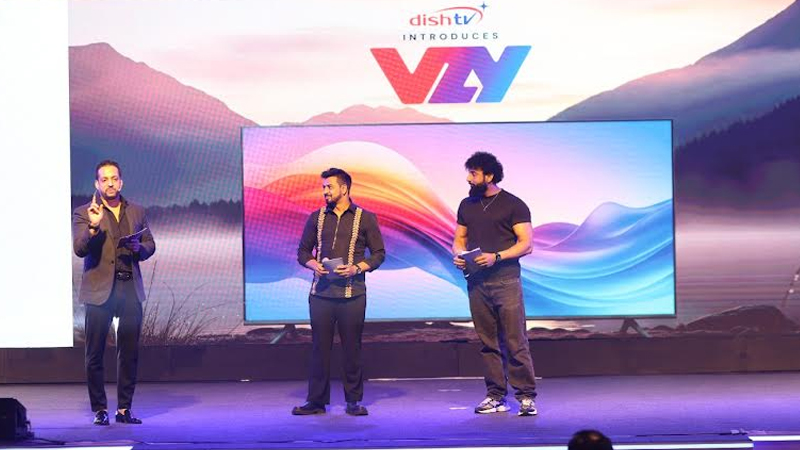
    MUMBAI: Dish TV has flipped the channel on its future and this time, it’s not just about broadcasting. The country’s leading DTH provider, trusted in Indian homes for over 22 years, has launched VZY Smart TVs, marking its grand entry into the integrated Smart TV segment.

    Standing for Vibe, Zone & You, VZY is pitched not as “just another TV” but as a full-blown entertainment universe. It blends Dish TV’s legacy in live television with cutting-edge streaming, creating what the company calls an all-in-one screen where DTH meets OTT.

    “For over two decades, Dish TV has been a trusted name in millions of Indian homes, built on innovation and customer focus. With VZY, we are building an entertainment universe that converges live TV, OTT, smart features, and immersive design,” said Dish TV India CEO & executive director Manoj Dobhal.

    What’s inside the box? Plenty of tech wizardry. VZY Smart TVs will be available in sizes from 32” HD to 55” 4K UHD QLED, with premium features such as Dolby Vision, HDR10, up to 350 nits brightness, and a bezel-less design. For audio, all models feature Dolby Audio, with select premium models stepping up to Dolby Atmos.

    Running on Google TV 5 (Android 14), the TVs come loaded with streaming staples like Netflix, Prime Video, and Youtube. Add to that voice-enabled remotes, Chromecast, Airplay, and in select models, an inbuilt DTH set-top box, offering instant access to both live TV and streaming apps.

    “The modern Indian family is digital-first and experience-driven. VZY goes beyond being just a television to deliver an immersive, curated experience,” added Dish TV India chief revenue officer Sukhpreet Singh.

    For performance, the range supports up to 2GB RAM and 32GB storage, ensuring smooth navigation and app usage. To make the smart shift easier on the wallet, Dish TV is offering Rs 0 down payment and 0 per cent EMI financing options.

    The VZY Smart TV range will hit retail shelves nationwide and will also be available through online platforms, reaching metros as well as Tier 2 and Tier 3 markets.

    With this move, Dish TV isn’t just selling a new screen, it’s making a play to own the living room once again, this time with a smarter, sleeker, and more immersive avatar.

  • French Bloom races ahead as Formula 1’s first alcohol-free fizz partner

    French Bloom races ahead as Formula 1’s first alcohol-free fizz partner

    MUMBAI: Formula 1 has uncorked a new kind of partnership, naming French Bloom its first official non-alcoholic sparkling wine partner. The collaboration brings bubbles without the buzz to Grand Prix weekends, offering an inclusive and elevated way to toast every lap, podium and party.

    From the 2025 season, French Bloom’s award-winning cuvées will be served across Paddock clubs, the F1 Garage and hospitality spaces, marking a milestone in the sport’s partnership with LVMH. The maison, co-founded by Maggie Frerejean-Taittinger and model Constance Jablonski, is the first alcohol-free brand backed by Moët Hennessy, which acquired a minority stake last year.

    “Our sparkling cuvées unite centuries of French winemaking savoir-faire with cutting-edge innovation,” said Frerejean-Taittinger. “This partnership celebrates intention, sophistication and the future of how we raise a glass.”

    With Netflix’s Drive to Survive fuelling global fandom and a surge of younger, more diverse audiences, the move reflects changing tastes. Millennials, gen z and female fans are driving demand for luxury choices that balance indulgence with moderation. French Bloom, crafted from organic Chardonnay and refined through an innovative dealcoholisation process, answers that call with style.

    Formula 1’s chief commercial officer, Emily Prazer, added, “The addition of French Bloom brings variety to our hospitality portfolio and ensures every guest experiences true luxury at our races.”

    Beyond bubbles, the tie-up carries a green note. French Bloom’s commitment to organic ingredients and reduced production impact dovetails with F1’s net zero carbon by 2030 goal.


  • Fast channels surge 14 per cent this year as news and horror fuel boom

    Fast channels surge 14 per cent this year as news and horror fuel boom

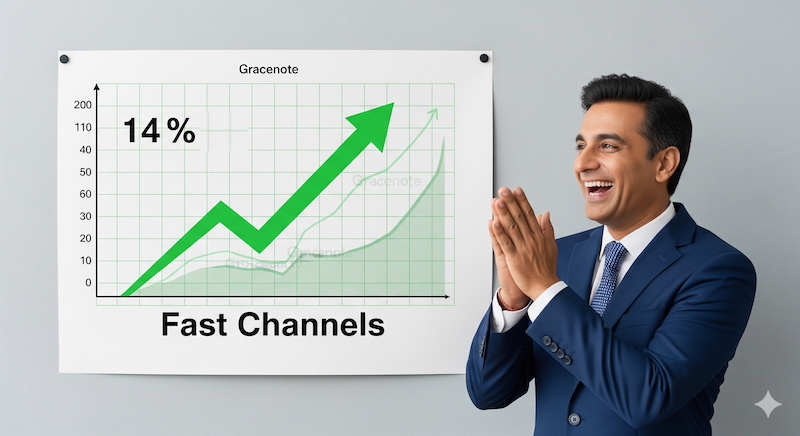
    MUMBAI: Free ad-supported television (Fast) is enjoying a blistering run. The number of Fast channels worldwide has climbed nearly 14 per cent since the start of 2025 and 76 per cent since 2023, according to fresh analysis from Gracenote, the content data arm of Nielsen.

    The firm has expanded its Data Hub to track nearly 1,850 active Fast channels, enabling direct comparisons with subscription video-on-demand (SVOD) catalogues from the likes of Amazon Prime Video, Apple TV+, Disney+, Netflix and Paramount+. The enhanced tool now covers more than 645,000 TV shows, films and sports programmes across SVOD and a further 197,000 across Fast.

    Fast is skewing younger than its subscription rivals. Almost half of its content has been produced in the past five years, compared with only a third for SVOD. Stretching the timeframe to 15 years, Fast jumps to nearly 80 per cent of programming, versus 68.5 per cent for SVOD.

    Television dominates both formats, but especially Fast: 93.1 per cent of its content comprises TV programming by episode count, compared with 88.8 per cent on SVOD platforms.

    Genre trends are diverging. Documentaries make up the largest Fast slice at 16.1 per cent, followed by drama (10.6 per cent) and news (9.9 per cent). Yet it is news and horror that are powering growth, up 37 per cent and 30 per cent respectively. On SVOD, sports led the charge in the past quarter with a 13.2 per cent bump, ahead of films (10 per cent) and TV (9.2 per cent). Sports on Fast dipped 3.7 per cent in the last three months but remain up 14 per cent year to date.

    Among the big streamers, Amazon bulked up most aggressively, expanding its catalogue by 12.6 per cent quarter on quarter. Paramount+ followed with a 6.4 per cent increase. Overall, SVOD offerings grew 9.8 per cent in the same period.

    Gracenote, which covers video content in more than 70 languages and 80 countries, is pitching its Data Hub as a strategic compass for distributors, producers and advertisers eager to map where audiences are headed.

  • Netflix wins Japan rights for 2026 World Baseball Classic

    Netflix wins Japan rights for 2026 World Baseball Classic

    TOKYO: Netflix will be the exclusive home of the 2026 World Baseball Classic in Japan, under a rights deal with World Baseball Classic Inc (WBCI), the body jointly run by Major League Baseball and the MLB Players Association. The streamer will carry all 47 games live and on-demand for Japanese subscribers.

    The sixth edition of the tournament will feature 20 national teams across four pools in Tokyo, San Juan, Houston and Miami from 5 March 2026. Defending champions Japan will again be in the spotlight.

    MLB deputy commissioner for business and media Noah Garden said the deal reflected “the growing popularity of the tournament” and WBCI’s ambition to expand through digital platforms. Netflix Japan vice president of content Kaata Sakamoto called the tie-up a chance to “deliver a new kind of viewing experience that brings fans even closer to the action.”

    MLB Players Inc  president Evan Kaplan added that the partnership would give Japanese fans front-row access to “one of the sport’s most unique stages, where the world’s top players compete for national pride”.

    For Netflix, the deal is the latest step in its tilt towards live sport, positioning it at the heart of one of baseball’s biggest international events.

    Could we see it snap up some premium cricket media rights in India? That’s a delivery  media observers have been waiting for Netflix to bowl for quite a while now.

  • Netflix sets guardrails for AI in film and TV productions

    Netflix sets guardrails for AI in film and TV productions

    MUMBAI: Netflix has moved to head off potential controversy over the creeping use of artificial intelligence in film and television, issuing sweeping new guidance for filmmakers, vendors and production partners. The rules, circulated globally this week, make clear that while generative AI (GenAI) can be deployed as a creative aide, it must not slip quietly into final cuts without disclosure, scrutiny and, in some cases, written approval.

    The streamer has stressed that AI is welcome for ideation — moodboards, concept sketches, mock posters — but warns of red lines when it comes to intellectual property, talent likeness and story-critical material. In other words, it’s one thing to ask an algorithm to imagine a dystopian cityscape for a pitch deck; quite another to use it to conjure a new character, rewrite an actor’s performance, or mimic a celebrity’s voice.

    The dos and don’ts

    The 20-page guidance has outlined a hierarchy of acceptable uses. Low-risk experiments that are non-final, non-identifiable and non-copyrighted can usually proceed with a simple “socialise and share” approach. But any GenAI-generated material that:
    * incorporates Netflix’s proprietary assets (scripts, footage, unreleased stills),
    * alters talent performances beyond cosmetic fixes,
    * relies on copyrighted datasets (such as celebrity faces or artistic styles), or
    * appears as final on-screen deliverables,
    must be escalated to the company for legal review and explicit sign-off.

    Perhaps the sharpest line the guidelines draw is around talent. Synthetic replicas of performers — whether de-aged faces, digital bodies or AI-generated voices — require documented consent, in line with union rules. Even subtle digital alterations, such as tweaking lip-sync or emotional delivery, are flagged as reputationally sensitive. Netflix says it permits the use of AI for minor industry-standard post-production tweaks (noise reduction, continuity fixes, cosmetic adjustments), but not for material changes that could distort intent or replace union-covered work.

    The streamer, says it is acutely aware of the reputational stakes. It warns against AI-generated content that could mislead viewers into believing fabricated events are real — such as fake news clips or invented statements attributed to journalists. It has also cautioned against undermining union jobs, an especially hot-button issue after last year’s strikes in Hollywood over the threat posed by AI.

    Vendors and AI studios delivering to Netflix are being told to adhere to the same standards, even if they build custom workflows by stitching multiple tools together. Confidentiality remains non-negotiable: all inputs — from scripts to actor headshots — must be protected inside secure, enterprise-level tools that prevent reuse or resale of data. Production partners have been reminded that they are personally responsible for checking licences, terms and conditions of any third-party AI software.

    The guidance draws a hard distinction between temporary AI-assisted mock-ups and content that makes it into the final cut. A background prop generated by AI may appear harmless, but if a character reads it aloud, it becomes story-relevant and must undergo rights clearance. Netflix insists partners flag such cases early to avoid last-minute legal headaches.

    Why now?
    The move reflects the industry’s jittery embrace of GenAI. While many creatives are already experimenting with it in design, concept art and even scriptwriting, studios are scrambling to balance innovation with ethics, copyright law and union agreements. Netflix is positioning itself as neither a Luddite nor a cheerleader — encouraging experimentation, but within guardrails designed to protect talent, data and audience trust.
    The message from Los Gatos is blunt: AI may be the new toy in the toolbox, but when it comes to finished stories and performers’ rights, the humans are still in charge.

    You can find the detailed guidelines here.
     

  • From Netflix to Next-Gen AI, Akash Iyer joins OpenAI India as social lead

    From Netflix to Next-Gen AI, Akash Iyer joins OpenAI India as social lead

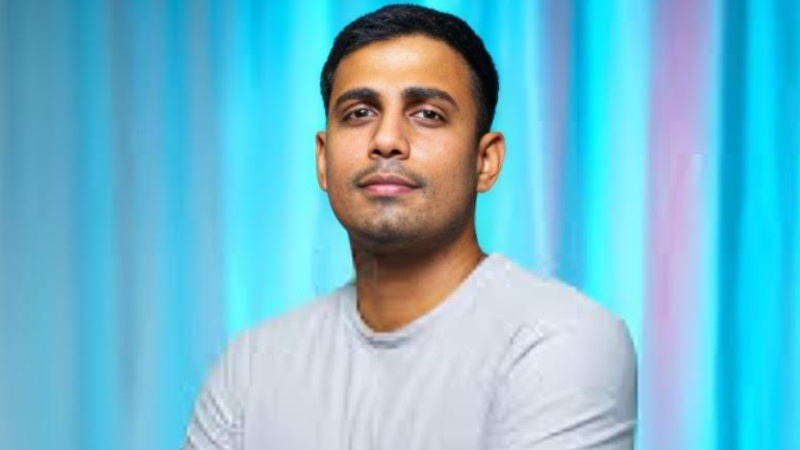
    MUMBAI: Lights, camera… AI-ction! After nearly seven years scripting cultural moments at Netflix, Akash Iyer is stepping into a whole new frame as the social lead for OpenAI in India. Iyer, who announced his move on LinkedIn with a mix of excitement and humility, joins at a pivotal moment. India is ChatGPT’s second-largest market after the US, and OpenAI is doubling down on its local presence with its first India office slated to open in Delhi later this year and a new India-only ChatGPT plan priced at Rs 399 per month.

    With over a decade in media and marketing, Iyer has a résumé as eclectic as it is impactful. At Netflix, he masterminded over 100 campaigns, from The Archies to the flagship Playback, scaled Youtube from zero to 20 million subscribers, and grew Instagram from 1 million to 8 million followers. Before that, he sharpened his storytelling craft at Buzzfeed, Sportskeeda, and The Glitch, dabbling in everything from viral video formats to sports explainers.

    His move signals OpenAI’s serious intent to court India’s fast-growing user base especially students, who, according to the company, use ChatGPT more here than anywhere else in the world. OpenAI comms head for Asia Pacific Jake Wilczynski summed it up: “India is not just a big market, it’s a critical one.”

    For Iyer, the leap is more than a career pivot. “It’s an incredible opportunity, but also a deep responsibility to contribute to building AGI for the benefit of humanity,” he wrote. With his cultural instincts and digital flair, OpenAI’s India story may just get the blockbuster treatment it needs.