Tag: Netflix India

  • Indian OTT platforms dish out special fare for kids

    Indian OTT platforms dish out special fare for kids

    MUMBAI: Streaming services have started taking the central stage of entertainment in Indian living rooms for quite a while now, catalysed more by the Covid2019 crisis. But it’s not possible to lay a strong foundation if the new-age entertainers don’t have anything in store for those loved little ones. While YouTube with numerous kids’ channels has been reigning  supreme over others for quite a while, the game is changing as over-the-top (OTT) platforms pay their attention to kids programming with new strategies. Along with international players, leading home-grown players have also made strides towards building noticeable offerings in the vertical.

    On last children's day, Viacom18’s VOOT, one of the major home-grown services in India, launched a dedicated service VOOT Kids, despite having a good portfolio of kids’ content on the main service. Rather than limiting it to entertainment, the new subscription-based service is a combination of fun and learning. VOOT Kids business head Saugato Bhowmik said the service started showing very good results from December onwards. Followed by customer acquisition, the journey from free trials to paid subscribers also started climbing significantly till February. From the mid-March when children started staying home, VOOT Kids’ daily subscriber additions jumped 6X from the pre-lockdown period.

    “In fact, in the early days of April, the peak we reached was nine times of pre-lockdown period. We were adding nine times and then we stabilized at about six times. So, the user base has expanded dramatically. Secondly, the time spent on the platform has also grown dramatically. So we already started this platform with a very high time spent, 70 minutes per viewer per day in December itself. Now 70 minutes is higher than most other OTT platforms. Today that number stands at 95 minutes, even some days it touched a hundred minutes,” Bhowmik added. The numbers shared by him relate to VOOT’s separate venture in kids’ space.

    Another leading OTT player in the country also revealed a hefty line-up of kids content recently; ZEE5 launched ZEE5 Kids, a dedicated section within the app. “It becomes an integral part of the content offering that we need to have on the platform, so it becomes holistic in nature. We are coming with hyper sports, there are kids content, premium content, direct-digital movies, there are movie premiers, catch-up content, news content. In that sense, there is something for everybody. Kids are an important target group that we needed to address on ZEE5,” said ZEE5 India programming head Aparna Acharekar commented.

    Acharekar mentioned that even before launching the section, the platform had kids content. It saw good viewership coming from limited hours of kids’ content leading to a full-fledged vertical, she said. However, both ZEE5 and VOOT Kids are not limiting the content bouquet to entertainment, but a blend of fun and learning.

    ShemarooMe, one of the newest entrants in the OTT race, is also focusing on the vertical. “At Shemaroo, we have always kept the preferences of audiences at the core of our offerings and our kids’ content is a high point for us with a special emphasis on learning about the rich Indian heritage, culture and values, which distinguishes us. The kids’ content on ShemarooMe is for a wider age group of two to 14 years, with focus on Indian mythology, stories, Indian personalities and early learning too. The kids’ genre has always been under-indexed,” Shemaroo Entertainment Animation, Digital Kids and L&M senior vice president Smita Maroo said.

    “However, the current situation has seen a growth in the overall kids’ genre across all platforms. Kids’ content on OTT platform helps in bringing the entire family together in consuming content which has seen a significant rise. There has been a spike of nearly 100 per cent in the viewership and the consumption has nearly doubled on kids’ movies and edutainment content since lockdown,” she added.

    Although international platforms lack content in local languages, Amazon Prime Video, Netflix, Disney+Hotstar have a significant amount of programming for the younger audience. Moreover, Disney+ recently making itself available in India has opened up a humongous amount of classics for the children. While Netflix has upped its local content in India, it has rolled very few original kids content in India. But in the limited store, Mighty Little Bheem has emerged as the most-watched preschool series on the service globally, and the second-most-watched kids’ series for the service worldwide. Released on Netflix in April 2019, it has now been watched by 27 million households around the world. The global streaming giant has also announced another animated show Ghee Happy.

    ZEE5’s Acharekar highlighted an important aspect: there is a great opportunity to create content for pre-teen age groups in the Indian market. While there is content like Chota Bheem for the younger age group, there is not much content available for the nine to 14 age group. While acknowledging that international content which has been created for those age groups coming to the country, she noted that there is a limitation of language. 

    “When you want to target nine to 14 years’ age groups, we need to serve content for them in languages they are comfortable with. In that sense, certain pockets of the kids segment are underserved.  There are opportunities to do better in regional languages and catering to Indian sensibility and creating more Indian viewers,” she added.

    VOOT Kids’ Bhowmik said that the space was underserved but now more and more players are coming in. He said that the ecosystem would only build more because kids need different solutions. Amid the rising competition, he is confident that VOOT Kids will always remain differentiated because of its approach to kids and solving their problems. He also added that the service is adding a lot more features in the next 90 days.

    ZEE5, on the other hand, intends to get into user-generated content for kids also. Describing its nature, Acharekar added that it could show auditions, talents that children can come forward and showcase on the platform. She also noted that they are building at the backend a very safe technology for children; so when they launch UGC, parents will find the platform safe to let their children be and brands realize it as a best bet.

    “As a content house, we continuously check the consumption patterns and trends in the kids’ space and plan our content pipeline accordingly while Indianness and Indian culture-inspired content always remain at the core of our hearts. We have a rich slate of films, shows and some very interesting edutainment content in the pipeline,” Shemaroo’s Maroo said.

    Yes, children will not fall out of options despite the exponential increase in screen time. 
  • Netflix to cancel subscriptions of inactive members

    Netflix to cancel subscriptions of inactive members

    MUMBAI: Streaming giant Netflix has taken another step to make the service more user-friendly, by cancelling the membership of inactive subscribers. It will start asking customers who haven’t used its platform in the past year if they want to keep their subscriptions.

    “We’re asking everyone who has not watched anything on Netflix for a year since they joined to confirm they want to keep their membership. And we’ll do the same for anyone who has stopped watching for more than two years,” Netflix product innovation director Eddy Wu said in a statement.

    If they don’t confirm that they want to keep subscribing, Netflix will automatically cancel their subscriptions. These inactive accounts represent less than half of one percent of the service’s overall member base, only a few hundred thousand, and are already factored into its financial guidance. 

    “We’ve always thought it should be easy to sign up and to cancel. So, as always, anyone who cancels their account and then rejoins within ten months will still have their favourites, profiles, viewing preferences and account details just as they left them. In the meantime, we hope this new approach saves people some hard earned cash,” Wu added.

    Follow Tellychakkar for the consumer facing news & entertainment

  • Zee Studios head producer Abhishek Vyas joins Netflix India

    Zee Studios head producer Abhishek Vyas joins Netflix India

    MUMBAI: Zee Studios head producer Abhishek Vyas has moved on to join the Indian originals team at Netflix. Vyas will report directly to Netflix India original film director Aashish Singh.

    In his new role, he will work closely with directors, producers, writers and external creative team for new acquisitions and content development of projects.

    He has overseen the production of Manikarnika-The Queen of Jhansi and developed multiple projects including Suraj Pe Mangal Bhari among others during his stay at Zee Studios. He has also worked with Eros International and Star Network in previous stints.

    “From brand marketing at CNBC TV 18 and Star India to being a part of setting up a film studio at Eros International and now developing and producing films at Zee Studios, last 10 years have been like a roller coaster. The appetite to do a lot of different things, learn and make it large just keeps on increasing,” Vyas’s LinkedIn profile says. 

    With the increasing focus on Indian market, Netflix has roped in a number of local talents as well to strengthen its consumer understanding.

  • Netflix reinforces focus on post-production, holds virtual Q&A session for editing community

    Netflix reinforces focus on post-production, holds virtual Q&A session for editing community

    MUMBAI: It's no wonder that streaming giants across the globe are trying to strengthen their business in India as the country has amongst the highest consumption of online video in the world. Streaming giant Netflix had hosted a first-of-a-kind workshop on post-production in Mumbai last October and recently it held a virtual Q&A session for the editing community in India with Emmy Award-winning editor Stuart Bass on 30 April. Netflix CEO Reed Hastings promised Rs 3000 crore for content in India in 2019-20. Hence, the streaming giant is not overlooking the training requirement of the local creative community as well.

    Bass, who has worked for iconic shows like The Wonder Years, Arrested Development, The Office, and Pushing Daisies along with his long-time assistant editor Preston Rapp, shared his insights with over 100 participants from India and South East Asia. Primarily editors were part of the session along with assistant editors, post-production supervisors, writers, showrunners and/or directors.

    The conversation focused on best practices in editing for complex episodic storytelling, how it differs from editing feature films, editing for different genres and the latest editing technologies. Even with the number of original content flooding the ecosystem, the country has limited experience in editing for series which requires a different approach from a creative, logistical, and management perspective. Hence, skills in editing for series will become increasingly relevant as India produces content at scale.

    “We’re seeing a flourishing of stories from India across multiple genres and for every mood and member of the family. As more episodic series are made in India, there is a desire for best practices in long format storytelling. We were thrilled to see the response to the session led by an editor as prolific and experienced as Stuart Bass. We are grateful to the Indian creative community who, despite this difficult time, joined us and made this an incredibly insightful session that ranged from in-depth creative discussions to the technical aspects of editing for series,” Netflix post-production director Vijay Venkataramanan said who also moderated the session.

    The streaming service has significantly upped its investment in Indian stories and storytellers. Netflix has announced over 50 productions in India. Its recent releases include Guilty, She, Jamtara- Sabka Number Aayega, Yeh Ballet has gained enough word of mouth. Even Chris Hemsworth-starrer Extraction was released on Netflix with dubs in Hindi, Tamil and Telugu indicating its ambition to engage viewers across the country.

    “We've seen a big growth in viewing in India, and have had great success on our local originals there as well. Most recently was She and Guilty and a few others that have really been driving a lot of engagement in local content on our India service, and they also are big fans of our global original content like Lacasa de Papel was a huge hit in India for us, as well as most of our other originals that we have out of the US. So we're growing the business of licensed original international domestic across the board content and content taste,” Netflix chief content officer Ted Sarandos said in an earnings call after q1.

  • Big growth in viewing in India led by originals: Netflix’s Ted Sarandos

    Big growth in viewing in India led by originals: Netflix’s Ted Sarandos

    MUMBAI: Last year, Netflix rolled out a mobile-only plan in India to suit the country's preference for smartphones over laptops. Moreover, it was a way to delve deeper into a market where its basic Rs-500-a-month subscription plan was sharply expensive compared to homegrown OTT giants. The bet got the success it hoped for and Netflix followed the footprint in other markets as well. After nearly a year, the streaming service seems satisfied in the uptake of mobile-only plans as well as its overall growth here.

    “It's a plan (mobile-only plan) that we've tested for a while and we have rolled it out now in a bunch of countries: India, Malaysia, Indonesia, Thailand and the Philippines. And it's consistent with the broad theme and goal that we have which is why we're seeking effective ways to make the Netflix service more accessible to more and more people around the world,” Netflix chief product officer Greg Peters said in an earnings call.

    This strategy has helped Netflix witness a significant increase in acceleration and addition of new members. From a revenue perspective, it's also helping the company go from "neutral to positive", which Peters says will be good in the long term for the business.

    While all streaming players have witnessed magical growth in users during this COVID-19 lockdown, everyone is keen to know about Netflix’s growth in the period. Peters said he would not draw any strong contrast between India and other countries around the world. He mentioned that it is putting high effort to make the offering more competitive and attractive to members.

    “We've seen a big growth in viewing in India and have had great success for our local originals. Most recently was She andGuilty and a few others have been driving a lot of engagement in local content on our India service and they also are big fans of our global original content like Lacasa de Papel. So we're growing the business of licensed originals, international and domestic, across the board,” Netflix chief content officer Ted Sarandos said.

  • We want to be future-protected: Netflix’s Aashish Singh

    We want to be future-protected: Netflix’s Aashish Singh

    MUMBAI: Netflix India’s recent film Yeh Ballet has received critical appreciation. It is a story of two boys from humble backgrounds who go on to become dancers. On the contrary, critics did not hold a very high view of Drive. The streaming service has kicked off March with another film Guilty. Along with churning out premium episodic content like Sacred Games, Jamtara, the ambition of Netflix to make a mark in digital original films is very evident.

    At Indiantelevision.com's The Content Hub 2020, Netflix India original film director Aashish Singh in a candid chat with Indiantelevision.com founder, CEO and editor-in-chief Anil Wanvari spoke about Netflix’s upcoming diverse slate of films to offer its subscribers content for every mood.

    Singh said that they are looking for content creators to create the best work of their lives. The platform is looking at a very diverse slate including films that can work across all genres for any audience that they can watch, anytime, anywhere. Singh is of the view that good stories could come from anywhere and can be watched everywhere. 

    “We do look at quality in terms of the technical requirements of a film, in terms of the cameras because we want to be future-protected. We want our films to be watched even ten years later, for that matter. So definitely quality is something that we definitely look at. We want to work with the best creative talent,” Singh commented.

    Netflix is also expanding its funnel by getting to know the Indian market better. 

    "So you will get to see a very diverse state going forward. And we have a wonderful slate already that's in process for 2021 and 2022,” he added.

    Singh also reaffirmed that the platform is not only looking at big names and they are working with ten new directors, nine new writers, eight women as new writers and directors this year itself. He added that Netflix is hungry for people who have not yet been discovered. According to him, those are the people who can come up with shows like Jamtara.

    When it comes to filmmaking, Netflix helps filmmakers throughout the process right from pre-production. The streaming service has a production team, finance team, post production team, VFX team that supports the entire filmmaking process. He notes that it helps in quality production. He also mentioned that they support creators to make it the best experience for them but they do not interfere in the process.

    “I liked Yeh Ballet a lot. And it's a very authentic story which talks about dance form that's not very common. The feedback that I got from a lot of people is that they didn't know much about ballet but after they saw the film, they want their kids to probably go and learn ballet,” he added. He also stated that Drive has also performed well on the platform.

    Although Netflix has not announced any animated content in terms of films, the platform is exploring things that could do well in the animation space and is in talks with a lot of people who are creating animation content in the country.

    Talking about challenges, Singh mentions that awareness of Netflix is an issue in India. Although the tier one cities and most of the urban people know about Netflix, Singh thinks they still have a long way to go as far as reaching out to the tier two cities or tier three cities. 

  • Netflix reports good topline growth, international subscriber additions in Q4

    Netflix reports good topline growth, international subscriber additions in Q4

    MUMBAI: Despite missing out on domestic subscriber addition for two consecutive quarters, streaming colossal Netflix beat its forecast for overall subscriber additions for the fourth quarter of 2019. The company also beat on the top and bottom lines for the quarter.

    The streaming giant witnessed a net addition of 8.76 mn paid subscribers globally including 420,000 streaming customers addition in the U.S. and 8.33 million overseas in the year-end 2019 quarter. Netflix reported $5.47 bn revenue for the quarter while earnings per share (EPS) for the same quarter amounted to $1.30.

    “We generated Q4-record paid net adds in each of the EMEA, LATAM and APAC regions, while UCAN paid net adds totaled 0.55m (with 0.42m in the US) vs. 1.75m in the year ago quarter. Our low membership growth in UCAN is probably due to our recent price changes and to US competitive launches. We have seen more muted impact from competitive launches outside the US (NL, CA, AU). As always, we are working hard to improve our service to combat these factors and push net adds higher over time,” the company said in a note to shareholders.

    The company ended 2019 with 167.1 million streaming customers worldwide including 61 mn in the U.S. and 106 mn internationally. For the first quarter of 2020, Netflix forecast global paid net adds of 7.0m vs. 9.6m in the first quarter of 2019, which was an all-time high in quarterly paid net adds. According to the company, the forecast reflects the continued, slightly elevated churn levels it is seeing in the US.

    “Many media companies and tech giants are launching streaming services, reinforcing the major trend of the transition from linear to streaming entertainment. This is happening all over the world and is still in its early stages, leaving ample room for many services to grow as linear TV wanes. We have a big headstart in streaming and will work to build on that by focusing on the same thing we have focused on for the past 22 years – pleasing members. We believe if we do that well, Netflix will continue to prosper,” Netflix added. 

  • Netflix and its binge spending: $17.3 bn on content in 2020

    Netflix and its binge spending: $17.3 bn on content in 2020

    MUMBAI: Netflix is stubborn with its content spending despite being criticised often for being “irrational”. The streaming firm is sticking to its 'grow now – pay later' strategy. According to a recent estimate, the streamer will invest around $17.3 billion on content in 2020.

    In 2019, the streamer spent little up from $15 billion on content. The report by BMO Capital Markets predicts the company is on track to spend $26 billion by 2028. An increase of almost $2 billion indicates that users will not get a chance to lower their screen time from the streaming engine as most of the money is expected to go on originals.

    While the popularity of the streaming platform rose with years, the competition has also turned tougher with the entry of other deep-pocket players in the ecosystem. Apple TV+ and Disney+ launch have thrown major challenges on the unofficial streaming king. Moreover, Warner Media’s HBO Max is also going to enter the market in mid 2020.

    "Netflix remains the clear leader in the global streaming video, and we believe there is still room to grow as incremental investment points enter the story: continued international growth (particularly India and Japan), improving per subscriber leverage on content spending, and the beginning of long-promised FCF improvements," BMO Capital Markets entertainment analyst Daniel Salmon comments in the research note.

    Considerably, among the other competitors, no one is spending extraordinarily big on content like Netflix. Disney said it would spend $1 billion on original programming for Disney Plus and will have nearly $1 billion in operating expenses in FY 20 while WarnerMedia will invest up to $2 billion in HBO Max in 2020. Comcast/NBCUniversal has planned about $2 bn for its streaming service Peacock in the first two years.

    "We continue to believe the 'streaming wars' narrative is false and there will be multiple winners in global streaming and thus continue to recommend buying Netflix (NFLX), Amazon (AMZN) and Discovery (DIS) together," the note also adds.

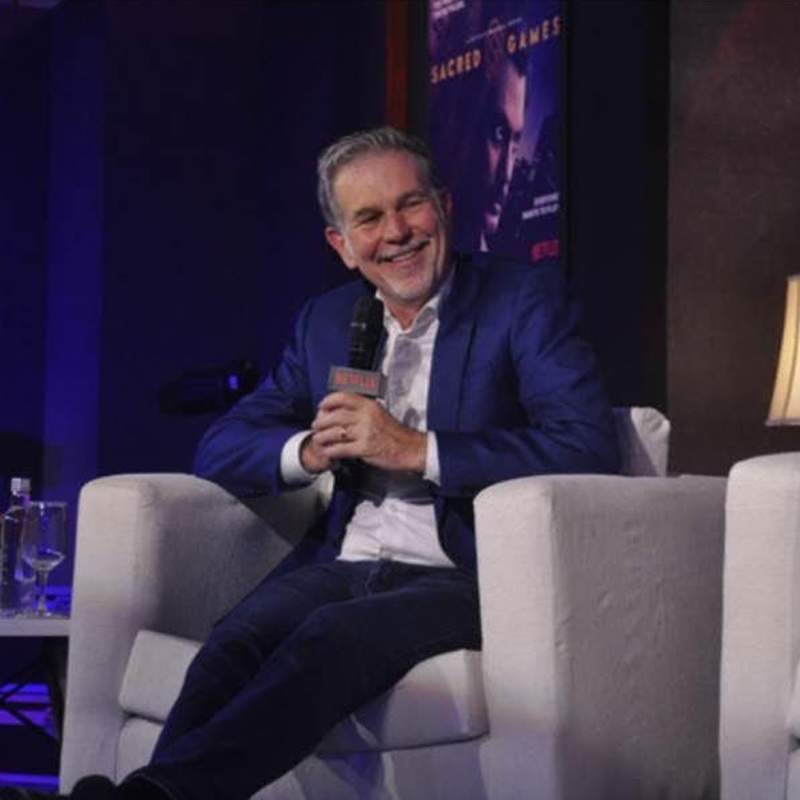
    Netflix is upping its India game significantly as the streaming giant is ready to spend Rs 3000 crore (around $418 mn)  on Indian content for this year and the next. Netflix founder and CEO Reed Hastings spoke about the investment during a recent India visit while illustrating the country’s importance in their business.

    "We launched in 2016 and we have continued to invest. So we have a lot of content from the United States, the UK and Spain. We are developing our Indian content here,” Hastings said. "This year and next year, we will spend about Rs 3,000 crore developing content and you will start to see a lot of stuff hit the screens," he added.  

    The streaming giant is set to report its fourth quarter earnings on 21 January. Netflix reported revenue of $5.24 billion, up 31 per cent year-over-year in the last quarter. 

  • Netflix to spend Rs 3000 crore on Indian content

    Netflix to spend Rs 3000 crore on Indian content

    MUMBAI: Netflix is upping its India game significantly as the streaming giant is ready to spend Rs 3000 crore on Indian content for this year and the next. Netflix founder and CEO Reed Hastings spoke about the investment during his India visit on Friday while illustrating the country’s important in their business.

    "We launched in 2016 and we have continued to invest. So we have a lot of content from the United States, the UK and Spain. We are developing our Indian content here,” Hastings said at the Hindustan Times Leadership Summit, according to media reports. "This year and next year, we will spend about Rs 3,000 crore developing content and you will start to see a lot of stuff hit the screens," he added.

    He also added that top performing Netflix shows from India include Sacred Games, Little Things and Delhi Crime. Talking about content made in India and watched by the world, Reed highlighted Mighty Little Bheem, which since its release in 2019,  has been watched by 27 million households around the world, including Latin America, Australia and New Zealand.

    Since launching here four years ago, Netflix has licensed hundreds of Indian films and shows, and invested in over 40 Netflix originals – almost all of which have been commissioned by Indian executives who live locally, know the culture and speak the language. These originals have been shot in over 20 cities across the country, including Delhi, Jaipur, Mumbai, Hyderabad, Lucknow, Kolkata, and Kochi.

    "The next 5-10 years will be the golden age of television. You are seeing unbelievable and unrivalled levels of investment. Partially from the global companies like Apple, Amazon, Disney and Viacom. There are all investing here in India as well as in the UK and the US. We are seeing more content made than ever before. It's a great export,” he said.

    "The internet has the possibility to really transform the Indian content market to be export-driven. So far, we have had some amazing successes. Sacred Games travelled around the world. We are really excited about those stories," he added.

  • Inside Netflix India’s growing post-production infrastructure

    Inside Netflix India’s growing post-production infrastructure

    MUMBAI: Netflix has always shown supremacy in content quality. After entering the Indian market in 2016, the Reed Hastings-led streaming service has created several high-quality originals including Sacred Games, Bard of Blood, Leila, Delhi Crime and Lust Stories. While emphasising on writing, direction, production, Netflix is not overlooking the oft-ignored segment in the industry – post-production. Currently, the over-the-top (OTT) platform is in the process of expanding its post-production team and growing the infrastructure.

    “There have been some very big shifts in the industry and how we look at post-production. In the film days it was that transition going from black and white to colour. After that, we went digital from film. That was the next big shift. Now we are completely almost 99 per cent in the digital space. And that next big shift is the change in discipline going from feature films to episodic series of higher production value,” Netflix India post-production director Vijay Venkataramanan said in a recent interaction with Indiantelevision.com.

    Talking about the big shift, Venkataramanan said that earlier people spent about a year or higher time making a feature film but with the series it needs to be delivered at an even better quality at the same time. Moreover, in contrast to typical feature films which typically would have one director, one editor and one visual effects facility, some shows have three directors, multiple editors and multiple visual effects teams working in parallel to meet timelines.

    He also added that Netflix has an extensive deliverables list because the platform future-proofs its content to stand the test of time. The platform archives everything carefully so it can remaster and update it whenever the technology changes. Venkataramanan added that to be able to get that, the process has to start even before the script is written, putting a plan together of the workflow needed to be followed and how to budget.

    “It’s not about how much time you get, it’s about how you use the time. Often we might get the same amount of time as a film, but then if you are structuring your crew better, hiring more people and hiring specialists for each genre, if you are not trying to economise by eliminating specialists or having one person to do the job of three persons, having dedicated specialist for each genre, you can use that time better. We get the same start date or delivery date but what we change is the factors in-between,” he also pointed out.

    “In India, the post-production team is growing fast. We are nine people now. But if you look at the support teams of our operations, we have QC teams, our visual effects management team and then we have production technology support. So, we are close to 14. We are in the process of expanding the team because for us it’s important to have sufficient support within Netflix and it’s important to hire leaders in the industry,” he added further.

    Notably, Netflix recently organised its first-of-a-kind workshop on post-production in Mumbai to train industry professionals on international standards and practices. It has brought in trainers from APostLab, Netflix professionals from the US and Korea and industry experts from India. The training was aimed at enhancing creative digital skills for the internet entertainment industry.

    Venkataramanan said that while Netflix is a platform with the ability to stream content in 4K high dynamic range and Dolby Atmos in homes, the next step for the international streaming giant is to implement that same technology and finish its Indian content at that standard, format and specification. According to him, post-production is 50 per cent technical, 50 per cent creativity.

    “Typically what we push for the budget is a minimum ten per cent of below the line budget for post-production. But this does not include visual effects cost because visual effect budgets change depending on the creative of the show. There is a huge difference in the scope of visual effect in a Bard of Blood and Bahubali. So the budget of visual effects is significantly high in Bahubali than Blood of Bard. That will also not include the budget for in-licensed music that you are taking. You can’t put pressure on post-production budget,” he added.

    “When you are talking about post-production, you are specifically talking about those functions that tie into post-production and all the crew that are connected to post-production. But these are people who start operating even before you go into production. How do you set up editors, multiple teams of editors, having proper edit facilities, not a stadalone iMAC in the corner of production office but properly set editing rooms, budgeting for the DIT, sound mix, come under that ten per cent,” he added.

    He also added that they keep working with the partners to make sure that money is spent wisely. But when there are savings, they don’t allow that money to go back to production, they put that money back into post-production to create a better product. He also gave an example of a feature film that they are working on for which they had a lot of savings. Instead of taking back that money, they used that money for the highest quality of delivery possible including going to 4K HDR from initially planned 4K SDR.

    “Right now our post-production infrastructure is growing. One year ago, we had only two to three facilities that were capable of delivering to Netflix. After we engaged with the industry and gave them confidence that we will pay fairly and you can fearlessly go and invest in creating your pipeline and we are here to making this content, today we have 11 facilities across India that can deliver to us. It's growing even faster and the industry is responding to the content we are making. Our philosophy towards post-production is different and when people see that, the iwAndustry gets confident and then they partner,” he commented.

    According to him, the challenge is not in terms of technology but how you are planning and budgeting for it. “The technical staff we can teach, our technicians are great. We have people who go to facilities and work with Technical staff and the entire team dedicated to facilities and helping guide them on how to upgrade their infrastructure. We have all these resources but it's important how we manage it efficiently. That’s the culture shift and we are making producers aware of how to use post-production properly respecting their skill set and making them aware of various stages of post-production,” he signed off.