Tag: Netflix India

  • Netflix India offers a thrilling treat in latest promo for ‘Red Notice’

    Netflix India offers a thrilling treat in latest promo for ‘Red Notice’

    Mumbai: Netflix India has come out with a new campaign for its action-packed Hollywood blockbuster movie, ‘Red Notice’. Conceptualised by 22feet Tribal Worldwide, the campaign invites fans to experience an adrenaline rush at the ‘Red Notice Shop’, where everything is free if they can steal it!

    The Red Notice Shop has been brought to life in a 3000 sq. ft. retail space at Phoenix Palladium, Mumbai. The space is guarded with lasers, sensors, secret codes, CCTV cameras, alarms, and top-notch security. The ‘heist’ is successfully completed if one is able to ‘steal’ from the Red Notice Shop. Prizes include not only goodies, tech delights, ownable shop merchandise but also three precious gold Faberge eggs from the film with exclusive rewards inside them, said the streaming network in a media statement.

    22feet Tribal Worldwide national creative director Debashish Ghosh said, “Most viewers fantasise about being in a role similar to one of their favourite characters or plots in a film. We wanted to give them an unexpected leg-up. So, we set up a shop to pull off a heist where stealers are keepers if you don’t get caught. And if you do, you don’t land up behind bars. Either way, the experience leaves an indelible mark and lodges Netflix & Red Notice in your memory for good.”

    To generate buzz about the Red Notice Shop, a promo film was also launched that introduced the shop to the fans. This was followed by a series of short, tutorial videos featuring stand-up comic Prashasti Singh and actor Javed Jaffrey. In these tutorials, the duo is seen dodging the multiple security measures at the ‘Red Notice Shop’ in an attempt to steal the Faberge egg – failing at stealing but winning at bringing home the fun quotient.  

  • Siddharth Roy Kapur re-elected as president of Producers Guild of India

    Siddharth Roy Kapur re-elected as president of Producers Guild of India

    Mumbai: Roy Kapur Films founder and MD Siddharth Roy Kapur has been re-elected as president of Producers Guild of India at the 67th annual general meeting (AGM) of the association held virtually on 29 September. Reliance Entertainment’s Shibasish Sarkar was named as vice president of the industry body.

    Another key development was the expansion in ranks of women producers in leadership roles. Emmay Entertainment and Motion Pictures LLP’s Madhu Bhojwani and Netflix India’s Ambika Khurana joined incumbents Apoorva Mehta, Manish Goswami and Sunjoy Waddhwa as vice presidents of the guild while Sol Productions’ Fazila Allana joined incumbent Ashim Samanta as treasurer.

    Kapur, who has been serving for six consecutive years as the president of the guild, announced that he would not be making himself available for re-election next year. With Kapur at the helm, the guild has spearheaded multiple industry initiatives to increase the market size and reach of Indian content and include advocacy of producers interests on matters like legislation, taxation and ease of doing business.

    The ongoing pandemic has thrown unprecedented challenges at the production industry. At the AGM, members were apprised of the key activities and developments during the year, including formulating rigorous SOPs for safe shooting, advocating for shooting resumption, organising vaccination camps for members and facilitating financial assistance to daily wage workers through donations by guild members.

  • Netflix India onboards Srivats TS as VP, marketing

    Netflix India onboards Srivats TS as VP, marketing

    Mumbai: Netflix India has brought on board Srivats TS as vice president, marketing. He will lead the marketing team in India and report to Netflix vice president, APAC marketing, Barry Smyth.

    Prior to Netflix, Srivats was associated with food delivery platform Swiggy as senior vice president, marketing and consumer experience. He holds strong experience in building brands and businesses across traditional and new-age consumer technology companies.

    Commenting on the new appointment, Smyth said, “Srivats is an original thinker and an incredible marketer. As we bring more great stories from India, he will lead marketing to drive conversations and form deeper connections with consumers.”
    Srivats started his career with Nokia, where he worked for close to nine years in roles across brand marketing, consumer insights, and key account management. He then joined Swiggy in 2016 as head of marketing. Prior to that, Srivats led digital brand marketing at Quikr.

    Speaking on his new role, Srivats said, “Netflix is home to incredible stories and characters that become a part of our lives and conversations. I am excited to be a part of this phenomenal team and find more creative ways to drive engagement with millions of Netflix fans in India.”

  • Netflix to open its first global post-production facility in Mumbai

    Netflix to open its first global post-production facility in Mumbai

    KOLKATA: Streaming giant Netflix is all set to open its first live-action, post-production facility in Mumbai. The facility with 40 offline editing rooms for use by showrunners, directors, editors and sound designers, will become fully operational by June 2022.

    With innovation and collaboration as the focus, it will pioneer advanced media management workflows to allow a seamless partnership with India’s post-production community, said the streamer.

    “Indian audiences love high quality and diverse stories available on-demand to suit their tastes and moods. We saw this last year with an increase in viewing of stories across formats, genres, and languages. Whether it’s our favourite preschool hit series Mighty Little Bheem, International Emmy winning series Delhi Crime, or our beloved films like Guilty, Ludo, Pagglait, and Paava Kadhaigal… it’s been an incredible ride,” Netflix said in a blog post.

    The US company has invested Rs 3,000 crores in local programming over 2019 and 2020 to build a universe of Indian stories. In March, it announced a lineup of 41 titles featuring more variety and diversity – from some of the biggest films and series to gripping documentaries and ingenious comedy formats. In 2020, it launched NetFX – a platform that enables multiple Indian artists to work on VFX for titles globally.

    Moreover, the company is investing in the latest technologies and skill development through multiple certifications and training workshops in post-production, scriptwriting, and other aspects of creative production.

    “We want to continue to contribute to the Indian creative community. Our goal is to keep improving the overall experience for our talent and industry partners and equip them with the best resources to tell authentic stories most engagingly. We are in a golden age of entertainment in India – this is the best time to be a creator and consumer of great stories,” the blog post read

  • Srishti Behl Arya to quit Netflix India

    Srishti Behl Arya to quit Netflix India

    KOLKATA: After a three years’ stint, Netflix India original films director Srishti Behl Arya has decided to move on. The veteran content creator joined the streaming service in May 2018 just when it began to expand its Indian content team. 21 May will be her last day at the company.

    Behl Arya has played a pivotal role in building Netflix India’s original film slate as starting from Hindi and then moving to regional markets as the competition around streaming intensified. In the last couple of years, the streaming giant has aggressively built its local library, enhanced its content investment in India. It began the year by unveiling a library with more than 40 originals consisting of as many as 13 movies.

    “Srishti has played a foundational role in building our original film slate in India, launching 35 titles over three years with critical acclaim and fandom including Guilty, AK vs AK, Bulbbul and Serious Men, and our first Tamil and Telugu films, with Paava Kadhaigal and Pitta Kathalu. We wish her every success and know she will bring her passion for storytelling to her future endeavours,” Netflix India VP content Monika Shergill said.

    Leading the Netflix originals film team in India over the last three years has been the adventure of a lifetime, Behl Arya stated. “I am incredibly grateful for this opportunity and have learned so much along the way. I couldn’t be more proud of the stories we’ve told, from first time directors, female filmmakers, established voices and so many fresh faces. I wish this wonderful team all the very best and can’t wait to see what’s ahead,” she added further.

    However, film remains a focus and priority investment for the streamer in the country. India is a key focus area for Netflix. It has not only commissioned local language content but has moderated subscription packs for mobile centric viewers, and launched its Hindi user interface.

  • Netflix rescues users from streaming indecisiveness with ‘Play Something’

    Netflix rescues users from streaming indecisiveness with ‘Play Something’

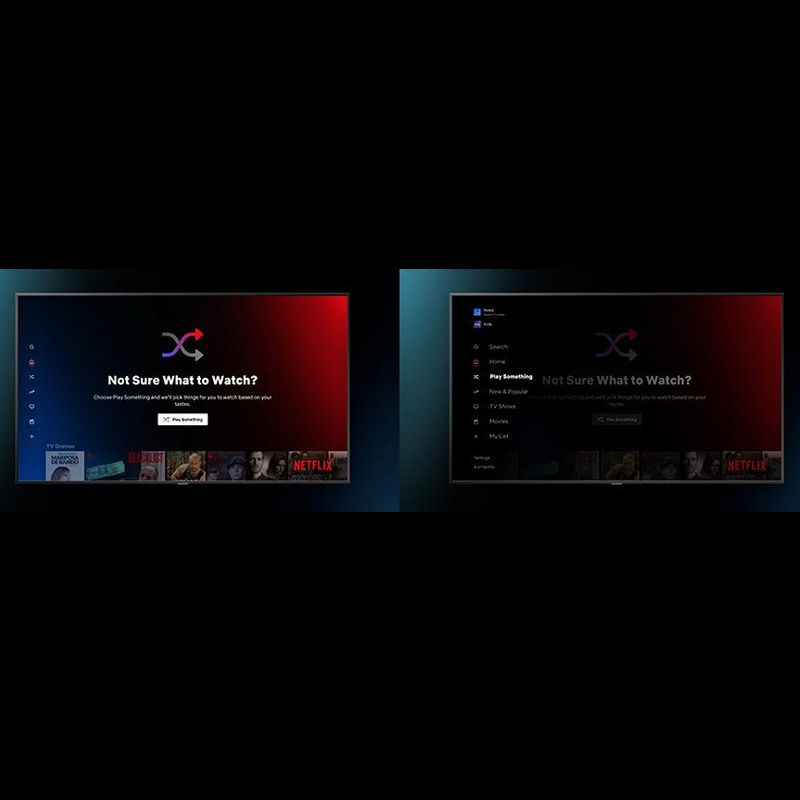
    KOLKATA: ‘What to watch now?’ – there is probably no Netflix user who has not thought of this. Now, the global streaming giant is ready to rescue viewers from the conflict with its new ‘Play Something’ feature.

    A Netflix user who presses the new ‘Play Something’ button will be shown a film or show based on his or her interest. If the user does not like the recommendation, they can move on with ‘Play Something Else’ to see a new set of options that include an unfinished series or film.

    “There are times when we just don’t want to make decisions. A Friday evening after a long work week. A fridge full of food but nothing jumps out. A family movie night where no one can agree. We’ve all been there. Sometimes you just want to open Netflix and dive right into a new story. That’s why we’ve created Play Something, an exciting new way to kick back and watch,” Netflix product innovation director Cameron Johnson said.

    Play Something can be found in multiple ways: underneath user profile name, the tenth row on your Netflix homepage, the navigation menu on the left of the screen. While the company is rolling out the feature globally, it is currently limited to TV based versions – that is, it is not available on mobile phones, laptops or tablet devices for now. Earlier this year, the streaming giant introduced a new feature that automatically downloads recommended content for users on their smartphones.

  • India is a ‘speculative’ investment: Netflix’s Reed Hastings

    India is a ‘speculative’ investment: Netflix’s Reed Hastings

    KOLKATA: It is not easy to win over Indian consumers given the diversity of the market – be it in terms of language, income or preferences. Since its foray into India, streaming giant Netflix has taken several measures from the dual point of view of content and pricing. While top executives remain bullish about the India market, there’s still a lot of work to be done by the streamer.

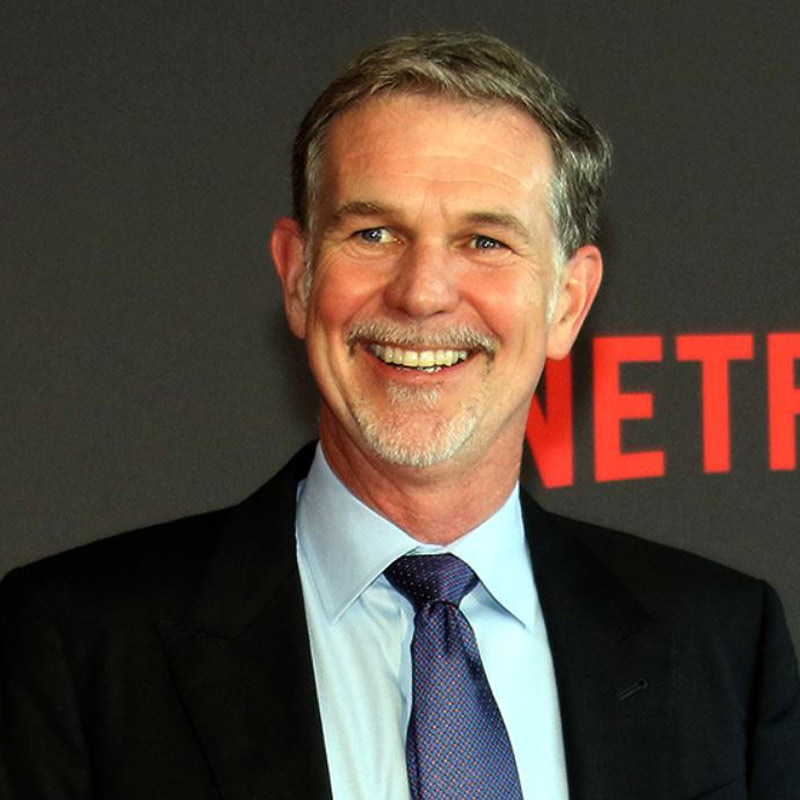
    Netflix has already seen huge success in some Asian markets like Japan, South Korea. The APAC region has contributed to a third of its subscriber growth in Q1 and has seen healthy revenue growth, including average revenue per member. However, it is “still figuring things out” in India, Netflix co-CEO Reed Hastings said in an earnings call.

    “Investment takes some guts and belief forward-looking. But the other investments you should think of, just like rich European countries, content exports really well and we are just getting a little better every month on it,” he added.

    While comparing India’s growth story to that of other Asian countries, Hastings averred that investing here still remains a "speculative" venture as they're still working out the kinks in their overall content strategy.

    “I would say we are still mostly focused on getting a content fit and getting broader content. So that’s why I would say that one is a more speculative investment than, say, Korea or Japan, which again, five years ago was very speculative. But we are over the hump on that,” he detailed.

    India is a tremendous opportunity for Netflix; moreover, the platform offers great scope for the creative community to connect with the enormous audiences, Netflix co-CEO and chief content officer Ted Sarandos said.

    “It’s just like all great opportunities. It’s a long journey, and it’s a challenge. And we think it’s worth it. And that’s why we’re investing early and trying to stay ahead of it. And I think we will be able to see those kinds of results that we’ve seen in other places in the world as we continue to learn more and more and more,” he stated.

    Of all its markets, India was the first one where Netflix launched its mobile only plan. Recently, it started testing Mobile+ plan at Rs 299 per month. Netflix COO Greg Peters said they would work more and more on such plans that have the right balance of features and pricing. The streaming platform is working on bringing in price points that are low enough for more and more of the world’s population to be able to access the service.

    Along with sachet plans, partnerships with market leaders have also yielded good results for the platform. “Jio is a great example of a partner we’ve been working with there to really bring the service to a new demographic at a very, very low price associated with low-cost mobile plans that they are offering as well as home-based IPTV plans. And those have been successful for us as well,” Peters said.

  • Netflix global TV head Bela Bajaria dishes on ‘local impact strategy’

    Netflix global TV head Bela Bajaria dishes on ‘local impact strategy’

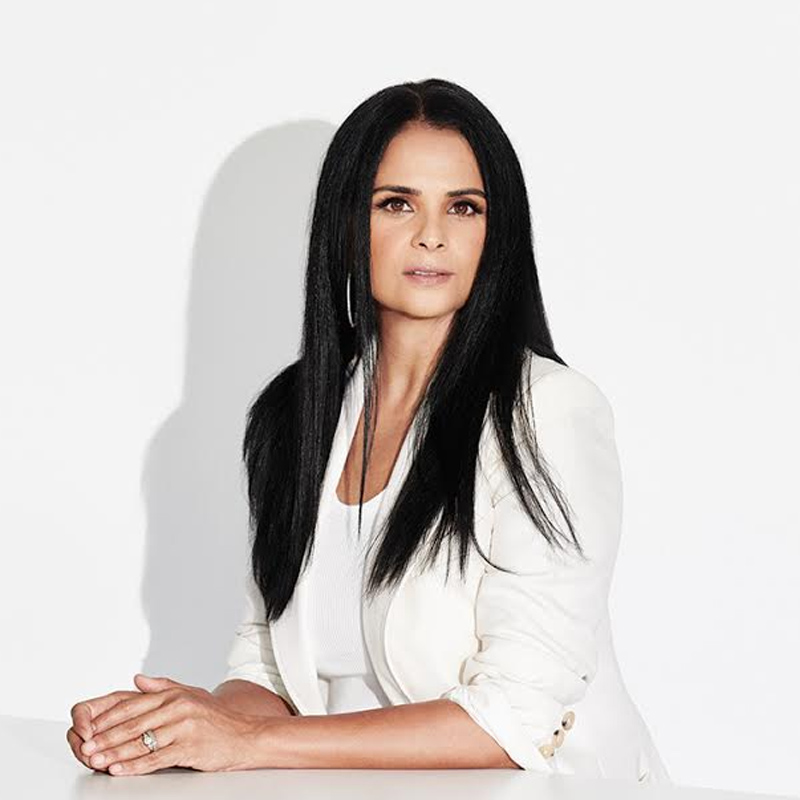
    KOLKATA: Among a host of over-the-top (OTT) platforms in India, Netflix has always been considered as the “premium” one in terms of pricing and content. To break the stereotype, the streaming giant has taken several measures like launching a mobile-only plan. Netflix global TV head Bela Bajaria said the platform wants to “please many more members” with its diverse content offering as well.

    Speaking on day one of APOS 2021, Bajaria, who smilingly disclosed her “personal bias” for the market because of her ethic roots, remarked that the platform wants to have a wider breadth of offerings for the country. She pointed to the much-hyped slate of more than 40 originals which consist of different categories of originals.

    “I think sometimes when we’re in a country, we make the first couple shows people externally and even sometimes [viewers] internally perceive us as just a platform having premium or edgy dramas… We want to please many more members than that,” she said during the discussion with Media Partners Asia executive director & co-founder Vivek Couto.

    Of all its Indian originals, Masaba Masaba really struck a chord with audiences. She also spoke of the recently launched women centric Bombay Begums, and the upcoming season of the highly acclaimed web series Delhi Crime that she believes will be compelling for viewers. She went on to reveal that more exciting shows would be launched in Q3 & Q4.

    Considerably, she noted the presence of family drama in Netflix’s upcoming slate. “I think it was important because we still want to have everybody’s favourite show. We want to have a show you could co-view with your family,” Bajaria commented.

    While Netflix is highly focusing on staying true to local stories, having a strong local team is really important, as is being part of the local ecosystem. For any local market the focus is always on “massive local impact”, not on making shows popular across markets. Netflix India took its localisation a step ahead with Monika Shergill’s appointment.

    “People sometimes think we want to make a show global or international. The most important thing is we make it the most authentic and specific vision in that country and it has the most local impact and people love it in that country. If people love it in that country, other people will love it too,” she stated.

    However, local shows like La Casa De Papel, Barbarians, Lupin, Who Killed Sara? and Space Sweepers have seen global success. In its home market, non-English viewership has grown by 50 per cent as the viewership of anime has increased by 100 per cent, while Korean drama consumption has tripled.

    “Traditionally, Hollywood has exported stories. Now what we are doing is we are exporting local authentic stories and shows everywhere around the world. All of these stories are different in point of views, from different lenses and very specific to the cultural lens,” she stated.

    Netflix has grown exponentially in other Asian countries too. South Korea has been the most prominent market for the streamer. It has a mix of licensed, regional, the original film in the market. While some of the licensed shows like K-Dramas have performed well, Korean shows in other categories also travelled. More importantly, Netflix could continue its production in Korea the whole time during the pandemic. Hence, the OTT platform has a “pretty solid” slate in Korea for 2021.

    The streamer is gearing up its efforts in Japan by building studios and partnering with local talent. Along with investing in anime which is very successful for the platform, it is also betting big on live-action and non-fiction in the Japan market.

    “The strategy is always going to be, we want to have the best shows. If the best shows are original shows, that’s great. If the best shows are a combination of acquisitions and partnerships and co-productions and originals, then that’s what we do,” Bajaria contended.

    To build a solid global footprint of Netflix, the other goal is it wants to be a part of the creative community in each country. There will be new places the platform starts making more original content in, she added. For instance, it was only a year and a half ago it started doing originals in Africa.

    “We’ve barely scratched the surface. There are so many great storytellers in so many parts of the world. There are great stories that can be told on a global scale in so many places,” she said.

    The media executive has worked across mediums, starting her career with millennial TV, spending a chunk of it at Studios. She has seen the growth and progression of the M&E business, especially the rapid change in the last three to five years. It has always been very important to create a supportive environment for creators and for executives to do the work.

    “I think what has been interesting about working at Netflix is typically the speed. The speed of decision making. There are not many layers like other traditional media companies I worked in. What I had to learn is to move very quickly,” she signed off.

  • Netflix adds 3.98 mn subs in Q1, to spend $17 bn on content this year

    Netflix adds 3.98 mn subs in Q1, to spend $17 bn on content this year

    KOLKATA: After a year of astounding growth, Netflix has missed the subscriber addition estimates in the first quarter of 2021. The company has added 3.98 million subscribers globally in contrast to its six million guidance. It has estimated even lower gains for the next quarter – one million with almost zero growth from US, Canada, Latin America.

    The Los Gatos-based streaming platform has cited the pull-forward growth in 2020, a lighter content slate due to delayed production as the reasons for slowdown in subscriber addition. “We don’t believe competitive intensity materially changed in the quarter or was a material factor in the variance as the over-forecast was across all of our regions,” it stated in a letter to shareholders.

    However, it has topped analysts’ expectations in terms of revenue and earnings per share. The entertainment giant has posted $7.16 billion revenue compared to $7.13 billion expectations and $3.75 earnings per share versus estimated $2.97.

    “We compete with many activities for consumers’ entertainment time, ranging from watching linear TV, video gaming, and viewing user generated content, just to name a few. Against this backdrop, the entertainment market is huge, giving us plenty of room to grow, if we can continue to improve our service. We believe we are less than 10 per cent of TV screen time in the US and even smaller in other regions and when including mobile devices,” it added.

    The streamer expects paid membership growth will re-accelerate in the second half of 2021 thanks to its strong slate with the return of big hits like Sex Education, The Witcher, La Casa de Papel (aka Money Heist), and You, as well as number of original films including the finale to The Kissing Booth trilogy, Red Notice, Don’t Look U. It also promises a comprehensive local language offering including Too Hot to Handle for Brazil and Mexico, Dhamaka for India along with others.

    Netflix will spend $17 billion cash on content this year compared to $11.8 billion last year. The company is also testing a crackdown on password sharing. It is working on making sure the people who are using a Netflix account are the ones who are authorised to do so, Netflix COO Greg Peters said.

    “We’ll test many things, but we’ll never roll something out that feels like turning the screws,” co-CEO Reed Hastings said.

  • Connected TV viewership growth: OTT users going beyond six-inch smartphones

    Connected TV viewership growth: OTT users going beyond six-inch smartphones

    KOLKATA: Indian viewers consume content only on smartphones – the market has matured enough to move on from this notion. With more and more premium content offered by leading streaming services, consumers don’t want to limit their viewing experience to six-inche screens anymore.

    It is undeniable that a large chunk of Indian consumers still watch content on mobile devices but their preference for the larger screen has increased by leaps and bounds, especially while they were homebound during lockdown. Moreover, the appetite for quality viewing experience also pushed them to larger screens.

    With smart TVs becoming more affordable, a number of TV households are replacing their old linear sets. Smart TV market has been on the rise over the last couple of years due to the entry of brands like Xiaomi, Vu, Real Me, One Plus, etc. In addition to that, traditional TV brands like Samsung, Panasonic, and LG also went aggressive in the segment. Reports have suggested the popularity of OTT content is driving smart TV growth in India.

    "India is one of the most exciting countries in the world with more than 200 million potential TV households and still underpenetrated. Smart TVs have become more affordable over the last three years, and represent the vast majority of all new TVs sold. People love having the ability to connect to the Internet and stream their favourite films and series on demand. We see an ever growing need among audiences to watch Netflix on a smart TV, at home, with their family,” Netflix India business development director Abhishek Nag said.

    Connected TV also includes streaming devices such as Roku, Chromecast and Fire TV. Users who don’t intend to invest in a brand new TV set are opting for these devices instead. Recently, Amazon said in a report that Fire TV users in India doubled consumption of entertainment content during their stay at home in 2020, with movies, cricket, online gaming and music gaining traction.

    “In 2025, we expect connected TV will reach over 40 million homes from around seven million homes today. This will further grow OTT viewership as people  prefer to watch content on a large screen if possible. Both Airtel and Jio have announced growth plans for home broadband. Hence, that’s growing to drive connected TV homes and viewership,” stated EY India partner and media & entertainment leader Ashish Pherwani.

    The prolonged shutdown of cinema halls and fresh content availability on OTTs also contributed to the uptake of connected TV. Over 50 per cent of Mirzapur 2 viewers completed the show within 48 hours of its release on Amazon Prime Video. Direct-to-digital releases Shakuntala Devi, Gulabo Sitabo, Coolie No.1,  Soorarai Pottru, Ponmagal Vandhal were the most watched movies from Prime Video on Fire TV devices. Users enjoyed sports content too as Disney+ Hotstar viewership increased 50 per cent during IPL 2020.

    Zee5 witnessed accelerated adoption of connected devices wherein, three out of five SVoD users watched content via connected devices, recording over 80 per cent growth during Covid2019. Overall engagement of the platform grew and the audience spent more time watching content on connected TV versus smartphone.

    “With the audience becoming acclimatised to the idea of work-from-home and social distancing owing to the pandemic, their content consumptions patterns have seen a drastic change and there has been a significant growth in terms of watch-time. The surge in content consumption is also partly driven by a big uplift in the use of connected devices,” shared Zee5 India chief business officer Manish Kalra.

    Earlier in a conference, head honchos from Disney+Hotstar, Voot, Amazom Prime Video also spoke of the shift towards the living room as opposed to mobile device viewing.  As a result of rapid growth lately, the current ratio of mobile-connected TV consumption for Zee5 stands at 50-50, Kalra revealed. This signifies higher engagement levels on CTV compared to content consumption on smartphones.

    “In terms of the genres, we have observed that the audience consumes more of family entertainment content. Some of the most watched content includes Jeet Ki Zid, Black Widows, Pareeksha as compared to crime and edgy content,” he added.

    On the back of surging demand for CTV, OTT services are increasingly forging partnerships with OEM manufacturers. Netflix’s Nag said the platform has tied up with global TV OEMs like Samsung, LG, Sony, Xiaomi, and OnePlus, and local TV OEMs like VU and MarQ, to ensure that all the members get the same consistent, high quality app experience, no matter which smart TV they choose. Zee5’s Kalra mentioned that the platform is available across all leading Smart TVs and smart sticks available in the market – Samsung, LG, Xiaomi, OnePlus, Sony; Amazon FireTV Stick and Mi 2k stick. Moreover, the streamer has a presence as Hot keys for Samsung, LG, TCL, Onida, Nokia and Marq TVs across all 2020 models.

    Although smart TV penetration is phenomenally low in India, going forwards it is projected to grow more swiftly than smartphones which have reached the 400 million threshold, Elara Capital VP research analyst (media) Karan Taurani noted. Moreover, affordability coming in with new players will boost growth. Hence, the mobile consumption of OTT platforms standing at 80-90 per cent can come down to 70 per cent in the next few years, albeit mobile devices will largely dominate the viewership for some time to come. However, the growth of connected TV viewership in India will be led by boxes offered by aggregators like Jio, Tata Sky, Taurani remarked.

    According to Deloitte India partner Jehil Thakkar, India is a mobile-first video consumption country and that will not change soon. Even, the launch of 5G can result in a better viewing experience for handheld devices. But viewership on connected TVs will parallelly go up, he asserted. During the Covid crisis, many users invested in new smart TVs or connected devices. These users will continue to consume content on those devices while they are homes, he opined. Along with that, the replacement of current TV sets in coming years will be mostly led by smart TVs only.