Tag: Net Neutrality

  • Free data, net neutrality: Discussion on TRAI paper to be held

    Free data, net neutrality: Discussion on TRAI paper to be held

    NEW DELHI: Given the complicated issues around net neutrality, an open house discussion is to be held in Hyderabad this month on Telecom Regulatory Authority of India’s consultation paper on free data. The OHD will be held at Hotel Trident in the Telangana capital on 24 October 2016.

    On 14 June, TRAI had given more time to stakeholders to send in their comments and counter comments to the paper issued on 19 May 2016 with final replies to come in by mid-July.

    Stretching the discussion on net neutrality, TRAI wants to know whether there is a need to have TSP agnostic platform to provide free data or suitable reimbursement to users without violating the principles of Differential Pricing for Data laid down by TRAI.

    It also wants to know if free data or suitable reimbursement to users should be limited to mobile data users only or could it be extended through technical means to subscribers of fixed line broadband or leased line.

    The paper says that in the recent past, some data services plans of the Telecom Service Providers (TSPs) came to the notice of TRAI which amounted to discriminatory tariff through offering zero or discounted tariffs to certain contents of certain websites/applications/platforms. The objective of offering such plans was claimed to be the desire of various service providers/content providers or platform providers to enable people of this country, especially the poor, to access certain content on the internet free of charge.

  • Vibrant Indian policy-making will ensure non-discrimination: Netflix APAC MD

    Vibrant Indian policy-making will ensure non-discrimination: Netflix APAC MD

    NEW DELHI: Netflix is not only upbeat on the Indian market, but feels the vibrancy in policy-making process here will ensure non-discriminatory access to the Internet for all.

    Pointing out that India is a place where many innovations are being witnessed, Netflix APAC managing director Yu-Chuang Kuek said that regulatory organisations (like TRAI) should take a wholistic view on issues like net neutrality and nuance the policies in such a way so as “not to stifle innovations.”

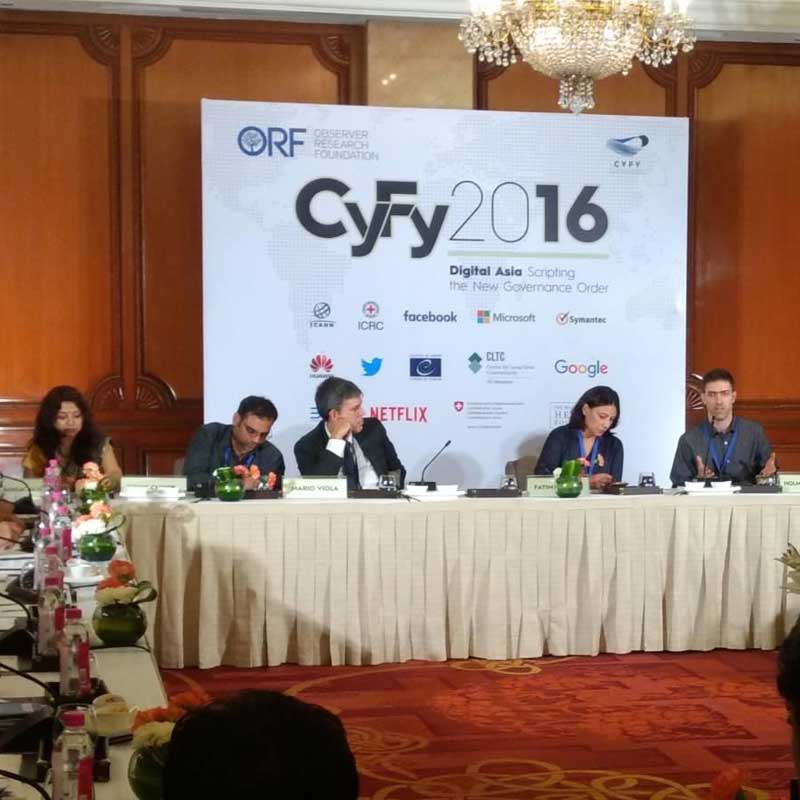
    Speaking as a panellist at a session on `The Future of Entertainment’ at ORF-organised `CyFy 2016: Digital Asia Scripting the New Governance Order’ here on Thursday, Kuek suggested Indian policy-makers should flesh out a policy after looking at all issues.

    Telecom Regulatory Authority of India (TRAI), the broadcast and telecoms regulator, is in the process of coming out with a set of guidelines for OTT services and net neutrality issue after lengthy debates with stakeholders. A section of the entertainment and telecoms industry in India has been lobbying hard to regulate mushrooming OTT services that have been claiming a growing subscriber base despite challenges of inadequate bandwidth and high cost of data.

    As to whether challenges of possible over-regulation (by TRAI), slow internet speed and high cost of data could pose a problem for the growth of OTT services like Netflix in India, Kuek emphasised that he’s much “heartened” by the ongoing “vibrant discussion” on net neutrality.

    He, along with another panellists, went on to clarify that regulations need to be “principled and technology-based” without “overreaching” as restrictive regulations were not good for the industry as a whole.

    Holding forth on Asian and global trends, the Singapore-based Kuek said that “entertainment and video consumption online is irreversible” and it becomes the “first point of contact for Internet adoption.” He added: “There has been an annual growth of 22 per cent in data consumption in Asia.”

    According to another panellist, Santa Clara University Associate Professor of Communication Rohit Chopra, the lines between entertainment and news have blurred (in the US) and the second wave of Internet has caused India to “jumpstart” to this trend.

  • Vibrant Indian policy-making will ensure non-discrimination: Netflix APAC MD

    Vibrant Indian policy-making will ensure non-discrimination: Netflix APAC MD

    NEW DELHI: Netflix is not only upbeat on the Indian market, but feels the vibrancy in policy-making process here will ensure non-discriminatory access to the Internet for all.

    Pointing out that India is a place where many innovations are being witnessed, Netflix APAC managing director Yu-Chuang Kuek said that regulatory organisations (like TRAI) should take a wholistic view on issues like net neutrality and nuance the policies in such a way so as “not to stifle innovations.”

    Speaking as a panellist at a session on `The Future of Entertainment’ at ORF-organised `CyFy 2016: Digital Asia Scripting the New Governance Order’ here on Thursday, Kuek suggested Indian policy-makers should flesh out a policy after looking at all issues.

    Telecom Regulatory Authority of India (TRAI), the broadcast and telecoms regulator, is in the process of coming out with a set of guidelines for OTT services and net neutrality issue after lengthy debates with stakeholders. A section of the entertainment and telecoms industry in India has been lobbying hard to regulate mushrooming OTT services that have been claiming a growing subscriber base despite challenges of inadequate bandwidth and high cost of data.

    As to whether challenges of possible over-regulation (by TRAI), slow internet speed and high cost of data could pose a problem for the growth of OTT services like Netflix in India, Kuek emphasised that he’s much “heartened” by the ongoing “vibrant discussion” on net neutrality.

    He, along with another panellists, went on to clarify that regulations need to be “principled and technology-based” without “overreaching” as restrictive regulations were not good for the industry as a whole.

    Holding forth on Asian and global trends, the Singapore-based Kuek said that “entertainment and video consumption online is irreversible” and it becomes the “first point of contact for Internet adoption.” He added: “There has been an annual growth of 22 per cent in data consumption in Asia.”

    According to another panellist, Santa Clara University Associate Professor of Communication Rohit Chopra, the lines between entertainment and news have blurred (in the US) and the second wave of Internet has caused India to “jumpstart” to this trend.

  • India lags in fixed broadband, but ahead in mobile: ESCAP

    India lags in fixed broadband, but ahead in mobile: ESCAP

    NEW DELHI: India had just over 100 million fixed broadband subscriptions in 2015 as compared to Iran and Japan which had more than 250 million.

    There were only 1.3 fixed broadband subscribers per 100 inhabitants in the country as against South Korea which had 40.2 per 100 inhabitants and China and Hong Kong which had 31.9. India stood at the 40th place, even below its immediate neighbours Bangladesh and Sri Lanka.

    However, a map of fixed broadband subscriptions per 100 inhabitants in Asia and the Pacific in 2015 shows India as the most developed country in this regard.

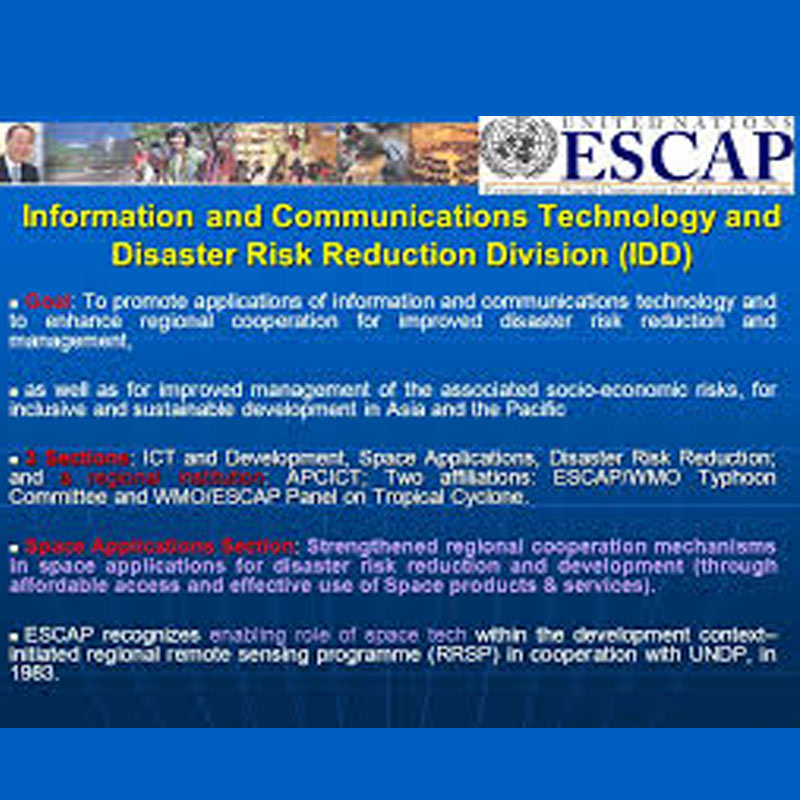
    These facts were revealed by the State of ICT in Asia and The Pacific 2016 Report by the Information and Communications Technology and Disaster Risk Reduction Division of the United Nations Economic and Social Commission for Asia and the Pacific (ESCAP).

    South and South-West Asia, Sri Lanka, Turkey, India and the Islamic Republic of Iran progressed well in both online services and telecommunications infrastructure development between 2008 and 2014. Other countries such as Bangladesh and Maldives performed well predominantly in the development of the telecommunications infrastructure.

    India has risen from just under 4 to around 5.5 out of seven in online services index among South Asian countries between 2008 and 2014.

    India was also among the top active mobile broadband subscriptions per 100 inhabitants in the Asia-Pacific region in 2015 with 120 million subscribers in 2015, the study showed.
    Disaster Risk Reduction Division.

    In 2015, China announced the One Belt One Road (OBOR) initiative, based on six economic corridors corresponding to the Silk Road. These economic corridors (China-Mongolia-Russia Corridor; New Eurasia Land Bridge; China-Central Asia-West Asia; China-Pakistan; Bangladesh-China-India-Myanmar; and China-Indochina Economic Corridor) aim to promote connectivity of these economies with China through infrastructure, trade and investment based on the original Silk Road’s pathway.

    The Global NGO Online Technology Report found that there are diverse regional differences in how NGOs worldwide utilize online technology. Within Asia Pacific, the report notes that the NGOs’ use of online technology varies greatly from subregion to subregion. For instance, India has hundreds of thousands of NGOs likely to come online in the next five years, while internet access throughout South-East Asia is growing as smartphone sales soar across the country. In Australia and Oceania, Europe and North America, NGOs’ use of web and e-mail communications, online fundraising tools, and social media is high, but NGOs in Asia, Africa and Latin America lag behind.

    Lack of a robust internet infrastructure is suggested to be a potential cause for this NGO divide. The report remarks that social, economic and political factors have either hastened or hindered the development of the infrastructure, and thereby also the uptake by the NGO sector.

    In a discussion on net neutrality, the paper says “Free Basics, formerly known as Internet.org, has sparked discussions in India and is one such case of net neutrality. This initiative pursues telecom companies in emerging markets, such as India — the world’s second largest market — to provide their customers free access to Facebook and entailing websites willing to play by its rule.”

    TechCrunch notes that these Facebook rules make it difficult to build competing social network or messaging applications. In February 2016, the Telecom Regulatory Authority of India (Trai) announced the prohibition of internet services such as Free Basics, claiming that they offer discriminatory tariffs for data services on the basis of content. While this may be a victory for neutrality supporters, others might be disappointed with the outcome as the goal of the Facebook initiative is to connect people who may otherwise not have internet access. The ruling will be in place for two years but may be open for review — it is still an open question whether the project will succeed in the long term.”

    The competition for spectrum has significant impact on the cost and affordability associated with broadband networks and access. As observed in the cases of the recent fourth generation (4G) spectrum auctions in India and Thailand, the quests for bandwidth and frequency would intensify along with the demand for mobile access and services, and subsequent need for more extensive broadband infrastructure.

    The report says Asia-Pacific countries are expanding their investments in the ICT infrastructure. For instance, in July 2015, the Chinese State Council announced the plan to develop underground telecommunication networks connecting 10 cities, which will be funded by the USD 160 billion bond programme designed for infrastructure projects.

    A mobile operator in India announced its plan to invest USD 9 billion for their mobile broadband network expansion in the next three years.

    Maldives will soon have USD 25 million nationwide fibre optic submarine networks of 1,200 kilometres to provide high-bandwidth services throughout the island nation. A mobile operator in Brunei announced plan for a nationwide Wi-Fi network rollout through more than 60 hotspots.

    The report found that connectivity still constrains not only ICT development but also various socioeconomic development opportunities. For instance, an UNCTAD report found that despite the unparalleled promise of the digital economy, the main barrier to B2C transactions in Asia and the Pacific appear to be the low internet penetration, the relatively poor postal reliability, and the low number of secure servers, which are essential for online shopping sites.

    China has demonstrated an exponential increase in fixed and mobile broadband, while slowest growths have been detected among LDCs, LLDCs and SIDs. The persistent challenge is that one-third of ESCAP member-countries have made only negligible progress over the last 15 years. In these countries, broadband access is still largely unavailable and unaffordable, while the gap as compared to the fast-growing economies is widening. Some sub-regions, such as Central Asia, seem to have made more holistic progress. The report also conducted descriptive statistical analysis using standard deviation on fixed broadband subscriptions per 100 inhabitants so as to statistically understand the digital divide.

    The results showed that Europe is the only region that has demonstrated a reduction in the broadband digital divide, while in Asia and the Pacific, it
    is in fact widening.

    Despite the increasing spotlight on newer technologies such as the IoT that aims to connect millions of devices and machines worldwide, the region still suffers from the lack of ICT connectivity, and mobile devices are mainly used for communication and entertainment.

    The report found that some countries have focused on broadband access expansion over online content and service development, but, in the long run, both infrastructure and content should be developed in tandem. The telecommunications investment seems to co-relate with fixed broadband subscriptions more strongly than with mobile broadband, indicating the investment-intensive nature of the fixed broadband infrastructure, which is a prerequisite for e-commerce.

    The report also found that weak regulatory framework might be associated with slow broadband growth.

    Regional broadband initiatives, such as the Asia-Pacific Information Superhighway, have become an essential and strategic development intervention that will shape the future of the region, the report concludes.
  • India lags in fixed broadband, but ahead in mobile: ESCAP

    India lags in fixed broadband, but ahead in mobile: ESCAP

    NEW DELHI: India had just over 100 million fixed broadband subscriptions in 2015 as compared to Iran and Japan which had more than 250 million.

    There were only 1.3 fixed broadband subscribers per 100 inhabitants in the country as against South Korea which had 40.2 per 100 inhabitants and China and Hong Kong which had 31.9. India stood at the 40th place, even below its immediate neighbours Bangladesh and Sri Lanka.

    However, a map of fixed broadband subscriptions per 100 inhabitants in Asia and the Pacific in 2015 shows India as the most developed country in this regard.

    These facts were revealed by the State of ICT in Asia and The Pacific 2016 Report by the Information and Communications Technology and Disaster Risk Reduction Division of the United Nations Economic and Social Commission for Asia and the Pacific (ESCAP).

    South and South-West Asia, Sri Lanka, Turkey, India and the Islamic Republic of Iran progressed well in both online services and telecommunications infrastructure development between 2008 and 2014. Other countries such as Bangladesh and Maldives performed well predominantly in the development of the telecommunications infrastructure.

    India has risen from just under 4 to around 5.5 out of seven in online services index among South Asian countries between 2008 and 2014.

    India was also among the top active mobile broadband subscriptions per 100 inhabitants in the Asia-Pacific region in 2015 with 120 million subscribers in 2015, the study showed.
    Disaster Risk Reduction Division.

    In 2015, China announced the One Belt One Road (OBOR) initiative, based on six economic corridors corresponding to the Silk Road. These economic corridors (China-Mongolia-Russia Corridor; New Eurasia Land Bridge; China-Central Asia-West Asia; China-Pakistan; Bangladesh-China-India-Myanmar; and China-Indochina Economic Corridor) aim to promote connectivity of these economies with China through infrastructure, trade and investment based on the original Silk Road’s pathway.

    The Global NGO Online Technology Report found that there are diverse regional differences in how NGOs worldwide utilize online technology. Within Asia Pacific, the report notes that the NGOs’ use of online technology varies greatly from subregion to subregion. For instance, India has hundreds of thousands of NGOs likely to come online in the next five years, while internet access throughout South-East Asia is growing as smartphone sales soar across the country. In Australia and Oceania, Europe and North America, NGOs’ use of web and e-mail communications, online fundraising tools, and social media is high, but NGOs in Asia, Africa and Latin America lag behind.

    Lack of a robust internet infrastructure is suggested to be a potential cause for this NGO divide. The report remarks that social, economic and political factors have either hastened or hindered the development of the infrastructure, and thereby also the uptake by the NGO sector.

    In a discussion on net neutrality, the paper says “Free Basics, formerly known as Internet.org, has sparked discussions in India and is one such case of net neutrality. This initiative pursues telecom companies in emerging markets, such as India — the world’s second largest market — to provide their customers free access to Facebook and entailing websites willing to play by its rule.”

    TechCrunch notes that these Facebook rules make it difficult to build competing social network or messaging applications. In February 2016, the Telecom Regulatory Authority of India (Trai) announced the prohibition of internet services such as Free Basics, claiming that they offer discriminatory tariffs for data services on the basis of content. While this may be a victory for neutrality supporters, others might be disappointed with the outcome as the goal of the Facebook initiative is to connect people who may otherwise not have internet access. The ruling will be in place for two years but may be open for review — it is still an open question whether the project will succeed in the long term.”

    The competition for spectrum has significant impact on the cost and affordability associated with broadband networks and access. As observed in the cases of the recent fourth generation (4G) spectrum auctions in India and Thailand, the quests for bandwidth and frequency would intensify along with the demand for mobile access and services, and subsequent need for more extensive broadband infrastructure.

    The report says Asia-Pacific countries are expanding their investments in the ICT infrastructure. For instance, in July 2015, the Chinese State Council announced the plan to develop underground telecommunication networks connecting 10 cities, which will be funded by the USD 160 billion bond programme designed for infrastructure projects.

    A mobile operator in India announced its plan to invest USD 9 billion for their mobile broadband network expansion in the next three years.

    Maldives will soon have USD 25 million nationwide fibre optic submarine networks of 1,200 kilometres to provide high-bandwidth services throughout the island nation. A mobile operator in Brunei announced plan for a nationwide Wi-Fi network rollout through more than 60 hotspots.

    The report found that connectivity still constrains not only ICT development but also various socioeconomic development opportunities. For instance, an UNCTAD report found that despite the unparalleled promise of the digital economy, the main barrier to B2C transactions in Asia and the Pacific appear to be the low internet penetration, the relatively poor postal reliability, and the low number of secure servers, which are essential for online shopping sites.

    China has demonstrated an exponential increase in fixed and mobile broadband, while slowest growths have been detected among LDCs, LLDCs and SIDs. The persistent challenge is that one-third of ESCAP member-countries have made only negligible progress over the last 15 years. In these countries, broadband access is still largely unavailable and unaffordable, while the gap as compared to the fast-growing economies is widening. Some sub-regions, such as Central Asia, seem to have made more holistic progress. The report also conducted descriptive statistical analysis using standard deviation on fixed broadband subscriptions per 100 inhabitants so as to statistically understand the digital divide.

    The results showed that Europe is the only region that has demonstrated a reduction in the broadband digital divide, while in Asia and the Pacific, it
    is in fact widening.

    Despite the increasing spotlight on newer technologies such as the IoT that aims to connect millions of devices and machines worldwide, the region still suffers from the lack of ICT connectivity, and mobile devices are mainly used for communication and entertainment.

    The report found that some countries have focused on broadband access expansion over online content and service development, but, in the long run, both infrastructure and content should be developed in tandem. The telecommunications investment seems to co-relate with fixed broadband subscriptions more strongly than with mobile broadband, indicating the investment-intensive nature of the fixed broadband infrastructure, which is a prerequisite for e-commerce.

    The report also found that weak regulatory framework might be associated with slow broadband growth.

    Regional broadband initiatives, such as the Asia-Pacific Information Superhighway, have become an essential and strategic development intervention that will shape the future of the region, the report concludes.
  • BIF bats for OTT regulations & level-playing field for all in Net Neutrality debate

    BIF bats for OTT regulations & level-playing field for all in Net Neutrality debate

    NEW DELHI: Broadband India Forum (BIF) has put its weight behind proposals to regulate OTT services, saying they too should be guided by same principles as ISPs and telecom service providers (TSP).

    “There  should be level playing field between the ISP/TSPs  and the OTT players. OTT players need to be brought under the same regulatory regime as the ISP/TSPs,” BIF has said in a submission on a pre-consultation paper on Net Neutrality to telecoms and broadcast regulator TRAI. 

    TRAI has been seeking comments since March 2015 from stakeholders on the issue of Net Neutrality and related matters like OTT, zero-rating plans and possible regulations.

    Since last year, several such papers have been issued by the regulator in an effort to finalise recommendations that could possibly go on to become industry regulations. BIF briefly alluded to this “piecemeal approach and not addressing the larger subject in one go” as this was fuelling ambiguities.

    Batting for plans like zero-rating offered by some Indian telcos earlier and Facebook’s FreeBasic — since then outlawed by TRAI — the Forum says, “At our stage of development, our highest need is internet adoption and increased data usage and whatever facilitates that, needs to be heartily supported”.

    Free Data should be permitted and it should be left to the service providers (ISP/TSPs) to decide whether they want to enter into such arrangement with the content providers or not basis their business case and requirement of technical development, BIF says.

    In India, OTT services are flowering every day, keeping in step with Asian trends.

    Some OTT services, available in India, include Star’s Hotstar, Zee’s dittotv, Viacom18’s Voot, Sony’s SonyLiv, Arre, Times group’s Box TV, Asian companies-owned Hooq and Viu and global giants like Netflix, apart from the likes of WhatsApp, Skype, YouTube and Hike. 

    No ex-ante regulation is required since there is enough competition and the market is vibrant enough, says the Forum, adding in case of violations, on ex-post basis, TRAI can examine tariff plans on a case by case basis after giving a reasonable opportunity to the operators of being heard.

    Dwelling on the economics of  broadband infrastructure, BIF highlights  efficient services would require investments up to Rs 500,000 crore over the next 3-5 years. Moreover, as per Government commitments, the Digital India initiative itself will require investments to the tune of  Rs. 113,000 crore.

    “It was the flexibility of service pricing that was permitted to the TSPs that led to mass adoption of voice services. A similar approach is warranted for ensuring adoption of data services. However, entrepreneurs are reluctant to start a new Internet based businesses when online customers are limited due to low adoption of data services,” BIF has said, adding that consumers are unwilling to invest in “expensive data plans” in the absence of adequate local content.

    Interestingly, BIF’s stand that telecoms is a capital–intensive sector where government mandates may hamper private investments, in some way, is also echoed by Hong Kong-based Asian organisation CASBAA.

    “We do not believe TRAI or the government should adopt policies that result in reducing or rationing of funds for (telecom) network investment. Advocates of `networks for all, open to all’ sometimes tend to forget that capable networks are costly, and they will not build themselves,” CASBAA had said in its submission to TRAI on Net Neutrality last year.

    Cautioning against replicating some existing regulation that may impede innovation, CASBAA had said TRAI and the government must avoid seeing the online content industry as another facet of the mature television content supply industry, ripe for extension of the same regulatory approaches governing the “traditional” TV industry. 

    “This would be a colossal mistake, especially at this new stage of development of online content supply in India. Overregulation will constrain development of newer business models which could be of great benefit to consumers and to India’s overall economic development,” the Asian industry organisation had said, hinting that a holistic view needs to be taken by regulators.

    Similarly, BIF in its recent submission has said the question of modernization of communications regulation…should be reviewed holistically and periodically to ensure same services are treated in a technologically neutral way, while protecting consumer rights and achieving the objectives of Digital India.

    The Forum has taken the initiative to define Net Neutrality in the Indian context and some key characteristics of Net Neutrality, amongst others, as:

    – No Blocking
    – No Throttling
    – Open Internet
    – No improper  prioritization (paid or otherwise)
    – Open, easy and non-discriminatory access
    – Recognition of at least four categories  of traffic and different traffic management techniques for different categories but having the same within each category
    – Equitable regulatory treatment of similar or near-similar services
    – Permission of zero rating systems.  

    (1 USD = 67.4874 INR)

  • BIF bats for OTT regulations & level-playing field for all in Net Neutrality debate

    BIF bats for OTT regulations & level-playing field for all in Net Neutrality debate

    NEW DELHI: Broadband India Forum (BIF) has put its weight behind proposals to regulate OTT services, saying they too should be guided by same principles as ISPs and telecom service providers (TSP).

    “There  should be level playing field between the ISP/TSPs  and the OTT players. OTT players need to be brought under the same regulatory regime as the ISP/TSPs,” BIF has said in a submission on a pre-consultation paper on Net Neutrality to telecoms and broadcast regulator TRAI. 

    TRAI has been seeking comments since March 2015 from stakeholders on the issue of Net Neutrality and related matters like OTT, zero-rating plans and possible regulations.

    Since last year, several such papers have been issued by the regulator in an effort to finalise recommendations that could possibly go on to become industry regulations. BIF briefly alluded to this “piecemeal approach and not addressing the larger subject in one go” as this was fuelling ambiguities.

    Batting for plans like zero-rating offered by some Indian telcos earlier and Facebook’s FreeBasic — since then outlawed by TRAI — the Forum says, “At our stage of development, our highest need is internet adoption and increased data usage and whatever facilitates that, needs to be heartily supported”.

    Free Data should be permitted and it should be left to the service providers (ISP/TSPs) to decide whether they want to enter into such arrangement with the content providers or not basis their business case and requirement of technical development, BIF says.

    In India, OTT services are flowering every day, keeping in step with Asian trends.

    Some OTT services, available in India, include Star’s Hotstar, Zee’s dittotv, Viacom18’s Voot, Sony’s SonyLiv, Arre, Times group’s Box TV, Asian companies-owned Hooq and Viu and global giants like Netflix, apart from the likes of WhatsApp, Skype, YouTube and Hike. 

    No ex-ante regulation is required since there is enough competition and the market is vibrant enough, says the Forum, adding in case of violations, on ex-post basis, TRAI can examine tariff plans on a case by case basis after giving a reasonable opportunity to the operators of being heard.

    Dwelling on the economics of  broadband infrastructure, BIF highlights  efficient services would require investments up to Rs 500,000 crore over the next 3-5 years. Moreover, as per Government commitments, the Digital India initiative itself will require investments to the tune of  Rs. 113,000 crore.

    “It was the flexibility of service pricing that was permitted to the TSPs that led to mass adoption of voice services. A similar approach is warranted for ensuring adoption of data services. However, entrepreneurs are reluctant to start a new Internet based businesses when online customers are limited due to low adoption of data services,” BIF has said, adding that consumers are unwilling to invest in “expensive data plans” in the absence of adequate local content.

    Interestingly, BIF’s stand that telecoms is a capital–intensive sector where government mandates may hamper private investments, in some way, is also echoed by Hong Kong-based Asian organisation CASBAA.

    “We do not believe TRAI or the government should adopt policies that result in reducing or rationing of funds for (telecom) network investment. Advocates of `networks for all, open to all’ sometimes tend to forget that capable networks are costly, and they will not build themselves,” CASBAA had said in its submission to TRAI on Net Neutrality last year.

    Cautioning against replicating some existing regulation that may impede innovation, CASBAA had said TRAI and the government must avoid seeing the online content industry as another facet of the mature television content supply industry, ripe for extension of the same regulatory approaches governing the “traditional” TV industry. 

    “This would be a colossal mistake, especially at this new stage of development of online content supply in India. Overregulation will constrain development of newer business models which could be of great benefit to consumers and to India’s overall economic development,” the Asian industry organisation had said, hinting that a holistic view needs to be taken by regulators.

    Similarly, BIF in its recent submission has said the question of modernization of communications regulation…should be reviewed holistically and periodically to ensure same services are treated in a technologically neutral way, while protecting consumer rights and achieving the objectives of Digital India.

    The Forum has taken the initiative to define Net Neutrality in the Indian context and some key characteristics of Net Neutrality, amongst others, as:

    – No Blocking
    – No Throttling
    – Open Internet
    – No improper  prioritization (paid or otherwise)
    – Open, easy and non-discriminatory access
    – Recognition of at least four categories  of traffic and different traffic management techniques for different categories but having the same within each category
    – Equitable regulatory treatment of similar or near-similar services
    – Permission of zero rating systems.  

    (1 USD = 67.4874 INR)

  • Separate Broadcasting Policy, use last mile operator for broadband spread: TDSAT seminar

    Separate Broadcasting Policy, use last mile operator for broadband spread: TDSAT seminar

    NEW DELHI: There should be a separate Broadcasting Policy analogous to the National Telecom Policy, and the existing laws and regulations should be enforced more stringently before drafting new ones.

    This was one of the recommendations on regulatory issues in broadcasting and distribution sector at a seminar by the Telecom Disputes Settlement and Appellate Tribunal (TDSAT) held early this year.

    The last mile cable network should be leveraged to provide broadband services, according to the recommendations placed on the website of TDSAT yesterday.

    A general consensus also said the government needs to ensure that the amendments in existing regulations do not lead to confusion and ambiguity with regard to the original objectives of the legislations.

    A more effective consultation process should be designed so that the stakeholders do not need to resort to the adjudicatory system, and there should be a more pro-active approach on the implementation of recommendations of the policy makers, the recommendations relating to broadcasting said.

    The seminar on the ART (Adjudication, Regulation, Telecommunication) of Convergence on 6 and 7 February 2016 was attended by government, policy makers, adjudicatory body, and service providers to deliberate suggestions to prepare for challenges that arise with a converging digital environment.

    The seminar was inaugurated by Information and Broadcasting Minister Arun Jaitley, Supreme Court’s Justice J. Chelameswar presided over the function, and Attorney General Mukul Rohatgi was the guest of honour.

    Jaitley stressed the need for an adjudicatory mechanism for telecommunications and broadcasting which is agile and responsive to deal with emerging challenges.

    The seminar was held with the support of Department of Telecommunications (DoT), Department of Telecommunications and Information Technology (DeitY), Telecom Regulatory Authority of India (TRAI), Justices from the Supreme Court and High Court, and representatives of the industry. Ernst and Young was the knowledge partner for the seminar.

    Regulatory and Licensing Regime in a converged environment

    The conclusion was the need to frame a simplified, resilient and comprehensive convergence law and regulation encompassing all activities and sections of the industry, which are currently governed by myriad laws and regulations.

    Separate mechanisms are needed for content and carriage regulation, with independent bodies for each of them. There needs to be converged licensing regime for telecommunications and broadcasting.

    It was also stated that there needs to be a clear and well-defined separation of regulatory and adjudicatory powers, with the adjudicatory powers vested in an independent authority. Strategic spectrum should be under the control of the government, while the commercial spectrum should be under the control of the regulator.

    The governance mechanism should be digitized and the processes should be made simpler to use. The existing laws should be amended keeping in mind their compatibility with other regulations and processes. Legislations should be made technology agnostic to provide a level playing field for all the stakeholders.

    Adjudicatory mechanism — issues and way forward

    It was stated that the law needs to be amended to bring more clarity regarding jurisdictional powers of TDSAT mandated in the TRAI Act apropos writ jurisdiction of the High Courts.

    A separate mediation centre is required for resolving minor cases, both pre-trial as well as post-trial, which do not require the specialized expertise of the judges of the Supreme Court.

    The original character of the TDSAT needs to be restored; in addition whether certain types of disputes should be entrusted to TRAI for resolution in order to improve the efficacy of the overall adjudicatory mechanism.

    There should be a fully integrated electronic tribunal and innovative technologies should be used to deal with cases rapidly and efficiently, the recommendations said.

    Training should be provided to all the stakeholders in the sector to eliminate the digital divide. Regulations need to be updated in accordance with the changing technology.

    Content distribution in next generation networks

    There should be clear, defined and uniform regulations for broadband, net neutrality, advertising, patents, and competition and pricing matters.

    There was unanimity that net neutrality should be ensured to safeguard the interest of all stakeholders in the internet ecosystem.

    A suitable patents and copyright system should be developed for India keeping in mind the specific concerns of the domestic industry.

    It was felt that the industry should not be over-regulated as this would dis-incentivize stakeholders and hamper the interests of both the content creators and the consumers.

    The behaviour of the stakeholders in the industry should be regulated instead of the economics of the industry, since regulation of the latter destroys business models while the former adds to both the consumers’ and the industry’s welfare.

    “I-way of the Future”

    It was felt that the challenge of slow implementation should be overcome through enhanced co-ordination among the stakeholders and the policy makers.

    A broadband highway needs to be built that ensures accessibility of high speed internet for everyone.

    Cyber security and privacy issues that arise due to the cross sector convergence and have standardized legislations for dealing with it needs to be addressed.

    A pro-active approach needs to be followed in policy making to speed up the creation and adoption of the next generation highway infrastructure.

    There should be a conducive business environment through policies that incentivize entrepreneurs and private participation. The expertise of the private sector should be leveraged. Start-ups needs to be encouraged to develop their capabilities and help build a compact, connected and coordinated network of smart cities.

  • Separate Broadcasting Policy, use last mile operator for broadband spread: TDSAT seminar

    Separate Broadcasting Policy, use last mile operator for broadband spread: TDSAT seminar

    NEW DELHI: There should be a separate Broadcasting Policy analogous to the National Telecom Policy, and the existing laws and regulations should be enforced more stringently before drafting new ones.

    This was one of the recommendations on regulatory issues in broadcasting and distribution sector at a seminar by the Telecom Disputes Settlement and Appellate Tribunal (TDSAT) held early this year.

    The last mile cable network should be leveraged to provide broadband services, according to the recommendations placed on the website of TDSAT yesterday.

    A general consensus also said the government needs to ensure that the amendments in existing regulations do not lead to confusion and ambiguity with regard to the original objectives of the legislations.

    A more effective consultation process should be designed so that the stakeholders do not need to resort to the adjudicatory system, and there should be a more pro-active approach on the implementation of recommendations of the policy makers, the recommendations relating to broadcasting said.

    The seminar on the ART (Adjudication, Regulation, Telecommunication) of Convergence on 6 and 7 February 2016 was attended by government, policy makers, adjudicatory body, and service providers to deliberate suggestions to prepare for challenges that arise with a converging digital environment.

    The seminar was inaugurated by Information and Broadcasting Minister Arun Jaitley, Supreme Court’s Justice J. Chelameswar presided over the function, and Attorney General Mukul Rohatgi was the guest of honour.

    Jaitley stressed the need for an adjudicatory mechanism for telecommunications and broadcasting which is agile and responsive to deal with emerging challenges.

    The seminar was held with the support of Department of Telecommunications (DoT), Department of Telecommunications and Information Technology (DeitY), Telecom Regulatory Authority of India (TRAI), Justices from the Supreme Court and High Court, and representatives of the industry. Ernst and Young was the knowledge partner for the seminar.

    Regulatory and Licensing Regime in a converged environment

    The conclusion was the need to frame a simplified, resilient and comprehensive convergence law and regulation encompassing all activities and sections of the industry, which are currently governed by myriad laws and regulations.

    Separate mechanisms are needed for content and carriage regulation, with independent bodies for each of them. There needs to be converged licensing regime for telecommunications and broadcasting.

    It was also stated that there needs to be a clear and well-defined separation of regulatory and adjudicatory powers, with the adjudicatory powers vested in an independent authority. Strategic spectrum should be under the control of the government, while the commercial spectrum should be under the control of the regulator.

    The governance mechanism should be digitized and the processes should be made simpler to use. The existing laws should be amended keeping in mind their compatibility with other regulations and processes. Legislations should be made technology agnostic to provide a level playing field for all the stakeholders.

    Adjudicatory mechanism — issues and way forward

    It was stated that the law needs to be amended to bring more clarity regarding jurisdictional powers of TDSAT mandated in the TRAI Act apropos writ jurisdiction of the High Courts.

    A separate mediation centre is required for resolving minor cases, both pre-trial as well as post-trial, which do not require the specialized expertise of the judges of the Supreme Court.

    The original character of the TDSAT needs to be restored; in addition whether certain types of disputes should be entrusted to TRAI for resolution in order to improve the efficacy of the overall adjudicatory mechanism.

    There should be a fully integrated electronic tribunal and innovative technologies should be used to deal with cases rapidly and efficiently, the recommendations said.

    Training should be provided to all the stakeholders in the sector to eliminate the digital divide. Regulations need to be updated in accordance with the changing technology.

    Content distribution in next generation networks

    There should be clear, defined and uniform regulations for broadband, net neutrality, advertising, patents, and competition and pricing matters.

    There was unanimity that net neutrality should be ensured to safeguard the interest of all stakeholders in the internet ecosystem.

    A suitable patents and copyright system should be developed for India keeping in mind the specific concerns of the domestic industry.

    It was felt that the industry should not be over-regulated as this would dis-incentivize stakeholders and hamper the interests of both the content creators and the consumers.

    The behaviour of the stakeholders in the industry should be regulated instead of the economics of the industry, since regulation of the latter destroys business models while the former adds to both the consumers’ and the industry’s welfare.

    “I-way of the Future”

    It was felt that the challenge of slow implementation should be overcome through enhanced co-ordination among the stakeholders and the policy makers.

    A broadband highway needs to be built that ensures accessibility of high speed internet for everyone.

    Cyber security and privacy issues that arise due to the cross sector convergence and have standardized legislations for dealing with it needs to be addressed.

    A pro-active approach needs to be followed in policy making to speed up the creation and adoption of the next generation highway infrastructure.

    There should be a conducive business environment through policies that incentivize entrepreneurs and private participation. The expertise of the private sector should be leveraged. Start-ups needs to be encouraged to develop their capabilities and help build a compact, connected and coordinated network of smart cities.

  • TRAI gives more time for responses on infrastructure sharing for TV distribution

    TRAI gives more time for responses on infrastructure sharing for TV distribution

    NEW DELHI: Even as the Telecom Regulatory Authority of India extended to 4 July the deadline for its pre-consultation paper on infrastructure sharing in broadcasting TV distribution sector, it is yet to receive a single response on its paper on ‘Net Neutrality to ensure National Security and Customer Privacy’ despite an extension of date to 5 July.

    However, a reproduction of a summary of the pre-consultation paper on Net Neutrality on mygov.in has elicited around 80,000 responses from consumers.

    The paper on infrastructure sharing assumes greater importance with the regulator having issued a paper on opening up the Digital Terrestrial Transmission – a domain so far of Doordarshan – to private television channels.

    While the pre-consultation on Infrastructure sharing was issued on 23 May and the deadline for responses was 23 June, the paper on Net Neutrality was issued on 30 May seeking conments by 21 June.

    In its paper on Infrastructure sharing, the regulator wanted to know from stakeholders what could be the operational, commercial, technical and regulatory issues which require to be addressed at the time of developing policy and regulatory framework for enabling infrastructure sharing in the broadcasting TV distribution space.

    TRAI also asked whether stakeholders envisage any requirement for change in the existing licensing/registration framework laid for DTH, DAS and HITS broadcasting services.

    The regulator wants to know what more can be shared by the distributor platform operators (MSOs, HITS, DTH) for better utilization of infrastructure.

    TRAI said the pre-consultation paper had been issued with an aim to solicit stakeholder’s views on issues related to sharing of infrastructure on voluntary basis and separation of network and service provider functions so as to reduce cost of distribution of services and enhance competition in respect of all type of TV distribution platforms.

    With mounting pressure from different quarters for and against net neutrality, TRAI in its paper on Net Neutrality wants to know what India’s policy should be and/or regulatory approach in dealing with issues relating to net neutrality

    India is one of the fastest growing information and communication technologies markets in the world, fuelled largely by the cellular mobile revolution. Starting from a few million connections in 1997, there are more than a billion connections, with 97.5% of them being wireless subscribers. With this, the overall teledensity in India at the end of 2015 stood at 81.83%.

    India has also witnessed tremendous growth in terms of the total number of Internet users. At the end of December 2015, there were over 331 million Internet subscribers in the country, of which about 94% (over 311 million) were wireless Internet users.

    The current nature of telecommunications and internet access services in India is therefore largely wireless. The number of broadband users has also been increasing steadily over the years. At present, India has approximately 136.5 million broadband subscribers, a figure that is expected to rise significantly in the coming years, particularly in light of the Government’s ‘Digital India’ initiative.

    This initiative emphasizes the electronic delivery of services to all citizens as an urgent national priority, with ‘Broadband for All’ as one of its fundamental pillars. Providing broadband to all will require a significant expansion of service providers’ networks, with substantial investments in infrastructure development.