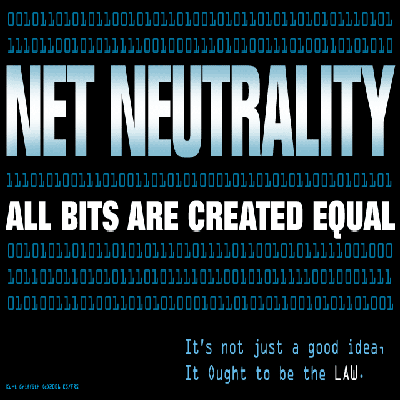
Tag: Net Neutrality

  • TRAI to hold discussions on net neutrality, spectrum in Mumbai

    NEW DELHI: Given the complicated issues around net neutrality, an open house discussion is to be held in Mumbai on 26 May, 2017on Telecom Regulatory Authority of India’s consultation paper on the issue NN and free data schemes. Earlier, a similar OHD was held in Hyderabad on 24 October 2016.

    TRAI had issued the paper in May last year. Another OHD will be held at the same venue on the same day on a consultation paper on spectrum, roaming and QoS related requirements in machine-to-machine communications.

    Stretching the discussion on net neutrality, TRAI had wanted to know whether there is a need to have telecom service provider (TSP)-agnostic platform to provide free data or suitable reimbursement to users without violating the principles of differential pricing for data laid down in TRAI regulations.

    It also wants to know if free data or suitable reimbursement to users should be limited to mobile data users only or could it be extended through technical means to subscribers of fixed line broadband or leased lines.

    The paper says that in the recent past, some data services plans of the TSPs came to the notice of TRAI, which amounted to discriminatory tariff through offering zero or discounted tariffs to certain contents of certain websites/applications/platforms. The objective of offering such plans was claimed to be the desire of various service providers/content providers or platform providers to enable people of this country, especially the poor, to access certain content on the internet free of charge.

    While TRAI is still to take a stand on the issue of net neutrality as a whole, American communications regulator FCC, under a new chairman, is dismantling some of the NN regulations put in force by his predecessor under the Obama regime that has ruffled the feathers of a section of the telecoms and broadcast industry in the US.

    Details of the TRAI open house in Mumbai and the related documents could be located at www.trai.gov.in.

  • Net neutrality: TRAI open to ideas till 12 April

    NEW DELHI: A second extension has been given to stakeholders to give their views on the crucial issue of net neutrality, on which a consultation paper had been issued by theTelecom Regulatory Authority of India (TRAI) on 4 January, 2017,

    Those wanting to give their views on this subject may do so by 12 April with counter comments if any by 26 April 2017.

    Earlier, the date of 15 February 2017 had been extended to 15 March 2017. The regulator made it clear that no further extension would be given.

    The aim is to establish a comprehensive framework that allows non-discriminatory access to the internet since net neutrality has been a subject of debate between content providers and telecom operators.

    TRAI  posed 14 questions that attempt to define the concept of net neutrality in the Indian context in a 65-page document. This follows a pre-consultation paper on the subject last May. The aim is to ensure that access is not, blocked, throttled or preferentially treated by service providers.

    “The purpose of this second stage of consultation is to proceed towards the formulation of final views on policy or regulatory interventions, where required, on the subject of NN (net neutrality),” Trai said in the paper.

    The paper said telecom service providers (TSPs) have to adopt traffic management practices to ensure network efficiency but that these should not be misused.

    Also Read:

    TRAI issues fresh paper seeking views on Net Neutrality definition

    Net Neutrality ideas date open till 28 Feb

  • Net Neutrality ideas date open till 28 Feb

    MUMBAI: The Telecom Regulatory Authority of India (TRAI) issued a Consultation Paper on Net Neutrality on 4 January, 2017 inviting written comments from the stakeholders by 15 February, 2017 and counter comments by 28 February, 2017.

    On request from the stakeholders, the last date for receipt of written comments, if any, from the stakeholders has been extended up to 15th March, 2017 and counter comments by 22nd March, 2017.

    Written comments on the Consultation Paper may be sent, preferably in electronic form, to Advisor (QoS). All comments will be posted on the TRAI’s website.

    Also Read:

    http://www.indiantelevision.com/iworld/telecom/trai-issues-fresh-paper-seeking-views-on-net-neutrality-definition-170105

    http://www.indiantelevision.com/regulators/trai/free-data-net-neutrality-discussion-on-trai-paper-to-be-held-161020

    http://www.indiantelevision.com/regulators/trai/trai-chief-pending-das-tariff-interconnect-qos-norms-by-year-end-161212

  • Regulations 2016: Of DeMon challenges, changing goalposts & rampant litigation

    Regulations 2016: Of DeMon challenges, changing goalposts & rampant litigation

    The regulatory regime in 2016 not only continued to struggle keeping pace with fast-marching technology (4G is passé, 5G is being talked in some countries), but lack of consensus amongst stakeholders on major issues meant that litigation was rampant, thus leading to changing milestones. It was also about the government trying to enforce censorship via the backdoor and, hence, despite the best of intentions, only average dividends accrued to the media and entertainment sector in India, which is still described as a market with huge potential, but also a challenging place to do business.

    The biggest policy (that ultimately turned into a regulatory challenge) initiative of 2016 — some would say the biggest hiccup — was PM Modi’s demonetisation bomb aimed at unleashing a surgical strike on black money and parallel economy in the country that, according to an earlier government narrative, made the poor poorer and gave a fillip to corruption. Debatable long term gains of such a move, notwithstanding, the media industry immediately felt the heat of cash crunch.

    As collections from the ground dropped for LCOs, it affected the MSOs too, though many big MSOs insisted that making high-value currency notes illegal from November 9, 2016 could act as a catalyst for LCOs to make their business more transparent.

    From an earlier estimate of Rs. 600 crore or Rs. 6 billion loss to the media and advertising segments owing to demonetisation, loss estimates ballooned to almost Rs 300 billion towards the end of the year when most corporate adspends were slashed owing to low on-ground collections. FMCG companies led this trend and are likely to do so the in the last quarter of the 2016-17 financial year too. The cascading effects on all segments made them yelp with pain.

    Demonetisation also made the telecoms and broadcast carriage regulator the Telecom Regulatory Authority of India (TRAI) scurry to issue guidelines to facilitate the government push towards a cashless economy. For example, reduction of the ceiling tariff for the use of unstructured supplementary service data (USSD)-based mobile banking services from Rs 1.50 to Rs.0.50 and amendment to the mobile banking (quality of service) regulations to increase the number of stages from 5 to 8 per USSD session.

    Though the government’s reluctance to interact with the media directly continued throughout the year as government representatives, led by PM Modi, relied more on social media to communicate with the country at large, like many regimes in the past this government too attempted to curb media freedom. The Ministry of Information and Broadcasting (MIB) directive to NDTV India, on suggestions from an inter-ministerial committee, to shutter for a day as a penalty for breaching content code on issues related to national security was one such example.

    The government initially tried to justify the move saying national security was compromised by NDTV India, a Hindi news channel, but ultimately MIB buckled under pressure from a large section of the media frat and populace in general to go in for a face saver and the directive was kept in abeyance. However, the message couldn’t have been louder and clearer to not only the media, but also the critics: don’t underestimate the government’s resolve to crack the whip even though the Constitution grants Indians certain freedom of expression and free media be damned.

    However, it would be unfair to criticise the government for doing nothing except increasingly crack the whip. As part of overall reforms, the government did liberalise FDI norms for several sectors, including the media, in June. Foreign direct investment limits in broadcast carriage services like DTH, cable distribution, teleports, HITS, mobile TV, etc were allowed up till 100 per cent with certain caveats. Norms for FM radio broadcasts too were liberalised.

    Still, foreign or global media players didn’t start pouring money immediately in ops in India. Government data on FDI till September 2016 makes it clear that the media and entertainment sector was not amongst the top 10 sectors where foreign investment flowed in and its share was comparatively small despite liberalised norms and New Delhi’s attempts to further work on ease of doing business in India.

    The MIB did manage to shave off to an extent the time period taken to obtain a licence for uplink or downlink for TV channels and teleports, but failed on many counts to be proactive on developing issues (like controversial appointments in several MIB-controlled media institutions and attempted content regulation by non-authorised organisations), for example. Its reactionary approach complicated matters further.

    Widely criticised for over regulating the telecoms and broadcast & cable sectors, the TRAI stuck to its avowed and stated aim of attempting to create a regulatory regime that would reduce ambiguities and create a level playing field for all stakeholders.

    From trying to deal with issues in a piecemeal fashion (Net Neutrality being one) to smoothening the road ahead for the players via various guidelines and recommendations, TRAI, under chairman RS Sharma, has not shied away from confronting any bull (like Facebook) — some players, however, say it acted like a bull in a China shop.

    Whether it was the issue of Net Neutrality or zero tariffs offered by telcos for certain services or tariffs, interconnect and quality of services in the broadcast carriage sector or pushing MSOs on digital rollout or suggesting free limited data to rural India to give a fillip to the digital economy or cracking the whip on mobile phone call drops, or interoperable boxes for DTH and cable TV services, the TRAI has been trying to walk the tight rope between regulations and industry and political lobbying.

    But it must be agreed that TRAI has done less of flip-flops compared to organisations like the MIB or ministry of telecommunications and stuck on its stated route to regulation. It also has been talking straight. For example, TRAI could not have been more apt when Chairman RS Sharma told indiantelevision.com in a year-end interview that the regulator has to step in only when industry stakeholders fail to resolve issues amongst themselves. Because the industry has consitently been disastrous on managing this and thrives on ambiguities and rampant litigations, the regulator has had to time and again had to step in to remove doubts, even if that means minimalistic regulations, Sharma opined.

    On cue, it seems, towards the fag end of the 2016, Star TV and Vijay TV moved the courts against draft TRAI regulations on tariff, interconnect and quality of services, pleading the regulator could not hold sway in areas where already established domestic and international laws are there. Till further hearing later this month, the Madras High Court directed TRAI to maintain the status quo.

    With the digitisation goalpost shifted to March 2017 it is to be seen whether MIB can push through some ongoing reforms and withstand pressures arising out of demonetisation and from political allies.

  • Regulations 2016: Of DeMon challenges, changing goalposts & rampant litigation

    Regulations 2016: Of DeMon challenges, changing goalposts & rampant litigation

    The regulatory regime in 2016 not only continued to struggle keeping pace with fast-marching technology (4G is passé, 5G is being talked in some countries), but lack of consensus amongst stakeholders on major issues meant that litigation was rampant, thus leading to changing milestones. It was also about the government trying to enforce censorship via the backdoor and, hence, despite the best of intentions, only average dividends accrued to the media and entertainment sector in India, which is still described as a market with huge potential, but also a challenging place to do business.

    The biggest policy (that ultimately turned into a regulatory challenge) initiative of 2016 — some would say the biggest hiccup — was PM Modi’s demonetisation bomb aimed at unleashing a surgical strike on black money and parallel economy in the country that, according to an earlier government narrative, made the poor poorer and gave a fillip to corruption. Debatable long term gains of such a move, notwithstanding, the media industry immediately felt the heat of cash crunch.

    As collections from the ground dropped for LCOs, it affected the MSOs too, though many big MSOs insisted that making high-value currency notes illegal from November 9, 2016 could act as a catalyst for LCOs to make their business more transparent.

    From an earlier estimate of Rs. 600 crore or Rs. 6 billion loss to the media and advertising segments owing to demonetisation, loss estimates ballooned to almost Rs 300 billion towards the end of the year when most corporate adspends were slashed owing to low on-ground collections. FMCG companies led this trend and are likely to do so the in the last quarter of the 2016-17 financial year too. The cascading effects on all segments made them yelp with pain.

    Demonetisation also made the telecoms and broadcast carriage regulator the Telecom Regulatory Authority of India (TRAI) scurry to issue guidelines to facilitate the government push towards a cashless economy. For example, reduction of the ceiling tariff for the use of unstructured supplementary service data (USSD)-based mobile banking services from Rs 1.50 to Rs.0.50 and amendment to the mobile banking (quality of service) regulations to increase the number of stages from 5 to 8 per USSD session.

    Though the government’s reluctance to interact with the media directly continued throughout the year as government representatives, led by PM Modi, relied more on social media to communicate with the country at large, like many regimes in the past this government too attempted to curb media freedom. The Ministry of Information and Broadcasting (MIB) directive to NDTV India, on suggestions from an inter-ministerial committee, to shutter for a day as a penalty for breaching content code on issues related to national security was one such example.

    The government initially tried to justify the move saying national security was compromised by NDTV India, a Hindi news channel, but ultimately MIB buckled under pressure from a large section of the media frat and populace in general to go in for a face saver and the directive was kept in abeyance. However, the message couldn’t have been louder and clearer to not only the media, but also the critics: don’t underestimate the government’s resolve to crack the whip even though the Constitution grants Indians certain freedom of expression and free media be damned.

    However, it would be unfair to criticise the government for doing nothing except increasingly crack the whip. As part of overall reforms, the government did liberalise FDI norms for several sectors, including the media, in June. Foreign direct investment limits in broadcast carriage services like DTH, cable distribution, teleports, HITS, mobile TV, etc were allowed up till 100 per cent with certain caveats. Norms for FM radio broadcasts too were liberalised.

    Still, foreign or global media players didn’t start pouring money immediately in ops in India. Government data on FDI till September 2016 makes it clear that the media and entertainment sector was not amongst the top 10 sectors where foreign investment flowed in and its share was comparatively small despite liberalised norms and New Delhi’s attempts to further work on ease of doing business in India.

    The MIB did manage to shave off to an extent the time period taken to obtain a licence for uplink or downlink for TV channels and teleports, but failed on many counts to be proactive on developing issues (like controversial appointments in several MIB-controlled media institutions and attempted content regulation by non-authorised organisations), for example. Its reactionary approach complicated matters further.

    Widely criticised for over regulating the telecoms and broadcast & cable sectors, the TRAI stuck to its avowed and stated aim of attempting to create a regulatory regime that would reduce ambiguities and create a level playing field for all stakeholders.

    From trying to deal with issues in a piecemeal fashion (Net Neutrality being one) to smoothening the road ahead for the players via various guidelines and recommendations, TRAI, under chairman RS Sharma, has not shied away from confronting any bull (like Facebook) — some players, however, say it acted like a bull in a China shop.

    Whether it was the issue of Net Neutrality or zero tariffs offered by telcos for certain services or tariffs, interconnect and quality of services in the broadcast carriage sector or pushing MSOs on digital rollout or suggesting free limited data to rural India to give a fillip to the digital economy or cracking the whip on mobile phone call drops, or interoperable boxes for DTH and cable TV services, the TRAI has been trying to walk the tight rope between regulations and industry and political lobbying.

    But it must be agreed that TRAI has done less of flip-flops compared to organisations like the MIB or ministry of telecommunications and stuck on its stated route to regulation. It also has been talking straight. For example, TRAI could not have been more apt when Chairman RS Sharma told indiantelevision.com in a year-end interview that the regulator has to step in only when industry stakeholders fail to resolve issues amongst themselves. Because the industry has consitently been disastrous on managing this and thrives on ambiguities and rampant litigations, the regulator has had to time and again had to step in to remove doubts, even if that means minimalistic regulations, Sharma opined.

    On cue, it seems, towards the fag end of the 2016, Star TV and Vijay TV moved the courts against draft TRAI regulations on tariff, interconnect and quality of services, pleading the regulator could not hold sway in areas where already established domestic and international laws are there. Till further hearing later this month, the Madras High Court directed TRAI to maintain the status quo.

    With the digitisation goalpost shifted to March 2017 it is to be seen whether MIB can push through some ongoing reforms and withstand pressures arising out of demonetisation and from political allies.

  • TRAI issues fresh paper seeking views on Net Neutrality definition

    TRAI issues fresh paper seeking views on Net Neutrality definition

    NEW DELHI: India’s telecoms regulator Telecom Regulatory Authority of India (TRAI) yesterday floated another consultation paper on Net Neutrality (NN) seeking to establish a framework that allows Internet users the `freedom of expression’ and non discriminatory access to the Net.

    In the discussion paper, TRAI stated having identified the India-specific context, the next challenge is to examine what should be the country’s policy response on issues relating to any form of discriminatory treatment in the provision of access to the Internet and seeks views on framing a regulatory framework that would ensure that access to content on the internet is neither ‘blocked’, ‘throttled’ nor ‘preferentially treated’ by ISPs and telecom service providers (TSPs).

    “The idea of equal or nondiscriminatory treatment of traffic that flows on the Internet resonates in the NN principles adopted by various jurisdictions, although the term itself does not necessary feature in their regulatory instruments. The EU regulations, for instance, create ‘common rules to safeguard equal and nondiscriminatory treatment of traffic’ without expressly using the term NN. Given that key terms such as `equal treatment’ are still contested, many have urged against a rigid definition of NN. This was also the view expressed by the DoT (Department of Telecoms) committee in its report where it stated that ‘the crux of the matter is that we need not hard code the definition of Net Neutrality but assimilate the core principles of Net Neutrality and shape the actions around them’,” TRAI said in the consultation paper.

    The issue of Net Neutrality has been occupying Indian mind space for the last 13 months with pro and anti neutrality views floating around without actually addressing the issue that is also a topic of debate in developed markets like the US, Europe and in Asia. TRAI, which has dealt with the issue in a piecemeal fashion (zero rating plans), for example, earlier in 2016, refers to US regulator FCC stand on the issue in its present paper. However, with a new government led by President-elect Trump to take over later this month, even FCC stand may change on the issue of Net Neutrality.

    Some of the questions raised by TRAI in its present 60+ pages paper on Net Neutrality include the following:

    # How should “Internet traffic” and providers of “Internet services” be un-derstood in the NN context?

    # Should certain types of specialised services, enterprise solutions, Inter¬net of Things, etc be excluded from its scope?

    How should such terms be defined?

    # How should services provided by content delivery networks and direct interconnection arrangements be treated?

    # In the Indian context, which of the following regulatory approaches would
    be preferable?

    # Whether and how should different categories of traffic be objectively defined from a technical point of view for this purpose?

    # Should application-specific discrimination within a category of traffic be viewed more strictly than discrimination between categories?

    # How should preferential treatment of particular content, activated by a users choice and without any arrangement between a telecom service provider and content provider be treated?

    The paper, however, does seem to highlight that telecom service providers have to deploy certain traffic management practices to ensure that the wireless networks are able to maintain a certain quality of standards. Hence, it also attempts to establish the framework for what it calls “reasonable traffic management practices” to ensure the wireless networks do not get choked or congested, Economic Times reported yesterday evening on its website.

    All stakeholders will have to give in their responses by February 28, 2017after which the telecom regulator will deliberate upon the responses and make its final recommendations to the government.

    ALSO READ

    “There would be a lot on TRAI’s plate in 2017” – RS Sharma

    Free data, net neutrality: Discussion on TRAI paper to be held

    Net Neutrality: Reactions from the consumers provide deep insights

    Net Neutrality: TRAI receives a million mails, Indians awaits judgment day

  • TRAI issues fresh paper seeking views on Net Neutrality definition

    TRAI issues fresh paper seeking views on Net Neutrality definition

    NEW DELHI: India’s telecoms regulator Telecom Regulatory Authority of India (TRAI) yesterday floated another consultation paper on Net Neutrality (NN) seeking to establish a framework that allows Internet users the `freedom of expression’ and non discriminatory access to the Net.

    In the discussion paper, TRAI stated having identified the India-specific context, the next challenge is to examine what should be the country’s policy response on issues relating to any form of discriminatory treatment in the provision of access to the Internet and seeks views on framing a regulatory framework that would ensure that access to content on the internet is neither ‘blocked’, ‘throttled’ nor ‘preferentially treated’ by ISPs and telecom service providers (TSPs).

    “The idea of equal or nondiscriminatory treatment of traffic that flows on the Internet resonates in the NN principles adopted by various jurisdictions, although the term itself does not necessary feature in their regulatory instruments. The EU regulations, for instance, create ‘common rules to safeguard equal and nondiscriminatory treatment of traffic’ without expressly using the term NN. Given that key terms such as `equal treatment’ are still contested, many have urged against a rigid definition of NN. This was also the view expressed by the DoT (Department of Telecoms) committee in its report where it stated that ‘the crux of the matter is that we need not hard code the definition of Net Neutrality but assimilate the core principles of Net Neutrality and shape the actions around them’,” TRAI said in the consultation paper.

    The issue of Net Neutrality has been occupying Indian mind space for the last 13 months with pro and anti neutrality views floating around without actually addressing the issue that is also a topic of debate in developed markets like the US, Europe and in Asia. TRAI, which has dealt with the issue in a piecemeal fashion (zero rating plans), for example, earlier in 2016, refers to US regulator FCC stand on the issue in its present paper. However, with a new government led by President-elect Trump to take over later this month, even FCC stand may change on the issue of Net Neutrality.

    Some of the questions raised by TRAI in its present 60+ pages paper on Net Neutrality include the following:

    # How should “Internet traffic” and providers of “Internet services” be un-derstood in the NN context?

    # Should certain types of specialised services, enterprise solutions, Inter¬net of Things, etc be excluded from its scope?

    How should such terms be defined?

    # How should services provided by content delivery networks and direct interconnection arrangements be treated?

    # In the Indian context, which of the following regulatory approaches would
    be preferable?

    # Whether and how should different categories of traffic be objectively defined from a technical point of view for this purpose?

    # Should application-specific discrimination within a category of traffic be viewed more strictly than discrimination between categories?

    # How should preferential treatment of particular content, activated by a users choice and without any arrangement between a telecom service provider and content provider be treated?

    The paper, however, does seem to highlight that telecom service providers have to deploy certain traffic management practices to ensure that the wireless networks are able to maintain a certain quality of standards. Hence, it also attempts to establish the framework for what it calls “reasonable traffic management practices” to ensure the wireless networks do not get choked or congested, Economic Times reported yesterday evening on its website.

    All stakeholders will have to give in their responses by February 28, 2017after which the telecom regulator will deliberate upon the responses and make its final recommendations to the government.

    ALSO READ

    “There would be a lot on TRAI’s plate in 2017” – RS Sharma

    Free data, net neutrality: Discussion on TRAI paper to be held

    Net Neutrality: Reactions from the consumers provide deep insights

    Net Neutrality: TRAI receives a million mails, Indians awaits judgment day

  • FB targets next billion Indians with local content and Express Wifi

    FB targets next billion Indians with local content and Express Wifi

    MUMBAI: Like Google, Facebook understands that in order to increase their market share of the digital ad pie, it is crucial to target the next billion users. And hence a strong strategy is needed for its India operations. The next billion users on the platform are what will drive its business, both in terms of scale of operation and revenues.

    Facebook is committed to this endeavour, says its south Asia and India managing director Umang Bedi and has taken major steps to keep the platform right, real and relevant for its Indian users.

    India has one of the highest percentages of people accessing Facebook via their mobile phones. Out of the 85 million active monthly users who access the platform from India, 81 million do it through their mobile devices. Nearly 95 per cent of the traffic Facebook gets from India is mobile. Needless to say, Fb has given special care to enhancing user experience in India on Facebook by making the platform functional even under slow internet.

    “For us that is a welcome news. The wider the reach of internet, and mobile, the better we can connect businesses to their right audience,” shared Bedi.

    The company’s flagship project, and perhaps most controversial in the local market, Free Basics, was designed to address the issue of internet penetration in rural India , but failed to move opinion in its favour resulting in its ban by the Telecom Regulatory Authority of India (TRAI) earlier this year due to its conflict with principles of net neutrality in the market.

    “Since the government’s mandate, Facebook has ceased all operations of Free Basics and concentrated on other sectors instead,” Bedi gave a short response when quizzed about Free Basics in a recent interview.

    To push forth FB’s internet.org initiative in India, the social media giant has instead launched what it calls ‘Express Wi-Fi’, which too promises to help connect rural India digitally.

    “We have recently piloted Express WiFI that works with telecom operators, internet service providers, and local entrepreneurs to help expand connectivity to underserved locations around the world. We’re currently live in India, and are expanding to other regions soon,” Bedi shared.

    While Bedi doesn’t clarify whether Express WiFi would also follow Free Basic’s principle of zero charges on data, its page on internet.org defines it as “ fast, affordable and reliable internet” hinting that the service will cost users some money, in-line with the TRAI directives.

    Bedi shares that the biggest challenge Facebook faces in penetrating the further into the market is its relevance in India through local content. “Even the international mobile operators association GSMA recognises the single biggest issue of mobile and internet penetration in India is producing relevant local content for the right device in the right format,” shared Bedi. Making the platform available in 12 Indian languages is another step forward in the direction along with promoting content partnerships with several regional players.

  • FB targets next billion Indians with local content and Express Wifi

    FB targets next billion Indians with local content and Express Wifi

    MUMBAI: Like Google, Facebook understands that in order to increase their market share of the digital ad pie, it is crucial to target the next billion users. And hence a strong strategy is needed for its India operations. The next billion users on the platform are what will drive its business, both in terms of scale of operation and revenues.

    Facebook is committed to this endeavour, says its south Asia and India managing director Umang Bedi and has taken major steps to keep the platform right, real and relevant for its Indian users.

    India has one of the highest percentages of people accessing Facebook via their mobile phones. Out of the 85 million active monthly users who access the platform from India, 81 million do it through their mobile devices. Nearly 95 per cent of the traffic Facebook gets from India is mobile. Needless to say, Fb has given special care to enhancing user experience in India on Facebook by making the platform functional even under slow internet.

    “For us that is a welcome news. The wider the reach of internet, and mobile, the better we can connect businesses to their right audience,” shared Bedi.

    The company’s flagship project, and perhaps most controversial in the local market, Free Basics, was designed to address the issue of internet penetration in rural India , but failed to move opinion in its favour resulting in its ban by the Telecom Regulatory Authority of India (TRAI) earlier this year due to its conflict with principles of net neutrality in the market.

    “Since the government’s mandate, Facebook has ceased all operations of Free Basics and concentrated on other sectors instead,” Bedi gave a short response when quizzed about Free Basics in a recent interview.

    To push forth FB’s internet.org initiative in India, the social media giant has instead launched what it calls ‘Express Wi-Fi’, which too promises to help connect rural India digitally.

    “We have recently piloted Express WiFI that works with telecom operators, internet service providers, and local entrepreneurs to help expand connectivity to underserved locations around the world. We’re currently live in India, and are expanding to other regions soon,” Bedi shared.

    While Bedi doesn’t clarify whether Express WiFi would also follow Free Basic’s principle of zero charges on data, its page on internet.org defines it as “ fast, affordable and reliable internet” hinting that the service will cost users some money, in-line with the TRAI directives.

    Bedi shares that the biggest challenge Facebook faces in penetrating the further into the market is its relevance in India through local content. “Even the international mobile operators association GSMA recognises the single biggest issue of mobile and internet penetration in India is producing relevant local content for the right device in the right format,” shared Bedi. Making the platform available in 12 Indian languages is another step forward in the direction along with promoting content partnerships with several regional players.

  • Free data, net neutrality: Discussion on TRAI paper to be held

    Free data, net neutrality: Discussion on TRAI paper to be held

    NEW DELHI: Given the complicated issues around net neutrality, an open house discussion is to be held in Hyderabad this month on Telecom Regulatory Authority of India’s consultation paper on free data. The OHD will be held at Hotel Trident in the Telangana capital on 24 October 2016.

    On 14 June, TRAI had given more time to stakeholders to send in their comments and counter comments to the paper issued on 19 May 2016 with final replies to come in by mid-July.

    Stretching the discussion on net neutrality, TRAI wants to know whether there is a need to have TSP agnostic platform to provide free data or suitable reimbursement to users without violating the principles of Differential Pricing for Data laid down by TRAI.

    It also wants to know if free data or suitable reimbursement to users should be limited to mobile data users only or could it be extended through technical means to subscribers of fixed line broadband or leased line.

    The paper says that in the recent past, some data services plans of the Telecom Service Providers (TSPs) came to the notice of TRAI which amounted to discriminatory tariff through offering zero or discounted tariffs to certain contents of certain websites/applications/platforms. The objective of offering such plans was claimed to be the desire of various service providers/content providers or platform providers to enable people of this country, especially the poor, to access certain content on the internet free of charge.