Tag: Net Neutrality

  • TRAI releases consultation paper on net neutrality issues

    TRAI releases consultation paper on net neutrality issues

    MUMBAI: The Telecom Regulatory Authority of India (TRAI) has released a new consultation paper that deliberates on traffic management practices (TMPs) and multi-stakeholder body for net neutrality.

    Earlier, TRAI issued recommendations on 'Net Neutrality' on 28 November 2017, covering the principle of non-discriminatory treatment, application, exclusions and exceptions, loT and Specialised services, Transparency and disclosures, monitoring and enforcement etc.

    DoT conveyed that TRAI recommendations on "Net Neutrality" were considered by the government. DoT issued its principle directives on net neutrality. Further, DoT sought additional recommendations from TRAI on TMPs and composition, functions, role and responsibilities of the multi-stakeholder body for monitoring and enforcement.

    The objective of this Consultation Paper is to deliberate the issues related to traffic management practices and the multi-stakeholder body net neutrality. The paper discusses various challenges in measurement of internet traffic and compilation of reasonable traffic management practices. It discusses establishment of a framework to formulate TMPs. The paper also discusses the issues related to composition, function, governance structure of various multi-stakeholder body.

    Comments on the issues raised in the consultation paper are invited from the stakeholders by 30 January 2020 and counter comments, if any, by 13 February 2020.

    Trai

  • NDCP 2018, net neutrality rules cleared by Telecom Commission

    NDCP 2018, net neutrality rules cleared by Telecom Commission

    NEW DELHI: India’s Telecom Commission, the second highest decision-making body regarding telecom policies, yesterday late evening approved the National Digital Communication Policy 2018 and also net neutrality rules, which bar service providers from discriminating against internet content and services by blocking, throttling or granting them higher speed access.

    Some mission critical applications or services like remote surgery and autonomous cars will, however, be kept out of the purview of net neutrality framework.

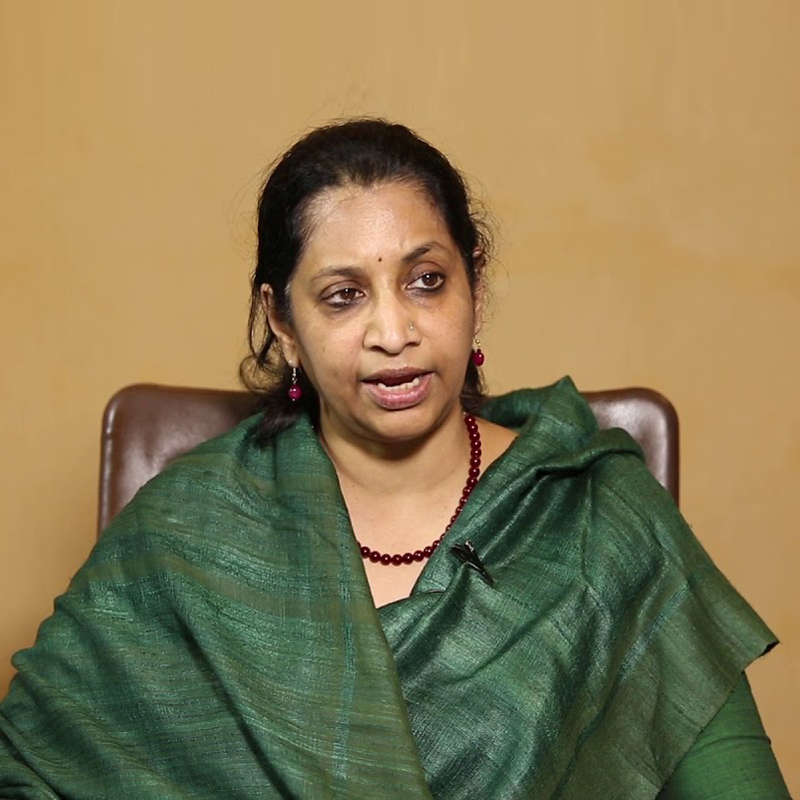
    “The Telecom Commission approved net neutrality as recommended by TRAI…some critical services will be kept out of its purview,” Telecom Commission Chairman and Secretary Department of Telecoms Aruna Sundararajan told reporters here, according to a Press Trust of India report.

    The Telecom Regulatory Authority of India (TRAI) had recommended restrictions on service providers from entering into agreements which lead to discriminatory treatment of content on the internet. It had also favoured tweaking of licensing norms of players to ensure “explicit restrictions” on discrimination in internet access, based on content.

    The Department of Telecom will set-up a multi-stakeholder body for monitoring and enforcement of net neutrality comprising government representatives, internet of things providers, telecom operators, civil society members and consumer organisations. DoT will seek recommendations from TRAI on traffic management for critical services.

    The Commission also approved the new telecom policy — rechristened National Digital Communications Policy (NDCP) 2018 — for seeking approval of the Union Cabinet, Sundararajan was quoted by the PTI report as saying.

    “Everybody in the meeting said that digital infrastructure is even more important than physical infrastructure for India… CEO of Niti Ayog [Amitabh Kant] said that for…districts, we must ensure digital infrastructure is provided at the earliest. Therefore, India must have ease of doing business and enabling policy environment,” Sundararajan said.

    The NDCP, which looks at having more synergies amongst various government organisations and ministries, aims to attract $100 billion investments, 400,0000 new jobs, 50 megabits per second broadband access to every citizen in the digital communications sector by 2022 with the help of reforms.

    A government official, who was part of the meeting, was quoted by PTI as saying that the Telecom Commission has approved installation of around 12.5 lakh Wi-Fi hotspots in all gram panchayats (village administrations) with viability gap funding of around Rs 60,000 million by December 2018.

    Under the Wi-Fi project all police stations, post offices, primary health centres, schools will be connected with Wi-Fi by December 2018 and there will be a couple of  additional hotspots that will be available for round the clock public access.

    The PTI report added that the commission has also approved avoidance of double tax on virtual network operators (VNOs) who provide retail services of telecom operators.

    According to the proposal approved, VNOs will be required to pay levies based on their adjusted gross revenue earned from any value addition that they will be do over the top of service they will buy from telecom operators for selling it to end consumers.

    Earlier, telecom minister Manoj Sinha had said that his department looks to get approval of the Cabinet for NDCP 2018 by July-end.

  • Sudhanshu Vats on Viacom18’s growth strategy and why data analytics is key

    Sudhanshu Vats on Viacom18’s growth strategy and why data analytics is key

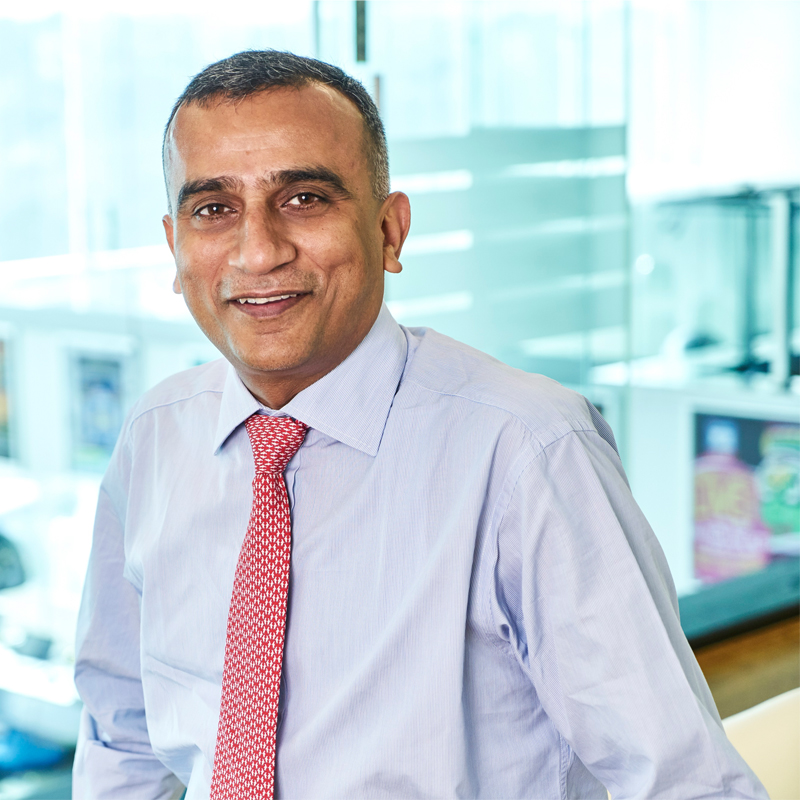
    He goes by many names. The Laundry Man and The Marathon Man being two of the more popular monikers. The second one is self-explanatory given his passion for running, especially marathons of many hues all over the globe. It’s the former one that makes people, sometimes, stop and give a quizzical look. Its origins, according to Unilever folklore, can be traced back to his days at the global FMCG company where he was at the helm of the laundry division in South Asia. But Sudhanshu Vats, group CEO of Viacom18, doesn’t mind the aliases; rather, he refers to them himself, at times—like he did in November at CASBAA Convention 2017 in Macau,where he was featured as a keynote speaker. At the time,Vats explained that running a marathon and running a company had lots in common as they taught one about the importance of planning and breaking down longer plans or goals into shorter milestones.

    Five and a half years into his new role in one of the top media companies of India that is an equal JV between US’ Viacom and Reliance Industries-controlled Network18, Vats is considered a thought-leader within the complex maze of the Indian media and entertainment industryand in government circles. His social media savviness makes him articulate on a range of subjects from media to women empowerment to an individual’s role in the Clean India campaignto the importance of health and fitness.

    In a free-wheeling chat with Indiantelevision.com’s consulting editor AnjanMitra and deputy managing editor Satyam Nagwekar, Vats speaks on a number of issues related to the M&E sector, including the necessity of regulation in India (he sometimes holds contrarian views to the general sectoral outlook of his peers) and why it’s important for a media company to be equally alive to data analytics to derivestrategies.

    Edited excerpts from an interview that took place when he was few days away from completing hisannual tenure as the chairman of BARC India, a joint industry body entrusted with collating audience data in a highly fragmented and, at times, quirky Indian broadcast sector, wherein competition is cut-throat:

    Q: What would be the three major changes in the industry that you have witnessed over the years in the complex M&E industry of India after your switch to the media sector from FMCG?

    A: The first significant development is the entire digitisation of the cable. While digitisation of the signal has happened, allowing (the pipe) to carry more content, addressability needs to improve. Overall cable digitisation has enabled the pipe to carry more content and to improve the viewer experience. The second development is the rise of OTT services; delivering content on demand in addition to the existing linear delivery of content. The third development would be the increasing importance of live and experiential entertainment. The advent of quality multiplexes has certainly made a difference in viewing experience in cinemas. Similarly, in the sphere of live entertainment, experimentation with modern technology has dialed up consumer experience. We have also experimented with theatricals. What happens is that as kids develop a relationship with characters, it allows you to bring those characters alive in different forms outside of television. One can take them outside of television into theatricals, into experiential zones and merchandising.

    I would add a fourth important development and that is the evolution of BARC India. I think the joint industry body that we formed to measure ‘what India watches’ is a significant development. It’s a unique feature that industry bodies have come together for audience measurement in India.

    Q:Are Hindi general entertainment channels (GECs) the largest contributors to the Viacom18 revenue pie?

    A: Yes, they are.

    “About 59-60 per cent of India communicates in regional languages, about 39-40 percent in Hindi, and the balance one per cent in English. This 59 per cent is still under-indexed in viewership. As the viewership catches up with actual consumption, so would monetisation opportunities.

    Q: Keeping in mind what you said, how do you see the market for Viacom18 going forward over the next couple of years?

    A: The GECs will remain an important block (from the point of view of revenues), but I am very bullish on the regional piece, too. I personally feel that regional businesses are gaining traction and will continue to get dialed up significantly in the future. The reason for that is that in television, and arguably in all mediums of television, digital and films, the regional languages have been under-indexed from the point of viewership and monetisation.

    In my opinion,the genesis of this lies in the fact that the erstwhile measurement system was a bit skewed towards the Hindi-speaking urban audiences; perhaps as it too developed along with the cable movement in India in the 1990s, which started with the Hindi-speaking regions. However, in the last decade, language programming in other parts of India, especially South India, has developed considerably. With BARC’s arrival, these markets are being better represented. As we go deeper into India, the regional language play will keep getting dialed up. About 59-60 per cent of India communicates in regional languages, about 39-40 percent in Hindi, and the balance one per cent in English. This 59 per cent is still under-indexed in viewership. As the viewership catches up with actual consumption, so would monetisation opportunities.

    Why do I say this? There is an intuitive understanding — not entirely always incorrect — that the English consuming audience has a higher propensity to spend and that amongst the other language markets, Hindi-speaking markets (HSM), perhaps, have the highest propensity to spend. Equally importantly, regional markets like Tamil Nadu, Karnataka, Andhra Pradesh/ Telengana, Kerala, Maharashtra and Gujarat have higher per capita income (compared to India average) and would therefore have a higher propensity to consume advertising and brands. My hypothesis is that the affinity to one’s mother tongue will remain and India will continue to remain a multi lingual country (most Indians speak at least two languages and in some cases three or more). All three clusters of English, Hindi and regional will grow with regional leading the rate of growth for viewership and monetisation.

    At Viacom18, we will continue to build our portfolio of services in all the three language-clusters mentioned above, while significantly dialing up our regional language clusters. To illustrate this, let me share how our dependence on our flagship Hindi channel Colors is systematically coming down. When I joined Viacom18, we used to get 80 per cent of our ad sales from Colors standard definition channel. That number now is 50 per cent or may be a little lower.

    About 59-60 per cent of India communicates in regional languages, about 39-40 percent in Hindi, and the balance one per cent in English. This 59 per cent is still under-indexed in viewership. As the viewership catches up with actual consumption, so would monetisation opportunities.

    Q: As Colors is the biggest revenue earner, a lot of strategising must be done forprogramming. How do you slice and dice programming for appointment viewing for different parts of India and the HSM?

    A: Not just Colors, but for all our content engines we marry insight to gut in the way we strategise and develop content. At Viacom18, we started an ambitious data science project called Project Pi with the objective to provide information and insights to the users and establish one single version of truth in the company.

    The second leg to this is a free-flowing discussion that we have recently started`Content PeCharcha’ (discussion over content), inspired by PM Modi’s now famous `Chai PeCharcha’ (discussion over tea), primarily with Raj (Nayak, COO, Viacom18), Manisha (Sharma, content head, Colors) and some more team members. These are open sessions where we have a qualitative and free-flowing discussion on both macro content trends and specific current and future programme story arcs.

    Let me give you a couple of examples of how this works. When I joined people said mythologicals/historical dramas don’t work on Colors. But our research suggested that competitors were successfully running them and it was a white space that hadn’t been explored properly at our end. We came up with Ashoka and proved the naysayers wrong. In one of our early meetings, we figured comedy was a white space for us and we should actively explore it. While our first attempt didn’t work, the next one (Comedy Nights with Kapil) created history as it was based on our learning. We then experimented with the crime genre with shows like Code Red and Dev. A Hindi GEC is like a `thali’ (an Indian plate with a variety of food offerings): it needs to have a spread of flavor and taste. Balance, however, is the key to how your audiences perceive the spread to be.

    Q: Has the rise of mythological and historical shows on Viacom18 channels, as well as on other TV channels, increased after 2014 or are we reading too much into it?

    A: I am a firm believer—and I am keep saying it often—that the richness of the Indian culture is reflected a lot in some of our mythological and historical stories. Brilliant evergreen tales like `Ramayan’ and `Mahabharat’ can be told over and over again but there are so many other stories that need to be taken to the audiences. If you look at some of our mythological stories, India has long been telling superhero stories—both of superwomen and supermen. But to answer your question, yes there has been a definite rise in these stories (on TV channels) post 2014.

    “My assumption is that over the next five years, India will follow China’s example and 10 per cent of all internet video consumers will move behind a pay wall. Once this happens, it will create both advertising and subscription economies at scale.

    Q: Hanuman probably was the first super hero and remains till day one. Agree?

    A: Precisely. I personally feel that these are stories that lend themselves well to a variety of interpretations. Moving forward, production quality can make our stories richer and give the consumers a better experience.

    Q. Is the digital venture VOOT making money?

    A: If you are asking if we are monetising VOOT, then yes we do have a fair number of advertising brands on VOOT. But having said that, I’d say we, like most consumer digital businesses, have substantial distance to cover in our monetisation journey. 

    The digital VoD space is one that requires an extended gestation period for investment. Today there are300 million Indians consuming video on the internet. That number is poised to touch 600-700 million in the next three to five years time.Further, my assumption is that over the next five years, India will follow China’s example and 10 per cent of all internet video consumers will move behind a pay wall. Once this happens, it will create both advertising and subscription economies at scale.

    Q: So, is VOOT targeting 10 per cent of subs behind a pay wall in, say, three years’ time?

    A: Absolutely. Maybe, even more. We are planning to launch the subscription service of VOOT early next fiscal.

    India is a price sensitive market and, unlike the West, we do not have the price arbitrage advantage between cable and VoD. In the US, Netflix disrupted the market with its offering at USD8-10 versus a monthly cable bill of USD80-100. In India, we still get 300 channels at Rs 200-250 making linear television the economical entertainment option. But having said that, I believe the right pricing for data and content will continue to drive VoD in India. I think, it is fair to assume that the range of pricing for subscription VoDin India lies between USD 1-3 to begin with.

    Q: So you are working on a price model that is between USD 1-3/sub/month in India?

    A: Yes. If you want to look at large numbers, you need to keep prices competitive in India.USD 3 is approximately Rs 200, but it will also depend on how many people you want at what price and that will be determined on the price volume elasticity study underway.

    public://Sudhanshu V1.jpg

    Q: Does it help for a content owner and producer like Viacom18 to also have a group company like Reliance Jio, which is a platform that is practically giving data free to consumers?

    A: There are clear synergies and we complement each other.

    Q: Have you ruled out sports altogether?

    A: The business of sports,particularly cricket,is a high-investment and long-gestation game. In our current scheme of things,such an investment can be better utilised in a host of other opportunities and, hence, we are not looking at sports as of now.

    Q: What are your views on the evolution of BARC India and that some of the audience data and methodology has been questioned by some industry players?

    A: BARC has made a promising start. The measurement is clearly more robust, transparent and objective. The sample size has already been dialed up to 32k (almost four times the size of the erstwhile measurement system). We plan to further grow the sample size to 40k by next year and even further in the years to come.

    The sample has also become broader,holistic and reflects more accurately what India watches. Even rural consumption and regional languages are getting represented in a better way. The fidelity of data has improved considerably and tent-pole events on television — from a big TV channel launch to a new program introduction and all the way to an important news break event in an hour — are captured and show up with a very prominent spike. The areas where more work needs to be done by all stakeholders are the measurement of niche channels by BARC and management of volatility as high fidelity brings high volatility.

    The initiatives like return path data and premium panel will help improve the measurement of niche channels.

    Q: When is BARC likely to rollout digital measurement?

    A: BARC is in the process of getting all stakeholders aligned for rollout of digital measurement. There are debates around all digital players being a part of the measurement, equitable methods/process used for data capturing from all players and the more holistic India stack/dmp for representation and publishing of the data. All the stakeholders at BARC are debating these issues and the timeframe of publishing digital data will depend on the speed of alignment and approach taken by the stakeholders. Until these issues are resolved, it would be premature to commit to a timeline.

    Q: What is your take on net neutrality?

    A: It is quite a nuanced subject. My broad take is that NN is essential and net should be as neutral as possible because that’s in the best interest of a functional democracy. Essential services, depending upon the evolution of our society, will need to be looked at differently. In years to come, the internet would be a basic requirement for day to day life and therefore net neutrality is an imperative to offer equal opportunity to everybody.

    Q: What about legal and illegal content as the latter results in revenue losses for content owners like Viacom18?

    A: The issue of piracy is entirely different, and another elaborate subject on its own. Illegal content is a big challenge for any content owner. Piracy is a complex topic where different stakeholders need to play a part. My view is clear: illegal content should not be made available, but then enforcement is not always that easy. Having said that, consumers too are not clear on legal and illegal content when it comes to the digital world, at times. In my view piracy should be tackled through a three-pronged approach of legislation, enforcement and consumer awareness. In addition, if content is made available to consumers at competitive price points, it would be a big deterrent to piracy and, business models permitting, arguably the most effective way to tackle this menace.

    “Technology is causing disruptions almost daily and resultantly the very definition of a media company is changing. For any regulator anywhere in the world or any government, it is a challenge to keep abreast or even keep pace with such changes. As we move forward, we will need to evolve a mechanism where there is greater participation from all stakeholders.

    Q. Do you think powerful lobbies like global video-streaming services can have a bearing on legislations relating to NN? How do you see that playing out?

    A: I would not like to specifically comment on this. But there are two fundamental considerations here. The first is that every player will have its point of view and arguments on the subject. Second is that considering the width and complexity of these arguments, the government is best placed to examine in detail and take an overarching view after wide-ranging discussions with every stakeholder.

    Q: You are head of the CII entertainment committee, part of the IBF board, associated with BARC and also head one of the largest media networks in the country. What are your views on the regulatory regime in India as it’s considered a challenging market?

    A: I think the tricky piece, or rather the interesting piece, is that media and entertainment as an industry, both in India and globally, is evolving at a rapid pace. Technology is causing disruptions almost daily and resultantly the very definition of a media company is changing. For any regulator anywhere in the world or any government, it is a challenge to keep abreast or even keep pace with such changes. As we move forward, we will need to evolve a mechanism where there is greater participation from all stakeholders. As one cannot operate in isolation, there is a need for some regulatory framework that is akin to the ground rules of a game, if one wishes the industry to flourish. So, yes, in my opinion, light touch regulation always works well.

    What are your views on FTA vs pay TV considering many popular TV channels are on DD’s free-to-air DTH service FreeDish, taking advantage of DD’s reach and making money on advertising?

    A: I am a firm believer that India is an ‘and’ market. So, I don’t think it’s an `and’ ‘or’ equation between FTA and pay TV. Both will continue to flourish as there is significant headroom for growth for both. Now, coming to DD FreeDish, you’re right in identifying it as a platform as it is a means to carry content to the consumer and represents a very affordable option. Admittedly, it is a rapidly growing platform where many private channels are also present. However, all other platforms are cognizant of the opportunity that a low priced FTA channel bouquet provides. It is quite likely that alternate platform options will emerge if DD FreeDish decides to bar privately owned channels.

    ALSO READ:

    Viacom18 celebrations: Mukesh Ambani sets the roadmap for next 10 years

    Viacom18’s Sudhanshu Vats: Indian media’s growth will be similar to China

    Viacom18 showcases strong women characters content: Ajit Andhare, buys Mithali biopic rights

    Viacom18 & govt announce anti-piracy partnership

  • Debate on for digital India stack consensus: Sudhanshu Vats

    Debate on for digital India stack consensus: Sudhanshu Vats

    MUMBAI: Viacom18 group CEO Sudhanshu Vats is of the opinion that net neutrality is essential for the evolution of society but firmly believes that illegal and pirated content can’t be made available to all in the name of net neutrality.

    Vats, who also happens to be the present chairman of BARC India, said that the ratings organisation has made a solid beginning but will have to iron out some glitches (like niche channels’ measurements) as it continues to evolve and that the rollout of digital measurement would depend on how soon the industry stakeholders bring themselves on the same page on issues under debate, including formation of an Indian stack for benchmarking digital data.

    “Net neutrality is essential and the net should be as neutral as possible because that’s in the best interest of a functional democracy,” Vats told indiantelevision.com in an interview, adding, “My view is clear: illegal content should not be made available but then enforcement is not always that easy.”

    Viacom18, which spans businesses such as film production and distribution of content on TV and digital space, has been working extensively and intensively on anti-piracy issues along with the Indian government and other media companies in recent times.

    Elaborating on his views on tackling the menace of video and content piracy, which is becoming a headache for content owners globally, Vats said, “At times, consumers too are not clear on legal and illegal content… (and) in my view piracy should be tackled through a three-pronged approach of legislation, enforcement and consumer awareness.”

    Making a case for introducing economic disincentives for arresting flourishing piracy, Vats added that if content was made available to consumers at “competitive price points”, it would be a “big deterrent to piracy” and such business models.

    Speaking on BARC India, Vats highlighted fidelity of data has improved considerably and tent-pole events on television — from a big channel launch to a new program introduction and all the way to an important news break event in an hour — are captured and show up with a very prominent spike. “The areas where more work needs to be done are the measurement of niche channels by BARC and management of volatility (high fidelity brings high volatility) by all stakeholders,” he explained.

    The initiatives like return path data (RPD) and premium panel will help improve the measurement of niche channels, Vats said. BARC has announced one partnership with DEN Networks for collecting additional viewership data via RPD from the MSO’s consumer-premises STBs, and negotiations are on with some other DTH platforms and MSOs.

    Vats lauded the measurement agency’s role saying data is more robust, transparent and objective (compared to an earlier system). The sample size, which has already been dialed up to 32,000 (almost four times the size of the erstwhile measurement system), will be further bumped up to 40,000 by next year and even further in the years to come.

    Asked about the much-awaited rollout of digital data by BARC, Vats explained, “There are debates (happening presently) around all digital players being a part of the measurement, equitable methods /process used for data capturing from all players and the more holistic India stack/dmp for representation and publishing of the data. All the stakeholders at BARC are debating these issues and the time-frame of publishing digital data will depend on the speed of alignment and approach taken by the stakeholders.”

    Keep tuned in and watch this space for the full text of the interview with Vats where he speaks on a wide range of subjects, including the evolution of the Indian media and entertainment sector, regulations, Viacom18’s businesses, how programming strategies are conceptualized with the help of data crunchers, why it is important for media companies to have their own data analytics centers and much more.

    ALSO READ:

    TRAI releases recommendations on net neutrality 

    Comment: War on online video piracy, which matters, is here for India to fight

    BARC India to solve digital puzzle with ‘EKAM’ 

    Global digital platforms adapting locally for BARC’s EKAM 

  • Guest column: Net neutrality – ensuring an open internet

    Guest column: Net neutrality – ensuring an open internet

    At a time when the US Federal Communications Commission is to vote on a rollback on the Net Neutrality Rules notified during the Obama administration, the Telecom Regulatory Authority of India (TRAI) has published its recommendations on the subject. Making headlines during the days of Zero Rating and products of the kind, and coming after nearly three years of setting up of a committee by the TRAI to make recommendations in this regard (January 2015), the document attempts to balance the interest of the general public by including ‘internet access services’ within the regulation of net neutrality and excluding “specialised services” that are “optimised for specific content, protocols or user equipment where optimisation is necessary in order to meet specific quality requirements.’’

    Net neutrality, in theory, is a laudable concept. It also finds mention in the UL, VNO and ISP licensing terms notified by the Department of Telecom. The specific mention is absent from the UASL and CMTS licenses. However, this principle can nevertheless be read into the obligation to provide non-discriminatory access even by the telecom service providers. In this background, what is to be considered is whether net neutrality, with its basic principle already enshrined in the law and some contours such as specialised services yet to be clearly defined, is even required to be separately regulated.

    First, net neutrality is, as stated in the recommendations, primarily to address and ensure “public internet access”. Importantly, what has not been considered is how much of this “public” of the country actually has access to broadband. The answer would be in the vicinity of 15 per cent. Of this “preferred public population,” many would be multiple connection/access holders and, hence, the effective penetration of broadband would be less than 12 per cent. With this background, the debate, rather than focusing on net neutrality, should focus on access to broadband for all. It is only when such a objective is achieved that the issue of whether or not we have a neutral internet would really need to be studied.

    Second, OTT, which is one of the aspects central to the debate on net neutrality, has been currently left out for separate consideration. It is unclear, therefore, as to what position is taken vis-à-vis this very important piece of the net neutrality puzzle.

    Third, it is strange that the document should pluck out internet of things, a concept and technology so nascent in India that even its mention in this document makes it conspicuous by its presence. Why is there a need for identification of such detail of a technology still under development, not only in India but in most parts of the world?

    Having said the above, all the right words have been used in the recommendations–non-discriminatory access, non-provision of fast lanes, etc. All or most of these recommendations are great in theory. However, and especially with the carving out for specialised services, the workability of these recommendations, if they are to be accepted and converted into regulations, is suspect. We need to have enough cars (population access to broadband) before we can deride the provision of fast lanes.

    (Abhishek Malhotra is a partner at Bharucha & Partners)

  • TRAI releases recommendations on net neutrality

    TRAI releases recommendations on net neutrality

    MUMBAI: The Telecom Regulatory Authority of India (TRAI) has released its recommendations on net neutrality. These recommendations are the result of a long, multistage consultation process.

    On 27 March,2015, TRAI had issued a consultation paper titled ‘Regulatory Framework for Over-The-Top Service.’ Apart from issues relating to Over-The-Top (OTT) service, this consultation paper also touched upon issues related to net neutrality.

    TRAI first decided to deal with the issue of differential pricing of data access. Accordingly, after following a public consultation process, TRAI issued the “Prohibition of Discriminatory Tariffs for Data Services Regulations, 2016” on 8 Feb,2016. Subsequently, Department of Telecommunications (DoT) vide letter dated 3 March, 2016 sought TRAI’s recommendations on net neutrality including traffic management and economic, security and privacy aspects of OTT services, apa1i from other relevant standpoints as covered in the consu ltation paper dated

    27 March, 2015. TRAI considered the matter and decided to deal with the issue of Net Neutrality first. The recommendations released by TRAI today are an outcome of this decision.

  • Trai to make recommendations on net neutrality today

    Trai to make recommendations on net neutrality today

    New Delhi: The Telecom Regulatory Authority of India (Trai) will issue its much-awaited recommendations on net neutrality today.

    “We will issue the recommendations on net neutrality tomorrow,” Trai chairman RS Sharma told reporters on Monday.

    Trai, which has so far adopted a pro-net neutrality stand, is expected to stick to its stand of ensuring a free and open internet for all.

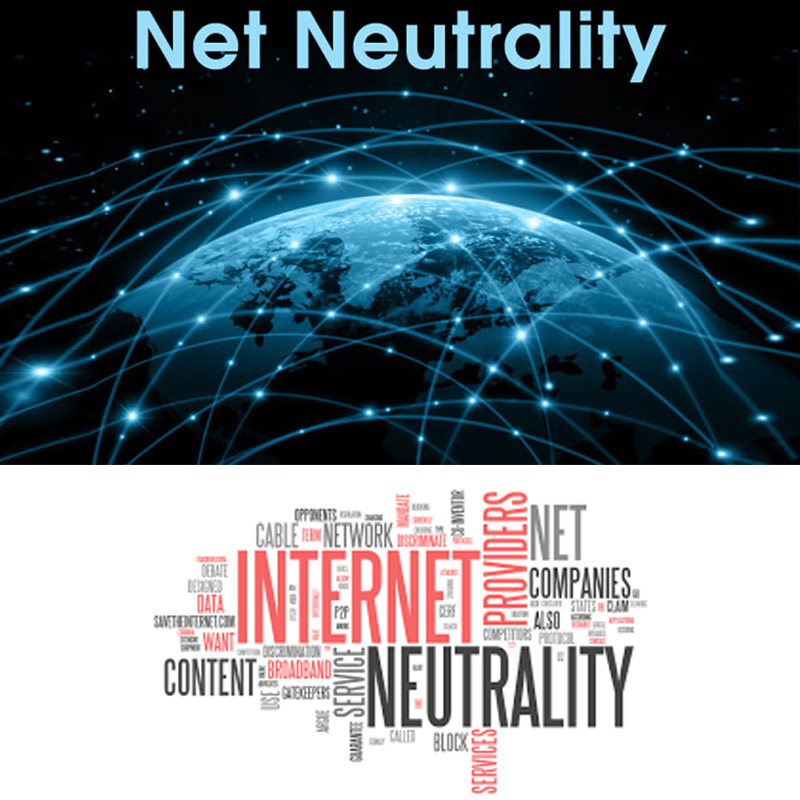
    Net neutrality requires telecom service providers to treat all internet traffic equally, without regard for the type, origin, or destination of the content or the means of its transmission.

    The recommendations are expected to include the definition of what constitutes reasonable traffic management practices by ISPs. A likely negative list of non-reasonable traffic management practices could also emerge.

    The issue has been debated upon globally as well as in India, with activists arguing the case for an open internet without any restrictions on speed.

    The recommendations that the regulator releases on Tuesday will assume significance, especially at a time when the US plans to repeal its existing rules on net neutrality, which will essentially allow telecom companies in the US to restrict broadband speeds and favour their own services if they want.

    Trai had in January floated a consultation paper on the topic, seeking views on issues such as how to ensure non-discriminatory access to content on internet, among others.

    This was followed up by an open house discussion in August which saw participation by representatives from telecom and ISPs, consulting firms, activists, and policy experts.

  • Net neutrality: TRAI recommendations likely to keep Indian context in mind

    Net neutrality: TRAI recommendations likely to keep Indian context in mind

    NEW DELHI: Telecom regulator TRAI which said it is expected to issue recommendations on the controversial issue of net neutrality in about a month, however, may define it more in the Indian context.

    “All stakeholders are actively participating in this (net neutrality) debate. I think TRAI should be able to give appropriate recommendation to the government, which they have asked for,” PTI quoted TRAI chairman RS Sharma as telling reporters here on the sidelines of an open house discussion on the issue. Asked for a timeline for recommendations, he said: “It should not take more than a month.” 

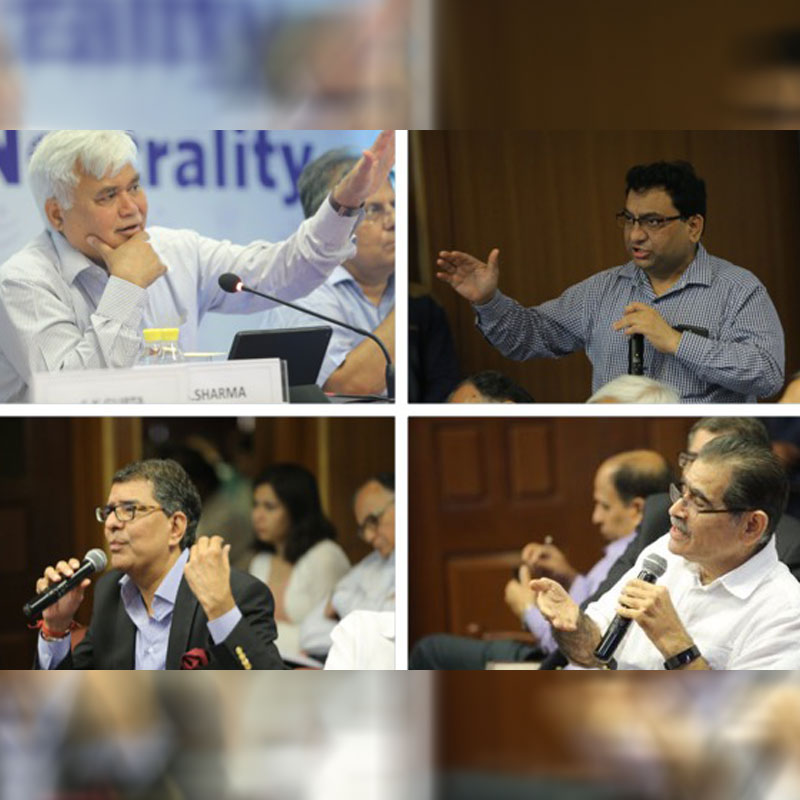
    At today’s open house, lasting several hours, many additional ideas and theories were thrown up at the regulator with participants bringing in issues like IoT (internet of things) and operating systems’ capabilities to block content in the context of net neutrality. For the records, there’s no one single definition of NN that is used globally and many regions and countries define it largely in the context of their nation. 

    The base rate of 2G mobile internet were over 500 times high at Rs 10,000 per GB approximately compared to around Rs 175-180 that companies were charging for 1 GB on the same network under a scheme.

    The debate further heated up after Airtel and social media firm Facebook separately launched free internet platforms. These platforms were banned by TRAI in February 2016.

    ALSO READ:

    TRAI’s final recommendations on net neutrality likely by September

  • TRAI’s final recommendations on net neutrality likely by September

    NEW DELHI: India’s telecoms and broadcast regulator Telecom Regulatory Authority of India (TRAI) is expected to come out with its final recommendations on net neutrality next month.

    TRAI chairman R S Sharma told indiantelevision.com  that after detailed discussions were held in Bengaluru last month on the consultation paper on Net Neutrality (NN) issued mid-2016, a similar round has been fixed for 30 August 2017 in Delhi after which TRAI will begin work on its final recommendations to ensure national security and customer privacy.

    However, the issue of NN has different meanings in different parts of the globe and depends on how regulators view the issue in terms of their own markets. For example, the present FCC chairman Ajit Pai is in favour of repealing of a regulatory framework that allowed his predecessor to establish robust rules of the road for the internet and is in the process of dismantling the previous regime’s regulatory framework for NN. In Asia too, NN is defined and regulated differently and there is no uniform approach to the issue.

    One of the chief arguments for Net Neutrality, senior tech journalists have argued, is that without rules in place, the internet could well grow into a system of tiers, akin to cable television, in which large content companies would dominate because of their ability to pay for better access to consumers.

    Asked whether the tariff order — which has been in suspended animation for few months now owing to some stakeholders moving Indian courts against its implementation — will come into effect on 2 September 2017, Sharma refused to commit anything as the matter would be subject to the outcome of court decisions.

    Referring to a paper on data protection, he said the present aim was only to start a discussion on the subject. He denied that the consultation paper had anything to do with the controversy around Apple refusing to cooperate on certain demands of the Indian regulator or had been prompted by it. “In fact, the controversy had been kicked off just over a week earlier whereas the paper had been under preparation earlier,” Sharma said.

    Elaborating on TRAI’s guiding principles, the chairman said that the organisation issues a paper or initiates a public debate or comes out with recommendations  for “transparency, (to) ensure non-discrimination, consumer protection, industry’s growth and encourage positive competition.”

    At a time when online piracy and theft of online data is gaining momentum in India, as also criticism of the country’s lack of a comprehensive legislation to protect data, including those mentioned in Adhaar, Sharma said TRAI has taken all the necessary steps to protect consumer data that it collects via its various apps.

    Though Sharma refused to be drawn into the online piracy issue (largely that falls under the domain of Commerce Ministry), he did say that inter-operable set top boxes, being tested by some government organisations in collaboration with TRAI, had provisions for dealing with pirated software.

    When questioned about the permission granted to Tamil Nadu government owned Arasu to distribute digital TV signals and consequent leanings towards similar set-up in the states of Telangana and Punjab, Sharma said the Authority had thrice given recommendations advising that state governments and political or religious groups should not be permitted to enter the broadcasting sector. “We still stand by those recommendations. But the ministry (MIB) has said the recommendations were under consideration,” he added.  

    He agreed that technologies were converging and said that regulations, attitude and outlook will “soon have to move in that direction.”

    ALSO READ :

    Star & Vijay TV amend plea, TRAI asked by Madras HC to file response

    Tata Sky & Airtel DTH pleas against TRAI tariff in Delhi HC on Friday

    “There would be  a lot on TRAI’s plate in 2017” – RS Sharma


  • TRAI Net Neutrality OHD in Bengaluru on 25 July

    NEW DELHI: An Open House Discussion has been slated in Bengaluru later this month on the Telecom Regulatory Authority’s pre-consultation paper on Net Neutrality which had been issued in mid-2016.

    The OHD will be held on 25 July after which the authority will begin work on its final recommendations.

    In a pre-consultation paper on Net Neutrality to ensure national security and customer privacy issued on 30 May 2016, the regulator had asked what should be regarded as the core principles of net neutrality in the Indian context and what key issues are required to be considered so that the principles of net neutrality are ensured.

    The regulator has also asked what the reasonable traffic management practices that may need to be followed by telecom service providers should be while providing internet access services and whether there any other current or potential practices in India that may give rise to concerns about net neutrality or its misuse.

    Stakeholders have been asked about the precautions with respect to the activities of TSPs and content providers to ensure that national security interests are preserved, and customer privacy is maintained.

    The regulator says it had issued a paper on 27 March last year and after much discussion among stakeholders and the government, the Department of Telecom had asked TRAI certain questions leading to the present paper.

    At the outset, TRAI says that during the last decade, the telecom industry in India has grown tremendously, both in terms of penetration as well as connectivity. Today, India is one of the fastest growing information and communication technologies markets in the world, fueled largely by the cellular mobile revolution. Starting from a few million connections in 1997, there are more than a billion connections, with 97.5 per cent of them being wireless subscribers. With this, the overall teledensity in India at the end of 2015 stood at 81.83 per cent.

    India has also witnessed tremendous growth in terms of the total number of Internet users. At the end of December 2015, there were over 331 million internet subscribers in the country, of which about 94 per cent (over 311 million) were wireless internet users.