Tag: Nestle

  • Dentsu Webchutney appoints Samera Khan as EVP

    Dentsu Webchutney appoints Samera Khan as EVP

    MUMBAI: Dentsu Webchutney, the digital agency from the Dentsu Aegis Network, has roped in Samera Khan as EVP- Strategy and Planning. Samera will be based out of Mumbai and will report to Dentsu Webchutney CEO Sidharth Rao.

    As part of her new mandate, Khan will head creative strategy and planning for the agency across its offices in Mumbai, Delhi and Bengaluru.

    Commenting on her appointment, Khan said, “I am excited about this new role that I take on with Dentsu Webchutney. They have a unique way of approaching digital advertising with a spot-on understanding of culture and technology. And to partner with a distinct set of creative and strategic talent makes this even more exciting and challenging.”

    Commenting on the appointment, Rao said, “Dentsu Webchutney has entered its next phase of growth and it’s absolutely essential for us that we use the right kind of partners to steer this growth forward. Samera has immense international experience along with advertising experience in India on some of the biggest brands in the world. This gives her a unique edge on strategy and understanding of the human mind. This will add to the strength that holds the Dentsu Webchutney fort together. I am extremely happy to welcome her on board.”

    With more than 12 years of experience, Khan has worked with agencies including Ogilvy, DraftFCB and Havas Worldwide.

    Some of the brands that Samera has worked on internationally and in India include Vodafone, Nestlé, Unilever, Volkswagen, Porsche, Hyundai, Mitsubishi, IKEA, Taco Bell, Pizza Hut, The Economist, HDFC Bank, BPCL, Sanofi and Hockey India to name a few.

  • Dentsu Webchutney appoints Samera Khan as EVP

    Dentsu Webchutney appoints Samera Khan as EVP

    MUMBAI: Dentsu Webchutney, the digital agency from the Dentsu Aegis Network, has roped in Samera Khan as EVP- Strategy and Planning. Samera will be based out of Mumbai and will report to Dentsu Webchutney CEO Sidharth Rao.

    As part of her new mandate, Khan will head creative strategy and planning for the agency across its offices in Mumbai, Delhi and Bengaluru.

    Commenting on her appointment, Khan said, “I am excited about this new role that I take on with Dentsu Webchutney. They have a unique way of approaching digital advertising with a spot-on understanding of culture and technology. And to partner with a distinct set of creative and strategic talent makes this even more exciting and challenging.”

    Commenting on the appointment, Rao said, “Dentsu Webchutney has entered its next phase of growth and it’s absolutely essential for us that we use the right kind of partners to steer this growth forward. Samera has immense international experience along with advertising experience in India on some of the biggest brands in the world. This gives her a unique edge on strategy and understanding of the human mind. This will add to the strength that holds the Dentsu Webchutney fort together. I am extremely happy to welcome her on board.”

    With more than 12 years of experience, Khan has worked with agencies including Ogilvy, DraftFCB and Havas Worldwide.

    Some of the brands that Samera has worked on internationally and in India include Vodafone, Nestlé, Unilever, Volkswagen, Porsche, Hyundai, Mitsubishi, IKEA, Taco Bell, Pizza Hut, The Economist, HDFC Bank, BPCL, Sanofi and Hockey India to name a few.

  • Nestle ties up with Snapdeal for new coffee launch with exclusive offering

    Nestle ties up with Snapdeal for new coffee launch with exclusive offering

    MUMBAI: Nestlé India announced the launch of a new coffee -Nescafé Sunrise Insta-Filter, adding to its range of coffee and beverages. Nestlé India has partnered with Snapdeal for an exclusive offering of this product starting April 30. The exclusive pack from Sanpdeal comes with a traditional South Indian steel tumbler.

    The company says that Nescafé Sunrise Insta-Filter provides the taste of filter coffee and yet does not require a filter and is specially made from 100 per cent Indian coffee beans, handpicked from Coorg and Chikmagalur.

    Announcing the launch Nestlé India General Manager – Beverages Nayla Sioufi said, “Traditionally, the coffee market in India is divided into two segments which include the instant and roast & ground coffee. Observing a trend of dual usage we realized that consumers want a product offering which provides the best of both worlds- the taste of filter coffee with the convenience of instant coffee. With the introduction of Nescafé Sunrise Insta-Filter we aim to create a whole new segment expanding the overall category in India while enhancing consumers coffee experience.”

    Nescafé Sunrise Insta-Filter will be available in the market at the cost of Rs 60 for a 24 gram pack that contains 15 sachets of 1.6 gram each as well as a 100 gram pack (tin) for Rs 225.

    Earlier this month, the Indian part of the largest food company in the world, launched a brand new exotic range of Greek Yoghurt under the brand name of Nestlé a+ Grekyo.

    For damage control and rebuilding of trust for its noodles products, Nestlé India hired McCann World Group for the Maggi Noodles relaunch, with the agency’s India unit chief executive Prasoon Joshi in charge of the creatives for the campaign. ZenithOptimedia handles the media buying duties for the company.

  • Nestle ties up with Snapdeal for new coffee launch with exclusive offering

    Nestle ties up with Snapdeal for new coffee launch with exclusive offering

    MUMBAI: Nestlé India announced the launch of a new coffee -Nescafé Sunrise Insta-Filter, adding to its range of coffee and beverages. Nestlé India has partnered with Snapdeal for an exclusive offering of this product starting April 30. The exclusive pack from Sanpdeal comes with a traditional South Indian steel tumbler.

    The company says that Nescafé Sunrise Insta-Filter provides the taste of filter coffee and yet does not require a filter and is specially made from 100 per cent Indian coffee beans, handpicked from Coorg and Chikmagalur.

    Announcing the launch Nestlé India General Manager – Beverages Nayla Sioufi said, “Traditionally, the coffee market in India is divided into two segments which include the instant and roast & ground coffee. Observing a trend of dual usage we realized that consumers want a product offering which provides the best of both worlds- the taste of filter coffee with the convenience of instant coffee. With the introduction of Nescafé Sunrise Insta-Filter we aim to create a whole new segment expanding the overall category in India while enhancing consumers coffee experience.”

    Nescafé Sunrise Insta-Filter will be available in the market at the cost of Rs 60 for a 24 gram pack that contains 15 sachets of 1.6 gram each as well as a 100 gram pack (tin) for Rs 225.

    Earlier this month, the Indian part of the largest food company in the world, launched a brand new exotic range of Greek Yoghurt under the brand name of Nestlé a+ Grekyo.

    For damage control and rebuilding of trust for its noodles products, Nestlé India hired McCann World Group for the Maggi Noodles relaunch, with the agency’s India unit chief executive Prasoon Joshi in charge of the creatives for the campaign. ZenithOptimedia handles the media buying duties for the company.

  • Network18 appoints ad guru Prasoon Joshi as additional director

    Network18 appoints ad guru Prasoon Joshi as additional director

    MUMBAI: Network18 Media & Investments has appointed National Award winning Indian lyricist, screenwriter and ad-guru Prasoon Joshi as additional director.


    Designated as an independent director, Joshi’s term is for a period of five years.


    Network18’s Board of Directors at its meeting held on 15 January, 2016 confirmed the appointment.


    Joshi is currently McCann Worldgroup Asia Pacific chairman as well as the agency’s India CEO. 


    He is credited with marrying creativity with scale and giving McCann’s work in India a distinct cultural edge. Joshi has worked on mainstream brands like Coca Cola, Mastercard, J&J, Perfetti, Nestle, GM, Metlife, Pears, Star TV, Maggi re-launch as well as NDTV, Marico, Dabur and Britannia amongst others.

  • Celebrities & brands in 2015: The changing dynamics

    Celebrities & brands in 2015: The changing dynamics

    MUMBAI: Celebrities and brands go hand in hand and so do celebrities and controversies! No sooner has a celeb publicly said something even remotely scandalous, blasphemous, startling or offensive knowingly or unknowingly than a controversy has erupted… one which doesn’t take too much time to snowball into a “grave national issue” to be discussed on prime time across news channels! 


    And 2015 was one such year that saw many a celebs facing the wrath of the common man for putting their foot in their mouth on more occasions than one. Be it Shah Rukh Khan, Aamir Khan, Salman Khan or Aishwarya Rai Bachchan, they’ve all had their moment in the spotlight and for all the wrong reasons. When a controversy breaks, after the celebrity, the next thing that gets affected is either their unreleased movie or the brands that they endorse.


    Last year was a significant year when it comes to celebrity endorsements. While there weren’t any path breaking innovations, a few memorable campaigns like Tanishq Divyam’s Diwali campaign featuring Deepika Padukone and her family, Shah Rukh Khan’s Yepme campaign and Ranbir Kapoor in Saavn’s TVC commercial kept up the excitement quotient. There’s no denying the fact that an ad’s reach becomes tenfold when a celebrity gets onboard. From automobiles, life insurances to washing powders and vests — there’s not a single category left that hasn’t yielded to star power. But it was not all merry in endorsement land as several cases of endorsements gone wrong popped up in 2015.


    Brand endorsements that went wrong:


    Interestingly, while it is hard to name any celebrity brand campaign that stood out in 2015, one can easily name the ones that made it to the headlines for all the wrong reasons. We saw Aishwarya Rai Bachchan being hurdled with racial discrimination allegations for her Kalyan Jewellers ad.


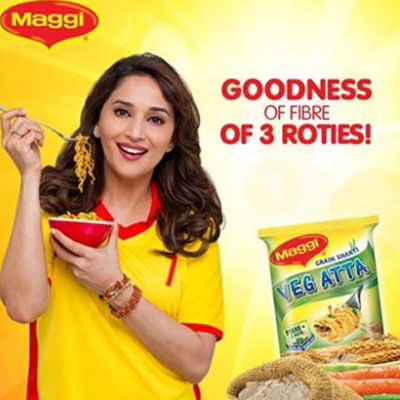
    That aside, one of the biggest example would be Nestle’s Maggi, which came under the radar over permissible amount of lead in it. Several celebrities who had promoted the brand in the past, especially Madhuri Dixit and Amitabh Bachchan had to face the wrath of netizens for endorsing a brand that may have been harmful.


    So what do we take home from these instances of endorsements gone wrong (if they are)?


    “Not to ride on media wave and add to mass hysteria,” says KWAN Entertainment and Marketing Solutions CEO and MD Anirban Das Blah. “A lot of all the so called controversial brand endorsements we saw in 2015 were more of a media cook up than a real issue. Moreover, almost all of them had nothing to do with the celebrities, who endorsed the product.”


    Acknowledging the moral responsibility of a celebrity in carefully choosing the brands they endorse, Blah simply asks, “If a certain product is considered harmful for consumption, aren’t the dealers and shopkeepers who sold it for so many years equally or more responsible?”


    According to Blah’s observation, celebrities do their research with whatever information is available to the public. Unless one is expecting them to conduct their own lab test, one can’t really point a finger at them for supporting a brand they know to be true. “I also feel that the media needs to be more responsible in how it reports these issues instead of riding on the power of social media trends and ignoring the facts,” he adds.


    However, it is not always the celebrities who are at the far end of the stick. We saw the flip side of the relationship when, spurned by Aamir Khan’s public statement, several netizens took to social media to boycott his biggest endorsed brand of 2015 – Snapdeal. The Rs 30 crore deal, which took Aamir Khan to the fifth spot in the Forbes list of celebrities as per brand value, came under trial when several threatened to boycott the online shopping portal if the brand didn’t ‘snap’ its relationship with the star.


    Madison Mates CEO Darshana Bhalla, who handled the deal between Snapdeal and Khan, shares her take away from the entire incident. “In a situation like that of Snapdeal and Aamir Khan, the brand has got to hand hold. If they are distinctly sure of the communication, which came with having Aamir Khan on board, then even if there are ups and downs either from the brand’s side or the celebrity’s side, they have got to stay on. Because it is after a lot of analysis that the two parties have embarked on their journey together.”


    While Snapdeal issued an official statement saying that it was neither connected nor played a role in comments made by Aamir Khan in his personal capacity, at the end of the day, their association survived the storm.


    Changing ball game:


    What’s changing the game is undoubtedly the emergence of digital as an advertisement platform. A clear shift from the traditional to the digital medium has been seen and more so in 2015. More and more brands are moving from plastering vanilla deals through electronic and print media to YouTube and social networking sites like Facebook, Twitter, and Instagram for their trend value.


    What does that imply for celebrity endorsements? Multi-platform entertainment management company, Exceed CEO Uday Singh says that it offers a sea change in the way endorsements are looked at.


    “Earlier we used see celebrities at several on-ground activation events. Getting a big star onboard generally would guarantee several hundred footfall for the events. But times have changed now. Now instead of on-ground activation, online activations are being preferred. If a brand can get an Amitabh Bachchan onboard, who has one of the highest number of followers on social media, a single message from him can reach millions of people. The beauty further lies in the fact that the result is instantaneous and measurable,” Singh explains, adding that he finds the current changes in the advertisement sphere quite exciting.


    When asked if the standard for hiring a star to communicate a message for a brand would eventually depend on their social media traction, Singh says, “The parameters aren’t that singular. There are more than one or two factors, which marketers and brand managers consider when signing a deal with a celebrity. The person has to stand for something and has to be relatable to the brand’s target group.”


    Seconding Singh, Bhalla adds, “Between 2014 and 2015, the industry saw a slight paradigm shift in how advertising is treated. We noticed a unique focus on multiple platforms viz-a-viz electronic and print ads that we were so used to. Digital and mobile phones have made advertising more personal and targeted. The rapid growth of e-commerce has also led to an increased traction on digital platforms. Stress is given on content and brands are opting for a more narrative approach to their brand communication that emotionally connects consumers with the products. This opens a huge opportunity for celebrity endorsements. Celebrities have an advantage when it comes to forming those bonds and connecting with consumers emotionally,” she says.


    Celebrity or not, the 30 second TVC formula is a dying breed, says Blah. The advertising world is fast moving to digital and soon mobile will outdo television in terms of reach. Bhalla says, “The growing need to have a personal connect with consumers will lead brands to take the celebrity approach as well.”


    Noticing the shift in the way a brand endorsement is approached, Blah adds, “Gone are the days when actors were required to fit into a type cast to be able to join the brand wagon. Where action heroes would address certain brands, while actresses would represent glamorous products. Today, endorsements are not strategic calls but a tactical necessity on the part of the marketers to retain their USP, and celebrities are nothing more than the models who act in the TVCs, albeit with a larger reach that the marketer needs.”


    The number game:


    What exactly is a successful celebrity campaign? Is it by its content, how many calls the brand’s sales teams get after the campaign, or by how long people retain an ad in their memory.


    “While talking about a good campaign done with a celebrity, we are often caught analysing the creative input and the content, which is a subjective matter, if you ask me. Creatively appealing or not, ultimately what matters is how much a particular campaign and a star’s presence has helped the brand achieve its communication target. In short, how many sales call they receive,” Bhalla puts across straightforwardly.


    With relevance as the key, the profit and loss effect of an ambassador over a brand is the ultimate judge of that celebrity’s brand value. Going by that formula, Bhalla acknowledges that Snapdeal has worked really well for Aamir Khan, not to mention it was one of the highest grossing endorsement deals of the year worth approximately Rs 30 crore.


    Perhaps it has to do with the actor preferring to sign at least a year or two long contracts, instead of per day deals like most celebrities. “Ranbir Kapoor and Aamir Khan are two celebrities, who prefer to sign long term campaigns and only come onboard with a brand with brand communication in mind. This also puts them on the top of the list of highest paid celebrities for endorsements,” Bhalla says.


    An executive from a celebrity brand management company shares on condition of anonymity that if one were to break up these two actors’ endorsement fees on a per day basis, Aamir Khan can charge up to Rs 3 – 4 crore per day for an endorsement, while Ranbir Kapoor can ask for Rs 2.5 – 3 crore.


    “The high rates don’t necessarily effect a celebrity’s net earnings from endorsements. While Aamir and Ranbir charge a ton for a single endorsement, they are not onboard with too many brands,” says Blah.


    On the other hand, actors like Shah Rukh Khan, who recently reclaimed his top rank in the Forbes list of Indian celebrities in terms brand value in 2015, may be working with over 25 brands at a time. Sources share that SRK commands anything between Rs 2 – 3 crore as his per day endorsement fee.


    While Blah asserts that SRK seldom strikes a long term deal with a brand, Singh begs to differ. “There is a certain charm about Shah Rukh Khan for which brands can’t leave him. His long term association with Videocon shows that the actor must be doing something right for them to be carrying on with him. Even brands like Tag Heuer, which have recently signed Ranbir Kapoor for one of their promotions, are still continuing with their contract with Shah Rukh Khan. He is undoubtedly the king in the endorsement world in India,” stresses Singh.


    Going by the figures shared by a source, who works closely with the stars, SRK, Aamir and Ranbir are closely followed by Salman Khan with a per day endorsement fee of Rs 2 – 2.5 crore. On the other hand, cricketers Virat Kohli and MS Dhoni, actors Deepika Padukone and Akshay Kumar all charge in the range of Rs 1.2 crore approximately, followed by Katrina Kaif and Kareena Kapoor at Rs 1 crore. Endorsement fees of actors like Shahid Kapoor, Farhan Akhtar and Priyanka Chopra fall in the Rs 75 lakhs per day range.


    While the Khans continue to lead the number game, even though the year wasn’t the best for the Dabangg hit-maker, industry experts unanimously agree that Akhtar emerged as the new face of endorsement for several brands in 2015.


    “He has carved a niche market for himself as an urban man in a scenario where every other actor is either too young or has too much mass appeal. Brands looking for a man of credibility to communicate for their premium products, have only so many options to choose from. This was a market initially led by Saif Ali Khan, and now Farhan Akhtar is doing amazing well for similar products like Asian Paints and Chivas,” says Blah.


    Another new kid on the block to watch out for, says Singh, is Varun Dhawan. “The boy has chosen his films very carefully. While he has done roles that strike a chord with a masses, he has also appealed to the niche market. Starting with 2015, one can look forward to seeing him in several brand campaigns in the upcoming year as well.”


    When it comes to newcomers and new faces, 2015 has been a busy year for the likes of Alia Bhatt, Kriti Sanon, Shraddha Kapoor and Jacqueline Fernandes says Blah, adding that these ladies will continue to command television screen time, visibility through OOH campaigns as well as digital footprints in 2016 as well.


    Over all, experts foresee an exciting year ahead for celebrity endorsements albeit with their share of controversies.


    As long as India remains a country that is driven by visual communication for quick and effective reach, celebrity endorsements will continue to dominate the advertising space, be it electronic, print or digital.
  • Doreswamy Nandkishore joins Blippar as its first external non-executive board member

    Doreswamy Nandkishore joins Blippar as its first external non-executive board member

    MUMBAI: Former Nestle South Asia global executive board member Doreswamy Nandkishore has officially joined image recognition and visual discovery platform Blippar as its first external non-executive board member. 

    Nandkishore will be advising the company on its increased focus on brand and marketing strategy across the company’s full portfolio of industry leading clients including Coca-Cola Conde Nast, Heinz, Jaguar, PepsiCo and Procter and Gamble.

    “Blippar is driving an entirely new behaviour – visual browsing and discovery – and is the global leader in image recognition and augmented reality experiences,” said Nandkishore. 
    “The company’s proprietary technology has the power to totally transform the way brands engage with consumers. By overlaying the physical world with personalised augmented reality technology, Blippar provides consumers the ability to draw great content and engaging brand experiences directly from their favorite products. As a non-executive director and mentor, I will be further informing the market about Blippar as the leading choice for brand-builders across the world,” he added.

    “As we continue our mission to activate the world with Blippar, it is increasingly important for us to become experts at digital brand and marketing strategy for our clients, and no one has been more successful at fostering and growing brand talent than Nandu,” added Blippar CEO and co-founder Ambarish Mitra. 

    “He brings extensive brand-building and cross-cultural leadership experience, alongside a proven track record of delivering consistent long-term results. He is also passionate about proliferating new technologies that will help us to reshape the world. He will undoubtedly play a vital role in helping us to become an even more effective strategic partner for brands on an international stage,” said Mitra. 

  • More instant food products to come under the scanner

    More instant food products to come under the scanner

    NEW DELHI: Even as the ban on Nestle’s Maggi continues and food safety authorities are examining other brands of noodles, pasta and macaroni, many more popular packaged snacks including various brands of chips and Kurkure are to be checked for their contents.


    Meanwhile, while refusing to stay the 5 June order of the Food Safety and Standards Authority of India (FSSAI) relating to Maggi, the Bombay High Court has questioned why the authorities have charged brand ambassadors.


    While directing that Maggi will remain off the shelves till 30 June but no action to be taken against Nestle without giving 72 hours notice, the Court noted that many stores in the city had still not removed the product from their shelves.  The Centre and FSSAI were asked to file their reply to Nestle’s petition within two weeks.


    In Delhi, the FSSAI has collected 32 samples of popular brands of chips, Kurkure and baby food for testing and will pick more in the days to come. The report for this batch is expected in a week’s time, according to Delhi Food Safety commissioner K K Jindal.


    Health supplements, energy drinks and imported packaged foods are already being tested.


    Medical experts said metals like lead or toxins in food may not have any effect immediately, but can even affect the mind as the child grows older.

  • After Maggi, other fast good products under govt’s scanner

    After Maggi, other fast good products under govt’s scanner

    NEW DELHI: After axing Nestle’s Maggi, the government has ordered quality testing for noodles, pasta and macaroni brands manufactured by seven other companies including Nestle, ITC and GlaxoSmithkline (GSK) amongst others across the country to check for health hazards.

    The 32 such brands listed by the Food Safety and Standards Authority of India (FSSAI) are Maggi, Top Ramen, Wai Wai, Yummy and Foodles.


    It has directed immediate recall of all other such instant food products, which did not have any product approval and were being sold in the market in an ‘unauthorised and illegal manner.

    In its order for quality testing by all states and union territories, FSSAI said, “Various test results on Maggi and some other similar products have raised serious health concerns” and therefore it was necessary to test other similar products.

    “It would be advisable to draw regulatory samples for similar products for which product approvals have been granted by FSSAI,” it said, while asking the samples to be sent to the authorised labs for testing.

    “The safety of all other such products in these categories has not been assessed as per the Product Approval procedures. As such, the same are unauthorised and illegal and cannot be intended for human consumption,” the food regulator said.


    All states and Union Territories have been asked to submit their reports by 19 June.


    “You are advised to ensure that such products are recalled, removed from the market and destroyed,” FSSAI CEO YS Malik said in a circular to the Commissioners of Food Safety of all States and UTs.

    In the circular, the FSSAI has also listed out the detailed parameters on which such tests would need to be conducted for noodles, pastas and macaroni with tastemaker of all makes and brands present in the market.

    Cakes and masala or tastemaker would need to be tested separately, Malik said.

    The circular follows FSSAI order on Friday for recall of all variants of Nestle India’s Maggi noodles terming them as “unsafe and hazardous” for human consumption.

    Nestle India recalled Maggi from the markets after several states banned the famous ‘2-minute’ instant food brand as tests showed that it contained taste enhancer MSG (Monosodium glutamate) and lead in excess of the permissible limits. 

    Companies under the scanner also include Indo Nissin Food Ltd, CG Foods India, Ruchi International and AA Nutrition Ltd.

    The products to be tested include Wai Wai noodles and bhujiya chicken snacks by CG Foods; Koka instant noodles from Ruchi International and Foodles by GSK Consumer Healthcare.

    Nestle’s Maggi instant noodles with nine variants as well as four variants of “Maggi Nutilicious Pazzta with tastemakers” would also be tested.

    Besides general parameters like test for preservatives and synthetic colours, the food regulator has asked all the state food safety commissioners to test for metal contaminants including lead, copper, arsenic and cadmium.


    Tests for certain quality parameters and naturally occurring toxic substances would also be conducted by the States/UTs.

  • JWT acquires minority stake in Turkey’s Wanda Digital

    JWT acquires minority stake in Turkey’s Wanda Digital

    MUMBAI: J. Walter Thompson Company has acquired a minority stake in Turkish digital agency Wanda Digital.


    Founded in 2006 and employing 80 people in Istanbul, Wanda’s clients include Turkcell, L’Oreal, Nestle and Unilever.


    Wanda offers a range of services including campaigns, social media, platform development and games and apps.


    The agency’s unaudited net sales for the year ended 31 December, 2014 were approximately $ 3.4 million, with gross assets at the same date of approximately $ 2.3 million.


    Following the transaction, Wanda and J. Walter Thompson’s local office, Manajans J Walter Thompson Turkey, will operate independently, but jointly invest in new technology and innovative projects.


    Since 2010, Manajans J. Walter Thompson Turkey has tripled its revenues and won over 40 awards including the “Global Smarties” in 2014.


    Turkey is one of the Next 11 growth economies where WPP companies (including associates) generate revenues of over $1 billion and employ over 10,000 people. In Turkey itself, WPP companies (including associates) generate revenues of around $120 million and employ approximately 1,300 people.