Tag: Ness Wadia

  • Avon Cycles partners with the Punjab Kings

    Avon Cycles partners with the Punjab Kings

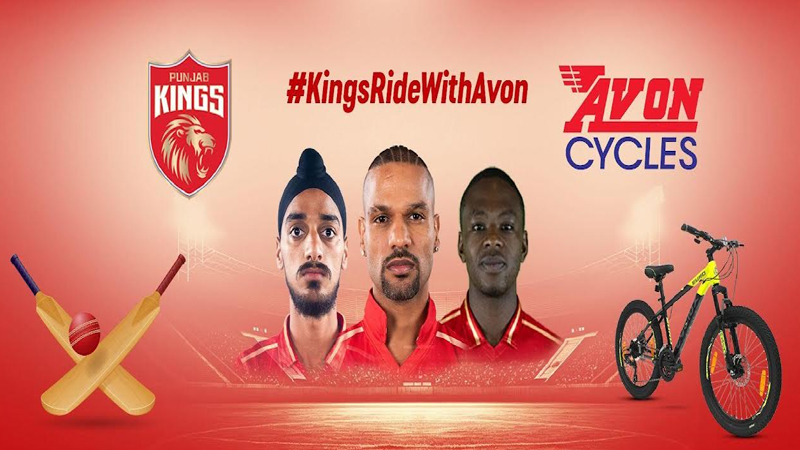
    Mumbai: Avon Cycles is proud to partner with the Punjab Kings, a Chandigarh-based franchise owned by Mohit Burman, Ness Wadia, Preity G Zinta, and Karan Paul.

    Avon Cycles had partnered earlier with the Punjab Kings in 2020 and have renewed their partnership for the cricket league season 2024.

    Avon Cycles CMD Onkar Singh Pahwa said, “Going on and beyond, here’s to sponsoring and coming together with the most coveted cricket team this season 2024. We are grateful to have a team that embodies the true spirit of sportsmanship, resilience, and excellence throughout the journey. As we carry on Avon’s legacy of being a frontrunner in bicycles, sports, and fitness, we are excited to reflect the values for the nation.”

    Avon Cycles joint MD Rishi Pahwa said, “We are delighted to hold a mark on the Punjab Kings for the upcoming 2024 season for the second time with optimism and enthusiasm. We are excited and thrilled to partner with this year’s most anticipated cricket team and look forward to rolling in with full speed and strength on the ground.”

    Avon Cycles ED Mandeep Pahwa said, “As we share the brimming values, it’s a moment of joy that we take on board the ‘lions’. We are grateful to share the strength and aim together to excel on the field in the true spirit of the game. All the best to the team Punjab Kings, looking forward to an amazing tournament of the season with a strategic win.”

    KPH Dream Cricket Pvt Ltd CEO Satish Menon said, “We are delighted to have Avon as our partner. For us the pleasure is multifold, firstly to have a Punjab-based brand and second that they have chosen to ride along with us again.”

    Avon Cycles, a leading player in the bicycle industry, has consistently promoted health and fitness at a higher level. With years of excellence, they have emerged as a preferred brand for Indians seeking reliable and sustainable commuting solutions.

    Today, they are even more delighted and proud to endorse the formidable Punjab Kings for the biggest franchise cricket league, wavering up the credibility and stride of the nation. Avon is aiming to align with the ethos of promoting an active and healthy lifestyle, encouraging the building blocks, the youth, to not only embrace the sport but embody the true values of sportsmanship in daily life.

    The collaboration has leveled up the excitement towards translating the values through the Punjab Kings! With their hustle, power, and performance, both brands are set to wheel into the season in 2024.
     

  • Mohit Burman willing to look at cricketing leagues globally

    Mohit Burman willing to look at cricketing leagues globally

    MUMBAI: They had never won the Indian Premier League (IPL) title in 10 seasons but that didn’t stop Kings XI Punjab (KXIP) from investing in big names for the eleventh edition. Chris Gayle, Aaron Finch, Yuvraj Singh and KL Rahul are names associated with this team.

    Since the commencement of the league, the ownership of KXIP has remained unchanged with Dabur India director Mohit Burma holding the majority stake and the rest being distributed among actress Preity Zinta, businessman Ness Wadia and Apeejay Surrendra Group’s Karan Paul.

    This season, the IPL has introduced a novel concept of allowing mid-season transfer of players. While some team owners believe that it won’t be used much, Burman thinks the opposite. Speaking to Indiantelevision.com, he says, “It is a great move by IPL. It helps the team realign its strategy keeping in mind the kind of position it is in at that particular moment. The players who haven’t received enough opportunity to play for the team will get a chance to play for some other team.”

    The first seven seasons were loss-making with KXIP losing Rs 70 crore but the team stuck to it and managed to turnaround things in the next three seasons. Burman is set on cricket and isn’t keen on investing in other sports but will look at other cricketing leagues globally.

    Burman may have taken a lesson from his investment in the team Dabur Mumbai Magicians in the Mumbai Hockey India League (HIL) from 2012 to 2014. The team is now owned by DoIT Sports Management. But he still owns the Pune team of the Indian Badminton League.

    Financially, this was the best pre-tournament time for KXIP’s history. “For the first time in history, we closed all our sponsorships one month before. This year, we changed our strategy to sell out sponsorships by approaching the companies that generally don’t advertise on cricket. In terms of sponsorship revenue, we grew by 20-25 per cent compared to last year. The average title sponsorship for all the teams is between Rs 10 crore and Rs 20 crore. The top teams for selling sponsorships are Mumbai Indians and Kolkata Knight Riders,” Burman adds.

    KXIP sponsors for season 11 include Kent RO, Lotus Herbals, Jio, Fena, Royal Stag, Finolex, Manyavar, Tecno, Surya LED, Kingfisher, Tic-tac and Coca-Cola.

    He lauds the investment by Star India to ensure the IPL reaches out to regional crowds this season onwards. “Star has put it a lot of work because of the amount they have paid for broadcasting it. IPL viewership has gone up in the south because they are showing it in different languages like Telugu, Tamil and Kannada,” he says.

    The team that failed to qualify for the knockouts in the previous season, surprised everyone by deciding to release star performers Glenn Maxwell and David Miller with the former going to Delhi Daredevils and the latter being retained using the right to match option. The side that ended in the fifth position of the table decided to retain only the bowling all-rounder option Axar Patel this year.

    As of today, KXIP stands fourth in the IPL ranking chart trailing Sunrisers Hyderabad, Chennai Super Kings and Kolkata Knight Riders. The team will have to buck up if it wants to defeat champions and become champion for season 11.

  • “Any model that guarantees 70% of your revenue is a great business to be in”: Fraser Castellino

    “Any model that guarantees 70% of your revenue is a great business to be in”: Fraser Castellino

    In April 2014 he was appointed as the COO of Kings XI Punjab, the team that sparkled on field during the seventh season of the Indian Premiere League (IPL). Fraser Castellino has over a decade of experience of working in the sports industry.  Besides leadership roles in IPL teams like Royal Challengers Bangalore and Rajasthan Royals, he was also instrumental in setting up the Sahara Group’s polo and other non- cricketing ventures. Castellino is a marketing graduate from Mumbai and also holds a bachelor’s degree from St Xaviers College.

    Ahead of the upcoming Champions League Twenty2O, Indiantelevison.com’s Herman Gomes talks to him about the franchises plan ahead and the factors that have contributed to the team making a profit this season.

    Excerpts…

    It was one of the best seasons for Kings XI Punjab having reached the finals. What are your thoughts?

    Yes, you’re absolutely right. We went on to win 11 out of the 14 games in the home stretch which was great. I think what was most exciting for me was the fact that Kings XI Punjab this year, demonstrated a brand of cricket which people identified with. People actually wanted to come and watch us play the games, because they loved the entertainment factor around our team.

    There were teams, who set up scores of 200 but we chased those down. There were teams that put us in to bat first, we scored and defended it. When I spoke to some cricket experts, one of them mentioned to me that teams did not know what to do with Kings XI Punjab. Opposing captains didn’t know whether to put us to bat or whether to make us chase or what to do at all because we guys seemed to tackle anything that came our way. That was a great and pleasant feeling.

    It wasn’t also that we were going overboard with it, but it was great to know that so many people identified and wanted to watch Kings XI Punjab.

    Earlier this year, KPH Dream Cricket showed a profit of Rs 78 lakh before tax. So you have finally broken even and made a profit. What has been the winning combination for your team?

    Yes, we have made a profit this year. There were a couple of reasons that contributed to this. We made a lot of smart decisions about the way we spent money this year. One of the first things was with player costs. A lot of people don’t know this but 60 to 70 per cent of the cost is actually the player cost which is the amount of money you spend on buying the players.

    If one spends Rs 60 crore, that’s 70 per cent of the budget. I think Kings XI Punjab this year was very smart in purchasing players and thus saved money. But having said that, we still bought a great team.

    Secondly, our team performed well. When a team performs well, people want to buy the tickets and come to watch the matches.  In India, there is a typical problem. People want to come for the games but in exchange for a free ticket. But this time we had people who actually were willing to buy the tickets and come and watch because they were enthused about the kind of brand of cricket that we played.

    Then there was sponsorship money. When a team is doing well, it makes money because the structure of the sponsorship contract ensures that when a team moves into the playoffs, the sponsor pays bonuses.

    Then finally is the prize money you win. The winning team as well as the runner-up make very decent sum money which comes to the franchise.  These factors have contributed to our winning combination.

    How well is the team preparing ahead of the upcoming Champions League?
    The Champions League is a very clear tournament. We get a participation fee for qualifying and participating in the tournament. And we pay 10 per cent of the player cost for the team. So one is already in a very good position, since they are making some money even without doing anything. The rest is taken care by the organisers. The travel etc is all paid by the organisers so there is no cost to the franchise. The big upswing is winning the tournament because the prize money is half million dollars. So that is the target for us. So in terms of preparing, we are looking at the apple and saying let’s go and shoot it.

    Have you looked at new deals with sponsors?

    We have signed two new sponsors ahead of the upcoming Champions League which is Air Asia and HTC. There are also a couple of other brands that will be announced in a couple of days. It’s simple business actually. All brands want to associate with the winning combination and many do well and perform.

    How difficult is it for a franchise to get a sponsor on board?
    The IPL is a successful property. Brands, want to be associated with it. But there are only those limited number of teams. So I think as long as we see the IPL remaining prime, every team will receive sponsorship. The amount of sponsorship one earns will depend on how the team performs and the stars one has. We have done well this season and we hope to continue doing it.

    How much of your local revenue comes from sponsorships?

    Sponsorship would be about 60 per cent of our local revenue. The rest comes from gate revenues.

    How is the team now approaching licensing and merchandising and how important is it for you?

    Licensing and merchandising should be looked at a greater context. Licensing is still progressing but if one looks at merchandising and the amount that teams make from it, I think there is a lot of potential to grow further. For Kings XI Punjab there is great potential. The Punjabi fan base is large. Our catchment area is not just Punjab or Himachal but everywhere the Punjabi exists.  This can be UK, Toronto, Canada Dubai or Australia. Punjabis are everywhere and these are our fans. The answer to your question is if we can take our merchandising internationally, then I think we will have a different story to tell.

    How much amount do you allot to digital marketing to interact with fans?

    There is a small team that works on various programmes. We have interesting deals where we don’t spend much money on digital marketing.  We in fact make money from it. Digital is actually a revenue line.  It’s small right now but for every video we put on YouTube, we earn money from it. In digital marketing there is a way of earning money and that will be our focus growing forward.

    During the off season what are the various programmes the team engages with?

    During this time our team works on sponsors, ideation, planning, thinking about players. We have programmes to engage with our fans like the Kings XI Punjab Cup which is a local identifying talent tournament. It is played all across Punjab in cities like Jalandhar and Amritsar. We target players between the age group of 18 to 25 years. These are players who play for colleges, clubs and various tournaments.

    Do you think the BCCI should be working more closely with teams to make them more profitable?

    The BCCI has done what they had to do. They have sold the franchise and every owner has bought the teams. They haven’t changed the terms and we need to work within those frameworks we bought in 2008 to make money.  I think any business that guarantees you 70 per cent of your revenue is a great business to be in. A team owner may have a different view but I personally feel BCCI doesn’t have to do anything more.
  • ‘Sponsorship rates have reduced by 20 per cent’ : Mohit Burman – Kings XI Punjab co-owner

    ‘Sponsorship rates have reduced by 20 per cent’ : Mohit Burman – Kings XI Punjab co-owner

    Kings XI Punjab, the Mohali team for Indian Premier League (IPL), was bought for $76 million by Bombay Dyeing deputy MD Ness Wadia, actress Preity Zinta, Dabur India director Mohit Burman and Apeejay Surrendra Group chairman Karan Paul.


    The four shareholders together formed KPH Dream Cricket Private Limited, the holding company of Kings XI Punjab.


    Kings XI Punjab is eyeing sponsorship revenues while cutting down on marketing expenses.


    In an interview with Anushree Bhattacharyya, Burman talks about how the economic downturn is going to upset the revenue targets of the team franchisees.


    Excerpts:

    Since Kings XI Punjab did not go for three-year sponsorship deals, how difficult has it been to retain them for the second IPL edition?
    Spice Telecom is very much on board as our title sponsor. We are in the final stage of negotiations with Coca-Cola as our pouring partner. Kotak, Provogue and 9X, however, are not there this time.


    As for new deals this year, we have signed up with United Spirits while Reebok is our apparel sponsor. We will be closing two more deals in the next four to five days. Overall, we are looking at signing eight to nine sponsors this year.

    Has the downturn in the economy forced sponsorship rates to fall?
    The whole world has changed and overall sponsorship rates have reduced by 20 per cent. We thought we were better off than those team franchisees who had gone in for three-year sponsorship deals. We felt we would be able to command higher sponsorship rates after the build-up from the first IPL tournament. But amid the economic downturn, the teams who signed three-year deals seem to be the smarter ones.

    Does this mean that the revenue targets have gone awry?
    Since the tournament went off on a high note last year, we were under the impression that we would break even this year. However, looking at the present situation, I don’t think that franchisees will be able to break even before 2012. Most franchisees will not be able to make a profit this year, although the tournament will continue to be a success.


    The fact that the IPL is held after a long gap doesn’t help matters. Globally, leagues are played for eight to nine months with a short break, providing sponsors a continuous flow of events.

    Where do you see most of your revenues coming from?
    We hope to make more from our sponsorships, ticket sales and merchandising. This should account for over 60 per cent of our total revenues this year, unlike in the inaugural edition where the maximum came from the central pool. We also hope to get our act right on the ticketing sales front this year.

    Do you plan to decrease the ticket prices to pack more audiences into the stadium?
    We already have a pricing strategy. The ticket prices range between Rs 150 to Rs 6000, addressing different segments of audiences. But this year we are going to be very strict in terms of ensuring that people who wish to watch the matches do pay for the tickets.

    Have you lined up your licensing and merchandising strategies?
    For apparel licensing, we have already tied up with Reebok. We will be soon announcing our partner for making accessories like key chain, mugs, etc.

    Have you trimmed your marketing expense this year?
    We are bringing down our marketing cost to Rs 35 million, from Rs 50 million last year. The initial costs in building up a brand are obviously higher. For example, we made a video with Daler Mehndi last year – and that obviously increased our marketing budget. We don’t see such a requirement for making another video this year.

    Since the tournament went off on a high note last year, we were under the impression that we would break even this year. However, looking at the present situation, I don’t think that franchisees will be able to break even before 2012

    What role will Preity Zinta play to promote the franchisee this year?
    We have already started our marketing initiatives through the King XI Punjab Cup. We had also sponsored the Manali winter festival in Punjab. This year we will be concentrating more on ground level activities in our catchment areas.


    Preity Zinta is one of the owners and she is welcome to play whatever role she desires. She has already contributed a lot last year and as the tournament gets closer, I am sure she will help us in our marketing activities.

    What was the idea behind organising the Kings XI Punjab Cup?
    The idea is to reach out to the people of our catchment areas which include Himachal Pradesh, Punjab, Jammu and Kashmir, etc. At the same time, we want to promote the game of cricket at the grass root level. Since we have a coach and some of the best players from the world, we want to nurture young talent.

    A few franchises have partnered with TV channels in search of cheer leaders. What are your plans?
    We have got plans, but at this moment we are really concentrating on ground activities. Our idea is that instead of doing national hoity-toity shows on TV, we should concentrate on building the brand in our own locality. We believe that if we really want to make our franchise work, then we need to get closer to our fans and get them more involved with the team.

    Are you looking at beginning a cricket academy as Ness Wadia said that the franchisee job is to acquire and groom new players?
    We are setting up an academy and for that we have already got an academy coach. We should be able to roll out the academy a few weeks before the tournament.

    Will Brett Lee’s injury affect your team’s performance?
    I believe Lee will be fit to play for the tournament. We have, however, crafted a team keeping in mind the fact that Lee may not be able to play. Which is why we added West Indian pacer Jerome Taylor and Ravi Bopara.

    You got England’s Ravi Bopara for $450,000, three times his starting price of $150,000. Would you call this an intelligent investment, looking at the present market scenario?
    Kolkata Knight Riders bought Mortaza at a very high rate. So was that an intelligent investment? Every team has to decide on their player investments, keeping many things in mind. While it is true that Bopara was expensive, it is a fact that we needed an all-rounder. And there were two other franchisees who were bidding for him. I believe Bopara would have gone for higher if other franchisees had not run out of money.
    With the dates of the Lok Sabha polls coinciding with some of the IPL matches, how would franchisees be impacted if venues were changed?
    The IPL committee had asked the franchisees to create a back-up plan. Franchisees have an option to play in one or two grounds in the nearby areas. Rescheduling, thus, will not affect the plans of the franchisees.