Tag: Nepal

  • SAFF gets going in Goa

    SAFF gets going in Goa

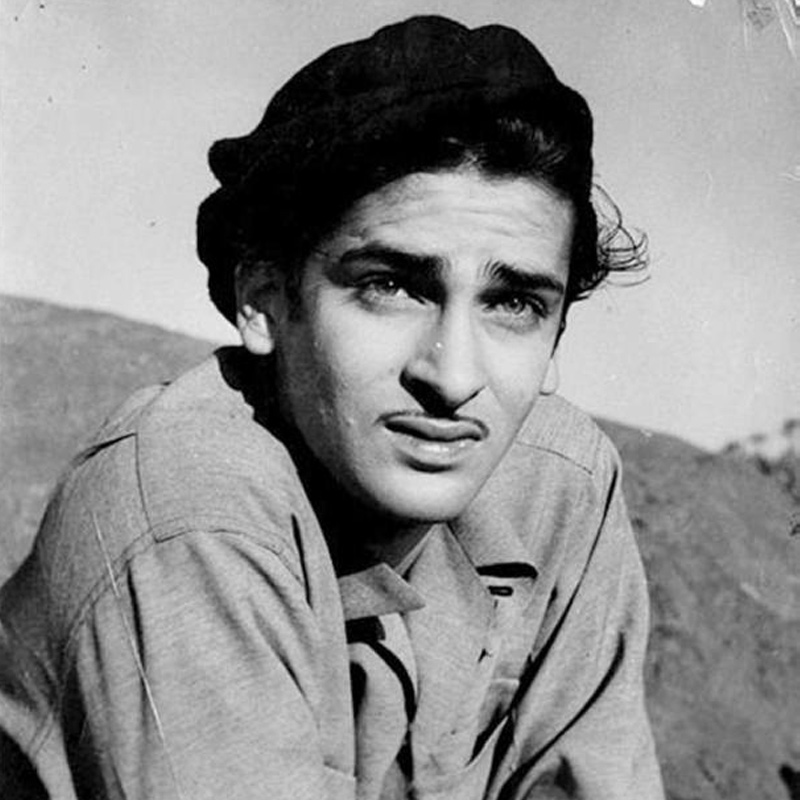
    MUMBAI: The South Asian Film Festival (SAFF) got going in Goa yesterday with the screening of the Shammi Kapoor and Sharmila Tagore-starrer Kashmir ki Kali, screened as a special tribute to the late star.


    The festival was declared open by Goa chief minister Digambar Kamat in the presence of Randhir Kapoor and Rajeev Kapoor, the scions of Kapoor family among representatives of South Asian Countries who were present at the ceremony.


    Randhir Kapoor was felicitated by the state chief secretary Sanjay Srivastava in honour of the contribution of the Kapoor family to Indian Cinema. “Cinema knows no boundaries. Its just an emotion that we create. We should have lot of cultural exchange amongst the south Asian nations,” said Kapoor responding to the felicitation.


    The festival‘s theme is ‘Dissolving Boundaries‘ – spreading the message of togetherness and oneness amongst the South Asian Countries including Afghanistan, Bangladesh, Bhutan, India, Maldives, Nepal, Pakistan and Sri Lanka.


    Bhutan is the focus country for SAFF 2011. The annual festival will also pay tribute to Bangladeshi film maker Tareque Masud who was one of the two prime witnesses of the International War Crime Tribunal. Incidentally, Tareque was killed in a fatal bus accident near Dhaka on 26 August.

  • ‘India is a dynamic and an absolute key market for us’ : Anne Barnard – BBC World Ltd. managing director

    ‘India is a dynamic and an absolute key market for us’ : Anne Barnard – BBC World Ltd. managing director

    BBC World News is positioning itself as a tri-media news service with presence in TV, online and mobile. Editorially, it is looking to deliver more live up-to-the minute news reporting, across a broader news agenda.


    Eyeing India as an important platform, BBC has set up its regional marketing centre in Mumbai to tap into Pakistan, Bangladesh, Sri Lanka and Nepal.


    In an interview with Indiantelevision.com’s Nasrin Sultana, BBC World Ltd. managing director Anne Barnard unveils the changes that news media organisations have to prepare for in the convergence era and talks about the company’s growth plans in India.


    Excerpts:

    In terms of audience reach and viewership, where would you place BBC World News?
    BBC World News has a global weekly television audience of 78 million, up from 76 million in 2006. It reaches 159 million full-time households, up 8 per cent from 2006, and 276 million total households globally. In terms of hotel-rooms, BBC World News has increased from 1.4 million to 1.6 million.


    On the mobile front, the channel is available on 34 platforms. Mobile is the fastest growing out-of-home platform for us. In India, we have inked content deal with six mobile service providers in India. The list includes BPL, MTNL, Airtel, Vodafone, Spice Telecom and Idea Cellular.


    BBC World News is also present in 42 airlines and 57 cruise ships. 29 million unique users (excluding the UK) visit BBC.com every month.

    Where is the audience growth coming from?
    Over the past five years there has been a 50 per cent increase in weekly European audiences and a growth of 25 per cent in Asian viewership.

    Where does BBC World News stand in terms of ad sales revenue?
    In ad sales, we have seen a 20 per cent growth and overall revenue has seen double digit growth.

    In terms of revenue, what kind of growth has Asia seen?
    In Asia, we have achieved a growth of 20 per cent.

    How much does subscription revenue contribute?
    We have recently launched two channels in India. We are in pay mode in India. The subscription revenue has just started to kicking in. Most of the channels in South Asia are largely free. In Southern Europe, we do not get subscription revenue at all.

    What are the key markets in Asia for BBC?
    From our commercial and advertsing point of view our key markets are India, Singapore, Hong Kong, and Japan. We see huge potential in the Korean market, especially with our online product.

    In Asia, we have achieved an ad sales growth of 20 per cent

    Why did you zero in Mumbai as your first regional marketing centre outside the UK?
    BBC World News wants to create a much more definite approach to new online and mobile products of BBC News and its consumers. India is a dynamic and an absolute key market for us. The regional centre in Mumbai will focus on the South Asian market.

    After the launch of the first regional marketing centre outside the UK, will there be any change to operations in South Asia?
    There will be key changes to the operations in South Asia, with a series of appointments for the regional marketing centre in Mumbai.


    BBC Global News will bring together BBC World Service radio, BBC World News television, the BBC’s international facing online news services and BBC Monitoring.


    All South Asian marketing, communications and audience insight (MC&A) activities will be managed from Mumbai. The Mumbai office will continue to service BBC World News’ MC&A needs in India, but will now additionally manage World Service’s extensive activities across the region, including Pakistan, Bangladesh, Sri Lanka, and Nepal.


    Vaishali Sharma has been promoted to head of marketing & communications, BBC Global News, South Asia.


    Dezma De Melo, who was previously head of audience insight for BBC World, has been promoted to head of audience insight, BBC Global News, South Asia.


    De Melo and Sharma will work across consumer and trade activities and will, for the first time, provide in-region support for World Service business development teams.

    Are you making any changes in your programming mix this year?
    BBC World News is now positioned itself as a tri-media news service, delivering international news and information across multiple platforms – TV, online and mobile. Editorially, BBC World News is looking to deliver more live up-to-the minute news reporting, across a broader news agenda. It will also focus on providing more in-depth news and debate, plus global and regional news, business and sports programming including the popular World News Today with Nik Gowing, and India Business Report which target the Indian market.


    We plan to expand our family of World News Today programmes from five hours, to seven hours a day. In July, a new World New Today programme with Mishal Husain will be launched. Our weekends will be focused on delivering topical lifestyle and documentary programming.


    A number of BBC programme seasons are also planned over the course of the year and will be broadcast across TV, radio and online.

    What about ad funded programming?
    It is the advertisers’ creation and ideas that we further push as a funded programming. But in all such cases, the editorial rests with us. Ad sales team does not impose upon any story on the editorial; they only suggest ideas. After we receive all the entries for the ad funded programming, we select only six programmes which suit our programming code.

    Which is your best ad funded programming?
    Our best is World Challenge sponsored by Shell. This year we will be in our fourth season. In the fourth season, we have teamed up with Newsweek and Shell for the World Challenge, to identify and reward people and groups that bring economic and social benefits to their local communities.


    This year each nomination must fall under one of the following categories: community welfare and enterprise; health and education; sustainable farming; energy; water and environment.
    A panel of judges will then shortlist the entries down to the 12 best examples of community-based projects or businesses.


    BBC World News will then produce six 30-minute programmes profiling the 12 finalists showing how their projects and businesses are changing lives. These programmes will be broadcast to the channel’s global audience in October and November, and the channel’s viewers will be invited to vote online for their favourite project or business.


    Last year a record 942 nominations were received from 99 countries worldwide. Winning project T’ikapapa – a Peruvian project set up to bridge the gap between Andean farmers and the potato market – was presented with a $20,000 grant from Shell to further develop their initiative.

    Would such programming have been possible for BBC to undertake without the ad fund support?
    No.

    With pressure coming from commercialisation, what are the changes that BBC News has gone through recently?
    There are no such pressures. Editorial and sales are two different entities.


    How do you position BBC World News in an Indian scenario where there is a mushrooming of popular local news channels?
    Our aim is to present a different and unique point of view. We do not want to put ourselves under pressure of becoming a market leader in India.

  • Confluence of Young Film Makers

    NEW DELHI: Over 25 films from Germany, Nepal and India are to be screened in the First Frame 2007 international students’ film festival being held on February 6 and 7 in the capital.

    Organised by the Madhubala Institute of Communication and Electronic Media (MBICEM), the Festival will feature documentary, fiction and short films. Awards will be presented for best Direction, Best Cinematography, Best Film, and a special award to be presented by the co-sponsor UNITECH.

    First Frame 2007 has gone global this year and the media partner for the event is SAHARA NCR. The event has been co-sponsored by UNITECH and is supported by Bajaj Hindustan and other corporate organizations.

    Former Film and Television Institute of India Director Mr. Mohan Agashe, senior film critic and indiantelevision.com Consulting Editor Mr. B B Nagpal, and KATHA Centre for Film Studies Director Mr. Prabodh Parikh are among the jury for the Festival. The final entries were shortlisted from those received from Germany, Sri Lanka, Pakistan, Canada, Nepal and India by a four-member panel comprising renowned poet Kailash Bajpai and filmmakers Pankaj Singh, Ajay Bedi, and Raza Haider.

    Many of the entries received have been to prestigious festivals including the Mumbai International Film Festival, Berlin Asia Pacific Film Festival, Asian Film Festival (Singapore), Indian Social Forum 3-Screen Festival, and the first Wordless International Short Film Festival.

    The Film Festival opens on February 6, and screenings are open to all. Ancillary activities include workshops like Reality Films by renowned documentary filmmaker from Magic Lantern Foundation, Delhi, Gargi Sen, and Gone in 30 seconds, conducted by Advertising professional Azaz Ahmed, Creative Head, Publisis India. These workshops can be attended by registration and payment of nominal fee.

    Started in 1996, MBICEM is a media institute affiliated to Guru Gobind Singh Indraprastha University, imparting education in Print Media, Radio, Television, Advertising and Video Production. The institute aims to equip the students with professional skills to meet the requirements of the corporate media world.

    First Frame in its very first edition in 2003 screened both fictional and documentary films. The participation of students was from three media colleges of Delhi; MBICEM, IP College for Women and Sri Aurobindo Institute of Mass Communication. Mrs. Aruna Vasudev, Editor, Cinemaya, was the guest of Honor for the event. The 2004 edition was bigger, inviting participation from institutes at national level like MCRC, St.Xavier’s College Mumbai, YMCA and FTII.

  • ESPN Star Sports wins broadcast rights to Uefa Euro 2008

    ESPN Star Sports wins broadcast rights to Uefa Euro 2008

    MUMBAI: ESPN Star Sports has won exclusive broadcast and internet rights for the Indian subcontinent for the 2008 European Football Championship (Uefa Euro 2008).

    The territories that are covered in the deal are India, Pakistan, Sri Lanka, Nepal, Bangladesh, Bhutan and the Maldives. With this acquisition, ESPN Star Sports will be broadcasting all 31 matches from the tournament live and exclusive.

    Uefa Euro 2008 is the most prestigious tournament in the football calendar after the World Cup. The competition will feature the top 16 national teams from Europe and will be held in Austria and Switzerland in June, 2008. In addition to its live coverage of matches, ESPN Star Sports will be producing exclusive pre-game, post-game, and halftime shows around Uefa Euro 2008 as well as other localised content designed to broaden the base of football viewers in the Indian subcontinent. This commitment to broadcast Uefa Euro 2008 continues the 14-year association between ESS and Uefa which goes back to the inaugural season of the Uefa Champions League in 1992/3.

    Commenting on the acquisition, ESS managing director Jamie Davis said: “I am delighted that the Uefa European Championship is returning to our networks in 2008. The fact that we are working directly with Uefa for the first time affirms their confidence in our efforts to deliver the best football programming to South Asian fans.”

    “We have expanded the football-watching audience in India through concentrated marketing efforts and programming initiatives such as the introduction of Hindi commentary. Viewers can expect an exciting presentation and fresh innovations for Uefa Euro 2008.” Davis added.

    Uefa director of marketing and media rights Philippe Le Floc’h said: “ESPN Star Sports is one of the most experienced sports broadcasters in the Indian subcontinent. We are excited to work again with ESPN Star Sports whose expertise and market position will further enhance the Uefa European Championship brand in the Indian subcontinent.”

    This latest acquisition follows the recent three-year extension of rights for the English Premier League for the Indian subcontinent. ESS football coverage also includes the Spanish Primera Liga and the English FA Cup. ESS also annually produces over 1,000 hours of original football programming, including Nokia Football Crazy, Football Focus, Goals, Tiger FC Locker Room, Here We Go, First Edition and Football Extra.

  • Worldspace inks cricket rights deal with Espn Star Sports

    Worldspace inks cricket rights deal with Espn Star Sports

    MUMBAI: Worldspace Satellite Radio has signed an exclusive broadcast license agreement with Espn Star Sports to provide subscribers with live audio coverage of cricket, further enhancing its content offering and providing consumers with a truly unique listening experience.

    Under terms of the agreement, Play, the Worldspace -branded all sports channel for South Asia and the Middle East, will have exclusive broadcasting rights throughout South Asia for 12 tours and over 200 days of cricket comprising both test matches and one-day internationals.

    Three of the 12 tours include India — Worldspace Satellite Radio’s primary market in the Asia region. Coverage begins 19 November, 2006 with India’s tour of South Africa, and runs through February 2008, with conclusion of the India-Sri Lanka-Australia Triangular Series in Australia, informs an official release.

    “The exclusive acquisition of these premier cricket internationals is another demonstration of Worldspace’s continued commitment to providing the best in audio entertainment for our listeners,” said Alexander Brown, co-chief operating officer, Worldspace.

    Subscribers will have “ball-by-ball,” real-time coverage of all matches as well as a host of ancillary programming surrounding each match. The coverage will feature matches with the national teams from India, Australia, England, New Zealand, South Africa, Zimbabwe, Sri Lanka, and the West Indies, and will also include the biennial Australia-England test series, “The Ashes.” Broadcasts can be received in countries covered by the Worldspace AsiaStar satellite’s West Beam and include: Bangladesh, Bhutan, India, Maldives, Nepal, Pakistan, Sri Lanka, Bahrain, Qatar, and UAE.

  • SAARC nations to evolve strategy to exchange information during calamities

    SAARC nations to evolve strategy to exchange information during calamities

    MUMBAI: The Press Information Bureau additional principal information officer B S Chauhan will be heading the Indian delegation at the Third Conference of Editors and Working Journalists of SAARC (South Asian Association for Regional Cooperation) countries at Male. On the agenda is SAARC countries evolving a strategy to exchange information on media usage during calamities

    The prime criteria is that reaching out is a must in disseminating critical information for those in the concerned affected areas.

    India has reiterated that SAARC Nations should make special efforts through media so that the people, especially women and children of these areas can be brought closer to the mainstream.

    With a view to reach out to people affected by terrorist acts and hilly terrain in India, Chauhan emphasised that radio coverage should be strengthened to reach the affected zone, informs an official release.

    Sharing the experience of India on media management during Tsunami crisis, he said, all stations of All India Radio in southern states of India and East Coast including the Andaman and Nicobar Islands where continuously broadcasting information on the developing situations in the affected areas are based on live inputs by districts and State authorities from different locations.

    Radio and TV stations also broadcast information about relief measures like helplines and measures to combat epidemics. He said that, the media must be involved as a participatory agency which combines the media, government officials, government multimedia implementing agencies, NGOs, public opinion representatives and the beneficiaries.

    Apprising the member countries of transparency measures being taken by India, Chauhan said India had recently adopted a legislation in Parliament relating to the Right to Information (RTI). The RTI Act is a major stride in further increasing transparency in the country and is expected to go a long way towards making officials more responsive to people’s urges articulated through the media. This is an idea, which the other countries in SAARC region may like to emulate.

    SAARC is an association of eight countries of South Asia including India, Bangladesh, Bhutan,Afghanistan, Maldives, Nepal, Pakistan and Sri Lanka. The two-day conference is being attended by the representatives of the SAARC countries except Nepal.

  • BBC World Service audiences hit record levels

    BBC World Service audiences hit record levels

    MUMBAI: BBC World Service now attracts 163 million weekly radio listeners to its 33 language services – a record audience for the world’s best-known and most respected international broadcaster, according to figures announced today.

    The new weekly audience figure, compiled from independent surveys around the globe, is an increase of 14 million on last year’s figure of 149 million. In India there are now 17.6 million listeners – a rise of 1.2 million. This continues the trend of increasing audiences in the country and follows a rise of 4.8 million last year. This is the second annual increase in the country and follows a dramatic drop in overall radio listening in India and a ban by Indian regulators on local FM stations carrying news from foreign broadcasters. This resulted in a drop of over 12 million listeners between 1995 and 2002.

    The new figure equates to around 50 per cent more listeners than any comparable international broadcaster. This new figure breaks the previous BBC World Service record audience of 153 million in 2001.

    BBC World Service director Nigel Chapman says, “This record-breaking audience is an outstanding achievement against the background of fierce competition, fast-developing technology and rapidly changing audience demands in many media markets. The challenges ahead for BBC World Service remain formidable, as they do for all broadcasters, but this is a strong and welcome indication that we are not only strengthening our impact in priority areas but are flourishing in the multimedia age.”

    More than 10 million extra listeners are listening on the higher quality audibility of FM through partner stations and the BBC’s own relays around the world. BBC World Service is now available on high quality FM sound in a record 150 capital cities out of a total of around 190 – up from 145 last year.

    Shortwave and medium wave listening also showed an increase of around five million, particularly in rural areas in parts of East Africa and SE Asia (Burma, India and Nepal), which are among priority areas for BBC World Service.

    The BBC World Service audience figure contributes to a combined record global weekly audience of more than 210 million individuals to all the BBC’s international news services – BBC World Service radio, BBC World television and the international-facing online news service bbcnews.com; some of whom are using all three media.

    This combined figure includes a record 65 million weekly viewers for BBC World – the commercially-funded international television news channel. Online audiences to the BBC’s international facing news sites have also shown significant rises.

    The sites attracted around 500 million page impressions a month in March 2006 compared to 324 million page impressions in March 2005. This is a rise of over 50 per cent over the year. The site now attracts around 33 million unique users each month, up from around 21 million unique users a year ago.

    Global audiences to BBC World Service English language broadcasts have risen to 42 million, up from 39 million last year. BBC World Service’s audiences in Africa and the Middle East are now 73.6 million – up 7.6 million. An even bigger increase of 7.9 million BBC radio listeners was recorded in the Asia and Pacific Region of the world which now has 61.1 million in total.

    Burma – Measured audiences in Burma rose by 6.7 million listeners to 7.1 million. This rise is as a result of improved access for the independent survey takers, who are now able to measure audiences nationwide rather than sample cities.

    Nigeria – BBC services in Nigeria gained 3.6 million listeners, raising the total to 23.8 million. This figure means the BBC has more than regained the 1.5 million listeners it lost last year after a Government ban on local FM stations rebroadcasting news programmes from foreign broadcasters in 2004. Listeners have turned to shortwave broadcasts, as the ban is still in place.

    Tanzania – Listeners to the Swahili Service in Tanzania rose by 2.7 million to 12.9 million. This follows a drop of 1.3 million last year.

    Nepal – There was an increase in listeners to the BBC Nepalese service of 2.6 million to 3.7 million, fueled by recent events.

    Indonesia – Audiences in Indonesia rose again. There are now 6.4 million listeners – a rise of two million. This follows a rise of 1.2 million listeners last year.

    Bangladesh – Audiences fell in Bangladesh by 4.4 million to 8.6 million. This follows a rise of 2.6 million last year. The BBC is working with Bangladesh National Radio to develop FM distribution in Bangladesh.

    Pakistan – Audiences in Pakistan fell by 0.9 million to 8.5 million. BBC World Service is looking to develop local FM partnerships to mitigate this loss.

    The new World Service global audience estimate is derived from a programme of independent audience research over a four year cycle. This year’s figure incorporates new data from 26 countries – some 71 per cent of this year’s audience (some 66 per cent of last year’s audience).

    It includes data on people listening to World Service directly via short wave, MW, FM satellite, cable and the internet or via local broadcasting partners on MW and FM. The surveys are carried out by independent market research groups and comply with international standards of audience research.

    There is some crossover of audiences who use both shortwave/medium wave and FM methods of listening. But listeners who use more than one method of listening are only counted once.

    BBC World Service is funded through Grant-in-Aid from the Foreign Office. The grant for 2006/7 is £245 million.