Tag: Neo Sports

  • Ranji Trophy Finals gain high ratings for Neo Sports

    Ranji Trophy Finals gain high ratings for Neo Sports

    Mumbai: According to a press release by the company, Neo Sports channel has met with unprecedented success in its efforts to rebrand and repackage domestic cricket. The viewership ratings touched new heights with the Ranji Trophy Finals between Mumbai & Bengal. The Finals saw peak ratings in the range of 2 TVRs across key markets like Mumbai – 2.1, Delhi – 2.1, Kolkata – 1.7 & WB 1 mn+ – 1.7.

    Additionally, the finals also propelled the Neo Sports ratings ahead of general entertainment, movies, news & music channels across key metros, Source: TAM, TG:CS Males Sec AB 15 years +, February 2nd – February 5th, 2007. Even markets not affiliated to the teams playing in the final garnered high peak ratings with UP 0.1-1mn – 1.6, AP 0.1-1mn – 1.3, Gujarat 0.1-1mn – 1.5, Gujarat 1mn+ – 1.2, Maharashtra 1mn+ – 0.9, Rajasthan1mn+ – 0.8, Bangalore – 0.7.

    “Neo Sports has been highly successful in marketing and presenting Indian domestic cricket. From the Challenger series to the Ranji Trophy, we have consistently managed to garner significant viewership. This only reaffirms our belief that Domestic cricket, when packaged well can attract large audiences. We now look forward to the All Star Series for The Deodhar Trophy starting 25th February to continue in the same vein especially with the inclusion of some of the key Indian players heading for the World Cup.” said Neo Sports Broadcast Pvt. Ltd.CEO Shashi Kalathil.

    Neo Sports which launched on October 1st, 2006 with the Challenger Series, became the No.1 sports channel within the 1st week of launch on the back of domestic cricket. Neo Sports Broadcast Pvt Ltd has an exclusive distribution tie-up with Star India, to take Neo Sports across the length and breadth of the country. The channel is available on Cable, DTH and new media platforms.

  • Neo Sports to telecast Ranji Trophy finals live

    Neo Sports to telecast Ranji Trophy finals live

    MUMBAI: Neo Sports has announced that it will air the live telecast of the Super League for the Ranji Trophy finals from 2 to 6 February 2007.

    The finals between Mumbai and West Bengal, will be played by a host of top players like Sachin Tendulkar, Saurav Ganguly, Ajit Agarkar and Zaheer Khan.

    The company claims that the telecast of the Ranji Trophy finals is an extension of the commitment of Neo Sports to bring domestic cricket closer to cricket lovers and with the seasoned players playing the series, it will definitely be an even more exciting game to watch.

  • Tata Sky reaches deal to air India cricket

    Tata Sky reaches deal to air India cricket

    MUMBAI: The Tata Sky DTH platform has reached an agreement with Neo Sports, the channel that has rights to telecast India cricket.

    An immediate fallout of this is the fact that Tata Sky subscribers will get to watch live the third ODI that kicked off in Chennai today and the subsequent matches as well.

    The remaining matches of the series will be available live on Tata Sky and in digital picture quality, a release issued by the DTH service provider states.

    Doordarshan is also showing the matches but with a seven-minute delay. The national broadcaster was allowed to telecast the matches ‘deferred live’ following a Delhi High Court ruling on dispute between Nimbus and Prasar Bharti.
     

  • Cricket knocks ‘KBC’ down the ratings ladder

    Cricket knocks ‘KBC’ down the ratings ladder

    MUMBAI: Cricket has done a number on Star Plus’ Kaun Banega Crorepati, which opened with a big bang clocking 5.3 TVR, but saw a significant ratings drop on Wednesday.

    In a downward trend, the ratings for the show have slipped by 1.8 per cent to 3.5 (aMap TG C&S4+ in the North West East India market) on its third day of telecast.

    Clearly, KBC received a kick on 24 January due to the India Vs West Indies ODI match telecast on Neo Sports and DD1, which garnered a market share of 27.8 per cent on an All-India level.

    Could this be a dampener for Star? Star India president advertising sales and distribution Paritosh Josh tells Indiantelevision.com, “I would not be too excited about the ratings generated on the first day, as it would be the outcome of the hype created by the enormous marketing and media coverage.”

    Date
    Market Share
    22 
    Monday
    24.1
    23 
    Tuesday
    24.0
    24 Wednesday
    15.4

    aMap’s overnight television ratings system indicates that the market share for the show has dipped from 24 per cent on the first two days to 15.4 per cent on the third.

    Although good opening ratings is not a bad thing, what is required is ‘stickiness’ that has to be built and sustained over time, says Joshi.

    A point of note is that all genres suffered as a result of the cricket with the hardest hit being the regional satellite channels, which saw viewing plummet 31.9 per cent. GEC channels followed closely at 29.4 per cent while south satellite and cable saw a drop in market share of 20.4 per cent.

    As opposed to what KBC set out to target, in terms of a more ‘youth’ based audience to be drawn in with SRK’s charms, ratings suggest that the average age for the viewers is 32 years.
    Joshi however is optimistic and says that he would not subscribe to the mentioned ratings, but instead await TAM’s report on Monday 29 January to further comment on the response that KBC has garnered.

  • Nimbus-DD talks fail, I&B may issue ordinance

    Nimbus-DD talks fail, I&B may issue ordinance

    NEW DELHI: The information and broadcasting ministry is likely to issue an ordinance by the end of the week, making it mandatory for Neo Sports to share its cricket telecast feed with Prasar Bharati.

    Ministry sources told Indiantelevision.com that as the minister Priya Ranjan Dasmunsi was not in Delhi, deliberations on drafting an ordinance can only commence on Tuesday.

    If an ordinance is finalized, it will be sent to the law ministry for clearance and only then referred to the union cabinet for approval. As this process is unlikely to be complete by Thursday when the cabinet meets, a special meeting may be held later to clear the ordinance.

    Negotiations had earlier broken down with Nimbus which owns Neo Sports when the private channel insisted that Doordarshan should either encrypt the channel or show the matches as a deferred telecast. After almost three days of negotiations, Prasar Bharati officials said the conditions set by Nimbus was not in conformity with the uplinking/downlinking guidelines issued by the government.

  • Neo Sports challenges Trai decision on price cut for its sports channels

    Neo Sports challenges Trai decision on price cut for its sports channels

    NEW DELHI: The Telecom Disputes Settlement Appellate Tribunal today asked Trai to explain by 7 February the basis of its decision to slash the bouquet prices of Neo Sports and Neo Sports Plus channels’ from Rs 58.50 to Rs 37.25, on which the channels had filed an appeal.

    The channels’ contentions were on several grounds, especially that “sports” cannot be treated as a “genre” for fixing of price.

    The counsel for the channels argued at TDSAT today, that “sports” cannot be treated as a genre as a method of fixing a channel’s price because there are sports channels and sports channels.

    The channels said that there were huge differentials between the pricing of various sports channels, and that these differentials stem from the rights to cricket properties. Neo Sports channels presented its case saying that it had rights of almost two-third of the assured cricketing properties involving India, till 2010. These properties have a tremendous revenue generating potential and also have to be bought at massive prices, hence the higher prices, the channels argued.

    Trai had argued earlier that fixing of prices for channels of the same “genre”, which is one of the key factors as per the Trai principal Tariff Order’s clause 3, does not allow Neo Sports and Neo Sports Plus to fix their prices higher than those fixed for channels of the same genre of sports, like Star Sports and ESPN.

    Based on these arguments Trai last week had ordered a slashing of the prices of the two Nimbus channels to the levels of Star Sports and ESPN, that is, Rs 5 in Cas areas in the three metros, and Rs 37.25 otherwise.

    While Nimbus has questioned the authority of Trai to fix the price, it has also pointed out to the tribunal that the price of sports channels range from Rs 10 for Zee Sports, to Rs 42.50 for ESPN, with Ten Sports at Rs 14 falling in between.

    This shows a 400 per cent difference in pricing for channels of the same genre: sports, which, Nimbus has contended, goes against Trai’s own argument, which is the basis of the decision to slash Nimbus’ pricing.

    MSOs and cable operators refused comment, since the matter has become sub-judice. Roop Sharma, president of Cable Operators Federation of India, which had in the first instance filed the case against Nimbus originally, said they would respond to the notice when the time comes.

  • ‘Cricket needs to evolve’

    ‘Cricket needs to evolve’

    If there was one person who brought about the biggest change in sports broadcasting in India in 2006, it was Nimbus chairman Harish Thawani. He took the big gamble by acquiring India cricket rights for a whopping $612.8 million and became a broadcaster.

    Thawani holds forth on sports broadcasting in terms of the changing landscape, Asia emerging as a major player and the importance of multiplicity of platforms and technologies.

    Traditionally the sports media industry has had 3 major segments: full service sports management/marketing agencies (such as IMG, Sport Five, Nimbus Sport) that manage/market rights, sponsorship sales, stage/manage events, provide sponsor services, advise on and/or manage L & M programs, represent athletes etc (many agencies specialize in a sub-set of these); sports television companies that focus on host broadcast production and/or sports program production and syndication (such as Sunset + Vine, TWI, HBS, Nimbus Sport) and sports broadcasters (such as ESPN, Fox Sports, Sky Sports, NEO Sports).

    Two trends seem to be emerging in the sports media sector. On one hand there appears to consolidation taking place in both the agency and broadcast sector (more of that later) and on the other hand the lines are getting blurred between the roles with agencies or their parent companies such as Nimbus entering the broadcast sector (with its recently launched NEO Sports) and broadcasters such as ESS pitching for rights on a global basis and consequently winding up acting as rights agencies in countries where they don’t broadcast.

    Consequently the future may see new role definitions, new competitive stances and strange alliances emerging; and quite possibly competitors in one region being partners in another.

    Trends close to home

    The importance of Asia is growing. In football it is now the world’s second most valuable rights territory. In cricket it is by far the most valuable. Japan, Korea, China and the ASEAN are fuelling unprecedented growth in rights values for basketball, golf, motor sport, tennis, even baseball.

    Pan Asian broadcast services are under threat and I think in 3 years will become unviable, as the regional broadcasters gain ground. The rise of the regional broadcasters and/or platform owned sports channels (from Al Jazeera in the Middle East to NEO Sports in South Asia to Astro’s Super Sports in Malaysia, to PCCW in Hong Kong and Starhub’s Super Sports in Singapore) have encouraged rights holders to stop doing pan Asian deals and opt for country wise deals. The success of the recent EPL auctions on a country wise basis was an example, where ESS lost a substantial portion of the valuable territories to regional broadcasters including China, Singapore, Hong Kong, Thailand and several others.

    Multiplicity of platforms and technologies will fetch sports broadcasters in Asia higher share of subscriber revenues. Sports and movies drive pay TV! In the Middle East we have three DTH platforms and three cable companies vying for premium sports channels. In India we have two DTH platforms with two more to come and a very large cable industry, Malaysia’s long standing monopoly of Astro will diminish with Telecom Malaysia’s massive IPTV foray. Hong Kong has two cable systems. Every major country is developing multiple platforms.

    Perhaps in 2-3 years time, we might see a consortium of regional broadcasters emerge, forming a pan Asian footprint but retaining regional autonomy, using the benefits of consortium buying of rights, collective platform negotiation ability, exchange of best practices and technology; and who knows perhaps even cross holdings into an Asian superstructure.

    Global management is now happy to work in Asia thereby giving Asian sports broadcasters the ability to merge local skills into global best practices, and compete with the global broadcasters such as ESPN and Newscorp (Fox, Sky, Star)…for e.g. NEO Sports has a Scottish COO, an Australian head of acquisitions, a Polish technology consultant and an Indian CEO!

    Cricket : The challenges and opportunities

    Cricket needs to evolve. The economic dominance of Asia powered largely by India represents both an opportunity and a threat to the globalization of the sport. Opportunity because the funds now at the disposal of cricket allow it to invest in development across the world. Threat because if the Indian economy slows down or the sports broadcast industry further consolidates, the revenues of the sport will decline. Cricket must reduce its excessive dependency on India. But that is easier said than done.

    The sport is essentially a 10 country sport with only 4-5 countries providing revenues worth the mention. The structure of the sport needs to emulate football and we need to dismantle the class system wherein only 10 countries get to play Tests and regular ODIs. In football even India plays internationals despite being ranked below 125! Cricket needs to allow all ICC member countries to play internationals. With the emergence of shorter formats (which itself are the way to the future of the game), like 20/20, it is easier for weaker teams to win against stronger teams occasionally because all that it takes is for 1-2 batsmen to fire for an hour or so!! Such results fuel fan following and the sports grows in new countries.

    Lastly cricket needs to understand that its obsessive focus only on revenues (read highest bidder wins!) is perhaps an expensive trade off as the interests of the highest bidder are not necessarily aligned to that of the sport. E.g. broadcasters that win global rights are not necessarily equipped or even wanting to encourage free TV broadcasts or multiple platform broadcasts for their interests lie in exclusivity and the subscription revenues that come with it. Fortunately many cricket boards have begun to understand that and now prefer to engage sports agencies (albeit with a revenue MG) to manage their rights with the mandate to increase revenues but also increase reach, improve branding, procure better sponsorships, develop new markets and assist in development programs through coaching videos etc.

    India : Road ahead is clear

    With economic growth beating the 8 per cent per annum mark and the next 10 years (if not much more) quite clearly a boom phase, there’s seldom been a better time to invest in India. Broadcast industry revenues are growing at 17-19 per cent per annum, spending on leisure including sport by Indians is on the rise, and the advent of addressable systems particularly DTH bodes well for premium pay TV services such as sports and movies.

    India : Cricket domination continues

    Having said that even the world’s largest markets don’t support more than 2-3 pay TV sports companies, which meant that my prediction of some months back that from a 6 player market we will see a 3 player market by 2007 has come true even before 2006 is out. DD and Sony are at least for the moment quite clearly out of the cricket rights acquisition market. Zee has taken control of Ten, so its essentially 3 companies now in sports broadcasting each with 2 channels (Neo Sports and Neo Sports Plus, ESPN and Star Sports, Zee Sports and Ten Sports); which should allow all three to operate profitably and given the amazing range of sports product available would give all three enough options to program their channels, except for one catch. The cricket catch.

    In a single sport country, this means that Neo Sports with its powerful cricket assets over the next five years, the depth of sports expertise of Nimbus behind it and powered by Star India’s distribution leadership will have a smooth side. As will ESS with its long standing experience, market franchise and reasonable cricket assets now strengthened by the ICC package. The challenge for ESS will be that in 2007 some if not all of their previous cricket assets start expiring and that means an uncertain path ahead. If renewals are hard to come by, they will have to wait for 2011 when the next World Cup is staged to make a strong come back.

    India: Domestic sport

    I had said in early 2006 that this would be the year of domestic sport in India. Hopefully the numbers bear me out. BCCI commenced 72 days a year of domestic cricket coverage and extensive re-branding and re-formatting. Even with the start-up phase distribution of NEO Sports it rocketed to the No 1 sports channel position in the TAM data in its first week itself with the broadcast of the domestic Challenger Series, with peak TVRs of 9.2 in one match! The Duleep Trophy final achieved peak TVRs of 2.7 on a weekday despite it being a 5 day match format! Zee Sports broadcast of Indian domestic football has also shown consistent results. I think by mid 2007 the ratings of domestic cricket will start rivaling Test match TVRs consistently and weekend One Day matches in the domestic Super League could be the killer app for NEO Sports!

    India: Other Sports

    Hockey is dead. It’s now official. It received a quiet and indecent burial at the recent Asian Games where India did not make it to the semis and no one shed tears.Tennis, golf and motor sport plough on their elitist path into Indian homes that would scarcely know the difference between a birdie and a break-point. I can hear howls of protest from the same elitist benches and to them I would say walk down (as I have) the streets of Jalgaon, Coimbatore, Ajmer or even Hyderabad and ask what a birdie is. The range of cute or crass answers might surprise you.

    That leaves football and to me the dark horse badminton as the 2 sports that India can and I think will develop a TV loyalty to. Football because it has a 3-4 state base, and the western and southern metros are beginning to take up to it (on TV I mean) and also quite simply because it is the true world game. Which is why at NEO Sports it already broadcasts live the Bundesliga and the Italian Serie A.

    And Badminton because it is India’s largest participation sport after cricket. It is extensively played in India and easily understood. It has never been adequately programmed on sports channels and not enough has been done to market it. NEO Sports plans to change both of that starting early 2007.

    India: Sports entertainment

    When Nimbus Sport did the Extraaa Innings production for Sony during the 2003 Cricket World Cup, only Nimbus Sport and Sony believed that merging sport with entertainment will lead to a serious opportunity to build a viewer franchise. It made the purists cringe (and rightfully so) but it raked in the TRPs and the revenues.

    Some months back I had announced that we see sports entertainment as the big hole in the market and NEO Sports Plus will launch a slew of sports entertainment shows by 1st quarter 2007. ESS was quick to follow with its own announcement and the good news is that they’ve already started 2 shows, both of which are showing very promising ratings.

    I think NEO Sports Plus will do 70+ GRPs a week by mid 2007 off the back of sports entertainment and its focus on football and badminton.

    Regulatory

    So now TV is in the PDS, controlled prices et al (sorry administered prices). Is it constitutional? Are world class premium channels to be sacrificed at the altar of populism? These and many other questions will get answered in the coming months. Personally I believe that price caps will not go for at least 6 months, but in the interim a multi tier price cap regime may emerge, with Rs 5 as cap for most channels, Rs 10 as cap for GE and movie channels and Rs 20 for sports channels.

    On anti-siphoning the Supreme Court of India has ruled in the Ten Sports case. Many believe that in India where cable is cheap and DTH is also cheap and covers all cable dark areas, there is no grounds for anti-siphoning regulations. Moreover cable reaches nearly 65 per cent of all TV homes now.

    But if anti-siphoning laws do get enacted, they need to consider some rather serious issues:

    1. Is DD a terrestrial broadcaster or cable/DTH? ODI matches can’t be shared with DD under the guise of it being a public free TV terrestrial broadcaster, and then DD merrily supplies the signal to cable and DTH killing the pay TV business!

    2. A use or lose policy with strict timelines and license fee rationale will need to be adhered to by DD as it is in many countries where antis-siphoning rules are in force.

    3. DD must encrypt its signals to their transmission towers. No where in the world does a free TV broadcaster send unencrypted signals via satellite.

    4. If the anti-siphoning rules are truly meant to for public service, DD must refrain from commercial exploitation of the feed and agree to carry the rights holders feed with commercials. And DD must not decline other sports the right to be broadcast on DD National, when events of global stature and/or Indian interest are being staged.
  • Nimbus looks to push genre frontiers with Neo Sports Plus

    Nimbus looks to push genre frontiers with Neo Sports Plus

    MUMBAI: Your Gateway to the best sporting action! This is the tagline that Nimbus is using to push its second channel Neo Sports Plus. The channel, which Nimbus says is a sports entertainment offering, has launched today. Sister cricket channel Neo Sports had launched a month back.

    Neo Sports Plus will offer content from a variety of sports like soccer, badminton, motorsports. As Nimbus chairman Harish Thawani says, “Some of the recent Indian sporting achievements have come from sports disciplines like golf, tennis and motor racing, to name a few. On the back of these developments we believe that there is potential in building sustained consumer interest in sports beyond cricket amongst Indians in the medium to long term through strategic content and marketing initiatives.”

    On the soccer front Neo Sports Plus has acquired content from Italy, Germany, Brazil and Argentina through leagues like Bundesliga, Serie A, Copa Suda Americana and Copa Libertadores. In motorsports it has got V8 Supercars and Superbike World Championships. Additionally, the channel is also focussing on badminton through properties like the Sudirman Cup, The Thomas Cup, The Uber Cup and The World Badminton Championship. Thawani says that the sport, despite strong grassroots support in India, has not got the backing of a channel to realise its potential.

    Neo Sports Broadcast CEO Shashi Kalathil says that the aim is to build up passion for different sports in the long run. It has sports entertainment concepts on the drawing board. Some shows have gone into production. The channel is looking at chat shows, reality shows, sports serials, game shows, quizzes etc.

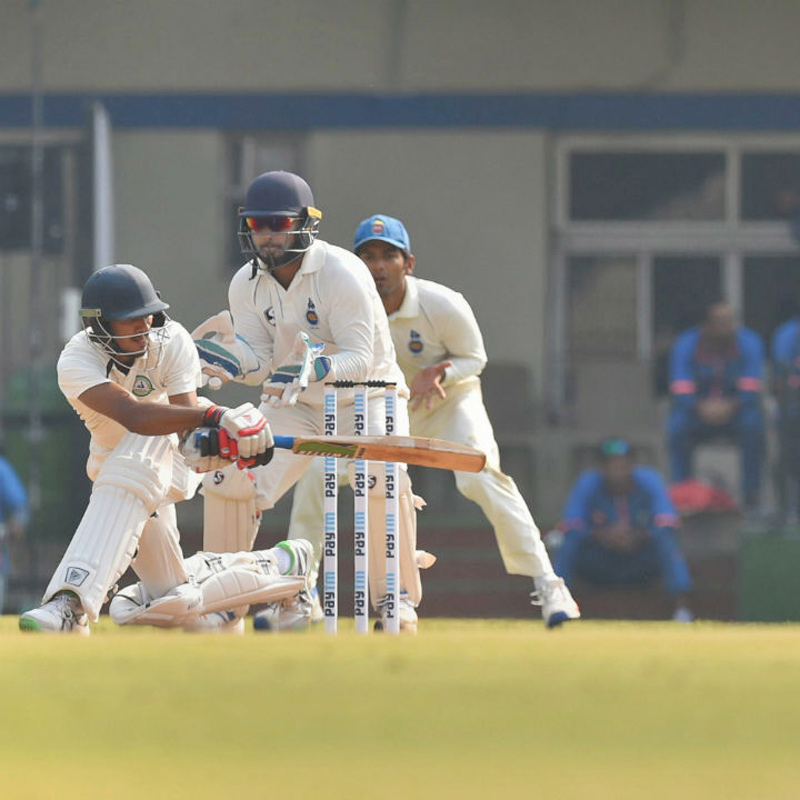
    Further Neo Sports Plus will also air India cricket in dubbed languages like Hindi. This initiative kicks off this month with the Duleep trophy. Kalathil says that search has been done into what kind of sports entertainment concepts the Indian viewer will like and dislike.

    It has already come up with some entertainment shows. One of them is Unbreakable. This focusses on a memorable performance of a batsman or a bowler or a partnership that refused to buckle under pressure. Then there is Test of Strength. This is a daily show that focusses on India’s great cricketing moments. When India Beat looks at victories by the Indian cricket team. Neo Sports Rewind provides a crisp look at classic ODIs. Mission Impossible is a one hour show that looks at some of the finest cricket matches. The anchor takes viewers through the match and sees how an individual made the impossible possible.

  • ‘I forecast that in three years time there will only be two sports broadcasters who will have any kind of market share’ : Harish Thawani – Nimbus Communications chairman

    ‘I forecast that in three years time there will only be two sports broadcasters who will have any kind of market share’ : Harish Thawani – Nimbus Communications chairman

    Early this year in February, Nimbus shook up the sports broadcasting sector by bidding $ 612.8 million for the rights to India cricket. Driven by the vision of its chairman Harish Thawani, the company has just launched its cricket centric channel Neo Sports. A second channel Neo Sports Plus, which will look to converge somewhere between sports and entertainment, is soon to follow in the next few months.

    It then signed a distribution deal with Star, which besides cable is also looking at Neo Sports to push DTH. Nimbus has also put a team in place to run Neo Sports. Indiantelevision.com’s Ashwin Pinto caught up with Harish Thawani over lunch for a lowdown on the company’s plans, the importance of improving stickiness, the advertising game plan, and a possible shakeout in the sports broadcasting sector.

    Excerpts:

    These are exciting times for Nimbus. First, the acquisition of India cricket, which allows you to enter the big league. Now you will be launching two sports channels. What is the vision you have for Nimbus Sports Broadcast?
    These are exciting times for the Indian broadcasting sector as a whole. We are seeing growth rates that are unprecedented and not slowing down. The growth forecast is robust for the next three to five years. The broadcasting sector is growing faster than the economy. We are seeing 7.5 – 8.5 per cent growth rates in the economy while for broadcasting, it is growing at 17-19 per cent.

    The interesting thing is that the sports sector seems to be growing the fastest. The spends on sports, whether it is on air or sponsorship or even on leisure activities, is big. You will notice that the sales of sports products like Nike, Adidas are all up.

    It is interesting that we are entering the sports broadcasting industry at a time when new alignments, new partnerships are taking place. The industry is maturing in such a way that you can compete with one party in one segment and collaborate with them in another segment of business.

    Our distribution alliance with Star is an indication of the growing maturity of the marketplace.

    So yes, I would say that we very much look forward to the impact that Neo Sports will make, not just on the broadcasting sector but also on consumers.

    More than Neo Sports, which is obviously cricket centric, we are even more excited about seeing the impact that Neo Sports Plus will make. It will be relatively slower as cricket being a bigger driver allows Neo Sports to be the bigger channel of the two. In the medium term, which is one to two years, we will be able to see what Neo Sports Plus has been able to achieve. Preliminary research shows that there is a huge appetite for a channel that converges its programming somewhere between sports and entertainment.

    When they launch, what will the programming of Neo Sports and Neo Sports Plus look like?
    We are launching only Neo Sports first. The launch date of the other channel is yet to be firmed up. We had earlier scheduled to launch it in the second quarter of 2007 which is April – June. But I can confirm that we are likely to bring that forward. We have been able to get ready faster. It is running ahead of schedule. For Neo Sports, the momentum will start building up towards the end of December just ahead of the first major international series.

    The industry is maturing in such a way that you can compete with one party in one segment and collaborate with them in another segment of business

    ESPN Star Sports had tried a soap concept Dream Team. That did not work out. Will you be doing this kind of programming on Neo Sports Plus?
    I am not off hand familiar with what ESPN Star Sports tried. I do recall them running some internationally syndicated football show.

    If that is what they chose to do then our vision is different. We have hit upon insights that may be unique. More importantly, as a company that has produced both sports and entertainment at disparate ends with more than reasonable success, the skill sets that we bring to the table are perhaps somewhat unique. It is not just based on understanding the consumer but also being able to deliver what the consumer wants.

    To pick up the case study of ESPN Star Sports, I think that running an English language soap opera on a minority interest sport like football is perhaps not the formula for succeeding and establishing an audience that is loyal to the concept of sports entertainment. English language soap per se does not do well.

    Football, while being a global sport, still lags significantly behind cricket in India. A Hindi language football soap opera might have done better. A Hindi language cricket soap opera will do even better.

    We are not planning to do that. We will move away from the obvious and move towards the slightly more complex solutions. I hasten to add that the perception of sports entertainment is presenting sports in an entertaining manner. That is now what we are attempting to do. We are looking to converge the two.

    Could you talk about the team that is being put in place to run the channels as well as the organisational restructuring?
    Shashi Kalathil has joined as chief executive of Neo Sports. We wooed and persuaded him because of the outstanding track record he has as a senior management professional. He is said to be a great motivator and is a young CEO. His many years at Pepsi have given him unique insights into how large advertisers buy cricket. He has been on the customer end to what was then the largest buyer of sport in cricket in India.

    It was also possibly one of the top five buyers of sport worldwide.

    Traditionally the tendency of a broadcaster is to look for a domain specialist out of broadcasting. We found that we needed domain specialists from the consumer products side of things. The second advantage he brought to the table is that he has worked in a startup Aircel. A startup has its own unique set of issues to confront.

    Scott Ferguson is the Asia-wide COO. He came out of the Sky Sports system. He worked with Orbit in the Middle East. We then tried to ensure that everybody under Shashi was from the broadcasting sector. Ranjith Rajasekharan is our marketing head. He come to us from MTV. Sanjay Goyal is our VP research and planning. He came back to us from CNBC. Sunil Manocha is the ad sales head and returns to us from Mindshare.

    Sonali Rege is our head of production. She comes to us from Channel [V]. Hitesh Sabbarwal is our VP affiliate sales. He comes to us from Zoom, and before that Sony. Each one of them is a domain, sector specialist.

    Shashi is spared the headache of having a role of having to tweak the broadcasting side of things. Customer acquisition, brand focus, revenue growth are the areas that Shashi will be able to focus on without having to worry about the back office so to speak.

    Where does Digvijay Singh fit in all this?
    He runs Nimbus Sport, which is the international sports rights management agency and production company. He does not fit into Neo Sports. Interestingly enough, Nimbus Sport and Neo Sport will compete in certain segments like rights acquisition.

    They are two different, separate arms. There will be conflict between the two and why not? Star Sports is a partner with ESPN and Star India is our distribution platform.

    This is an example where a business of one company may compete with another business of the company. The theory for us is that if 10 per cent of Nimbus Sports’ profits are eaten into by Neo Sports then it is fine.

    Cumulatively, they will profit much more than one entity might have done on its own. There is also a physical separation between the two entities. One is headquartered in Singapore. One is headquartered from India. Except for rights there is nothing in common with the two. One is a service provider for the industry. The other is a product delivered to the consumer.

    Nimbus Sport may provide services to Neo Sports. Nimbus Sport is a global player in rights management while Neo Sport will only focus on acquiring India rights.

  • Neo Sports launches 1 October; looks to lock in 8 sponsors to 5-year deals

    Neo Sports launches 1 October; looks to lock in 8 sponsors to 5-year deals

    MUMBAI: Nimbus has announced that its cricket centric TV channel Neo Sports, positioned as “The Home of Indian Cricket on TV” will debut on 1 October with the Challenger Series for NKP Salve Trophy.

    Nimbus Communications chairman Harish Thawani tells Indiantelevision.com, “Our internal benchmarks are the soft launch on 1 October, commercial launch on 1 November. 1 January 2007 is when we want to arrive as a globally benchmarked competitive sports network. Before that date comes I can say that we will have eight sponsors locked in on five year contracts. They want it. People approach us and say, ‘When do we sit down and do a five year deal?’

    “Between the eight sponsors that we will have locked in, 60 per cent of the channel’s inventory will have been snapped up.

    “They do not believe in the artificial division of three and a half or four years. The momentum anyway gets carried to the next period. The eight charter partners will enjoy the best positions and exclusivity on cricket advertising.”
    Soon after the comercial launch of Neo Sports, will come a second channel Neo Sports Plus, which will look to converge somewhere between sports and entertainment. And some time in the second half of 207 will come the sports news channel – Neo Sports News.

    Speaking about Neo Sports Plus, Thawani says, “We had earlier scheduled to launch it in the second quarter of 2007 which is April – June. But I can confirm that we are likely to bring that forward. We have been able to get ready faster. It is running ahead of schedule. For Neo Sports, the momentum will start building up towards the end of December just ahead of the first major international series.”

    Neo Sports has entered into an exclusive distribution tie-up with Star India, which will roll out over 10,000 decoders in the coming weeks to take Neo Sports across the length and breadth of this country. The channel will be available on Cable, DTH and new media platforms.

    Speaking about the pricing for the two channels, Thawani says, “We are looking to charge a premium price. Broadcasters so far have not had the guts to charge the price that they feel reflects the true value of their product. What I can confirm is that our pricing will be considerably higher than ESPN Star Sports.

    “Neo Sports is premium not just in cricket but also in product feel, the technology investment we are making. We are building up for high definition ready. We are the first company to install complete station automation software for the channel from day one. When you invest and create a premium product you expect premium pricing.”

    Neo Sports will focus on various cricket related programming, live coverage of both domestic and international cricket, interviews with top cricketers, analysis and sports entertainment. Neo Sports subscribers, specifically for domestic cricket, would be able to enjoy features like top angle shots and pan vision, speedometer, 3D animation and graphics, spin vision camera for tight bowl vision and spin action, informs an official release.

    Neo Sports will broadcast on an average three international cricket series every year featuring India and six domestic tournaments, in addition to which it will broadcast several other international cricket matches. It promises to broadcast close to 150 days a year of live cricket.

    Among the key people who have recently joined Neo Sports include Shashi Kalathil as CEO, Hitesh Sabharwal as VP affiliate sales, Ranjith Rajasekharan as VP marketing, Shakeel Memon as creative director and Sonali Rege as GM production.