Tag: NEO Sports Plus

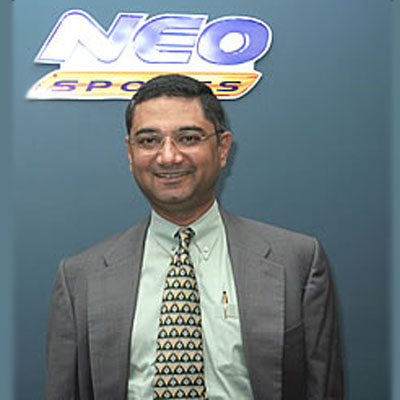
  • ‘Language feeds can get us 30 per cent more viewership’ : Shashi Kalathil – Neo Sports CEO

    ‘Language feeds can get us 30 per cent more viewership’ : Shashi Kalathil – Neo Sports CEO

    Neo Sports has had a testing time. The distribution deal with Star did not work out and the two channels – Neo Sports and Neo Sports Plus – did not find space on cable networks. This, in turn, impacted ad revenues.

    Now with Australia and Pakistan touring India, Neo is ramping up the distribution of its two channels. And it is hoping that strong content will drive in viewership and revenue.

    In an interview with Indiantelevision.com's Ashwin Pinto, Neo Sports CEO Shashi Kalathil reveals the gameplan for the company.

    Excerpts:

    Has Neo Sports gone through a rough weather ever since its launch almost a year back?
    The going has been tough. There was uncertainty on the regulation front. We had mandated Star to handle our distribution, but our channels had serious problems of being carried on cable networks. Cricket also went through its ups and downs, with the World Cup being the lowest point for the sport. There was a lot of media hype which made a not – so – good situation worse.

    What were the factors that made you terminate the distribution contract with Star and decide to do it on your own?
    We had an arrangement with Star. While I do not want to get into details as the matter is under arbitration, I will admit that we got almost zero delivery. We found that we would not be able to survive as a channel if we did not reach anyone. Besides, the payments that were contractually due to us were delayed – or never arrived.

    Did it also badly impact your ad revenue?
    Our ad revenue was hurt as a result of the Star deal. We got away with it to some extent in the Sri Lanka series by keeping ad rates high and through strategisation where some matches aired on Doordarshan. However, we could not fully exploit the Bangladesh Test series. That would have been worth at least Rs 70-90 million. We could not realise even one fifth of that.

    How have you worked out on your distribution strategy?
    We have covered one third of the cable networks. We went to the smaller towns first as there the declaration is much better. A lot of viewership comes from rural areas. We signed with direct-to-home (DTH) service provider Tata Sky. We expect to sign with Dish TV soon. We are also stitching deals with the south-based cable networks.We are now approaching the big multi-system operators (MSOs) like Incablenet, Hathway Cable & Datacom and Siticable. By the time the Australia series starts we will be in three fourths of cable & satellite (C&S) homes.

    Since the matches have to be shared with Doordarshan, doesn't it affect the kind of deals that Neo is able to strike with the cable operators?
    No! The sharing of feed has been going for a long time. The 2003 World Cup was shared. There are guidelines. Last year for a while, the Supreme Court had taken a view on this kind of activity. India-South Africa was a rare example where DD did not air the matches.

    We have a situation where the pubcaster does not bid for cricket but takes feed when it wants to do so. Besides, there is the issue of encryption.

    What was the write off that Neo Sports got from BCCI due to the non-encryption of DD's signals?
    DD's footprint extends from China to the Middle East. We had a protection clause in case of circumstances that dilute the value of our BCCI rights. If DD sends an unencrypted signal, then how can you sell the rights in those markets?

    Right now there are a lot of cricket rights coming up for grabs. Is Neo Sports going after any of these or are you first trying to justify the BCCI investment?
    It isn't a sequential process. If there are rights that are of value, we will bid for them. Right now what we are seeing is that the price appreciation for these boards has not been as high as what it was for the ICC and BCCI rights.

    If someone gets the BCCI rights which are huge, you will see polarisation happening around the ICC rights. These two rights are the definitive ones in the cricket world; nothing else comes close. About 70 per cent of cricket that India plays in the next 13 months will be on Neo. That is an awesome depth to have.

    For the Australia and Pakistan tours, in terms of coverage what are the kind of innovations being looked at?
    We are keen on language feeds. You can get 30 per cent viewer addition doing this. Traditionally, the South has been neglected in terms of the regionalised feed. Neo Sports Plus will be broadcasting the matches in Hindi, Tamil and Telugu while Neo Sports will have English language transmission.

    We are looking at virtual advertising and programming innovations. We are also looking at interactivity on DTH.

    How challenging is it to push up ad rates to match rising acquisition costs?
    The cricket market is well set up. There are certain clients who advertise heavily in it. The economy is opening up which will allow you to have better inventory utilisation. There are ways to exploit cricket like having multiple language feeds.

    There is also a proliferation of general entertainment and movies channels which is resulting in further fragmentation. This will make the monolithic viewership of cricket more cost effective for brands and more valuable. Break viewership is becoming a serious issue for advertisers. On movie channels, often the break might be too long and people surf. Cricket's format is built to counter this.

    You will eventually be able to do multiple visual feeds for advertising. Now, though, it is still expensive and messy. With addressable delivery platforms like DTH coming in, the dependence on advertising will gradually fall.

    'If someone gets the BCCI rights which are huge, you will see polarisation happening around the ICC rights. These two rights are the definitive ones in the cricket world'

    How would you describe the perception of cricket at the moment among viewers and advertisers?
    I don't think that it is changing. Yes, there is noise made in the media on perceptions of how India is faring. It has to do with the quality of the opposition, how they are perceived. However, I do not think that cricket viewership or ad revenues are as sensitive as what the media says it is. When India did not do well in South Africa last year, people said that the sport was in trouble. Then we did well at home against Sri Lanka and the same media said that this was the best team for the World Cup.

    There is huge interest in the Australia series as it takes place during the festive season. Cricket in media parlance offers viewership that other programming cannot match. This will not change.

    Which are the clients with whom Neo Sports has signed long term deals?
    Perfetti and Hero Honda are our anchor sponsors. The concept is to have someone who wants a long term relationship with cricket on board. We have predictability to our calendar. So a client knows that Australia, Pakistan England, South Africa or Sri Lanka will be visiting us. So if a client does media activity, he knows that a footprint is available.

    How many anchor sponsors do you want to have?
    Initially, we had thought of having four anchor sponsors. However, the media space is getting so competitive that we held back a little bit as we did not want to preclude a large media buyer. There are emerging segments like retail and financial services that will become large. We are waiting for the media environment to settle down before we make more long term deals. There is a risk and also a de-risk in long term deals. You might end up paying more. You might end up paying less. Management is about dealing with it.

    During the World Cup there was a lot of grumbling about the deluge of ads. Steve Waugh went public about it in a column. What is Neo Sports' gameplan to ensure that commercial considerations do not interfere with viewer enjoyment?
    Cricket has a certain format which allows you space for ads – between overs, when a wicket falls, and also during the lunch interval. I think that the World Cup was a situation where matches were going beyond midnight. So perhaps the broadcaster was trying to get in as many ads as possible in the first half as viewership would certainly drop precipitously during the second half.

    In terms of domestic cricket with the push that has been given to it by Neo Sports, has there been any increase in viewership?
    We have had a good experience with domestic cricket. Now that our distribution issues have been settled, we will do innovations around domestic cricket.

    We don't air every domestic match. Cricket is tiered at various levels. We broadcast the best part of it. I have heard arguments about having less matches and fewer teams which I will leave for the administrators to settle. But at the end of the day, a Ranji Trophy final has value. It is the question of packaging it. There is also an awareness issue. People have not gotten used to watching domestic cricket. However when they find that the coverage quality is as good as what you get for an international match, there is stickiness. Last year's data shows that domestic cricket has potential. It is for us to develop that.

    However, the ad fraternity does not seem to be getting on board domestic cricket. Is there a perception problem in the market?
    The product needs to be developed and defined. Once you do that and take it to the advertiser, it will draw interest. But it will not happen overnight. There is still work to be done.

    What is the status regarding your second channel Neo Sports Plus?
    One part of its identity is to be an adjunct to Neo Sports. So Neo Sports Plus airs cricket in local languages. We were clear at the beginning that we wanted to adopt a regional multi language feed for it.

    Neo Sports Plus also airs other sports like German soccer, Italian league. We have badminton, cycling, motorsports. We have also found that rugby got a strong niche viewership among males.

    Can we flesh out the definition of Neo Sports Plus to go beyond cricket? That is something we are working on. Other sports have a growing niche. In the long term, you can grow it to a mass level like what EPL has done. Activities were done that led to the product definition being unique. However, no other sport can substitute cricket. The assumption that if India does poorly, a cricket fan will watch another sport is wrong. Our research tells us that a lot of ODI watchers in India do not watch any other sport.

    Could you shed light on the investments made in technology?
    We are set to go live with broadcast management system ForeTV from MSA Focus. This follows the solution's recent implementation at Neo's Mumbai headquarters for $4 million. The Fore TV Broadcast management system allows Neo Sports the ability to efficiently manage the proliferation of new revenue streams that these rights will inevitably generate.

    Unlike traditional systems which treat each stream separately, ForeTV offers a consolidated solution for total revenue management, encompassing income from Internet Protocol Television (IPTV), advertising, sponsorship, pay-per-view (PPV), interactive (iTV) and video on demand (Vod). This system will be fully integrated into workflow of the channel, automation, editing and financial software allowing seamless process from acquisition, production and post production, transmission and billing at the end of the process.

    On the production front, we have installed Vizrt Virtual studio, a virtual studio for sport production. This allows Neo to create a number of different sets for each sport and change it at the flick of a button. There is no need for storing and changing physical sets. The advantages of using Vizrt virtual studio are flexibility in different backdrops, virtual monitors in the set and incorporation of sport results directly to the set. Vizrt Graphics are template based, allowing for rapid changes and are especially suited for the ever changing sport environment.

  • TDSAT adjourns hearing as Nimbus approaches SC

    TDSAT adjourns hearing as Nimbus approaches SC

    NEW DELHI: The Telecom Disputes Settlement and Appellate Tribunal (TDSAT) today adjourned its hearing in the case by sports broadcaster Nimbus challenging the Telecom Regulatory Authority of India (Trai) direction to its channels Neo Sports and Neo Sports Plus to reduce their subscriber price.

    The adjournment till the second week of next month came after TDSAT was informed that Nimbus had filed a petition in the Supreme Court challenging the Delhi High Court order fixing Rs 37.25 as bouquet price for the two channels.

    Earlier on 22 January, the High Court had dismissed an application by Nimbus and upheld the Trai order of 11 January fixing Rs 37.25 as bouquet price for the two channels. The order of the High Court had also made it clear that Nimbus could recover its cost at the rate of Rs 58.50 if its appeal before the TDSAT was accepted. The Trai order had also asked Nimbus to charge Rs 5 per channel in the areas covered by Conditional Access System (Cas).

    Nimbus contended that Trai can fix the rates only under Section 11(2) of the Trai Act after due hearing to the concerned broadcaster, and not arbitrarily under Section 13 (2).

  • Nimbus receives Rs 5.5 billion from 3i, Cisco, Oman Fund

    Nimbus receives Rs 5.5 billion from 3i, Cisco, Oman Fund

    MUMBAI: Nimbus Communications Ltd. has attracted an investment of Rs 5.52 billion (approx $125 million) from 3i, Cisco and Oman Investment Fund (OIF).

    This marks 3i’s second round of investment in Nimbus, the entry of OIF into the Indian market and Cisco’s continued strategy to invest across the Indian content industry. 3i had invested $45 million in Nimbus 18 months back.

    The investment is in the form of compulsorily convertible bonds that will convert into equity based on a pre-set formula, prior to an IPO or trade sale.

    The funds will largely be deployed towards sports rights acquisitions, developing global sports events, financing Indian language and international film production and distribution, developing further digital content production for wireless and VOD/IPTV platforms and expanding the broadcasting operations of the company.

    Nimbus was advised in this transaction by London based Euromax Capital and Mumbai based Enam Financial Consultants.

    In the last quarter of 2006, Nimbus launched two pay TV sports channels, NEO Sports and NEO Sports Plus, which are exclusively distributed over cable and direct-to-home platforms by Star India.

  • Nimbus looks to push genre frontiers with Neo Sports Plus

    Nimbus looks to push genre frontiers with Neo Sports Plus

    MUMBAI: Your Gateway to the best sporting action! This is the tagline that Nimbus is using to push its second channel Neo Sports Plus. The channel, which Nimbus says is a sports entertainment offering, has launched today. Sister cricket channel Neo Sports had launched a month back.

    Neo Sports Plus will offer content from a variety of sports like soccer, badminton, motorsports. As Nimbus chairman Harish Thawani says, “Some of the recent Indian sporting achievements have come from sports disciplines like golf, tennis and motor racing, to name a few. On the back of these developments we believe that there is potential in building sustained consumer interest in sports beyond cricket amongst Indians in the medium to long term through strategic content and marketing initiatives.”

    On the soccer front Neo Sports Plus has acquired content from Italy, Germany, Brazil and Argentina through leagues like Bundesliga, Serie A, Copa Suda Americana and Copa Libertadores. In motorsports it has got V8 Supercars and Superbike World Championships. Additionally, the channel is also focussing on badminton through properties like the Sudirman Cup, The Thomas Cup, The Uber Cup and The World Badminton Championship. Thawani says that the sport, despite strong grassroots support in India, has not got the backing of a channel to realise its potential.

    Neo Sports Broadcast CEO Shashi Kalathil says that the aim is to build up passion for different sports in the long run. It has sports entertainment concepts on the drawing board. Some shows have gone into production. The channel is looking at chat shows, reality shows, sports serials, game shows, quizzes etc.

    Further Neo Sports Plus will also air India cricket in dubbed languages like Hindi. This initiative kicks off this month with the Duleep trophy. Kalathil says that search has been done into what kind of sports entertainment concepts the Indian viewer will like and dislike.

    It has already come up with some entertainment shows. One of them is Unbreakable. This focusses on a memorable performance of a batsman or a bowler or a partnership that refused to buckle under pressure. Then there is Test of Strength. This is a daily show that focusses on India’s great cricketing moments. When India Beat looks at victories by the Indian cricket team. Neo Sports Rewind provides a crisp look at classic ODIs. Mission Impossible is a one hour show that looks at some of the finest cricket matches. The anchor takes viewers through the match and sees how an individual made the impossible possible.

  • ‘I forecast that in three years time there will only be two sports broadcasters who will have any kind of market share’ : Harish Thawani – Nimbus Communications chairman

    ‘I forecast that in three years time there will only be two sports broadcasters who will have any kind of market share’ : Harish Thawani – Nimbus Communications chairman

    Early this year in February, Nimbus shook up the sports broadcasting sector by bidding $ 612.8 million for the rights to India cricket. Driven by the vision of its chairman Harish Thawani, the company has just launched its cricket centric channel Neo Sports. A second channel Neo Sports Plus, which will look to converge somewhere between sports and entertainment, is soon to follow in the next few months.

    It then signed a distribution deal with Star, which besides cable is also looking at Neo Sports to push DTH. Nimbus has also put a team in place to run Neo Sports. Indiantelevision.com’s Ashwin Pinto caught up with Harish Thawani over lunch for a lowdown on the company’s plans, the importance of improving stickiness, the advertising game plan, and a possible shakeout in the sports broadcasting sector.

    Excerpts:

    These are exciting times for Nimbus. First, the acquisition of India cricket, which allows you to enter the big league. Now you will be launching two sports channels. What is the vision you have for Nimbus Sports Broadcast?
    These are exciting times for the Indian broadcasting sector as a whole. We are seeing growth rates that are unprecedented and not slowing down. The growth forecast is robust for the next three to five years. The broadcasting sector is growing faster than the economy. We are seeing 7.5 – 8.5 per cent growth rates in the economy while for broadcasting, it is growing at 17-19 per cent.

    The interesting thing is that the sports sector seems to be growing the fastest. The spends on sports, whether it is on air or sponsorship or even on leisure activities, is big. You will notice that the sales of sports products like Nike, Adidas are all up.

    It is interesting that we are entering the sports broadcasting industry at a time when new alignments, new partnerships are taking place. The industry is maturing in such a way that you can compete with one party in one segment and collaborate with them in another segment of business.

    Our distribution alliance with Star is an indication of the growing maturity of the marketplace.

    So yes, I would say that we very much look forward to the impact that Neo Sports will make, not just on the broadcasting sector but also on consumers.

    More than Neo Sports, which is obviously cricket centric, we are even more excited about seeing the impact that Neo Sports Plus will make. It will be relatively slower as cricket being a bigger driver allows Neo Sports to be the bigger channel of the two. In the medium term, which is one to two years, we will be able to see what Neo Sports Plus has been able to achieve. Preliminary research shows that there is a huge appetite for a channel that converges its programming somewhere between sports and entertainment.

    When they launch, what will the programming of Neo Sports and Neo Sports Plus look like?
    We are launching only Neo Sports first. The launch date of the other channel is yet to be firmed up. We had earlier scheduled to launch it in the second quarter of 2007 which is April – June. But I can confirm that we are likely to bring that forward. We have been able to get ready faster. It is running ahead of schedule. For Neo Sports, the momentum will start building up towards the end of December just ahead of the first major international series.

    The industry is maturing in such a way that you can compete with one party in one segment and collaborate with them in another segment of business

    ESPN Star Sports had tried a soap concept Dream Team. That did not work out. Will you be doing this kind of programming on Neo Sports Plus?
    I am not off hand familiar with what ESPN Star Sports tried. I do recall them running some internationally syndicated football show.

    If that is what they chose to do then our vision is different. We have hit upon insights that may be unique. More importantly, as a company that has produced both sports and entertainment at disparate ends with more than reasonable success, the skill sets that we bring to the table are perhaps somewhat unique. It is not just based on understanding the consumer but also being able to deliver what the consumer wants.

    To pick up the case study of ESPN Star Sports, I think that running an English language soap opera on a minority interest sport like football is perhaps not the formula for succeeding and establishing an audience that is loyal to the concept of sports entertainment. English language soap per se does not do well.

    Football, while being a global sport, still lags significantly behind cricket in India. A Hindi language football soap opera might have done better. A Hindi language cricket soap opera will do even better.

    We are not planning to do that. We will move away from the obvious and move towards the slightly more complex solutions. I hasten to add that the perception of sports entertainment is presenting sports in an entertaining manner. That is now what we are attempting to do. We are looking to converge the two.

    Could you talk about the team that is being put in place to run the channels as well as the organisational restructuring?
    Shashi Kalathil has joined as chief executive of Neo Sports. We wooed and persuaded him because of the outstanding track record he has as a senior management professional. He is said to be a great motivator and is a young CEO. His many years at Pepsi have given him unique insights into how large advertisers buy cricket. He has been on the customer end to what was then the largest buyer of sport in cricket in India.

    It was also possibly one of the top five buyers of sport worldwide.

    Traditionally the tendency of a broadcaster is to look for a domain specialist out of broadcasting. We found that we needed domain specialists from the consumer products side of things. The second advantage he brought to the table is that he has worked in a startup Aircel. A startup has its own unique set of issues to confront.

    Scott Ferguson is the Asia-wide COO. He came out of the Sky Sports system. He worked with Orbit in the Middle East. We then tried to ensure that everybody under Shashi was from the broadcasting sector. Ranjith Rajasekharan is our marketing head. He come to us from MTV. Sanjay Goyal is our VP research and planning. He came back to us from CNBC. Sunil Manocha is the ad sales head and returns to us from Mindshare.

    Sonali Rege is our head of production. She comes to us from Channel [V]. Hitesh Sabbarwal is our VP affiliate sales. He comes to us from Zoom, and before that Sony. Each one of them is a domain, sector specialist.

    Shashi is spared the headache of having a role of having to tweak the broadcasting side of things. Customer acquisition, brand focus, revenue growth are the areas that Shashi will be able to focus on without having to worry about the back office so to speak.

    Where does Digvijay Singh fit in all this?
    He runs Nimbus Sport, which is the international sports rights management agency and production company. He does not fit into Neo Sports. Interestingly enough, Nimbus Sport and Neo Sport will compete in certain segments like rights acquisition.

    They are two different, separate arms. There will be conflict between the two and why not? Star Sports is a partner with ESPN and Star India is our distribution platform.

    This is an example where a business of one company may compete with another business of the company. The theory for us is that if 10 per cent of Nimbus Sports’ profits are eaten into by Neo Sports then it is fine.

    Cumulatively, they will profit much more than one entity might have done on its own. There is also a physical separation between the two entities. One is headquartered in Singapore. One is headquartered from India. Except for rights there is nothing in common with the two. One is a service provider for the industry. The other is a product delivered to the consumer.

    Nimbus Sport may provide services to Neo Sports. Nimbus Sport is a global player in rights management while Neo Sport will only focus on acquiring India rights.