Tag: Neha Barjatya

  • Google India marketing chief calls it quits after 14 years

    Google India marketing chief calls it quits after 14 years

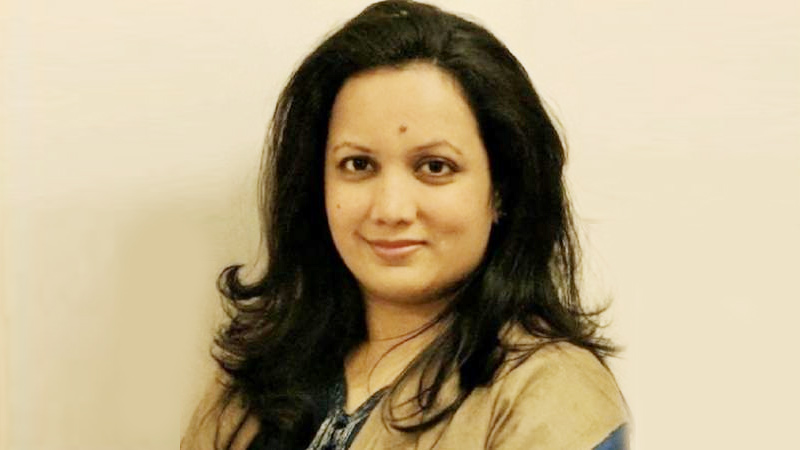
    MUMBAI: After nearly 14 years climbing Google’s ranks, Neha Barjatya has bid farewell to the tech behemoth. The marketing director announced her departure from Google India on LinkedIn, marking the end of a tenure that spanned the country’s digital transformation from the early mobile internet days to the current artificial intelligence boom.

    Barjatya’s stint at Google reads like a greatest hits album of Indian digital marketing. She masterminded campaigns that brought back Hindi cinema’s Mr India with Pixel phones, gamified search with Google Googlies, and launched the country’s Pixel manufacturing operations. Most recently, she shepherded the launch of Gemini, Google’s AI assistant.

    But perhaps her most significant legacy lies in Internet Saathi, one of the world’s largest digital literacy programmes. The initiative, a collaboration between Google and Tata Trusts, has reached over 290,000 villages and benefited more than 30 million rural women. Barjatya even took a secondment to establish Frend (Foundation for Rural Entrepreneurship Development), aimed at creating livelihood opportunities for digitally skilled women.

    Her career at Google began in November 2011 as head of business marketing and digitising India initiatives. She climbed to marketing director in March 2020, overseeing consumer apps including Search, Gemini, and Maps, alongside platforms and devices such as Pixel, Android, and the Play Store.

    Before joining Google, Barjatya cut her teeth at Viacom 18 Media for over five years, following earlier stints at Zee Turner and advertising agency Lintas.

    In her farewell post, she credited leaders including Sapna Chadha, Sandeep Menon, and former country head Rajan Anandan for their support. “This company has taught me to push past hurdles, stay grounded in purpose and never lose sight of what’s possible,” she wrote.

    Barjatya’s next move remains under wraps, though she hinted at “the next chapter” without revealing details.

  • The third edition of IAA’s ‘Voice of Change’ summit inspires industry to ‘Break the Bias, Together!’

    The third edition of IAA’s ‘Voice of Change’ summit inspires industry to ‘Break the Bias, Together!’

    Mumbai: The International Advertising Association (IAA) India Chapter hosted the third edition of its ‘Voice of Change’ summit, themed ‘Gender Portrayal from 30 Seconds to 3 Hours’, aiming to champion gender-sensitive and equitable content across media.

    This impactful event featured an impressive lineup, including chief guest Smt. Smriti Irani, guest of honour Taapsee Pannu and prominent industry leaders such as Srinivasan K. Swamy, Neha Barjatya, Eashwari Deshpande, Anushree Bhattacharyya, Mitrajit Bhatacharya, Neena Dasgupta Anurag Agnihotri, Karthik Nagarajan, Zairus Master, Gautami Kawale, Janaki Amrite and Shreya Jain. The summit highlighted the critical role of the stakeholders of the industry in shaping gender representation and addressed the need to challenge biases.

    Lamp-lighting ceremony

    The day began with a formal lamp-lighting ceremony graced by the chief guest followed by a welcome address by Srinivasan K. Swamy, IAA Mancom Member & Executive Group Chairperson at R.K. SWAMY Ltd.

    Welcome address from Srinivasan K. Swamy

    The summit’s opening session, led by Nina Elavia Jaipuria and Megha Tata, Chairperson and Co-Chairperson of the IAA India Women Empowerment Committee, discussed the evolution of the ‘IAA: Voice of Change’ movement since its inception in 2021.

    Nina Elavia Jaipuria and Megha Tata

    Reflecting on the initiative, Megha Tata shared: “This journey began four years ago, and it has become a powerful movement in our industry. When I was President of IAA, we launched ‘Voice of Change’ with the objective that, as communication professionals, we must be the change we want to see.” She emphasized the significance of their partnership with UNICEF and Google, which has provided critical data on gender portrayal in media, underscoring persistent stereotypes and the need for progress.

    Nina Elavia Jaipuria added: “In the previous editions of IAA: Voice of Change, we covered advertising, television and OTT content, while this edition focuses on gender representation in Digital. Over the years, we have created awareness and sensitized stakeholders of the industry in shaping their perspectives and challenging stereotypes for a more equitable gender portrayal in content. Thus, having a positive influence on consumers and shaping the social narrative. We are delighted to have Google India continue to partner with us in this movement.”

    The chief guest of the day, Smt. Smriti Irani, former cabinet minister, engaged in a lively and insightful conversation with Neha Barjatya, IAA Mancom Member and Marketing Director at Google India. Together, they discussed the transformative role content creators play in reshaping the portrayal of women in media and society.

    Neha-Barjatiya--Smriti-Irani

    Smt. Smriti Irani delivered a compelling keynote address, stating the lack of visibility and acknowledgement women face despite their contributions. She remarked: “Women do not have a problem speaking or showing up; what we lack is recognition for our contributions. It’s crucial to continue these conversations and support women who strive for their rightful place.” She also powerfully emphasized YouTube’s societal impact and remarked the platform does not just provide access but by giving women in Tier 2 and 3 cities a platform and an audience, we “democratize dreams”.

    She spoke passionately about how women have always been present and impactful, yet their contributions are often overlooked, challenging audiences to not only see women but truly hear their voices. Addressing the pressure many women feel to downplay their achievements to avoid labels of arrogance or ambition, she urged women to own their successes openly. Irani noted a generational shift, celebrating young women today who express themselves boldly without apology, contrasting this with the constraints her own generation often faced. She underscored the responsibility that comes with content creation in the digital era, highlighting the need to dismantle stereotypes rather than reinforce them. Irani also reminded listeners that each woman’s journey is unique and deserves respect, calling for collective action to build a legacy where female voices are valued and celebrated, creating a world where all women can take pride in their contributions without reservation.

    Neha Barjatya emphasized “At Google and YouTube, we are deeply committed to empowering women in the digital age. We have always fostered inclusivity across our platforms and as we’ve entered the AI era, our commitment continues. We are dedicated to building AI that unlocks creative possibilities and promotes economic opportunity for everyone. We are focused on developing AI responsibly, ensuring it is used to create a safe and equitable platform for all women. We believe that when women succeed, India succeeds.”

    In a special address, UNICEF’s Geetanjali Master, Partnerships Specialist in Public & Private Sector Engagement at the UNICEF Delhi office, highlighted the pervasive impact of gender socialization on opportunities for girls in India, emphasizing the role of media and community engagement. She stated: “Gender socialization creates visible and invisible barriers—manifesting as limited educational opportunities, early marriages, and fewer job prospects for girls. As UNICEF engages across India, we see the profound impact media can have. It has the power to reinforce stereotypes or to challenge them. That’s why we’re working with organizations like the Geena Davis Institute to generate real-time insights on gender portrayals, and we recognize the importance of connecting with content creators not only in metros but also in smaller towns and communities. By doing so, we aim to inspire inclusive storytelling that can shift perceptions and unlock opportunities for young girls across India with our continued partnership with IAA: Voice of Change.”

    Geetanjali

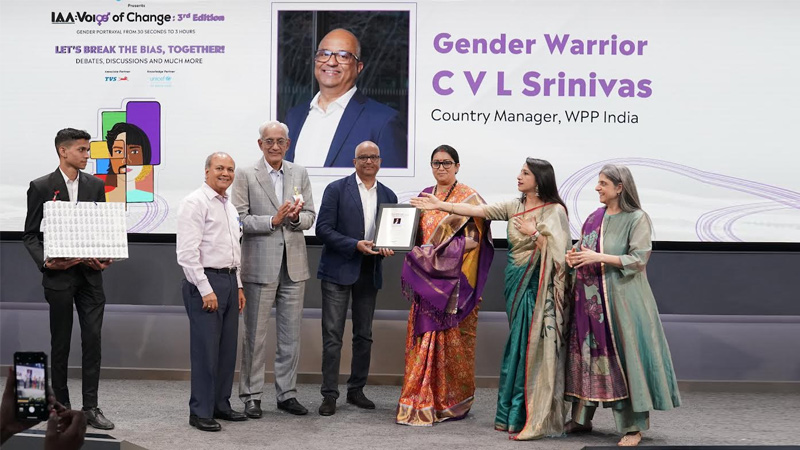
    Celebrating gender warriors: The event honored remarkable industry stalwarts who have tirelessly championed gender equity and led by example as protagonists of change. The first recipient of the Gender Warrior award was C.V.L. Srinivas, Country Manager of WPP India, recognized for driving transformative change in the industry. The second Gender Warrior, Smita Sharma, an acclaimed photojournalist and visual storyteller, was celebrated for her impactful work in human rights and gender issues. Through her powerful images featured in National Geographic, TIME and other publications, Smita has brought dignity to marginalized communities while challenging societal norms.

    CVL SrinivasSmita

    The day’s events were marked by thought-provoking insights, particularly during the first panel, “Conscious Creativity in Digital Content,” moderated by Eashwari Deshpande, Head of YouTube Ads Marketing & Industry Advocacy. Esteemed panelists included content creators Gautami Kawale and Shreya Jain, alongside Janaki Amrite, Associate VP of Content Syndication and OTT Partnerships at Pocket Aces.

    IAA

    The discussion emphasized the transformative role of technology in democratizing both access to content and aspirations, creating a space where everyone has a voice. Deshpande shared YouTube’s commitment to enabling creators to build sustainable careers, transcending barriers of language, literacy, and background.

    Slayy Point & The Crash Pad founder Gautami Kawale highlighted the responsibility content creators hold when engaging with Gen Z audiences. Janaki Amrite spoke about Pocket Aces’ commitment to positive representation through channels like Dice Media and Filter Copy. Beauty influencer Shreya Jain discussed navigating stereotypes in the beauty and makeup industry, sharing her journey of maintaining authenticity while shedding light on makeup’s role as both an art form and a major industry.

    The session underscored the importance of responsible creation and inclusion, inspiring attendees to reflect on their own creative roles and the potential of digital platforms to promote positive, diverse voices.

    The second panel discussion at our event, titled “Digital Advertising through the Gender Lens,” was wonderfully moderated by Anushree Bhattacharyya, Editor, Education and Brand and Marketing, Financialexpress.com. This engaging panel featured industry leaders: Anurag Agnihotri (Managing Partner- Creative, Ogilvy West), Karthik Nagarajan (CEO, Hogarth), Neena Dasgupta (Founder & CEO, The Salt Inc.), and Zairus Master (Chief Business Officer, Honasa Consumer Ltd- Mamaearth).

    IAA

    Anushree kicked off the session by delving into how digital advertising is evolving with gender inclusivity in mind. Anurag Agnihotri discussed his approach to portraying women as strong, independent figures in advertising, especially in campaigns where the aim is to break away from traditional stereotypes. Zairus Master shared insights on Mamaearth’s consumer-centric branding, which places an emphasis on progressive storytelling that resonates with modern, urban audiences. Karthik Nagarajan tackled the topic of stereotypes in product marketing, especially within categories like beauty and personal care. Neena Dasgupta discussed how content creation on platforms like OTT and YouTube is contributing to a more nuanced portrayal of women. She noted that women-centric content often performs well on OTT platforms, reflecting a shift in audience preferences.

    The panel closed with a shared sentiment on the importance of creating content that is aspirational, breaking stereotypes, and representing both men and women in roles that reflect today’s society. The discussion provided valuable insights on how advertising can be a powerful tool in reshaping gender perceptions and promoting inclusivity in brand storytelling.

    The event was infused with energy and laughter, thanks to a special performance by renowned comedian Neeti Palta. Her sharp wit and relatable humor based on gender portrayals, biases and stereotypes brought a fresh, lively vibe, engaging the audience and drawing waves of laughter from the guests. With her unique perspective on everyday life and her natural ability to connect with diverse audiences, Neeti turned the event into a memorable experience, leaving everyone in high spirits.

    The event wrapped up with an engaging and deeply inspiring fireside chat featuring acclaimed actor Taapsee Pannu, moderated by Mitrajit Bhattacharya, IAA Mancom Member and Founder of The Horologists. The session celebrated Taapsee’s fearless spirit, impressive body of work, and commitment to impactful storytelling. Reflecting on her career from her Telugu film debut to her success in Hindi cinema, Taapsee shared insights into her journey, the challenges of taking on complex, women-centric roles, and her drive to explore diverse characters. She spoke about her memorable roles in films like Pink, Mulk, and Saand Ki Aankh, which echo her commitment to challenging societal norms and advocating for women’s empowerment. In addition to her acting, Taapsee discussed her entrepreneurial ventures and her passion for breaking stereotypes.

    Taapsee-Pannu-Mitrajit-Bhayyacharya

    Google India & Youtube were the presenting partners, while UNICEF the knowledge partner and TVS the associate partner for this event.

    Republic Digital was the digital news partner & Crome Talkies, AdGully, Indian Television, Manifest, Mediabrief, MxM India were web media partners whereas Free Press Journal & Hindustan Times were the print partners for this event.

    This edition of IAA: Voice of Change summit included powerful voices that engaged in meaningful and inspiring discussions making it another milestone in the journey of the movement, reinforcing our commitment to a more positive and inclusive gender portrayal in media.

  • Google report: AI analysis unveils demographic imbalances in Indian television programming

    Google report: AI analysis unveils demographic imbalances in Indian television programming

    Mumbai: “Reflecting India: An intersectional and longitudinal analysis of popular scripted television from 2018 to 2022” is a new five year longitudinal study led by the Geena Davis Institute on Gender in Media (GDI), to which Google Research has extended our AI-powered research support, with the Signal Analysis and Interpretation Laboratory (SAIL) at the University of Southern California (USC) as the study’s academic advisor, and the India Chapter of the International Advertising Association (IAA) as the media studies advisor.

    This first-of-its-kind large-scale, multi-lingual study examined media content across five Indian languages – Bengali, Hindi, Kannada, Tamil, and Telugu – in 10 scripted television shows that were the most watched between 2018 and 2022, according to the Broadcast Audience Research Council (BARC), India. The sample included a variety of genres such as soap operas, thrillers and mythological dramas. The study sample was organised by GDI and IAA.

    The report stated that female characters had more on-screen time than male characters, nearly 55.8 per cent for women compared to 44.2 per cent for men, with both Bengali and Telugu shows providing female characters the highest proportion of screen time, approximately 59 per cent, across all languages.

    While female names are mentioned more often in dialogue than male names, unique male names outnumbered unique female names. Perceived female names featured in 55.6 per cent of all instances in which names were mentioned in dialogue, but these names were only 46.7 per cent of the different names featured on the shows.

    Young adults (18–33 years old) are seen on screen the most, accounting for 75.6 per cent of all characters present on screen, with female characters over the age of 33 on screen for less time than their male counterparts.

    Characters with lighter skin tones were shown 8x more on screen than characters with medium or dark skin tones. However, between 2018 and 2022, the screen time of characters with medium skin tones increases proportionately with a decrease in screen time of characters with lighter skin tones.

    When shown on screen, female characters tend to be younger and with lighter skin tones than male characters. 70 per cent of female characters on screen were between the ages of 18 and 32 and had lighter skin tones, compared to 52.9 per cent for male characters, who represented a wider age and skin tone range.

    Tamil and Telugu language TV shows present a wider range of skin tones, with characters with darker skin tones occupying more screen time, approximately 23 per cent, than in other language shows, which showed characters with medium or dark skin tones between 13 per cent and 18 per cent of screen time.

    Google India marketing director Neha Barjatya said, “Access to digital is crucial to opening up the gateways of information, opportunity and progress, and we’re committed to building products that empower everyone to use the internet with convenience and confidence. Bridging the digital gender gap is core to this, and we’re committed to doing our part to ensure women’s participation in the digital economy is equitable – be they as creators, innovators, or entrepreneurs. As an AI-first company, we’re delighted to power this groundbreaking study and join hands with GDI, SAIL and IAA to build a better understanding of representation in popular media, and inform the industry’s progression towards greater inclusiveness.”

    MUSE Google AI research, product manager & lead Komal Singh said, “AI advances in computer vision and natural language processing technologies provide us a powerful computational lens to study human-centric representation in mainstream media, at scale. We were fortunate to have this meaningful and novel opportunity to apply the tech towards studying Indian TV across a breadth of languages and timeframe. This work is an example of Google’s responsible approach to AI at work — using AI technology along with partners in the service of encouraging more transparency, and equity for diverse communities.”

  • The second edition of IAA’s ‘Voice of Change’ summit galvanises the industry to ‘Break the Bias, together’

    The second edition of IAA’s ‘Voice of Change’ summit galvanises the industry to ‘Break the Bias, together’

    Mumbai: Strengthening its commitment towards gender-sensitive and gender-equitable content across all platforms and formats, the International Advertising Association (IAA) India Chapter, held the second edition of the Voice of Change summit: ‘Gender Portrayal from 30 seconds to 3 Hours’. The 2023 summit bolstered its mission further, with the first-of-its-kind Google AI-powered research study on gender and intersectional representation in scripted Indian television, moving the needle from previous edition’s analysis of gender portrayal in advertising content.

    Putting the spotlight on the definitive strides of the pan-India Voice of Change movement from its inception in 2021, IAA Women Empowerment Committee and Immediate Past president, Co-Chair, IAA India Chapter, Megha Tata said, “IAA has always championed causes which are fundamental to advertisers, consumers, and the media landscape. This, coupled with the path-breaking insights of the study in 2021, was the genesis for the Voice of Change initiative. We acknowledge our ability as a collective to define narratives, and the culture-defining power that media holds. This is indeed an incontestable responsibility that we hold.”

    Setting the tone for the transformative day, IAA Women Empowerment Committee chairperson Nina Elavia Jaipuria, urged everyone to champion gender-equitable portrayal on screen, as creators and consumers of content. She said, “Content serves as a mirror to the society, with a far-reaching impact on perception of gender-roles, affecting the lives we lead as a whole. We hope that the second edition of the summit will serve as an inspiration for us all to ‘Break the Bias’ together, and to drive change in cultural paradigms.”

    The first-of-its-kind, large-scale, multi-lingual study powered by Google AI titled, “Reflecting India – An intersectional and longitudinal analysis of popular scripted television from 2018 to 2022”, led jointly by the Geena Davis Institute on Gender in Media (GDI), the Signal Analysis and Interpretation Laboratory (SAIL) at the University of Southern California (USC) as the academic advisor, and the IAA as media studies advisor was also unveiled at the event. The study covered the 10 most popular scripted television shows in India across five languages – Hindi, Bengali, Tamil, Kannada, and Telugu – between 2018 to 2022, according to the Broadcast Audience Research Council (BARC), India.

    AI-enabled technology developed by Google Research MUSE (Media Understanding for Social Exploration) was used to infer the visual and intersectional attributes of perceived gender, perceived skin tone, and perceived age of the on-screen characters, with automation enabling accurate and consistent analysis, yielding a wealth of evidence that would have otherwise been impractical and difficult to collect manually.

    The study revealed several data-driven insights about representation in the India media and entertainment sector. Across all the shows analysed, young adults between the ages of 18 and 32 were seen the most, accounting for 75.6% of all characters present on screen, while characters with lighter skin appeared 8X more than characters with medium or dark skin tones. Female characters were present on screen and their names mentioned in dialogue more than male characters, amounting to over half of a show’s time, with 7 in 10 of all perceived female characters on screen typically being young and having lighter skin tones.

    Google India director, marketing Neha Barjatya said, “Access to digital is crucial to opening up the gateways of information, opportunity and progress, and we’re committed to building products that empower everyone to use the internet with convenience and confidence. Bridging the digital gender gap is core to this, and we’re committed to doing our part to ensure women’s participation in the digital economy is equitable – be they as creators, innovators, or entrepreneurs. As an AI-first company, we’re delighted to power this groundbreaking study and join hands with GDI, SAIL and IAA to build a better understanding of representation in popular media, and inform the industry’s progression towards greater inclusiveness.”

    Google AI research, product manager and ead on MUSE Komal Singh said, “AI advances in computer vision and natural language processing technologies provide us a powerful computational lens to study human-centric representation in mainstream media, at scale. We were fortunate to have this meaningful and novel opportunity to apply the tech towards studying Indian TV across a breadth of languages and timeframe. This work is an exemplar of Google’s responsible approach to AI at work — using AI technology along with partners in the service of encouraging more transparency, and equity for diverse communities.”

    The release of the study was followed by a stirring collective pledge by the IAA for all attendees – from advertisers to brand custodians and students – to acknowledge their crucial role in forming a more inclusive and empowering gender narrative, by making a conscious choice in content creation and consumption.

    Chief Guest Smt. Khushbu Sundar, Founder, Avni Cinemas and Member of National Commission for Women, graced the occasion, showing her support for the cause. In her persuasive anecdotal keynote speech, she touched upon how the real change needs to begin at home, exemplifying her upbringing that empowered her to celebrate both men and women as equals. The firebrand actor said, “The Voice of Change comes from within. The portrayal of gender on screen has undergone a significant change and has seen progress; women and men are now often seen as equal partners in decision-making. However, there is still room for improvement to eliminate regressive storytelling. We collectively have a responsibility to represent all genders in a responsible and empowered way. I would like to express my gratitude to IAA, the Geena Davis Institute on Gender in Media, and Knowledge Partner UNICEF, for taking up the responsibility of spreading this awareness. All creative minds are responsible for breaking perpetuated stereotypes. We must pause, think and take a step back, to take that giant leap towards equitable and sensitive gender portrayal.”

    UNICEF India Representative Cynthia McCaffrey said, “Gender inequalities in children’s lives and in the lives of those who care for them, hinder their growth, development, learning and eventually in reaching their full potential. Statistically, the lack of parity impacts girls and women the most but also disadvantages men and boys. Children observe and learn social cues from many forms of content including advertising and it plays a powerful role in shifting perceptions on gender roles. UNICEF is delighted to be the knowledge partner with IAA and its members on this very important journey to promote positive gender roles and practices through advertising, so every young person can live a life free from stereotypes and achieve their full potential”.

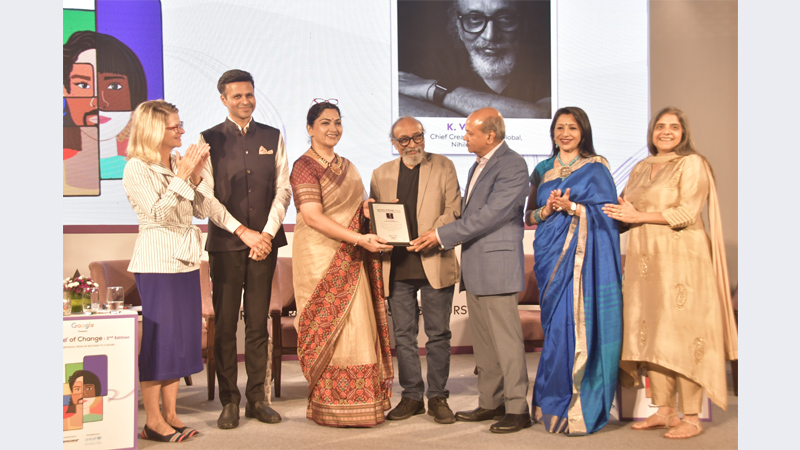
    The event saw the felicitation of Gender Warriors, industry stalwarts who have incessantly championed gender equity, and led by example as protagonists of change. This included advertising veteran KV ‘Pops’ Sridhar, who revolutionized the industry by challenging stereotypes to make way for a more equitable and inclusive advertising landscape; Dr. A. L.  Sharada, Director, Population First, whose work effectively continues to change norms and  advance gender equality in India through campaigns like ‘Laadli’; and Padma Shri Dr. Shyam Sundar Paliwal, whose social activism pioneered the Piplantri model, a remarkable initiative celebrating the birth of girl children with tree planting in Rajasthan.

    Additionally, the event also recognized the distinguished service of, and felicitated the IAA North Star awardees, Mr. Srinivasan Swamy, Chairman and Managing Director, R K SWAMY Pvt. Ltd. and Mr. Ramesh Narayan, Founder, Canco Advertising Pvt. Ltd, for their contribution to the IAA.

    The day proceeded with enlightening discussions, where panellists debated impending challenges and shared their experiences with the audience. The ‘From Screen to Screen: Gender Portrayal in the World of Entertainment’ panel brought together esteemed visionaries like Sameer Nair, MD, Applause Entertainment; Aparna Purohit, Head of Originals, Amazon Prime Video; Gaurav Banerjee, Content and Business Head, Disney Star, popular actor Manasi Salvi and actor, writer, director and stand-up comic, Sumukhi Suresh. Moderated by renowned journalist Anuradha Sengupta, the session saw the luminaries engage in a compelling dialogue on the evolving role of and the transformative power of storytelling for equitable gender representation. The dialogue traced the journey of gender portrayal in media and entertainment, the progress so far and the direction for further positive development. It touched upon the parallel evolution of content creators and consumers, and the role of today’s audience that looks for a progressive narrative in content on-screen, be it television or streaming platforms or cinema. The panellists also spoke about the need to mandate equitable gender participation on- and off-screen to create definitive change, and how creating gender-sensitive content can be well-balanced with commercial considerations when the intent and impact coincide.

    Leading creative powerhouses and industry stalwarts like Raj Kamble, Founder and CCO, Famous Innovation; Mansha Tandon, Head of Marketing, YouTube India; Dr. A. L. Sharada, Population First; and Ad & Film Director, Screenplay Writer Renzil D’Silva delved into ‘Gender portrayal in advertising and media’. Moderated by Prasad Sangameshwaran, Editor, ET Brand Equity, the panel candidly explored nuances like softer cues of imbalance in gender portrayal, while shedding light on the power of imagery and narrative in shaping perception of gender roles. The panellists discussed corrective measures and ways to make them a way of life, beyond academic discussions. They also shared their perspectives on pertinent aspects, for advertisers and brand custodians, like ensuring gender-sensitive messaging within a 30-second time limit which must also include brand specific mandates; and purposefully reimagining gender roles in advertisements while keeping in mind client delivery timelines and balancing it with direct consumer connect. The panellists also debated how, despite fundamental challenges of time, commercial deliberations, and popular culture that drives stereotypes, it is possible to inch towards gender equitable portrayals through subtle and effective changes in writing character roles.

    The enriching day concluded with an evocative and inspiring fireside chat with Dia Mirza. The actor, producer and UN Secretary General’s Advocate for Sustainable Development Goals, UNEP Goodwill Ambassador spoke to Celebrity Host, Atika Farooqui, about her conscious choice of roles as an artist in her professional journey, to advocate the values that deeply align with her. She also spoke about the progress made and the distance to go, when it comes to storytelling across cinema and OTT, by giving examples of the latest projects she was intentionally a part of to drive that much-needed change. Speaking of one of her latest movies, she illustrated how men too can be strong allies in telling revolutionary stories reflecting the women of today. The chat also touched upon her concerns pertaining to gender portrayal, such as assigning beauty to youth for women, formulated roles basis gender and the awareness around gender fluidity, and its impact on society. Dia said, “I believe there has been a shift in storytelling when it comes to depicting gender sensitivity and equity on screen, but we have a long way to go. I truly think that a lot can change in society with what we portray. For that change to happen, we must all come together, men and women alike. Representation matters. Each of us has a part to play towards creating a lasting change.” Dia also took the aforementioned pledge with audience, showing her commitment to the cause of breaking the shackles of stereotypes.  

    The game-changing second edition of the IAA: Voice of Change summit, packed with riveting discussions, forthright debates, and critical evidence-based insights probed deeper into the nuances, challenges, and possible solutions for breaking gender stereotypes effectively on screen. The event harkened the need for gender-equitable and gender-sensitive portrayal in all content across formats – be it a short video on social media, a television show, an advertisement, or a full-length feature film. With presenting event sponsor Google India, the Geena Davis Institute on Gender in Media, Knowledge Partner UNICEF and Associate Partner TVS Raider, the latest edition of the summit served as another milestone in the journey of IAA’s ‘Voice of Change’ movement, to develop the dialogue in favour of right benchmarks for gender equitable portrayals on screen and to continue this endeavour at the grassroot level across the length and breadth of the media and entertainment industry.

  • Rajshri’s YouTube channel crosses 10 million subscribers

    Rajshri’s YouTube channel crosses 10 million subscribers

    mumbai: Rajshri Entertainment’s flagship YouTube channel ‘Rajshri’ has crossed milestone of 10 million subscribers. Rajshri was one of the first Indian partners of YouTube in early 2008.

    The Rajshri YouTube channel has a large catalog of blockbuster Bollywood movies, popular movie scenes and songs, making of the movies, and much more. The channel gets a massive reach of around 300+ millions views a month from India and various countries including US, UK, Canada, Australia and Pakistan.  

    “This is a significant milestone for us. The Rajshri channel has grown steadily through the years. Rajshri’s early mover advantage combined with its focus on quality content has helped build a strong and loyal subscriber base,” said Neha Barjatya, CEO of Rajshri Entertainment. 

    Rajshri Entertainment is India’s leading digital entertainment studio. Its other channels — Rajshri Marathi, Rajshri Kids and Rajshri Food — have more than million subscribers each on YouTube. Rajshri also syndicates content to digital platforms in India and globally.