Tag: Neeraj Vyas

  • Interactive programming, the new trend

    Interactive programming, the new trend

    MUMBAI: Ever imagined talking to Aamir Khan while watching his film? Thanks to the broadcasters who have now started taking the digital approach seriously, the dream is turning into a reality for many.


    For the country which eats, sleeps and breathes movies, it will be unwise of movie channels to not create a connection between the two. Multi-screening is a reality today and media planners believe that if one needs to survive in today’s digital age then a broadcaster needs to be available on all the platforms.


    Taking a cue from changing consumption patterns, the increasing number of middle-income households and the propensity of consumers to spend on leisure and entertainment, channels today are pursuing two important facets – innovation and interaction.


    A case in point is &Pictures, from the Zeel stable, which for Aamir Khan’s first unreleased movie, Chale Chalo, invited fans of the movie and the actor together and gave them the opportunity to watch the movie along with Khan himself.


    Chale Chalo, a documentary film, based on the making of Khan’s Oscar nominated movie Lagaan, became a talking-point even before it was aired on the channel. The buzz created on the social media and the chance to speak to the actor during live dial-ins achieved an unbelievable ratings. “No one expected a documentary film to garner more viewership than the original film,” says pleased Zeel executive vice president – marketing, national channels Akash Chawla.


    “Until a few year ago, only News channels had an option of live dial-ins, but since second screen is becoming an important part of viewing today and is becoming a reality in India as well, we had to go beyond the usual,” he adds.


    The concept of bringing high-level of interactivity was later also used by Sony Entertainment Television for the premiere of Dhoom 3. The channel wanted to interact with its younger audience and hence, invited kids for a live call-in to the Dhoom star, Aamir Khan.


    In an earlier interview to indiantelevision.com, Sony Max senior VP and business head Neeraj Vyas had said that the use of digital space has became a kind of a case study for them. “Even post the IPL, we have some very aggressive plans. We were the first ones to have live tweets during the telecast of Jab Tak Hai Jaan. We got close to 2,500 responses. We also had Twitter contests called #TalaashHunt for Talaash. Through the contest we added around 11,545 followers from 11 to 14 July, 2013, the day the movie was telecast,” he had said then.


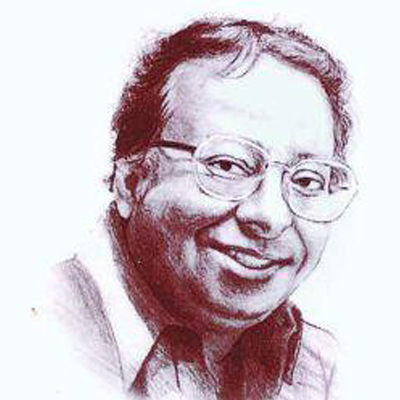
    Recently, Sony Max showcased a special programme Pancham – Mujhey Chaltey Jaana Hai that showcased never-seen-before nuggets about Rahul Dev Burman aka Pancham Da.


    The channels know that viewers today want more than just plain-vanilla movie watching experience. &Pictures created a crowd-sourced Online Milo Sajna during its launch a year ago, where viewers wrote a script and the channel shot the best one and showcased it online. It added another feather in its cap with a blogger activity in a train for the movie Chennai Express.


    However, the new trend isn’t as simple as one might think of. Depending on projects, teams (research and digital) sit together to ideate and come up with tactical measures to woo viewers. Channels are even earmarking a certain amount ranging from 10 to 20 per cent of the total marketing budget on these projects.


    “Anything innovative always catches advertisers fancy,” says Zee’s chief sales officer Ashish Sehgal while adding that the brands too want to interact with viewers and hence, are eager to advertise on such innovations.


    As per sources, a normal film would charge as less as Rs 6,000 for every 10 second ad slot; however, the innovations especially for a blockbuster film can charge up to Rs 2 lakh. “Chale Chalo sold 10 second ad spots for a lakh. And the interactions helped the channel earn almost Rs 2 crore from it which would have never happened especially for a documentary,” says a planner.


    The innovations are moving regional as well. Zee Marathi premiered Fandry with a difference. The campaign was woven around the concept Jaaniv Zhali, Badal Havaa that aimed at bringing about change in society and making a difference in the lives of children. The channel tied up with 10 NGOs that work in the area of child development and protection and raised funds for these NGOs through the movie and also got the likes of Nana Patekar, Sonali Kulkarni, Urmila Matondkar to promote it.


    Media observers believe that though it is a good trend and getting the movie channels what they want, but with time the innovations might overlap and hence, each channel will have to differentiate itself from the other. “A lot will depend on how they keep the mark up and come up with innovations that will attract viewers and not come up with an interactive programming just because it is a fad,” opines a media planner.

  • Max to telecast film dedicated to R D Burman on his 75th birth anniversary

    Max to telecast film dedicated to R D Burman on his 75th birth anniversary

    NEW DELHI: The genius maestro and singer Rahul Dev Burman aka Pancham Da, son of the veteran maestro Sachin Dev Burman, is being remembered by most radio and television channels this week to mark his 75th birth anniversary.


    While Big FM has already announced a concert, ‘Yaadon mein Pancham’ and is devoting some time to his films, other channels have planned similar programmes.


    One of the most creative music directors of Bollywood, ‘Pancham Da is being featured on special programmes on Sony Max on 27 June at 9.00 pm, Sony Mix on 28 June at 9.00 pm and Max 2 on 29 June at 7.00 pm.


    The programme ‘Pancham – Mujhey Chaltey Jaana Hai’ attempts to bring out hitherto never seen before nuggets.


    R D Burman, probably the only composer who could play all the musical instruments available during that time; brought with him the colour of modern sound unlocking a path to new and original sounds which created history in Bollywood, despite the fact that his father Sachin Dev was steeped in folk music. 


    The film will feature celebrities from the Bollywood industry who were an intrinsic part and had the opportunity to be up close and personal with the enigmatic Pancham Da. Stalwarts sharing the intricacies of what went into making a genius called RD Burman and will feature in the film are Gulzar, Javed Akhtar, Pyarelal, Asha Bhosle, Shantanu Moitra, Vishal Bharadwaj, Vidhu Vinod Chopra, Randhir Kapoor, Rishi Kapoor, Shammi Kapoor and Manna Dey. 


    The film will give viewers an insight into Pancham Da’s inner being through an incisive look into his genius artistry.


    “R.D Burman was a legend who still rules the hearts of millions all across the globe. It is our honour to salute a man of such stature by showcasing his classic work and his journey to become an idol through the distinctive film ‘Puncham – Mujhey Chaltey Jaana Hai. I am certain that the visuals and anecdotes of the mega star will inspire audiences of all age groups,” said Sony Max senior EVP and business head Neeraj Vyas.


    Rahul Dev Burman (27 June 1939 – 4 January 1994) composed musical scores for 331 films between the 1960s and the 1990s. The best songs of Kishore Kumar and Asha Bhosle, were composed by Pancham Da.


    Perhaps Pancham Da is the only music director whose songs and music inspired the making two Hindi feature films, both following in quick succession. 


    While Dil Vil Pyar Vyar directed by actor-filmmaker Anant Mahadevan came in 2002, Jhankaar Beats directed by Sujoy Ghosh came a year later. Both films are about aspiring musicians who owe their inspiration to Pancham Da and even gain fame singing his songs.  

  • Pepsi IPL Extraaa Innings T20 returns at Reliance MediaWorks’ state of the art Sound Stages at Filmcity

    Pepsi IPL Extraaa Innings T20 returns at Reliance MediaWorks’ state of the art Sound Stages at Filmcity

    MUMBAI: The biggest entertainment format of the year that brings in cricket like never before, PEPSI IPL has already taken a flying start in its seventh edition. And for the second year in a row, the broadcasters Multi Screen Media, who are airing PEPSI IPL 7 on their channels Sony MAX, Sony SIX have chosen the state of the art sound stages at Reliance MediaWorks in Filmcity for Extraaa Innings T20.


    The programming contents of the show involve several elements including live stadium action, and studio programming. The overall programming requirements are thereby stringent, especially considering the fact that the show is aired live everyday. Live feeds from the matches played across different locations and the feed from the in studio programming is entirely consolidated at this place so that the seamlessly integrated programme is available to delight the millions of PEPSI IPL viewers on a daily basis.


    The entire setup for the show has been done on one of the floors at the studio complex of Reliance MediaWorks. PEPSI IPL is a long format show and from preparation right up to the entire event, the studio facility will be utilized for almost three months for the show. Availability of the best in class infrastructure, on site technical support, high standards of quality & security; all within the reach at a convenient location like Filmcity is a key reason that has made these shooting spaces the preferred destination for several broadcasters and filmmakers alike.


    Known for their Hollywood benchmarked infrastructure, Reliance MediaWorks currently offers three sound stages for all production requirements for broadcast, film, TVCs & events. The new set of 5 stages, which also have the same technical specifications, will be operational in the latter half of 2014.


    Neeraj Vyas: EVP & Business Head – Sony MAX “With IPL there has certainly been a revolution in the way cricket based programming is created & aired, and we have set new benchmarks from an entertainment perspective. In order to deliver the very best to our viewers, we need to ensure that everything that goes into the creation of the content is the very best. Thereby, we chose the high technology studio facilities at Reliance MediaWorks, yet again. It is convenient, efficient & high quality, just perfect for all the requirements of the IPL.” 


    PEPSI IPL programming has a bunch of logistical requirements, in terms of technology, infrastructure and also the fact that the show is aired live. Therefore a studio environment that offers the best possible solutions on all the fronts is needed, and hence Reliance MediaWorks was the chosen destination. Agile technology and services par excellence are the key USPs of Reliance MediaWorks that are crucial in this regard.


    Venkatesh Roddam, Chief Executive Officer: Reliance MediaWorks added, “We are committed to providing a personalized service through our studios. We are absolutely delighted to be partnering with Sony for IPL yet again and contributing to the creation of quality content for millions of cricket fans globally. We look forward to a long and successful association.”


    PEPSI IPL 7 continues with the cricket fervour and Extraaa Innings T20 remains one of the highlights of the show as cricket fans across the world continue to be entertained.

  • IPL7 campaign: Chalo bulaava aaya hai

    IPL7 campaign: Chalo bulaava aaya hai

    MUMBAI: Remember the movie Exorcism? The same will happen to the whole country when the “bhoot” of cricket will enter the minds and hearts of the countrymen and women and children!


    If we go by the latest campaign, the IPL-loving “bhoot” in all of us has to wake up.


    The seventh season of Indian Premiere League (IPL) which will be aired on Sony Max has begun its promotion.


    As part of the excitement, the channel has started engaging people through e-mailers, social media and radio wherein the buzz was created with ‘sabse bada bulaava aa raha hai’ campaign. 


    RJs “prepared” people for an impending major announcement to be made soon while SMSes informed people to stand-guard as a bulaava will soon come for them.


    Today, the channel revealed the two TVCs on youtube. “From tomorrow, the TVCs will go on air on all the channels of our network,” informs Sony Max marketing head Vaishali Sharma, who is happy with the response generated so far. “We have got responses through SMSes and on social media from people, cricket-lovers and it is overwhelming.”


    The campaign conceptualised by Havas Media Worldwide is based on the thought that one has to come when the IPL calls. Unlike last year, this year the campaign will feature aam aadmi and not a popular face in Farah Khan which was used in season six campaigns by the channel.


    Nonetheless, staying true to its filmy style, the two TVCs are melodramatic and showcase how in the country where cricket is like a religion, everything else is forgotten when one hears the so-familiar IPL tune.


    The concept was chosen after various meetings between the various stakeholders with the focal point being entertainment. “It is as if you cannot refuse a call from the god. In the same way, when IPL calls, you have to be there,” is how Sony MAX and Sony MIX executive vice president and business head Neeraj Vyas had explained the thought behind the campaign for IPL7 to indiantelevision.com in an interaction last month.


    The tournament which will commence on 16 April and end on 1 June has already made headlines. Till a couple of days back, nobody knew where the matches will be played? Since the tournament clashes with the general elections, it will be now played the in UAE, probably some matches in Bangladesh and the matches after counting of votes on May 16 in India.

  • The whole movie acquisition game has gone for a toss

    The whole movie acquisition game has gone for a toss

    MUMBAI: In recent times, quite a few International as well as regional films have been dubbed into Hindi to wide commercial acclaim. Why are the channels acquiring the rights to air these foreign films or south Indian films, dub in Hindi and air on their channels at primetime? What might be the reason behind it?


    Bollywood blockbusters have become too expensive. These films revolve around just the top four to five male actors. Plus, a Bollywood blockbuster comes with a baggage. Bollywood producers have become aggregators. When they sell a blockbuster film, four to five smaller-budget films come in the package.


    For example, when Karan Johar sells television rights for his blockbuster, he sells it as a package along with a few of the films made under his banner by other directors. The smaller-budget films make no commercial sense for television channels.


    When Sony MAX bought the television rights for Dhoom 3, reportedly paying a very high price, the movie channel had to buy yet-to-be-released film like Bewakoofiyaan as part of the package.


    Also, the recall value of bollywood blockbusters now is low. A bollywood blockbuster which was aired on a television channel for the second time, the viewership rating was more than 75 per cent lower than the ratings garnered by the film at its television premier in October 2013.


    The big budget films being made now make their money in the first and second weekends. The films do not qualify for a second viewing.


    The economics of acquiring bollywood blockbusters first drove movie channels to dubbing English and south Indian languages films, largely action movies, in Hindi.


    Sony MAX, Senior Vice President and Business Head, Neeraj Vyas, has an interesting take on the matter. He says, “it is because acquisition of Hindi films has become so expensive. It is virtually impossible to keep buying those films. Everybody everybody has a limited budget. There is a cost that you incur for renewing your existing library. So there is very little money to keep buying those films.”


    “The whole movie acquisition game has gone for a toss,” says Vyas.


    Even the Hollywood action blockbusters do not come cheap. These films too are packaged by the studios along with older movies. Aggregation happens even when television rights are sold for Hollywood movies. And, a substantial part of the movies acquired along with blockbusters add to the worthless movie library.


    In an interesting turn of events, the south Indian films being dubbed into Hindi are gaining more traction as compared the international films.


    Disney India Director, Programming, Movie Channels, Kunal Mukherjee says Disney has witnessed a preference towards regional films, specifically south Indian language films dubbed in Hindi. “While certain international titles do work wonderfully with the audiences, south Indian films, if taken average, certainly work better.”


    Do the channels tend to follow a particular timeslot, for example, airing Chinese films dubbed in Hindi on weekends and south Indian films dubbed in Hindi on weekdays? On that Mukherjee states, “We understand our audiences and there is no specific viewing pattern that is followed for dubbed movies. UTV Action brings in content as per the audience preferences and entertains them with movies in the manner and language that is relevant to them.”


    What is the selection process of the films? “We are constantly listening to our viewers’ choices and for UTV Action, we consider the star cast of the movie along with the number of action scenes and the date of release for our library.”


    Regarding the audience demographic being aimed at, Mukherjee stated that, UTV Action is a movie channel which entertains audiences across all age groups with content which is acquired through various partners  and associates who own the intellectual properties of the film.


    Sony MAX’s Vyas says, “Almost 25-30 per cent of everybody’s FPC in a week comprises of south Indian dubs. South Indian dubs are very integral reality of composition of every Hindi movie channel. Those guys completely enjoy south Indian cinema.”


    Another up and coming movie channel &Pictures also has some exciting projects lined up. The channel is launching ‘Hollywood Sundays’ at 12:00 pm, starting 2 March, 2014, to bring the Asli Desi flavour.

  • South Indian films dubbed in Hindi more popular than English

    South Indian films dubbed in Hindi more popular than English

    MUMBAI: Sony MAX and Sony MIX executive vice president and business head Neeraj Vyas was the Guest Editor of the day at Indiantelevision.com today.

    During his interaction with journalists at Indiantelevision.com, Vyas talked about what he thinks about broadcast journalism. His complaint was that journalists do less of research-based writing and are more interested in the financial details of the broadcasting business.

    While dwelling on the businesses he heads, Vyas talks about how Sony MIX has tried to make the music channel musical from being a trade channel, on the preparations for Indian Premier League (IPL) season 7 and the preferences of Indian audiences for the film genre.

    Following are the comments made by Vyas on films, music and IPL:

    There is a channel dedicated to English movies dubbed in Hindi — UTV Action. If you look at the other channels — Sony MAX, Zee Cinema, Star Gold, & Pictures and Movies OK, almost 25-30 per cent of everybody’s FPC in a week comprises south Indian films dubbed in Hindi. South Indian dubs are a very integral reality of composition of every Hindi movie channel. There was reluctance from advertisers initially. Indians completely enjoy south Indian cinema.  They might not know who is Nagarjuna or who Ravi Teja is but they love the action. They love the way the action is choreographed. They love the fact that there are no songs. They like the feel of the characters because they are larger than life.

    They like the plots in south Indian films because they feel some of the plots are better than Hindi movie plots. Its vendetta, its revenge, it’s about the common man rising. These are the plots that work across.

    The language of Indian cinema does not change just because the film is made in the south or made in Mumbai or Hyderabad. Most of the films dubbed are Telugu films which are over the top. Tamil films are by and large understated. Telugu films have blood and gore and all that. Indian viewer does not mind.

    The characters are bound differently because of language reasons, geographical reasons. Otherwise Indian films are Indian films. Viewership tilts towards the male.

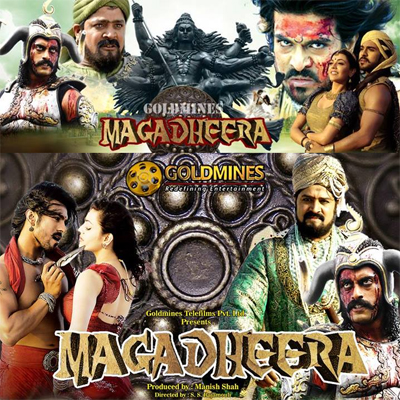
    Hindi movie channels are skewed towards male. Unless you have Chennai Express which is very universal. If I have to give you some south Indian parallel is Telugu film Magadheera. We promoted it as a proper Hindi film blockbuster. It gave me a rating of 2 in the first screening. That cuts through all TGs and massive special effects.

    International dubbed movies are not staple diet, but can be served as a surprise and can be a good break from the regular.

    MUSIC:

    We went and bought more music and put more variety than anybody else.  The other call we took was that whatever we do we should be musical. We will not have movies like some channels do. We will not have animated characters. Whatever we do will be music. We have got something like Solos. Singer comes and sings two lines.  These are things that we did and after digitisation we got shelf space. We saw 13 weeks in a row we were the number one channel. But for that we did a lot of sacrifice. We reduced advertising time. Against 30 minutes I was doing 15-20 minutes.

    We started with 12 million viewers and today we have 55 million viewers.

    Indian Premier League

    The second edition was done in South Africa, but at that time the scale at which IPL was hosted wasn’t as big as it is today. Everything today has changed. So the campaign has to be bigger.

    This season, if done outside India, will be very critical in terms of revenue as well. IPL for us is like a huge ‘Mela’. The ‘Mela’ gets prominence and written about because it happens in our city. If it happens outside India, it also impacts advertising, since the advertiser loses the buzz. It also has an impact on the rating. If IPL happens in South Africa, they will ensure that the match is aired in India at 8 pm. This time there will be only 60 games, because there is one team less.

    IPL Campaigns

    We need to up the entertainment quotient. There has to be a call of action. These two states always have to go hand in hand. It needs to be engaging, entertaining and fun-filled. It needs to be riveting; it needs to cut through different kinds of loops. Can’t be very male dominated, can’t be very male–centric, can’t be very female centric, can’t be very children centric. So, it’s a tough brief, not a very easy brief; because these guys are used to very focused briefs. I say, “this is my TG, these are the values of my brand, this is what it needs to be and these are the values that need to come through my communication. So, the consumer knows that I’m buying this for this.

    On Farah Khan

    Farah brought her own style and because of the fact that she’s a director and actor, made it easier for her to get into the zone of her character. She knew the tone and tenor of what we needed. She has changed the entire paradigm of the campaign. Then we roped in Vishal – Shekhar, who she is very close with. So it became a huge family gathering. We also got Rajeev Sethi, the director of Keroscene Films is also a childhood friend of ours.

    The 2014 campaign has no real people, they’re all models. Especially because our campaign is emotion based. One wrong reaction about what the character is feeling and the whole 30 second ad can go for a toss. That is why we spend a lot of time in casting. I personally am a stickler for casting!

    This year, we are doing five 30-40 seconders and one 60 seconder and again there will be an anthem that’s been composed again by Vishal Shekhar. We’ll also have an Extra Innings music video shot on that with the actors and the commentators. So, it all comes together as a package.

    So, this year we have the same girls and boys back for IPL.

  • Music genre to lose 15-20% inventory due to ad cap

    Music genre to lose 15-20% inventory due to ad cap

    MUMBAI: Sony MAX and Sony MIX executive vice president and business head Neeraj Vyas was the Guest Editor of the Day at Indiantelevision.com today. In his role as a journalist, Vyas interviewed Sony MIX’s senior VP sales Mayar Penkar on music broadcasting as a genre and its potential.


    Penkar feels the 12-minute per hour cap on advertisements would force music channels like 9XM and Masti to change their programming for the better.


    He says the music genre does not get what it deserves in terms of ad rates because of the way these channels have been positioned so far.


    Following are the excerpts from the interview:


    From the sales point of view, what do you think is the perception of the genre in the trade and what is the perception of MIX in the same subset?


    I completely believe that, music as a genre, and when I am saying music, I am talking about pure play music channels that are actually today looked upon as supplementaries or value addition to a media plan which is looking at Hindi speaking markets largely driven by the GEC (general entertainment channel) and Hindi movie channels. Today, it is being bought as a frequency buy. The reason for that are the broadcasters themselves for the way they have positioned the channel and the genre as more of a frequency buy channel and not as something which can actually deliver far more better results in audience targeting.


    How can music be the vehicle for better audience targeting?


    One of the biggest consumers of the music today is the youth. Be it on television, on mobile or any other digital platform and these are very important subset for most of the brands to actually be a part of the media plan or be a part of their marketing objectives. The broadcasters will actually have to make music channels far more relevant and important in the minds of clients than just the media sellers or media buyers. Till such time the client does not perceive music channels as a core genre for their media requirements or for their marketing requirements, they will continue to look the channel from a little downward point of view and not really from the mainland point of view. It will never be seen as the critical part of the media plan till such time the broadcasters take upon themselves to make it a relevant point with clients that this channel has lot of potential reaching out to the TG of 15-24 which is 60-70 per cent of today’s India youth.


    So what are you trying to say is that education has not happened. It is being treated like a commodity and sold like a commodity and hence the core values of the channel will never be exposed to the end buyer?


    Never! So coming back to MIX, the channel has made an effort to stand out in terms of its positioning, compared to what the other pure play music channels are. There is not so much differentiation that can be brought on to the content part. The role MIX has played by setting up the mood for the viewer with the segmentation of the music being played across the day has actually become far more acceptable to the viewer.


    Why is MIX perceived to be a favourite among the music fraternity?


    The kind of support MIX has got from the industry itself in terms of talent coming on to MIX and showcasing as to what their viewpoints on music are, has actually brought in a large amount of differentiation as far as MIX is concerned. Be it in terms of MIX voices, MIX Solos, MIX Gigs that we have done and TV’s first radio show. We brought radio live on television and I think that deserves a big applaud as far as MIX programming is concerned for having done something which is breakthrough in the space of music. Going forward things like this will only create that positive perception in the minds of clients that music can actually be looked upon as a proposition which is far more targeting and not anymore random and not just a commodity. So I guess MIX is playing that role, but is a fairly new channel in the space.


    Coming back to the critical reality of getting a fair share of revenues, do you think the genre per say gets its fair share of revenues?


    No product which is sold as a commodity will ever get its fair price. Today, my sense is that the entire genre is at least down by 50 per cent from the revenue point of view. The reason being, I think the way most of the broadcasters in the music space were operating was not very clear as to the setting up of the right benchmarks. Most importantly, in the pure play music channel, there were no strong networks involved in the business of pure play music.


    The first strongest network that was involved in pure play music was Sony and that was one of the last ones to enter. So when you look at channels like 9XM, 9X Jalwa, Masti or Mtunes, the whole survivor model for them is to actually somehow get the money. The survival model for them is to actually not look at creating brand assets or creating a proposition which can for a long term be monetised.


    What’s wrong in the music genre?


    When you have quarterly profitability into play, you have gone ahead and aired 30 minutes of the advertising time in an hour. In a scenario where you should have actually consolidated as a category and as a genre to help raise the benchmark of the music space, the sheer fear that you may lose out that little bit of revenue has prevented creation of a fair pricing model. It would have helped the category on the long-term basis and would have made the category even more stronger as far as revenue potentials are concerned.


    How will the 12-minute per hour ad cap impact?


    As far as MIX is concerned, we are clearly awaiting the ad-cap regulation to happen. Once that ad-cap regulation happens, there will be a level playing field. Also there would be approximately six and half to seven and half lakh seconds which will clearly get vanished from the current music genre space. Once the level playing field is set, the market will suddenly realise the importance of music space with close to 15-20 per cent of the inventory getting vanished overnight.


    People will start looking at this genre with a little more respect and I think that respect will come with a little bit of regulation and with a little bit of effort that each broadcaster will actually bring in to put on to the table when they are making their pricing models or pricing strategies.


    I guess this channel will move. The music category according to me is in the same phase as the Hindi movie channels were in 2002 — bought for frequency and not really for the content and the value that they want to bring on to the table. Hindi movie channels have actually moved a distance in the past 10 years. Music will move in a similar fashion.


    But provided every broadcaster chips in…?


    I don’t think there is a choice. Once they are down by 20-25 per cent of their inventory, nobody will have a choice but to actually re-look at their rates and by then if you have to go back to an advertiser asking for a rate hike, the first thing the advertiser will start looking at is the differentiation on the programming, content and quality of the channel if he has to start paying you a rate hike. Gone will be the days when broadcasters could accept commercials after commercials just because they could expand the time. So when the time restriction comes in, people will start looking at the product. I guess MIX in that point of time will be a clear winner as far as being looked upon as a much more valued product than just a commodity product.


    So giving these realities and given the fact that ad-cap is a likely reality for the entire genre, what do you think is the growth prospect?


    To look at it in a two-year horizon, the growth would be anywhere between 25-30 per cent. But if you look at it coming from the next fiscal which is going to be March- April next year, most of the people according to me are actually not ready for creating a strategy on how will they tackle the  rate growth. Reason being, most of these channels like 9XM or Masti used to enjoy clear dominance in terms of leadership 13 weeks prior to today. Even in a commodity model, they had established price points for themselves.


    For them after April, life will become a more real scenario where they are number two and three players by a distance, in the sense of 25-30 per cent distance, with number one being MIX. And then to work at price points which will be much higher than currently what they were operating with or what they were enjoying as leaders is going to be a difficult task.


    For them or for clients to start giving them higher rate hikes immediately, I don’t see that happening. We may see price point corrections happening but the category may just remain flat only because of lesser inventory and more or less securing the same level of revenue growth. But next year, this genre will actually become a very important channel. The genre will get its share price or share due in the next two years to come.

  • The call of IPL7….

    The call of IPL7….

    MUMBAI: The call of the IPL so divine that you have to be there for the seventh edition of the Indian Premier League (IPL).

    This year’s campaign by Sony MAX for the IPL is with a tagline that revolves around the concept of ‘The call of the IPL’.

    “It is as if you cannot refuse a call from the god. In the same way, when IPL calls, you have to be there,” is how Sony MAX and Sony MIX executive vice president and business head Neeraj Vyas explains the thought behind the campaign for IPL7.

    Vyas, the Guest Editor of the day at Indiantelevision.com, was speaking on the finer details that go into the making of the campaign to promote IPL. MAX has the broadcast rights for the twenty-20 cricket tournament.

    “You have to be there when IPL calls you,” reiterates Vyas.

    Sony’s IPL campaign will be launched towards the end of the first week of March.

    The core theme of the IPL campaign continues to be entertainment but the broadcaster’s challenge is to every year come up with a bigger and bigger campaign idea.

    ‘Sirf Dekhneka Nahi’

    In 2013, Sony took its campaign to a much higher level bringing in a celebrity in choreographer and director Farah Khan.

    ‘Sirf Dekhneka Nahi’ was the punch-line of the 2013 campaign featuring Farah Khan, urging people to express themselves whenever a wicket falls or a boundary or a six is hit.

    The campaign for IPL season 7 is expected to be a step ahead of 2013 campaign. “IPL is an entertainment vehicle which appeals to families, friends, men, women and youth. It cuts across different target groups. And this was the brief given to the creative agency (Havas Communications),” says Vyas.

    The preparation for the campaign started in November 2013 with the first creative meeting. “This was followed by several meetings to come out with that one idea, that one hook to develop the campaign,” Vyas points out.

    While five 30 second creatives have been made with common people, one 60 second creative has been made, which will have a glimpse of Farah Khan. The music for the campaign has been composed by the duo Vishal and Shekhar.

    It was JWT that worked on Sony’s IPL campaign in 2013.

    So why hasn’t the campaign come out as yet? Vyas says, “Well, this time, neither the venue nor the dates have so far been announced. But, we will be launching the campaign towards the end of the first week of March.”

    MAX’s EARLIER CAMPAIGNS

    So, as people eagerly wait for the new campaign, we at indiantelevision.com, take you through the journey of past IPL campaigns.

    Sony MAX has since the first edition of IPL, which started in 2008, been promoting the new format to build an audience.

    What started with IPL being ‘Manoranjan Ka Baap’ with unknown faces, the campaign has grown bigger and better over the years.

    The ‘Manoranjan Ka Baap’ campaign, directed by Rajesh Krishnan of Soda Films, was a spoof from the 80s films, where the wife and her two sons are taunted every now and then for their missing father.

    While the villagers keep asking the mother and the sons ‘Kab aayenge Manoj aur Ranjan Ka Baap?’, the trio believed that he would come some day. And then when the wife gives up hope, her sons come running and point at the TV set which says, ‘Aa Gaya Manoranjan Ka Baap.’ The promo that got around 78,377 views on YouTube was aimed at positioning IPL as the ultimate entertainer.

    The second season saw two promos under the tagline ‘Ek Desh Ek Junoon.’ While one promo shows how god made one land, but man created boundaries, the other promo shows how one billion people are doing the same thing at the same time. It shows how people rejoice over a ‘Six’ and get sad on a ‘wicket’, but all these emotions are depicted at the same time.

    The promo was created in-house and took the communication one level up from the first season which had proved that the format was accepted across.

    IPL by its third season had built a huge fanfare and while the second season was played in South Africa, the format was back in India in its third year.  The channel went all out promoting the series and came out with the campaign ‘Saare Jahan Se Achha’.

    The video showed a red carpet laid for the players belonging to IPL teams from various cities. The video became hugely popular and this was quite evident from the 412,650 views it garnered on YouTube.

    ‘Bharat Bandh’ was the message the channel gave out to its viewers as the tournament stepped into season four. To send this message, seven promos were created.

    One showing how a politician was left wondering who had announced a 51-day ‘Bandh’ and the second promo showed a goon being upset with his business going down, considering there was a ‘Bandh’. The third showed a ‘Hot’ lady stepping out of the train and looking for help on the station but there was no one there to help.

    The fourth promo involved two female neighbours, who for long had hated each other but now have come together saying ‘nafrat bandh’ with ‘Bharat Bandh’.  The campaign was conceptualised by JWT and it too became popular.

    In the fifth season of IPL, MAX got more personal with its promos. The campaign was under the tagline ‘Mauka’, for a get-together for family and friends.

    The campaign saw five promos doing the rounds: ‘Mauka Phuphaji’ which garnered around 17,289 views on YouTube, ‘Mauka Stadium’ which saw approximately 45,229 views on YouTube, ‘Mauka Family’, with around 19,233 hits, ‘Mauka Father’ with around 17,898 views and ‘Mauka Friends’ with 15,663 views. The campaign was based on the idea of how IPL had the power to get people together.

    For the first five seasons, MAX roped in common faces, with no actors. But, as the game grew bigger, the channel knew that its campaign has to be at the same scale. It was then that in the season six of IPL, Farah Khan was roped in to promote its campaign ‘Sirf Dekhneka Nahi.’      

    The campaign had come from the insight that cricket is not just a game in this country but a passion that moves every Indian to get up to celebrate and dance.

    And to promote this thought, Farah Khan established three unique signature dance moves each for a four, a six and a wicket. Through the campaign, MAX invited the audience to shed all inhibitions and groove to the tune of Pepsi IPL 2013.

    The campaign featured three short films, three dance instruction videos and one big grand film. To make the campaign a nationwide sensation and to add to Farah’s dance moves, the channel had also roped in music director–singer duo Vishal and Shekhar who composed the tune for the Pepsi IPL 2013 campaign.

    The campaign was created and conceptualised by JWT and directed and filmed by ad film director Rajesh Saathi of Keroscene Films.

    Talking on the last year’s campaign and Farah Khan, Vyas says, “Farah Khan fit the bill completely. She directly connected with the audience and she cut across audience groups. She is a choreographer, a director, an actor and a mother. And she does all this with so much perfection. So when a Farah Khan says, ‘Sirf Dekhneka Nahi’, people know she means it. Also because she is a director herself, she could add so many other bits to the campaign to make it look even better.” 

    PROMOTING VIEWERSHIP

    “Since the inception of the game, marketing has been one of IPL’s strengths, and both TV viewership and stadium attendance were promoted simultaneously. One reason for IPL’s success has been that multiple entities (tournament owner, broadcaster, team owners, etc.) all promoted IPL, while ICL was promoted by Zee alone (as it played all those roles),” informs PipalMajik CEO Chandradeep (CD) Mitra.

    How different will be MAX’s IPL 2014 campaign?

    Pepsi, the title sponsor of IPL 7, has brought on board actor Ranbir Kapoor as an intern for promoting Pepsi IPL 2014.

    MAX will surely think bigger for this year’s campaign.

    For PipalMajik’s Mitra, marketers need to constantly promote their brands to break the clutter and keep their brands top-of-mind. “This is especially true for seasonal brands and time-bound events. Sports events particularly need to drum up excitement to engage fans. There has been some evidence of IPL viewership plateauing or declining in the last couple of years. This year, post last year’s scandals, and likely scheduling of matches outside India, the need for the IPL brand to be rejuvenated and promoted is even greater,” he adds. 

    Also, with other major sporting events like Football World Cup and T20 World Cup competing for sports lovers’ limited time and attention, this year “IPL definitely needs major promotion this year,” says Madison Media COO Karthik Lakshminarayan.

    IMPACT OF CAMPAIGNS

    Talking about the previous campaigns, Lakshminarayan says, “The campaigns so far have helped the channel garner good impressions in terms of ratings. Almost all of the marketing efforts are realised in the first week of the series as that draws in the viewers. So one can safely say that the ratings in the first week is largely the result of the media campaign that the channel runs. Post that the ratings are dependent on the matches played thereafter and the results etc.”

    So while there are loyalists for the series, there is also a huge chunk that is attracted to the game through the marketing campaign. “The campaign drives on emotions. There has always been general excitement around the marketing campaign of IPL, this year should be bigger,” adds Lakshminarayan

    The first leg of IPL 2014 mostly will be held in South Africa, and the second leg in India. “Keeping this in mind, the communication has to be more engaging this time. For me digital media should play a very critical part in the channel’s communication about the game,” says MPG planning head – west Soumya Sarkar.

    For Sarkar, it is not the brand ambassador that will drive the communication this year. “The channel has to keep interacting with the audience. So it needs to come up with more contests, fan clubs and online chatting among others to keep the viewers hooked,” he adds.

    (Following are links to Sony’s earlier campaigns)

    http://www.youtube.com/watch?v=0MQ4Jbb_nns

    http://www.youtube.com/watch?v=r41mcUzUkis

    http://www.youtube.com/watch?v=-RVg2mvNJDI

    http://www.youtube.com/watch?v=AHByZLDbPiw

    http://www.youtube.com/watch?v=3v5Nh_XtY_8

    http://www.youtube.com/watch?v=dBBIrcKBMWk
  • The year of big movie acquisitions

    The year of big movie acquisitions

    By Neeraj Vyas

    If we were to reflect on the landmark moments of 2013, we could proudly say that it has been an impactful year with many highs. To start off, Indian Cinema celebrated 100 years of diverse and distinctive movies. It is a momentous occasion for the world’s largest producer of feature films with over 1200 releases a year in more than 25 languages. The casts got bigger, the designing of the film got more glamorous, the locations more exotic and the technical values are at par with anywhere else in the world.  

    On the flip side, most of this additional cost was passed on the broadcaster and acquisitions became hugely expensive. Surprisingly, these high costs have not deterred many broadcasters from acquiring big banner films at pre-production stage even though it is almost impossible to gauge how well the film will be received by television audiences. In future, movie deals will probably be governed by the revenue generated at the box office.

    On the digital front too, the channel focused on building its brand equity and connect, apart from trying to keep strengthening the positioning of the brand.With competition within channels heating up to garner maximum viewership, the stakes attached to such upmarket films has evolved to be much more complicated than it has been in previous years. Marketing budgets for the television premiers of these films is something which has seen a huge increase with each channel upping the level of spends and trying to be distinctively innovative with each premier. For Aashiqui 2, the biggest romantic musical of the year, at MAX, we raised the bar for marketing innovations across all mediums of communication. The channel engaged with its viewers across all platforms – print, online and outdoors raising to a crescendo with the stars of the movie engaging with some lucky viewers thereby creating a much required stickiness for the brand. The main aim was to attract fresh viewers and entice older ones to watch the film again.

    The digital space is constantly evolving and our endeavour is to customise everything we do on the digital platform. Some of the innovations on the social platform were the IPL Jhumping Jhapak app. Also, MAX was the first Hindi movie channel to integrate live tweets on Jab Tak Hai Jaan.

    From an overall industry perspective, I feel the highpoint was the rollout of digitisation across the country in phases. Although much delayed and slower than anticipated, it opened out a whole new opportunity for channels to increase shelf space. The proposed ad cap pushed many networks to launch new channels to adequately maximise their inventory supply. At MAX, our focus was to consciously deliver better films and energise the brand to engage with our loyal viewers.  

    Looking forward, the film channels will also need to re-evaluate the way advertising is sold so that the true value is gained in return for the delivery of this product to large chunks of audiences.

    (Neeraj Vyas is senior VP and business head, Sony Max. The views expressed in the above article are the author’s personal views)

  • Max goes maxi on its campaign

    Max goes maxi on its campaign

    MUMBAI: Have you ever, in the middle of some important discussion got up and said something completely out of context and people thought it was too filmy. If it happens often, well you can easily blame the movies for it. Cinema has become a part of our lives which easily influences our thoughts and also adds drama, but in a cute little way. And this is what Sony Max, is trying to cash on through its newly launched three TV campaigns.


    “We wanted to take a step forward and discover the cuteness of this deewanapan that people have within themselves,” says   Sony Max senior VP and business head Neeraj Vyas. “All the three creatives are cute and whacky, but at the same time they are not over the top and not overtly dressed up to sound funny.”

    The campaign is Max’s tribute to the effect cinema has on people


    The three campaigns have tried to keep pace with the current trend of cinema. “The TVCs capture the deewanapan that remains as a residue of movie viewing,” he adds.


    The first of the three TVC’s which went on air on 15 August features a police officer who while describing the action of a criminal in a photograph, promptly says, “Shayad who poochh raha hai agar usne Aashiqui 2 dekhi”. The second TVC is about a girl who confesses to his parents that she is in love with a guy from a different religion, though the girl expected some drama around this revelation, she is upset that her parents are cool with her relationship and goes on to say, ‘Toh kya humare pyaar mein ek bhi kaanta nahi.’ The third TVC shows a boy who questions his mother on the death of his father and is disappointed to know that he died of a heart attack and says, ‘Ab main kiske khoon ka badla loonga’.  All the three ads conclude with ‘Deewana deewana deewana, jahan dekho wahan deewana.’


    “We use filmy tones and dialogues in real life situations to say something funny or nice. And that’s all the campaign is saying,” comments Vyas.


    Eyebrows do go up with the timing of the campaign. One may smell some competition coming in from the launch of Zee TVs new movie channel &pictures. So is it this which forced Max to connect with audiences through new campaigns? Promptly answers Vyas, “Well! This is mere co-incidence, that the launch of Max’s new TVC and &pictures happens at almost the same time. In fact we hurried the campaign because of the October deadline for implementation of ad cap.”


    Explaining further he adds, “We had campaigns even the last year, around the same time which was called Shuruwat Yahin Se, this was more of a sub tribute to deewanapan .  We have at least three creatives per campaign every year.”
    The campaign is Max’s tribute to the effect cinema has on people


    The key insight for this year’s campaign was to demonstrate the latent deewanapan in everyone’s life. “It is communication from the point of view of people. None of the TVC’s asks the audiences to watch Max, they are all talking of their personal issues which is a derivative from the residue of movies.”


    Max has bought space on 22 channels from other networks to promote the new campaign. These include news, music, kids and regional language genres. “It is a part of our massive media plan. It is a media need to reach out to ‘x’ number of people in ‘x’ number of times, which is what we are aiming at by tying up with these networks,” informs Vyas.


    The campaign has been created by JWT, the production house is Kerosene Films and the director for the film is Rajesh Sathi. While currently the campaign involves only on-air promotions, the channel will soon use the digital space as well. No print ads will be used. “How can you translate the TVC into print?” he questions.


    According to the chief creative officer of a Delhi based creative ad agency the commercials are reasonably well made and are likeable. “If the attempt was to establish that the channel is associated with Bollywood, this set of commercials delivers. However, they do evoke a sense of déj? vu as such filmy things have been done before. Also the ad may not be path breaking but certainly makes one smile.”


    A commercial is an attempt to create propensity among viewers to like the channel. “In my opinion, these commercials have achieved that,” adds the CCO. When asked if a channel needs to rope in big names for promotions he says, “Max is an established channel and so can afford to cast real people. But for a new movie channel like &pictures, to announce its arrival, it needs to shout louder, both creative- and media-wise. Therefore, it’s understandable why they have roped big names.”


    When asked if the commercial was an attempt to pre-empt &pictures promotions, he says, “Well I haven’t seen &pictures promos, so can’t comment on that.” Resonating the same another creative head said, “Well, I haven’t heard or seen &pictures on-air promotions.”


    The launch of the campaign at a time of the launch of &pictures is a mere coincidence or no, is something which we can only speculate. But, what comes as good news for Max is that while its campaign is being watched and appreciated, &pictures even with big stars seems to have gone wrong with the marketing. Which of the two make a mark in this campaign driven industry, is yet to be seen.