|
|
| Posted on 24 July 2013 | |
|
He is a man who is passionate about movies, music and cricket and is lucky enough to be handling all three. Sony Max senior VP and business head Neeraj Vyas is living his passion for all three by handling Set Max and Sony Mix. The man always has work on his mind and cannot disconnect from the office even when on a holiday. And he has been at it for almost 17 years at Sony Entertainment Television (now called Multi Screen Media), first with the main channel, followed by stints at Max before finally heading it. Today, Vyas is looking at maxing Max‘s position in the Sony entertainment channel bouquet. In a t?te-?-t?te with Indiantelevision.com‘s Seema Singh, Vyas shares his thoughts on changing movie trends, the supply and demand chain and the opportunities provided by digital space and digitisation. Excerpts:
|
|
|
How do you decide on which movies to acquire? What is the life cycle of these movies? Does Sony buy movies for the entire network? Or does Set Max buy them separately? I don’t think anybody can, beyond a point, guarantee if a particular film will work or not on television. There are situations where a film has been a monster hit in the theatre circuit, but has not worked on TV. The reverse of this is also true. So, these are judgement calls that the broadcaster has to take from time to time, even in scenarios of what is available and what is not. By seeing the trend (actors, crew, director, past record, genre, production house and marketing), one gets a feel of how the film will perform and based on this one decides to either buy or not buy. I don’t think anybody can predict the success or the failure when he is buying the film. The meter keeps moving as per the demand and supply situation and the price obviously needs to be right to make that final choice. We buy a film for the network, it’s not only Max, any network today whether it is us, Star, Zee or Viacom, buys films for the network. No movie channel will be able to sustain the cost that it is bought for. It has to be played across various channels of the network for the cost to be amortised. |
|
|
Which are the movies that you have acquired recently? We kicked off post IPL with the telecast of Jab Tak Hai Jaan. This was followed by Taalash. We will be telecasting the world TV premier of Aashiqui 2 on 28 July. Among the host of other movies that we added are: Yeh Jawani hai Deewani,Murder 3, Shootout at Wadala, Once Upon a time in Mumbaai Dobara, Ek thi Daayan, Gippi and Krish3. |
|
|
|
|
Does the network set a limit in terms of price it is willing to cough up for movies? Or do you buy movies which you think will click with the public? How big is the Bollywood movie channel industry market in terms of ad sales revenues? With a fair approximation it would be close to Rs 1350 crore to Rs 1400 crore and is growing at about 15 per cent. |
|
|
What is the trend in movie acquisition? We have heard that there are networks paying close to Rs 400 or 500 crore to acquire Salman Khan and Ajay Devgan movies? |
|
|
What is the lifecycle of Bollywood blockbuster on TV? Having said that, the films being made today are creatively better, technically sounder, performance wise better and also there is a lot of boldness in the attitude of the films. Movies today are edgier, bolder and racier. So, while all of this is good from a cinematic point of view and from a theatre-going point of view, this does not work on TV. For example, even though The Dirty Picture was a nice, bold, raunchy film with bold dialogues and situations one would probably go and watch it in the multiplexes and feel good about it. But the same audience will not watch it with their parents when aired on TV. Eight out of ten films made today are from this kind of work zone. Back in the seventies, eighties and nineties, commercial cinema was driven by certain kind of directors and producers. You had the Manmohan Desai, Prakash Mehra, Yash Chopra, and Yash Johar (among others) schools of filmmaking. They made films in a particular genre for a particular kind of wider cinema audience. Then you had the art house makers like Shyam Benegal, Govind Nihalani, Ketan Mehta and others who made art house cinema. So there was clear demarcation of people who wanted to watch their kind of films. Today, it’s great for the industry to see Vishal Bhardwaj and Ekta Kapoor coming together, with the creative sensibilities of one and commercial sensibility of the other to make Ek thi Daayan. Also Yash Raj Films, for example, made certain kind of cinema, but today if you look at the kind of directors that Aditya Chopra is working with like, Manish Sharma and Habib Faizal, are directors who don’t confirm to commercial Hindi cinema. They have a mind of their own, treatment of their own, message to give and language of their own to use in the kind of cinema they believe in and these are the films that are being made now. So even though it’s more meaningful and relevant cinema, bringing out the social realities of the country, they don’t work on TV beyond a point. |
|
|
|
|
If these movies do not work on TV then why are channels spending so much on buying these movies? Movies like Hum Aapke Hai Kaun and Kuch Kuch Hota Hai still get good viewership. This is because most of the audiences are from smaller cities. Also 85 per cent of the country is still a one TV home, which is a big number. The supply chain is not producing the kind of content that the movie channels will ideally like and as an industry, this is the biggest challenge we face. And, on the flipside, which is worse is that we have to pay a lot more than we should be paying for those films. |
|
|
Does SET have exclusive deals with any distributor or film production houses? |
|
|
Any plans to convert Set Max into a complete movie channel and taking cricket only on Sony Six now? Will Max telecast the next IPL season? Sony Six needs to be distributed well. We are still waiting for the DAS roll out to happen peacefully. From a network point of view, IPL is the biggest thing we do. So only after Six has a bandwidth to reach out to people, the shift can take place. We may take a call on the shift of IPL from Max to Six later in the year. |
|
|
How do you ensure that the channel gets good ratings during the IPL? How do you manage it throughout the year? For the rest of the year, the titles that we buy ensure good ratings. Presentation of films, marketing and packaging of promos, all lead to good ratings. For example, the promotion strategy (see story on Set Max goes big on marketing for Aashiqui 2) for the world television premier of Aashiqui 2 is such that we are virtually re-releasing the film. The challenge today is to retain an element of freshness of the movie being telecast on channels. The film is aired on a channel almost after two to three months of its release. By this time either the audience watches it in theatres or at home on pirated CDs. Channels have to get people excited about something they have already seen. |
|
|
|
|
How do you programme the channel during the IPL season? Did spot-fixing allegations during the IPL affect the ratings in any way? Honestly, I don’t think it affected our ratings, because it happened only towards the last games. It surely leaves a bad taste in your mouth. |
|
|
Will the 10+2 ad cap have any effect on the channel? Will there be any hike in the ad rate? We have a 48 to 50 per cent reach. So whether it is Max or Zee Cinema or Star Gold, the reach is not very different from Sony‘s, Star Plus‘, Colors‘ or Zee TV‘s reach. The ad cap will bring down the advertising time the genre currently has. The biggest problem that the genre faces is the time spent by the viewer on the channel. The current time spent by viewers on movie channels is around 65 to 68 minutes and on GECs it is around 122 to 130 minutes. There are clear reasons: 1) GECs air original content everyday; while movie channels air movies that have already been watched. Ad cap will mean a reduction in ad time and this in addition will tempt the viewer to stick on to the movie channel and watch more. The ad cap will lead to a hike in the ad rates. Reasons:For one, the time spent by viewers will get better, so we will have a valid reason to ask for a rate hike. Then traditionally, Hindi movie channels have been sold at a very low rate, though the correction should have happened many years back, it has not happened. So probably this is the right time to make that switch. |
|
|
With GECs also entering into the world TV premier league, how do you intend to hold on to viewers‘ perception that movie channels also offer them value? Sony has recently launched MSM Motion Pictures. Is that going to help MAX get good deals in world premiers? Set Max will never telecast the world TV premier of a big film, having huge acquisitions (Aashiqui 2 being an exception, since the acquisition rate was not very high). It will always be on Sony. MSM Motion Pictures will help us get better deals. That is the main or one of the objectives. |
|
|
How do you see the competition in the space? Who amongst the movie channels is the leader? |
|
|
How do you differentiate between various channels? What are the standout brand characteristics of Max? |
|
|
Set Max telecasts a lot of South movies dubbed in Hindi. Do you get a good viewership for them? What led to this trend of running such movies? Most of these films have extremely exciting action sequences and are gorgeously and lavishly produced. The themes of these movies are mostly revenge, emotional and social issues. By large it is Indian cinema, so the ethos does not change beyond a point, only the look of the people and the way the films are packaged is different. So that is the only reason that everybody is buying them and telecasting them. Had it not been accepted, it would not have survived for four years. |
|
|
What strategies are being used by the channel for marketing itself to increase its viewership? We get star faces on the channel to promote the upcoming movies. This helps us further the perception of Max being the big channel with big faces. Max, in return acts as platform for movie promotion for these actors. Today, apart from the GECs, we are the only ones who have this kind of reach. Aashiqui 2 is another movie which is being promoted by the Lootera team. We have also tied up with Once Upon a Time in Mumbaai Dobara team for promotions. We keep doing this every month. |
|
|
Is the channel using digital space to promote its content? How? And do you have any striking case studies? We also have mega plans for Aashiqui 2. Digital is a massive reality for all of us. |
|
|
What kind of USPs do you offer to advertisers? |
|
|
Can Max become a substantial revenue creator for Sony Entertainment in terms of ad revenues and subscription revenues? |
Tag: Neeraj Vyas
-
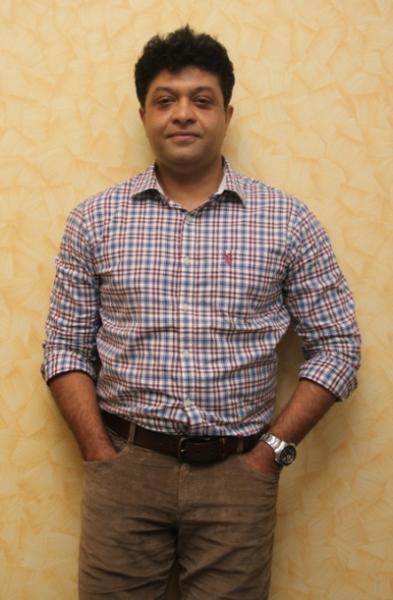
“Bollywood is not making films suited for home viewing on TV today”
-
MSM ups the ante for promoting IPL
MUMBAI: With just a month and a half left for cricket’s biggest extravaganza to begin, Max, the official broadcaster of the Indian Premier League (IPL), has embarked on an extensive marketing campaign that is aimed at improving viewer stickiness and increasing the engagement level.
The theme of the marketing campaign is ‘Sirf Dekhneka Nahi’ which calls upon viewers to celebrate every boundary hit or fall of wicket like they would do in a stadium.
While executives at Multi Screen Media refused to talk about the extent of marketing spends, sources say the broadcaster has earmarked Rs 220-250 million for the pan-India marketing campaign.
The marketing spends have gone up by 20-25 per cent over last year, the source added.
Almost 60 per cent of the marketing budget will be devoted towards television and print, while the remaining 40 per cent will go towards mediums like radio, outdoor, digital and on-ground activations.
The broadcaster is also evaluating whether or not to advertise during the India-Australia Test series which will air on Star Cricket.
With dance being the key feature of the campaign, the broadcaster has roped in ace choreographer Farah Khan who would feature in a series of television commercials.
The campaign drawn from the insight that cricket is not just a game but a passion will see Farah asking viewers to support their favourite team by grooving to the signature IPL tune composed by the music director duo of Vishal and Shekhar.
MSM COO NP Singh said that the idea behind the campaign is to raise the engagement level around the IPL by engaging cricket fans through various touch-points like television, radio, print, digital and outdoor.
“It became a passive viewing habit, so we wanted to increase the level of participation among the viewers. Therefore the campaign theme ‘Sirf Dekhneka Nahi‘. The same theme will be used across all our marketing campaign whether it is print, outdoor or digital,” said Singh.
According to him, dance has a universal appeal and will help the broadcaster in breaking through the barriers of age and language.
“Dance has a universal appeal and it cuts across all age groups and demographics. The idea is to make IPL successful through this campaign by engaging viewers,” he added.
The marketing budget for the IPL has gone up vis-?-vis last year. However, Singh refused to talk about it.
“Like every year, we will pull out all stops to promote the IPL. We will use all our network channels to push the marketing campaign. This time our network is much bigger than last year,” Singh asserted.
Max’s creative agency JWT has created a series of three short films, three dance instruction videos and one big grand film featuring the choreographer.
The three short films will showcase women, working professionals and families celebrating the IPL together with Farah Khan teaching them the signature dance steps. These campaign films will lead to the grand film which will highlight how IPL binds cricket with dance and celebration.
Singh feels that the IPL ratings are still holding strong at an average of 3.5 TVR compared to an all-time high of 5.51 TVR that it achieved in 2010 when the tournament returned to India.
“My belief is that the IPL ratings have stabilised at a strong 3.5 TVR level, despite the fact that the number of matches have gone up. My feeling is that the ratings this year will be better than last year. The marketing campaign that we have launched will help us attract viewers to watch the IPL,” he averred.
IPL’s format coupled with the presence of a galaxy of cricket stars both Indian and foreign is what will deliver ratings for IPL, believes Singh.
MSM EVP and Business Head of Max Neeraj Vyas revealed that the broadcaster will go for large-scale activations on digital medium. The strategy is to go viral as the campaign lends itself to the digital medium.
“While television will be the main stay of the campaign, we will also have activations on mobile and internet as song and dance lends itself to this medium. For example we will ask users to upload videos as to how they will celebrate when a boundary is hit or a wicket falls,” he says.
MSM SVP and marketing & communications head of Max Gaurav Seth said the thought behind the campaign is to make viewers excited about the IPL which would lead to greater stickiness.
“The message is not to just sit at home and watch it passively. What we are saying is like you celebrate in the stadium when a boundary is hit, why not do that at home,” Seth elaborated.
Seth said that the brief given to the agency was to create a campaign that reflects India’s passion for the game. He also feels that unlike cricket IPL is more of a family phenomenon and therefore the campaigns are designed in a manner that it appeals to each member of the family.
“The campaign is designed in such a way that it showcases IPL as the ultimate sports and entertainment property in India. Tell me one property that delivers that so much value to advertisers and viewers,” Seth maintained.
For the record, MSM has roped in three sponsors for season 6 of IPL. Vodafone and Pepsi have come on board as co-presenting sponsors, while Tata DoCoMo is going to be an associate sponsor. MSM is looking at two co-presenting and eight associate sponsors.
The IPL this year will be simulcast on Max, which has been the home of IPL for the last year five years, and sports entertainment channel Six. The IPL will be available on a High Definition (HD) feed in English and a Standard Definition feed in Hindi on Six and a SD feed on Max.
Featuring nine teams and 76 games, the IPL will be held from 3 April to 26 May.
-
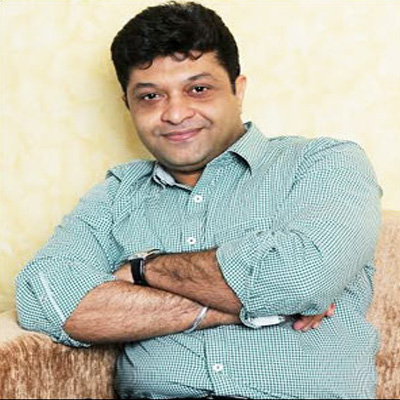
‘Max will see 15-20% ad growth this year’ : Executive Vice-President and Business Head of Max and Sony Mix Neeraj Vyas
Neeraj Vyas, the Executive Vice-President and Business Head of Max and Sony Mix, is excited with the way the year went for Max, the Hindi movie channel from Multi Screen Media (MSM) stable.
As the head of Max and Mix, Vyas has two challenges before him. The first is to take Max to the top position. The channel‘s strategy will be to acquire as many blockbuster movies as possible but at the same time remain judicious with the acquisition prices.
The second challenge for Vyas is to grow Sony Mix, the music channel that was launched last year to widen the bouquet. The key for Mix, which operates in a tough genre, is to differentiate itself from other music channels through its programme offering while at the same time control costs to become viable.
In an interview with Indiantelevision.com‘s Javed Farooqui and Urvi Malvania, Vyas shares his thoughts about the two channels and the way forward.
Excerpts:
Has the rise of Star Gold and the launch of its sibling channel affected the existing movie channels?
Strictly from the ratings point of view, barring the first two months and post the IPL, it has been good for us. If you look at the ratings that were available three weeks back for the first 8-9 weeks, there is very little difference between the three of us – Star Gold, Zee Cinema, and Max. We have also had a successful movie acquisition year.How dependent is Max on big-ticket movie acquisitions as it has a premium positioning?
Movie channels are completely driven by the library they have. Max has managed to have a premium image. It‘s completely by design and not by default because it‘s the way we want the channel and it‘s the way we present the channel. It‘s everything that you see on-air — the entire movie experience and our packaging. We want to set ourselves apart from others and hence did Extra Shots last year, a property where you get your trivia during the break and also put that into a half-an-hour show. This year we did something called Dirty Khabar.Does the premium positioning help Max get higher ad rates?
It has helped us to extract premium from the advertisers. There are a lot of lifestyle brands, a lot of brands that are very conscious of the kind of environment they are seen in from an imagery point of view. If the advertisers have a choice between two or more channels, then Max will always be preferred.Did the ad slowdown have an impact on Max‘s revenues?
There was no ad slowdown. In fact, we will see at least 15-20 per cent growth this year. The ad market for Hindi movie genre is a little under Rs 1,000 crore (Rs 10 billion).‘The music genre accounts for about Rs 4 bn and is growing at 15% annually mainly due to new channel launches. We have set a 3- year period to break even‘
What is driving this growth?
There is money in the market, brands are being launched, and there are marketing activities. So there is no slowdown in my opinion. It (the slowdown) was a myth that was being created. At least till November or probably mid-December, we are tight on our inventory and are completely sold out.But there are broadcasters who have felt the pinch of ad slowdown?
You tell me which broadcaster has slowed down in terms of content. Has anybody pulled back any shows? Despite no ratings, every GEC is going ahead with their biggest shows. There are two-three reality shows running on all the channels which are hugely expensive properties to produce. GECs are doing one-hour specials of their fiction shows and movie channels like us are marketing and putting more blockbusters on-air. Why would people do all these things if there was no money in the market? Give me a reason. I think the same people (who talk about a slowdown) need to answer this question.After a lull last year, has there been a spate of movie acquisitions this year?
Yes, there was a lull. The way it (acquisition) works is if I have to acquire a film, I have to do it a good year-and-a-half before the film is released. If a producer doesn‘t get the price he wants, he waits for the box office performance of his film. Depending on the success or failure of the film, the price gets decided. The trend these days is strange as you have to acquire movies upfront. It sometimes works for you and sometimes it doesn‘t, so you have to be judicious.Has there been a price correction in acquiring movies?
Unfortunately, what happens is that this industry is driven only by seven to eight stars. Unless we have more stars it will continue to be dominated by these 7-8 stars and it‘s essentially these men who lead the prices — the Khans, Akshay Kumar, Ajay Devgn and Ranbir Kapoor. If the price is going to be determined by these 7-8 stars, then their films will be sold at a premium.But a large number of movies go unsold?
That is because the films of only these 7-8 guys get the ratings. For example, a film like Vicky Donor was liked by many but on television it won‘t get you a rating of even 1.5 TVR. Ratings for most GECs and time spent for channels like us come from the interiors of the country and the audience in the interiors is for films like Singham and Rowdy Rathore. That‘s the reality.Do you think acquiring movies on the basis of box office success is the criteria to follow?
Honestly, that can be misleading. For example, Barfi is a brilliant film but put it on TV… probably it will get a rating of 2-3 TVR in the first airing, but it‘s not a movie that will get sustained ratings. Movie channels have a different model. When a film airs on television 10 times a year it has to give a certain yield and it has to give certain GRPs. As I said, the viewership comes from the interior.Zee walked out of the Barfi deal because at such high price point the monetisation becomes impossible. A correction is needed. It‘s a no-brainer. Zee‘s refusal to acquire Barfi rights was a step in the right direction. It also serves as a wake-up call for the producers or the corporates producing high-budget films. They have to get the pricing right irrespective of the box office collection because that is not connected to the success of the film on TV.
Many networks have also experimented by premiering movies on GECs rather than the movie channel?
That is a calculated gamble. Sometimes it pays off, sometimes it doesn‘t. It‘s a high-risk game because the price points of both the genres are hugely different. A GEC would trade at a certain level. Unfortunately movie channels have been under-priced since the beginning. By the time we start doing corrections, it is going to take time. The kind of money we recover on GECs will be far higher than on a movie channel. The yield is higher on GEC which is why we as an organisation have taken a decision to air certain movies like Paan Singh Tomar on Max but movies like Ek Tha Tiger and Rowdy Rathore will always be on Sony from a monetary point of view and its working for us. Once Sony has its one or two runs, it comes to Max and it really doesn‘t make a difference. What this does is safeguard our revenues and we manage our ratings better.How long does it take for a broadcaster to recover costs?
For us it probably takes a little lesser time because we premiere on Sony. Our recovery is higher. It takes anywhere between two to three years to recover the costs. We acquire movies for a minimum of five years. We have a library of 800 movies and all of them are exclusive.Next year, IPL won‘t be there on Max since it will move to Sony Six. So what is your strategy going to be?
We are a Hindi movie channel and we are happy that IPL is moving out. IPL moving out is a blessing for Max since we will get an opportunity to do a lot of things in the Bollywood space.Most Hindi movie channels also have dubbed content. How is it working?
Almost 25-30 per cent of the content is dubbed and it is working. The prices of dubbed movies have also gone up although I can‘t give a number. The dubbed content adds variety to the channel. People in UP and MP don‘t know the actors but they love the action. Most of the South Indian films are in the realm of vendetta, revenge, high octane action, family values and so on. These are qualities that fit very well with the sensibilities of the heartland. Indian movies are Indian movies. People might look different but the basic ethos will always remain the same. The trend in Bollywood is that every big film that is going to come will be a remake of some or the other Southern language film. Everyone has acquired remake rights whether it is Salman Khan, Akshay Kumar or Aamir Khan.What implications will digitisation have on the genre?
We are governed by the reality of libraries that we own. We will be able to run a large number of movies that we have not telecast. Hopefully, we will also get the opportunity to reach out to slightly more premium audiences. Also films like Silsila, Kabhi Kabhi, Rocket Singh and Saawariya which are rotting in our library will be able to see the light of the day.Coming to Sony Mix, how do you differentiate the channel from the other players in the genre?
We decided to be a channel that is musical and understands the mood of the people. Our programming corresponds to the time of the day. So we have Surili Subah in the morning, Ishq Vishq in the afternoon, Mix Adda in the evening right up to Raina Beeti Jaaye, which is the slot for the retro songs. The promise of the channel is that we understand viewer‘s mood at different times of the day. We also went ahead and bought more music than anybody else simply because we wanted variety. So when other channels were playing the free plays and the new music launches, we went ahead and did deals with Yash Raj and Sony Music.What about your original content?
We have a property called Mix Solos which has singers like Javed Ali, Roop Kumar Rathod and Shafqat Amanat Ali doing acoustic solos for the channel between songs. Then we have something called Mix Tippani where the channel suggests which song to listen to in which situation. We also have a show called Picture Abhi Baki hai. Here we take bytes from the actors, directors, music composers, singers etc — all with focus on the music and nothing else. It is like a sneak peak with focus on the music of the movie.These are the things that set us apart and we want to continue doing them. We want to do Harmony again which was on Sony 10 years back. We would love to revive that and have a show that has pure unplugged music. We also had a show “Yun Bana Yeh Song” with Swanand Kirkire where he explained how a song was made and took the viewers through the journey of the song. We have also brought back a lot of videos from the 90s that were huge back then. You see, you have to have a Mix of music for a music channel to be called a music channel.
What is your primary TG? And what was your strategy when you launched Mix?
Our primary TG is 15-24 age group, while our secondary TG is the 25-34 age group. We would never dilute our focus on the secondary TG. We firmly believe that you can‘t just cater to the youth which is why we have a Raina Beeti Jaaye at night. Music transcends age and we are going against the grain and not doing what everyone else is doing in the genre. Our belief is that it will pay off with digitisation and people wanting to make a choice.How tough is it to sustain a Hindi music channel?
If you control your costs, then it is viable to have a music channel. But it is a tough game. We make use of our synergies with Sony Music and YRF. The challenge lies in how you programme your day as everyone has the same content in this genre. The brick of three songs before you go into an ad has to be so strong that it appeals to the audience.How is the revenue split between distribution and advertising?
Distribution is negligible as a source of revenue right now. It‘s completely dependent on ad revenue. We have a wide range of advertisers come to us due to our programming. We have a broad base of viewers and though we are packaged as young and happy, our appeal is across age groups. You have to build the proposition based on the core values. The music genre accounts for about Rs 4 billion and is growing at 15 per cent annually mainly due to new channel launches. We have set a three-year period to break even. -
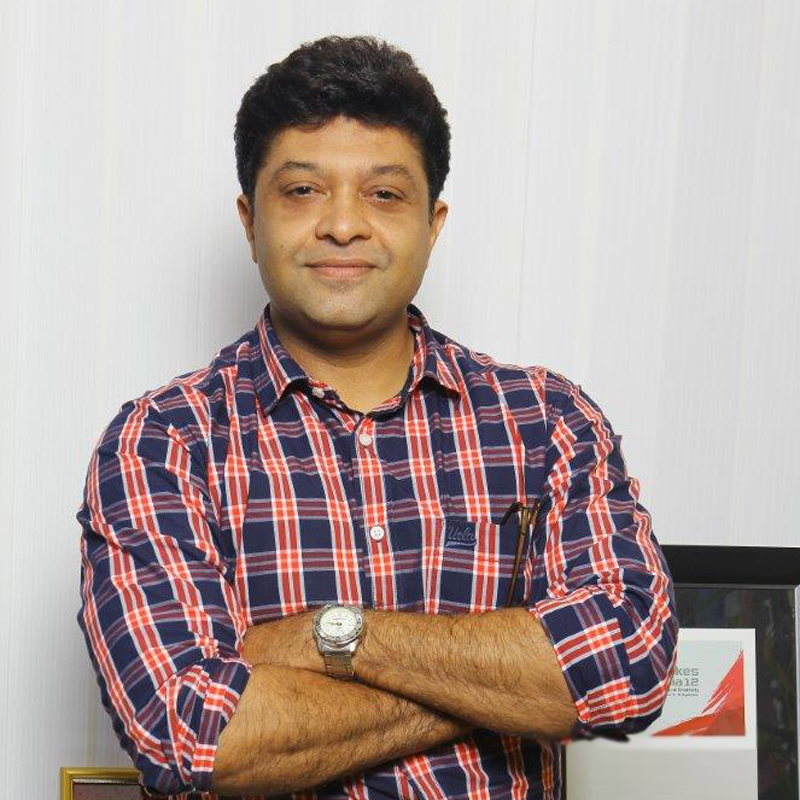
Max’s new campaign tells viewers to relax on weekends
MUMBAI: Multi Screen Media (MSM)‘s Hindi movie and special events channel Max has launched a new campaign highlighting its weekend programming. The campaign promotes the idea of taking a much deserved break in weekends after slogging for the whole week.
Created and conceptualised by Max‘ creative agency JWT, the theme of the campaign is ‘saare hafte lagey raho…weekend pe padey raho‘.
The communication is targeted at promoting viewership on Max on weekends when the channel claims of showcasing some of the “best family entertainers” of all times.
Max EVP and business head Neeraj Vyas said, “At Max, it is our endeavour to come up with extremely relatable and life-like themes for all our communication campaigns. With our latest weekend campaign ‘Saare hafte lage raho…weekend pe pade raho‘, we are trying to relieve the monotony of daily life by creating a complete entertainment package on the weekend for our viewers thus making Max the ultimate movie destination.”To promote this, three films will be released over the next few days across television, social media and online forums. Each of these films bring alive the central communication theme that says after a hectic week at work the best way to recharge yourself is to overdose on blockbuster movies on Max over the weekends.

 We buy a film for the network, it’s not only Max, any network today whether it is us, Star, Zee or Viacom, buys films for the network. No movie channel will be able to sustain the cost that it is bought for. It has to be played across various channels of the network for the cost to be amortised
