Tag: Neela Telefilms

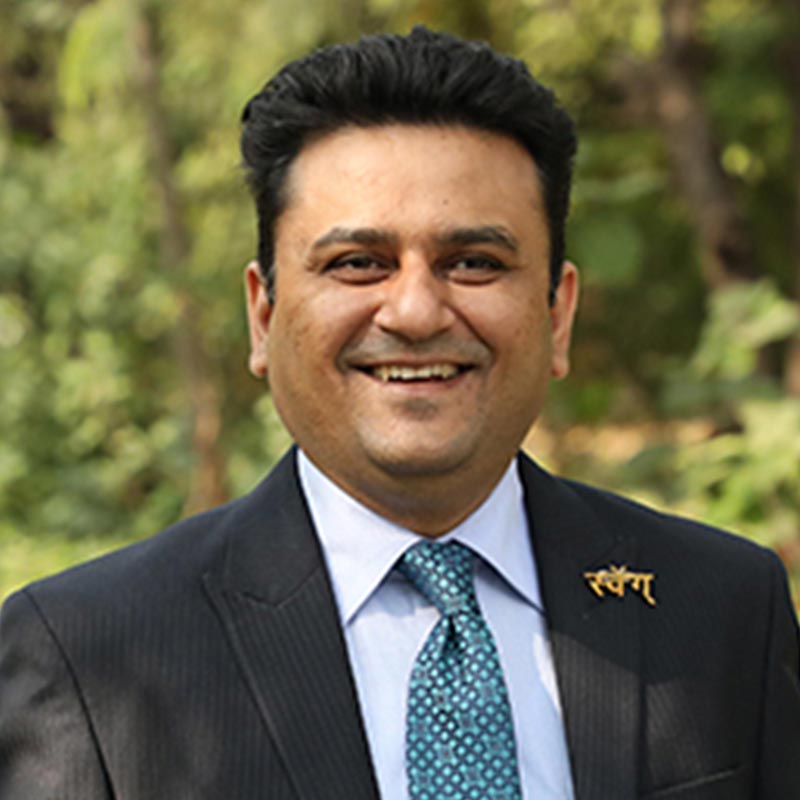
  • Neela Telefilms welcomes Darshan Ashwin Trivedi as COO

    Neela Telefilms welcomes Darshan Ashwin Trivedi as COO

    MUMBAI: Neela Telfilms Pvt Ltd has announced the appointment of Darshan Ashwin Trivedi as the COO of the company. He is responsible for the day-to-day operations and development of new projects.

    He has been in the media and entertainment industry professional for about 20 years. Beginning his career at the age of 10 as an artiste in radio and television, Trivedi has worked with Reliance Broadcast Network Ltd, Zoom Entertainment Networks Ltd, Sony Entertainment Television, Radio Mirchi, Zee Interactive Learning Systems, Triologic Digital Media Ltd, Memesys Cultural Lab Pvt Ltd, The Moving Pixels Company and L J Institute of Media and Communications as a senior resource.

    He has directed feature film, short films, documentary films, has produced and directed thousands of hours of television and radio content. He holds a PhD degree in Sociology and Law from Gujarat National Law University.

    Trivedi is also a founder of Gujarati Film Fraternity, an initiative to support Gujarati Cinema.

  • GST: TV prod biz bemoans lack of clarity and increased paperwork

    MUMBAI: Minister of information and broadcasting M Venkaiah Naidu, writing for a business newspaper, opined: “At the midnight of June 30, India will make a tryst with history by heralding the much-awaited GST regime and turning a new leaf in the annals of the country’s taxation system.”

    “There might be some teething problems initially, but, in the long run, GST will help both the traders and consumers as it will cut down red tape — there will be no inspector raj, harassment by taxmen or check posts at borders. The officers will have no discretionary powers. It will ensure transparency, reduce inflation, bring down prices, improve ease of doing business, create a level-playing field, increase tax compliance and help achieve higher economic growth.”

    The aim of the Goods and Services Tax (GST) — one nation, one tax — may be lofty, but clearly many segments of the media business don’t seem to agree with Naidu’s optimism — at least in the short term. And, television and film production houses are one such category.

    Executives at production houses feel accounting and operational processes would definitely escalate, thus needing more staff in a largely insecure business environ, although most are hopeful that irritants would iron out in the long run.

    “Accounting and operational processes would increase to a large extent. I am sure we would learn, adjust and settle down in the new system,” said Swastik Production producer Rahul Kumar Tewary. Although, he feels there wouldn’t be much impact on the television industry owing to a new indirect taxation regime that GST seeks to usher in, he explained, “The producers will claim additional tax from the broadcasters who, in turn, will recover it from the advertisers.”

    In fact, a uniform tax system will help the largely unorganised industry become organized and, according to Tewary, it will “benefit the content makers and producers” who will get more input credits under GST as there will be no distinction between service tax, entertainment tax and VAT. However, the paperwork will definitely increase. Neela Telefilms director Asit Modi admitted paperwork will be a “big problem”, especially when shooting outdoors as then production houses will have to file “three (tax) returns in a month.” His worry is compounded by the fact that more paper work would warrant employing more human resources in the presently financially insecure production business.

    Still & Still Media Collective founder Amritpal Bindra pointed out some big impacts of GST. Dubbing increased tax filings a “clerical impact” of GST, he said, “Administrative hassle in the beginning will lead to a simplified tax structure substituting multiple taxation in the long run.”

    Pointing out that high taxation (28 per cent) on movie tickets priced over Rs. 100 would be a challenge for the industry, Bindra explained teething pains as paving the way for “transparency, unique management, discipline and good corporate governance in the industry.”

    The reason for his relaxed attitude towards GST? “We have been trying to pay more people through cheque and also insisting on raising relevant invoices so that our partners could pay taxes in their individual capacities. Unlike the norm of 90-120 days payment cycle in the industry, we make sure the vendor is paid within 30 days after raising an invoice,” Bindra explained.

    Some executives are approaching the new system differently. Contiloe Pictures COO Anup Vijai is looking at the new tax regime in two parts — commercial and compliance. “There is a cost perspective and the other is process compliance,” he remarked, “We are a production house that is subjected to service tax. When we raise an invoice for a TV channel, we add service tax separately. We believe that GST would lead to reduction in costs, but are unclear on the process of filing the new tax.”

    Some other production house leaders complained about the new tax regime, nevertheless. Hats Off Production founder JD Majethia said that more funds would get blocked as they would have to pay the actors in advance and, according to him, things such as makeup, food and vanity van, covered under GST, would become expensive.

    “Under GST, the cost of food provided to actors could be set off, which is good. But, if we ordered from hotels (outdoor catering), it may be dearer under the new regime,” Majethia said. He expected the situation to be prevalent for a couple of years, but hoped GST would boost economy.

    Another production house executive chided the government for “poor marketing” of the new tax system. Paperback Films co-producer Pradeep Kumar found GST to be beneficial, but was unhappy about its marketing and lack of a thorough awareness and literacy drive about GST.

    “GST may hurt because there will be a penalty for delayed or missed payment of GST,” he said, adding, “We would have to ensure that vendors and caterers, etc raised invoices by the end of every month so that we are in a position to do the taxation process in the next ten days.” He also described a surge in tax from 10 to 15 per cent as “tax terrorism”, saying that GST may simplify taxation in the long run, but an increase in the quantum is a “liability”.

    Whoever said `no pain, no gain’ probably had GST in mind and for the media industry and production business, in particular, it seems to be quite true. The long-term simplification of a multiple taxation regime brings along pains in the form of short-term uncertainties as India is still largely a cash-economy and formal invoices and a process-driven system a rarity.

    ALSO READ:

    http://www.indiantelevision.com/regulators/ib-ministry/gst-benefits-come-with-daunting-compliance-increased-paperwork-say-sector-stakeholders-170628

    http://www.indiantelevision.com/dth/dth-operator/under-gst-taxes-on-cable-dth-entertainment-services-to-come-down-170523

  • How to get your story on screen?

    How to get your story on screen?

    MUMBAI: The key to survival in the cut-throat world of television programming is creativity and conviction. At a time when writers and good ones at that, are available nineteen to a dozen, television channels are picky-choosy about the scripts and scriptwriting talent that they hire. In such a scenario, many a scriptwriters with fire in their belly and the desire to be successful are left with no choice but to taken the route of becoming a producer by roping in investors.

    With a focus on how new age writers also have to don the hat of a producer not out of choice but out of compulsion, The Content Hub 2016’s session ‘The Age of Creative Producers’ set the ball rolling by focussing on issues of show-runners, C driving creativity as well as writers and directors turning producers.

    The session was attended by writers, producers, directors and broadcasters alike from the television industry. The session was chaired by Bodhi Tree Multimedia co-owner Sukesh Motwani and the panellists included Neela Telefilms owner Asit Modi, The House of Originals director Nivedita Basu, Sony SAB programming head Saeed Akhtar and Swastik Pictures founder Siddharth Tewary.

    Shedding light on the issue of writers and directors becoming producers, Tewary said, “Writers have no other option than to become producers because many a times, production houses don’t agree to produce their stories. So writers are left with no choice but to manage their funds and produce it on their own.”

    Basu opined, “The concept of writers and directors collaborating with production houses is nothing new. It already existed in the industry. Moreover, the collaboration between writer and production house as well as between the production house and channel has become a key factor.”

    For the smooth shooting for any television show, a ‘show-runner’ is a must. The show-runner is responsible for the show’s creative and financial aspects and also looks after the overall creative authority and management responsibility for television programs. Emphasising the importance of having an able ‘show-runner’ to helm the television show, Basu added, “Nowadays having a good concept is nothing. It’s all about how you build the characters. It is good to have a very experienced person as a show-runner by a channel.”

    Elaborating on the concept of show-runner, Modi opined, “It is important to have somebody who has knowledge about all aspects of creation rather than writing. Thus it is important to have a show-runner who has a better idea, vision and understanding about what the audience wants.”

    Broadcasters play a pivotal role in getting the content out on television and highlighting the criteria that broadcasters look for while choosing a show, Sony SAB programming head Saeed Akhtar opined, “An individual should have a vision on what they are creating. Today, a lot of shows on television are infinite, and thus it is very important to have a vision about the show as for broadcasters, the show is a product, which they need to sell to advertisers as well as the viewers. One should choose the right person internally to drive a particular kind of brand and maintain brand hygiene. If the channel identifies a person who has the capability to drive a particular idea into a good show and everyone’s conviction is on that show, then broadcasters helps in creating an ecosystem so that the essence of the core idea always stays.”

  • How to get your story on screen?

    How to get your story on screen?

    MUMBAI: The key to survival in the cut-throat world of television programming is creativity and conviction. At a time when writers and good ones at that, are available nineteen to a dozen, television channels are picky-choosy about the scripts and scriptwriting talent that they hire. In such a scenario, many a scriptwriters with fire in their belly and the desire to be successful are left with no choice but to taken the route of becoming a producer by roping in investors.

    With a focus on how new age writers also have to don the hat of a producer not out of choice but out of compulsion, The Content Hub 2016’s session ‘The Age of Creative Producers’ set the ball rolling by focussing on issues of show-runners, C driving creativity as well as writers and directors turning producers.

    The session was attended by writers, producers, directors and broadcasters alike from the television industry. The session was chaired by Bodhi Tree Multimedia co-owner Sukesh Motwani and the panellists included Neela Telefilms owner Asit Modi, The House of Originals director Nivedita Basu, Sony SAB programming head Saeed Akhtar and Swastik Pictures founder Siddharth Tewary.

    Shedding light on the issue of writers and directors becoming producers, Tewary said, “Writers have no other option than to become producers because many a times, production houses don’t agree to produce their stories. So writers are left with no choice but to manage their funds and produce it on their own.”

    Basu opined, “The concept of writers and directors collaborating with production houses is nothing new. It already existed in the industry. Moreover, the collaboration between writer and production house as well as between the production house and channel has become a key factor.”

    For the smooth shooting for any television show, a ‘show-runner’ is a must. The show-runner is responsible for the show’s creative and financial aspects and also looks after the overall creative authority and management responsibility for television programs. Emphasising the importance of having an able ‘show-runner’ to helm the television show, Basu added, “Nowadays having a good concept is nothing. It’s all about how you build the characters. It is good to have a very experienced person as a show-runner by a channel.”

    Elaborating on the concept of show-runner, Modi opined, “It is important to have somebody who has knowledge about all aspects of creation rather than writing. Thus it is important to have a show-runner who has a better idea, vision and understanding about what the audience wants.”

    Broadcasters play a pivotal role in getting the content out on television and highlighting the criteria that broadcasters look for while choosing a show, Sony SAB programming head Saeed Akhtar opined, “An individual should have a vision on what they are creating. Today, a lot of shows on television are infinite, and thus it is very important to have a vision about the show as for broadcasters, the show is a product, which they need to sell to advertisers as well as the viewers. One should choose the right person internally to drive a particular kind of brand and maintain brand hygiene. If the channel identifies a person who has the capability to drive a particular idea into a good show and everyone’s conviction is on that show, then broadcasters helps in creating an ecosystem so that the essence of the core idea always stays.”

  • The Content Hub: Education in comedy doesn’t exist in India

    The Content Hub: Education in comedy doesn’t exist in India

    MUMBAI: With the soaps and dramas ruling the Indian television screens, comedy to some extent has taken a backseat. A session on ‘Comedy Fix’  moderated by Indiantelevision.com’s founder, CEO and editor in chief Anil Wanvari and panellists Neela Telefilms director Asit Modi, Optimystix Entertainment producer Vipul D Shah and All India Bakchod (AIB) co-founder and member Tanmay Bhat sought to find if the TV industry is seeing a dearth of writing talent.

    Modi said that in the field of comedy there is not only shortage of writers but producers as well. “Our industry is not ready for new writers. We have a closed mindset when it comes to new writers and tend to only work with a particular set of experienced ones. We don’t give an opportunity to explore,” he said.

    Bhat went on to reason why new writers are not accepted by the industry and what today’s writing lacks. According to him the current state of television writing is very generic. “Right from actors to producers to writers, I have seen ‘just-get-it-done’ kind of attitude where originality doesn’t matter but copy pasting does.  In my early days, when I used to meet television writers  one common thing that I noticed amongst them was that they all had a set pattern of writing in a number of shows,” he elaborated.  

    All the panellists felt that in today’s time everything is scripted and agreed that the attitude towards writing is very poor which needs to be changed.

    Shah highlighted right from the beginning there were no new writers created for TV but the ones making the films ended up writing for the small screen too. According to him, it is difficult to get innovative story writers because it is demanding. “Today, television writing, whether fiction or non-fiction, has a set of dos and don’ts because a channel can demand a change in the plot anytime and we as writers have to be also on our toes to fix it.”

    He went on to say that western formats can never be adopted in India. “Our humour is completely different from the genre abroad. We can’t present dirty comedy here because it will never be accepted. So, to bring the humour, which can be accepted by Indian audiences, we have to create our own talent, which is again very difficult.”

    According to Modi, whose Taarek Mehta Ka Ooltah Chashmah has been running successfully for more than six years, writing a daily comedy is not only a challenge but a task. It is not only the writer’s responsibility to make the show going but the entire teams. “You not only need a good writer but a good performer also. And after getting a good performer/actor, one needs a good producer who can bridge the gap.”

    Showing the silver lining in the cloud, Bhat said that thankfully now humour has started getting the respect it deserves. According to him, comedy education doesn’t exist in India. “We compare ourselves to the shows in the US. But we also have to look at the kind of education and training they have gone through. All writer/comedians one sees in their shows have all gone through a certain level of training. This doesn’t exist in India.”

    The panellists agree that Indian television has always accepted family comedies and this is what will continue in the future as well. From shows like Dekh Bhai Dekh to Khichdi to Sarabhai vs. Sarabhai, they all have catered to the masses.  

    Is there fatigue coming in comedy? “No, not at all,” said both Modi and Shah. “There will be always space for comedy. Shows like Comedy Nights with Kapil, Comedy Circus, are making everyone laugh today. And everyone loves to laugh, so comedy is and will always be audience’s first choice,” added Modi.

    Wanvari further delved to find out that apart from family comedies if there is a room for sitcoms on television? “It will change, because comedy has just started its journey.  I am seeing a lot of scope as more comedy channels are being launched. In comedy more than the story, character development is important. So once the characters are developed, the task will be simple,” said Modi.

    According to Shah, whose Comedy Circus ran for seven and half years, a show never feels the fatigue. “Yes, at times a few episodes works and a few don’t. Comedy sometimes backfires as well. But overall as a genre, there is no fatigue coming in,” he further said.

    Coming from a digital background, Bhat feels that television needs to start catering to the youth a lot more. “They are still catering to the families and not the youth. So, young people will stop watching television at some point of time unless channels keep re-inventing.”

    As for Bhat, re-invention should start from the writers’ room. “I don’t see enough young people picked up from the colleges and groomed. It is essential to grab someone at 16 and groom them to get good comedy in place. Any college kid would want to write for television but there are no platforms.”

  • Your content should be good, it will attract people anyway: Asit Modi

    Your content should be good, it will attract people anyway: Asit Modi

    MUMBAI: At a time when daily soaps the likes of Kyun Ki Saas Bhi Kabhi Bahu Thi and Kahaani Ghar Ghar Ki ruled the small screen, one man dared to differ. Asit Kumar Modi of Neela Telefilms nurtured a dream – to produce a daily comedy based on Taarak Mehta’s column ‘Duniya ne oondha chashmah’ in the popular Gujarati weekly, Chitralekha. Friends found the idea ridiculous while general entertainment channels (GECs) simply trashed it. However, Modi stuck to his guns and finally found a taker for his show Taarak Mehta Ka Ooltah Chashmah! in Sab TV. Today, the sitcom has not only completed five years but has acquired sort of cult status, maintaining its position among the top ten TV shows of all time. In a heart-to-heart with Disha Shah of indiantelevision.com, Modi casts a long and close look at the journey thus far…

    If there was one thing Modi knew he would have to face is repeated rejections. Indeed, it took eight long years for his show to come on-air. “In between 2000-2008, no GEC was ready to accept comedy. Every channel wanted to focus on saas-bahu and drama soaps because that was the trend at the time. However, I through that ‘if a daily drama can run, then why not a daily comedy?’” he says. Modi was also aware that writing a daily comedy was a huge challenge as one had to churn out something new every day to keep viewers hooked.

    His friends laughed at him when he told them about his plans. “They de-motivated me and said that viewers are not going to accept a daily comedy; a genre like this will be accepted only over the weekends. But somehow, I had the confidence in me that channels would have to accept a daily comedy,” he recalls.

    The show had to convey the harshest truths in the funniest possible way. Also, when he purchased column rights in 2001, all characters were Gujarati. He faced the uphill task of bringing in characters from different communities to appeal to a universal audience. “I wanted to showcase the lives of middle class families; how they live, eat, sleep, and even go through stress laughingly. Moreover, I wanted to showcase different cultures living together in one society; how they celebrate festivals together, the bond between them and so on in a simple but humorous way,” he remembers.

    So, he researched each and every character he had in mind for the show and considering Mumbai’s cosmopolitan background, created mixed combinations like a Parsi and Punjabi family, a Tamil and Bengali family etc.

    Armed with a concept, Modi approached channels including Star Plus and Sony (four times) but in vain. At the time, Sony had just taken over Sab TV, and NP Singh invited Modi and asked him to produce the show for Sab TV. That’s how Modi finally got a platform to showcase his talent. Apparently, Disney too had approached Modi but the channel wanted to feature only children, which is why Modi had to turn them away.

    Casting was most difficult and took Modi over two months to finalise, what with each artist being auditioned five times to ensure the right fit. “I wanted faces with which people can identify. Dilip Doshi (Jetha) was always my first priority when it comes to comedy. Daya’s role was suggested by Doshi and a few other artists; I had watched her plays but wasn’t sure because she hadn’t really dabbled in comedy. I was a little confused, but when she mimicked a few personalities, she was excellent,” says Modi. He would often take the actors to the sets to familiarise them with their characters. “Whenever the set was in a developing stage, I used to take the actors and tell them that this was their society where they would stay and so on. In the beginning, I had to mould each of the actors personally.  While it took time, at the end of the day, the whole team worked equally hard,” he says.

    Working within budgets was the other big constraint, considering Sab’s budgets were very low at the time the show was launched. “For the first six months, I incurred heavy losses. I had to create a huge society. Usually, a daily soap demands one set- either a house or a haveli or other methods of living. I had to create two sets – Gokhuldam exterior sets and interiors showcasing everyone’s houses,” reveals Modi. The one thing that kept Modi going was his belief that if your show is good, you can build the slot and become the slot leader as well. Besides, he had an understanding of the ways of TV, having been associated with it since the days of Buniyaad and Hum Log. “There was a time when people did not consider afternoon slots. But shows like Shanti, Bhabhi and Swabhiman on Star Plus made people watch TV during the afternoon as well. There was also a time when shows like Mahabharat and Ramayan made people watch TV on Sunday mornings,” he explains. “Your content should be good; it will anyway attract people. I believed that if I made a good show, there would be a loyal audience for Sab TV as well. With lots of households having just one TV set, we decided to cater to the entire family.”

    Putting a team in place was the third challenge. “The writers who came to me for work were all new; they didn’t have any experience in writing. So with my kind of experience, I had to train them and utilize their talents in the best possible manner. I have designed this show, so it is in my blood,” says Modi, adding, “We get our reward when we manage to make people smile at the end of a hard day.” Currently, Modi has about seven to eight people in direction, and around 10 people in editing. “I have an in-house editing studio and three to four writers. I am always aware of what’s happening in terms of the screenplay. I don’t want those ‘yes, sir’ type of people, otherwise how will I grow? In the creative field, one has to constantly grow and reinvent. And for this, you need people who can pinpoint your weaknesses,” he says. As it is a daily comedy, editing happens 24×7. “We do it shift-wise. Compared to daily soaps, comedies need much more editing. One needs to understand that comedy is more dynamic and hence, there is more work,” says Modi. The staff strength including directors, script writers, technicians and laborers is nearly 150. “What is wonderful is that my whole team has remained with me through these years. About 98 per cent of crew members have stuck with me. We all work as a team, a big family,” he adds with pride.

    Looking back, Modi feels he has succeeded in making it a one-of-a-kind show. “In television, you work for the audience. One needs to be aggressive. You will lose the audience, if even one or two episodes are not up to their expectations. It will leave your target audience disheartened. They then have options of switching to other channels. So, for the stickiness of the show, I made the show as real and as simple possible. With daily soaps taking tons of leaps, in my show, I have taken no leap. No double meaning comedy jokes, it’s all about simplicity. The show is different and unique in its own way and that is the reason it is running strong for years,” he elaborates.

    Anooj Kapoor, Senior EVP and Business Head, SAB TV

    While media experts observe that Sab TV’s reach would be lower than say, that of a Star Plus or Colors, the higher TVTs enjoyed by Taarak Mehta… mean that the show is watched more intently by viewers as compared to other offerings in the same time band. Thus, great content on Sab TV has translated into stickiness for the channel. Sab TV executive vice-president and business head Anooj Kapoor could not agree more on this. “When we defined our brand promise of ‘Asli Maza, Sab ke saath ata hai’, the idea was to showcase light-hearted entertainment that the entire family can sit together and watch. So, that was our brand promise. Modi interpreted our brand promise in a very nice manner by showing people of different communities living together in a fun sort of way.” Kapoor feels casting is the best thing to ever happen to the show, with the characters of Daya and Jetha becoming extremely popular.

    Ask Kapoor the reason for Taarak’s success and he says: “In Taarak, because there are so many characters from such diverse backgrounds and different communities, that they are able to create a wide array of plots and keep the show robust and that is the reason why it continues to be successful.”

    He informs that in the last six years, Sab TV has grown 600 per cent in terms of ratings despite a reach of 40 and a budget which is one fourth of the total. “That has been possible firstly, because of our unique decision taken as a channel and secondly, because of successful shows like Taarak and so on. “

    Elaborating on Sab TV’s strategy as a channel, Kapoor says: “Our strategy was differentiation through innovation. We tried to create several different brands with each having a very distinctive kind of an image. So, the entire bouquet fell together very nicely which was ably led by the success of TMKOC.”

    Going by industry experts, the stickiness has enabled Sab TV to rake a premium for its leading show. A 10-second ad spot on the channel goes for Rs 50,000. Its popular show commands a premium of 15 to 20 per cent. Taarak Mehta Ka Ooltah Chashmah sees its ad slots being sold for Rs 80,000.

  • Sab TV launches its first ever game show

    Sab TV launches its first ever game show

    MUMBAI:  With an aim to provide families with a joyful experience that they can take back home and cherish for life, Sab TV is launching its first ever game show – Sab Khelo Sab Jeeto!


    Sab’s executive vice president and business head Anooj Kapoor spoke of the launch, “Sab TV believes that a complete family entertainment experience can only be relished together. Our brand promise ‘Asli Mazaa Sab Ke Saath Aata Hai’, emphasises on the essence of togetherness through our new show ‘Sab Khelo Sab Jeeto’. The show is progressive in its content and interactive in its format. We hope that ‘Sab Khelo Sab Jeeto’ entertains audiences across India.”


    The show’s format encourages participation from families across the country urging them to engage in fun-filled games and spend family time together. Each episode we will declare 1 Champion family who has either won or qualified maximum number of times. The six champion families will compete to win the coveted title of the ‘Maha champion family’ and will be entitled to win a bumper prize.


    Having anchored game shows before, Cyrus Sahukar who is known for his comic skills has been roped in to host the show. On this he said, “I am really excited to try my hand at hosting a show that has a much different outlook towards entertainment. There have been many game shows out of which some have been physically stimulating, some based on quick thinking and some for purely entertainment purposes. However ‘Sab Khelo SAB Jeeto’ is what you get when you put all the three aspects together to form a unique concept. I’m very certain that the viewers will enjoy the show thoroughly.”


    Produced by Neela Telefilms and directed by TV Vinod, the game show promises complete entertainment for both, viewers as well as families participating every weekend, starting 12 October at 8:00 pm.