Tag: NDTV

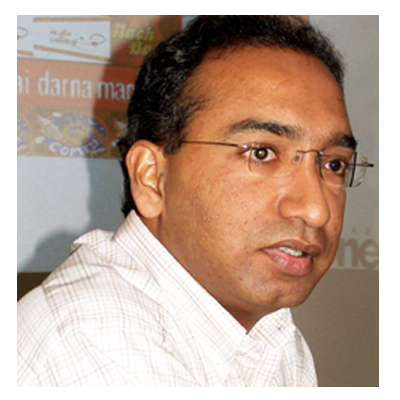
  • ‘Challenge is to convert local advertisers’ contribution to 50 per cent from 25 per cent’ : Abraham Thomas – Red FM COO

    ‘Challenge is to convert local advertisers’ contribution to 50 per cent from 25 per cent’ : Abraham Thomas – Red FM COO

     Red FM has gone through a sea change after the Living Media Group sold it to a consortium including Hyderabad-based Value Labs, NDTV and Malaysia-based Astro. Then Sun TV Ltd. acquired a 48.9 per cent stake to build a national footprint, synergising with its South India operations.


    Red FM has grown over the period, claiming to hold top spot in the lucrative market of Mumbai. It has also grown its base in Delhi and Kolkata.


    In an interview with Indiantelevision.coms Nasrin Sultana, Red FM COO Abraham Thomas throws light on some of the pertinent issues that plague the FM radio sector in a Bajate Raho style.


    Excerpts:

    What do advertisers identify with the Red FM ‘Baajate Raho’ brand?
    Advertisers associate Red FM as a young, energetic and pro-active brand. Any product or brand that targets between the 15-35-year-olds likes to get associated with Red FM. Even the local advertisers in each city where we operate – Delhi, Mumbai and Kolkata – are putting money on us as our content is wholly local.

    What about the listenership growth at Red FM in the recent past?
    The Red FM brand has been created with our innovative content and our ‘Bajate Raho’ attitude. We have moved from just being a radio brand to a FM station. Listeners identify Red FM as a station of expression. We have also ventured into TV. Our annual on-ground Bajaate Raho awards is going to air on Sony Entertainment Television.


    In terms of listenership, we have been consistently in the number one spot in Mumbai for the last seven to eight months. In Delhi we were a bit behind. Now we have climbed to the number two spot there. In Kolkata, we are the only station which play only Bollywood superhits unlike other FM stations which have Bengali music too.

    With Sun TV Ltd. picking up a stake in Red FM, what has this meant at the operational level?
    In the operational level, there has not been much change. In the ad sales front, the network is able to sell a national package to any advertiser.

    FM broadcasters are seen complaining about advertisers’ preference of TV and print over FM radio. Has it improved over the years?
    Advertisers have gradually started to realise the potential of the medium. The industry has seen a two-way expansion – growth from existing markets and new geographies with FM phase II expansion. In the last fiscal, the FM industry has expanded to deep pockets of the country. Definitely this attracts advertisers as FM radio is seen as an innovative mode of advertising in the smaller towns.


    In Red FM national advertisers pull 75 per cent revenue while the local advertisers constitute the rest. The big challenge is to convert the 25 per cent into 50 per cent. Only then can the FM radio sector expand its share in the overall ad pie which currently stands at 3.4 per cent.

    Has the launch of Ram (radio audience measurement) made any impact since advertisers can now have data to back up their spend?
    Unlike the TV industry, advertisers and FM broadcasters are not using Ram figures on a week-on-week basis. But a 4-6 week data provides a clear trend which we use to pitch to advertisers. Besides we use the trends which come out of time spend, cumulative and Tarp (target audience rating point) data to design and conceptualise our shows. They indicate content stickiness and the profile of the audience.


    The Ram figures have demystified a myth that we most often had. Pre-Ram, we neglected the weekend slot thinking that listenership is slender. Now we are concentrating on the weekend slot as well. The Ram figures clearly indicate that there is a strong listenership population even on weekends. Earlier when there was no data to refer to, most of the FM stations played back-to-back music with no jock talk.

    What are the other trends that the Ram figures indicate?
    Listeners start stepping in from 7:30-8:30 in the morning. This increases gradually, so much so that it beats TV viewing audience. But after 1:30-2 pm, listenership slides down. The 2-5 pm band faces a tough competition from the TV audience as during this time most of the general entertainment channels (GEC) have original content in the afternoon band. Radio listenership reaches its peak after 5:30 pm.


    There was another believe among us that highest listeners come in from the car listeners. However, Ram data proves this wrong as there are few listeners on the drive. Most of the listeners come in from mobile and personal set listening.

    Are you content with the Ram week-on-week data or you wish for some improvisation?
    Yes, it has been useful. At least something is better than nothing. We were not able to use the data of Indian Listenership Track (ILT) as it was out only on a quarterly basis. It was difficult to use the dated trends. The Ram figure is a good indicator. The best method in this connection is the electronic meter of mapping listeners. Only a few countries use that methodology as it is very expensive.


    The ideal thing to do in India is to have three different methodologies in three different types of market. The small markets can have Day-After-Recall (DAR) methodology, the big markets can use Daily Diary methodology while the metros can depend on Electronic methodology. But the Electronic methodology is not feasible in India as it is very expensive.

    The Indian Premier League (IPL) had its devastating effect on GECs and multiplexes. Has the FM industry felt the heat?
    IPL has been beneficial for us. Red FM is the official radio partner of Mumbai Indians IPL team. To cheer up the team, Red FM turned into Blue FM for one day. Red FM has woven both content and contest around cricket to promote the team. Vinod Kambli is our special cricket expert. He does a cricket review of the last day’s match in a humorous way.


    We also had a contest where the winners were taken to one of the matches when Mumbai Indians was involved. The winners were taken in an open bus to cheer the team with Red FM’s RJs.


    With innovation in content and different contests, there has been a spike in the listeners. But I can’t say for sure if this has been primarily because of IPL because school and colleges are closed for vacation. During this time of the year, we have spikes in listenerships. But we do not have corresponding figures as Ram was not available last year during this time.

    Is the Association of Radio Operators of India (AROI) pressurizing the government to take any decision on the issue of music content pricing?
    AROI is a new body. We have many an issue out of which pricing of music is one of them. I believe through AROI the matter will be sorted out.

    As one of the senior VPs of AROI, what do you think could be the possible solution?
    The FM industry needs a single leadership to sort out things. Large stations can pay more for music. The charge should vary according to category of the stations like A, B, C, D, E.


    The other could be if there is a revenue sharing model between the FM station and the music company.

    What are the other areas that AROI is concentrating on?
    Apart from the music rights issue, AROI is working upon methodology of listenership and finding new talent in the industry. With the expansion of the market, there is talent crunch which every station is finding difficult to address.

    How do you see Trai’s recommendation of allowing 49 per cent foreign equity in FM radio sector?
    It is a welcome move. The FM industry will see a growth with foreign players taking interest in the local medium.

    Do you think that the FM industry will see a change once news is allowed in the FM broadcasting as recommended by Trai?
    Yes, it will bring change to the industry but not to Red FM. Red FM is a total entertainment station for the masses. But there may be some operators who could position themselves as news FM stations to beat the cluttered market.
    How do you see Trai’s recommendation of multiple licensing in the same district?
    It would be a wonderful thing for the FM industry. Differentiation will come in after multiple license is allowed. It will pave way for niche stations. In the present situation very few stations dare to go the niche way as it fears losing a chunk of listeners. But with multiple licensing, stations can experiment a lot adding to the growth of the industry.
    Which are the different platforms you are experimenting with to build brand awareness?
    We have done good work in the brand activation front with our Red Activ team. We have expanded our footprint in the mobile vertical too by our exclusive tie-with Mobile2win. We syndicate our properties like Kamla Ka Hamla and Angry Ganeshan. Mobile2Win has a tie-up with the telcos by which subscribers can download our properties as ring tone, caller tone etc. But good revenue is yet to come from this activity.
  • NDTV to expand documentary slot from mid-March

    NDTV to expand documentary slot from mid-March

    NEW DELHI: NDTV 24X7, which had commenced a weekly half-hour slot for short films after it entered into a partnership with the Prasar Bharati-supported Public Service Broadcasting Trust (PSBT) last month, has now decided to increase the telecast of documentaries from mid-March.

    At present, NDTV telecasts the short and reality films each week on its flagship channel NDTV 24×7 as part of the series Documentary 24×7, every Thursday at 9:30 pm and repeated on Sundays at 1:30 pm.

    NDTV Producer Gunjan Jain – who recently attended the Mumbai International Film Festival for documentary, short and animation films to scout for good films – told indiantelevision.com that the half-hour and one hour slots may be alternated depending on the length of the films received by the channel for telecast.

    She also clarified that though the initial agreement had been with PSBT, the channel was also prepared to telecast documentaries by other producers. She had seen some good films in Mumbai and submitted her report to the channel.

    According to a PSBT spokesperson, the partnership provides an ideal platform for the exploration of myriad issues that these documentaries deal with, and for enhancing the viewership of powerful and insightful content. The effort will go a long way in creating and encouraging a public culture of documentary appreciation and engagement.

    Renowned filmmaker and PSBT Chairperson Adoor Gopalakrishnan said, “We welcome exposure for the excellent films produced by PSBT on a private commercial channel. With the terrible decline in the standards of commercial television, this is a very praiseworthy effort by NDTV. Our films are produced by independent filmmakers, most of them young, partially funded by Doordarshan. The future for public broadcasting lies in efforts such as these that demonstrate the potential of public-private partnerships.”

    PSBT is a non-profit trust that represents the confluence of energies to foster a shared public culture of broadcasting that is exciting and cutting edge. PSBT’s pioneering work revolves around the creation of independent films that are socially responsive and representative of democratic values. It seeks to situate a new vocabulary and activism at the very heart of broadcasting in India and this endeavour will open up new spaces for engagement with the form and content of documentary films in the mainstream public media.

  • INX News ropes in Arup Ghosh as newsroom head

    INX News ropes in Arup Ghosh as newsroom head

    MUMBAI: Indrani and Peter Mukerjea’s INX News Pvt Ltd has announced the appointment of news broadcast veteran Arup Ghosh as its newsroom head.

    Ghosh’s appointment marks the first senior level hire by INX News after the departure of its CEO and editorial head Vir Sanghvi and the recent summary dismissal of executive editor Avirook Sen and others.

    Indrani Mukerjea said, “I am delighted to welcome Arup to the INX family as the newsroom head, and I am sure he will add immense value to the company. We will also shortly announce the appointment of our editor-in-chief.”

    Ghosh said, “I really look forward to working with the team at INX. This is the perfect time in the industry to raise the bar where the English News genre is concerned, and I am very happy to be a part of the team who are committed to doing this.”

    Ghosh’s television career started in 1995 with NDTV. He has at different points held top positions in Star News, Sahara Samay Rashtriya and Channel 7. Prior to joining INX News, Ghosh was running a consultancy firm called Network 1 Media Consultancy.

  • NDTV wins Commonwealth innovative engineering award for record 5th time

    NEW DELHI: NDTV Labs Ltd was awarded the prestigious Commonwealth Broadcasting Association or the CBA award for ‘Innovative Engineering’ and NDTV’s Features Editor Sutapa Deb was honoured with the prestigious ‘CBA-Thomson Foundation Journalist of the Year’ at the CBA’s Broadcasting Awards for 2008 presented in Nassau, Bahamas.

    NDTV Labs set an unprecedented record for media houses by winning this award for the fifth time in six years. NDTV Labs also took the opportunity to launch the nX series of software products at the Conference at the Commonwealth Broadcasting Association’s Broadcasting Awards for 2008.

    Sutapa Deb who won the CBA – Thomson Foundation Journalist of the Year award is the driving force behind India’s pioneering television series, India Matters. This rare series engages viewers with development issues at a time when most TV channels are catering to politics, cricket and films.

    About her work, Sutapa says: “There are thousands of stories waiting to be told. Often I wish there was a little less cynicism and a lot more idealism. Stories come and go before people can understand the context and because of this we have failed to deepen our understanding about a
    number of vital issues that face our society. Each story is important, and must be well told”.

    Some of Sutapa’s path breaking reports include Banker to the Poor and India’s Coming Out. The most recent series is on positive children who are neglected by the system. Her report looks at the lack of institutions for HIV orphans.

    Apart from the CBA-Thomson Foundation journalist award, Sutapa is the recipient of the Indian Telly Award for the best documentary of the year for her documentary Unsung Heroes of the Gujarat Earthquake, 2002 and the Ramnath Goenka award for excellence in journalism in 2006.

  • Right wing religious outfit ransacks NDTV’s office in Ahmedabad

    MUMBAI: Right wing religious outfit called Hindu Samrajya Sena ransacked NDTV’s office in Ahmedabad to protest against the news channels running a SMS poll on M F Husain as a contender of Bharat Ratna.

    A group of 15-20 people destroyed the office property and assaulted one of the staff members. The group broke furniture, destroyed studio equipment and even smashed the air-conditioners and other electrical fittings.

    The attackers plastered NDTV’s office with poster and banners describing the channel as traitors and demanded an apology.

    Meanwhile Congress condemned the attack on NDTV’s office in Ahmedabad by a right wing Hindu outfit, deploring the “climate of intolerance” and alleged “ultimately this is what fascism all about”.

  • Indian Soldier NDTV Indian of the Year, Pachauri Global Indian 2007

    NEW DELHI: The NDTV Indian of the Year 2007, cutting across all categories, went to the Indian Soldier, with Prime Minister Dr Manmohan Singh handing over the trophy to the Chief of Army Staff General Deepak Kapoor, looked on by one of the oldest surviving Param Vir Chakra awardee and also the widow of an Indian soldier.

    A visibly moved Singh said that the Indian soldier embodies all the core values that are enshrined in the constitution of the country.

    Singh, who himself got the special award for the politician category, which was given away by NDTV chief Dr Prannoy Roy, said he was an accidental politician who did not often sleep well because the responsibility of doing anything that would affect the lives of a billion-plus Indians was indeed a heavy one.

    R K Pachauri, who heads the global panel on climate change, won the Global Indian of the Year, beating the likes of Indra Nooyi of PepsiCo and K P Singh of DLF.

    The Indian of the Year for music went to, predictably, A R Rehman, who was unable to attend the ceremony but sent a pre-recorded acceptance speech, while Shahrukh Khan won the a special award and his Tamil counterpart Rajnikanth won the Best Entertainer of the Year.

    The best business person of the year was given away to Mukesh Ambani by Finance Minister P Chidambaram who, asked what he was doing by way of the coming budget, quipped, “Do away with all taxes,” and after a short pause, added, “appropriate all incomes!”

    Ambani, on his acceptance, said that the PM must be congratulated for his endeavour of taking to economy to benefit the rural community with his outlook of “inclusive growth.”

    Former President Dr APJ Abdul Kalam was honoured with the Indian Leader of the Year award who most inspired the country in 2007. Kalam, asked by Barkha Dutt what he would do if he were to revisit the presidency, said, “I would electrify the Rashtrapati Bhavan (President’s House) with solar power.”

    Incidentally, the Indian Soldier also won the Best Unsung Hero of the Year.

  • NDTV to telecast DD-supported documentaries

    NEW DELHI: Many channels owe their origins or at least their talent to Doordarshan. Prannoy Roy began his television innings in a weekly programme on Doordarshan. Now, NDTV headed by him is to become the first privately-owned channel to screen films made by the Prasar Bharati-supported Public Service Broadcasting Trust.

    The Trust (SSBT) and New Delhi Television (NDTV) have entered into a significant partnership for the promotion of documentary and reality films. PSBT’s films are already being telecast on Doordarshan every week and at numerous national and international fora. They will now be telecast each month on NDTV’s flagship channel NDTV 24×7 as part of the NDTV series ‘Documentary 24×7’, every Thursday at 21:30 hrs and repeated on Sundays at 0130 hrs. 

    According to a PSBT spokesperson, the partnership provides an ideal platform for the exploration of myriad issues that these documentaries deal with and for enhancing the viewership of powerful and insightful content. The effort will go a long way in creating and encouraging a public culture of documentary appreciation and engagement. 

    Renowned filmmaker and PSBT Chairperson Adoor Gopalakrishnan said: “We welcome exposure for the excellent films produced by PSBT on a private commercial channel. With the terrible decline in the standards of commercial television, this is a very praiseworthy effort by NDTV. Our films are produced by independent filmmakers, most of them young, partially funded by Doordarshan. The future for public broadcasting lies in efforts such as these that demonstrate the potential of public-private partnerships”.

    Two PSBT films have been telecast on NDTV over the last month: Spot the Difference by Vivek Mohan, which documents the everyday lived similarities of a Chinese and Tibetan family despite underlying political differences, and Sharira by Ein Lall which explores the life of Chandralekha, an extraordinary and celebrated dancer and the interconnections between body, movement, sexuality, sensuality and spirituality.

    PSBT is a non-profit trust that represents the confluence of energies to foster a shared public culture of broadcasting that is exciting and cutting edge. PSBT’s pioneering work revolves around the creation of independent films that are socially responsive and representative of democratic values. It seeks to situate a new vocabulary and activism at the very heart of broadcasting in India and this endeavour will open up new spaces for engagement with the form and content of documentary films in the mainstream public media.

  • ‘Once digitalisation happens, let a thousand channels come’

    ‘Once digitalisation happens, let a thousand channels come’

    Concluding our three-part series of interviews looking at the year that was and on into 2008, we turn the spotlight on NDTV Imagine CEO Sameer Nair.

    In a candid chat with Indiantelevision.com, the former Star Entertainment India CEO offers his take on the entertainment industry, why he feels the TV industry needs a kick up, the importance of not just ambling along, and the potential that 2008 offers.

    Excerpts:

    What were the key points of reference which defined 2007? One would be for you personally and also if you could offer a sense of where the industry is in general?

    Well, I left Star TV, in which I was working for about 13 years. But I think 2007 opened on a good note because we did KBC with Shah Rukh Khan and so I thought that was a good swansong of sorts for me. We also got Gajendra Singh from Zee to Star. He was with Zee for I think 16 years and so this was something equally dramatic.

    So those were the last good things to do at Star. On a personal level it was of course moving on and setting up a whole new company, whole new business and preparing for the launch of a new channel.

    2007 basically marked preparation for 2008?

    Yes! As you can see, it’s been all the pre-production and production. And now we get ready for release. So it’s been a lot of that kind of hard work. It’s been about team building… It’s been about company building. It was about resource building and also financial resource building and putting it all together.

    I think by the time indiantelevision.com puts up this interview we will have over 132 people, which is I think a good collection of people across all disciplines.

    What were the positives that came out of this year?

    One positive of course is there seems to be a lot of interest in all things media, in all things entertainment. So there have obviously been so many more players entering the market, so much more money being put into the market.

    So that’s obviously a good thing, industry per se. I think a lot of people have announced or started new ventures, which shows that there is obviously place for growth and a place for new players to get into.

    There is some level of consolidation, there is some increased activity of international participation in local business. The movie business has gone through the roof.

    But was it a good year for the business?

    2007 was an interesting year because it, in my mind, remains a sort of a question mark. It will get resolved in years to come as to whether it was a good year or not. But everything is too close, so I mean this was the year where millions of dollars were pumped into the system. You know prices went through the roof, newer and newer players getting into it, each man with bigger and bigger claims and promises. Nobody talks the normal figures anymore.

    Everything is in a super inflated scenario. It’s like the wire where the string is really stretched. So whether it will be good or bad, it is hard to say now. Currently, everyone is into this valuation zone and everyone seems to be so rich.

    The rollout of digital cable, which was supposed to proceed in a particular manner, did not go the way it ideally should have. Your views on this?

    That is hardly a surprise. There was always this issue about how it would roll out and if it would be mandatory or voluntary. How does it all work? It didn’t really come as a surprise that it didn’t happen in A or B or C manner.

    So effectively nothing of any real note happened?

    No! There was no landmark legislation that occurred, there was no landmark regulation that occurred, there was no landmark activity.

    I don’t really think that there has been any major change. The world has not undergone a digital revolution, nor a mobile one.

    On television, some shows are doing better than others. The gap between Star and Zee narrowed, Zee came within the whisker of Star, than it again fell back. Now it is again coming back pretty much as per calculations. But there was nothing outstanding. It was straightforward.

    But for the industry in terms of sports, a lot happened.

    Sports was an interesting thing that happened. That was pretty good if you look at the high priced acquisition of the ICC rights (by ESPN Star for $ 1.1 billion).

  • News Channels: Sensation-fatigue, government’s attitude and regional channels will decide future content

    Why has phenomenon of unrestrained inputs developed is one question that if answered well, will rid us of taking moralistic positions. In this the points made by QW Naqvi, News Director at TV Today are pertinent.

    Naqvi says that first there was none, and then there was clutter of private news channels and the clutter will increase as days go by. To cut the clutter, channels did what has been seen in Bollywood in terms of genres of films. Some channel did something, which clicked and all channels started doing the same thing, which became a wave.

    Successive waves of formulae came and went, first family tension-based stories, then crime, then violence and sex and then bhoot-pret and the seemingly ridiculous, as this year the channels bent over backwards to snatch the ephemeral eyeballs from each other.

    Part of the phenomenon is because Indian news channels spend relatively much less money and try to break even fast and run the shortest course, cutting at the corners, but that is only part of the story.

    The other part is that over the past year, lifestyles have vastly changed and worries have shifted in the urban middle class areas from roti-kapda-makaan to a restless quest about how to best entertain themselves. The news channels have been trying to answer that quest for the viewers by experimenting with their own formulae, from serious to sensatonal.

    In this process Aaj Tak itself became a victim, in the sense that it did go over to the sensational, though it did not banish serious news or socially relevant stings that shook the country.

    And here comes the third point: Aaj Tak is – despite the veering away from serious news – doing the best in terms of turnover. What does that show? That advertisers are flocking for the raw hide?

    Quite contrarily, Narayan Rao says that despite sticking to the hard news path, they are today not number three in ratings, but firmly sticking to the number two position in terms of revenue, so what does that show?

    Perhaps the picture will become clearer if we see that despite drawbacks, IBN 7 did reach a point where it had a 14 per cent market share this year, from a lowly six a year ago, and though it could not retain that share that for too long, according to Ashutosh, “this shows that there is scope for serious news”.

    Also, according to industry sources, India TV is far more disadvantaged in revenue terms than its ideological opponent IBN 7, which though it has not broken even is doing better business.

    But the ethical debate in 2007 was really being driven by the fact that there has been a consistent fear in the minds of the CEOs that the vanilla channels with soaring and consistent ratings, would sooner or later bag the big brands, who could shift greater proportions of their spendings to higher rated channels.

    Rating itself has been debated widely this year, especially in the captains in the news channel space, and barring India TV, which says that only those gripe about rating who get the wrong end of the stick, all major channels are today questioning various aspects of rating system of TAM, even while agreeing that it is as of date the industry standard.

    The sample size has been questioned, so has been the possibility of tampering with people metre homes, and also the issue that it is a Western system that does not take into consideration the plurality of Indian society, and even the highest rated channel’s news head, Naqvi too feels that there is need for vast improvements in the system.

    This year, TAM has ruled the market, creating what Sardesai has termed the ‘tyranny of the eyeball-driven marketplace’.

    But then going by the above discussion, where we saw Aaj Tak stay at No. 1 with its mix of the sensational and serious in equal measure, and yet NDTV stay at No. 2 with its insistent on serious journalism, it seems that TRP is not driving revenue flows: it is after all, perceptions, and here is why.

    Let us not forget that Aaj Tak had started out a decade ago as the private sector’s perfect answer to sterilised government reporting on Doordarshan and had been marked by three specific attractions: accuracy and speed and courage. The perception of Aaj Tak as a credible channel that talked a lot more things than the PMs and the CMs had made it a darling of the masses as well as the classes.

    When advertisers today decide on apportioning monies from their budget, their perception of NDTV and Aaj Tak have remained the same, though one changed and the other did not.

  • Innovation the mantra in a time of increasing fragmentation

    Before embarking on a discussion about the marketing strategies used by Indian TV channels in 2007, it will be worthwhile to see what the picture could be in a few years.

    A recent report says that India will have 700 TV channels by the end of 2009. “Broadcasters will be forced to slash advertising rates and spend heavily on improving technology to ensure their channels are carried into homes, or face the prospect of being swallowed up by rivals,” the report adds.

    In fact, TV advertising was at its peak during the third quarter of 2007, with the food and beverages sector leading with 15 per cent share of overall TV advertising. The medium also saw a 33 per cent increase in volumes during January-September 2007, over the corresponding period the previous year.

    For sure, this predicted crossfire from newly launching TV channels has already brought about a number of changes in the marketing strategies of the channels. Generally speaking, these changes or trends may be summarized as follows:

    1. Increased fragmentation due to more channels.
    2. More money going into mobile marketing (SMS) stealing share from traditional media.
    3. Increased use of online social marketing strategies – Orkut, MySpace.

    SMS voting in TV shows is not a new phenomenon. Based on the premise that if a person can afford a mobile phone, s/he can surely be a potential voter, channels encourage viewers to remotely participate in the shows and support their favourite contestants.

    The numbers speak for themselves. 2005 was a record year when more than 350 million messages and phone calls were zapped on account of television. With the number of singing and dancing and acting competitions on TV channels increasing every month, and adding sms activity by the news channels, the number of messages sent this year is estimated to be in the region of 750 million.

    Speaking of new channels, it is in the dominant general entertainment genre, whose Hindi-language soaps and movies corner about 40 per cent of all TV ad revenues, where the most serious action is.

    One thing, therefore that is certain, is that the Indian television industry is no longer run by a few monopolies. Star India will face new launches from rival Zee Entertainment Enterprises as well as from NDTV, Viacom 18, INX Media and who knows who else.

    The Star Network has shown considerable ingenuity in their marketing initiatives. As Star Network marketing head Prem Kamath said, “In order to target a wider section of audience, we shifted focus to smaller towns and organized ground events. Since cricket has a unifying influence on the large bulk of Indian populace, we used cricket-centric programmes to attract a greater viewership and will build on our strengths next year.”

    Indeed, this year cricket has been among the more widely used means of attracting audiences for a number of channels. For example, INX News has roped in Sourav Ganguly as their brand ambassador. INX Media founder and CEO Indrani Mukerjea says, “Sourav is one of the most loved stars from India’s collective passion, cricket. We are proud that Sourav, too, has been keen to be associated with the INX Network.” INX News will be launching an English news channel NewsX in early 2008.

    In a recent interview, INX Media group director, brand and communications, Anthony Pettifer told indiantelevision.com that their marketing campaigns were chiefly aimed at “creating a buzz and a permanent platform as well as entertaining the target audience”. “Since we started from ground zero, we needed a logo and a motto to carve a niche in the mass market of Hindi GEC. Our original logo ‘9X,’ with the ‘X’ in eye-catching orange, has proved to be hugely successful, while our motto ‘9 times more entertainment’ is in complete accord with the logo. To dramatize our positioning, we made sure that our marketing initiatives incorporated two elements of Indian life – cricket and Bollywood. We strategically planned our channel’s launch with the release of Om Shanti Om and made use of cinema screens as a vehicle for communication. To be a leader from day one, we also organized innovative ground activities in retail malls across Mumbai and Delhi,” he added.

    There was of course Sony Entertainment Television (SET India), which had its spell of cricket action with its telecast of ICC Cricket World Cup in March. That India’s early exit skewered Sony’s plans was of course a beyond everyone’s control.

    Commenting on his channel’s marketing strategies, SET India executive vice-president, sales and revenue management Rohit Gupta says, “Our programming has been tailored to cater to a young target audience belonging to the 15-35 age group. This year, we have been successful in offering a unique content. Amber Dhara, for example, is a first-of-its-kind serial that tells the story of two conjoined sisters; no other TV channels have ever dared to deal with this theme. We are also committed to offering viewers a package of Hindi blockbusters on weekends.” To revive SAB TV’s flagging fortunes, the channel has introduced 10 new shows in the last two months. Moreover, the channel has organized a number of ground events to promote its hugely successful Indian Idol 2007. Asked about the channel’s innovations in the field of marketing, pat replied Gupta, “We pioneered the concept of client servicing in the TV industry.

    Zee TV is confident that newer marketing initiatives will take the channel even higher. Indeed, with ingenious marketing strategies, Zee’s newest scion Zee Next organised a number of innovative on-ground activities. “Our outdoor activities have been a great success. We plan to build on our strengths in accordance with the viewers’ response,” says Zee Next marketing head Tarun Mehra.

    However, media experts opine that newcomers like NDTV Imagine and INX Media are serious contenders as well, and needless to say, with the launch of Zee Next, Zee TV is faced with an unavoidable competition with itself.

    The road ahead may be exciting and promising for those who dare to compete in the Hindi GEC space, but it sure is going to get tougher and rougher than ever before. Marketing will be as much about innovating on the run as about using time tested strategies.