Tag: NDTV

  • IDOS 2014: News broadcasters still struggling to make money

    IDOS 2014: News broadcasters still struggling to make money

    GOA: The news television industry has been witnessing losses for several years now. To throw some light on what are the hurdles and what needs to be kept in mind while forming regulations, NDTV vice chairperson KVL Narayan Rao, Times Television Network MD and CEO MK Anand and BBC World News India COO Naveen Jhunjhunwala took the stage at IDOS 2014 for the session ‘News Television- a specialised beast’ that was moderated by Castle Media founder Vynsley Fernandes.


    The session took off with a keynote from industry veteran Rao, who spoke of the issues facing the most competitive news industry. “News has always been a high cost, low return industry and since 20 years, there has been an unholy dependence on advertising revenue in an environment that doesn’t seem to be changing,” he said while adding that one needs to consider the importance of news in such a landscape. “Not a single news operator in this country is making money,” he stressed.


    The recent extension to digitisation has also not gone down well with Rao, who just this week stepped down as the president of the News Broadcasters Association. “Digitisation was to finish by this year but has been extended till 2015 and 2016. To say the least, I am very disappointed with this decision,” he said.


    As far as regulations are concerned, he says that content should always be kept separate from carriage. “The business environment that we are operating in is one where we pay a large amount of money as carriage fees. For most news broadcasters, one third of operating cost goes as carriage fees while 90 per cent of revenue is generated from advertising and in some cases 100 per cent. All news broadcasters today pay a large amount as carriage fees and it is a terrible burden that we find impossible to bear,” said he. All the stakeholders must see the way the news channels operate and not look at regulations in isolation.


    News channels during primetime end up showing only panel discussions because of the lack of resources. The western countries have subscription revenue of up to 60 to 70 per cent. All these issues were meant to change after digitisation with subscription revenues kicking in and carriage fees eventually coming down. However, Rao hopes that the new government helmed by Narendra Modi would do all it can in its new ‘Digital India’ plan.


    He spoke of the statement by the Editors’ Guild regarding denial of access to journalists by government and increasing number of significant government authorities taking to social media to give information. He says that this serious issue needs to be addressed since news is not about press releases but rather about ‘ferreting information out’.


    Adding to the issues faced by the industry was Anand. He said that the last six months have seen a loss of collective bargaining due to the deaggregation paper by the Telecom Regulatory Authority of India (TRAI). “The paper has hit news broadcasters and unless one diversifies into entertainment, it is difficult to survive,” he said. In order to make money, the idea is generally to go heavy on branding and marketing and create an aura around the channel. The lopsided ad sales revenue also adds to the woes.


    Jhunjhunwala said that the BBC has been broadcasting news for decades and the technological advancements have allowed it to make it smoother and more cost effective.


    The ad cap has also hit them hard by restricting advertising air time to 12 minutes per hour. Here, the panel agreed that there are times when channels go live for hours without showing any ads and there is no provision to make up for the lost time. Fernandes questioned that in such a scenario, could there be alternative sources of revenue that can be put into use.  Rao said that now, to monetise news one needs to generate revenue through different streams such as sponsorships and associations. “But how can you not have subscriber revenue?” he questioned.


    Fernandes then questioned if there should be a limit on the number of channels that exist to which Rao said that the government should not curtail the number of channels because it is a free market. However, he feels the politicians and political parties should not be allowed to be in news.


    Anand said that the regulator could think about regulating carriage fees with some focus on news channels. He also pointed out that a decade ago, ad spots on news channels were sacrosanct but today it is being sold at one third the rate.


    Jhunjhunwala said that the government could look at raising the FDI limit on news to bring in more investment. There were talks of raising it to 49 per cent but no one has addressed the issue.


    Rao finally concluded by saying that though the digitisation deadline has been extended it will hopefully iron out things.

  • InMobi and NDTV bring native advertising on mobile to India

    InMobi and NDTV bring native advertising on mobile to India

    MUMBAI: NDTV Convergence (NDTV) and InMobi are together bringing the first fully native ad experience to mobile users in India.


    Talking about their latest offering, NDTV CEO Vikram Chandra said, “NDTV has always believed in providing users with the most credible content across all platforms and ensuring the best user experience while consuming this content. This is another step towards further enhancing the experience by ensuring native in-stream ad formats, which will provide great value to our advertisers in a non-intrusive environment. We are excited to partner with InMobi to launch this offering.”


    As NDTV continues to embrace native ads for mobile, the unique offering provides tangible benefits like five times the conversion rate and user engagement than standard display ads, higher ad viewership of up to 1.5 times more than banner ads and more importantly, a new-found trust for mobile ads, which are experienced as content and less intrusive.


    InMobi Revenue & Operations vice president Atul Satija said, “InMobi Native Ads match the app experience entirely in terms of visual form and function, so that your brand’s audience can enjoy a non-intrusive, engaging ad experience while using an app. We have witnessed a phenomenal increase in demand for Native ads worldwide. InMobi is thrilled to partner with NDTV to bring the Native Ad experience to India,” said Atul Satija, Vice President – Revenue & Operations, InMobi.


    NDTV has been at the forefront of creating best-in-class content experiences across all screens. Together with InMobi, NDTV will now offer a bouquet of innovative ad units native to its news content, thereby further re-inventing the user experience.

  • RB partners with NDTV & Facebook to launch “Dettol – Banega Swachh India”

    RB partners with NDTV & Facebook to launch “Dettol – Banega Swachh India”

    MUMBAI: As the global leader in consumer health and hygiene, RB (formerly called Reckitt Benckiser), today announced a 5 year ambitious program in partnership with NDTV and Facebook – “Dettol – Banega Swachh India”. With a commitment of making India healthier and cleaner by 2019, RB has made a commitment to invest a sum of INR 100 crores towards this initiative across the next 5 years. The program aims to spread awareness around the importance of hygiene and sanitations to millions across the country and has introduced Indian film actor and legend, Mr. Amitabh Bachchan as the program ambassador for this mega campaign.

    With a history of over 150 years of innovation and the DNA engraved in health and hygiene, RB has powerbrands such as Dettol and Harpic, which are considered as gold standard in hygiene and sanitation segments. Through the partnership, RB aims to combine the on-ground expertise and vast presence of NDTV network with the massive reach of Facebook through online and mobile to address one of the most critical challenges faced by our country. NGO partners such as CAF will bring on-board their implementation expertise to execute the programs and will be supported by the Sulabh International & WaterAid as knowledge partners.

    To kick off the program, a “Dettol – Banega Swachh India” bus will be flagged off in October, which will cover around 400 villages across 8 states – Haryana, Rajasthan, UP, Bihar, Jharkhand, Chattisgarh, MP & Maharashtra. The objective of the bus will be to create awareness around hygiene and sanitation through interactive videos, flyer distributions, posters, hand-washing sessions and street plays. The partners in the initiative will continue with an ongoing dialogue for the next year to explore more opportunities for making a difference towards this initiative.

    Emphasizing on the lack of hygienic conditions in India, Mr. Nitish Kapoor, Managing Director, RB India said, “As a global leader in consumer health and hygiene, our purpose is to improve the hygiene and sanitation in the daily lives of our consumers. We have been committed to the cause for a long time,
    but now it is time to step up and reach out to a much larger audience. Our commitment to the program and collaboration with like-minded partners is just the beginning of our journey towards a healthier and cleaner India by 2019.”

    Speaking at the occasion, campaign ambassador, Mr. Amitabh Bachchan, said, “There are a few causes that I feel very strongly about like Saving the Tiger, Eradicating Polio and TB. Sanitation has been on my mind for a very long time & when this opportunity presented itself, I had to be a part of this movement.  Banega Swachh India is a dream each one of us should have in our hearts and minds and make it a part of our daily lives; only then can our country prosper.”

    Vikram Chandra, Group CEO, NDTV said, “It is disturbing to realize that for all its many successes India still suffers from lack of sanitation in most parts of the country. NDTV is pleased to support such an initiative. Sanitation is a fundamental human right and we are proud to partner with Dettol, to try to do something about this problem. We hope that we can make a significant contribution to this cause.”

    “Through Dettol – Banega Swachh India, RB is showing that the right combination of people and technology can lead to effective social solutions that tackle some of the largest and most difficult challenges we face in India,” said Kirthiga Reddy, Managing Director, Facebook India. “ We are excited to join hands with RB and help this national initiative build a presence by reaching over 100 million people on Facebook across India by leveraging our strength in mobile — both smartphone and feature phone. Our collaborative efforts make this movement social, personal and relevant by inspiring people to action through powerful stories to keep India clean.”


  • 1 million people extend their support to  NDTV-Aircel ‘Save Our Tigers’ signature drive

    1 million people extend their support to NDTV-Aircel ‘Save Our Tigers’ signature drive

    NEW DELHI: The third season of Aircel-NDTV ‘Save Our Tigers’ campaign successfully culminated with unanimous support from state governments, school children, youth and concerned citizens. Over a million people from various walks of life came together and partnered NDTV and Aircel in their mission to save our tigers.


    Taking the country’s largest and the most comprehensive media campaign on tiger conservation a step ahead, The Signature Drive 2014 was launched in April this year with the Tiger Agenda 2014 focusing on 1) Involve Local Communities in Conservation; 2) Strengthen and modernize the forest department to step up protection; 3) Improve Man-Animal Conflict Mitigation Measures; 4) Increase protection of buffer zones and corridors; 5) Zero tolerance approach to poaching and 6) To make political parties accountable for loss of bio-diversity.


    The finale addressed some key concerns during a panel discussion hosted by Vikram Chandra, Group CEO, NDTV Group. The panelists included Brinda Malhotra, Head-CSR, Aircel; Dr. K Ramesh, Wildlife Scientist, Wildlife Institute of India; Anish Andheria, President, Wildlife Conservation Trust and Bittu Sahgal, Founding Editor, Sanctuary Asia who shared their valuable insights into the conservation of tiger and the sustainability of the ecosystem.


    Speaking on the occasion, Vikram Chandra, Group CEO, NDTV said, “This is a proud moment for both Aircel and NDTV. We have come a long way during the 3 seasons of the campaign. This time we focused on involving the youth and school children along with the state governments and concerned citizens to extend their support and we are glad that it has been a huge success. At NDTV, we have always been committed to protect and save our ecosystem through various initiatives and we hope this initiative has been able to make a substantial contribution to the cause.”


    The eminent panelist opined that while the increase in the number of tigers from 1411 to the current 1706 has been a positive outcome, however, the increase has also resulted in some threats that the tigers may face. The panel discussion raised some key concerns such as Poaching, Man-Animal Conflict, De-forestation, lack of security for Buffer Zones and Corridors and Political Will to take action that could be affect the safeguard of these animals.


    Emphasizing the need for immediate implementation of measures to safeguard these animals, Brinda Malhotra, Head-CSR, Aircel said, “Aircel and NDTV together, for the third time, committed themselves to gain public support towards six immediate action points of Tiger Agenda 2014. From creating awareness on the plight of our national animal when we started, to mobilizing mass support, participation and contribution today, we have come a long way. We are overwhelmed by the response we have received this time. It is now imperative for all stakeholders to implement the measures that are needed to conserve and protect the present and the future of the tigers and the ecosystem.”


    The Signature Drive 2014 also initiated World Tiger Day Art Competition for Children to raise awareness across 6 cities (World Tiger Day hubs across the metros) to collect signatures. Chief Ministers of Key Tiger States of Madhya Pradesh, Uttarakhand, Bihar and Rajasthan supported the Tiger Agenda under this initiative.


    The special show capturing the discussion on the occasion of the closing finale of the Aircel-NDTV ‘Save Our Tigers’ campaign will be telecast on September 20, 2014, Saturday at 11:30AM on NDTV 24X7.

  • NDTV’s flagship show, The Property Show hits the airwaves exclusively on Radio City

    NDTV’s flagship show, The Property Show hits the airwaves exclusively on Radio City

    MUMBAI: NDTV and Radio City 91.1FM have partnered to air NDTV’s ‘The Property Show’ exclusively for Radio City listeners. As a part of first-of-its-kind alliance, The Property Show on Radio City launching on September 13, 2014 will be aired weekly and will give listeners the best from the world of Real Estate while they’re on the go.


    NDTV’s pedigree in Real Estate Programming gives the show an edge over its competitors in the similar space. Hosted by Manisha Natarajan, The Property Show today has become the platform for leading thinkers and opinion makers. The show decodes the country’s opaque property markets for its audience.


    NDTV had taken its property information content online by launching an official website called NDTV Property last year. Continuing the legacy, with the major success achieved in connecting with the consumers and the trade, NDTV has stepped forward to build the ecosystem of The Property Show beyond the homes of consumers with NDTV and Radio City coming together to take this giant leap forward. The initial focus will be on Mumbai and Delhi, two major cities when it comes to Real Estate, and this partnership will bring the very best to consumers.


    Announcing the partnership, Vikram Chandra, Group CEO, NDTV, said, “We are delighted that NDTV is the first TV broadcaster to have partnered with radio to put television content on air. The NDTV-Radio City 91.1FM partnership will be bringing another dimension to information about the Real Estate industry, adding to the innovation that NDTV is constantly bringing to its audiences.”


    Commenting on the alliance, Mr. Ashit Kukian, President & COO, Radio City 91.1 FM said, “This alliance is an important milestone for both TV & Radio. This association is a testimony of how meaningful content integration can trigger great consumer experience along with ringing in revenues. We are happy to partner with another leader, NDTV ” 

  • Adani Group looking to acquire stake is baseless, says NDTV

    Adani Group looking to acquire stake is baseless, says NDTV

    MUMBAI: It was in the month of July when news reports about a leading corporate house showing interest in acquiring news broadcaster New Delhi Television (NDTV) soared. The buzz had a positive impact on the shares of the news broadcaster, which hit its upper limit of approximately 20 per cent.


    The news caught more fire, when business journalist Sucheta Dalal tweeted, “Sources say Adani has made a bid for #NDTV. Haggling about price. Stock shot up 20%. muzzling @madhukishwar & us to keep out bad news?”


    NDTV refuted the report by issuing a statement to the BSE on 25 July evening. The statement said, “As part of its continuing business strategy to look for growth opportunities, the Company is constantly on the look out for and in discussions with potential partners in various capacities to further its business. The Company is not aware of any negotiations …”


    Since no mention was made to Adani Group in the statement, the buzz about the company bidding for NDTV kept doing its rounds with more media reports coming out on the same.


    The news broadcaster, in order to put a stop to any such news, has therefore once again issued a statement on 25 August.  Says NDTV senior vice president corporate affairs Manisha Natarajan, “All and any reports of the Adani Group looking to acquire a stake in NDTV are utterly false and entirely baseless.”

    “We request all media houses and publications to refrain from publishing any such motivated rumours,” she adds.

  • Nargis Fakhri extends her support to Aircel-NDTV Save Our Tigers Campaign

    Nargis Fakhri extends her support to Aircel-NDTV Save Our Tigers Campaign

    MUMBAI: India’s leading television network, NDTV, in its constant endeavour to save the tiger, has collaborated with the dynamic Bollywood actress Nargis Fakhri for the 3rd edition of its popular campaign, the Aircel-NDTV Save Our Tigers.

    As a part of her support and commitment to save wildlife and our environment, Nargis Fakhri, in a special series with NDTV, has been seen visiting the Nagarahole Tiger Reserve in Karnataka. The two episode show captures the eventful journey of the actress as she starts a long expedition by road from the entertainment hub of Mumbai to Bangalore to reach Nagarahole learning and exploring the intricacies that makes the world of animals such a fascinating place.

    The series will also showcase Nargis interacting with tiger experts, taking a guided safari of the jungle and exploring the forest by boat on the Kabini river among her other enriching experiences. She also learned about the core tenets of our campaign, the 6 point tiger agenda being taken to key Chief Ministers across the nation and she signed and supported the tiger agenda.

    Watch this special series across all channels of the NDTV network.


  • Good Times with New shows

    Good Times with New shows

    MUMBAI: With slicker look, crazier anchors and edgier shows, NDTV Good Times has come up with a slew of new shows to reach out to Gen Y. To suit its rebranding last year of ‘#LiveYoung’, the channel has come with two new food shows FoodMad and Veggistan in July.


    Speaking to Indiantelevision.com, NDTV Good Times’ channel head Aarti Singh says, “With an increasingly maturing lifestyle space in India which is at an inflection point and as pioneers in that space, we redefined the lifestyle entertainment category codes and now we cater to the youth. We are where the youth and young-at-heart consumers are.”


    Launched on 26 July, Veggistan is a 100 per cent vegetarian cookery show spread across 52 episodes and hosted by chef Ajay Chopra. Produced by Ttweetyy Production, a Bengaluru based production house owned by Gopal Kulkarni, the theme based show will highlight the lifestyle of the youth in India. The show will focus on themes such as Quick Veg Bites, Mango Special, Independence Day Special, Monsoon Special etc. It airs every Sunday at 7pm.


    FoodMad is a 17 episode series where Rocky and Mayur take the audience to best joints across Delhi, Mumbai, Kolkata and Bengaluru, while savouring everything from biryani to kebabs to street food to bar food. Restaurants include Soi7, Smokeys, Fat Lulu’s, Assam Bhavan, Karim’s, The Table, Meghana Biryani, Rajdhani etc. FoodMad is an in-house production, airing every Saturday at 9pm.


    As the channel caters to the youth and urban Indian, the marketing and promotions of the shows were done mainly by on-ground events and digital platforms. FoodMAD magazine ads can be spotted in the August issue of Vogue, Cosmopolitan, Health and Nutrition, Stardust, Travel Plus and Outlook Traveler. The channel also organised a ‘blogger’s meet’ to launch Veggistan, wherein Chopra cooked 3 easy-to-make delicious vegetarian dishes with various food bloggers.


    Commenting on the promotional strategy for the shows, Singh says, “We always make sure that we leverage and communicate our expertise; online, on-ground, print, web and everything in between. On-ground show promotion took place in Delhi, Mumbai and Kolkata via branded cabs plying around the cities.” Campaigns will run on Oye FM and Zomato for the promotion of the two shows.


    Talking about the cost involved in promotion of these shows, Singh says,” Show promotions are planned at par with the production cost.”


    The sponsor list of FoodMAD includes Dettol as presenting sponsor, Ask Me and Hike as powered by sponsors, Rooh Afza, Zomato and Tempo as other sponsors. Veggistan is powered by Monini Olive oil.


    News shows that will go on air within the next three months include Best Sandwich of America, You Got Magic, Cutthroat Kitchen, Kingfisher Supermodels.


    The channel says that while it has skewed younger as a brand, it found that youth is a mindset and not a segment.  Says Singh, “Content that is young-at-heart and dynamic has an appeal across segments and demographics. Our focus has always been multi-platform content creation, and we will continue to do that as we reach across to our consumers through all platforms.”

  • “We will be enriching our movie catalogue over the next six months”: Mansi Shrivastav

    “We will be enriching our movie catalogue over the next six months”: Mansi Shrivastav

    Mansi Shrivastav comes across as a calm, joyful young lady. With reason: the content head of two English entertainment TV channels – Movies Now and Romedy Now which entered the genre late- has managed to create offerings that have given the older established players some sleepless nights. A large part of the credit goes to her: among the first employees to have been,  she has battled in the doorways of MipCom and MipTV and other content markets, along with her former boss Ajay Trigunayat, to acquire the best of Hollywood movies and show – and succeeded.

    The catalogue she acquired has helped carve out a space for the two channels in the minds of the victims of several TV viewers.

    Born in Jamnagar, she is a Stephanian who did her English literature graduate degree and then decided to pursue a Masters in Spanish. Midway she knocked on the doors of NDTV in 2001 and was hired to work for Star Plus’ Ji Mantriji – a Hindi adaptation of the BBC show Yes Prime Minister.

    It has been a whirlwind journey for her since and Mansi declares that if it were to be captured on celluloid, the film would be aptly titled ‘Rush’.

    Indiantelevision.com’s Herman Gomes caught up with to get insights into what has gone into making the two channels the successes they are today. Excerpts:

    Take us through your journey so far.

    It has been a roller coaster ride because it has been about news, reality shows, fiction as well as nonfiction shows. I joined Times almost a year before Zoom went on air. This was followed by the launch of Movies Now and Romedy Now and it has been a good 13-14 years.

    What were the initial problems Movies Now had to face at the time of launch?

    We had entered a very competitive market where established players were already present. Some of them have been there for more than a decade or even two in some cases. When we came in, we had to break a lot of perceptions. People were apprehensive about the kind of content we were going to launch.

    Other channels had already established long running deals in the market with the parent company. The initial challenge, therefore, was to reach out to every market and explain to the world who we were, buy the content and give them strong reasons to engage with us rather than the established players in the market.

    The other major challenge was breaking myths per se, because everyone felt the content was blocked by other players.

    Many months prior to the launch, we had to undertake a lot of research; 89 per cent is the number we all have ingrained in our minds. This is because 89 per cent of the viewership is generated is from library titles. So we remained focused on this number and purchased content and titles which had high levels of repeat potential like Baby’s Day Out, Titanic, Terminator and Die Hard. What started off as a challenge turned out to be the recipe for success.

    Which are the different studios that you have signed output deals with?

    Our very first partner was Fox Studios followed by our second deal with Warner. They together continue to remain as our base deals. We also have had deals with Sony and MGM. While we engage with many independent studios worldwide, we have worked with several studios in the US and Europe for smaller deals.

    At the time of our launch we showcased Rocky titles, which was a small deal with MGM, but Rocky was precious and with a fantastic marketing campaign it came to the viewers like never before because we scheduled it and programmed it in a certain way. In fact, the very first promo that went on air on Movies Now at 6 in the morning was Rocky.

    How large is the library of your two channels?

    It’s large but I won’t be able to quote a number but it is almost 1000.

    How different is the lineup of Movies Now from that of your other channel Romedy Now?

    They are totally two different brands. Movies Now has content that is very adrenaline pumping, action, science-fiction, martial arts, thrillers and even slapstick comedies like Baby’s Day Out and Dumber and Dumber type of content. Romedy Now is focused towards a psychographic segmentation that has been done on the basis of three emotions. They are as different as chalk and cheese but both complement each other since both are catering to two different kinds of personalities or maybe even two different facets of the same personality.

    While Romedy Now cheers up your day and makes one feel upbeat, Movies Now on the other hand is literally about guns and fast paced adrenaline thrillers. The idea during the launch was that they would remain distinct.

    Which are the titles that have done well on Movies Now and which have been your favourite among them?

    That’s a tough question. I like Avatar. There are some titles, which can surprise you out of nowhere.  A random title like Aliens in the Attic performed well for us. I think the challenge for the content team was not just to pick the obvious titles like Die Hard or Terminator. The interesting ones for us are titles that surprise us as well as add a little bit of extra viewership peaks in that week.

    What is the research that the channel undertakes before launching a show?

    The launch of a new show in India is very different from the US. So for us it is important to see the context of how it is going to be viewed here in India. There are some shows that are detached from the Indian context and will probably alienate the Indian viewer.  A lot is based on gut, of course, but there are examples of shows and trends that are doing well in the market. But the final decision we make as a programmer is by watching a show and taking a call whether it will work for our particular target audience.

    Is the research carried by an in-house team or sourced from an independent research agency?

    We do both. But we have a strong research team, which is constantly looking at market trends and viewership patterns. TAM is also of help and there are agencies and focus groups that the marketing team engages with.

    Can you tell us about the recent premieres on Movies Now?

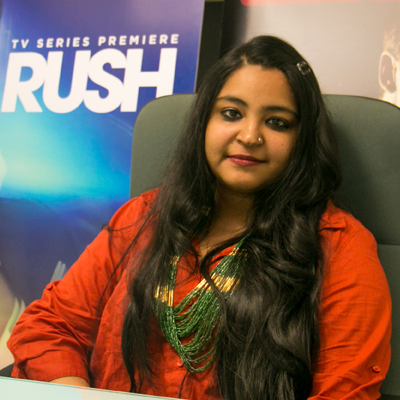
    We do not focus much on premieres but premiere-wise we have had Rush – both movie and the show. The movie Rush is adrenaline pumping and very iconic. Its characteristics are very much in sync with the philosophy of Movies Now. There is also Rush that is the form of a series whose format and content is engaging. Our next premier will be Olympus has Fallen while we have monthly properties for Independence Day, Dushera and Diwali

    How successful is your micro property Moviethon?

    Moviethon was a launch property. It’s been one of our successful ones because of the fact that it does not break up the day and has back-to-back blockbusters, which is what Movies Now always promised. Through it we bring to our viewers uninterrupted entertainment at any given point of the day. When we launched in 2010, we had made a conscious call not to break up the day into separate morning and afternoon properties. The whole endeavor was to provide non-stop back-to-back blockbusters. There was a time when Moviethon on the Sundays was performing better than several of the players put together in the market. Moviethon is an amalgamation of the best titles.

    For example, we started off with Shaolin titles for the first time in 2011. It was so successful that we have repeated it several times but every time with a new bouquet of titles. When it was launched for the first time we pitched it against a very important property that was going out in the market on our competitive platform. Shaolin won hands down. What we had done is we had taken the entire gamut of Shaolin movies that was there and positioned it in a certain time slot and added a very different marketing spin to it saying that Shaolin was sexy and not boring. It’s been a very promising one and therefore we continue to show it here. It’s been on for four years now.

    Are you looking at expanding with new titles?
    We are constantly expanding and are looking to associate with newer studios. In the coming six months there is a very significant component that is going to be added to our library and it will add richness to both Movies Now and Romedy Now in terms of content.

    What are the key challenges that you face as a programmer within the English entertainment genre?
    I think today the key challenges would be to get content. Buyers and sellers are vying for the same product, which has made it a precious commodity. Therefore, we are constantly fighting for the best titles that are in the category across studios. Also, I think the challenge is to pick the best content and in that I would mean a combination of new and old titles.

    Then, how important a role does marketing play for the new channels?

    It is very important for all of us but for us more so because we focus on titles that have already come in the market. We are not just focusing on new titles but on titles that viewers want to see and some of those titles may not have been aired for two to three years.

    When we had launched, there was a whole gamut of titles we had bought which had not even seen a primetime during that period. But for us marketing has been key factor because we have brought together titles that have been aired before but not in the same form.

    Rocky and Shaolin are examples. Fans may have seen Bond titles on other platforms but on Movies Now it had a different take and all the credit goes to our marketing team who put Bond out there as one of our prime time viewership garners. 

    Another example was Chaplin, which had a very different marketing campaign. Expectations were low since it was a black and white film but internally we had a lot of conviction that we would do well. But in spite of all the apprehension Chaplin was one of the highest rated films in that week across English movie channels. It added an entire new look and feel to that property.

    We have heard that the two channels will be revamped this festive season. Is it true?
    We are looking at a re-ignition. We want to promote a lot of festivals and are thinking of adding new content. We had Terra Nova for the first time, followed by Crisis and now Rush. Overall, in the coming six months additional adrenaline blockbuster titles will be added but there will not be a change in strategy.

    What is the line up for your 1 pm slot and how important is the slot?
    The 1 pm slot today is the most important slot after the primetime as it garners the highest viewership after 9pm. When we launched, we focused a lot on our non- prime time slots like the 1 pm and 3 pm slots. Amongst all of them, we have been doing exceptionally well at 1 pm. Thus, Movies Now has been a leader for many of the weeks in the 1 pm slot. We sometimes play a very big blockbuster at 1 pm or a repeat telecast of a movie one may have missed the night before. But since it is a very critical spot we are careful how we schedule the movies.

    Do you see a growth in consumption patterns of Indian audiences for English movies and shows?
    I think it is happening as we speak and we are slowly catching the wave. We ourselves have moved from initially targeting just eight metros to now including 1 million plus towns. The country is already consuming different kinds of English content, whether it is a Spiderman movie in different languages or even in pirated forms. I think there are enough platforms that are catering to the various demands as well. Romedy Now is an example of a movie channel which does not have the usual adrenaline, action, sci-fi kind of movies but the appreciation that it is receiving and the viewership it is garnering is an example of how the country is moving towards larger and higher consumption patterns for English content.

    Do you see an Indian production company coming up with an English show, soon?
    That will be interesting but a lot will depend on quality. Quality is the key for us. As long as Indian production houses produce such quality works it could be possible of course. There was a show like 24 that was produced in India and it was of high quality standards. As long as the content is in sync with our brand we wouldn’t hesitate to engage with such houses especially for Romedy Now. There is every possibility that you may see content that is locally produced. The only filter would be that it would have to be within the gamut of ‘Love Laugh and Live’. You can’t have a Hollywood film and then suddenly switch to another piece of content which is not so well produced.
  • The strange case of NDTV and the taxman

    The strange case of NDTV and the taxman

    MUMBAI: The share price rise, a comment about it always being open to potential partnership, has got the income tax department running to news network NDTV’s doors again. And a war of letters has broken out between the two with the taxman once again reiterating his demand for alleged unpaid taxes from the broadcaster, promoters Prannoy and his wife Radhika Roy, which they have disputed for a long time.


    What got the IT department’s attention was the sharp 20 per cent rise in the NDTV share price last month. Speculative reports appeared in the media which hinted that the broadcaster was a takeover target and the stalker was allegedly the Adani group. The company issued a clarification to the Bombay stock exchange stating that it is regularly in discussions with various potential partners to further its business interests. And that it would make the appropriate disclosure when the talks reach a concrete stage or a transaction is happening.


    The circle 13 deputy commissioner of income tax (D-CIT) in New Delhi responded to this announcement a few days later by writing to the company,  Prannoy and Radhika Roy, forbidding them from selling or taking a charge against their shareholding in NDTV without taking permission from the assessing IT officer during the pendency of assessment/reassessment of tax demands  proceedings.  He said that section 281 of The Income Tax Act (which prescribes this) is applicable in the broadcaster’s case as it had not met the department’s tax demands against it for the assessment years 2003-2004 (Rs 9.16 crore), 2006-2007 (Rs 4.21 crore), 2007-2008 (Rs 6.80 crore), 2008-2009 (Rs 22.99 crore) and 2009-2010 (Rs 449.24 crore). 


    The D-CIT also wrote to Prannoy and Radhika Roy claiming unpaid taxes of Rs 69 lakh (2009-2010) and Rs 22.81 crore (2010-2011) and Rs 68 lakh (2009-2010)and Rs 22.61 crore (2010-2011), respectively.  


    NDTV responded to the D-CIT’s order through a notice to the Bombay stock exchange yesterday by stating that section 281 does not have a bearing on NDTV shares held by individual shareholders and could only apply on assets of the company.  The company also stated that the claims by the Tax department prima facie don’t exist or are unsustainable or are stayed by Income Tax Appellate Tribunal. In fact, it has argued in the stock exchange notice that the department owes it Rs 40.84 crore in tax refunds. Hence, there is no case of section 281 being applied in NDTV’s case.


    It has “further  prayed that  the records of the department  may kindly be rectified to reflect the correct position of the  amount  of  refunds  due  to  the  company.”


    The chartered accountancy firm of RKACA & Associate which is advising both Prannoy and Radhika Roy later informed the tax authorities and the stock exchange that both are aware of the provision of the law referred in D-CIT’s letter and that both will comply with the same in both “letter and spirit.” 


    Ever since the media reports about the NDTV takeover broke last month, the company’s shares have been climbing northwards. NDTV got listed on May 2004 at an issue price of Rs 70, and hit an all time high of Rs 511.75 in 2008 and all time low of Rs 24.75 in 2011.  The share closed today at Rs 91.55. It was trading at Rs 66.25 a share on 16 May, the day Narendra Modi was elected prime minister but then recovered to hit Rs 82.95 on 26 May and Rs 89.05 on 6 June 2014.