Tag: NDTV

  • Q3-2015: NDTV y-o-y revenue up 18%; company reports profit

    Q3-2015: NDTV y-o-y revenue up 18%; company reports profit

    BENGALURU: New Delhi Television Limited (NDTV) reported 17.9 per cent y-o-y  growth in consolidated Total Income from Operations (TIO, revenue) to Rs 149.93 crore in the current quarter (quarter ended 31 December, 2014, Q3-2015) as compared to the Rs 127.21 crore in Q3-2014 and 26.4 per cent more than the Rs 110.38 crore in Q2-2015. TIO for 9M-2015 at Rs 407.73 crore was 21.4 per cent more than the Rs 335.79 crore in 9M-2014.


    Note: 100,00,000 = 100 lakh = 10 million = 1 crore


    The company reported consolidated profit after tax (PAT) of Rs 1.56 crore in the current quarter as compared to a consolidated loss of Rs 10.43 crore in Q3-2014 and a consolidated loss of Rs 26.89 crore in Q2-2015. Loss in 9M-2015 at Rs 26.82 crore was lower than the Rs 49.75 crore in 9M-2014.


    Let us look at the other results reported by NDTV


    The company says that NDTV and allied business unit revenue went up to Rs 134 crore in Q3-2015 from Rs 122 crore in the year ago quarter. This segment’s EBIDTA doubled to Rs 18 crore in the current quarter from Rs 9 crore in Q3-2014. This business unit reported PAT of Rs 7 crore as compared to a loss of Rs 3 crore in Q3-2014.


    NDTV’s Convergence business unit reported revenue of Rs 30 crore in Q3-2014 as compared to revenue of Rs 19 crore in Q3-2014. This segments EBIDTA reduced to Rs 2 crore in Q3-2015 from Rs 6 crore in Q3-2014.


    The company’s Total Expenditure (TE) in Q3-2015 at Rs 145.94 crore was 9.8 per cent more than the Rs 132.95 crore in Q3-2014 and 10.2 per cent more than the Rs 132.43 crore in Q2-2015. 9M-2015 TE at Rs 426.54 crore was 8.7 per cent more than the Rs 392.3 crore in 9M-2014.


    Q3-2015 Production expense went up 24.8 per cent to Rs 28.63 crores as compared to the Rs 22.93 crore in the year ago quarter and was 32.3 per cent more than the Rs 21.64 crore in the immediate trailing quarter. Production expense increased 24.7 per cent to Rs 86.93 crore in 9M-2015 as compared to the Rs 69.74 crore in 9M-2014.


    Marketing, distribution and promotional expense (marketing expense) went up 17.7 per cent in Q3-2015 to Rs 30.91 crore as compared to the Rs 26.27 crore in Q3-2015 and was 23.8 per cent higher than the Rs 24.96 crore in Q2-2015. For 9M-2015, the company spent 11.4 per cent more at Rs 81.64 crore towards marketing than Rs 73.27 crore in 9M-2014.


    Employee Cost (EBE) in Q3-2015 was 6.8 per cent higher at Rs 46.24 crore than the Rs 43.29 crore in Q3-2014 and was 1.3 per cent more than the Rs 45.65 crore in Q2-2015. EBE in 9M-2015 at Rs 137.75 crore was 3.5 per cent more than the Rs 133.14 crore in 9M-2014.


    The company’s operating and administrative expense (O&E) in Q3-2015 at Rs 27.73 crore was 14.6 per cent lower than the Rs 32.48 crore in Q3-2014 and 14.4 per cent lower than the Rs 32.41 crore in Q2-2015. 9M-2105 O&E at Rs 94.59 crore was 3.8 per cent lower than the Rs 90.95 crore in 9M-2014.
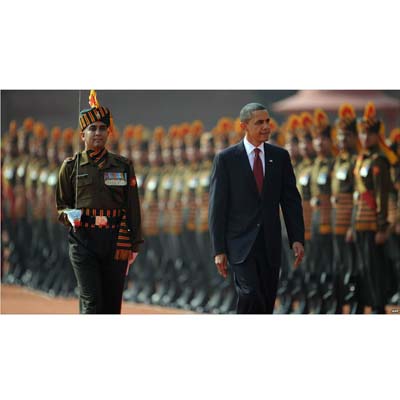
  • Obamania: The biggest blockbuster of 2015

    Obamania: The biggest blockbuster of 2015

    For India weekend means late mornings, set of movies in theatres and relaxation. Subsequently Indian news media shifts the focus from hard news to Bollywood gossips and cupids. ’Twas a similar weekend but in the National Capital, the excitement was almost palpable on a sodden morning of fog and rain. The Eagle had indeed landed at the Palam Airport carrying POTUS and FLOTUS!

    Yes, it was the Air Force One carrying President of the United States Barack Obama and his wife and First Lady of the United States Michele Obama.

    Obamania had begun!

    The media spotlights were aimed on the door of that aircraft and journalists were on the edge of their seats in the studios. The moment the door opened, breaking news and flash tickers started rolling in each and every news channel. Every news channel began its claim of being distinguished and unabated. If one channel was emphasizing on economics, the other was showing exclusive footages of the hotel. Creative juices were flowing freely as far as headlines and programme names go on various news channels!

    NDTV named its coverage ‘Namo’ste Obama’, with anchoring responsibility majorly rotating amongst its senior brass of journalists namely Vishnu Som, Sreenivasan Jain, Vikram Chandra and Barkha Dutt. They ensured cameras were present everywhere and whatever penetrated through the lenses was discussed in detail with a panel of experts. Shekhar Gupta and Vivek Katju were among them.

    Times Now kept it simple by calling its coverage – “Obama’s India Visit.” CNN-IBN named it “Namaste Obama” and Headlines Today called it “Rolling Coverage Obama.”

    Speaking to Indiantelevision.com on the entire three days’ coverage, NDTV CEO Vikram Chandra said, “We had a distinguished panel that had expertise in various fields and we were determined to have a comprehensive coverage. We were the only channel to have presence in the Taj Palace, where the CEOs met President Obama and Prime Minister Modi. We were also present in DAVOS where global economics was debated in presence of Finance Minister Arun Jaitley and economist Nouriel Roubini.”

    The US President’s visit to attend the 66th Republic Day Celebration of India was indeed an event of historical importance. That aside, a lot of economic and strategic modifications were also expected from the visit. India now has a stable Government with absolute majority in the Lower House and economic growth is one of the prime need of the country at this point. The current Government has made its position clear on developing an open, business friendly market scenario. Not long back, India was one of the fragile five economies of the world and now the country aspires to be in the fantastic five.

    All news channels were exclusively covering the developments in Hyderabad House where Obama met Modi for a bilateral dialogue. After hours of speculations of what was happening inside, the deadlock was broken in a joint press conference where channels got the second big breaking news, which they termed as ‘Nuke Deal.’ Soon after, all news broadcasters began discussions on the positives and negatives of the Indo – US nuclear deal. That was the major talking point of Day 1 of President Obama’s India visit.

    Day 2 was India’s Republic Day. It was bitterly cold weather with overcast sky accompanied by a slight drizzle and the focal point was ‘Rajpath.’ The coverage responsibility was on India’s public broadcaster Doordarshan. A three hour long extravaganza was put forward by valiant soldiers of respective battalions. And it concluded with an Air Show by the Indian Air Force.

    When queried about the entire coverage, Doordarshan India deputy director general (IR) C K Jain said, “We employed the best of infrastructure and technicians to cover the parade. There was absolutely no commercialisation and the parade was covered uninterrupted. We did not accept any commercial advertisement, we showed some government ads before and after.”

    All other private channels were relaying DD’s coverage.

    On a national holiday, when executives separate themselves from work and corporate meetings, 26 January would see them preparing for one of the biggest meetings of their lives. From Ratan Tata to Anil Ambani, they all queued up to meet POTUS. This was the second major talking point of Day 2 – the CEO meet. The focal point this time was ‘Taj Palace’ and the breaking news was the $4 billion investment promise made by Obama. The detailed discussion on the deal summed up Day 2 coverage of Obama’s Visit.

    Speaking about the commercial impact of the coverage, Maxus South Asia MD Kartik Sharma said, “We have to wait for the ratings to see which news channel performed better. As per my opinion, the English news channels were more specific and slightly better than the Hindi ones but Hindi news channels also catered well to their viewers. In news channels there was a marginal hike in ad rate due to Obama’s visit.”

    On Day 3, Obama left for Riyadh but before taking off he gave an amazing speech to the Indian media that could be discussed for days. Addressing a gathering of 2000 students, Obama started his speech by saying ‘Namaste’ and concluded it with ‘Jai Hind’. During his speech he paid gratitude to Mahatma Gandhi and Swami Vivekananda, warned India against communalism and domestic fragmentation. To add to the delight of the students and journalists present, he recited the famous dialogue from the iconic Bollywood film, which completed 1000 weeks at the box office recently – Dilwale Dulhaniya Le Jayennge (DDLJ). “Senorita, bade bade deshon mein…you know what I mean,” said Obama. Not surprisingly, soon after DDLJ started trending on social media and became an important part of the round up.

    Though Obama’s visit was not a Bollywood movie, it turned out to be one of the biggest blockbuster event followed by one and all for various reasons.

  • Increase in FDI cap: a boon or a curse?

    Increase in FDI cap: a boon or a curse?

    MUMBAI: From a recent speech of Information and Broadcasting (I&B) Minister Arun Jaitley, speculation was drawn of a probable increase in foreign direct investment (FDI) cap from 26 per cent to 49 per cent. The current government has always been in favour of FDI and on numerous occasions stated FDI as one of the major aspects behind economic growth and reform. 


    The government has already taken steps towards increasing FDI in various departments, railway and defense being among them. Hence the speculation of increase in FDI cap in media may soon turn into reality.


    Foreign investment will certainly ensure development of channels, more employment and better quality, but will it in return take away editorial freedom? Will Indian media be a victim of foreign dictatorship or will it manage to keep its integrity alive despite foreign investment? Will we have Indian CEOs and reporters after the investment or will strategic affairs slip away from Indian entrepreneurs? A larger democratic debate on the issue is extremely important and Indiantelevision.com took the initiative to find the answers from media stalwarts.


    NDTV executive vice chairperson KVL Narayan Rao said, “On this FDI development my comments are personal remarks and not a point of view of the company. I welcome this increase whole heartedly as it will allow more investments and result to better service in terms of producing quality programmes. And the only difference we are having is added investment; we will continue to have Indian editor in chiefs, reporters and video journalists.”  


    On the speculated increase in FDI cap to 49 per cent, News Nation network CEO RK Arora said, “Increase in FDI will be extremely favourable, news industry needs to expand and the increase in FDI cap to 49 per cent will be a boon for us. Moreover we see increase in other departments so why not in this industry. If we are to match the standards with international content we need investments from foreign investors.” 


    For Arora, there is no harm in increasing FDI to 49 per cent “but the investment should not dictate the strategic affairs, and there shouldn’t be any interference in editorial freedom,” he added.


    Though the news industry is extremely positive about the possible increase, none of them are ready to compromise with strategic and editorial affairs. 


    Focus News managing editor Shailesh Kumar said, “If FDI is increased in news it would be a very good decision as most of the channels are going through a tough time and we need investment from other sources to rejuvenate the industry.”


    ABP News CEO Ashok Venkatramani is of the same opinion. “We (ABP News) are in total favour of the increase and I don’t see any possibilities of editorial or strategic affairs getting influenced due to any investment. If this actually happens then we will develop and grow big. Hence I am very happy that the point has been raised. We welcome the increase in FDI cap,” he said.


    No second thoughts came from any of channels; while they unanimously welcomed the increase in FDI cap to 49 per cent, they also held a firm grip on not compromising with editorial or strategic affairs. 


    Now it remains to be seen how things develop and whether the issue is debated at the top level. Considering the fact that the current government is concentrating on building an open market scenario to ensure economic growth and reform, speculations of a possible increase in FDI cap to 49 per cent can soon be a reality.

  • NDTV presents ‘What’s Your Choice’ with Prannoy Roy

    NDTV presents ‘What’s Your Choice’ with Prannoy Roy

    The character of a nation is often measured by how much each person cares for a fellow citizen.  If you see someone in distress, suffering, being bullied or molested – reaching out, do you step out of your comfort zone and help?


    We have heard of many cases in which an accident victim, bleeding, lying on the side of the road, reaches out – but nobody stops.  Or stories of when a woman is being teased or molested even in a crowded area, nobody intervenes to save the girl.


    But bad news, like these examples, tend to hit the headlines, while good news, like when an ordinary Indian does make a choice to intervene, goes unreported.  What’s the truth about India?


    NDTV’s brand new series ‘What’s Your Choice’ with Prannoy Roy aims to simply to find out: Does India care? And if so, who cares?


    And in the final analysis, we will have succeeded if at the end of each show each one of us asks ourselves: Do I care — and do I care enough?


    WATCH PRANNOY ROY PRESENT ‘WHAT’S YOUR CHOICE?’ EVERY SATURDAY ON NDTV 24X7 AT 9:30 PM AND SUNDAY AT 12 NOON

  • State election results: A busy day for news channels

    State election results: A busy day for news channels

    MUMBAI: The year 2014 saw not only the 16th Lok Sabha election, but a number of states undergoing assembly elections as well.


    As the year ends, two states – Jammu & Kashmir and Jharkhand – casted their votes and elected their new governments. The result day i.e. 23 December, was a day of excitement for news channels as most of them started early with predictions. As the day progressed, the counting results were displayed on the screens as media stalwarts analysed the results.


    The numbers clearly showed the mark that Prime Minister Narendra Modi had left on these states as the BJP won a number of seats. In Jharkhand, the party has won with almost majority while in J&K, it is the second largest party after PDP. However, the “breaking news” was J&K Chief Minister Omar Abdullah losing from both Beerwah and Sonawar assembly constituency seats.


    The news channels focused on the next step of the political parties especially in J&K as there was no clear winner. The channels got a panel discussing the same as well as senior editors within the channel analysed the winners, the overall results as well as what discussions are going on behind the closed doors of parties on their next move.


    The analysis continued till late afternoon; with a little break as BJP’s Amit Shah held a press conference to talk about the party’s performance in the two states. “2014 is the year of BJP,” is what the right-hand man of Modi had to say.


    Throughout the day, the channels also gathered as well as took people’s reaction through their digital platforms. Hashtags like #Dec23WithArnab, #NDTVResults were created and promoted on channels as they geared for the big debates to be held at primetime.

  • ‘Junior MasterChef Swaad Ke Ustaad’ wins at the 19th ATA

    ‘Junior MasterChef Swaad Ke Ustaad’ wins at the 19th ATA

    NEW DELHI: The 19th Asian Television Awards (ATA) ceremony took place on 11 December 2014 at Marina Bay Sands, Singapore. With 1,371 entries from 14 countries across Asia-Pacific, this year’s ATA was attended by over 500 industry professionals in broadcasting, entertainment and the media. In all, 199 channels from 119 broadcasters, as well as 64 independent production companies, vied for accolades across 38 award categories.
    A total of 43 trophies were awarded at the ceremony, including the “Outstanding Contribution to Asian Television” which was presented to Metan Global Entertainment Group president and CEO Larry Namer.
    “We’ve seen tremendous interest for our Awards over the years. Not only have the number of entries increased, we’re also seeing greater participation from more Asian broadcasters and production companies, making this Awards truly representative of Asia,” said Asian Television Awards chairman Raymond Wong.
    He added, “To enhance the standing of the Awards and build its brand amongst the viewers of our industry, the proceedings of the Asian Television Awards last year were carried by FOX International Channels (FIC) and MediaCorp TV. This year we will continue to do the same and I am pleased to announce that Bangkok TV and Astro will be joining us as a Broadcast Partner, carrying the Awards’ proceedings on its Channel 7HD, Astro Ria and Astro Maya HD respectively. Together with FIC’s Star World, MediaCorp’s Channel 5, Bangkok TV’s Channel 7HD, Astro’s Ria and Maya HD, the Asian Television Awards will reach out to more than 40 million households across Asia Pacific.”
     Here is the list of winners of significant categories –


  • “Mr Modi, when are you giving me the big interview you promised?”: Rajdeep Sardesai

    “Mr Modi, when are you giving me the big interview you promised?”: Rajdeep Sardesai

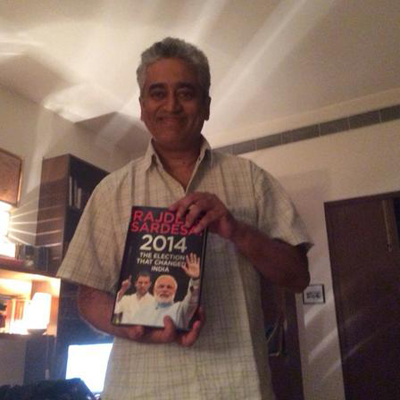
    He is one of Indian television’s most recognisable face as a news presenter and now the author of the best seller ‘2014: The Election That Changed India’. Rajdeep Sardesai may have quit Network18 as IBN18 editor in chief and later on joining the India Today Group as consulting editor, but the man with over 26 years of experience in the field continues to be recognised for his work.


    Sardesai was honoured with the Asian TV Award on 11 December for ‘The Best News Presenter’ for his coverage on the counting day of the general elections.


     The award is a special one for him as he becomes the first Indian to receive the recognition. On the occasion, in a quick chat with Indiantelevision.com’s Herman Gomes, Sardesai speaks about the recognition and upcoming plans for the New Year.


    Your feelings on receiving the award? Do you see Indian journalism receiving its due credit?

    When I was with NDTV, The Big Fight had won the Asian TV Award, three times in a row. At CNN-IBN, India at 9 and our election coverage had won awards for the best news coverage and best current affairs, but to win an individual award as the ‘Best News Presenter’ feels special. Being nominated with icons from CNN, Discovery, Nat Geo and CNBC, along with Chinese and Korean TV, makes it special. I feel honoured to be honoured as the only Indian.


    Are awards and recognition important for journalism?

    Being the first Indian to receive an award like this, feels nice, but only for a moment. Journalism is not about winning awards but about work or the interview you do.  Elections after all is a team game. The award is also for all those who worked with me as a team at my old organisation, CNN IBN.


    Any celebrations planned?

    I am going to have a quiet dinner when my son returns from his hostel. I am planning to take him out for dinner next weekend.  I owe a lot to the family.


    How well is your book ‘2014:The Election That Changed India’ been performing on the shelves?

    The book as of last week was placed at number two in the non-fiction category, behind Sachin Tendulkar’s autobiography: ‘Playing It My way’.  It has been on the best seller list for six weeks. I am told that in one month it has sold more than any other nonfiction political book of 2014. I am taking the book across the country for various promotions and lit fests.  On the weekends I promote the book while on weekdays I am caught up anchoring my show. It’s a packed week!


    Are politicians affected by the revelations in the book?

    Interestingly I find the Congress politicians having more problems with the book than BJP. The BJP politicians had feared the book, but Congress seems to be unhappy now.


    How has the state of journalism changed over the last one year?

    One of the continuing fears I have is the tendency to sensationalise. That continues to remain a trend and has not stopped. This is what I call window journalism, where you have eight people in a window, talking at each other rather than talking to each other.

    But at the same time there is some good work being done. But the sad part is it does not get the due recognition, because some of the less important work dominates the more worthy work.


    We are destroying our credibility in the long run.


    How do you view the growth for online journalism?

    My belief is that digital is going to see a big revolution in the next few years. It will not happen overnight but will take two to three years.


    Are there chances of you joining back CNN-IBN?

    There are no such plans. 2014 has been a roller coaster year for me. Our election coverage is being recognised at the Asian level. The book was a high point while my departure from CNN IBN was an unfortunate one. 


    It has been six months since the new government came to power. Do you think Aache Din Aa Gaye?

    Ache Sitare Aa Gaye, ache din we don’t know. Maybe next year. It’s too early to judge.


    One question you would want to ask the Prime Minister Narendra Modi?

    Mr Modi, when are you giving me the big interview you promised?


    How do you see the year ahead for the Indian media and how are you planning to welcome the New Year?

    I view the year 2015 as the year of introspection for the media including myself. 2014 has been a year of excitement. I am welcoming 2015 by going to Goa and resting by the beach.


    For this year do you want to be known as Rajdeep Sardesai: the journalist or the author?

    I want to be known as a journalist who has written a bestselling book!

  • Broadcasters want tariff to be left to market forces

    Broadcasters want tariff to be left to market forces

    MUMBAI: The Telecom Regulatory Authority of India’s (TRAI) latest tariff order that will come into effect from 1 January 2015 has already got a few stakeholders’ views on it. To be called the Telecommunication (Broadcasting and cable) services (seventh) (non-addressable systems) Tariff Order, 2014 (draft), it will be applicable to broadcasting and cable services provided to cable subscribers throughout India through non addressable systems.


    Tariff


    The main point that the stakeholders who have given their comments agree on is not having any regulation on wholesale tariff and there should be complete forbearance from the Authority. “The presence of a  plethora  of players in the market  clearly  indicates  that there exists enough competition  in  the  market  and  no  monopolistic  practices  or  unfair  trade practices can be practiced in such a scenario,” is the view of agent The One Alliance (A MSM and Discovery JV, which has now parted ways).


    NDTV and Star India also have similar views on tariff. “Given TRAI’s own finding that TV channels fulfill only ‘esteem needs’ of consumers and are as such non-essential, there is all the more no reason whatsoever for regulating channel prices,” is Star’s opinion. The same is shared by The One Alliance.


    If in case TRAI decides that complete forbearance cannot be allowed, then Star India says that it can consider regulating prices at retail level only. The One Alliance on the other hand feels that TRAI needs to keep its nose out of even retail tariff since it will affect the consumer and the entire distribution chain. “The MSOs under the guise of regulated retail pricing would either further renegotiate with the broadcasters or fill their bandwidth with lesser priced channels,” it says.


    According to The One Alliance, in case the TRAI feels that it should control wholesale rate then only it has to consider inflation rate while if it leaves to market forces, it won’t have to do the same.


    The agent also feels that pricing on the basis of genre is illogical since the Ministry of Information and Broadcasting (MIB) recognises only two categories: News and Current Affairs and Non News and Current Affairs while TRAI seeks to differentiate the non-news category into many genres. “Movie channels like Max and Star Gold also show live sports which is another genre with a different price cap,” it states.


    On the issue of HD and 3D channels, The One Alliance feels that since these are niche channels and require high technology, it should not be subjected to any tariff restrictions whereas Star India feels that they should be kept out since they anyway cannot be transmitted in an analogue regime.


    While TRAI says that broadcasters must give all channels in bouquets as well as a-la-carte, Star India says that there shouldn’t be any mandate that channels have to compulsorily be given on a-la-carte. At the same time, the obligation that old bouquets must be offered as per 2007, needs to go away specially after the coming into force of the deaggregation paper.


    Carriage


    Carriage fee is the biggest burden on broadcasters which everyone has askedthe regulator to include in its order. The News Broadcasters Association (NBA) and Times Television Network have just asked for carriage fees to be included as a crucial element.


    The One Alliance on the other hand states that the authority has ‘blatantly ignored’ the issue of carriage fee even after its own view in a 21 July 2010 report which states, “The Authority is of the view that all carriage and placement fee transactions should be a part of inter connection agreements between the broadcasters and MSO/LCOs in the case of pay channels, or separately formalised as carriage and placement fee agreements in the case of FTA channels, and these should be filed with the TRAI. Such filings of carriage and placement fees will enable the authority to monitor carriage and placement fee transactions regularly and regulate the same through interventions where considered necessary.”


    NDTV says that if there is a price control on how much broadcasters can charge MSOs for content, MSOs should also be told how much they can charge broadcasters for carriage and placement. “The charges paid by MCCS have increased by 300 per cent over the years. It is estimated that the carriage and placement fee paid by broadcasters is between Rs 1200 crore to Rs 1500 crore,” reads NDTV’s reply.


    Declaration and reporting


    The fact that MSOs and LCOs have not been asked to provide any reporting requirement is a question raised by them. Broadcasters urge TRAI to ensure that MSOs and LCOs do not under-declare their subscribers.


    “We strongly believe and submit that the inter-connect regulations must allow for Broadcasters to conduct surprise audits and surveys with their respective technical teams to prevent under-reporting of subscriber base,” states The One Alliance.


    Star India opines that strict financial disincentives should be prescribed for illegal transmission, area transgression, under declaration, piracy or any other illegality or non compliance. “Operators who have been found to be violating rules should not be given the protection of the Must Provide or regulated Tariffs.”


    Both The One Alliance and Star India feel that details on advertising need not be declared as they don’t have any relation to tariff or other issues.


    While TRAI says that a new channel launch needs 30 day prior intimation, The One Alliance feels that a seven day notice is sufficient.

  • NDTV’s media disclaimer on case with Quantum Securities

    NDTV’s media disclaimer on case with Quantum Securities

    NEW DELHI: The New Delhi Television has asked the media not to publish any defamatory advertisement or publication of any nature whatsoever etc by Quantum Securities Private Limited or its directors/associates in connection with and/or pertaining to and/or relating to NDTV, its senior officials and promoters in a contempt application filed by the channel in Bombay High Court in a case pending in that Court.


    The case against Sanjay Dutt, Quantum Securities Private Limited and its directors Om Prakash Arora, Neraaj Dewan and Sandeep Dutt was filed last year.


    The directive was sent to the media by NDTV advocates Amarchand and Mangaldas and Suresh A Shroff and Co.


    While issuing notice to Quantum as to why action under the provisions of the Contempt of Courts Act shall not be initiated against respondents for committing violation of the orders dated 6 August 2013 and 26 February 2014, the Court in an interim order restrained Quantum or its directors from issuing any advertisements, defamatory letters, notices, e-mails, or any publication whatsoever relating to the case.


    The matter has been fixed for 8 December.


    The judge said his attention had been drawn to the advertisement given by the respondents in the national daily newspaper ‘The Economic Times’ in New Delhi in Edition dated 30 October 2014 alleging that the NDTV had not disclosed facts and events in the presentation and also on NDTV website.


    It is stated that the Department of Income Tax, Government of India vide its final assessment order dated 21 February 2014 for AY 2009-2010 raised fresh demand of Rs 450 crore which has not been disclosed  which was required to be disclosed. NDTV said this was defamatory.


    The matter relates to an alleged Memorandum of Understanding of September 2006 and an agreement dated 1 July 2007 (as stated by NDTV senior counsel R M Kadam in court) executed between NDTV and Sanjay Dutt and Sanjay Jain whereby NDTV engaged services for providing strategic and financial advisory services; corporate finance; investment management and strategic consultancy. It is alleged by NDTV that under this agreement an amount of Rs 2,60,00,000 was paid by the Plaintiff to Dutt and Jain.


  • Bhupendra Chaubey is now CNN-IBN consulting editor

    Bhupendra Chaubey is now CNN-IBN consulting editor

    MUMBAI: After being elevated to executive editor of CNN-IBN a few months ago, Bhupendra Chaubey has now shifted his role to consulting editor.


    He will now do only one show a week and appear on screen for big days such as elections but will not be looking at hourly/daily management of news. He will also be focusing a lot on the digital space.


    In a series of tweets, Chaubey said that ’24 hour management doesn’t leave you any space to unlearn and learn again.’ He also tweeted ‘Journalism without passion and processes of enquiry isn’t journalism. I believe new age media platforms do provide you with that space.’


    While several media reports suggested that Chaubey would be leaving the organisation, following the footsteps of Rajdeep Sardesai, Sagarika Ghose, Vinay Tewari etc, it seems like he is still committed to Network18.


    Chaubey has been in the field from the past 17 years, starting his career with NDTV post which he joined TV18 in 2005 as chief political correspondent.